In the commercial real estate landscape of Ontario, surface water is more than just a nuisance, it is a liability. Improper site grading leads to ponding, which accelerates asphalt deterioration, creates hazardous ice patches in winter, and can even compromise structural foundations. For property owners and developers, transforming a poorly drained lot into a high-functioning asset requires a drainage-focused approach and precision engineering.
At Reliance Engineering, we specialize in turning complex drainage challenges into practical designs. Whether you are managing an existing retail plaza or developing a new industrial site, understanding the mechanics of commercial site grading is essential for maintaining property value and ensuring municipal compliance.
The High Cost of Poor Drainage
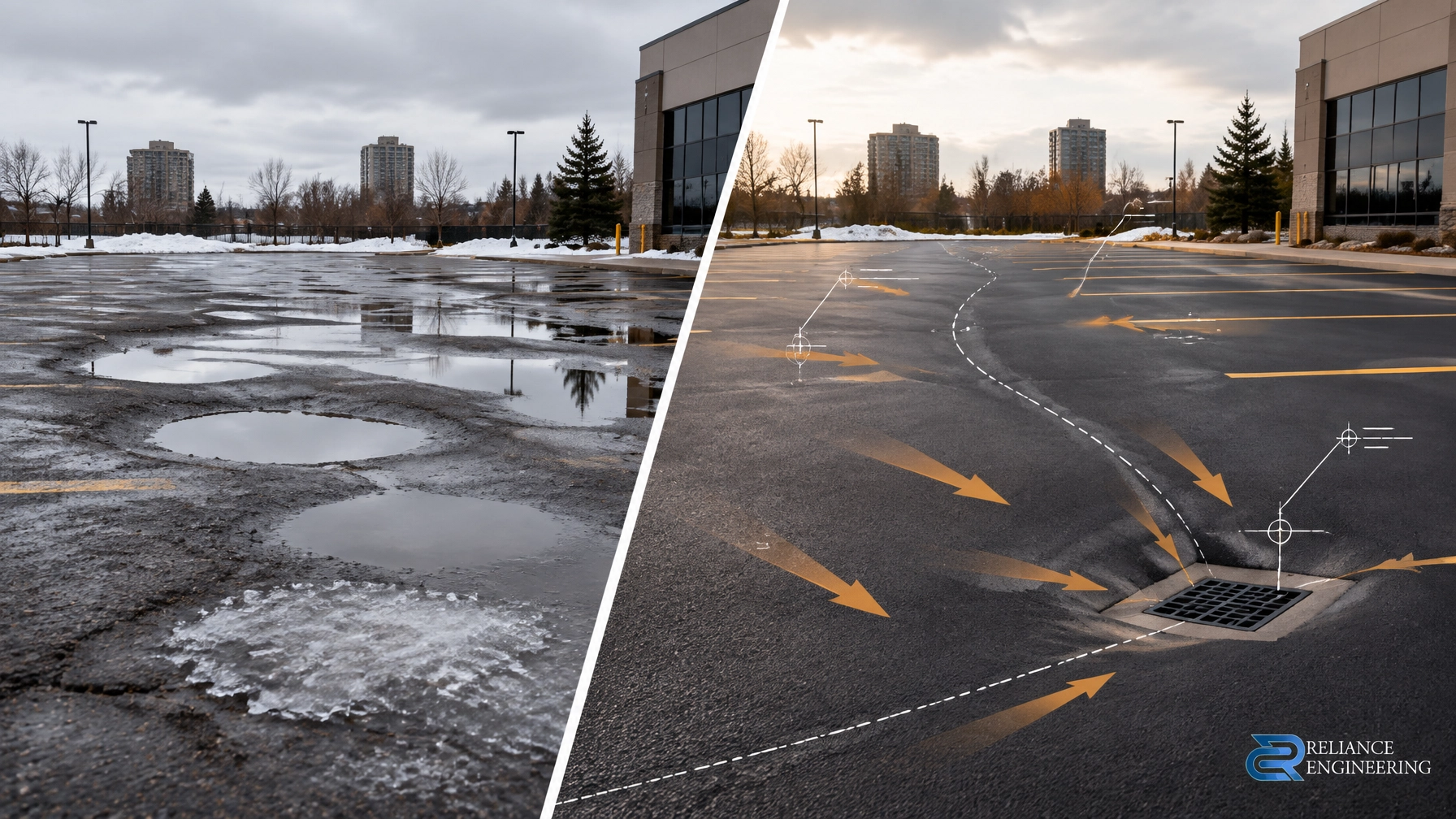
Ponding occurs when water collects in low spots on an asphalt surface rather than flowing toward an inlet. In Ontario’s climate, the freeze-thaw cycle turns minor ponding into a major expense. Water seeps into the asphalt sub-base, freezes, expands, and creates cracks and potholes.
Beyond maintenance costs, poor grading creates significant safety risks. Large pools of water hide trip hazards and, during the winter months, create "black ice" that increases the risk of slip-and-fall accidents. Professional commercial property grading fixes address these issues at the source by establishing positive drainage across the entire site.
Establishing Positive Drainage
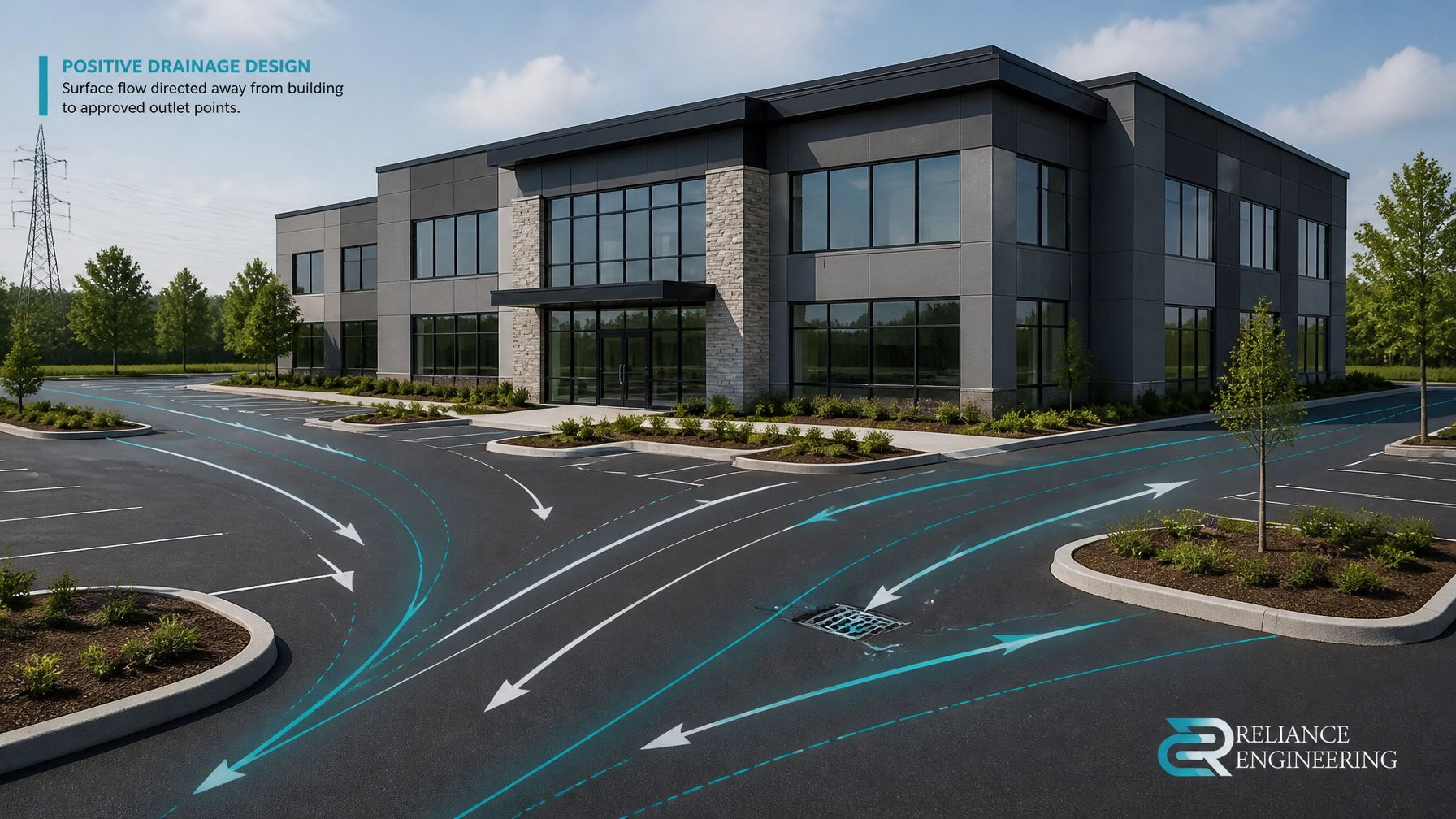
The foundation of any successful Site Grading Plan is the concept of positive drainage. This means that every square meter of the site is designed with a specific slope, typically between 1% and 2%, to ensure water moves consistently toward a catch basin or a designated discharge point.
Asphalt Regrading Strategies
When ponding is identified on an existing property, asphalt regrading is often the most effective solution. This process involves:
- Topographic Surveying: Identifying the exact elevations and low points of the current surface.
- Milling and Overlays: Strategically removing or adding asphalt layers to reset the slope.
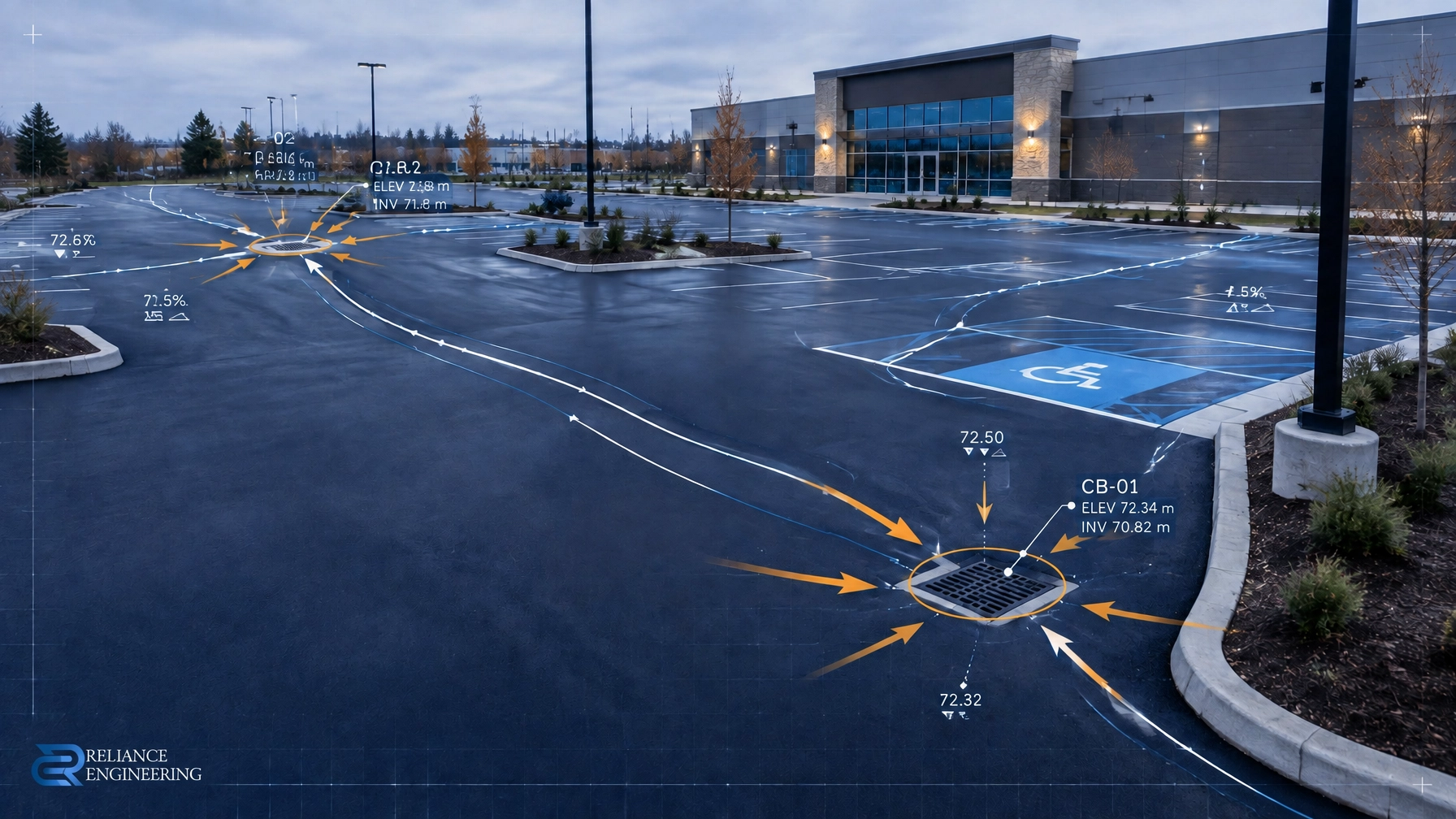
- Inlet Installation: Adding new catch basins or trench drains in areas where water naturally collects but currently has no outlet.
By utilizing buildable grading techniques, we ensure that the theoretical design on the paper translates perfectly to the physical site, providing a permanent fix for drainage issues.

The Importance of Overland Flow Routes
Even the best-designed storm sewer system has a capacity limit. In Ontario, municipal standards require the definition of "major system" drainage, commonly known as overland flow routes.
These are specifically designed paths, such as drive aisles or swales, that safely carry excess water away from buildings during extreme storm events that exceed the capacity of the underground pipes. Without clearly defined overland flow routes, water will find its own path, often leading to flooded basements or damaged building envelopes.
Our Stormwater Management Reports provide the detailed calculations necessary to ensure these routes protect your investment during 1-in-100-year storm events.
Navigating Municipal Requirements in Ontario
Securing municipal approval for commercial developments requires more than just a simple drawing. Authorities across Ontario demand Site Plan Approval (SPA) Drawings that meet strict technical criteria.
Key requirements typically include:
- Controlled Ponding: In many jurisdictions, parking lots are designed to act as temporary storage (ponding) to prevent downstream sewer systems from overflowing. This ponding must be strictly limited in depth (usually 300mm) and duration.
- Inlet Control Devices (ICDs): These restrictors are placed inside catch basins to manage the flow of water into the municipal system.
- Permit-Ready Drawings: Municipalities require professional engineering seals and detailed elevation callouts to issue building or site alteration permits.
Failure to provide a coordinated design that aligns with Functional Servicing Reports can lead to costly delays in the approval process.

Professional Expertise with Reliance Engineering
With over 20 years of experience, Naresh Ochani, P.Eng. M.Eng., leads our team in delivering precise, permit-ready drawings for commercial clients across Ontario. We understand the nuances of local municipal requirements and provide the approval support necessary to keep your project on schedule.
Our services for commercial properties include:
- Site Grading and Servicing Plans
- Erosion and Sediment Control Plans
- Building Permit Drawings
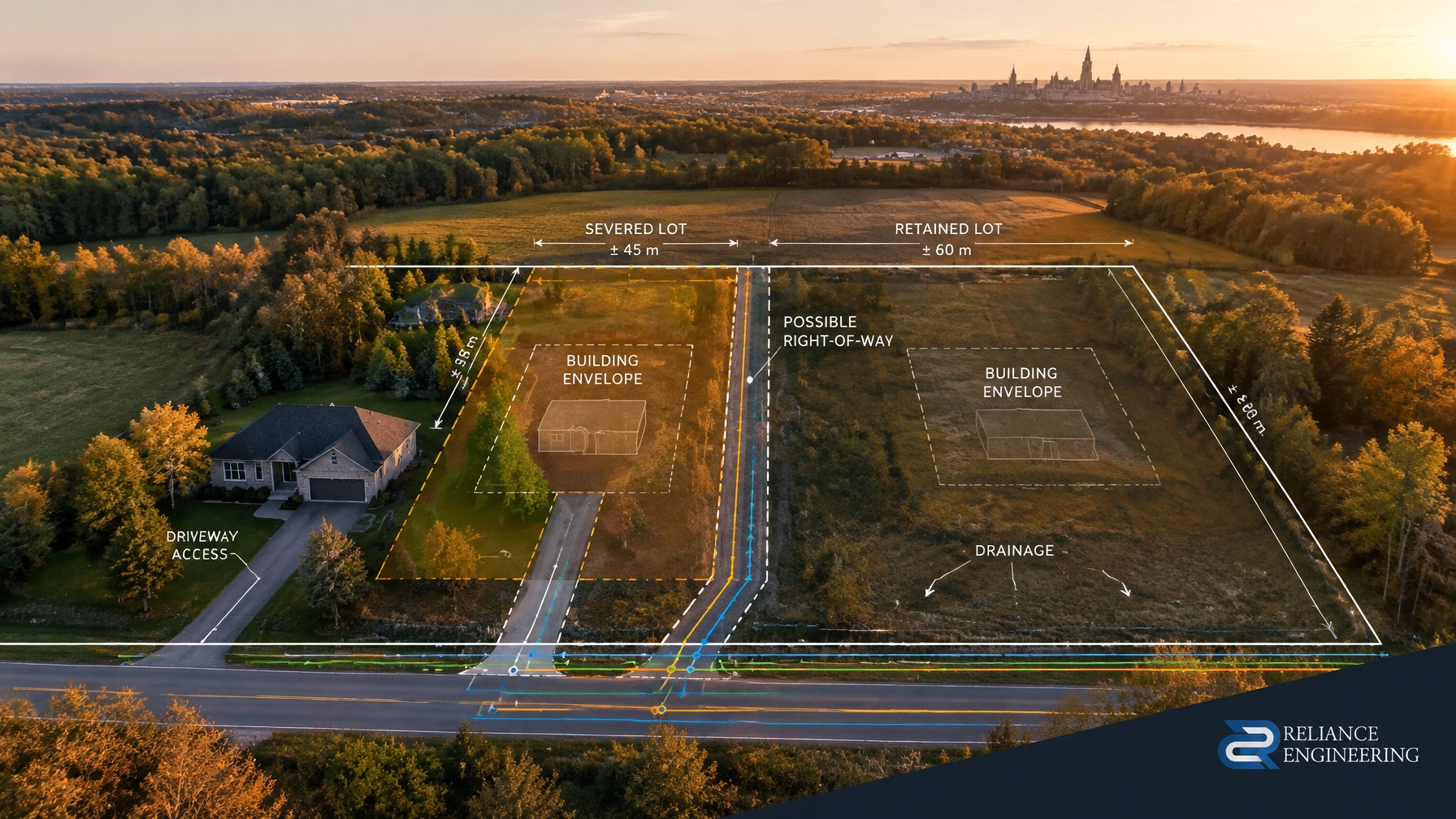
- Severance and Consent Application Drawings
We focus on delivering practical designs that are not only compliant with regulations but are also cost-effective to construct.

Contact Information
For professional consultation on your commercial site grading or drainage requirements, please contact our office.
Reliance Engineering
Address: 6850 Millcreek Dr, Mississauga, ON L5N 2H4
Phone: 647-385-6418
Email: [email protected]
Office Hours:
- Saturday: 12:00 PM – 2:00 PM
- Sunday: Closed
Professional Credentials:
- Naresh Ochani, P.Eng. M.Eng.
- PEO Certificate of Authorization: 100548882