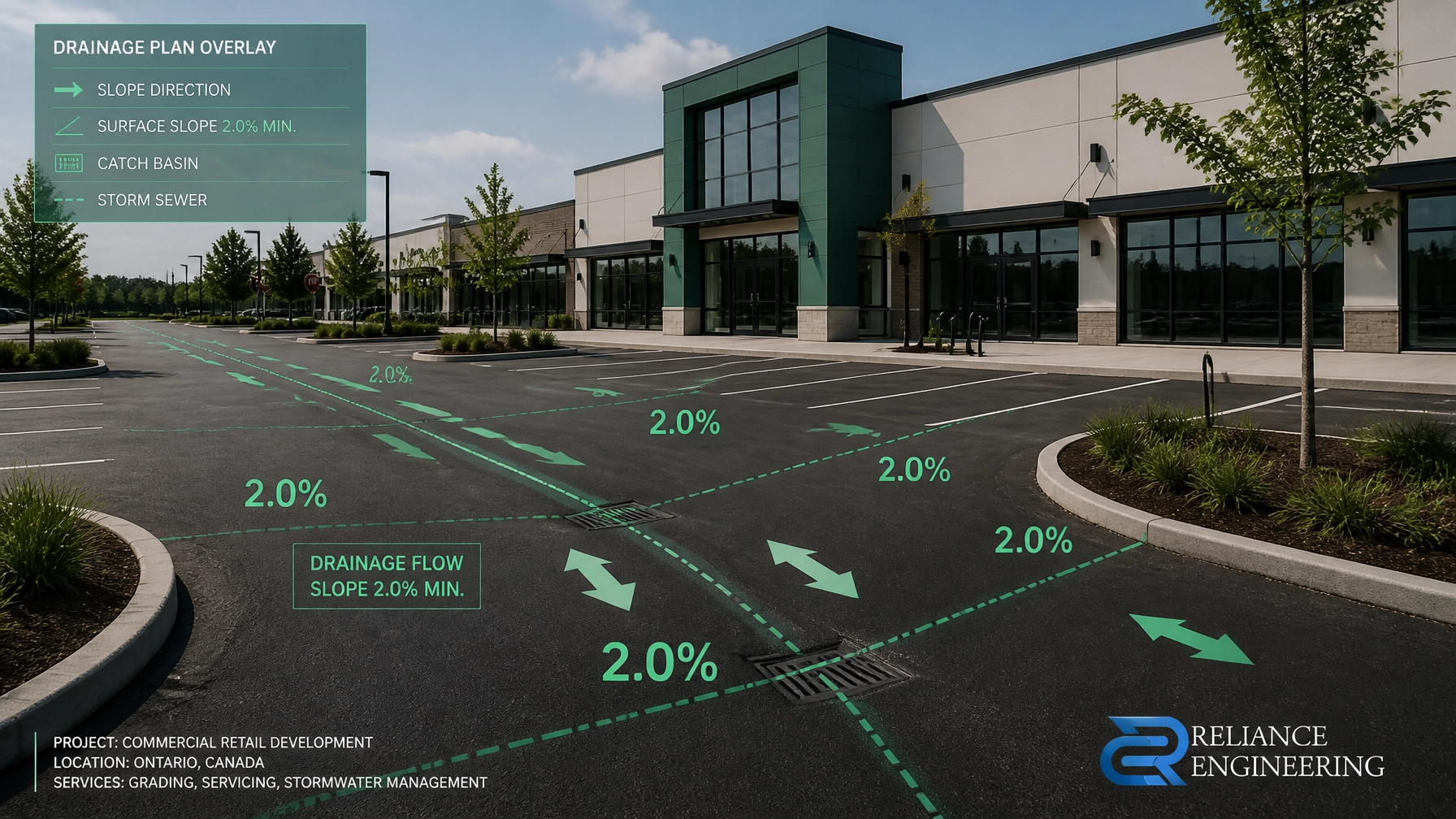
A commercial parking lot is more than just asphalt for cars. It is a critical piece of infrastructure. In Ontario, where we face intense freeze-thaw cycles and increasingly heavy rainfall, your parking lot's drainage system is its heartbeat. If it fails, the consequences are immediate: liability from ice patches, structural damage to your building foundations, and astronomical repair bills.
Most property owners and developers think drainage is a "set it and forget it" feature. It isn't. At Reliance Engineering, we see the same expensive errors across Ontario every single day.
Here are the 7 most common drainage mistakes you’re making and exactly how to fix them before the next storm hits.
1. The "Flat" Trap: Insufficient Slope
The biggest mistake in commercial lot design is a lack of adequate slope. Many older lots or poorly designed new ones feature "dead zones" where the grade is less than 1%. Water doesn’t just sit there; it infiltrates the asphalt, weakens the sub-base, and creates potholes.
The Fix: Every square inch of your lot needs a purpose-driven slope. We recommend a minimum of 2.0% cross-slope for parking bays and at least 1.0% along drainage aisles. If your lot is already flat, strategic asphalt overlays or milling and resurfacing can re-establish the necessary flow. Precision in your Site Grading Plan is the only way to avoid this.
2. Low Points Without an Inlet
It sounds obvious, but you would be surprised how many lots have "bowls" that lack a catch basin. Water follows gravity, not your intentions. If you have a natural low point in your topography and no drain to catch the runoff, you’ve created a permanent puddle: or an ice rink in February.
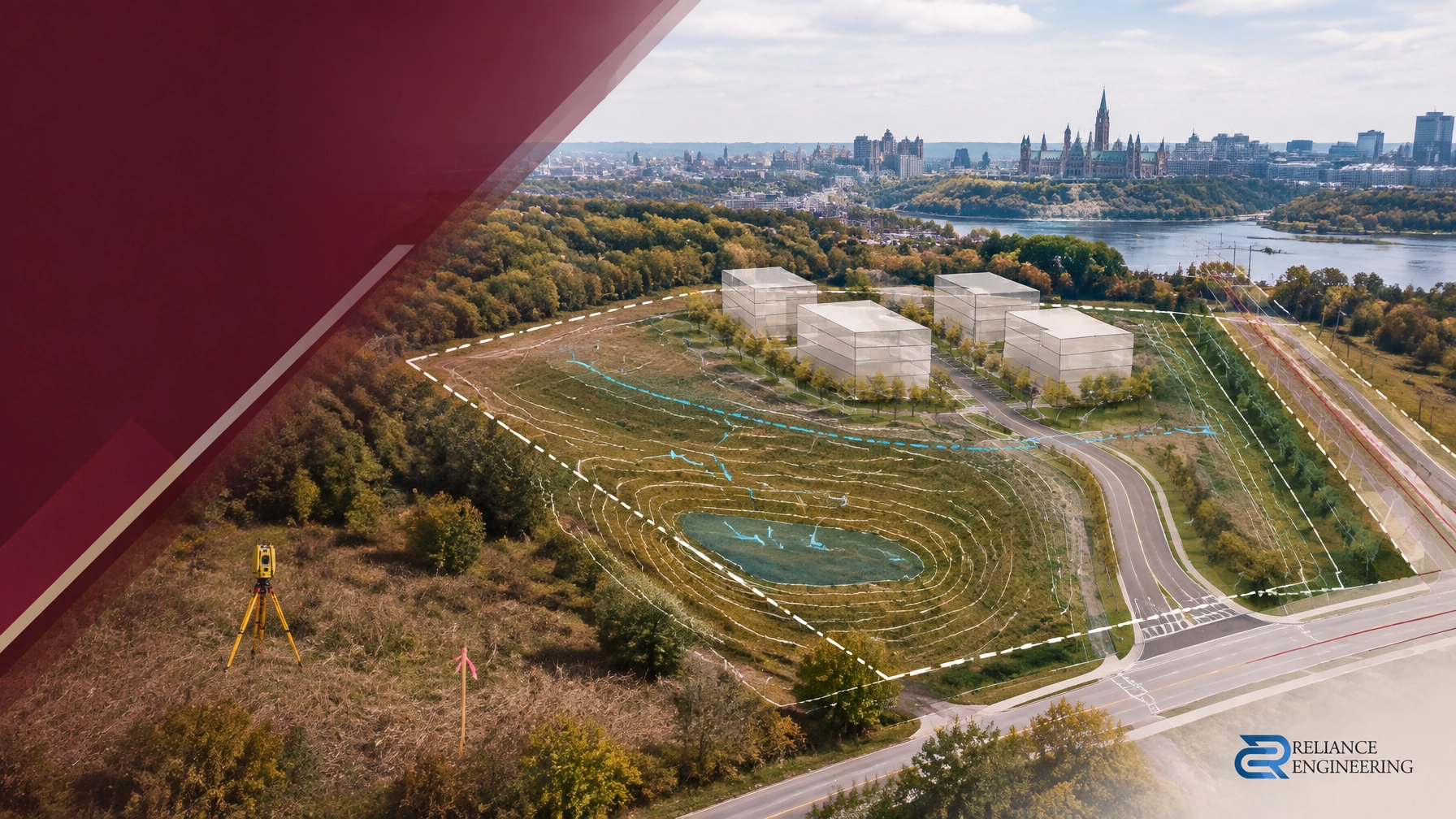
The Fix: A professional Site Servicing Plan ensures that every low point has a corresponding inlet. If you’re retrofitting an existing lot, we can pinpoint these "missing" inlets using topographic surveys and install new catch basins to tie into your existing storm sewer.

3. Draining Toward the Building Foundation
The absolute worst direction for water to travel is toward your building. We frequently find commercial lots where the grading hasn’t accounted for settlement near the foundation, causing water to pool against the exterior walls. This leads to basement flooding, mold, and structural degradation.
The Fix: All grading must direct water away from the building envelope. We utilize trench drains: long, narrow grates: at building entrances and loading docks to intercept sheet flow before it reaches the structure. This is a standard requirement in Site Plan Approval Drawings.
4. The "Set and Forget" Maintenance Fail
A drainage system is only as good as its maintenance. Catch basins act as filters, catching silt, leaves, and trash. When these fill up, the water has nowhere to go but up. Clogged drains are the #1 cause of "emergency" drainage calls in Ontario.
The Fix: Schedule semi-annual catch basin cleaning: once in the spring after the thaw and once in the fall before the first snow. This simple preventive step can extend the life of your asphalt by a decade and is a fraction of the cost of a full lot resurfacing.

5. Ignoring Subsurface Settlement
Soil isn't static. Over time, the fill under your parking lot can settle by 1-3%. If your design didn't account for this, your perfectly graded lot will eventually develop new low spots that collect water. This is especially common in areas of Ontario with high clay content or where "soft" soil was used during construction.
The Fix: Professional engineering involves calculating potential settlement and over-designing slopes to account for future movement. If your lot is already settling, we can use subsurface drainage solutions like French drains to move water out of the sub-grade, preventing the "pumping" effect that shatters asphalt.
6. Undersized Stormwater Infrastructure
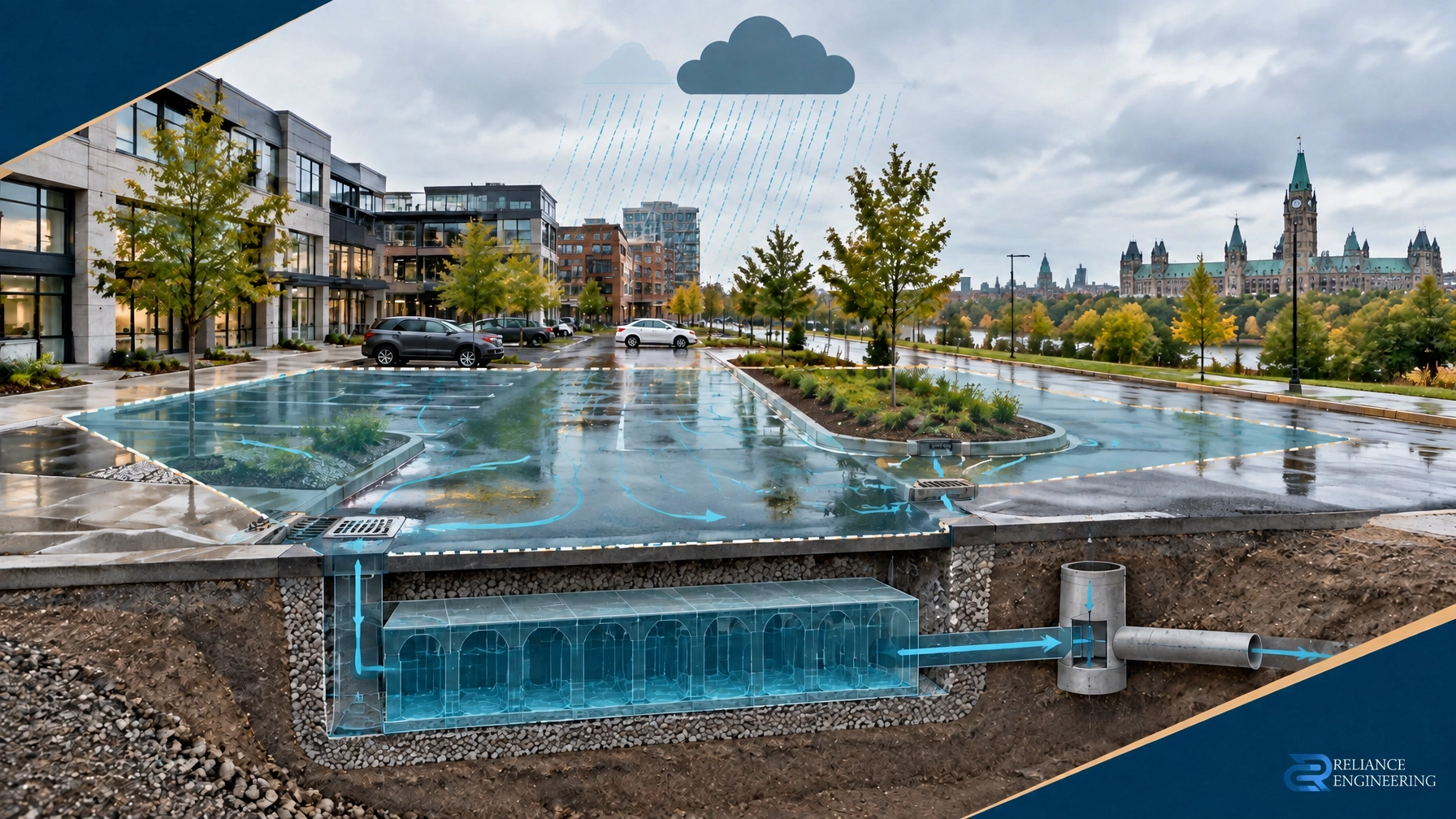
Ontario’s rainfall patterns are changing. Many commercial sites were designed for "10-year storms" that now happen every two years. If your pipes or detention tanks are undersized, the system will back up, flooding your lot and potentially your neighbors’ properties: which opens you up to massive legal liability.
The Fix: You need a modern Stormwater Management Report. We use advanced hydrological modeling to ensure your pipes, catch basins, and underground storage can handle current and future weather events. In many cases, we can retrofit "Low Impact Development" (LID) features like permeable pavers to reduce the load on your pipes.

7. Relying on "Patch-and-Seal" Instead of a Plan
Property managers often try to "save money" by hiring a paving company to patch cracks and seal-coat the lot. While this looks good for a month, it does nothing to fix the underlying drainage problem. If the water is still pooling, it will simply eat through the new patch from the bottom up.
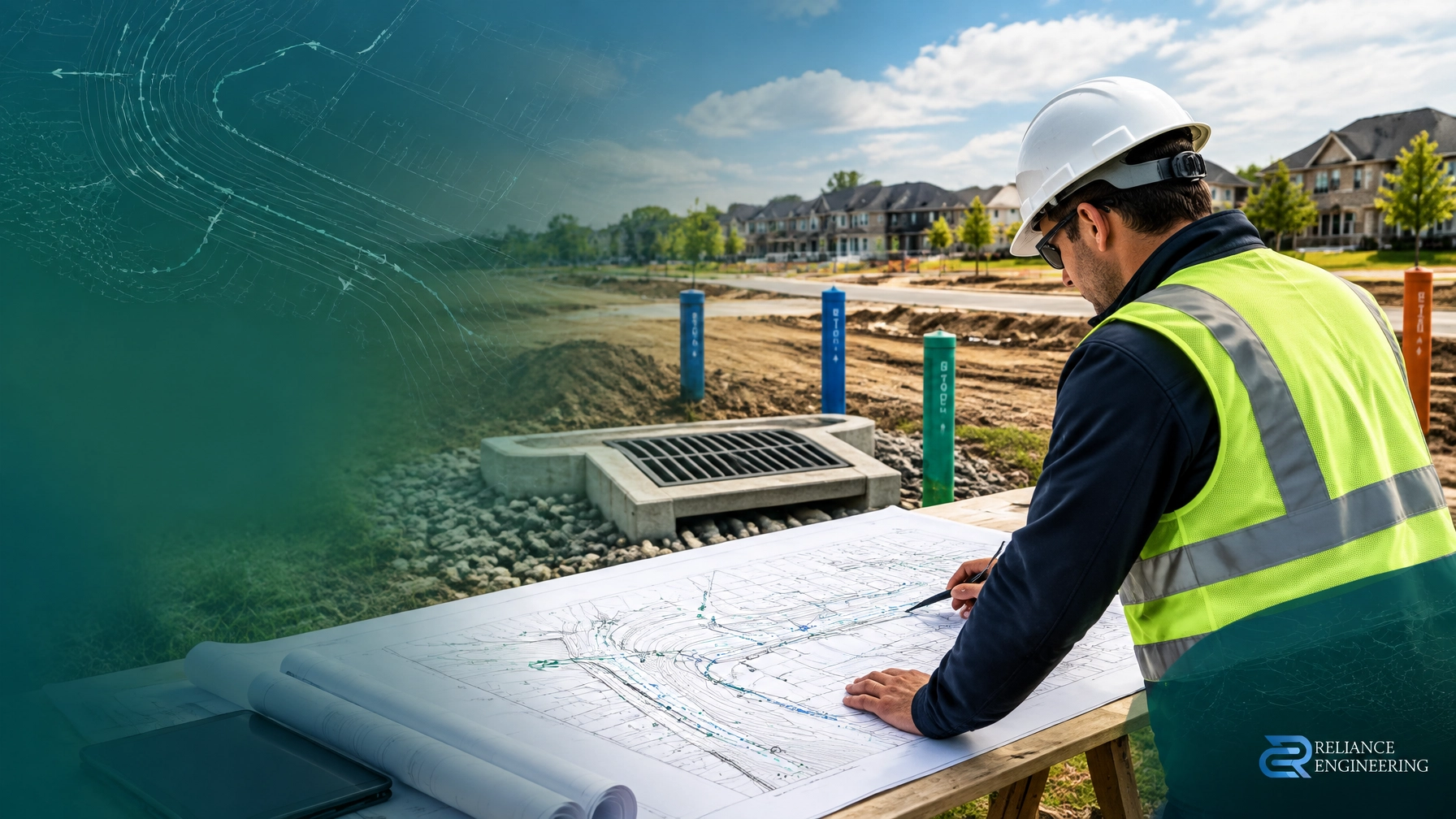
The Fix: Stop wasting money on cosmetic fixes for structural problems. Before you resurface, get a professional Functional Servicing Report or a grading review. A few hours of engineering can save you hundreds of thousands of dollars in wasted paving costs.
The Reliance Engineering Advantage
At Reliance Engineering, we don't just draw lines on a map. We provide solutions. With over 20 years of principal engineering experience, Naresh Ochani and his team specialize in securing municipal approvals and solving complex drainage puzzles across Ontario. We take full ownership of your project, ensuring your designs are approved quickly: often in just one submission.
Whether you are dealing with a "lake" in your industrial yard or need a complete site plan for a new commercial development, we have the expertise to get the job done right.

Contact Us Today
Ready to fix your drainage issues for good? Contact us for a consultation.
Naresh Ochani, P.Eng. M.Eng.
Reliance Engineering
6850 Millcreek Dr, Mississauga, ON L5N 2H4
Phone: 647-385-6418
Email: [email protected]
Website: www.relianceengineering.ca
Office Hours:
- Saturday: 12:00 PM – 2:00 PM
- Sunday: Closed