Topic: Functional Servicing Reports | Service area: Ontario | Published: November 13, 2026
Most Functional Servicing Report (FSR) problems are not modelling problems. They start before the first node is drawn: a consultant assumes a release rate, a downstream limit or a background flow that the municipality has not confirmed.
Municipal terms of reference put that confirmation step on the applicant. An FSR is one of the civil deliverables where some of the model’s inputs are owned or controlled by the municipality. If they are wrong, the calculations may be consistent and still answer the wrong question.
The pre-submission meeting is a requirement, not a nicety
The City of Hamilton’s Functional Servicing Report development application guideline, updated February 13, 2026, says the applicant or consultant must request a meeting with the City before submitting the report. The meeting is to discuss boundary conditions and the limits of the downstream capacity analysis needed.
That meeting is the cheapest hour in the approval process. It can establish the scope of the model before design work depends on unverified assumptions.
Hamilton also requires the FSR to demonstrate that downstream watermain, sanitary and stormwater systems will not be negatively affected. The report must show that the development will not cause upstream or downstream conditions to exceed City design criteria.
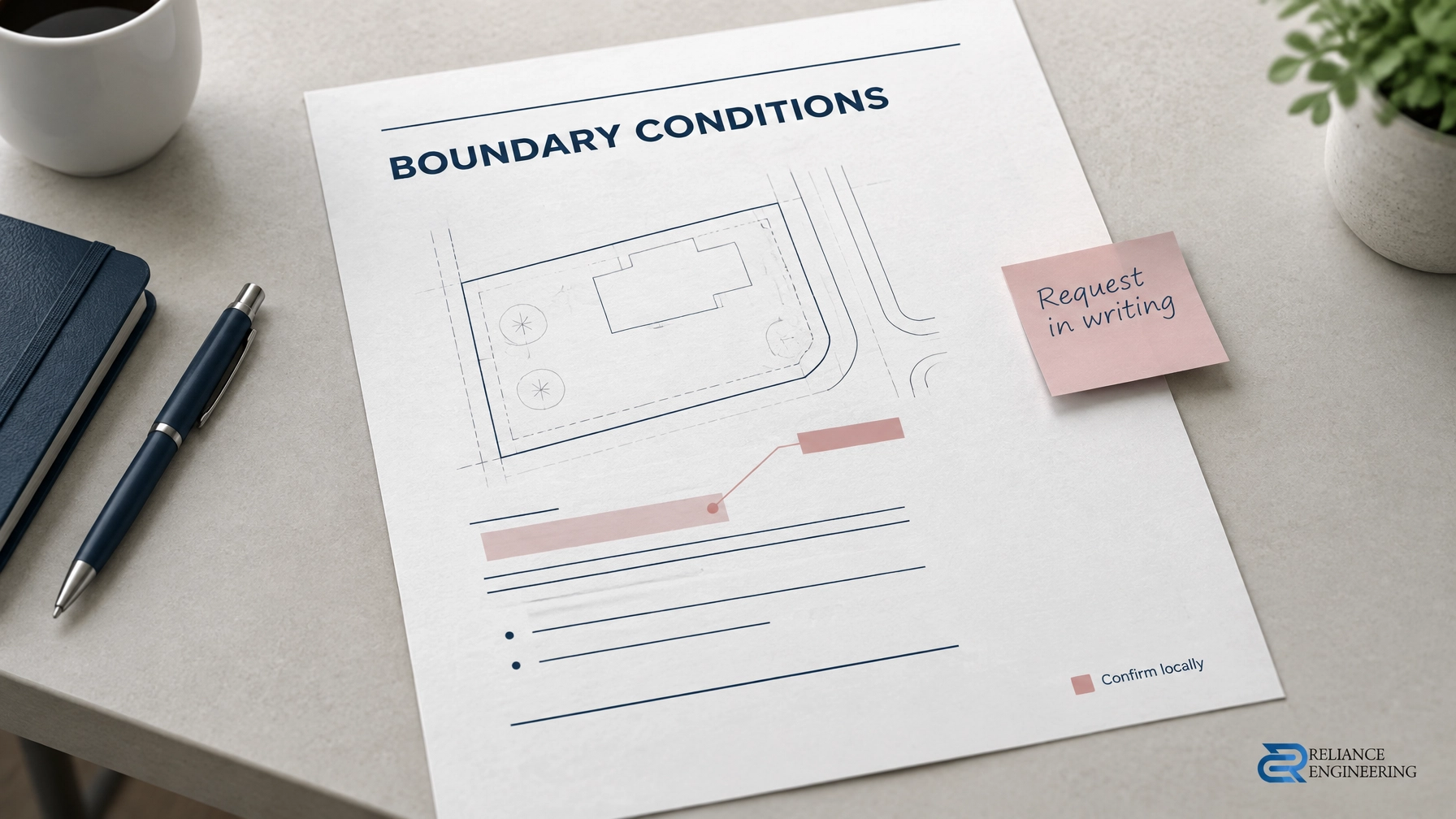
Six boundary inputs to request in writing
Ask for the inputs below at pre-consultation. Record the source, date and responsible organization. The exact process varies by municipality; confirm the process and inputs with your local municipality at pre-consultation.
-
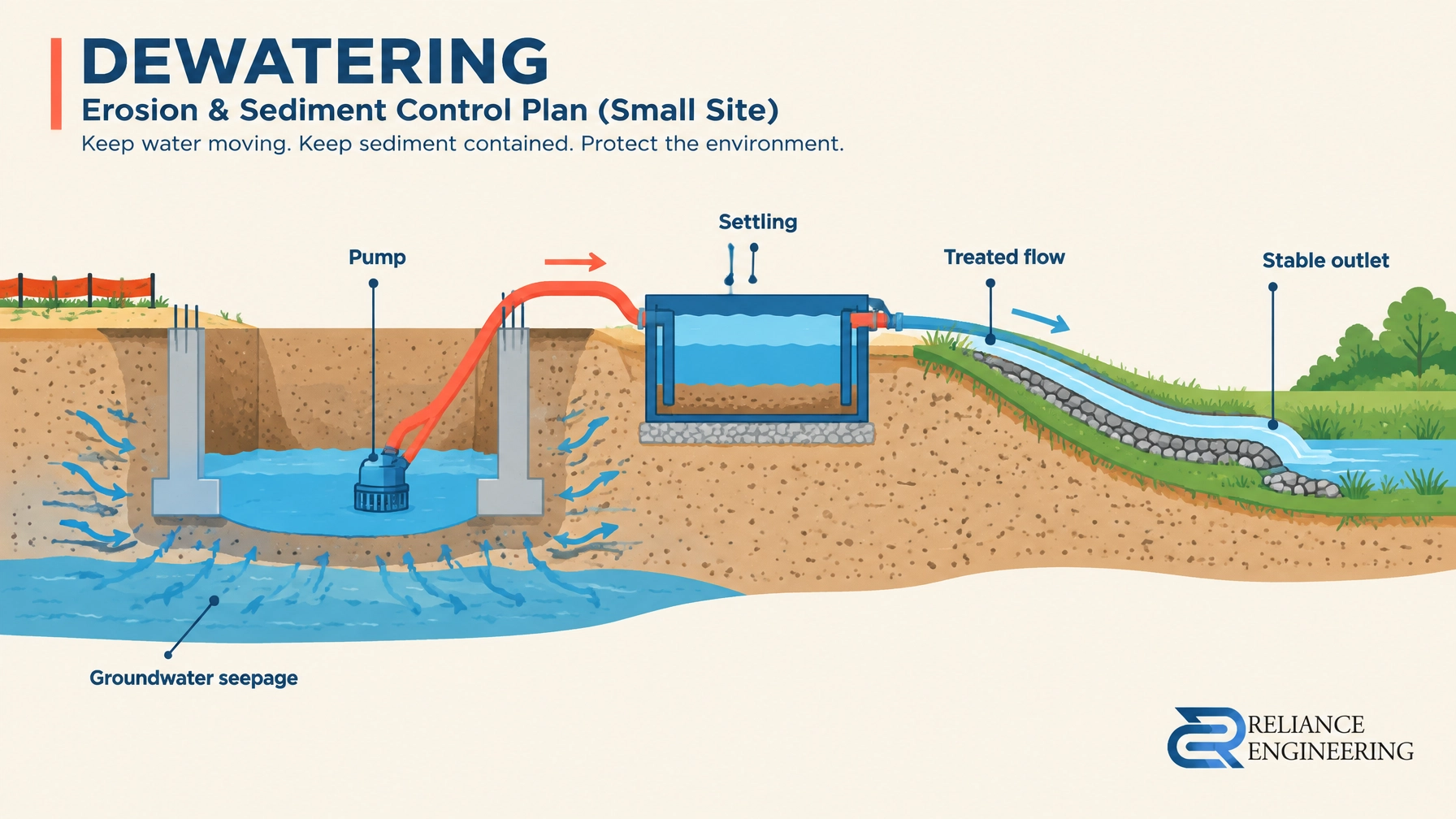
Stormwater criteria and their source. Request the criteria that apply to the site’s watershed, including quantity, quality, erosion and water balance, and how they were established. Hamilton’s guideline says that when City staff or a Conservation Authority provides criteria, the correspondence should be appended and the report should identify where the criteria are applied.
-
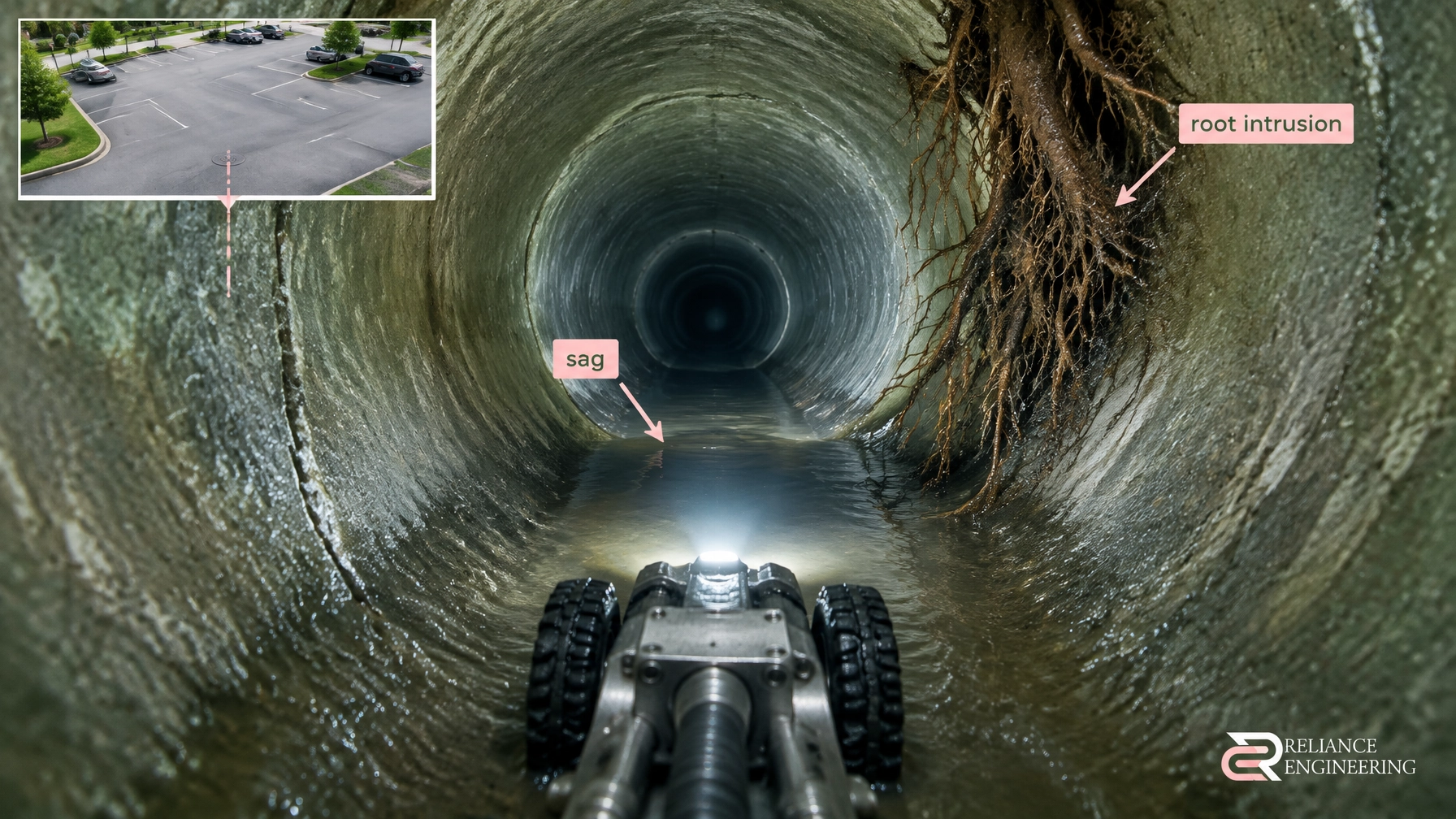
Downstream capacity analysis limit. Confirm how far downstream the assessment must extend, and identify the nodes, junctions or structures that define the study boundary. The first accessible manhole is not necessarily the required endpoint.
-
Background and committed flows. Ask what existing, approved or committed development flows are already represented in the relevant model. The project’s proposed demand is not the only demand on a shared sewer.
-
Governing criteria document and version. Identify the applicable design manual, its current version and any approved deviation. Record the document name and date used for the analysis.
-
Water demand and fire flow conditions. Confirm the demand criteria, required hydrant flow and pressure-test conditions, and the pressure zone serving the site. Richmond Hill’s FSR requirements call for pressure-zone identification, hydrant flow pressure tests and water-demand calculations based on municipal design criteria.
-
Master plan conformity target. Confirm which MESP, UMESP, Water and Wastewater Master Plan or equivalent applies. Ask which phase, trunk commitment or planned improvement the site is being assessed against.

Confirm who runs the trunk model
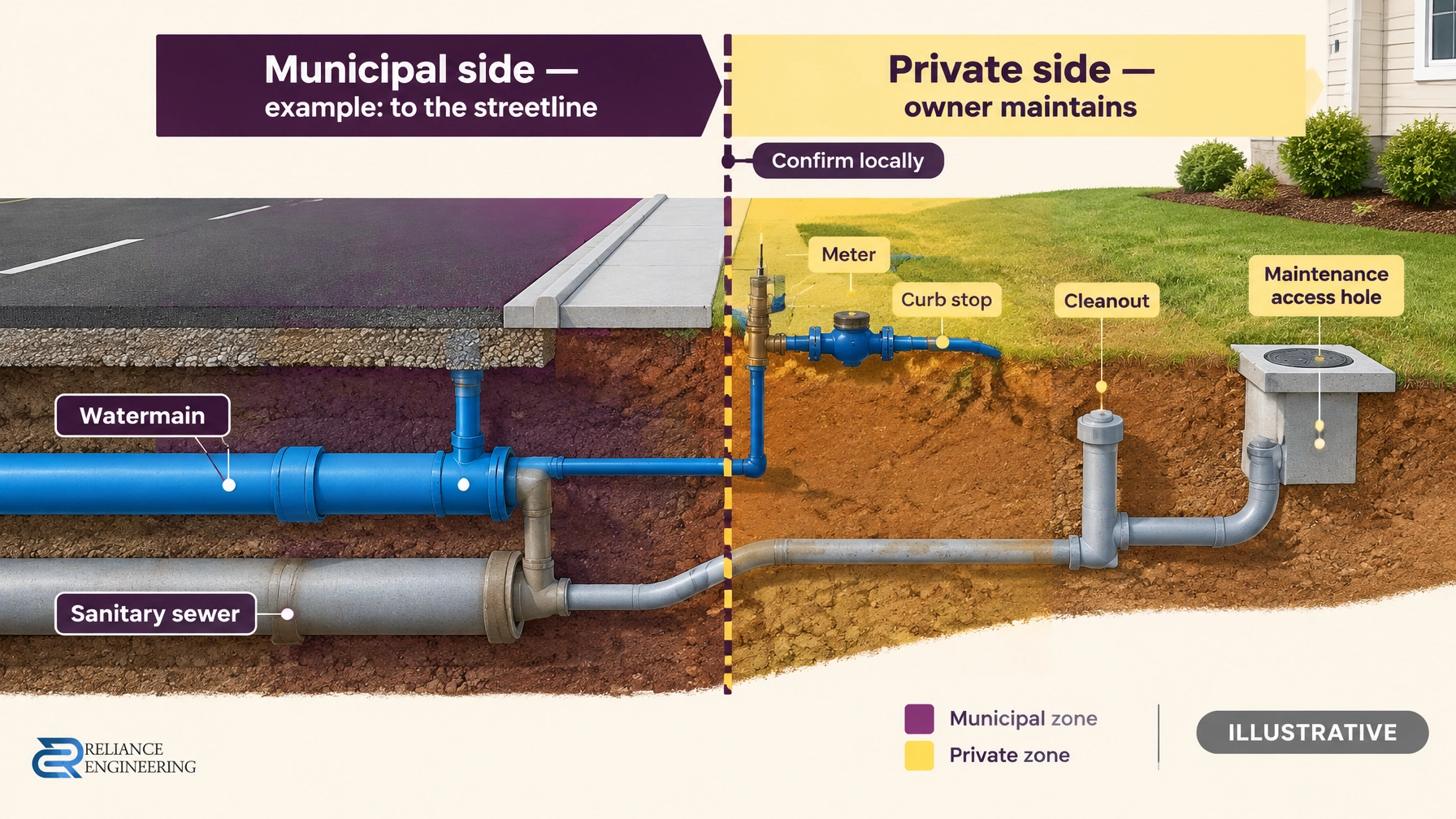
The consultant and municipality may not use the same model or perform the same capacity analysis. The City of Richmond Hill’s FSR requirements describe a specific division of work: after acceptable water demands are submitted, the City’s Infrastructure Planning Section completes the water-system capacity assessment using its Water System Computer Model. The requirements describe a similar City-led assessment for wastewater flows using its Wastewater Computer Model, and for downstream storm capacity using its Stormwater Computer Model.
In this process, the consultant supplies acceptable demand and drainage inputs; the City runs its own system models. The practical implication is that conclusions may remain open while a municipal model run is queued. Clean, complete inputs submitted early help avoid preventable requests for clarification. If unit counts or land use change after a run, updated inputs and a new assessment may be needed.
The division between consultant modelling and municipal modelling varies. Confirm it at pre-consultation rather than assuming the same process applies everywhere.
Boundary conditions can go stale
A boundary input is not permanent. A release rate from a 2019 drainage study may predate a master plan update, an upstream subdivision approval or a revised design manual. If the input is old, the resulting model may no longer represent the conditions under review.
The City of Waterloo’s Functional Servicing Report Terms of Reference, dated June 30, 2023, says the City may request an updated study or addendum when the proposal or legislation changes. It also places responsibility on the applicant to use the most recent version of the terms of reference.
Hamilton requires an FSR to incorporate comments from formal consultation and to identify whether the proposal exceeds current or approved future density. For each boundary input, keep a dated record in the report: the value or condition, source document or correspondence, date confirmed, responsible party and where it is used. At resubmission, re-confirm the input table, not just the report narrative.
Hamilton also requires the report to state whether it is preliminary or final. A final FSR should identify the specific draft plan conditions it addresses.
Five assumptions that commonly undermine the analysis
- Using the release rate from a neighbouring subdivision without confirmation for the subject watershed.
- Ending the downstream model at the first manhole reached instead of at the municipality’s required limit.
- Omitting background flows and treating committed sewer capacity as available.
- Applying a superseded design criteria manual.
- Treating a municipal model run as immediate, then changing unit count or land use after the inputs were submitted.
Hamilton’s deviation rule is direct: any deviation from municipal standards requires City staff approval, even if it is shown in the FSR or engineering drawings. Without approval, City standards govern. A boundary input the design team disagrees with is not a design decision; it is a matter to raise and resolve with staff.
Six-item pre-design checklist
Before building the model:
- Request the pre-submission boundary-conditions meeting and retain its record.
- Get the release rate and stormwater management criteria in writing, with the source document named.
- Confirm the downstream study limit and node list.
- Request committed background flows and the model’s current build date.
- Confirm the criteria manual version and the process for approving any deviation.
- Enter every input in a dated table with its source and owner, then re-verify it at each resubmission.
Five takeaways
- Confirm boundary conditions before modelling, not after a review comment.
- Request the study limit, flows and criteria in a form that can be cited in the FSR.
- Know whether the consultant or municipality runs each capacity model.
- Date and source every input, then check its currency before resubmission.
- Coordinate the FSR with site servicing plans so demand assumptions, clean layouts, constructible routing and clear drawings support one coordinated design.
A clear functional servicing report connects municipal inputs to clear calculations and practical controls. Reliance Engineering prepares coordinated servicing documentation and provides approval support for development projects across Ontario, including stormwater management reports Ontario projects require and permit-ready drawings.
Request a functional servicing report consultation
Contact Reliance Engineering to discuss boundary conditions, municipal model inputs and the servicing requirements for your project.
Naresh Ochani, P.Eng. M.Eng.
Principal Engineer, Reliance Engineering Canada Limited
PEO Certificate of Authorization: 100548882
Reliance Engineering is authorized by the Association of Professional Engineers of Ontario to offer professional engineering services.
Address: 6850 Millcreek Dr, Mississauga, ON L5N 2H4
Phone: 647-385-6418
Email: [email protected]
Office hours: Monday to Friday, 9:00 AM–5:00 PM; Saturday, 12:00 PM–2:00 PM; Sunday, Closed.