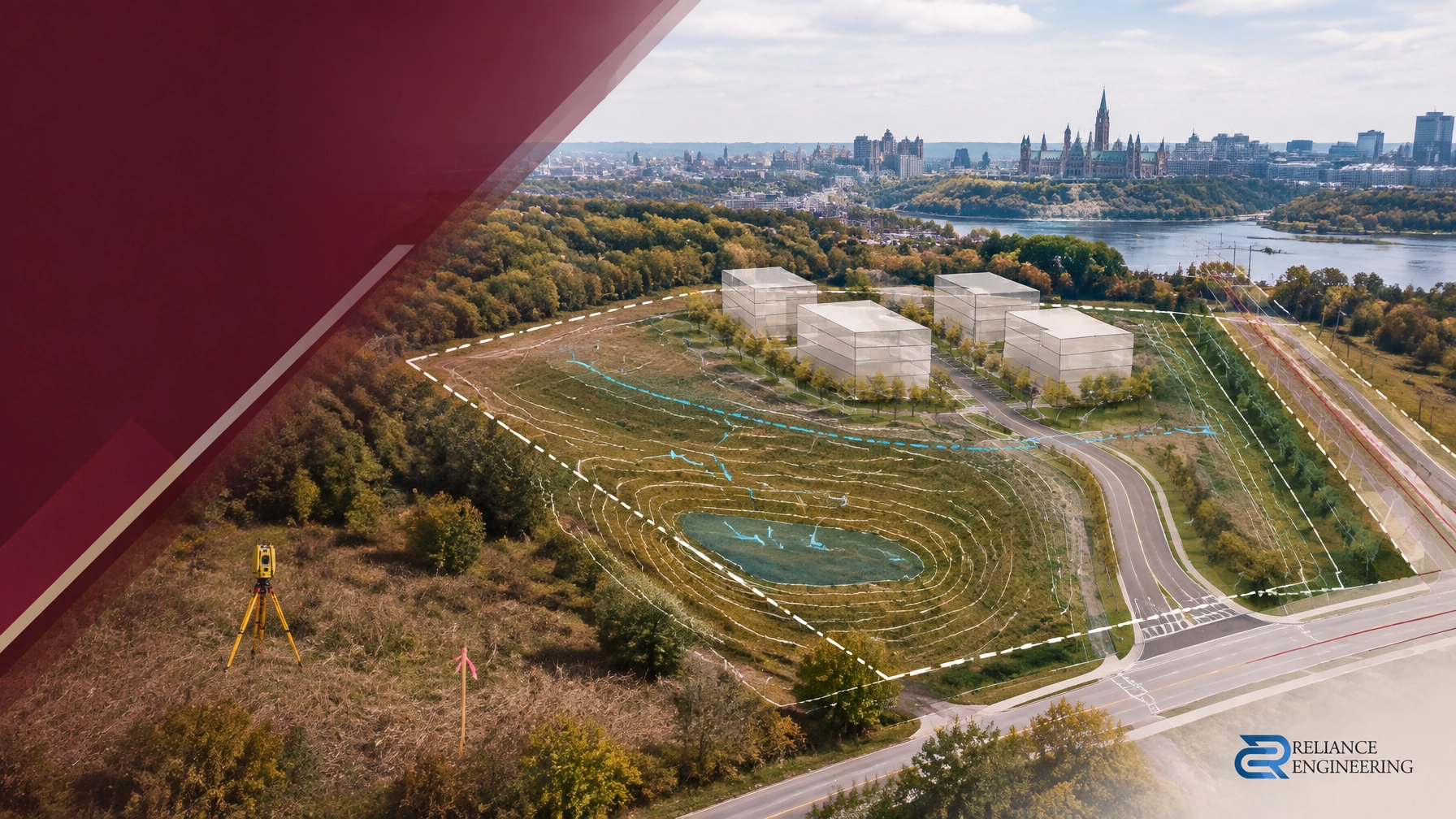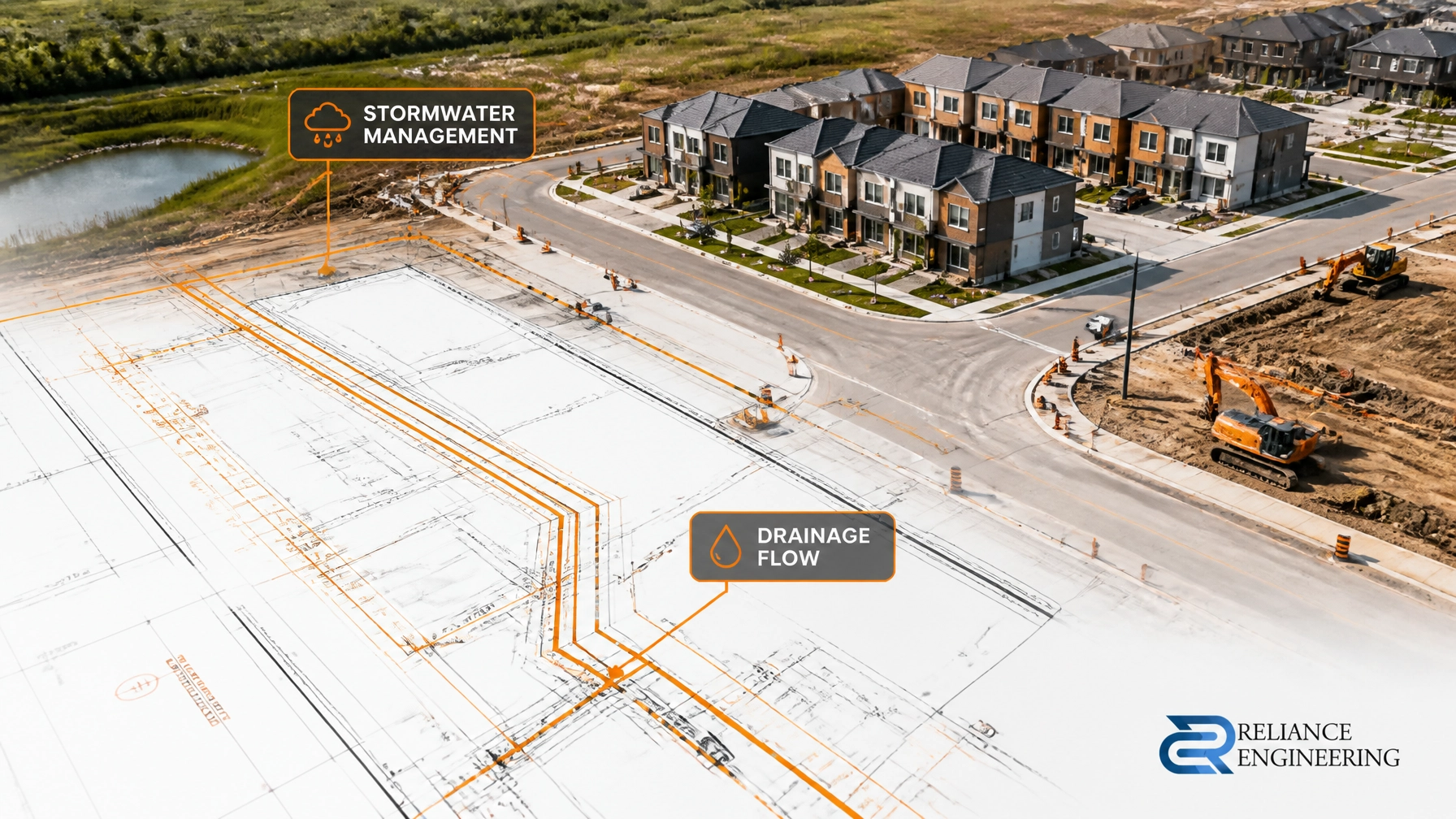
In 2026, the speed of your project’s approval hinges on one critical document: the Stormwater Management (SWM) Report.
For property developers and investors across Ontario, the regulatory landscape has shifted. Gone are the days of simple detention ponds. Today, the Ministry of the Environment, Conservation and Parks (MECP) and local municipalities demand sophisticated, sustainable, and resilient water management strategies.
At Reliance Engineering, we don't just draft reports; we secure your path to construction. If you want to avoid the "submission loop" and keep your pro-forma on track, you need to master the new rules of engagement.
The 2026 Regulatory Landscape: The "LID-First" Mandate
The most significant change in 2026 is the full integration of Low Impact Development (LID) into the approval process. While the MECP’s draft manual was once a guideline, it is now the standard by which your project is judged.
Municipalities across Ontario: from Toronto to Ottawa: now require developers to manage rain where it falls. This means mimicking natural hydrologic cycles rather than just piping water off-site.
Why Investors Must Care
- Approval Speed: An inadequate SWM report is the #1 cause of Site Plan Approval rejections.
- Land Value: Modern LID features can reduce the need for massive, land-consuming ponds, freeing up more buildable square footage.
- Compliance: You cannot bypass Section 53 of the Ontario Water Resources Act. Every "sewage work": which includes your storm sewers and bioretention cells: requires an Environmental Compliance Approval (ECA).

The 2026 SWM Checklist: What Your Engineer Must Deliver
A professional SWM report in 2026 is a complex technical dossier. It isn't enough to show where the water goes; you must prove it won't flood your neighbors or degrade local water quality.
Here is what Reliance Engineering includes to ensure a one-and-done approval:
1. Water Balance Analysis
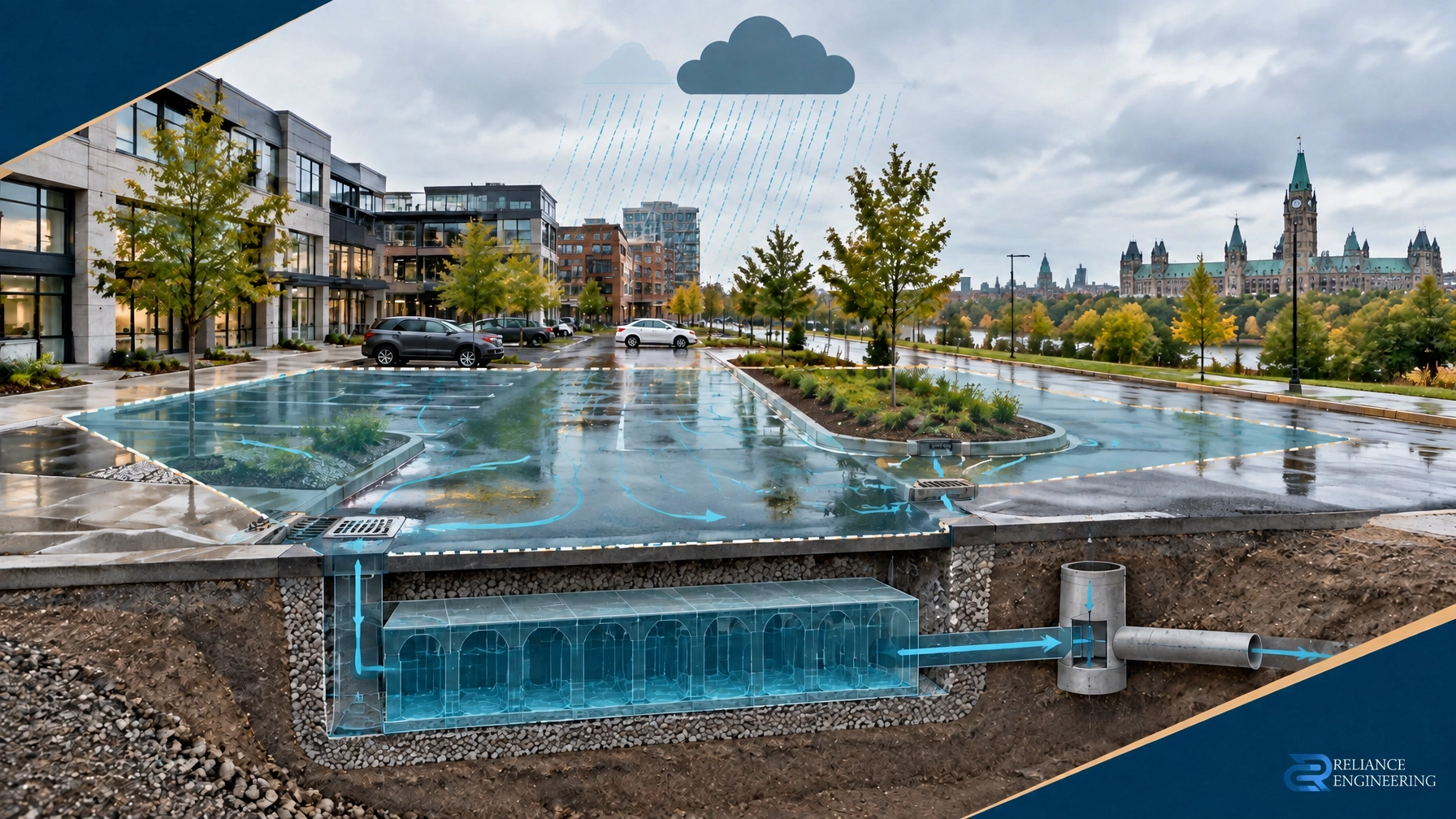
We calculate the pre-development versus post-development runoff. In 2026, the goal is "net-zero" hydrologic impact. We use advanced modeling to show how LID features like infiltration trenches and soakaways maintain groundwater recharge.
2. Phosphorus and Nutrient Removal
Water quality is non-negotiable. Your report must detail how you are removing suspended solids and phosphorus before water leaves your site. This is particularly critical for projects near sensitive watersheds or conservation-protected lands.
3. Climate Resilience Modeling
Standard "design storms" are being replaced by climate-adjusted IDF (Intensity-Duration-Frequency) curves. We design for the 100-year storm of the future, not the past. This prevents catastrophic flooding and future-proofs your asset.
Strategic LID Tools: Maximizing ROI
Smart investors use SWM requirements as an opportunity to enhance their site’s aesthetics and marketability.
- Permeable Pavement: Ideal for high-density infill projects. It provides the required parking while doubling as an infiltration system.
- Bioretention/Rain Gardens: These turn functional drainage into high-end landscaping, increasing the "green" appeal of residential developments.
- Rainwater Harvesting: Collecting roof runoff for irrigation reduces municipal water costs and helps meet sustainability targets.

Avoiding the "Submission Loop"
The biggest cost to any investor is time. If your Stormwater Management Report is sent back for revisions, you lose weeks: or months.
The Reliance Engineering advantage lies in our 20+ years of principal experience. We understand the specific quirks of Ontario municipalities. We know what the TRCA (Toronto and Region Conservation Authority) wants versus what the CVC (Credit Valley Conservation) expects.
We submit reports that are technically bulletproof and fully compliant with the Ontario Water Resources Act. Our goal is always Site Plan Approval in a single submission.
Precision Engineering for Serious Investors
Don't let drainage become a bottleneck. Whether you are working on a multi-unit conversion, a new commercial plaza, or a high-rise development, your civil engineering partner makes the difference between a project that starts on time and one that sits in a municipal backlog.
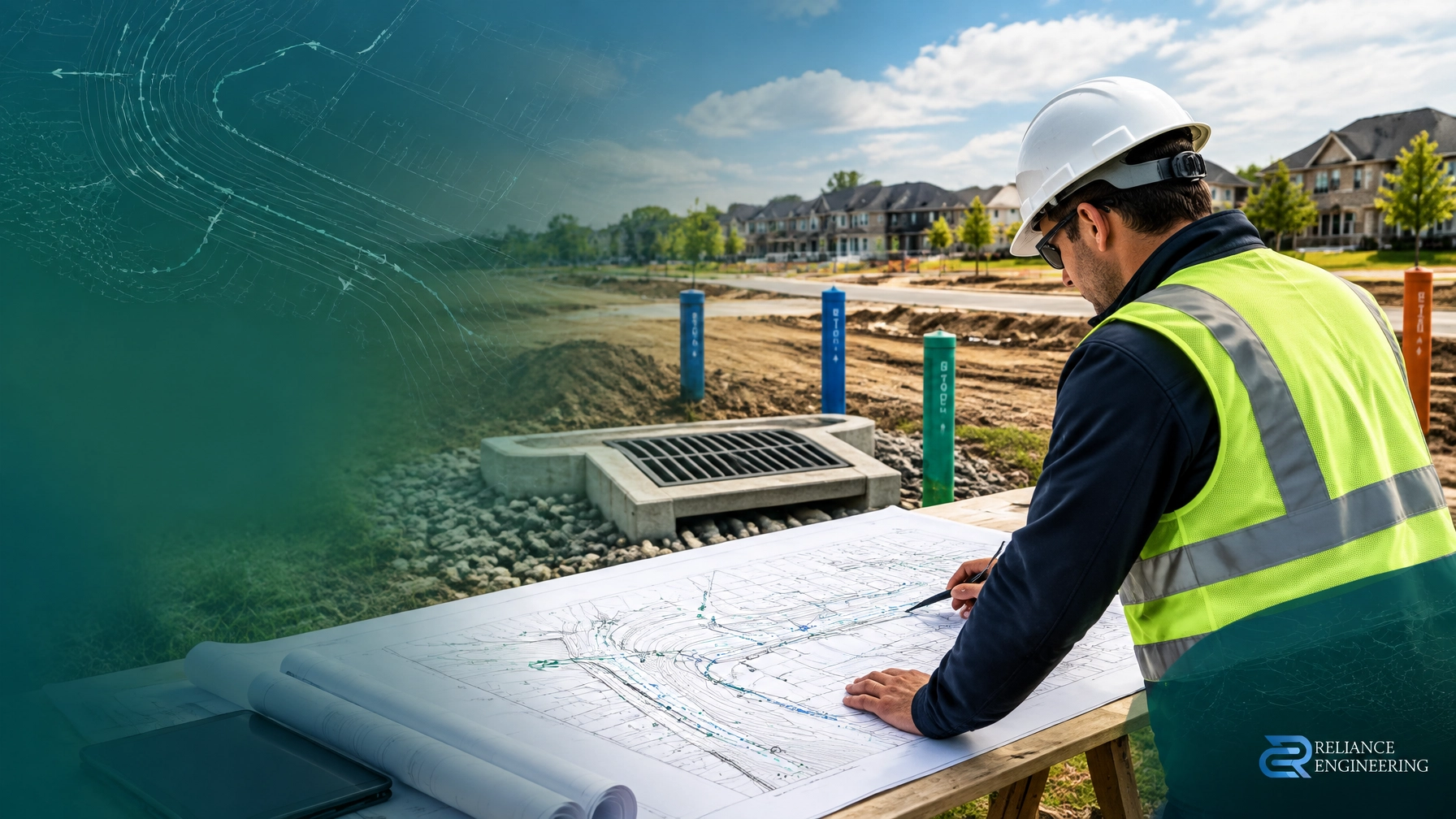
At Reliance Engineering, we take full ownership of your municipal approvals. We handle the site grading, the servicing, and the complex stormwater modeling required in today’s aggressive regulatory environment.

Contact Information
For expert guidance on your next development project across Ontario, contact our principal engineer directly.
Naresh Ochani, P.Eng. M.Eng.
Reliance Engineering
6850 Millcreek Dr, Mississauga, ON L5N 2H4
Phone: 647-385-6418
Email: [email protected]
Website: www.relianceengineering.ca
Office Hours:
Saturday: 12:00 PM – 2:00 PM
Sunday: Closed