In the world of Ontario land development, speed is your greatest asset. But speed without precision leads to rejection. If you are developing land anywhere in Ontario: whether it is a multi-unit residential conversion or a massive industrial complex: your Functional Servicing Report (FSR) is the technical backbone of your entire application.

An FSR determines if the existing municipal infrastructure can actually support your vision. Without a stamped and signed report from a licensed Professional Engineer (P.Eng.), your Site Plan Approval (SPA) or subdivision application will hit a brick wall. At Reliance Engineering, we’ve seen developers lose months to avoidable municipal back-and-forth simply because their FSR lacked the necessary depth.

This guide outlines the five critical steps to mastering your FSR and ensuring your project moves through the municipal pipeline at record speed.


Step 1: Identify Your Triggers and Consult Early

Don't wait for the municipality to tell you that you need an FSR. By then, you’re already behind schedule. In Ontario, an FSR is typically triggered when a development increases the demand on water, wastewater, or stormwater infrastructure.

Common triggers include:

  • Official Plan Amendments (OPA)
  • Zoning By-law Amendments (ZBA)
  • Draft Plans of Subdivision
  • Site Plan Control (SPA)

Early consultation is the key to a fast-track approval. Before putting pen to paper, you must understand the specific scope required by the local municipality. Every jurisdiction in Ontario has unique design standards. What works in Mississauga might not fly in Ottawa.

If you're looking for a baseline, start here: Your Quick-Start Guide to a Functional Servicing Report. Understanding these triggers early saves you from the "red-line" nightmare during the second or third submission.

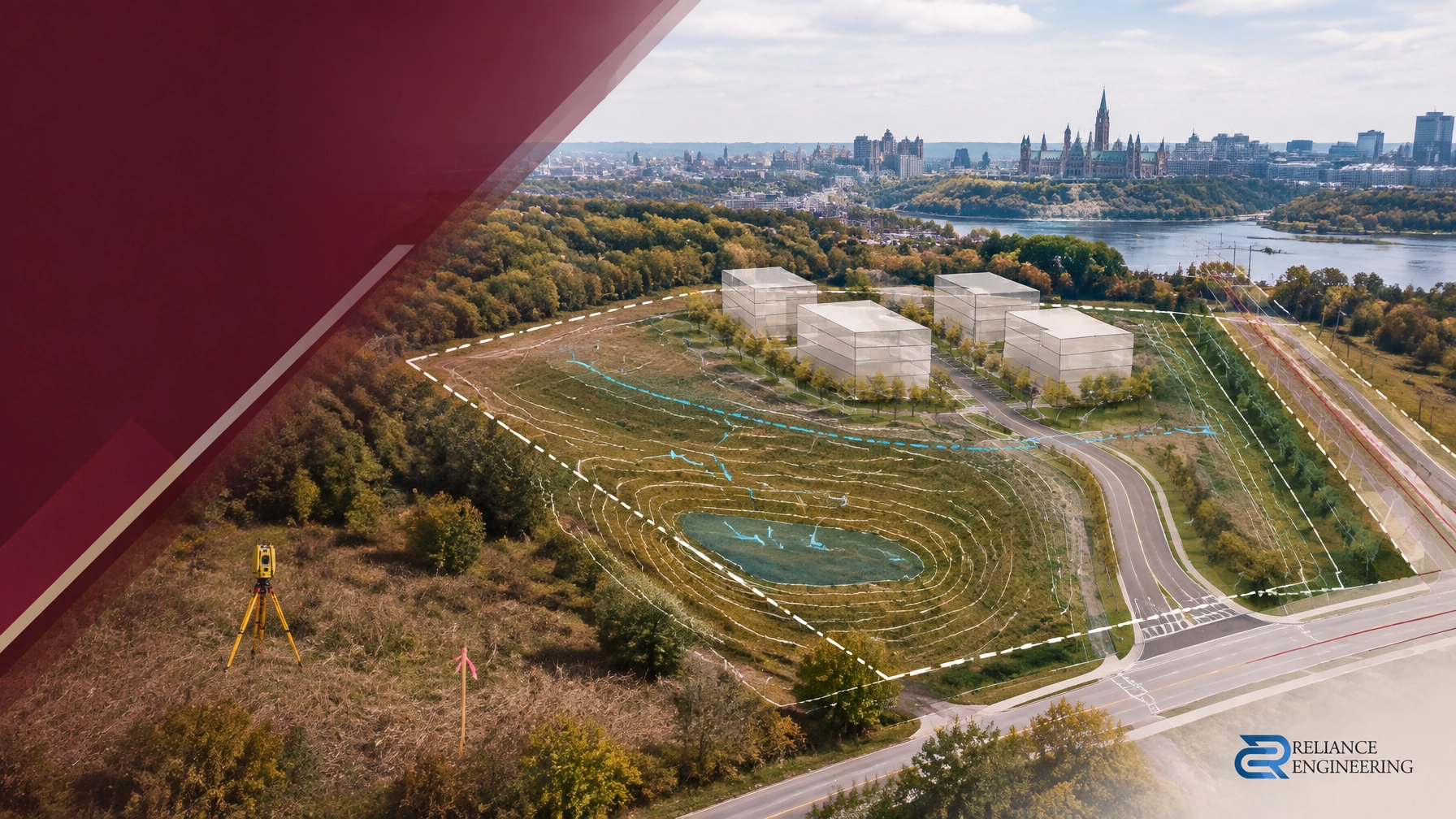
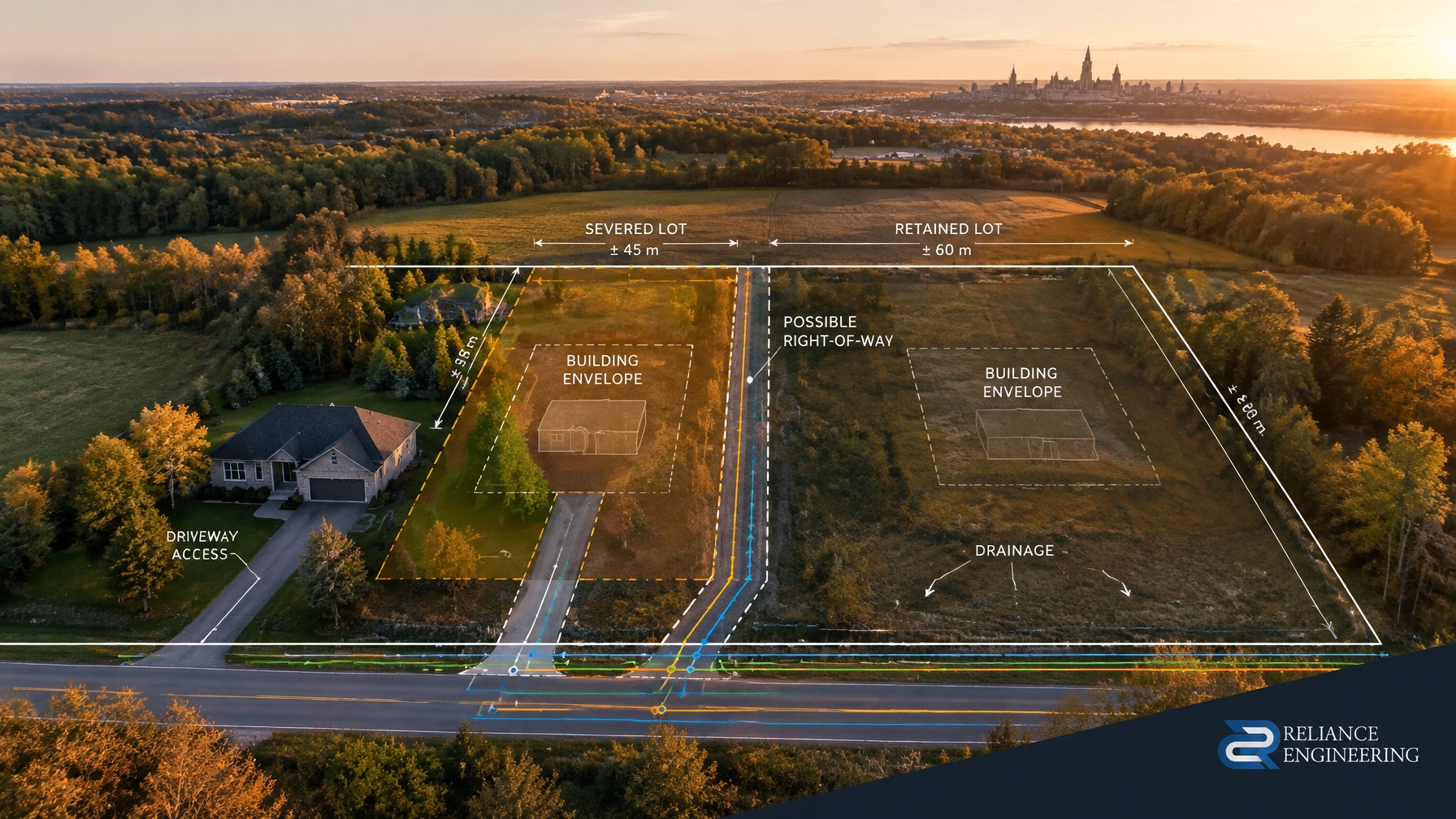
Ontario suburban development site with site plan and utility overlays for an FSR application.


Step 2: Assemble High-Quality Preliminary Documentation

Your engineer is only as good as the data you provide. To master the FSR, you need to compile a comprehensive data package. If you provide fragmented information, you are paying your engineering team to act as administrators rather than designers.

Before the technical modeling begins, ensure you have the following:

  • Architectural Site Plan: This defines the building footprint, the number of units, and the gross floor area (GFA). These numbers drive the water and sewage demand calculations.
  • Topographic Survey: A detailed survey showing current land elevations is mandatory for accurate site grading and drainage planning. Precision here prevents basement flooding rejections later. See how precision in site grading plans impacts your overall approval.
  • Utility Locates: Mapping existing underground infrastructure is vital to ensure your new servicing lines don't conflict with existing gas, hydro, or fiber optic lines.
  • Land Use Statistics: Accurate population counts or industrial usage types are required to calculate the "peaking factors" for water and sanitary sewer demand.

Step 3: Hire a Licensed P.Eng. with Provincial Expertise

This is not the place for shortcuts. Under the Professional Engineers of Ontario Act, your FSR must be prepared, signed, and sealed by a registered Professional Engineer (P.Eng.).

The value of an experienced engineer isn't just in the stamp; it’s in the reputation they have with municipal reviewers. At Reliance Engineering, we bring over 20 years of experience navigating the regulatory landscape across Ontario. We know what the reviewers are looking for because we speak their language: the language of hydraulics and hydrology.

A report that is "roughly correct" is actually "completely wrong" in the eyes of a municipal reviewer. You need a partner who understands the nuance of the Site Plan Approval process in Ontario.

Reliance Engineering Logo


Step 4: Execute Rigorous Technical Analysis

City staff are engineers. They don't care about your project’s aesthetic; they care about the math. Your FSR must prove: with data: that your project won't flood the neighbors or starve the local water supply.

To master this step, your report must include:

Water Distribution and Fire Flow

You must prove that the municipal water system can provide enough pressure for both daily use and emergency fire protection. This often requires a Hydrant Flow Test. If the pressure is too low, you may be forced to install on-site booster pumps or storage tanks, which can significantly alter your budget.

Sanitary Sewer Capacity

Your engineer will calculate the "sanitary flow generation" based on your land use. We then map this against the capacity of the existing municipal sewer. If the pipe is full, your development is stalled until capacity is found or infrastructure is upgraded.

Stormwater Management (SWM)

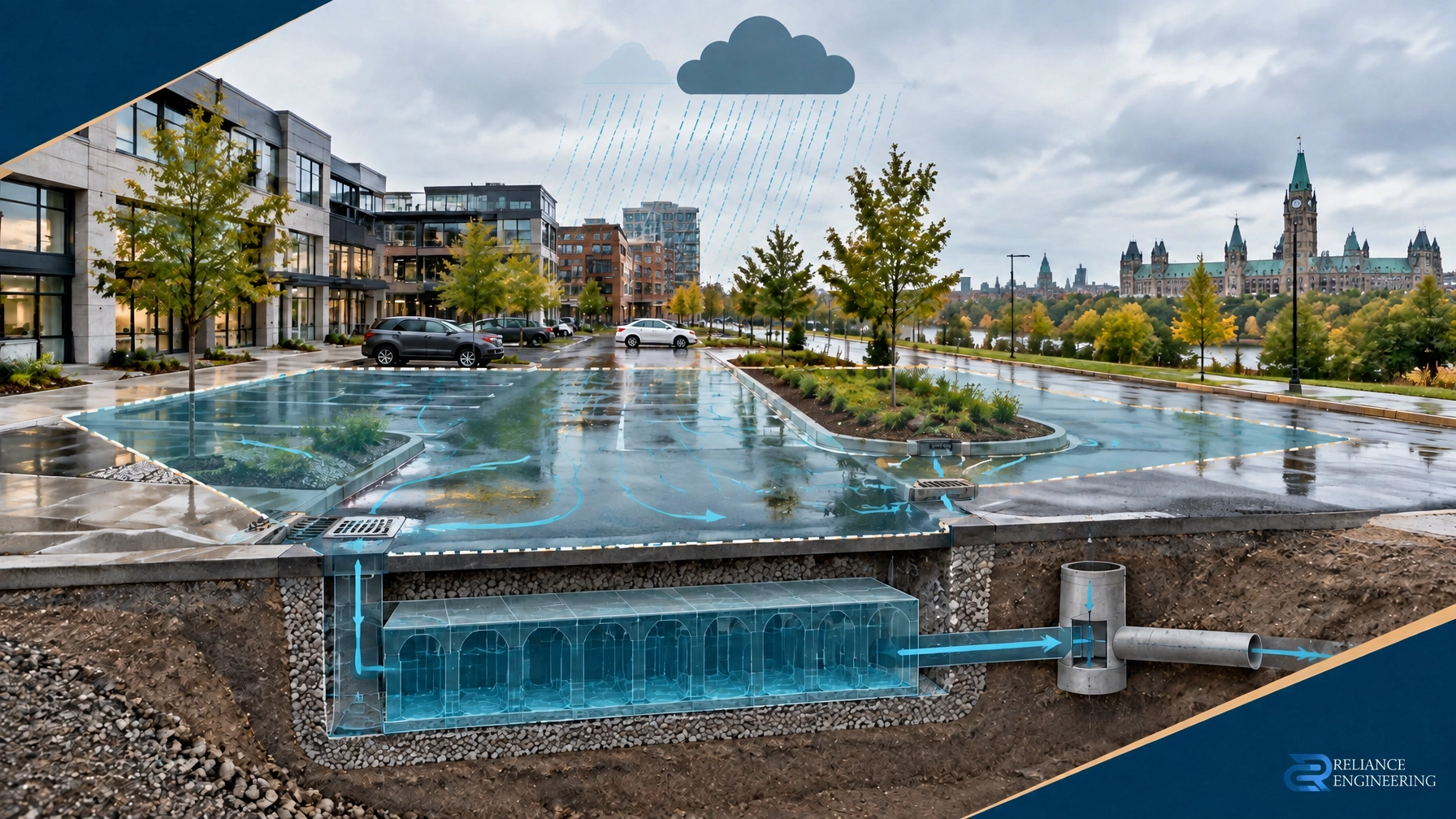
This is often the most scrutinized section of the FSR. In 2026, the standards for SWM are stricter than ever. You must demonstrate how you will manage "Quantity, Quality, and Water Balance." Whether you use detention tanks or Low Impact Development (LID) strategies, the math must be flawless.

For more on why this matters, read: Does a Precise Stormwater Management Report Really Matter in 2026?.

Stormwater management infrastructure and hydraulic flow analysis at an Ontario commercial site.


Step 5: Master the Municipal Engagement Strategy

The final step to fast-tracking your approval is the delivery and follow-up. A common mistake developers make is treating the FSR as a "fire and forget" document.

Once the report is submitted, stay engaged. If the municipality returns with comments, address them immediately and completely. Partial responses lead to more "rounds" of review, and every round costs you time and carrying costs on your land.

Transparency is your friend. If there is a servicing constraint on the site, don't hide it. Address it head-on with a proposed engineering solution. Whether it's a simple trick for your site servicing plan or a complex infrastructure upgrade, showing that you have a plan builds trust with the reviewer.


Why Reliance Engineering?

At Reliance Engineering, we don't just write reports; we solve development bottlenecks. We specialize in taking complex Ontario regulations and distilling them into permit-ready designs. Our 20+ years of expertise mean we know how to anticipate municipal objections before they happen.

We offer:

  • Site Grading and Servicing Plans
  • Stormwater Management Reports (SWMR)
  • Functional Servicing Reports (FSR)
  • Erosion and Sediment Control
  • Severance and Zoning Support

If you want your Site Plan Approval to move through the system without the typical headaches, you need an engineering partner that prioritizes speed and precision.


Contact Information

Naresh Ochani, P.Eng. M.Eng.
Founder and Principal, Reliance Engineering

Address: 6850 Millcreek Dr, Mississauga, ON L5N 2H4
Phone: 647-385-6418
Email: [email protected]
Website: www.relianceengineering.ca

Office Hours:

  • Saturday: 12:00 PM – 2:00 PM
  • Sunday: Closed

Ready to fast-track your Ontario development? Call us today for a consultation on your next project.