
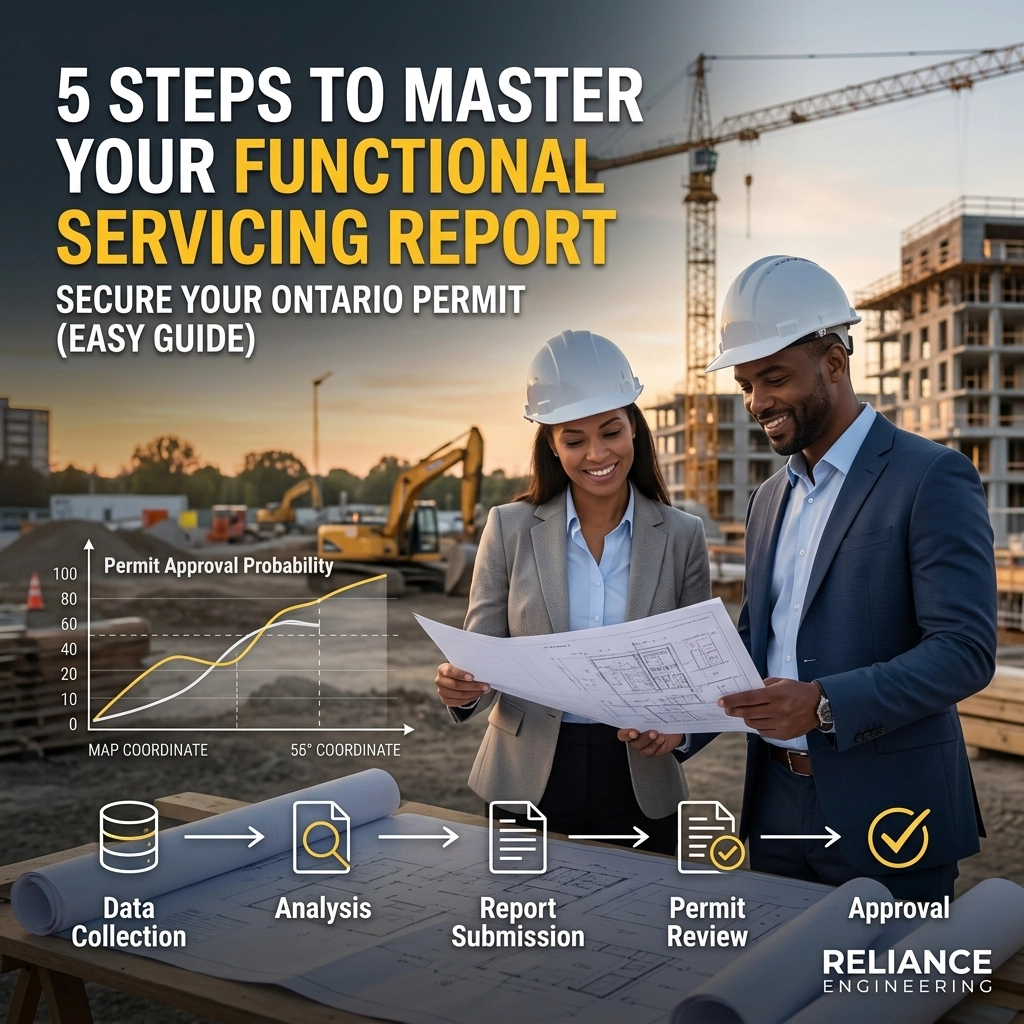
For land developers and real estate investors in Ontario, the path to a building permit is often paved with technical documents. None is more critical than the Functional Servicing Report (FSR). Whether you are working on a residential severance in Mississauga or a major industrial redevelopment in Etobicoke, the FSR is the document that tells the municipality your project is viable.
At Reliance Engineering, we have spent over 20 years navigating Ontario’s complex regulatory landscape. We know that a poorly prepared FSR doesn’t just delay your permit: it can kill your ROI. This guide breaks down the five essential steps to mastering your FSR and ensuring your project moves from "proposed" to "under construction."
What is a Functional Servicing Report (FSR)?
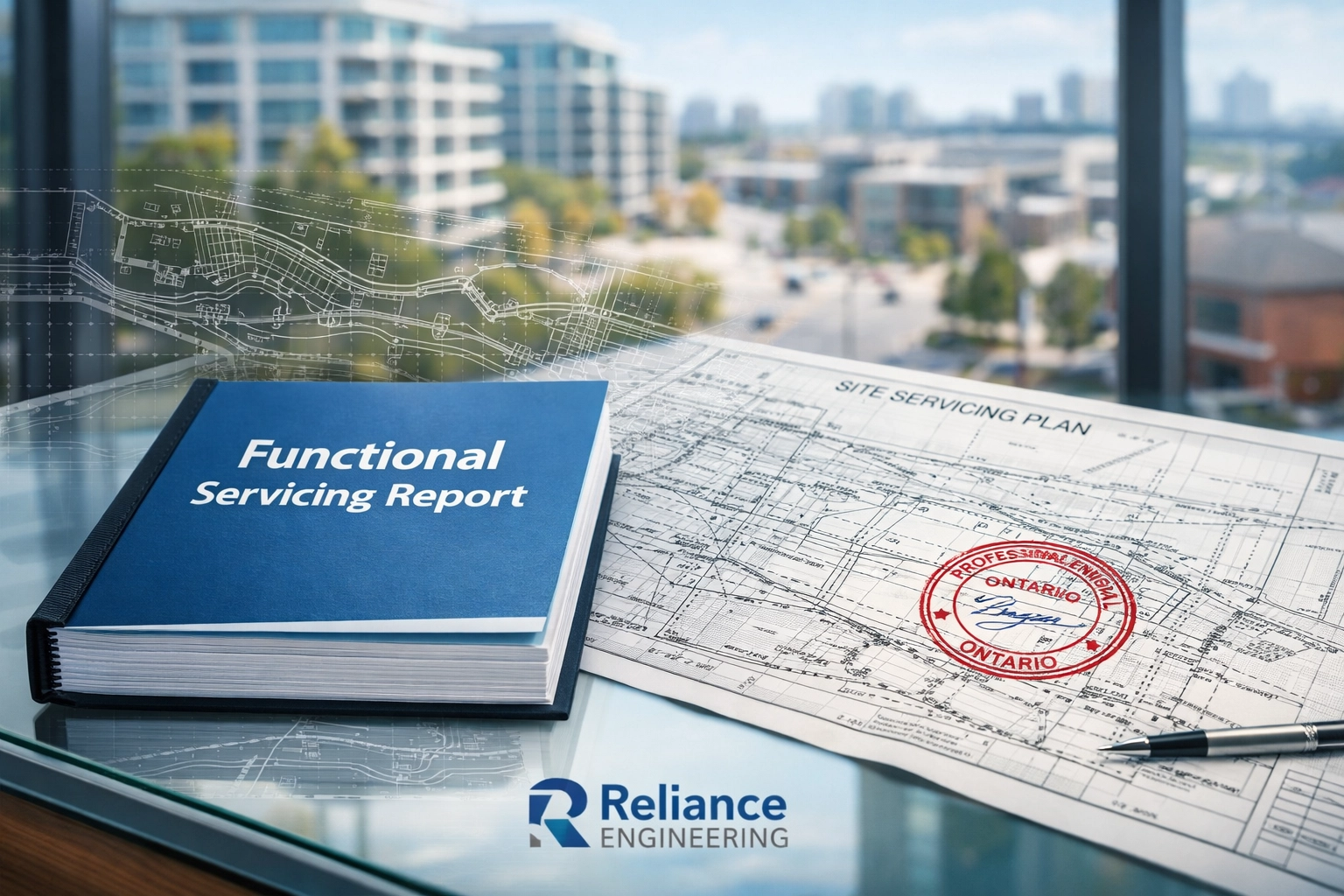
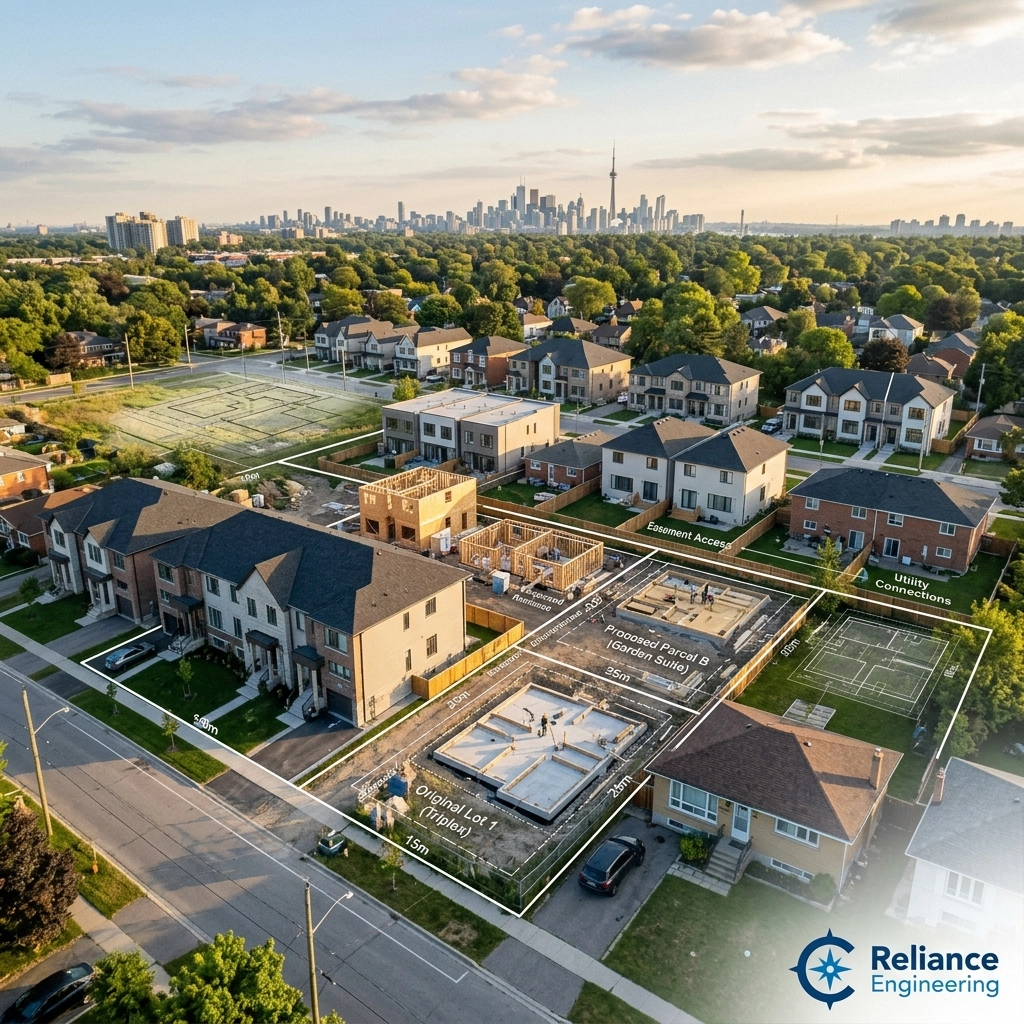
An FSR is a comprehensive engineering document that evaluates how a proposed development will be serviced by municipal infrastructure. It covers three main pillars: Water Distribution, Sanitary Sewage, and Stormwater Management. In Ontario, municipalities require an FSR during the Site Plan Approval process, Zoning Bylaw Amendments, or Official Plan Amendments (OPA).
Without a stamped FSR from a licensed Professional Engineer (P.Eng.), you cannot prove that the existing city pipes can handle the increased load of your new building.
Step 1: Engage a Qualified Ontario Professional Engineer Early
The biggest mistake investors make is waiting too long to call a civil engineer. In Ontario, the FSR must be prepared and stamped by a Consultant registered as a Professional Engineer.
Early engagement allows your engineer to perform a "due diligence" check. Can the existing municipal water main provide enough pressure for your fire suppression system? Is there enough capacity in the downstream sanitary sewer?
By consulting with Reliance Engineering before you close on a property, you identify "deal-breakers" early. We specialize in providing rapid, permit-ready Functional Servicing Reports that align with municipal standards across Ontario.
Step 2: Gather Comprehensive Site Data
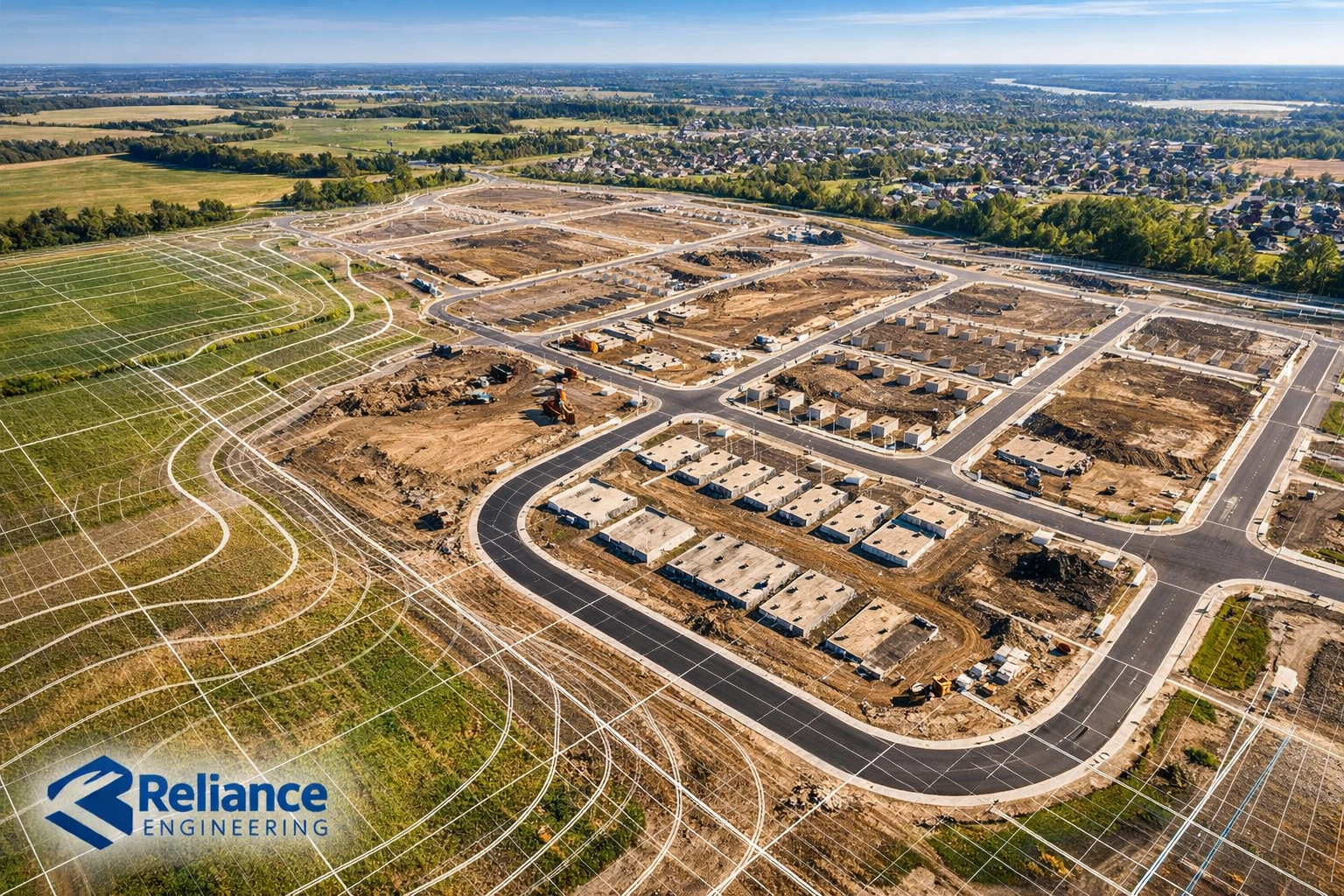
A Master FSR is only as good as the data behind it. You cannot rely on 30-year-old municipal record drawings alone. To secure a permit in Ontario, you need a high-resolution snapshot of your site’s current state.
Key data points include:
- Topographic Surveys: To understand natural drainage patterns.
- Utility Locates: Identifying the exact position and depth of gas, hydro, and water lines.
- Geotechnical Reports: Understanding soil percolation rates for Stormwater Management.
- Architectural Site Plans: Total floor area and unit counts directly dictate the "demand" on the system.
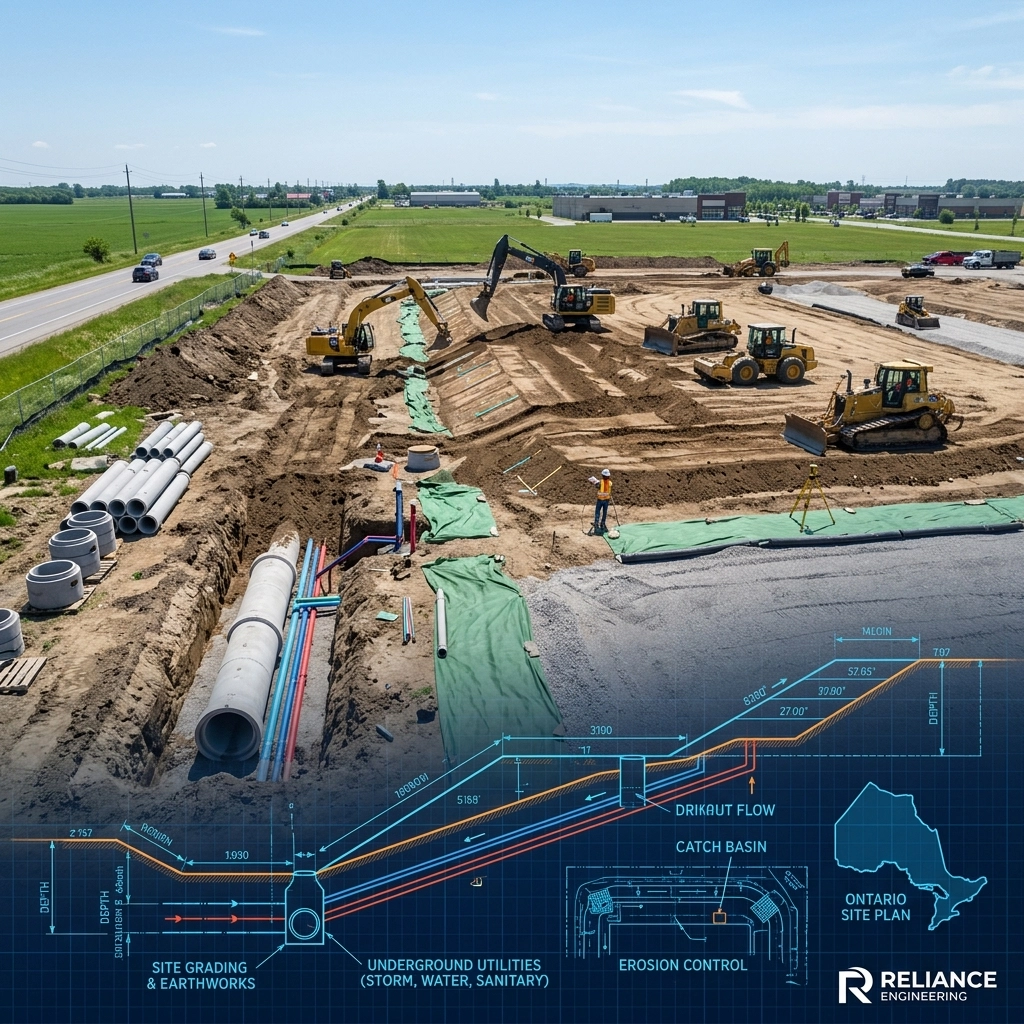
At this stage, we also look at Site Grading Plans to ensure the proposed building elevations work with the existing street levels.
Step 3: Analyze Infrastructure Capacity
This is where the engineering "heavy lifting" happens. We compare the "demand" of your development against the "capacity" of the Ontario municipality’s infrastructure.
Water Distribution
We calculate the domestic water demand and the required fire flow. Using hydraulic modeling, we determine if the local water mains can support your project. Projects like the Redevelopment of Etobicoke General Hospital require massive fire flow capacities that must be meticulously documented in the FSR. Learn more about our Water Distribution Design services.
Sanitary Sewer Design
Will your new 10-unit townhouse complex overwhelm the local sewer? We perform a Sanitary Sewer Design analysis, looking at peak flow rates and downstream pipe diameters. If the capacity isn't there, you may be responsible for infrastructure upgrades: a cost you need to know upfront.

Step 4: Develop Detailed Servicing & Stormwater Solutions
Once the capacity is understood, we design the solutions. This is the core of the Site Servicing Plan.
In Ontario, Stormwater Management (SWM) is often the most scrutinized section of the FSR. Most municipalities require that post-development runoff does not exceed pre-development levels. To achieve this, we design:
- On-site Detention: Underground storage tanks or rooftop ponding.
- Water Quality Treatment: Oil-grit separators (OGS) to clean water before it hits the municipal system.
- Low Impact Development (LID): Permeable pavers or bioswales to encourage infiltration.
Our team ensures your Storm System Design meets the specific criteria of local Conservation Authorities (like the TRCA or CVC) and municipal standards.
Step 5: Final Submission and Regulatory Navigation
The final step is compiling the data, calculations, and plans into a professional report. A complete FSR package for an Ontario permit includes:
- Executive Summary: Clear findings for municipal reviewers.
- Calculations Appendices: Detailed math on fire flow, sewer capacity, and SWM volumes.
- Site Servicing and Grading Plans: Visual representations of the proposed infrastructure.
- Erosion and Sediment Control (ESC) Plans: Essential for protecting municipal assets during construction.
We have successfully navigated high-density projects such as 24 Howard Park Avenue in Toronto and 85 Bronte Road in Oakville, where urban constraints make servicing a challenge.
Common Pitfalls for Ontario Investors
Even experienced developers can hit roadblocks. Here are three things to watch for:
- Ignoring Downstream Constraints: Just because a pipe is in front of your property doesn't mean it has capacity. Always check the downstream "bottlenecks."
- Underestimating SWM Requirements: Modern Ontario standards for "Quantity, Quality, and Water Balance" are strict. Cutting corners here leads to immediate application rejection.
- Late Consultant Involvement: Waiting until the municipality asks for an FSR to hire an engineer. This adds months to your timeline.
Why Reliance Engineering?
With over two decades of experience across Ontario, Reliance Engineering provides more than just technical drawings. We provide a strategy to get your permit approved as quickly and cost-effectively as possible. Our expertise spans from 345-351 Davis Drive in Newmarket to complex townhome developments like 35 Wabash Avenue.
We specialize in:
- Site Grading and Servicing
- Functional Servicing Reports (FSR)
- Stormwater Management Reports (SWMR)
- Zoning and Severance Applications
If you are looking to master your next development project, start with a solid engineering foundation.
Contact Information
Reliance Engineering
Naresh Ochani, P.Eng. M.Eng.
6850 Millcreek Dr, Mississauga, ON L5N 2H4
Phone: 647-385-6418
Email: [email protected]
Website: www.relianceengineering.ca
Office Hours
- Saturday: 12:00 PM – 2:00 PM
- Sunday: Closed
- Monday – Friday: By Appointment
Professional Services Link
Explore our full range of Civil Engineering Services or view our Recent Projects to see how we help Ontario investors succeed.
Ready to secure your permit? Contact us today for a consultation on your Functional Servicing Report.




Leave A Comment