
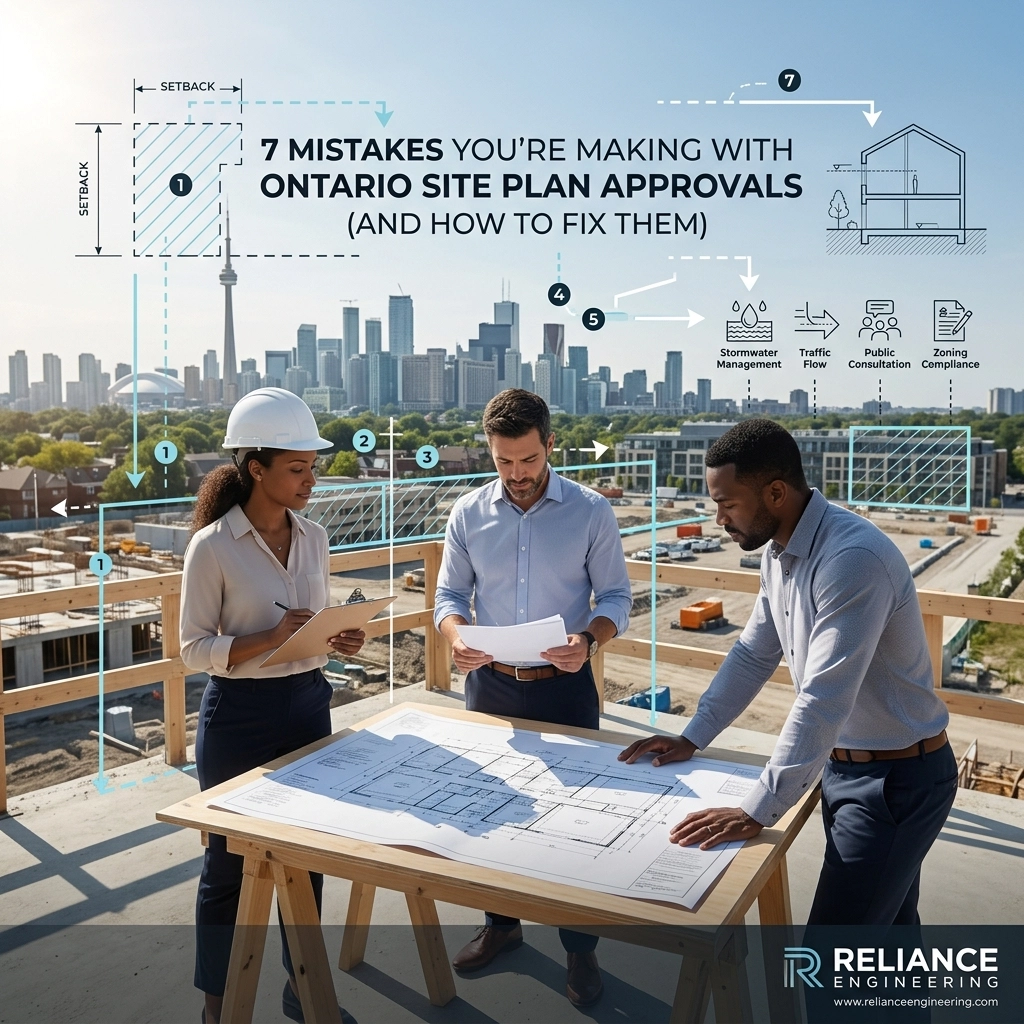
Navigating the Site Plan Approval (SPA) process in Ontario is often the most grueling phase of land development. Whether you are developing a multi-residential complex in Toronto or a commercial plaza in Ottawa, the regulatory landscape is dense, unforgiving, and prone to delays. At Reliance Engineering, we’ve seen projects stall for months, not because of a lack of vision, but because of technical oversights that could have been avoided.
With over 20 years of expertise in civil engineering and land development, we know that a successful SPA is built on precision. Here are the seven most common mistakes developers make during the Ontario Site Plan Approval process and the professional strategies to fix them.
1. Treating the Pre-Consultation Meeting as an Informal Chat
The biggest mistake begins before the application is even submitted. Many developers treat the mandatory pre-consultation meeting with municipal planners as a "get-to-know-you" session. In reality, this is where the requirements for your entire project are set in stone.
The Fix:
Approach the pre-consultation with a preliminary Functional Servicing Report (FSR) and a conceptual Site Grading Plan. When you show up with data, the municipality provides more specific feedback. This prevents "requirement creep" later in the process where new studies are suddenly requested halfway through your timeline.
2. Neglecting the Impact of Stormwater Management (SWM)
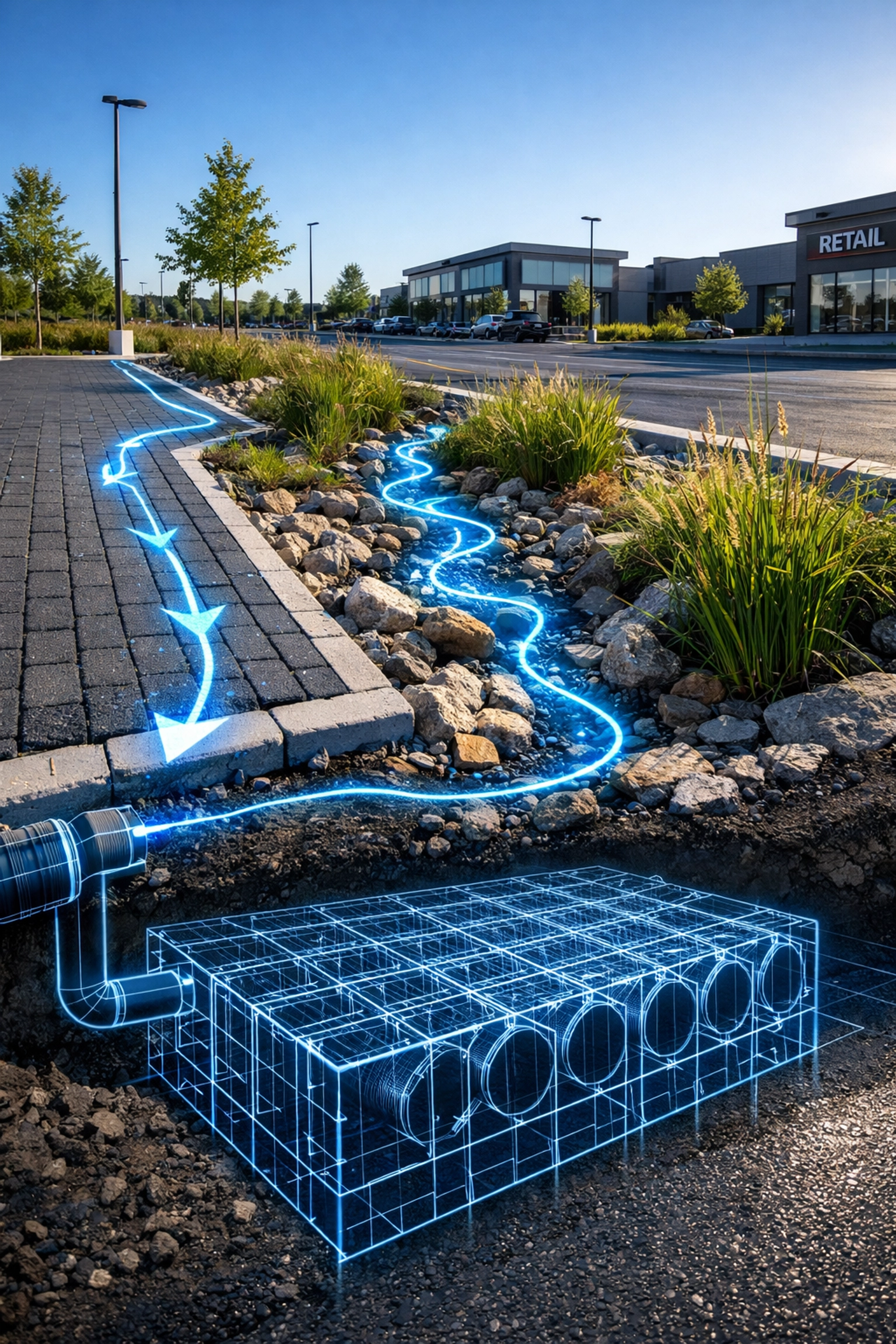
In Ontario, Stormwater Management is no longer just about pipes; it’s about Low Impact Development (LID) and climate resilience. A common error is assuming that the existing municipal infrastructure can handle your site’s runoff without significant on-site attenuation.
The Fix:
Integrate Stormwater Management into your site design from day one. You need a comprehensive Stormwater Management Report (SWMR) that addresses quantity control, quality control, and water balance. Failing to account for underground storage tanks or bioswales early can force you to redesign your entire parking lot layout later to make room for infrastructure.
3. Inaccurate Site Servicing Capacity Assumptions
Can the existing sanitary sewer on the street handle your 50-unit townhome development? Assuming "yes" without verification is a recipe for disaster. We often see projects reach the final stages of SPA only to find out the municipal sewer is at capacity, requiring a costly external upgrade or a holding tank.
The Fix:
Perform a Sanitary Sewer Design analysis early. Work with a firm like Reliance Engineering to coordinate with the municipality and confirm capacity. If upgrades are needed, you want to know that during the feasibility stage, not three weeks before you expect your permit.
4. Underestimating Erosion and Sediment Control (ESC)
Ontario municipalities have become increasingly strict regarding environmental protection. An ESC plan that is "copied and pasted" from a previous project will likely be rejected. Inadequate ESC measures can lead to heavy fines from the Ministry of the Environment, Conservation and Parks (MECP) or local Conservation Authorities.
The Fix:
Develop a site-specific Erosion and Sediment Control plan that accounts for the unique topography and soil conditions of your Ontario site. This includes silt fences, mud mats at exits, and rock check dams. This is not just a "box to check": it is a critical legal requirement for Site Plan Approval.
5. Mismatched Zoning and Site Layout
It sounds fundamental, but projects frequently fail because the proposed site plan doesn't align with the current Zoning By-law or the Official Plan. If your building height or lot coverage exceeds the limits, your SPA will be paused until you secure a Zoning By-law Amendment (ZBA) or a Minor Variance.
The Fix:
Conduct a thorough zoning audit before drawing the first line. If your project requires an Official Plan Amendment (OPA) or a Severance application, trigger those processes concurrently with your SPA. Relying on a professional consultant to navigate these "planning overlaps" saves months of back-and-forth with the city.

6. Submitting Low-Quality or Uncoordinated Drawings
A Site Plan Approval involves multiple disciplines: civil, architectural, landscape, and electrical. A common mistake is submitting a Site Servicing Plan that conflicts with the landscape architect’s tree planting plan. If a water main is proposed exactly where a large maple tree is supposed to be planted, the municipality will send the drawings back.
The Fix:
Ensure your lead civil engineer acts as the coordinator. At Reliance Engineering, we emphasize "permit-ready" drawings. This means every pipe, catch basin, and property line is cross-referenced across all plan sets. Precision in your Storm System Design prevents the technical reviews from stalling due to simple coordination errors.
7. Ignoring Construction Feasibility in the Grading Plan
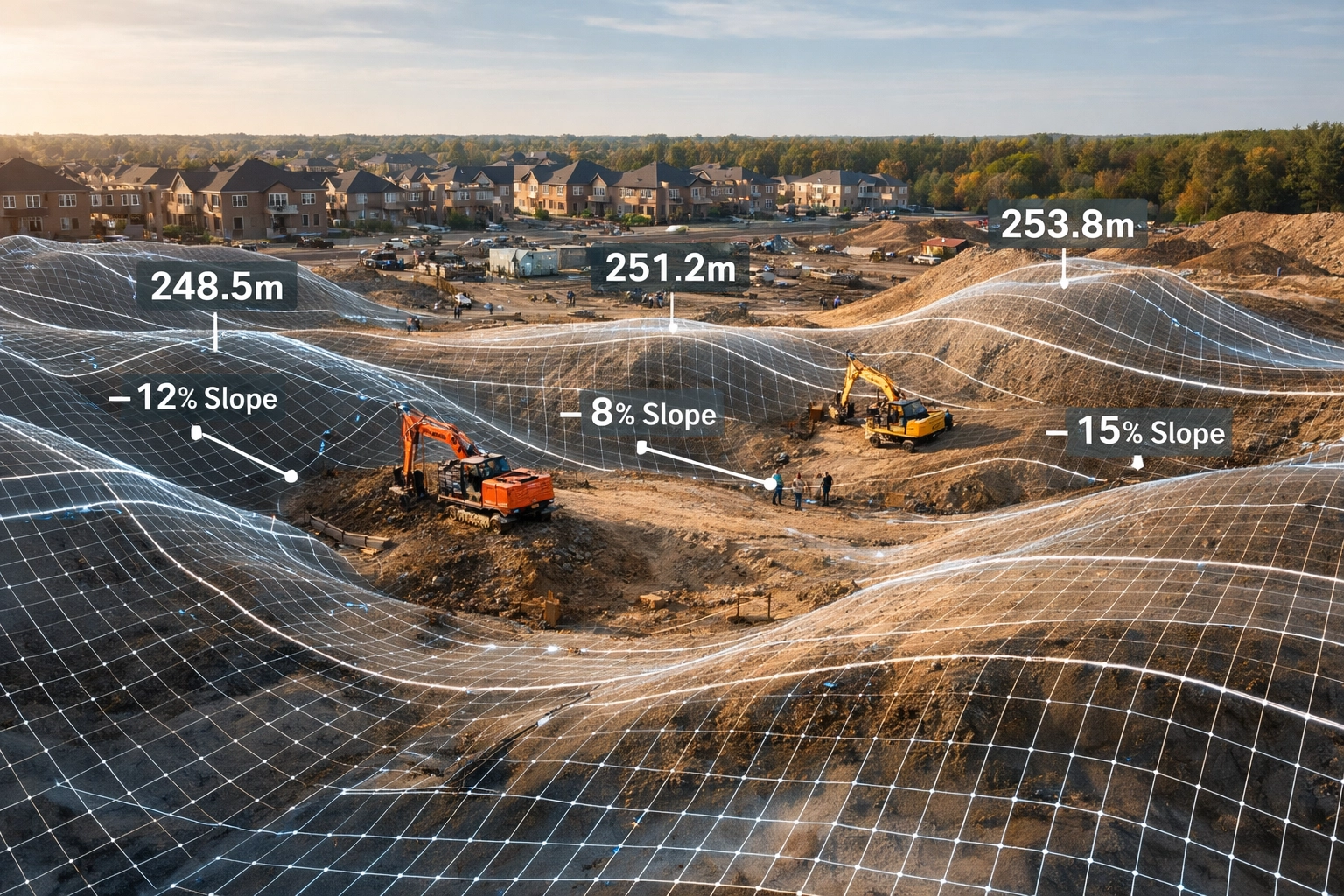
A plan can look great on paper but be impossible to build. We see many site plans that meet the technical slope requirements but fail to account for the actual "constructability" of the site. For example, ignoring how a retaining wall will be footed or how a basement walk-out will drain can lead to massive change orders during construction.
The Fix:
Your Site Grading Plan must be both compliant and practical. Use 3D modeling to visualize the earthworks. This helps identify where you might have excess fill (which is expensive to haul away) or where you might need to import soil. Balancing your site's "cut and fill" is a major cost-saving measure that should be handled during the SPA phase.
Why Professional Engineering Matters
The Ontario regulatory landscape is shifting. With the introduction of various housing-related legislative changes, the pressure on municipalities to approve plans quickly has increased, but so has the complexity of the submissions required.
At Reliance Engineering, we specialize in turning complex land development challenges into streamlined approvals. We don't just draft plans; we provide the strategic foresight needed to navigate Ontario’s various municipalities, from Toronto to the surrounding regions.
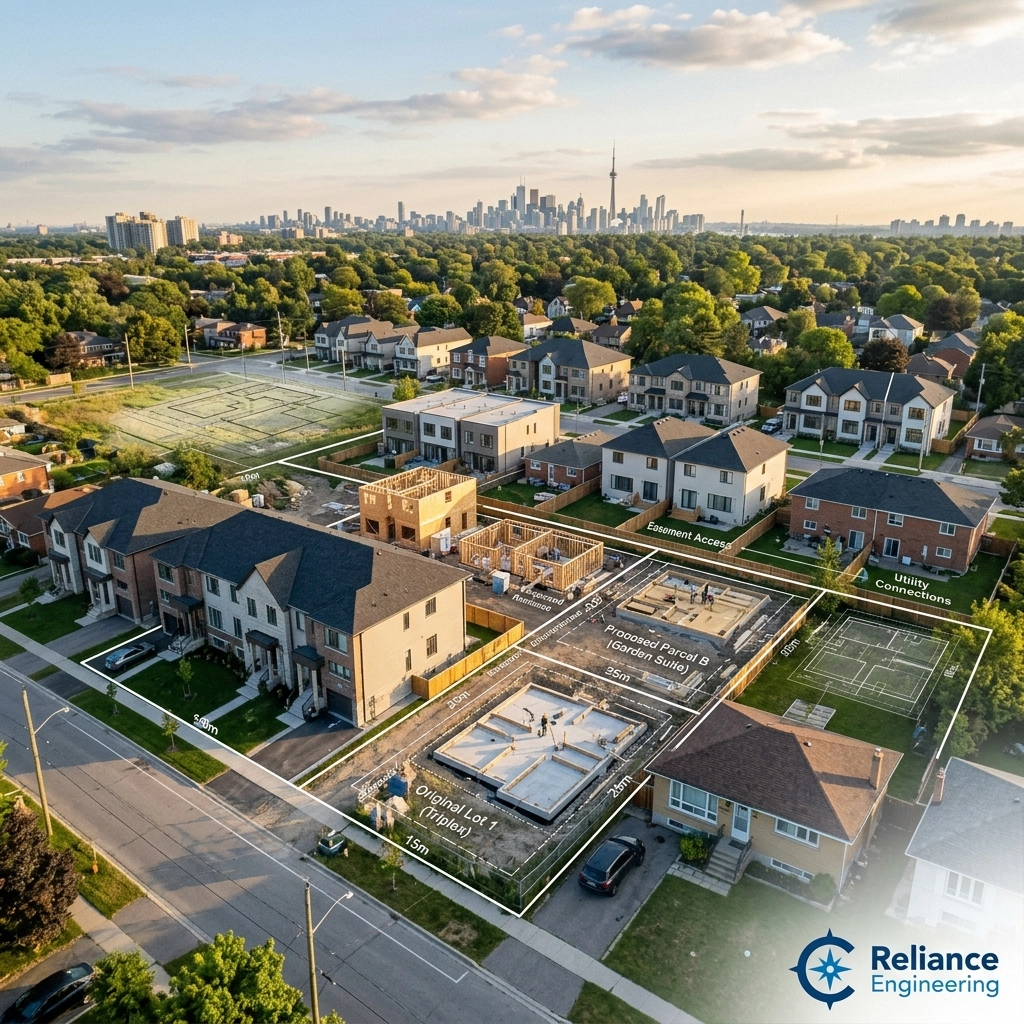
Whether you are working on a redevelopment of Etobicoke General Hospital or a boutique residential project like the 35 Wabash Avenue Townhomes, our team is dedicated to getting your project through the finish line.
Stop Making Mistakes. Start Building.
Don't let a missing detail in your SWMR or a poorly coordinated grading plan delay your project by six months. Experience the difference that 20+ years of Ontario land development expertise makes.
Contact us today for a consultation on your next project.
Corporate Information
Company Name: Reliance Engineering
Address: 6850 Millcreek Dr, Mississauga, ON L5N 2H4
Phone: 647-385-6418
Email: [email protected]
Website: www.relianceengineering.ca
Principal Lead:
Naresh Ochani, P.Eng. M.Eng.
Founder and Principal
Office Hours:
- Saturday: 12:00 PM – 2:00 PM
- Sunday: Closed
- Monday – Friday: By Appointment
Our Core Services Across Ontario:
- Site Grading Plans
- Site Servicing Plans
- Functional Servicing Reports (FSR)
- Stormwater Management (SWM)
- Erosion and Sediment Control (ESC)
- Zoning & Official Plan Amendments
- Building Permit Coordination (Residential, ICI)





Leave A Comment