
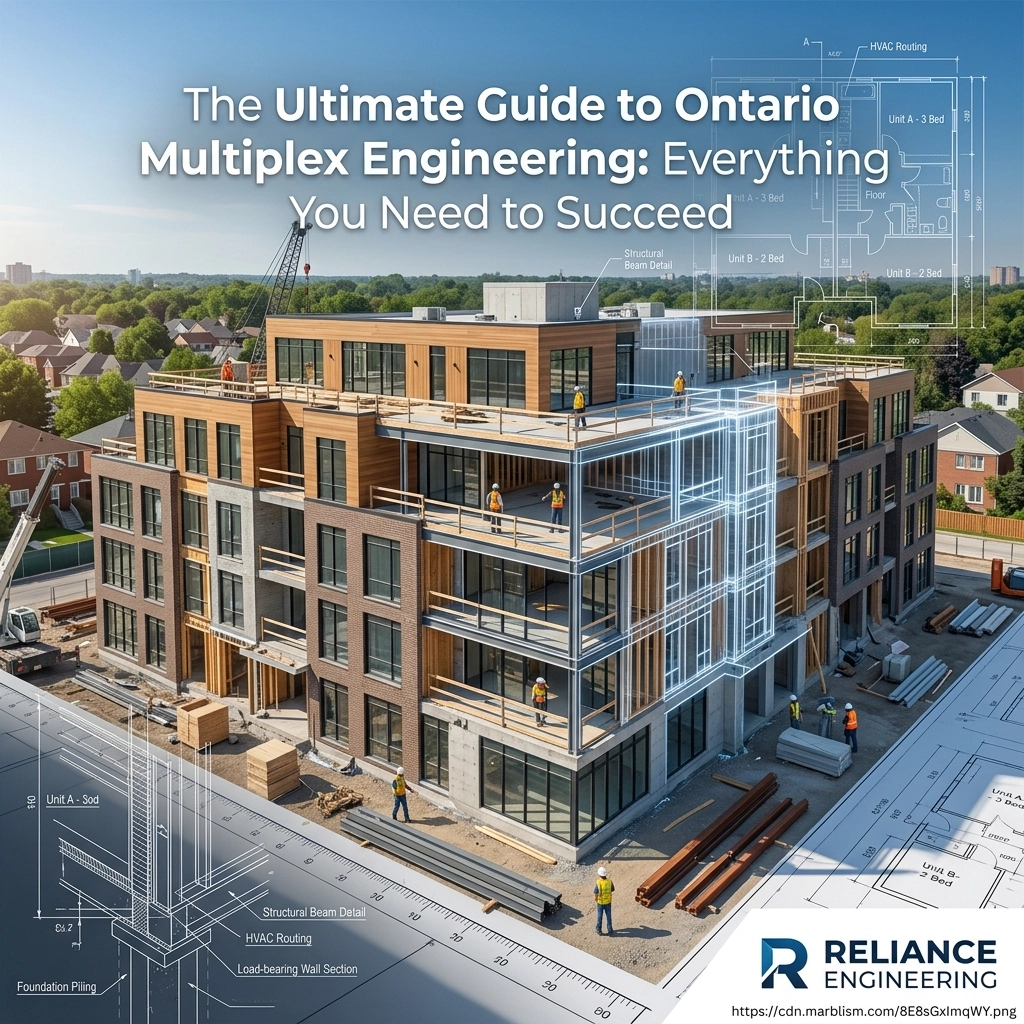
Ontario is in the middle of a housing revolution. For decades, the "yellowbelt", those vast swaths of land zoned exclusively for single-family detached homes, prevented density. That has changed. With the introduction of provincial mandates like Bill 23 (More Homes Built Faster Act) and updated municipal bylaws, the "Missing Middle" is now the hottest ticket for real estate investors across Ontario.
If you are looking to maximize your ROI, the shift from a single-family dwelling to a 4-plex or 5-plex is no longer just a dream; it is a viable business strategy. However, the path from an old bungalow to a high-yield multi-unit property is paved with technical hurdles. Specifically, land severance and civil engineering servicing are the two factors that will either secure your profit or drain your budget.
At Reliance Engineering, we specialize in the "boring" stuff that makes these projects possible: grading, servicing, and stormwater management. Here is how you navigate the Ontario landscape to ensure your multi-unit conversion actually pencils out.
The Missing Middle Opportunity: Why 5-Plexes?
The "Missing Middle" refers to multi-unit buildings that fit the scale of a residential neighborhood, think duplexes, triplexes, fourplexes, and small apartment buildings. In many parts of Ontario, including Toronto, Mississauga, and Brampton, you can now build up to four units "as-of-right."
But the real players are looking at the 5-plex and 6-plex models. Why?
- Scale: The jump from 4 to 5 units significantly improves the cap rate.
- Zoning Flexibility: Many municipalities are expanding permissions to allow 5 or 6 units to meet aggressive housing targets.
- Development Charge Exemptions: In many jurisdictions, development charges are waived or reduced for multi-unit conversions to encourage density.
However, once you move past the "as-of-right" 3-unit or 4-unit limit, you often enter the realm of Site Plan Approval (SPA). This is where professional engineering becomes your greatest asset.
Severance: The ROI Multiplier
Before you even think about floor plans, look at the land. Can the lot be severed?
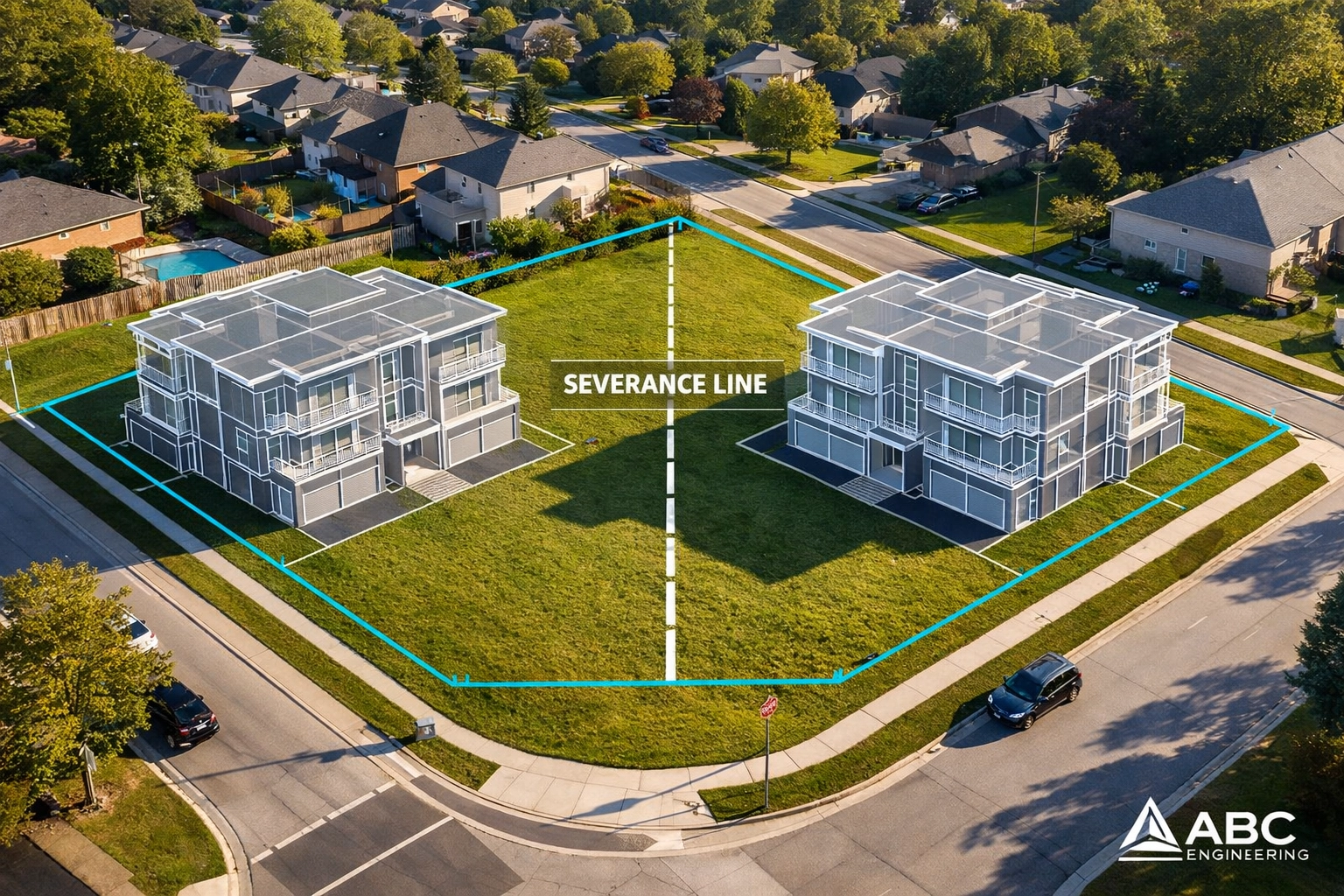
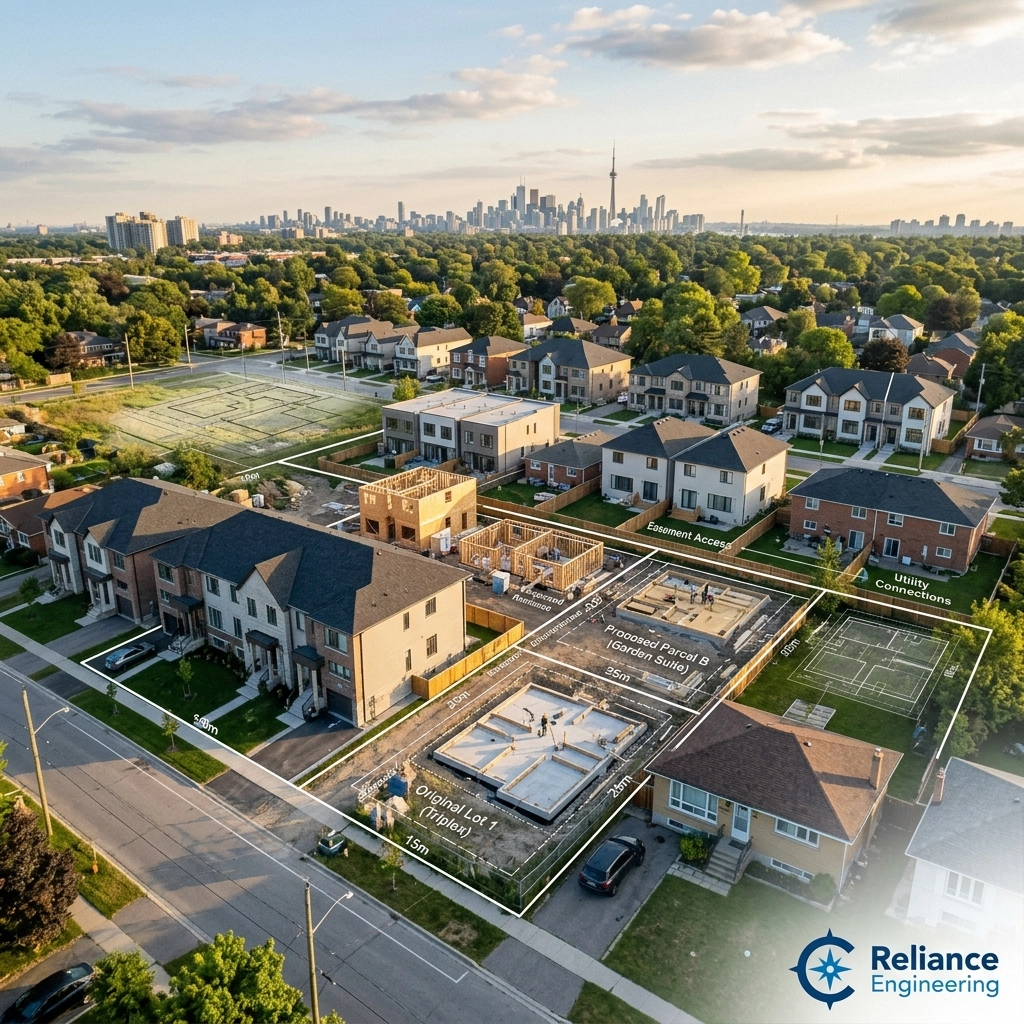
Severance (a Consent application) allows you to split one property into two or more separate parcels. For an investor, this is the ultimate ROI multiplier. Instead of one 5-plex on a large lot, you could potentially sever the lot and build two 4-plexes.
The Math of Severance:
- Single Lot: 1 property = 5 units.
- Severed Lot: 2 properties = 8 units (4 on each).
While a severance application sounds simple, it requires a "Severance Sketch" and a clear demonstration that both new lots can be properly serviced. You cannot sever a lot if the city determines the existing sewer or water infrastructure cannot handle the double load. This is why a preliminary Functional Servicing Report (FSR) is mandatory during the due diligence phase.
Engineering: The Make-or-Break Factor
Investors often focus on the "pretty" side of the project, the kitchen finishes and the exterior siding. But the city doesn't care about your quartz countertops. They care about where the water goes when it rains and how the sewage leaves the building.
For a 5-plex conversion, three engineering documents are non-negotiable:
1. Site Servicing Plans
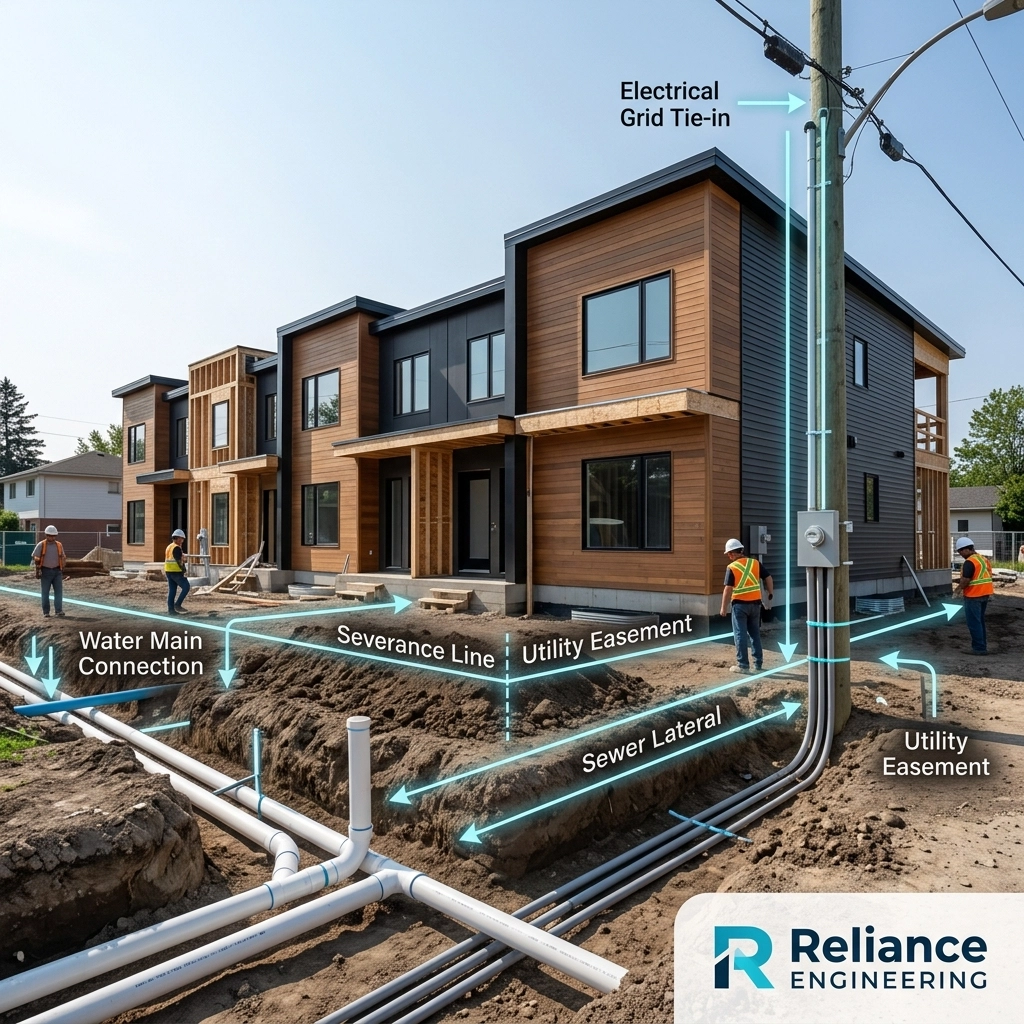
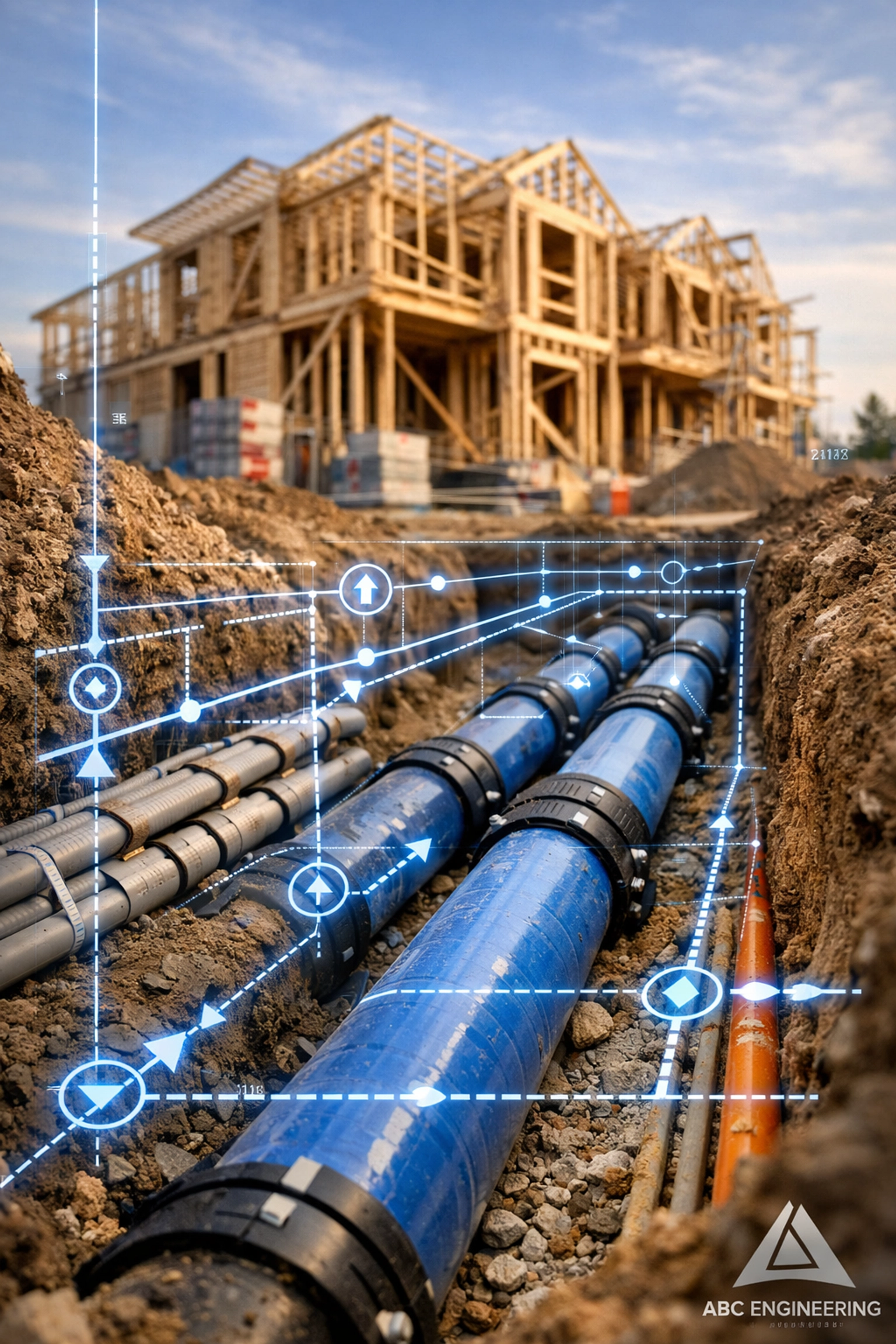
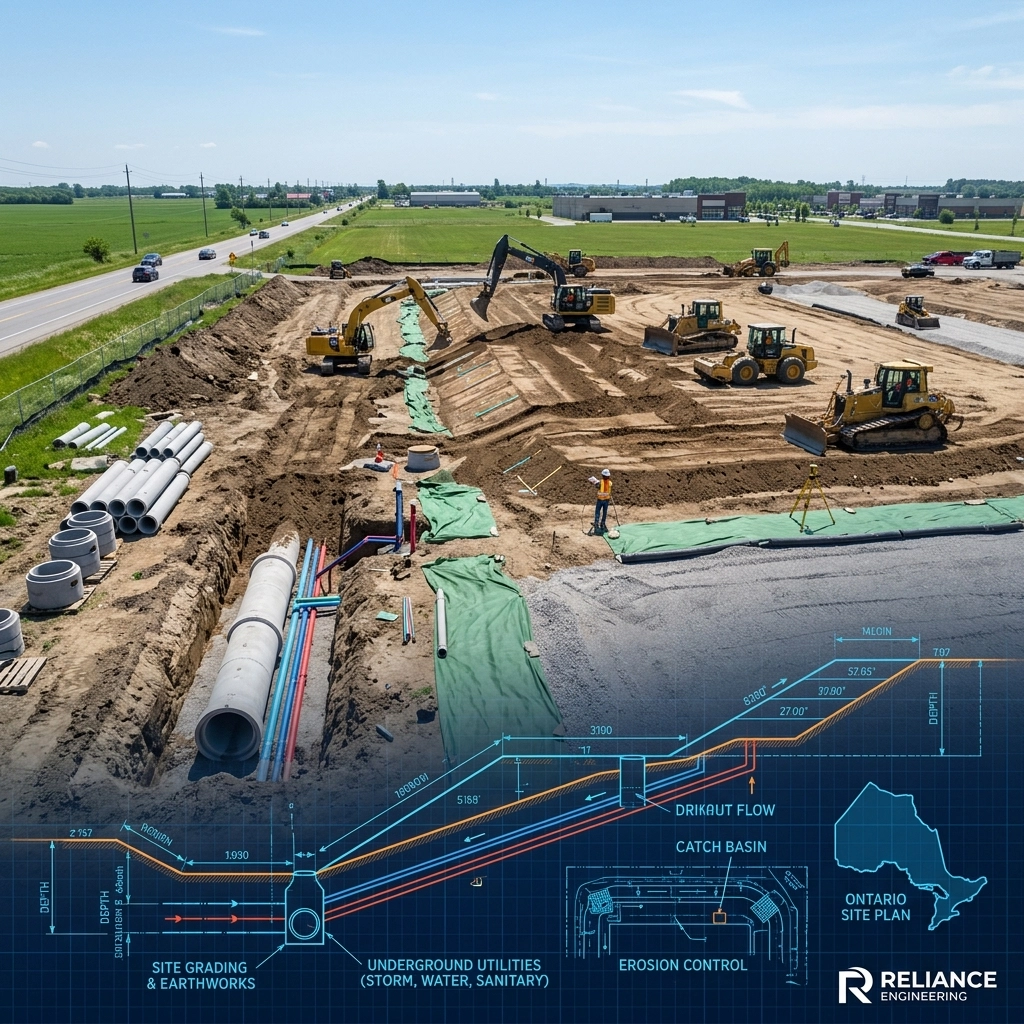
A 5-plex requires significantly more water pressure and sewage capacity than a single-family home. Most old 1/2-inch or 3/4-inch water connections will not suffice. You will likely need to upgrade to a 1-inch or 1.5-inch service.
Your Site Servicing Plan must detail exactly how these utilities will connect to the municipal mains. If you don't account for these upgrades in your initial budget, you could be looking at a $50,000+ surprise after you’ve already started construction.
2. Lot Grading and Drainage
When you increase the footprint of a building (by adding a 5th unit or an addition), you increase the "impermeable surface" area. This means more rainwater runoff.
Ontario municipalities are strict: you cannot drain your water onto your neighbor’s property. A precise Lot Grading Plan ensures that water flows safely to the street or into a designated infiltration system. Poor grading leads to basement flooding, which is the fastest way to destroy your multi-unit ROI.
3. Stormwater Management (SWM)
For 5-plexes and larger developments, a simple "drain to the curb" strategy often isn't enough. You may be required to implement "Low Impact Development" (LID) features, such as soakaway pits, dry wells, or permeable pavers.
As we move into 2026, SWM requirements are becoming even more stringent. A detailed Stormwater Management Report is now a standard requirement for most multi-unit conversions across Ontario.
Navigating the 2026 Regulatory Environment
The rules changed in 2024 and 2025, and they are continuing to evolve in 2026. The Provincial Planning Statement (PPS) has placed a heavy emphasis on "intensification." This is good news for investors, as it limits the ability of municipalities to say "no" to density.
However, the "how" remains technical. Even if the zoning allows for a 5-plex, the Site Plan Approval for multi-unit conversions is where most projects get stuck. To move quickly, you need a firm that understands the specific demands of Ontario’s conservation authorities (like the TRCA) and municipal engineering departments.
Five Mistakes That Kill Multi-Unit ROI
- Ignoring the FSR: Buying a property without knowing if the existing sewer pipes can handle five toilets.
- Underestimating Grading Costs: Realizing too late that you need an expensive retaining wall to manage the slope for a new 5-plex.
- Ignoring Easements: Finding a municipal pipe running right through where you planned to put your fifth unit.
- DIY Engineering: Trying to use "standard" plans for a custom lot. Every lot in Ontario has unique topography; "standard" leads to rejections.
- Missing the Deadline: Municipalities are overwhelmed. Every day your submission is incomplete is a day you are paying interest on a construction loan without a permit.

How Reliance Engineering Secures Your Project
At Reliance Engineering, we don't just draw lines on a map. We provide the technical backbone for your investment. We understand that in the world of real estate development, time is money.
We offer:
- Draft plans in days, not weeks.
- Permit-ready designs that anticipate municipal objections before they happen.
- Cost-effective solutions for stormwater and servicing that protect your margins.
Whether you are looking for a Site Plan for a garden suite or a comprehensive engineering package for a 5-plex conversion, we are your partners in land development across Ontario.
Contact Information
Ready to unlock the potential of your property? Don't let engineering hurdles stall your ROI. Contact us today for a professional consultation.
Naresh Ochani, P.Eng. M.Eng.
Founder and Principal
Reliance Engineering
Address: 6850 Millcreek Dr, Mississauga, ON L5N 2H4
Phone: 647-385-6418
Email: [email protected]
Website: www.relianceengineering.ca
Office Hours:
- Saturday: 12:00 PM – 2:00 PM
- Sunday: Closed
- Monday – Friday: 9:00 AM – 5:00 PM
Our Services Include:
- Land Development Consulting
- Lot Grading & Drainage Plans
- Site Servicing Plans
- Stormwater Management Reports (SWM)
- Functional Servicing Reports (FSR)
- Erosion and Sediment Control Plans
Specializing in Permit-Ready Solutions across Ontario.


Leave A Comment