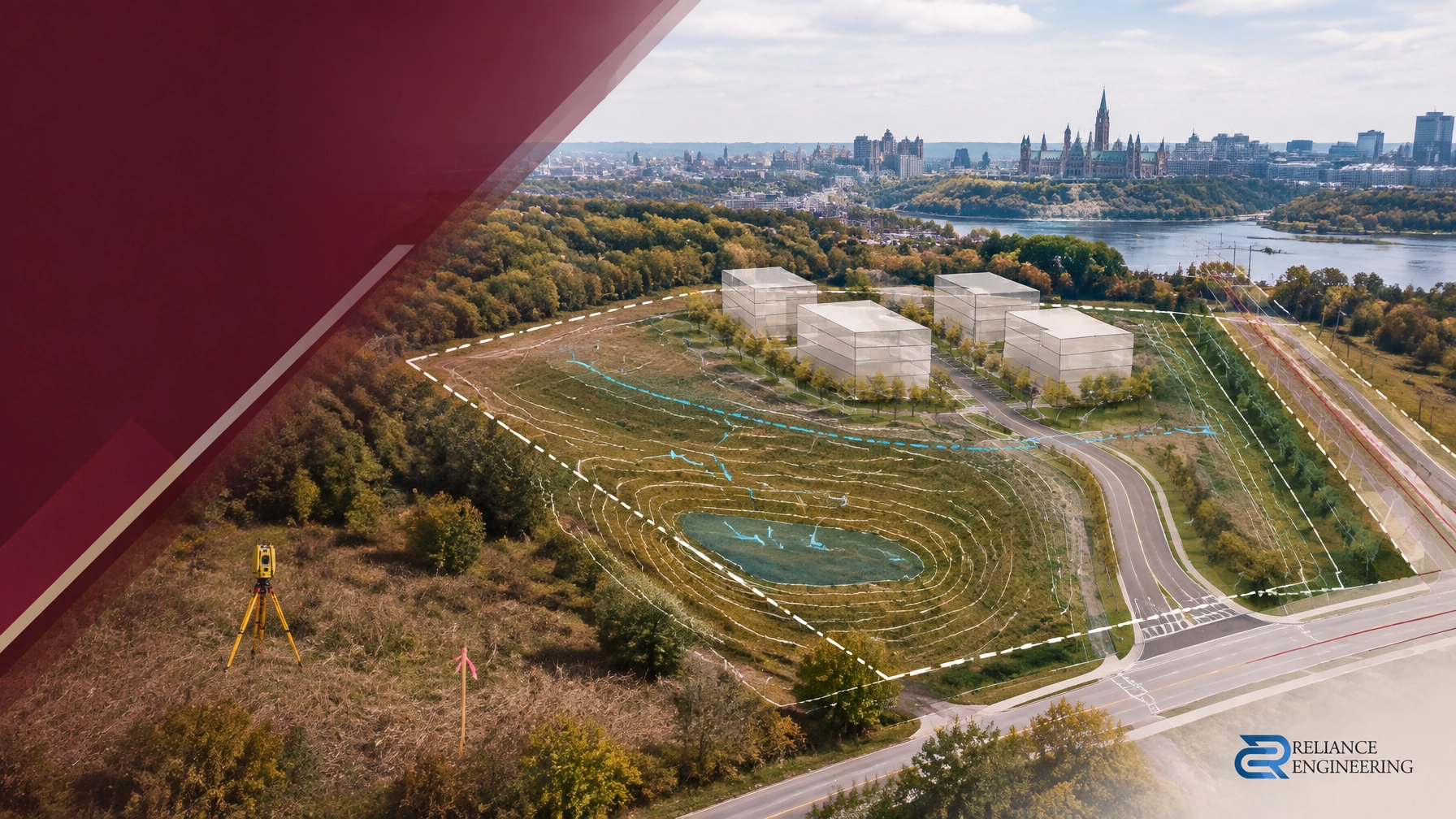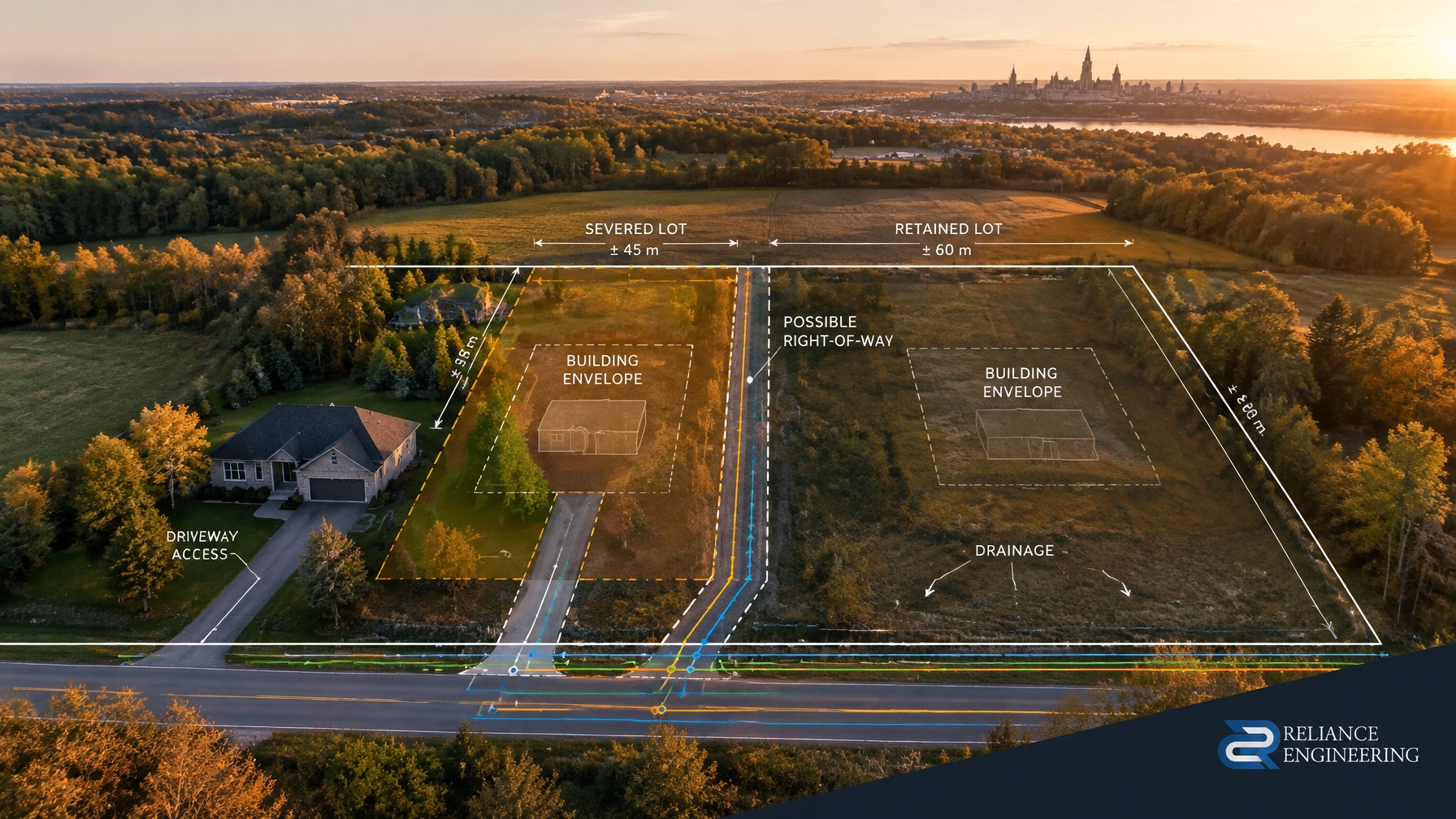
Stormwater management (SWM) is no longer just a box to check on a permit application. As we navigate 2026, the regulatory landscape in Ontario has shifted. New provincial mandates, climate-resilient designs, and the full integration of Low Impact Development (LID) have transformed how property developers, builders, and homeowners must approach site approvals.
At Reliance Engineering, we understand that an efficient, compliant Stormwater Management Report is the backbone of any successful land development project. Whether you are developing a multi-unit residential complex or a commercial site, the 2026 standards demand precision.
The 2026 Regulatory Shift: LID is Now the Standard
The Ministry of the Environment, Conservation and Parks (MECP) has finalized the transition to a performance-based framework. The most significant change in 2026 is that Low Impact Development (LID) is no longer an optional "green" addition: it is a core requirement for municipal approval across Ontario.
What is LID?
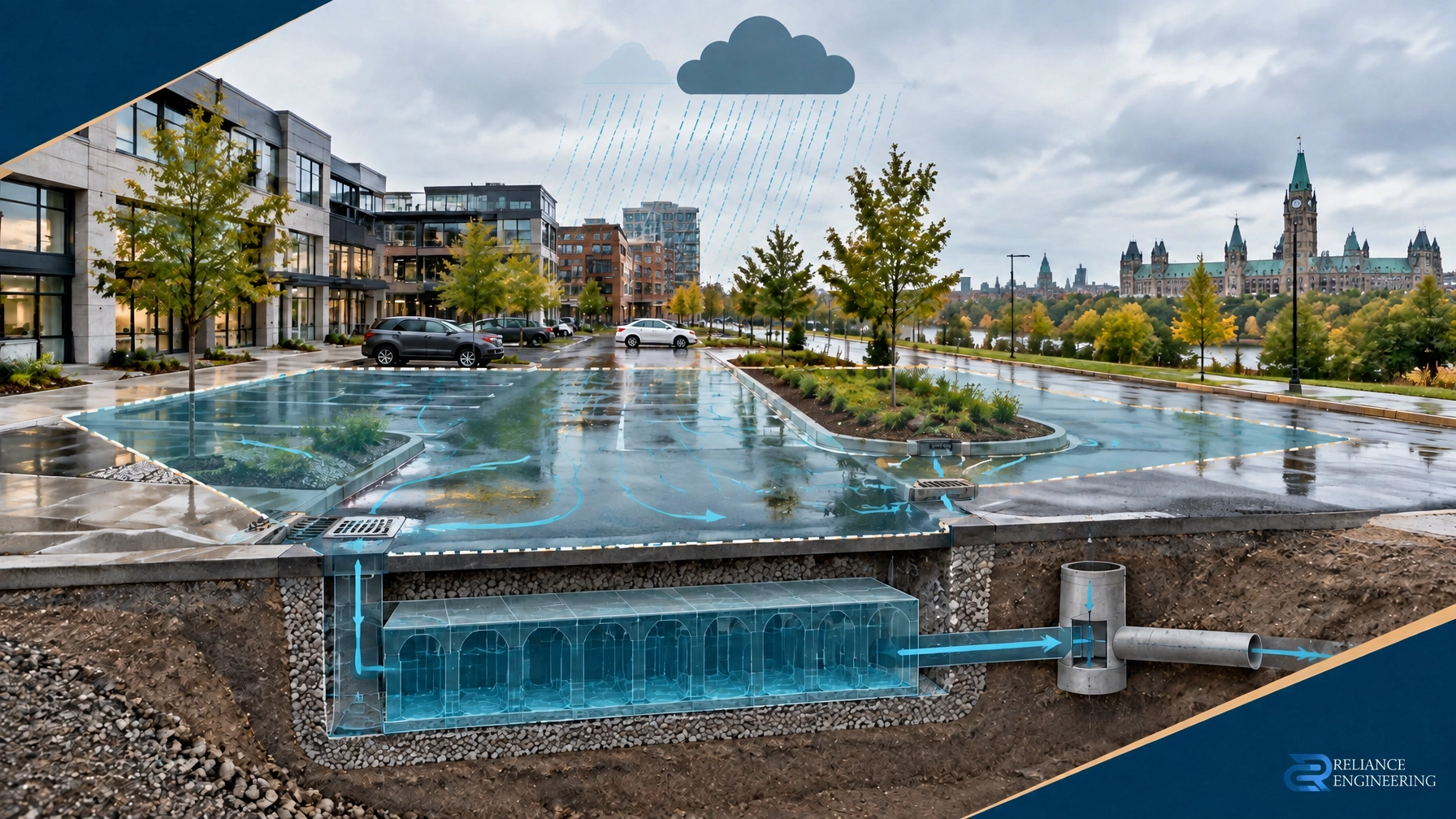
LID is an engineering approach that manages stormwater as close to its source as possible. Instead of simply piping water away, LID mimics natural hydrology by encouraging infiltration, filtration, and evaporation.
For developers in the GTA and across Ontario, this means:
- Reduced reliance on traditional ponds: Large detention ponds are being supplemented or replaced by distributed LID features.
- Strict Water Balance Requirements: You must demonstrate how the site will maintain pre-development groundwater recharge levels.
- Climate Adaptation: Designs must now account for increased storm intensity as defined by the latest IDF (Intensity-Duration-Frequency) curves.

Navigating Municipal and Conservation Authority Criteria
Securing approval requires alignment with two major bodies: your local municipality and the relevant Conservation Authority (such as the TRCA).
1. Water Quantity Control
You must ensure that post-development peak flow rates do not exceed pre-development rates. This prevents downstream flooding. In 2026, many Ontario municipalities have tightened these requirements to account for the "100-year storm" becoming more frequent.
2. Water Quality Control
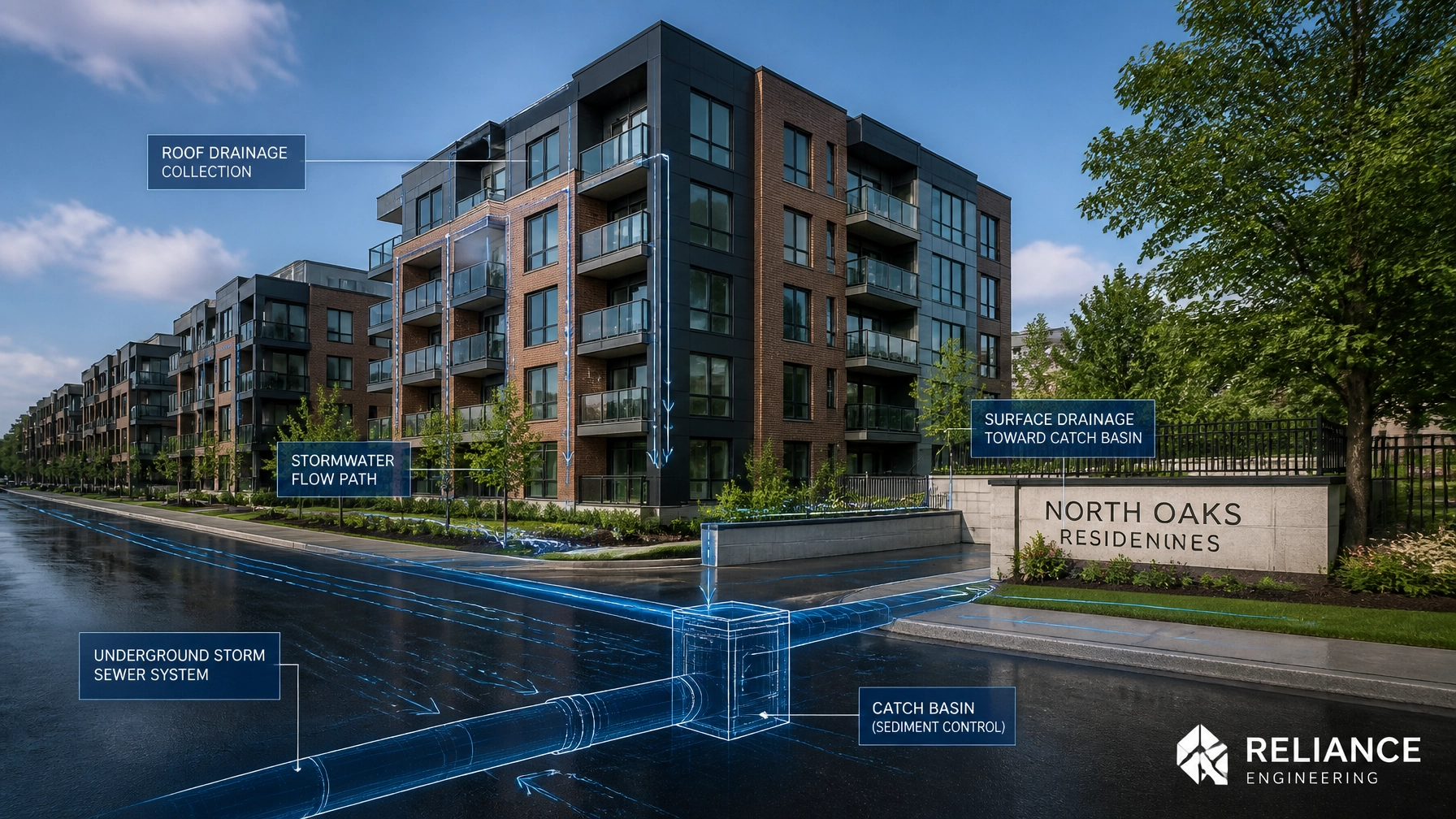
Most projects now require "Enhanced Protection" (80% Total Suspended Solids removal). Achieving this typically involves a multi-stage treatment train, combining Oil-Grit Separators (OGS) with LID features like bio-retention swales.
3. Erosion Control
Runoff must be released slowly to protect local creek banks from erosion. Our team at Reliance Engineering specializes in calculating the specific "extended detention" requirements needed to satisfy these municipal mandates.
4. Water Balance
This is the "new" hurdle for many developers. You must prove that the volume of water soaking into the ground post-construction matches what occurred naturally. This often requires specialized Site Servicing Plans that incorporate infiltration trenches or permeable pavement.
The Anatomy of a Modern SWM Report
A successful Functional Servicing Report in 2026 must be a comprehensive technical document. At Reliance Engineering, our reports include:
- Hydrologic Modeling: Utilizing advanced software (like PCSWMM or SWMHYMO) to simulate storm events.
- LID Design Details: Specific technical drawings for rain gardens, bioswales, or perforated pipe systems.
- Operations & Maintenance (O&M) Plans: Municipalities now require a clear plan for how the owner will maintain these systems over the next 25 years.
- Cost-Benefit Analysis: We don't just design for compliance; we design for your budget. We find the most cost-effective way to meet 2026 standards without over-engineering.

Why Experience Matters: The Reliance Engineering Advantage
Navigating the 2026 standards requires more than just technical knowledge; it requires a deep understanding of the people and processes behind the approvals.
With 20+ years of principal engineer experience, Naresh Ochani, P.Eng. M.Eng., leads our team in delivering designs that get approved. Our "One-Submission Approval" goal is built on:
- Precision: We understand the nuances of local municipal engineering manuals across Ontario.
- Responsiveness: We take full ownership of your project, responding to municipal comments within days, not weeks.
- Technical Authority: We are authorized by the PEO (Certificate of Authorization: 100548882), ensuring every drawing is held to the highest professional standard.
Our core services, including Site Grading Plans and Sanitary Sewer Design, are all integrated into our stormwater management strategies to provide a seamless approval experience.
Avoiding Common Approval Delays
The most common reason for project delays in 2026 is incomplete stormwater documentation. If your report doesn't address the 2026 LID mandates or fails to coordinate with your Site Plan Approval Drawings, the municipality will send it back for revisions.
Pro Tip: Engage your civil engineer early. The stormwater strategy dictates the site layout. Trying to "fit in" SWM after the architectural plans are finalized is a recipe for expensive redesigns.

Conclusion: Get Your Project Moving
The 2026 standards are rigorous, but they aren't a barrier if you have the right expertise on your side. At Reliance Engineering, we bridge the gap between complex municipal requirements and your development goals.
Don't let drainage issues or stormwater reports stall your progress. Let us handle the technical heavy lifting so you can focus on building.
Contact Information
Naresh Ochani, P.Eng. M.Eng.
Reliance Engineering
6850 Millcreek Dr, Mississauga, ON L5N 2H4
Phone: 647-385-6418
Email: [email protected]
Website: www.relianceengineering.ca
Office Hours
- Saturday: 12:00 PM – 2:00 PM
- Sunday: Closed
- Monday – Friday: By Appointment
Ready to secure your permits? Contact us today for a consultation on your next project.