Article type: Practical how-to guide
Focus: Commercial ponding diagnosis, drainage correction, and approval-ready design
Service area: Ontario-wide
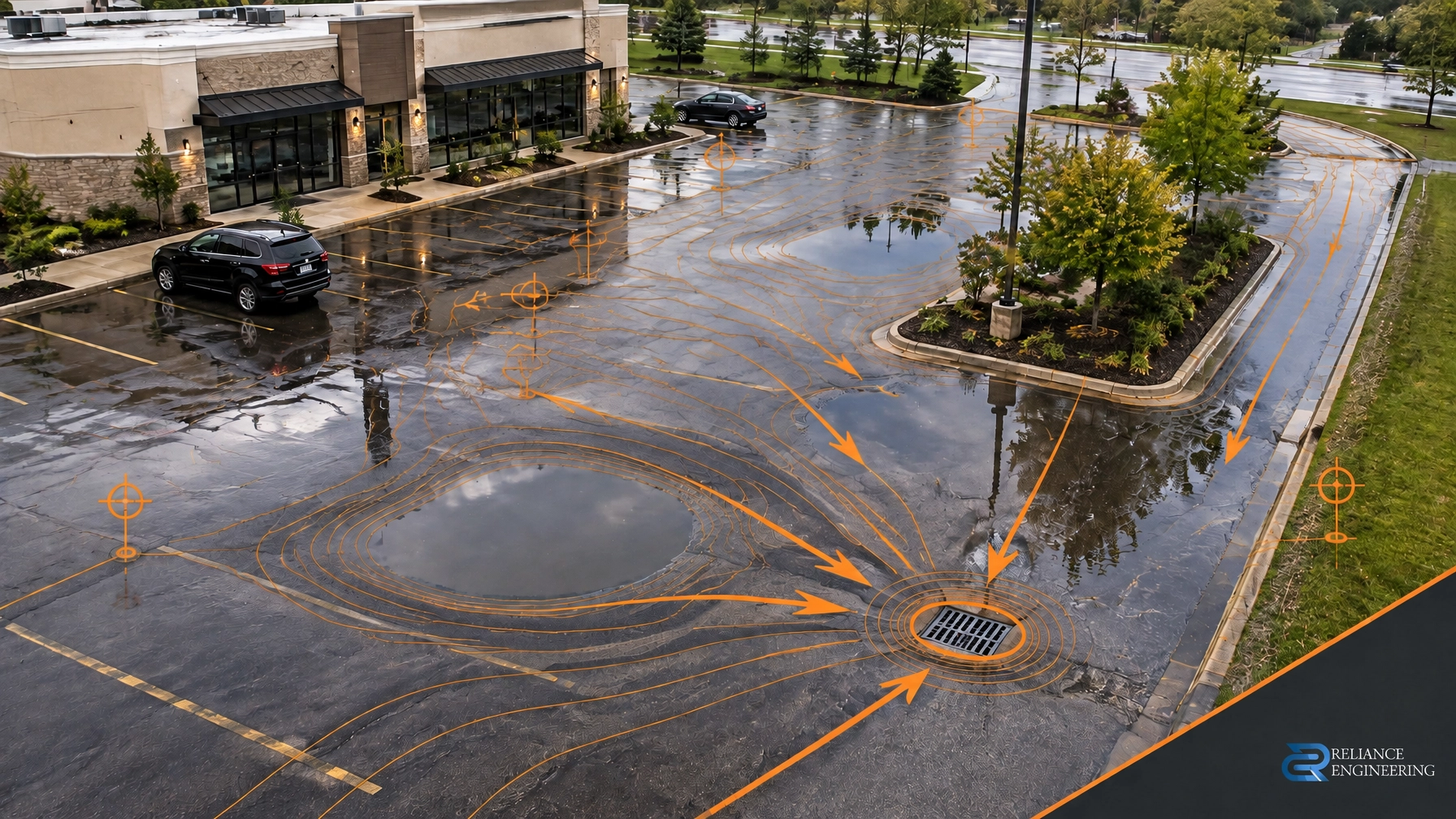
Standing water on a commercial property is rarely just an asphalt problem. If ponding returns after patching or resurfacing, the underlying issue may be incorrect grades, a low catchbasin grate, blocked or undersized drainage infrastructure, restricted outlet capacity, settlement, curb and driveway conflicts, or moisture trapped below the pavement.
A durable solution begins with diagnosis. The objective is not simply to move water away from one low spot. It is to establish positive drainage, confirm a legal outlet, protect adjacent properties, and document the fix with survey-based, permit-ready drawings.
Why Ponding Keeps Returning After Asphalt Repairs
Asphalt repairs can temporarily conceal a low area without correcting the drainage system below or around it. Common root causes include:
- Pavement grades that do not direct runoff to a catchbasin or area drain
- Settlement over weak or wet sub-base material
- Catchbasin grates set too high or located away from the actual low point
- Blocked inlets, damaged connections, or insufficient storm sewer capacity
- A restricted downstream outlet or full municipal storm system
- Curb, sidewalk, or driveway tie-ins that interrupt the intended flow path
- Swales that are too flat, shallow, or obstructed
- Roof leaders or adjacent properties discharging into the parking area
- No safe overland flow route when the minor storm system is full
- Winter frost heave followed by spring settlement
In Ontario’s freeze-thaw climate, a surface repair may fail quickly if water remains in the granular base. Saturated sub-base material can lose strength, freeze, expand, and leave the pavement lower after thawing. This is why recurring ponding should be treated as a drainage and geotechnical condition, not only a paving defect.

A Drainage-Focused Diagnosis Comes First
A reliable investigation normally includes the following steps.
1. Review the approved design
Existing site grading plans, servicing drawings, stormwater management reports, site plan approvals, and previous municipal comments can show the intended drainage strategy. The review should identify:
- Approved catchbasin, area drain, and storm sewer locations
- Design elevations and finished floor elevations
- Legal storm outlets
- Swales and overland flow routes
- Storage areas and emergency spill paths
- Conditions imposed through site plan or development approval
The approved plan is important because a practical repair must not create a new drainage impact on a neighbouring property, public road, or municipal system.
2. Complete a detailed survey
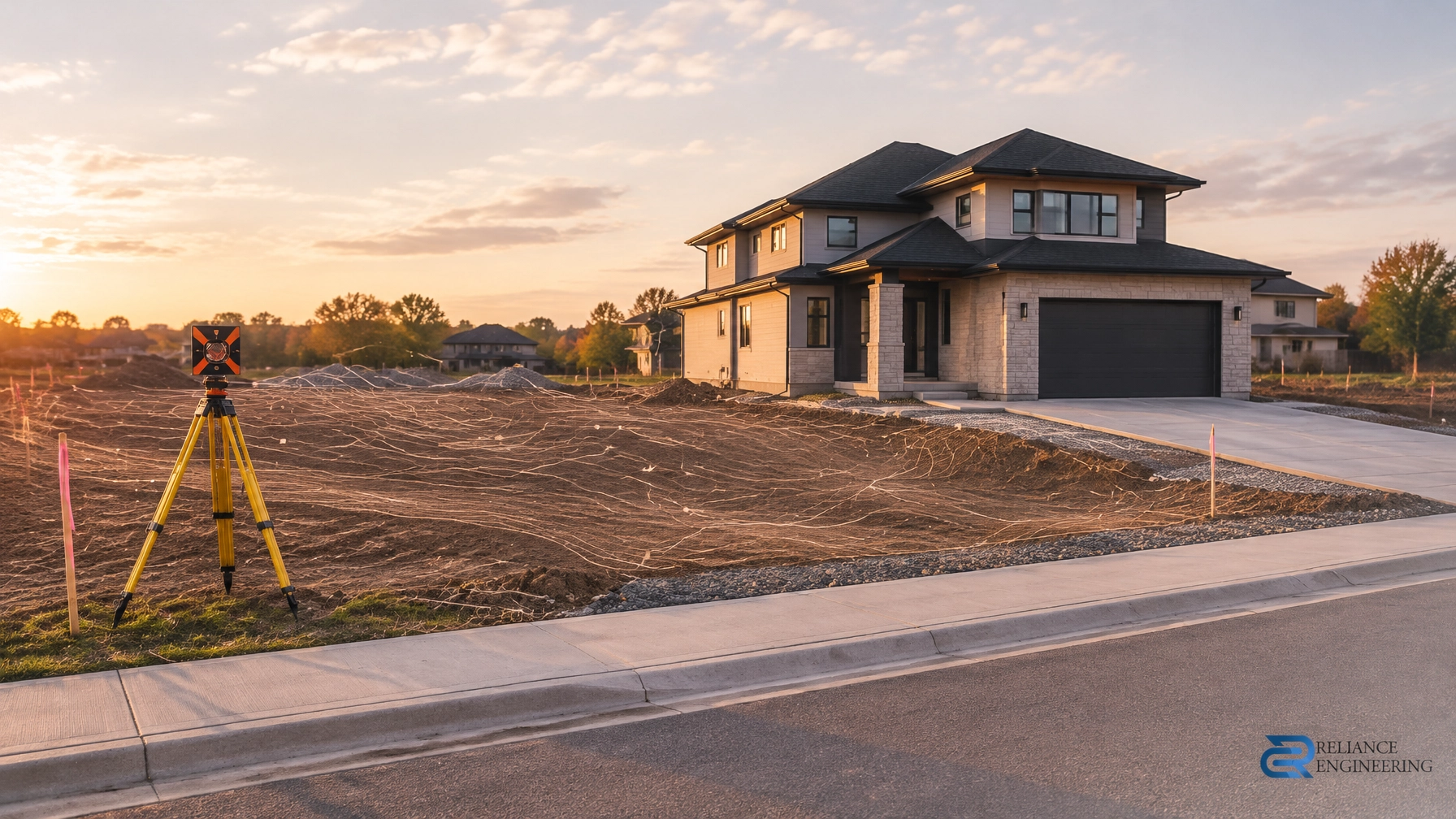
A field survey should capture the actual condition, not rely only on old drawings. Survey points should include:
- Pavement high and low points
- Catchbasin and manhole rim elevations
- Invert elevations where accessible
- Curbs, sidewalks, ramps, and driveway entrances
- Building entrances and finished floor elevations
- Swales, ditches, landscaped areas, and property boundaries
- Road gutter elevations and municipal tie-in points
The survey can confirm whether the ponding is caused by localized settlement or a wider grading failure.
3. Inspect inlet and outlet capacity
A catchbasin may appear to be the solution but still fail because the inlet, pipe, or outlet is restricted. The assessment should consider:
- Grate elevation relative to surrounding asphalt
- Sediment, debris, ice, or vegetation blocking the inlet
- Pipe slope and connection condition
- Downstream pipe capacity
- Backwater from the municipal storm system
- Outlet control structures or flow restrictions
- Whether the existing storm system can accept additional runoff
Adding a catchbasin without confirming outlet capacity can simply move the problem underground.
Symptom-Based Ponding Solution Options
The correct repair depends on the observed symptoms, survey results, and municipal requirements.
| Site symptom | Potential fix | When it is appropriate |
|---|---|---|
| Water collects directly around a catchbasin | Catchbasin grate adjustment, inlet cleaning, connection repair, or outlet correction | The drainage structure exists but is poorly set, blocked, damaged, or hydraulically restricted |
| One or two shallow pavement depressions | Local regrade or localized asphalt regrading | The surrounding base is stable and the problem is limited to a defined area |
| Broad pavement area drains poorly | Mill-and-fill or broader pavement reconstruction | Existing grades are generally workable but the surface profile needs correction |
| Runoff bypasses the storm system | New swale, area drain, trench drain, or additional catchbasin | Surface flow needs a defined collection or conveyance route |
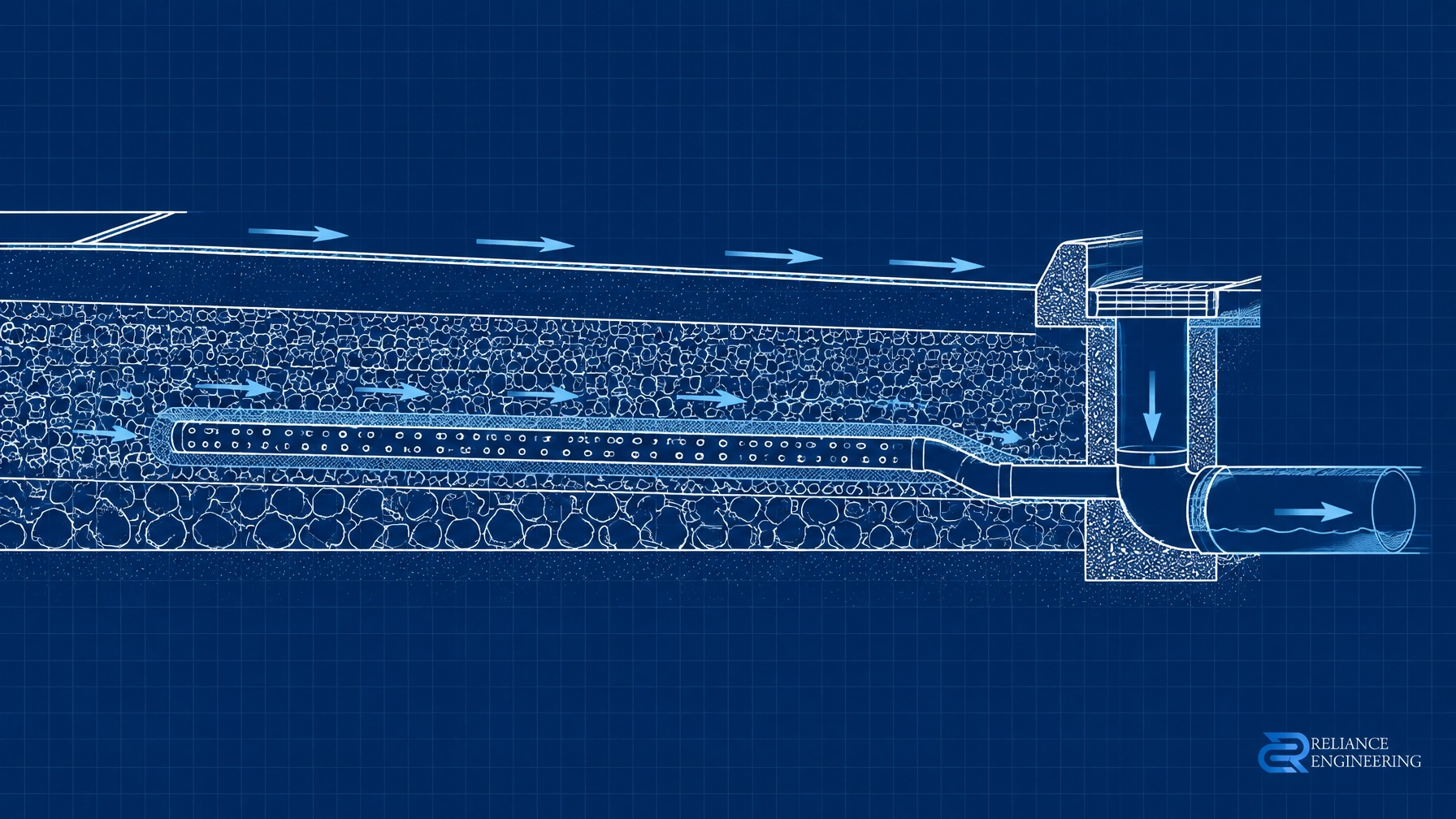
| Water remains below the pavement | Sub-drainage, free-draining granular replacement, or underdrain connection | Saturated sub-base, frost movement, or poor subsurface drainage is contributing to settlement |
| Multiple low points, failed base, or inadequate drainage network | Full reconstruction with revised grading and servicing | The pavement, sub-base, and drainage system require coordinated replacement |
These options may be combined. For example, a permanent correction could include a localized regrade, a reset catchbasin, a short sub-drain, and a revised curb tie-in.
Swales, Area Drains, and Overland Flow Routes
Not every commercial site should send all runoff directly to a catchbasin. A properly designed swale or depressed landscaped area can provide a controlled route to an approved outlet.
However, the swale must be buildable and maintainable. The design should show:
- Clear start and end elevations
- A continuous positive slope
- Stable side slopes
- Adequate width and depth
- Protection against erosion
- Safe crossings at driveways and pedestrian routes
- A defined outlet or overflow point
An overland flow route is also required where the storm sewer system cannot convey every event or where a structure becomes blocked. It should direct excess water away from buildings, loading areas, accessible routes, and neighbouring lands.
The Reliance Engineering Site Grading Plans service includes existing and proposed elevations, swales, drainage routes, catchbasins, area drains, driveway grades, road tie-ins, and overland flow routes.
Curb, Driveway, and Road Tie-In Problems
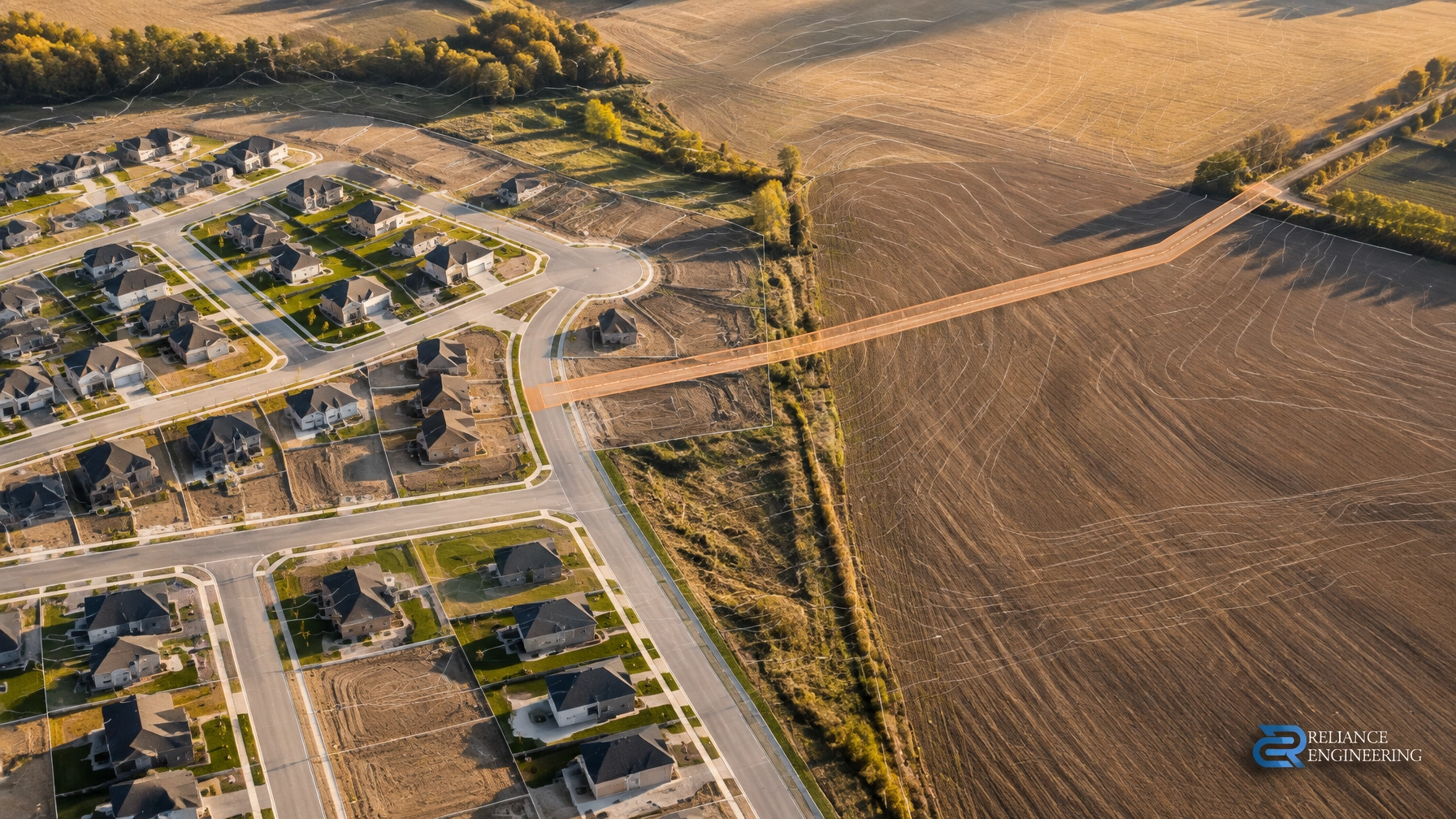
Commercial ponding often begins at the edge of the property. A curb may be higher than the adjacent pavement, a driveway may slope back toward the parking area, or a sidewalk ramp may interrupt sheet flow.
These details need to be checked together. Correcting the parking lot while leaving the driveway or municipal road tie-in unchanged may trap water at the boundary.
Work within a municipal road allowance may require permission from the municipality. This can apply to:
- Altering a curb or driveway entrance
- Changing boulevard grades
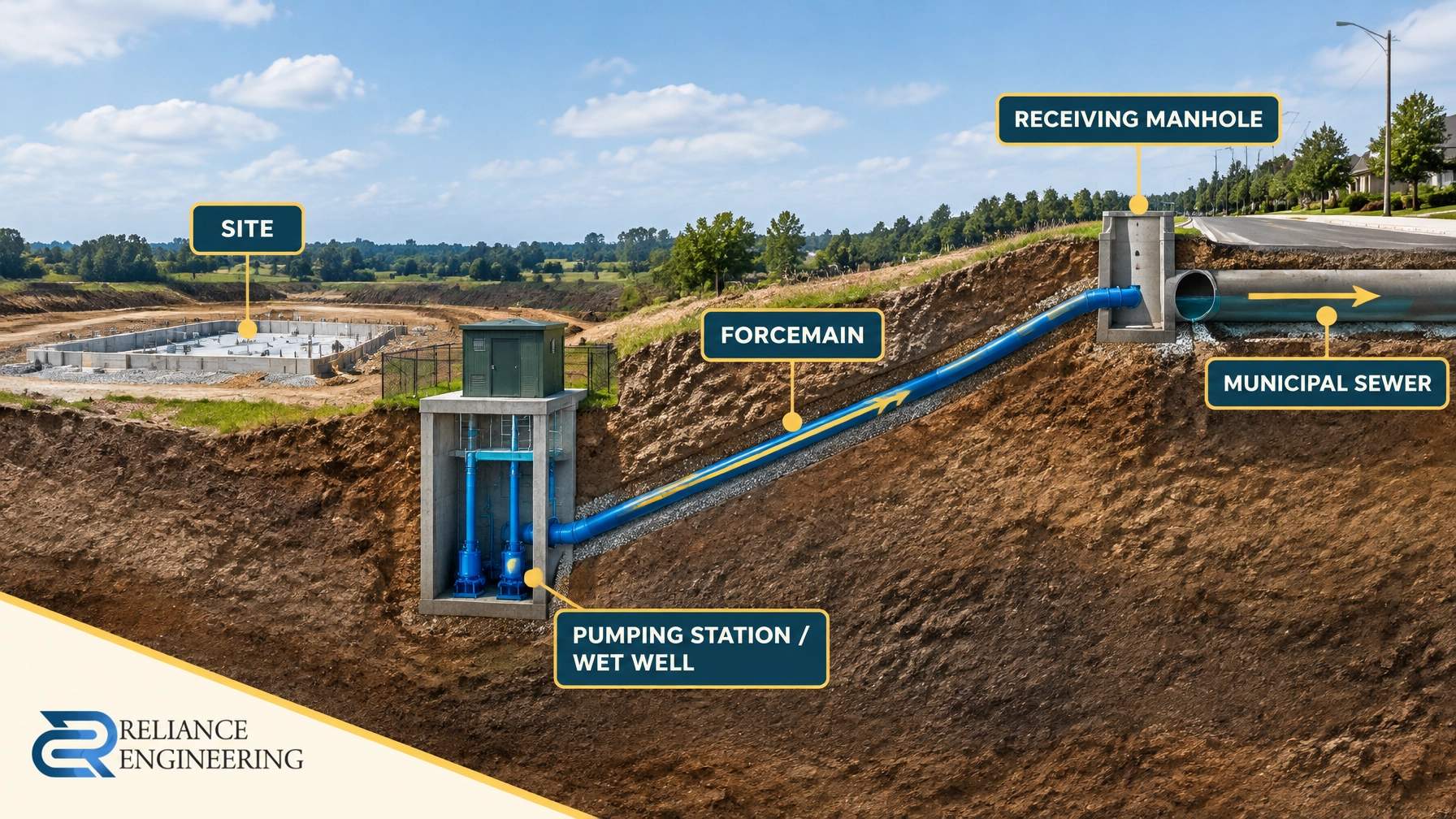
- Connecting to a municipal storm sewer
- Installing a new outlet or crossing
- Modifying a roadside ditch or drainage feature
The municipality will determine the required application, drawings, inspections, and restoration conditions.

When Approvals May Apply in Ontario
Approval requirements vary by municipality and project scope. A ponding repair may require review when it changes grades, drainage patterns, storage volumes, public infrastructure, or the approved site plan.
Site alteration permit
Some municipalities require a site alteration permit for moving, removing, or placing soil or fill, or for changing existing grades and drainage patterns.
For example, the City of Brampton’s site alteration guidance identifies permits for activities that alter grade or drainage through soil or fill operations. Brampton’s Grading and Drainage Plan Terms of Reference also identifies grading plans as part of site plan and site alteration submissions.
Site plan, building, or engineering review
In Toronto, commercial grading and drainage changes are commonly reviewed through site plan control, servicing submissions, building permits, or related engineering processes rather than a single standalone grading permit. The City’s Design Criteria for Sewers and Watermains addresses site drainage, storm servicing, and commercial site requirements.
A proposed correction may also require an updated stormwater management report, servicing plan, or site plan amendment if it changes the approved outlet, storage, runoff rate, or drainage area.
Conservation Authority review
A Conservation Authority review may apply where the work is within or near regulated wetlands, watercourses, valleylands, shorelines, flood hazards, or other regulated areas. Ontario’s Conservation Authorities Act and Ontario Regulation 41/24 govern regulated development and site alteration activities.
The applicable Conservation Authority may review changes to grading, fill, drainage routes, flood storage, and watercourse or wetland conditions. This should be checked before construction begins.
For construction-phase controls, Reliance Engineering prepares Erosion and Sediment Control Plans coordinated with grading, drainage, catchbasin protection, and construction access.
How a Permanent Fix Is Proven
A permanent ponding solution should be supported by documentation, not only a paving invoice. A professional review should typically produce:
- Existing-condition survey and drainage assessment
- Root-cause diagnosis
- Proposed grading and drainage design
- Catchbasin, area drain, swale, or sub-drain details
- Outlet and overland flow confirmation
- Coordination with servicing and stormwater requirements
- Permit-ready drawings with professional engineering review
- Construction support and, where required, field verification or as-built documentation
The design must show that the proposed grades are practical to construct, maintain positive drainage, protect adjacent properties, and connect to a legal outlet. It should also account for winter conditions, pavement maintenance, accessibility, truck movements, and future resurfacing.

Request an Ontario Ponding and Drainage Review
Recurring standing water should be investigated before another asphalt repair is authorized. Reliance Engineering provides practical designs, buildable grading, coordinated drainage reviews, permit-ready drawings, and approval support for commercial properties across Ontario.
For a ponding and drainage review, contact:
Naresh Ochani, P.Eng. M.Eng.
Founder and Principal Engineer
PEO Certificate of Authorization: 100548882
Reliance Engineering
6850 Millcreek Dr, Mississauga, ON L5N 2H4
647-385-6418
[email protected]
Request a consultation
Office hours: Saturday 12:00 PM–2:00 PM; Sunday Closed.