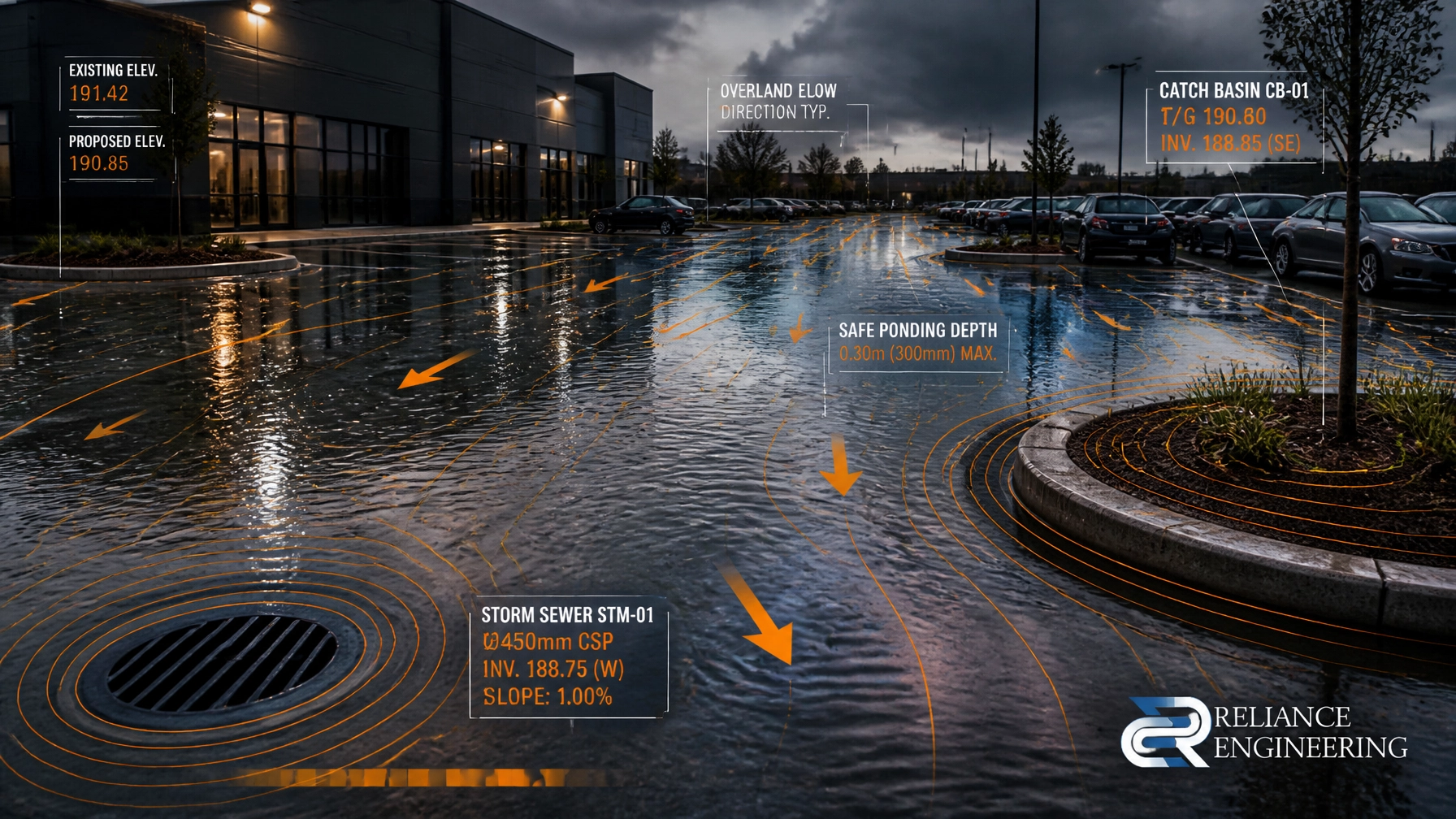
For a commercial property owner in Ontario, a parking lot is more than just a place for cars; it is the first impression of your business. However, when a heavy rainfall transforms your lot into a series of mini-lakes, that impression sours quickly. Beyond aesthetics, poor drainage is a massive liability. Standing water leads to rapid asphalt deterioration, foundation damage, and hazardous ice patches in the winter.
If you are dealing with parking lot ponding solutions in Ontario, you know that a quick asphalt patch rarely solves the root cause. You need a structural fix. At Reliance Engineering, we specialize in taking these complex drainage nightmares and turning them into permitted, high-functioning assets.
In this guide, we’ll break down the process of retrofitting drainage on existing commercial sites: from the first puddle to the final municipal permit.
The Hidden Cost of "Living With It"
Many property owners ignore minor ponding, viewing it as a nuisance rather than a crisis. But in the engineering world, standing water is a "silent killer" of infrastructure.
- Structural Failure: Water that sits on asphalt eventually seeps into the sub-base. Once the base is saturated, it loses its load-bearing capacity, leading to alligator cracking, ruts, and eventual sinkholes.
- Liability Risks: In Ontario, freeze-thaw cycles turn puddles into "black ice" overnight. Slip-and-fall lawsuits are expensive; a proper site grading plan is your best insurance.
- Foundation Issues: If your lot is graded toward your building rather than away from it, you are inviting moisture into your building's envelope, leading to mold and structural rot.
Phase 1: Identifying the Root Cause
Before you call a paving contractor, you need an engineer to diagnose why the water isn't moving. Common culprits for existing property stormwater issues include:
- Subsurface Settlement: Over time, the earth beneath your lot shifts, creating low spots where water naturally collects.
- Undersized Infrastructure: Many older commercial lots in the GTA were built to standards that didn't account for modern climate intensity. Your catch basins simply can’t keep up.
- The "Pave-Over" Problem: Often, previous owners have simply added a new layer of asphalt on top of the old one without considering the grades, effectively "burying" the drainage outlets.

Phase 2: Engineering the Retrofit
Retrofitting drainage isn't about guessing where the water should go; it’s about precision. Parking lot regrading engineering involves a few key strategies:
1. Asphalt Regrading
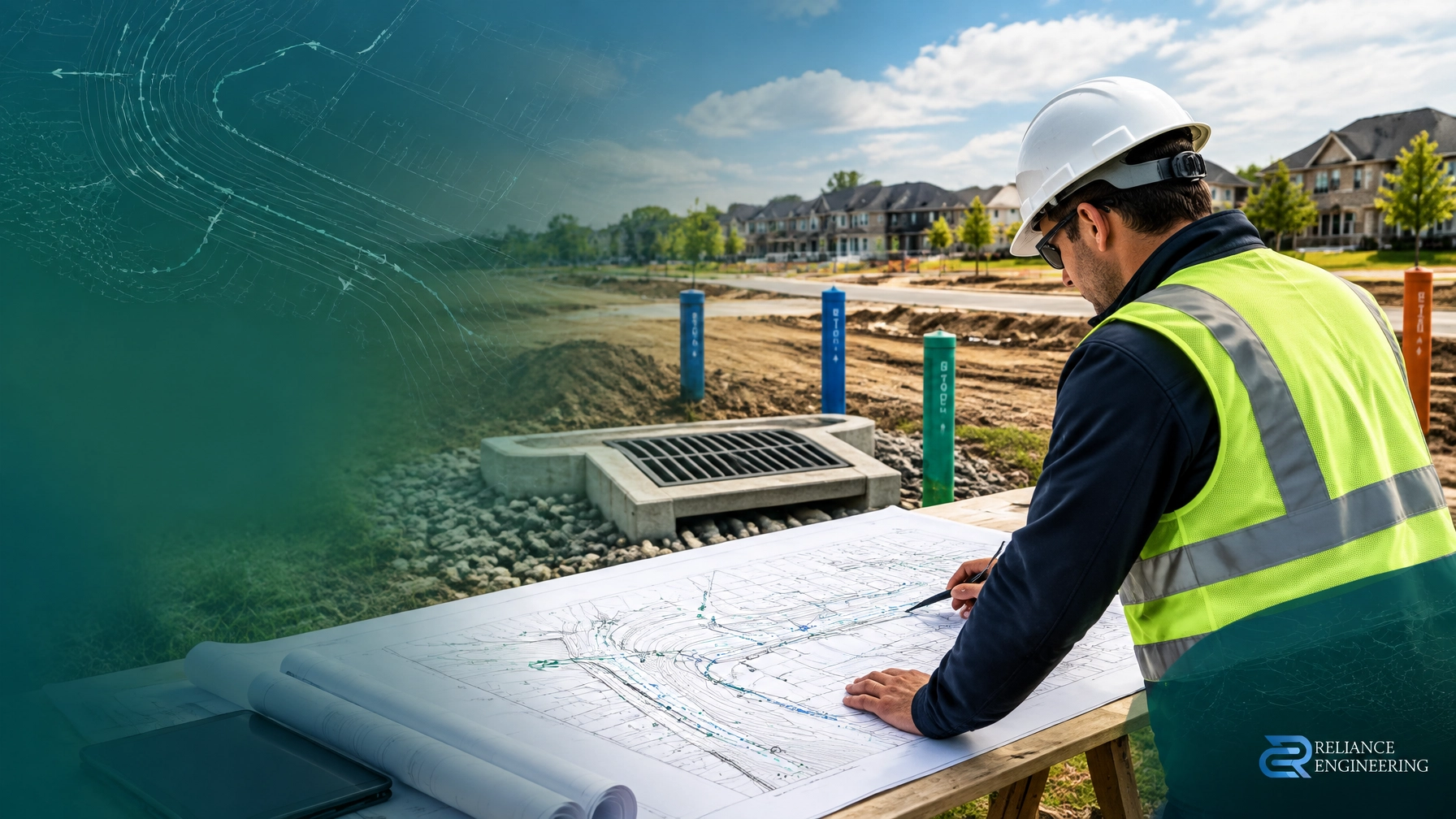
The gold standard for drainage is a minimum 1% to 2% slope. We use advanced surveying tools to map your lot’s existing elevations and design a new "surface profile." This may involve milling down high spots or adding strategic thickness to ensure every drop of water is gravity-fed toward a drain.
2. Strategic Catch Basins and Trench Drains
If the distance to the nearest drain is too far for regrading to be effective, we design new infrastructure.
- Catch Basins: Ideal for point-source drainage in large open areas.
- Trench Drains: Perfect for "intercepting" water before it reaches building entrances or flows across high-traffic drive lanes.
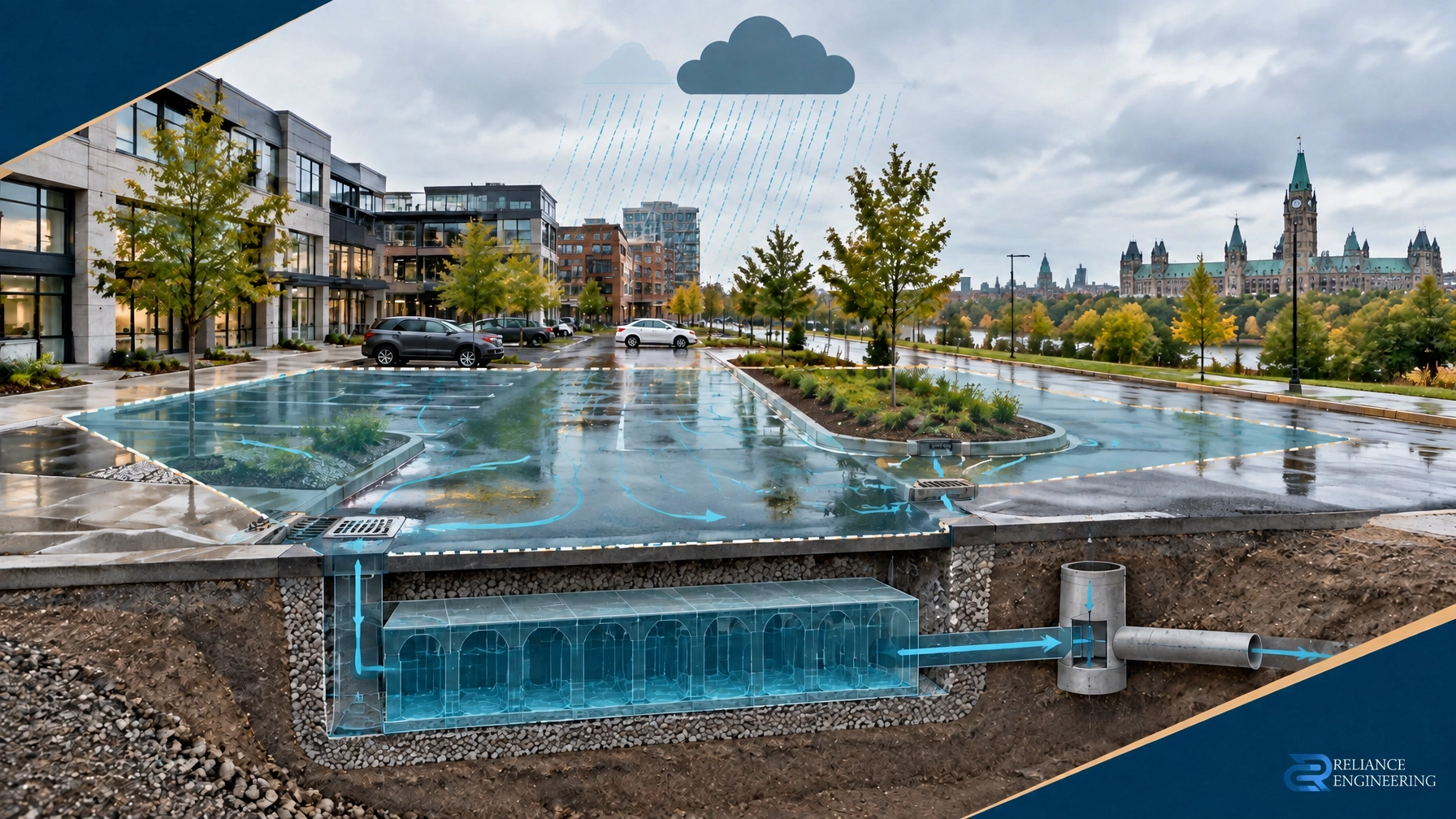
3. Stormwater Management (SWM)
Modern municipalities across Ontario require that any change to your site doesn't negatively impact the municipal system. Our team develops Stormwater Management Reports that prove your retrofit meets local criteria for water quality and quantity control.
Phase 3: Navigating the Ontario Permit Maze
This is where most property owners get stuck. You cannot simply dig up a commercial parking lot and install new sewers without municipal oversight. If you are performing a commercial site drainage retrofit, you will likely need:
- Site Plan Approval (SPA) Amendments: Even minor changes to grading often require an amendment to your original site plan.
- Grading and Servicing Permits: Municipalities like Mississauga, Toronto, and Vaughan require stamped engineered drawings before work begins.
- Right-of-Way Permits: If your drainage connects to a municipal storm main, you'll need specific approvals to work within the public property line.
At Reliance Engineering, we don't just provide the drawings; we take full ownership of the approval process. We understand the specific quirks of municipal requirements across Ontario, often securing permits in a single submission.

Why Reliance Engineering?
With over 20 years of principal engineering experience, Naresh Ochani and the team at Reliance Engineering provide the precision that contractors can’t match. We are authorized by the PEO (Certificate of Authorization: 100548882) and focus exclusively on land development and municipal approvals.
We offer:
- Functional Servicing Reports: A deep dive into your site’s infrastructure to find the most cost-effective fix. Read more here.
- Site Servicing Plans: Detailed layouts of water, sanitary, and storm sewer designs. View our services.
- Speed & Accuracy: We know time is money. Our designs are built to pass municipal review the first time.
Conclusion: Stop Pumping, Start Engineering
Don't let a poorly graded parking lot wash away your property value. Whether you need commercial property grading fixes in Toronto or a full commercial parking lot drainage GTA retrofit, professional engineering is the only way to ensure a permanent solution.
Stop managing puddles and start managing your asset.

Contact Information
Naresh Ochani, P.Eng. M.Eng.
Reliance Engineering
6850 Millcreek Dr, Mississauga, ON L5N 2H4
Phone: 647-385-6418
Email: [email protected]
Website: www.relianceengineering.ca
Office Hours
- Saturday: 12:00 PM – 2:00 PM
- Sunday: Closed
- Monday – Friday: By appointment