Article type: Technical how-to and compliance guide
Published: August 12, 2026
For: Developers, property owners, builders, architects, and construction professionals across Ontario
Construction activity exposes soil to rainfall, snowmelt, runoff, and wind. Without proper controls, sediment can leave the site, block catchbasins, enter storm sewers, damage adjacent properties, and create environmental or municipal compliance problems.
An Erosion and Sediment Control (ESC) Plan provides the site-specific measures needed to manage these risks. The strongest plans are not collections of standard notes. They are coordinated with the site grading, drainage patterns, construction limits, access routes, and construction sequence.
Reliance Engineering prepares practical designs, clear drawings, and permit-ready drawings that help protect construction sites and support municipal review across Ontario.
What an Erosion and Sediment Control Plan Does
Erosion occurs when soil is loosened and transported by water or wind. Sediment is the soil material that moves from the disturbed area into nearby drainage systems or natural features.
An ESC Plan addresses both risks by showing how the site will:
- Limit the area and duration of exposed soil
- Direct runoff through controlled routes
- Intercept sediment before it leaves the property
- Protect catchbasins, storm sewers, ditches, and watercourses
- Stabilize slopes, swales, stockpiles, and construction entrances
- Inspect, maintain, and remove temporary controls
- Reinstate disturbed areas after construction
The plan should reflect actual site conditions. A control that works on a small residential lot may not be suitable for a large commercial site, steep slope, or property connected directly to a municipal storm system.
Why Grading and Drainage Control Are Central to ESC
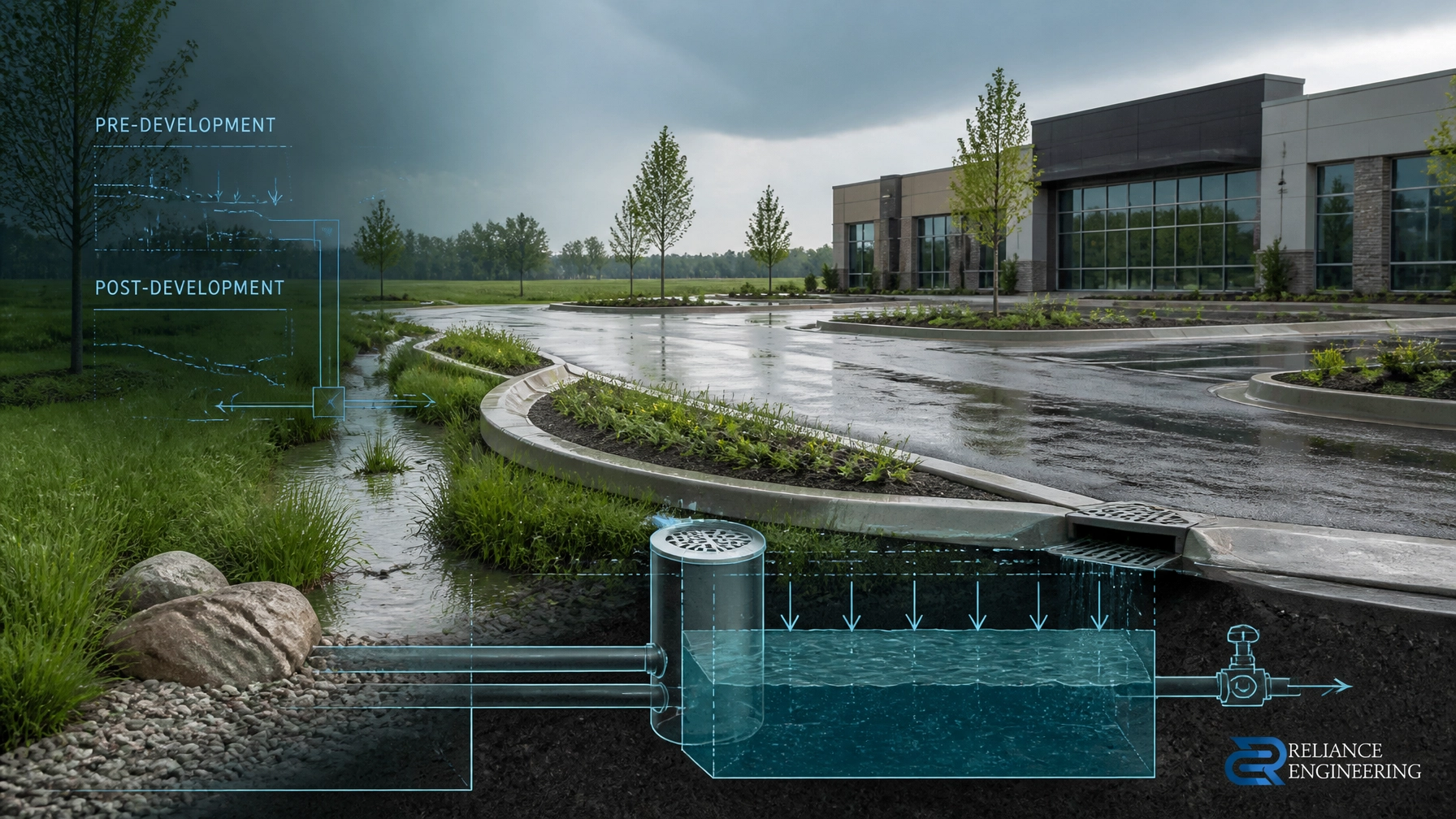
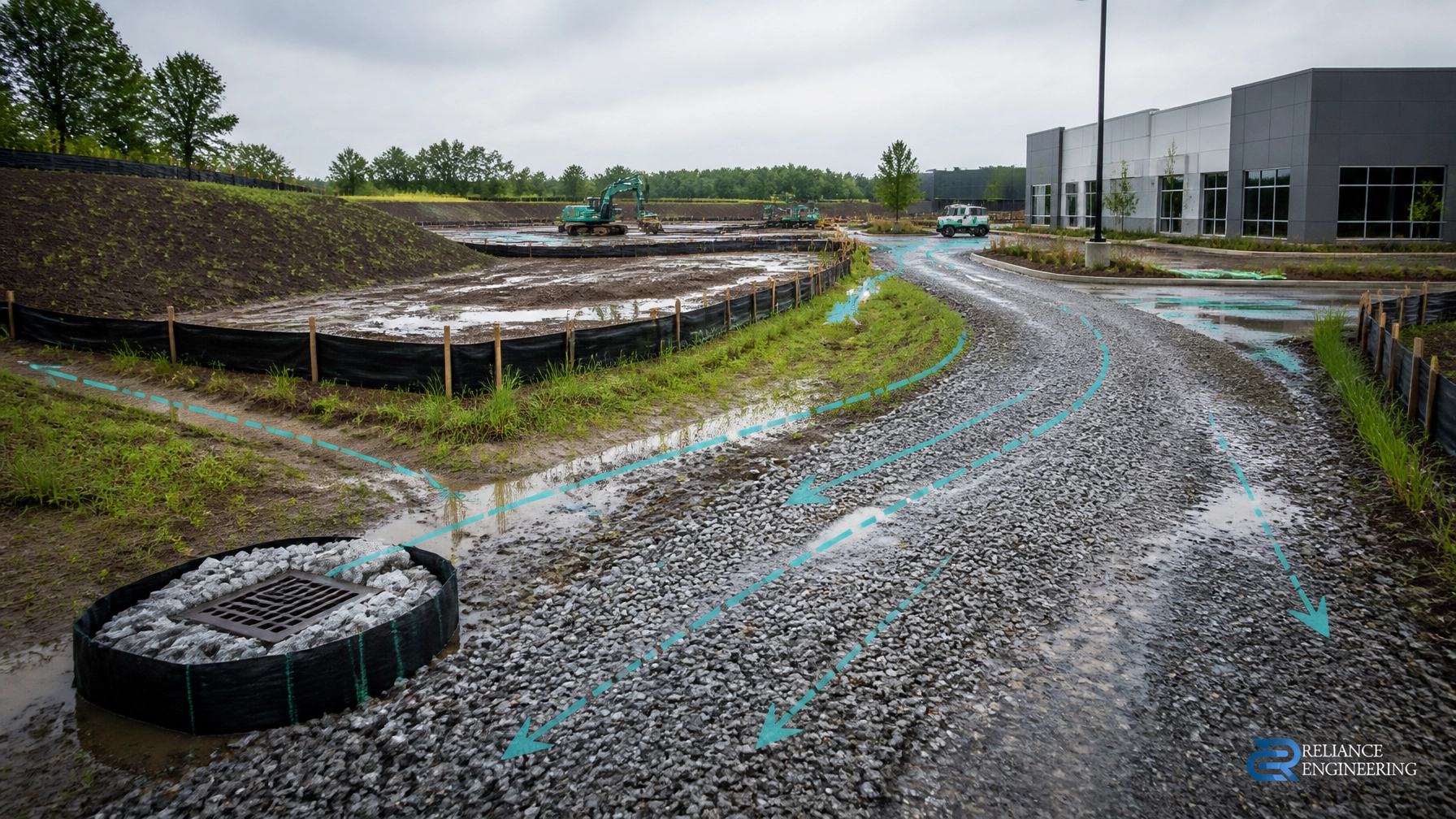
Erosion and sediment control begins with water management. If runoff is allowed to move uncontrolled across exposed soil, sediment controls can become overloaded or bypassed.
A drainage-focused approach coordinates temporary ESC measures with both existing and proposed grades. The design should identify:
- Existing drainage patterns
- Proposed grading and drainage routes
- Low points and vulnerable areas
- Temporary swales and diversion berms
- Overland flow routes
- Catchbasin and storm sewer locations
- Construction access and material storage areas
- Adjacent properties and receiving drainage systems
The objective is positive drainage. Water should move predictably toward a protected discharge point rather than collect behind buildings, along curbs, near foundations, or within construction access routes.

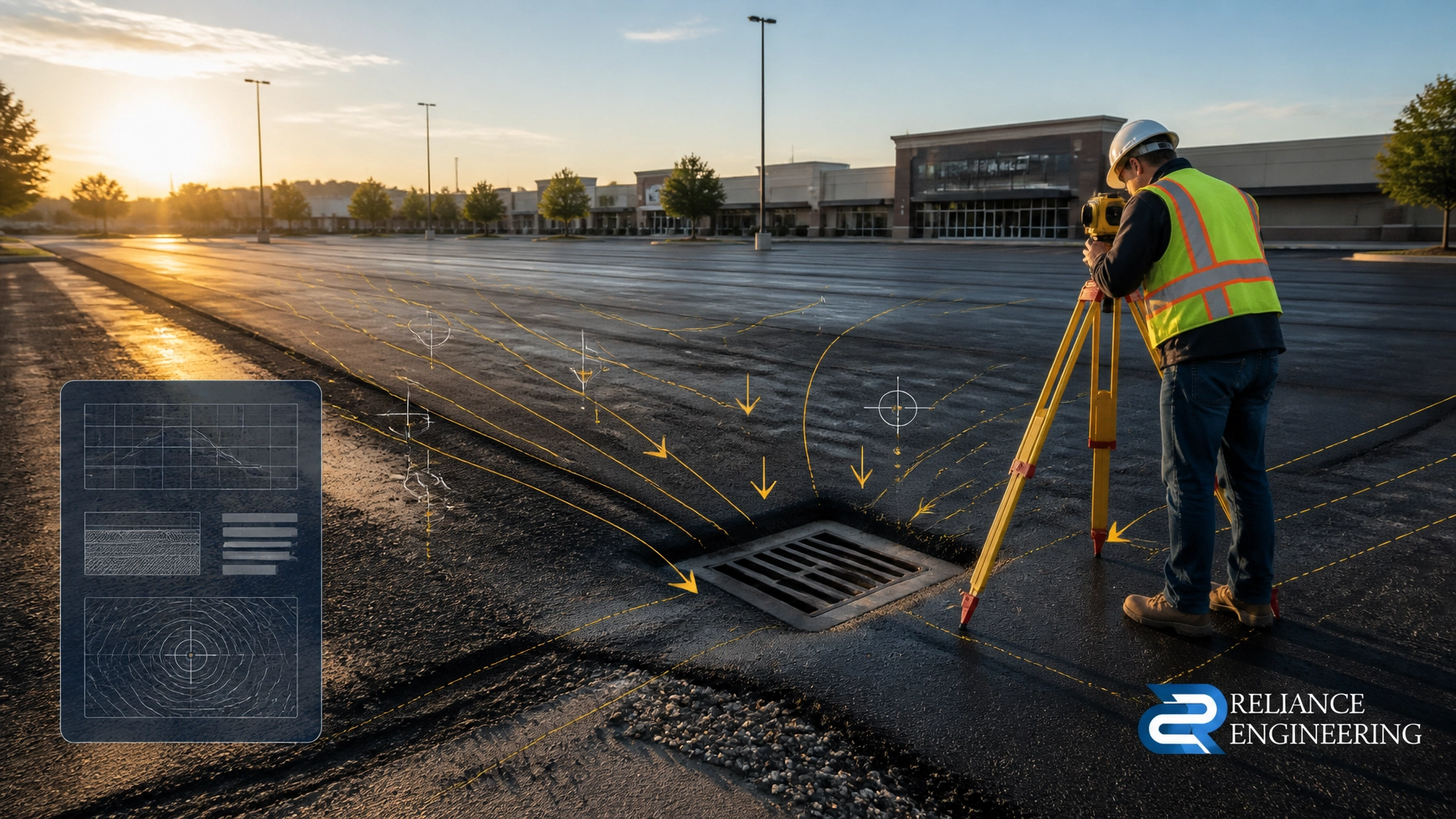
For commercial developments, this is especially important. Commercial parking lot drainage in Ontario must account for pavement slopes, catchbasin locations, curbs, entrances, accessible routes, loading areas, and connections to the municipal storm system.
Key Components of a Site-Specific ESC Plan
A complete plan normally includes drawings, construction notes, standard details, and inspection requirements. Typical measures include the following.
Stabilized Construction Entrance
A stabilized construction entrance helps prevent mud and sediment from being tracked onto public roads. It typically uses appropriately sized granular material over a suitable base and should be located where vehicles can enter and leave without crossing uncontrolled soil.
The entrance should be maintained as construction progresses. If sediment is carried onto the road, street sweeping or other approved cleaning methods may be required.
Sediment Fencing
Sediment fencing is installed along the downslope perimeter of disturbed areas. It must follow the actual drainage direction and be securely installed. Fencing should not be treated as a substitute for proper grading. Concentrated runoff can bypass or damage it if flow is not managed upstream.
Catchbasin and Storm Sewer Protection
Temporary inlet protection helps prevent sediment from entering catchbasins and storm sewers. The selected protection must allow drainage to continue while capturing sediment without creating unsafe or damaging ponding.
Protection should be coordinated with the site’s temporary grades. Poor placement can redirect runoff toward buildings, neighbouring properties, or construction areas.
Stockpile Protection
Soil stockpiles should be located away from catchbasins, property lines, drainage channels, and sensitive areas where possible. They may require perimeter controls, covers, slope stabilization, or diversion measures.
The plan should show stockpile locations and identify how runoff will be prevented from flowing through exposed material.
Sediment Traps, Check Dams, and Settling Measures
Where runoff becomes concentrated, sediment traps, check dams, or temporary settling measures may be required. These controls reduce flow velocity and provide a location for sediment to settle before water reaches a protected outlet.
They must be sized and located according to the drainage area, slope, construction phase, and expected flow conditions.
Slope and Swale Stabilization
Temporary and permanent slopes should be protected where erosion is likely. Depending on the application, measures may include erosion control blankets, stone armouring, riprap, hydroseeding, sod, or other approved stabilization methods.
Swales must be graded to carry water without causing excessive velocity or scour. Their alignment should support safe overland flow routes and prevent discharge toward unprotected soil.
Dewatering Controls
Excavation and construction activities may require dewatering. Pumped water should not be discharged directly onto exposed soil, public roads, adjacent properties, or natural features without appropriate treatment.
Depending on site conditions, dewatering may require settling tanks, filtration, sediment bags, or a controlled discharge arrangement. The ESC Plan should identify the expected method and any applicable approval requirements.
Construction Phasing Matters
ESC measures must be installed before major soil disturbance begins. Controls should then be adjusted as the site moves through each construction phase.
A practical sequence may include:
- Install construction limit fencing and perimeter controls.
- Establish the stabilized construction entrance.
- Protect existing catchbasins and drainage outlets.
- Install temporary swales, diversion measures, and sediment controls.
- Complete stripping and rough grading.
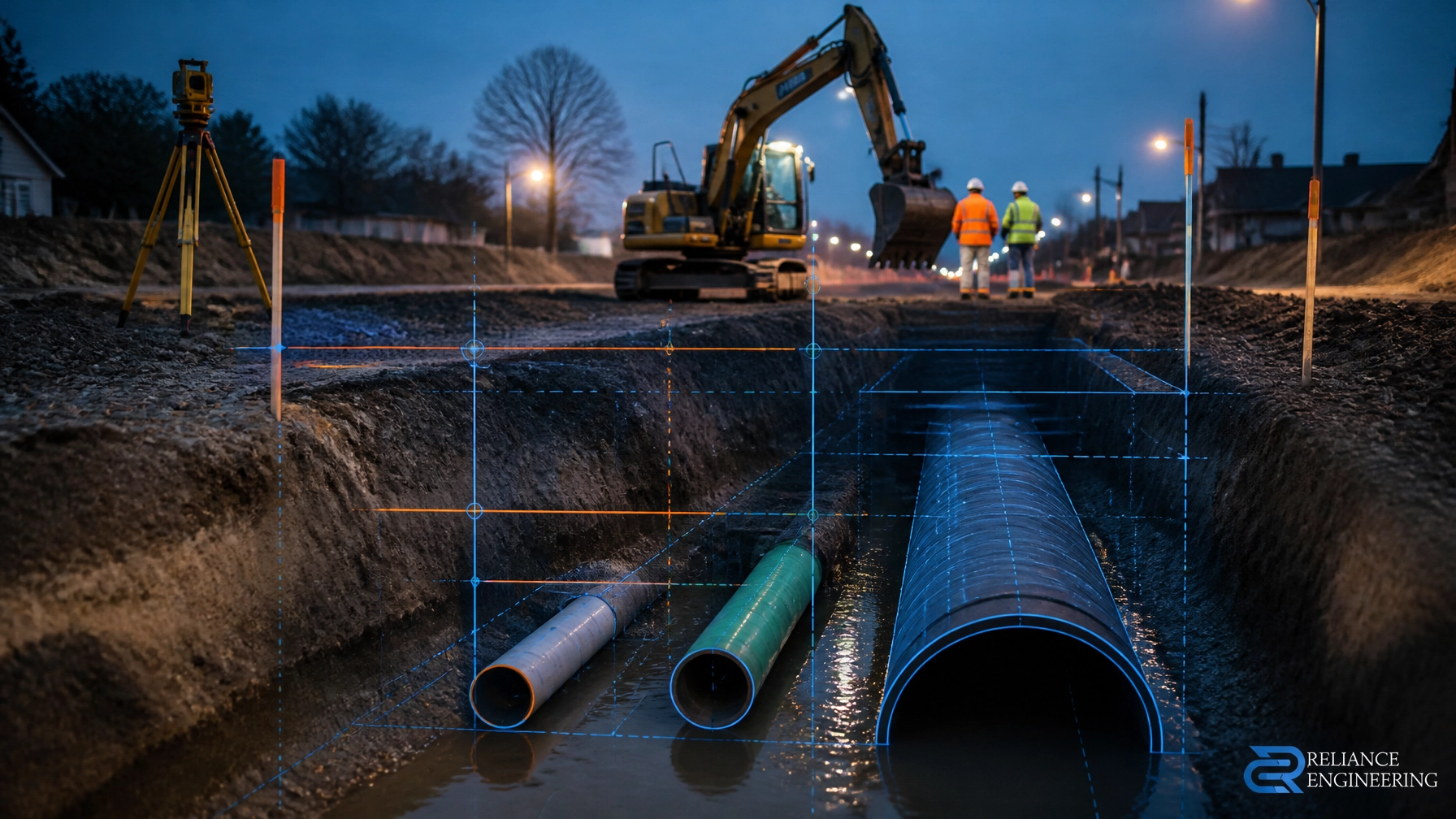
- Coordinate controls with servicing and building excavation.
- Stabilize completed areas as soon as practical.
- Remove temporary measures only after the site is adequately stabilized.
A plan prepared without construction phasing may show controls that cannot be installed or maintained once excavation, material storage, and equipment movement begin.
Ontario Municipal and Provincial Requirements
ESC requirements vary by municipality, conservation authority, project type, and the extent of site disturbance. Site plan approval, grading approval, site alteration permits, building permit submissions, and stormwater management approvals may all require erosion and sediment control documentation.
Where stormwater management works are subject to Ontario Regulation 137/25, the applicable ESC plan requirements include temporary control measures, inspection procedures, inspection frequency, maintenance procedures, and reinstatement measures. The regulation identifies inspections at least once every two weeks and as soon as practicable after significant storm events during construction. Local requirements may be more stringent.
Project teams should review:
- The applicable municipal site alteration or grading by-law
- Municipal engineering standards and submission requirements
- Conservation authority requirements
- Ontario Provincial Standard Specifications and Drawings
- The Ontario Regulation 137/25
- Ontario stormwater management guidance
- Applicable technical guidance such as the TRCA Erosion and Sediment Control Guideline for Urban Construction
Requirements should be confirmed at the beginning of design. A plan that does not address the reviewing authority’s criteria can result in comments, redesign, inspection delays, or construction interruptions.
Addressing Drainage Problems on Existing Commercial Sites
Existing properties often require ESC and grading improvements because of settlement, pavement deterioration, blocked drainage routes, or changes to surrounding development.
Common issues include:
- Ponding at parking spaces or drive aisles
- Water collecting near entrances and accessible routes
- Asphalt surfaces that no longer drain to catchbasins
- Runoff crossing property lines
- Damaged or poorly positioned catchbasins
- Eroded swales and shoulder areas
- Sediment entering municipal infrastructure
Asphalt regrading may be part of the solution, but it should begin with a review of existing elevations, pavement limits, catchbasin inverts, curb conditions, and the available outlet. Milling and resurfacing alone may not correct the underlying drainage problem.
Effective ponding solutions may include revised pavement grades, localized drainage improvements, new area drains, swale adjustments, inlet protection, or better-defined overland flow routes.
For property owners seeking commercial property grading fixes, a coordinated design can identify the cause of the problem and provide a buildable correction rather than a temporary surface repair.

What a Professional ESC Design Should Deliver
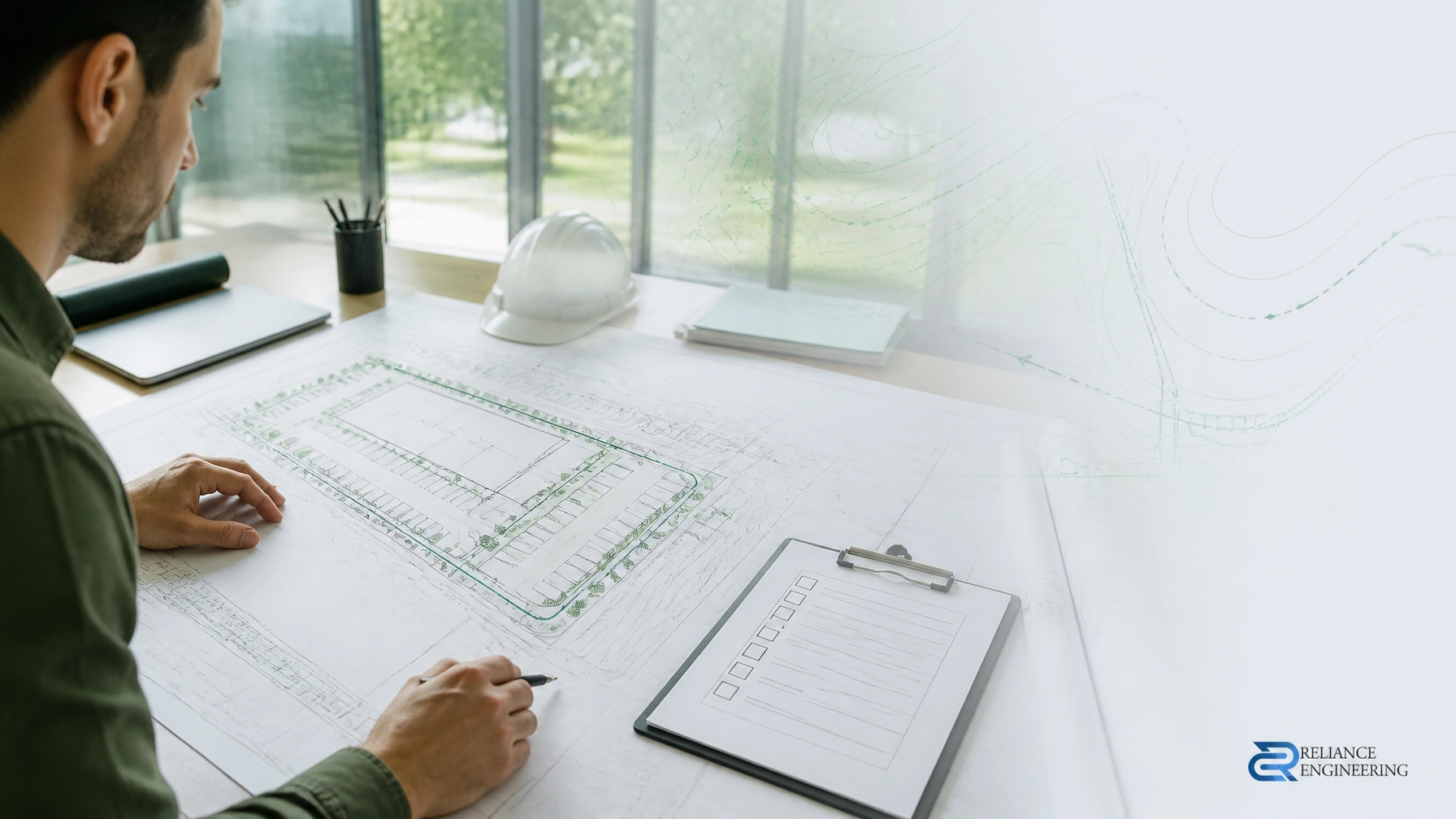
A useful ESC Plan should be clear enough for contractors to implement and detailed enough for municipal or conservation authority review. Reliance Engineering’s approach includes:
- Review of survey information and site layout
- Assessment of existing and proposed drainage
- Coordination with grading and construction limits
- Selection of practical controls for site conditions
- Clear locations, notes, and standard details
- Inspection and maintenance requirements
- Phasing and stabilization recommendations
- Support responding to municipal comments
- Engineer-stamped, permit-ready drawings
The plan must also be maintained in the field. Controls should be inspected after storms, repaired when damaged, and adjusted when construction staging or drainage conditions change.

Prepare the ESC Plan Before Construction Starts
An ESC Plan should not be added at the end of the approval process. It should be coordinated with grading and drainage design before soil disturbance begins.
Reliance Engineering provides erosion and sediment control planning for residential, commercial, industrial, institutional, parking lot, site plan, and drainage projects across Ontario. We focus on practical controls, buildable grading, positive drainage, and clear approval support.
Request an erosion and sediment control consultation or review our Erosion and Sediment Control Plan services.
Professional Contact Information
Reliance Engineering
6850 Millcreek Dr, Mississauga, ON L5N 2H4
Phone: 647-385-6418
Email: [email protected]
Naresh Ochani, P.Eng. M.Eng.
PEO Certificate of Authorization: 100548882
Reliance Engineering is authorized by the Association of Professional Engineers of Ontario to offer professional engineering services.
Office hours: Saturday 12:00 PM–2:00 PM; Sunday Closed.