Article type: Technical how-to and approval guide
Focus: Ontario construction runoff, erosion and sediment control, municipal review
Prepared by: Reliance Engineering
Service area: Ontario-wide
Construction changes the way water moves across a site. Clearing, excavation, stockpiling, grading, foundation work, and temporary access routes expose soil and create new drainage paths. Without effective controls, rainwater can carry sediment onto municipal roads, into catchbasins, through storm sewers, and toward neighbouring properties or natural features.
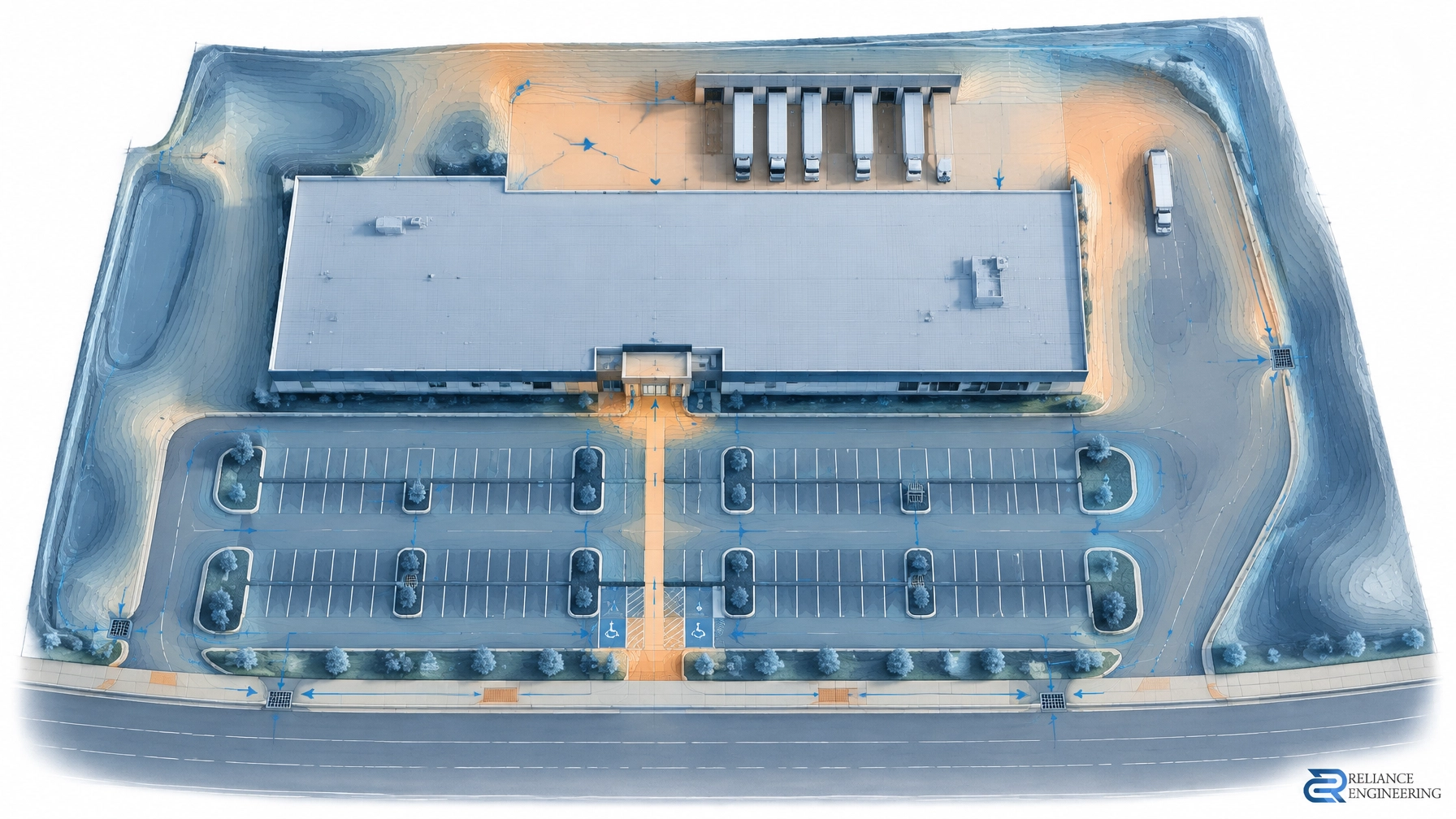
An Erosion and Sediment Control (ESC) Plan is the construction-stage counterpart to permanent grading and drainage design. It explains how runoff and exposed soil will be controlled while the site changes. The plan should be based on actual grading, drainage areas, overland flow routes, construction limits, access points, and sequencing, not copied standard notes.
Reliance Engineering prepares practical, drainage-aware ESC plans with clear drawings, construction details, maintenance requirements, and approval support for projects across Ontario.
ESC Plans Must Reflect Real Site Conditions
A permanent site grading plan shows the proposed finished condition. An ESC Plan shows how the site will remain controlled before that condition is reached.
During construction, the final swales, catchbasins, pavement, landscape areas, and stormwater facilities may not yet be operational. Temporary controls must therefore manage runoff through each construction phase.
A coordinated ESC design considers:
- Existing and proposed elevations
- Drainage areas and positive drainage
- Overland flow routes
- Construction limits and disturbed areas
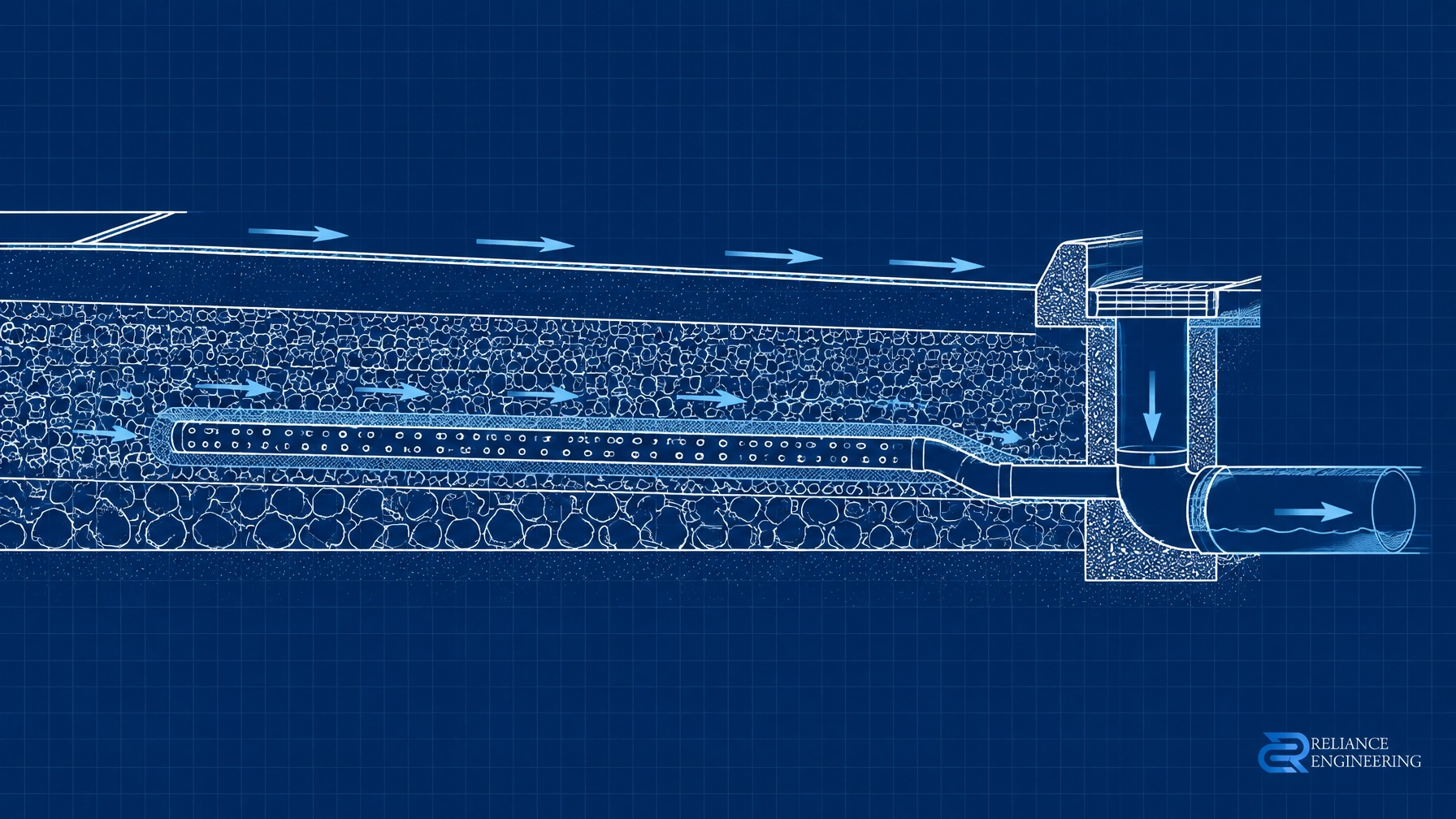
- Temporary and permanent storm connections
- Excavation and dewatering locations
- Stockpiles and exposed soil
- Construction access and municipal road conditions
- The timing of grading, servicing, paving, and stabilization
This coordination is essential for commercial sites, subdivisions, townhouse developments, infill projects, parking lots, building permit submissions, and site plan applications.

What an Ontario ESC Plan Typically Includes
Municipal requirements differ by jurisdiction and project type. However, a complete ESC submission commonly includes the following measures.
Silt Fence and Perimeter Controls
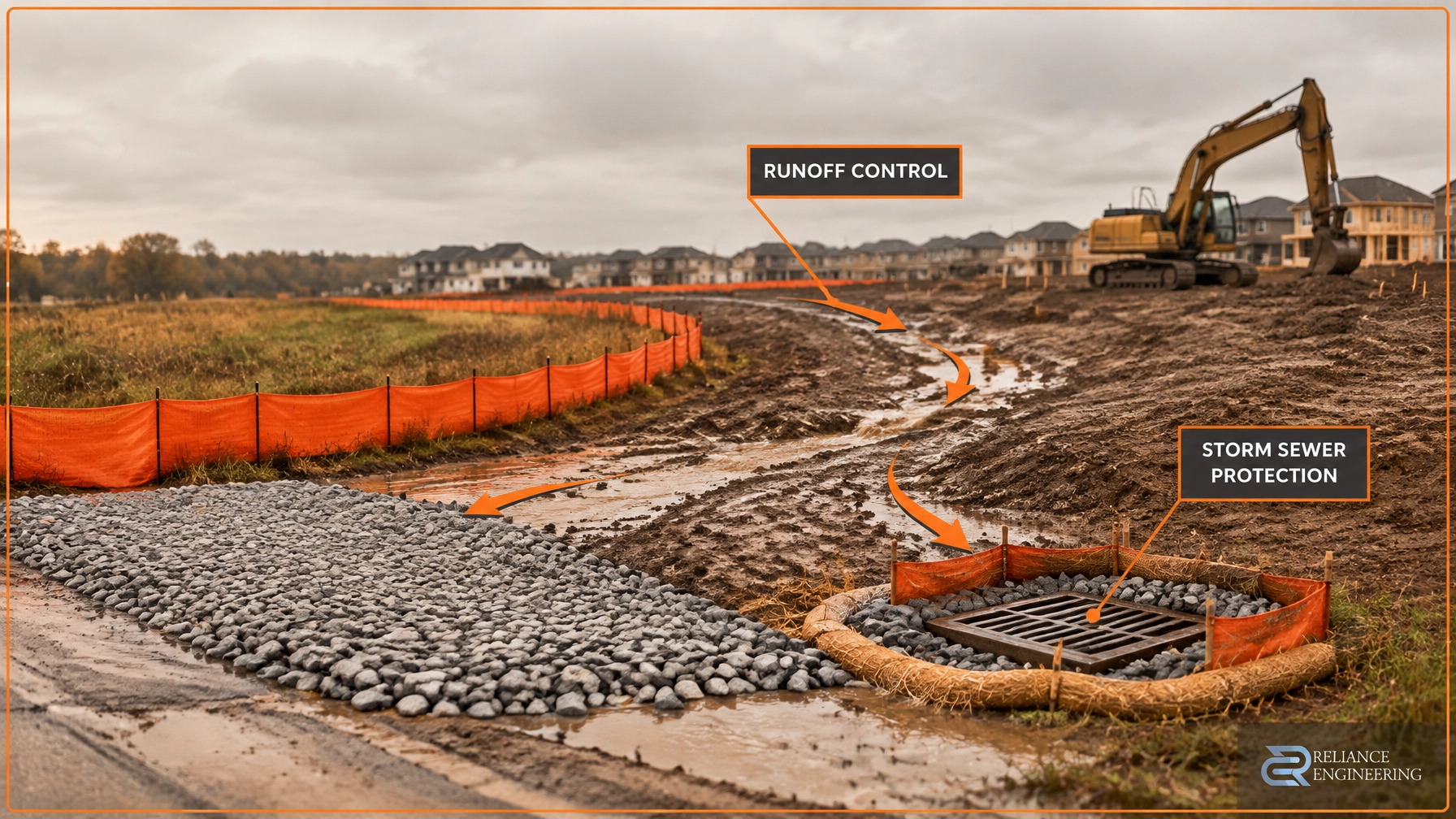
Silt fencing is typically placed along the downslope edge of disturbed areas. The alignment must follow the site’s drainage pattern and should not block required access, emergency routes, or clean-water flow.
A practical layout identifies:
- Fence locations and limits
- Flow direction
- End treatments and returns
- Tie-ins to existing barriers
- Areas requiring reinforced or alternative controls
- Locations where maintenance access is required
Silt fence is not a substitute for proper grading or stabilization. It must be installed correctly and inspected regularly.
Mud Mats and Construction Access
A stabilized construction entrance helps prevent soil from being tracked onto municipal roads. Mud and sediment on the roadway can enter nearby catchbasins and create public safety concerns.
The plan should show:
- Construction entrance location
- Stone mud mat dimensions and material
- Connection to the internal access route
- Turning and delivery requirements
- Wheel-cleaning or wash-down measures, where required
- Road sweeping and maintenance responsibilities
This detail is especially important for commercial sites and projects near active sidewalks or heavily used roads.
Catchbasin and Storm Sewer Protection
Catchbasins are direct pathways from a construction site to the municipal storm sewer system. ESC drawings should identify catchbasins on and near the site that may receive construction runoff.
Typical measures may include:
- Inlet protection devices
- Filter fabric or approved inlet inserts
- Temporary sediment barriers
- Protection at adjacent municipal catchbasins
- Regular cleaning and replacement requirements
- Restrictions on removing protection before the site is stabilized
Storm sewer protection must be coordinated with the site servicing plan and the proposed drainage system. A control that blocks an inlet without providing an alternative flow path can create flooding or unsafe ponding.
Sediment Traps, Check Dams, and Outlet Protection
Where runoff is concentrated, perimeter fencing alone may not be sufficient. Sediment traps, check dams, diversion measures, and stabilized outlets may be required.
These controls should be located based on:
- Contributing drainage area
- Slope and flow velocity
- Available storage
- Soil conditions
- Discharge location
- Construction sequence
- Access for cleanout and maintenance
The objective is to slow water, reduce erosion, and retain sediment before runoff leaves the site.
Stockpile Protection and Construction Limit Fencing
Stockpiles should be located away from catchbasins, property lines, watercourses, and concentrated flow routes. ESC plans should show whether stockpiles will be covered, surrounded by controls, or stabilized.
Construction limit fencing helps preserve areas that are not intended to be disturbed. It can also protect vegetation, drainage features, natural heritage areas, and buffers required by a municipality or Conservation Authority.
Dewatering Notes
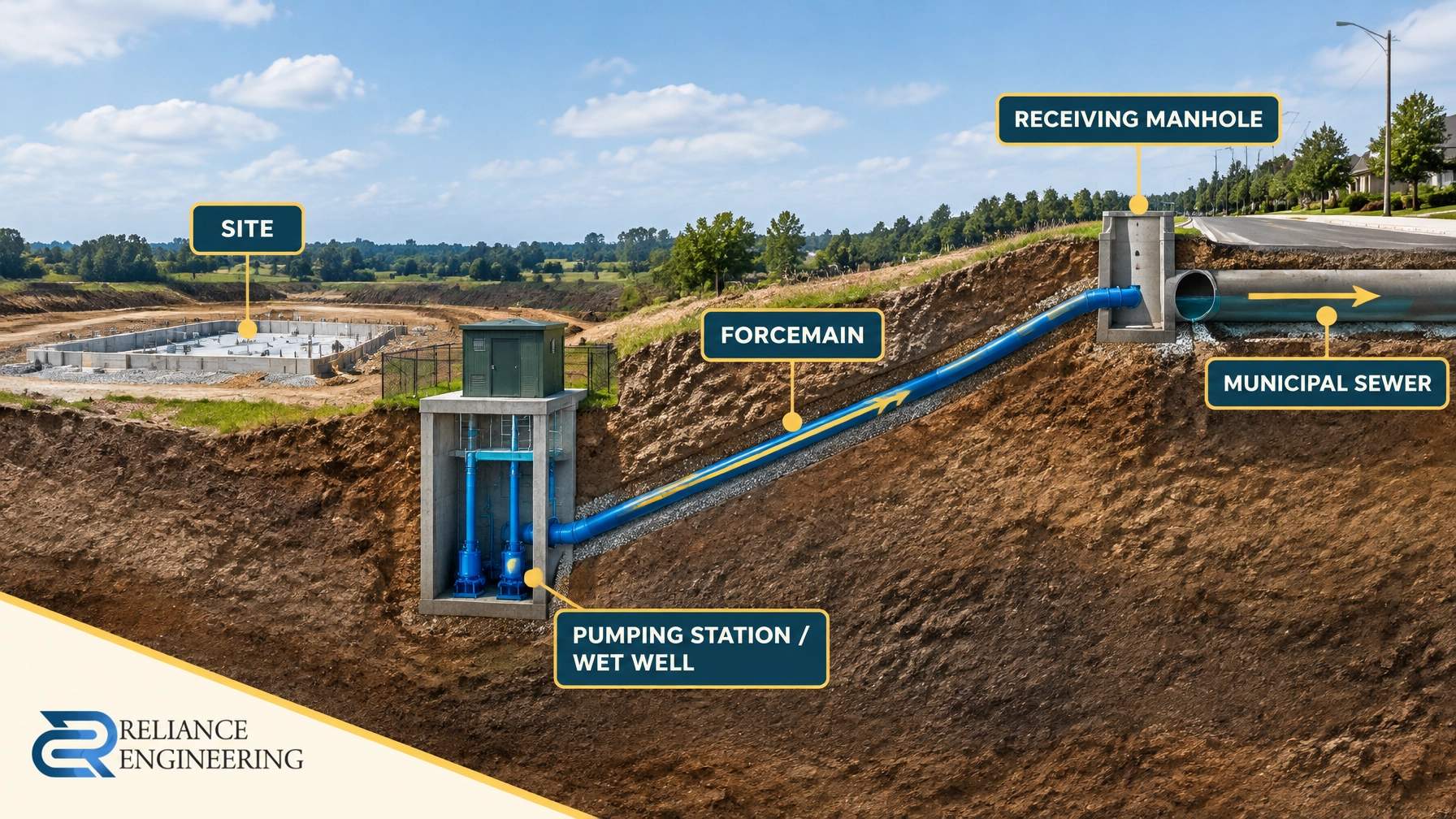
Excavation water cannot simply be pumped onto a road, neighbouring property, storm sewer, ditch, or watercourse. Dewatering notes should explain the proposed treatment and discharge approach.
Depending on the site, controls may include:
- Sediment tanks
- Filter bags
- Settling areas
- Grit chambers
- Sand filtration
- Controlled discharge points
- Energy dissipation at outlets
Dewatering requirements should be reviewed with the municipality and, where applicable, the Conservation Authority or other approving agency.
Municipal and Conservation Authority Review Requirements
Across Ontario, ESC requirements may be connected to:
- Municipal engineering standards
- Site alteration by-laws
- Fill and topsoil regulations
- Storm sewer protection requirements
- Planning applications and site plan control
- Conservation Authority permits or technical review
- Provincial environmental requirements
- Construction best practices and applicable specifications
Ontario’s B-6 Guidelines for Evaluating Construction Activities Impacting on Water Resources identify the importance of protecting exposed surfaces and controlling runoff during construction.
The Toronto and Region Conservation Authority ESC Guide and the Lake Simcoe Region Conservation Authority ESC Evaluation Tool also demonstrate the level of detail often expected for phasing, installation, inspection, and maintenance.
Requirements vary across Ontario. A project may require a separate ESC Plan, an ESC report, an approved site alteration permit, financial securities, or specific inspection records. The municipality and Conservation Authority should be contacted early where the site is near a watercourse, wetland, valley, floodplain, or other regulated feature.
Common Municipal Review Comments on ESC Plans
Many ESC submissions receive comments because the controls are generic, incomplete, or disconnected from the grading design. Common review comments include:
-
Show all adjacent catchbasins.
Protection may be required beyond the property line where runoff can reach municipal infrastructure. -
Clarify construction phasing.
The plan should show when controls are installed and how they change during clearing, earthworks, servicing, building, paving, and final stabilization. -
Coordinate the ESC Plan with grading.
Reviewers need to understand where runoff will flow during construction and whether temporary controls are located on the actual drainage path. -
Provide a stabilized construction entrance.
A note without a detailed access location, material, and maintenance requirement may not be sufficient. -
Add dewatering procedures.
Pumped water must be treated and discharged without causing erosion or sediment release. -
Include inspection and maintenance notes.
Plans should identify inspection frequency, post-storm inspections, repair responsibilities, sediment cleanout, and record keeping. -
Address seasonal shutdown.
Fall and winter conditions require stabilization of exposed soils, secure stockpiles, protected slopes, and controls that can withstand snow, freeze-thaw cycles, and spring runoff.

Inspection, Maintenance, and Construction Responsibility
An ESC Plan is not complete when it is stamped. Controls must be installed before or as site disturbance begins, maintained throughout construction, and removed only when permanent stabilization is established.
The contractor and owner should confirm:
- Controls are installed at the locations shown
- Silt fences remain upright and properly anchored
- Catchbasin protection is clear and functional
- Sediment traps and check dams are not full or bypassed
- Mud mats remain effective
- Stockpiles remain covered or stabilized
- Damaged controls are repaired promptly
- Inspections occur after significant rainfall and at the frequency required by the approval
- Inspection and maintenance records remain available on site
A field condition that differs from the plan should be addressed promptly. New drainage paths, changed access routes, unexpected groundwater, and accelerated construction sequencing may require revisions.
ESC Design Supports Better Grading and Drainage
Construction runoff controls also provide an early test of the site’s drainage strategy. If temporary runoff cannot be routed safely, the permanent design may need further review.
For example, a commercial parking lot may require coordinated solutions for:
- Ponding during excavation or paving
- Asphalt regrading
- Temporary catchbasin protection
- Positive drainage toward approved outlets
- Protection of adjacent sidewalks and roads
- Commercial property grading fixes
- Temporary and permanent overland flow routes
These issues should be coordinated with the Stormwater Management Report, permanent grading, and site servicing design. Early coordination reduces construction delays and helps avoid rework after municipal inspection.

Reliance Engineering ESC Plan Services
Reliance Engineering prepares permit-ready ESC drawings for residential, commercial, industrial, institutional, subdivision, parking lot, drainage, and building permit projects.
Our process includes:
- Site review of survey information, grading, drainage, access, and construction limits.
- Control selection based on real site conditions and construction sequencing.
- Plan preparation with silt fence layouts, mud mats, catchbasin protection, sediment controls, stockpile protection, dewatering notes, construction limit fencing, details, and maintenance notes.
- Review support for municipal and Conservation Authority comments.
Our approach is practical and drainage-focused. We use clear drawings, buildable grading, coordinated design, and approval support to help keep sediment on site and projects moving.
Request an Ontario ESC Plan Consultation
If your project requires an Erosion and Sediment Control Plan, contact Reliance Engineering before construction or site alteration begins. We can review the project scope, municipality, drainage conditions, construction sequence, and approval requirements.
Request a consultation through Reliance Engineering or contact us directly.
Professional Contact Information
Naresh Ochani, P.Eng. M.Eng.
Principal Engineer, Reliance Engineering
PEO Certificate of Authorization: 100548882
6850 Millcreek Dr, Mississauga, ON L5N 2H4
Phone: 647-385-6418
Email: [email protected]
Office hours: Saturday 12:00 PM–2:00 PM; Sunday Closed.