Published: October 10, 2026 · Category: Ontario Grading & Drainage · Reading time: 6 minutes
During site grading and parking lot construction, runoff can carry soil into catchbasins, municipal storm systems, roads and neighbouring properties. A well-prepared erosion and sediment control (ESC) plan sets out how the site will be protected as work progresses, not just what controls should be installed on the first day.
Reliance Engineering prepares ESC plans coordinated with site grading plans, construction staging and drainage patterns. Our focus is on practical designs, clear drawings and buildable grading that support positive drainage and protect overland flow routes.
Confirm permit requirements before disturbing the site
Permit requirements vary by municipality and project. Before clearing, excavation, importing or exporting fill, or changing drainage, confirm whether the work requires a municipal site alteration, grading, engineering or site plan approval. Requirements may also apply to road and driveway tie-ins, work near municipal infrastructure, and changes that affect neighbouring lands.
Check whether the property is within a regulated area of a Conservation Authority. Where applicable, a separate permit or review may be required. Ontario Regulation 41/24 describes prohibited activities, exemptions and permits under the Conservation Authorities Act; the applicable Conservation Authority should confirm how the regulation applies to the site.
An ESC drawing should reflect the actual permit conditions and proposed construction sequence. Generic notes may not show where runoff will go, how a temporary control will be accessed for maintenance, or when it must be installed.
Sequence controls with the work
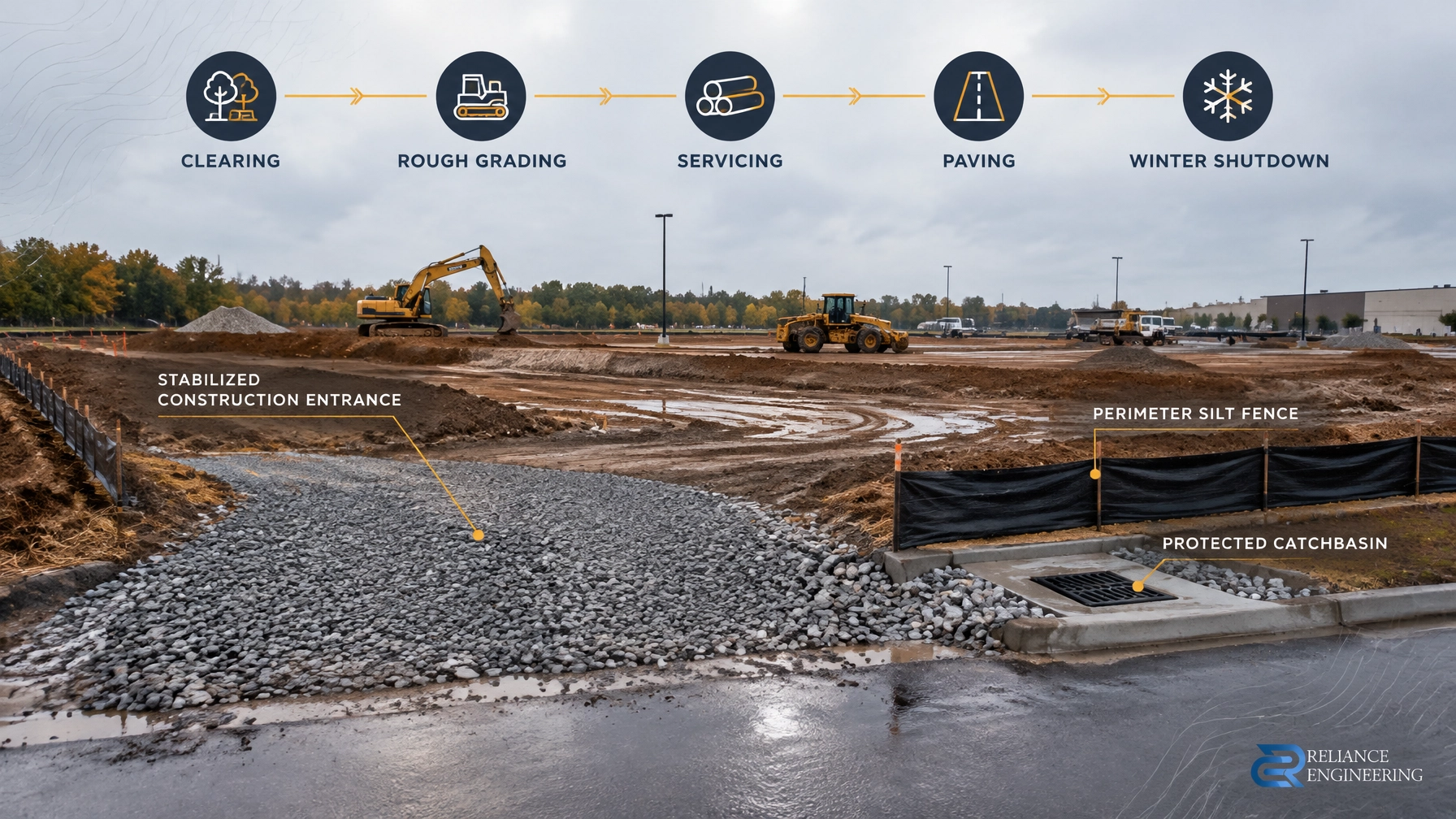
Controls need to be in place before soil is exposed and adjusted as the project changes. A coordinated plan typically addresses each stage:
- Clearing and construction access: Mark limits of disturbance and install perimeter controls before clearing. Establish a stabilized mud mat or construction access to reduce tracking onto public roads. Protect nearby catchbasins that could receive runoff.
- Rough grading: Direct clean water away from disturbed soil where practical. Use temporary swales, check dams and sediment traps where site conditions call for them. Protect stockpiles and exposed slopes, and maintain safe drainage paths.
- Servicing: Keep inlet protection effective as storm structures are installed. Coordinate temporary drainage and dewatering with the grading and servicing work; do not allow pumped water to carry sediment into a storm sewer or watercourse.
- Paving and final grading: Maintain controls until the site is stabilized. Coordinate asphalt grades, catchbasins and drainage routes so that permanent runoff paths work as designed.
- Winter shutdown: Stabilize exposed ground and stockpiles, secure controls and document who will inspect and maintain them. Resume work with an inspection, especially after snowmelt or freeze-thaw damage.

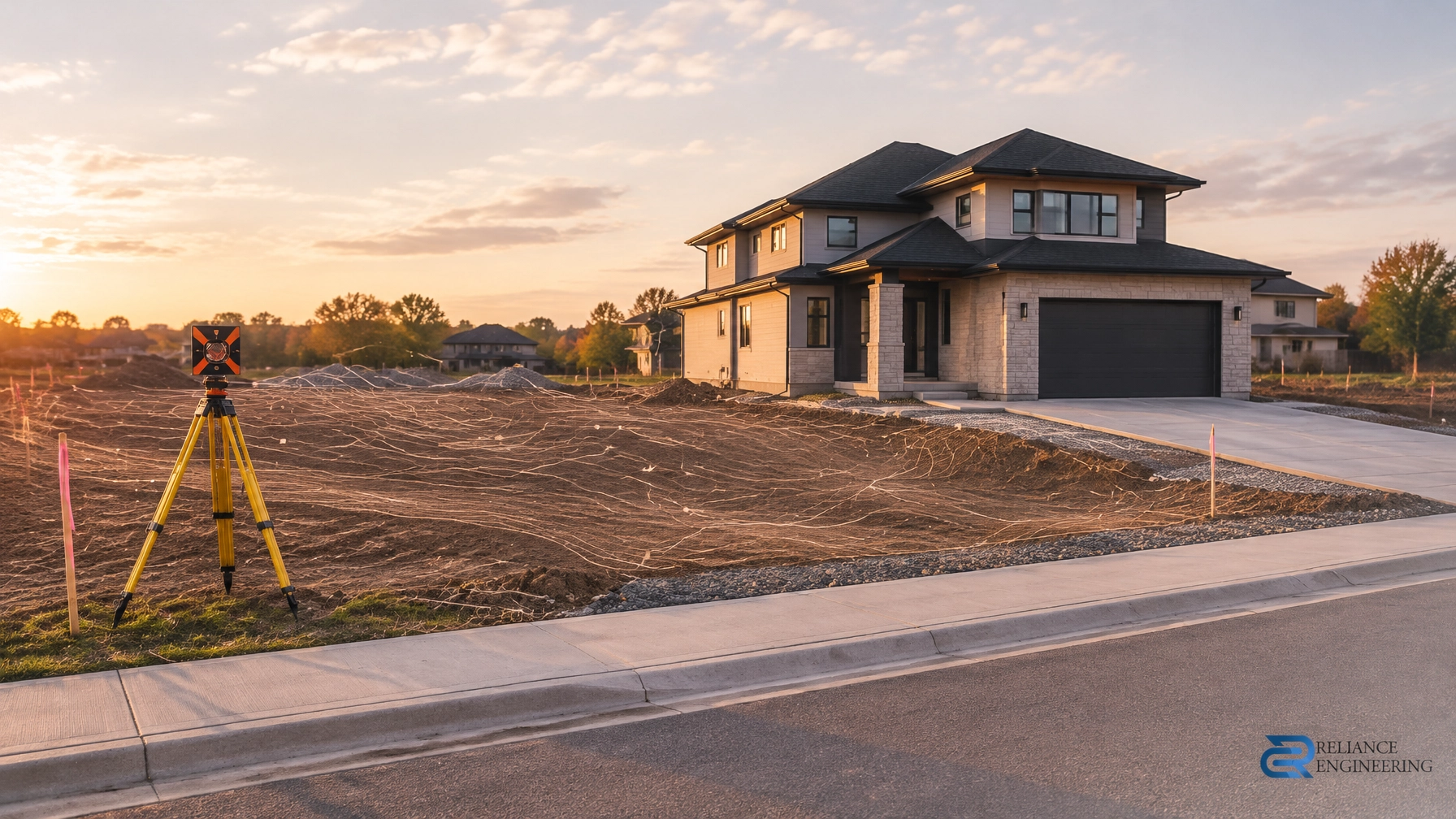
An ESC plan should locate controls on the site and show how they relate to access, drainage and construction limits.
Protect inlets, outlets and temporary drainage
Catchbasin protection is a frequent focus of construction inspections. Show which existing and proposed inlets need protection, including those near site boundaries or on the street frontage that could receive sediment from the work. Install protection at the appropriate stage, then inspect it for accumulated sediment, damage or blockage. A clogged device can redirect water over pavement or toward adjacent areas.
Dewatering notes should identify the pumping area, treatment or filtration method, discharge location and erosion protection. Depending on the site and approval conditions, controls may include a sediment bag or settling arrangement and a stabilized discharge point. The plan should not imply that untreated, sediment-laden water can be sent directly to a storm sewer or watercourse.
Sediment traps and check dams help slow and capture sediment in temporary drainage paths when suited to the site. They require accessible locations and enough capacity for the intended use. They also need maintenance: a full trap or damaged check dam may no longer control sediment or runoff effectively.
Coordinate temporary controls with permanent drainage
ESC and grading designs need to work together. Temporary grades should direct runoff to controlled locations without sending concentrated flows across exposed soil, onto neighbouring property or toward a building. The permanent design should establish positive drainage, show overland flow routes and coordinate driveway and road tie-ins, catchbasins and municipal storm connections.
This is especially important for parking lot construction and asphalt regrading. Commercial property grading fixes and ponding solutions require more than adjusting the asphalt surface: proposed grades must work with inlets, accessible routes, entrances and boundary conditions. A drainage-focused approach helps identify construction-phase sediment risks while keeping the final drainage design buildable.

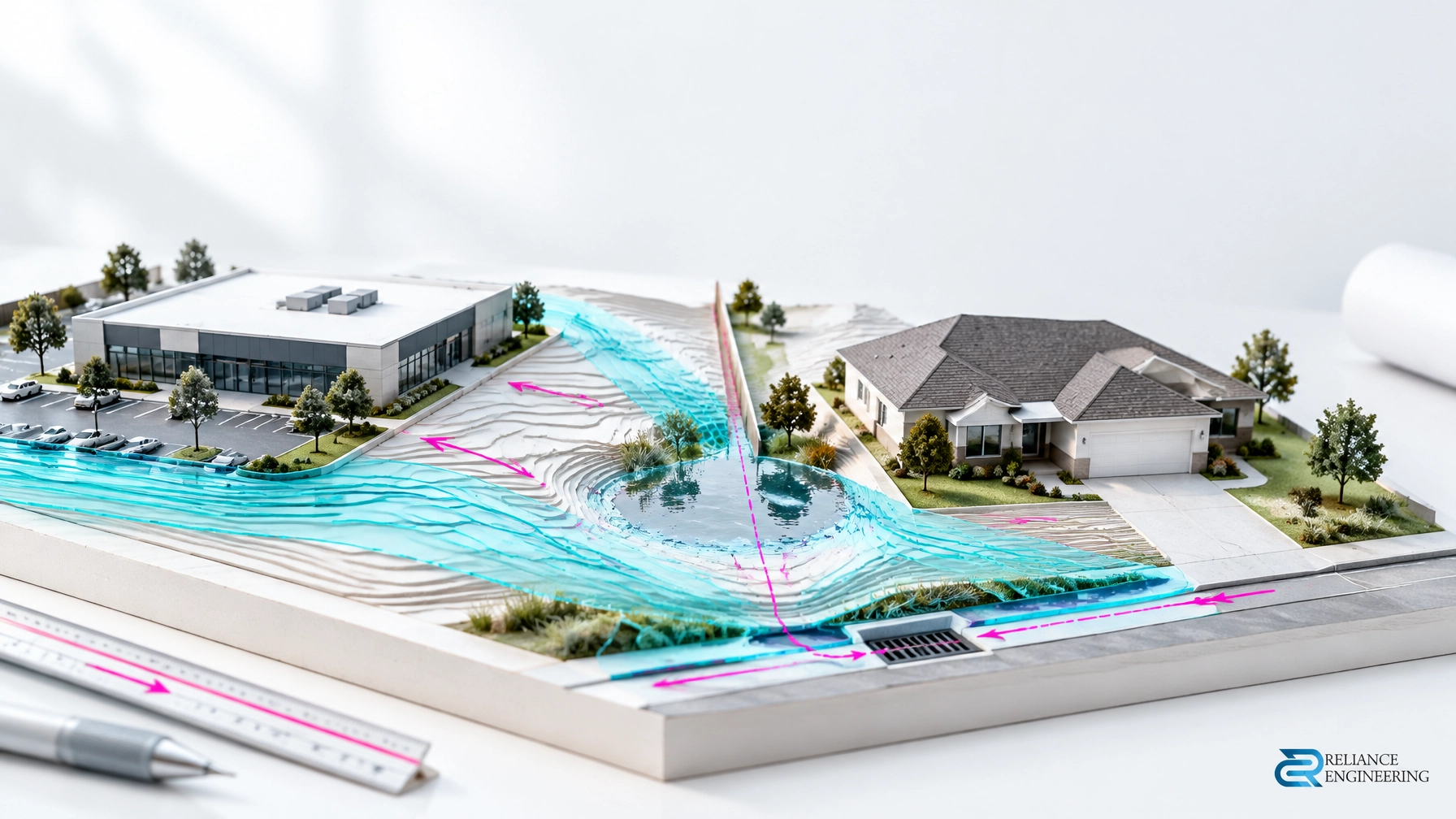
Coordinate temporary sediment controls with permanent parking lot grades, catchbasin locations and drainage routes.
Inspections and maintenance keep controls effective
An ESC plan is not a one-time installation checklist. Assign responsibility for inspection and maintenance, keep inspection records, and follow the schedule in the permit or municipal requirements. The required frequency varies; local approval conditions take precedence. Inspections should also respond to rainfall, snowmelt, construction changes and observed damage.
Common inspection problems include:
- Silt fence that is damaged, poorly installed or bypassed by runoff.
- Mud tracked onto the road because the construction access is ineffective or not maintained.
- Catchbasin protection that is missing, clogged or installed too late.
- Exposed stockpiles or disturbed areas left without suitable protection.
- Dewatering discharge causing erosion or carrying visible sediment.
- Sediment traps and check dams that are full, damaged or inaccessible.
- Controls removed before final grades and surfaces are stabilized.

Regular inspection and timely cleaning, repair and stabilization help keep controls functioning through changing site conditions.
How permit-ready drawings help prevent failures
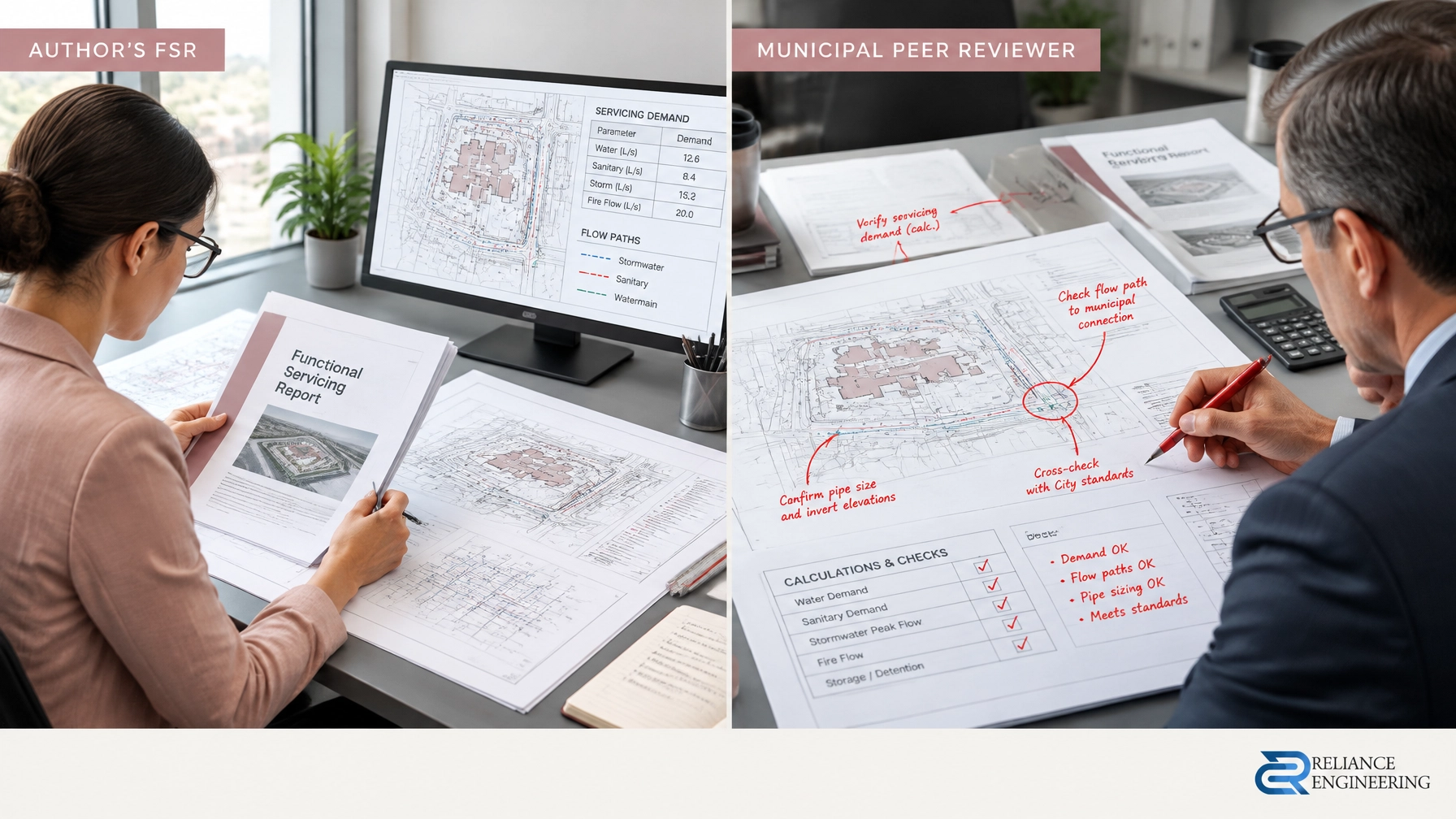
A permit-ready ESC drawing set identifies control locations, construction limits, access, drainage directions, stockpiles, inlet protection, sediment traps and check dams where required. It includes relevant details and maintenance notes, and it is coordinated with grading and servicing. Contractors can use clear drawings to understand what must be installed, when it is needed and how it should be maintained.
Reliance Engineering prepares coordinated civil drawings for municipal review and construction. See our site grading plans, site servicing plans and ESC plan services. Municipal and Conservation Authority requirements are site-specific; drawings should be developed around the applicable review conditions.
Request an ESC plan consultation
Planning grading, drainage or commercial parking lot work in Ontario? Contact Reliance Engineering to discuss your site, permit requirements and ESC drawing needs. Request a consultation or quote.
Professional credentials
Naresh Ochani, P.Eng. M.Eng.
PEO Certificate of Authorization: 100548882
Reliance Engineering
6850 Millcreek Dr, Mississauga, ON L5N 2H4
Phone: 647-385-6418
Email: [email protected]
Office hours: Monday to Friday 9:00 AM–5:00 PM · Saturday 12:00 PM–2:00 PM · Sunday Closed
Reference: Ontario Regulation 41/24: Prohibited Activities, Exemptions and Permits.