Article type: Ontario drainage and property-responsibility guide
Published: October 29, 2026
Prepared by: Naresh Ochani, P.Eng. M.Eng.
PEO Certificate of Authorization: 100548882
Reliance Engineering Canada Limited
6850 Millcreek Dr, Mississauga, ON L5N 2H4
647-385-6418 | [email protected]
Office hours: Mon–Fri 9:00 AM–5:00 PM; Sat 12:00 PM–2:00 PM; Sun Closed
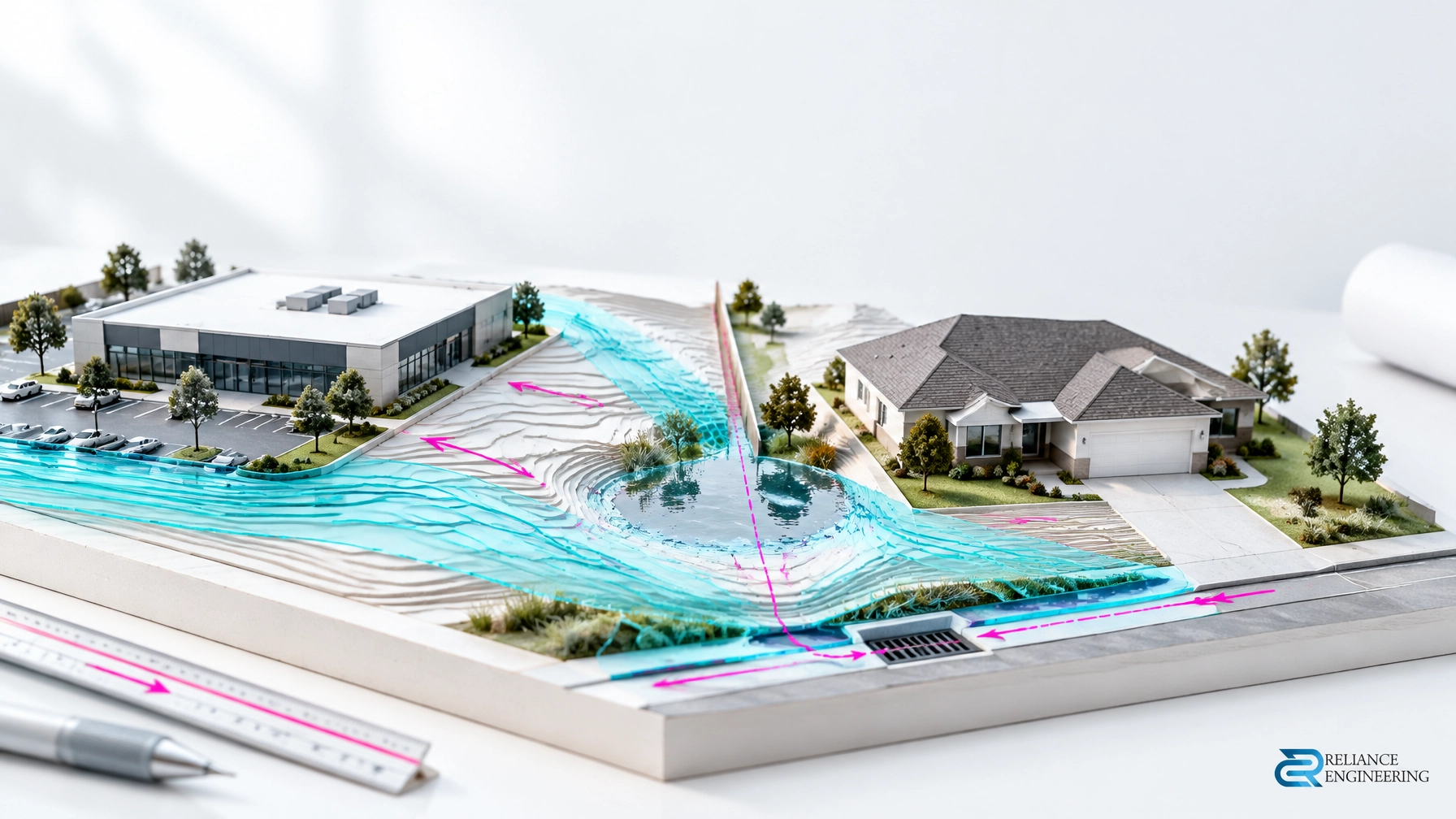
Repeated ponding beside a property line can become more than a maintenance concern. It may signal that grading has changed, a swale or drain is blocked, or runoff is being directed where it was not intended to go. But water crossing a lot line does not, by itself, establish who is responsible.
Across Ontario, the right response starts with evidence: how water naturally moves, what the approved grading shows, whether an easement applies, and whether a private or public drainage system is involved. Municipal lot-grading criteria and bylaws vary. The examples below explain common principles; they are not province-wide rules or legal advice.
Start with the cause, not the property line
A lower property may receive ordinary surface runoff from higher land. That fact alone does not necessarily mean the uphill owner is liable. The concern changes when grading, paving, walls, downspouts, sump-pump outlets, landscaping, or blocked drainage features collect, concentrate, increase, or redirect water onto neighbouring land.
The Ontario Ministry of Agriculture, Food and Agribusiness guide to drainage legislation and common law discusses the distinction between natural surface flow and altered or concentrated drainage. The details of any dispute depend on the property, evidence, applicable law, and agreements registered on title.

A useful assessment asks:
- Where did water flow before the ponding began?
- Have grades, hard surfaces, retaining walls, or roof drainage changed?
- Is a swale, catchbasin, ditch, or private pipe blocked or damaged?
- Does the approved lot-grading plan show a shared drainage route?
- Is the outlet private, municipal, or controlled by an easement?
The aim is to identify a cause and a practical remedy, not simply to assign blame based on where water is visible.
Check the grading plan and easements
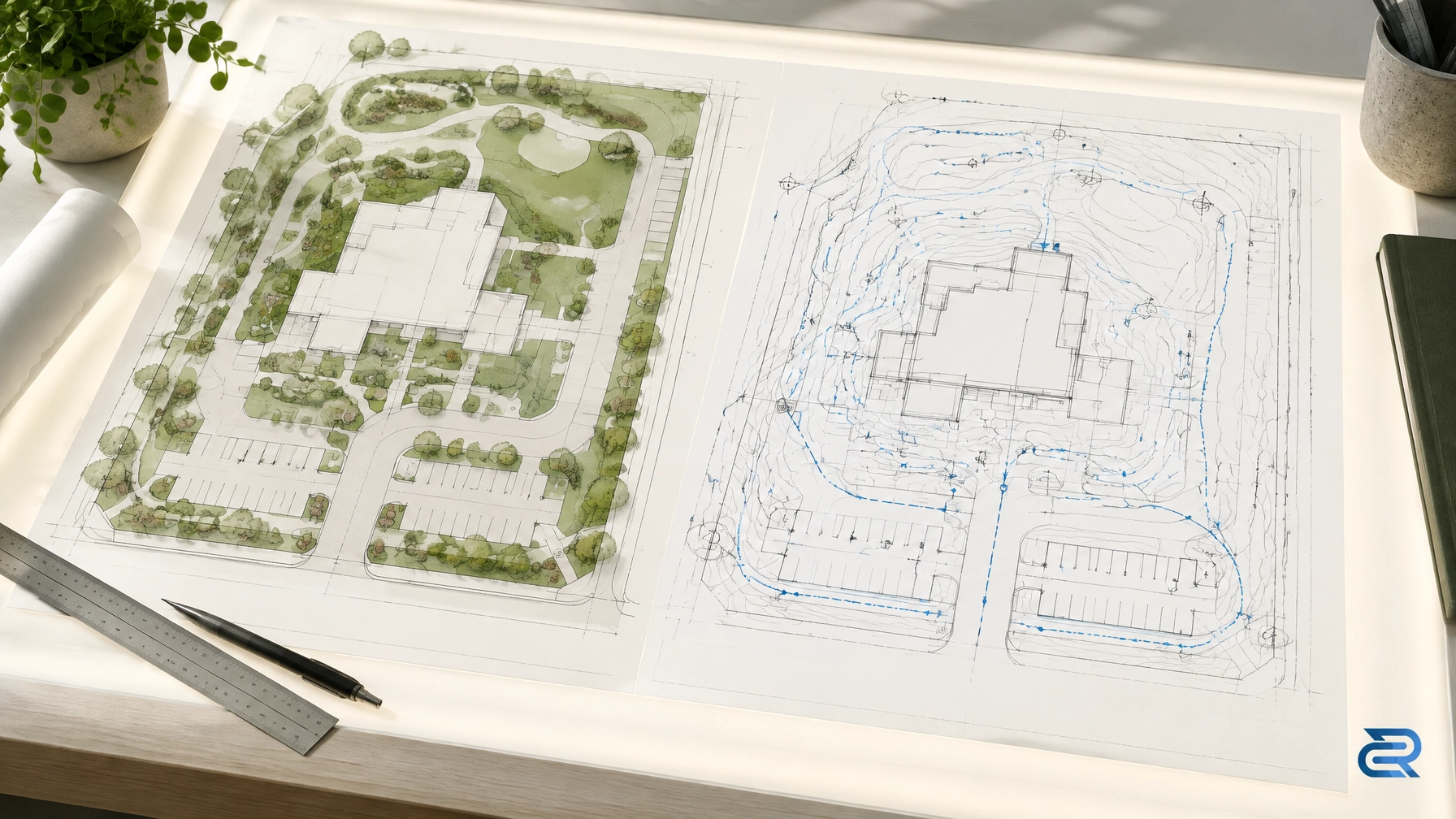
An approved grading plan can help show the intended elevations, swales, and overland flow routes. Compare it with current site conditions. A swale that has been filled or flattened, a raised garden bed, or an added retaining wall can interrupt the designed route and leave water trapped.
An easement may provide legal rights to carry drainage across a property or to access and maintain a pipe or structure. Its wording matters: do not assume that a visible pipe, catchbasin, or historic drainage path is public, or that a neighbour automatically has maintenance obligations. Review the registered instrument alongside the approved plans and any subdivision or site agreements.

Municipal documents illustrate how local requirements differ. For example, Oakville’s guide for residential infill developments addresses grading and drainage considerations for infill sites. Toronto’s lot-grading guidance is another municipal example. These criteria are not automatically identical across Ontario.
Identify whether the outlet is private or public
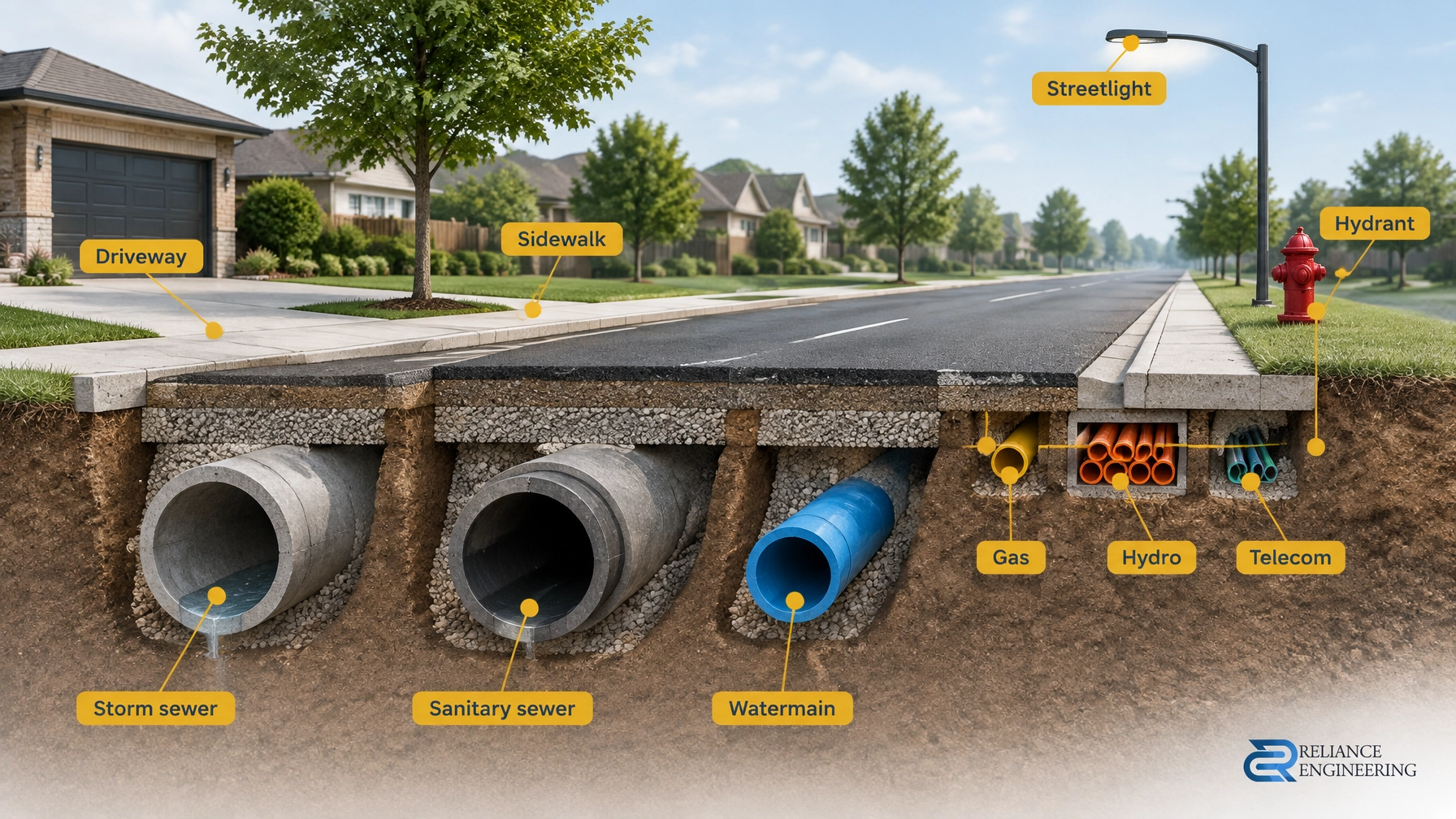
A private drainage system can include a property’s swales, catchbasins, roof leaders, sump-pump discharge, and private pipes. Owners generally need to keep their own drainage features functioning and avoid changes that impair neighbouring drainage. A connection to a municipal storm system does not necessarily make every upstream pipe or surface pond a municipal responsibility.
Public responsibility depends on the infrastructure and circumstances. A road inlet, municipal storm sewer, public ditch, or municipal easement may be relevant, but the municipality’s ownership, control, maintenance duties, and records should be confirmed. The City of Waterloo’s drainage guidance explains that some disputes involving private properties are civil matters, while public drainage concerns may require municipal review.
Major overland flow routes are also important. A storm sewer may not be designed to carry every storm event. Approved plans may rely on surface routes to convey excess water safely. Do not block, fill, or redirect a route without checking the design and municipal requirements.

Site alteration bylaws add another layer, and they vary by municipality. As one example, Ottawa’s Site Alteration By-law regulates certain changes to land and drainage features in Ottawa. It is an example of local regulation, not a province-wide bylaw.
Document the problem before changing the site
If ponding is recurring, preserve evidence before attempting a fix. Useful information includes:
- Dated photographs and videos during and after rainfall.
- Notes on where water appears, how long it remains, and which way it moves.
- Existing and proposed grading plans, surveys, and any lot-grading certificate.
- Registered easements, subdivision agreements, and relevant municipal records.
- Information about recent construction, paving, landscaping, or drainage repairs.
Avoid filling a low area, blocking a swale, or installing a pipe that discharges onto neighbouring land without proper review. A quick intervention can worsen the problem, create a new flow path, or complicate later assessments. Where liability, property rights, or a significant loss is in question, seek advice from a qualified lawyer as well as a drainage professional.
Courts assess evidence and circumstances. In Warren v. Gluppe, 2023 ONSC 6301, the court considered property drainage and maintenance issues in a dispute that resulted in substantial damages. The decision illustrates why drainage problems should be investigated carefully; it does not determine the outcome of other properties’ disputes. Read the decision summary.
How a site grading plan helps prevent disputes
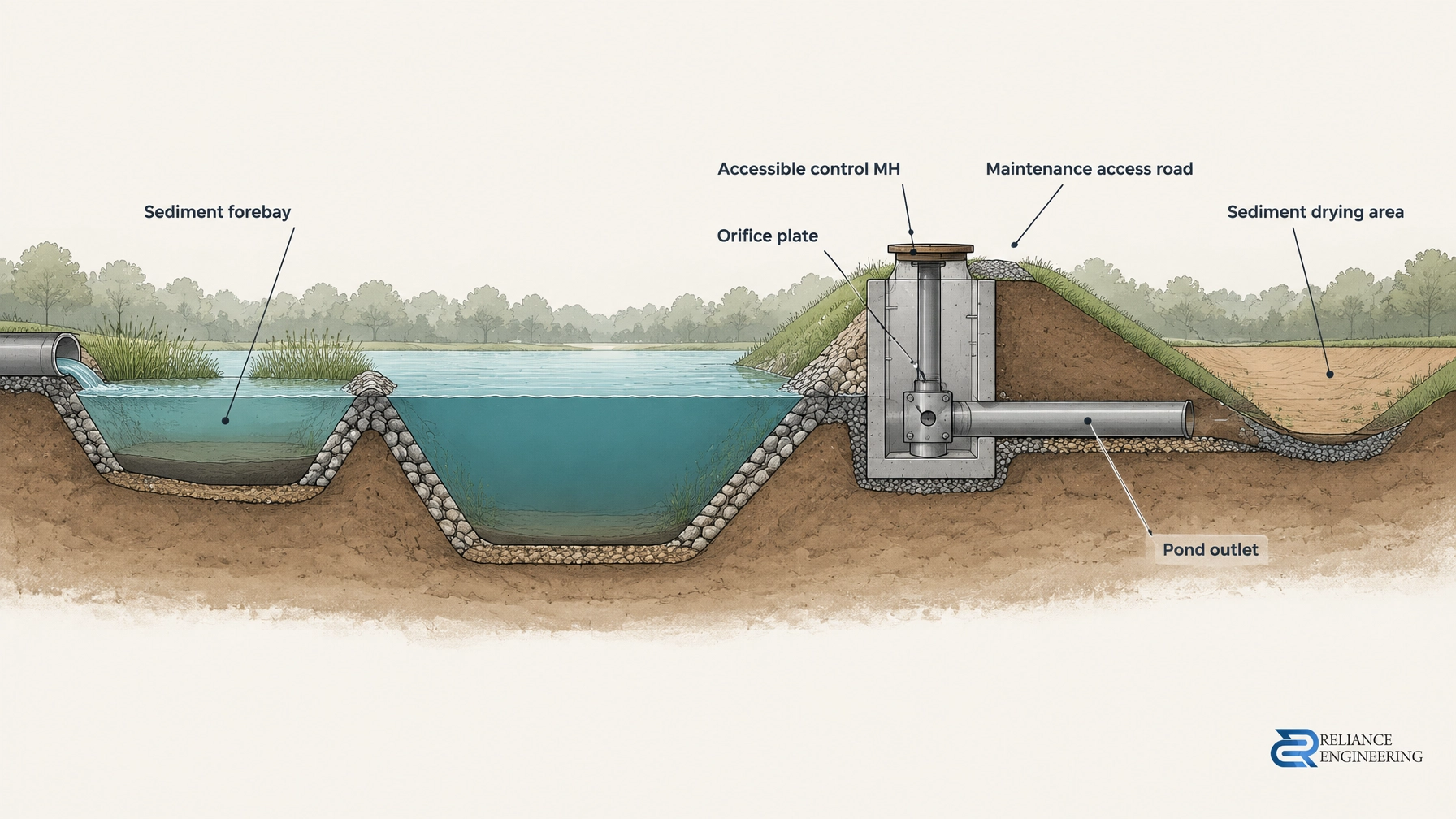
A properly coordinated site grading plan sets proposed elevations and shows how runoff will move across a site. It can coordinate positive drainage, swales, overland flow routes, driveway and parking grades, building entrances, retaining walls, and tie-ins to roads or storm systems. Where a storm connection or related infrastructure is required, grading should be coordinated with the site servicing plan and, where applicable, a stormwater management report.
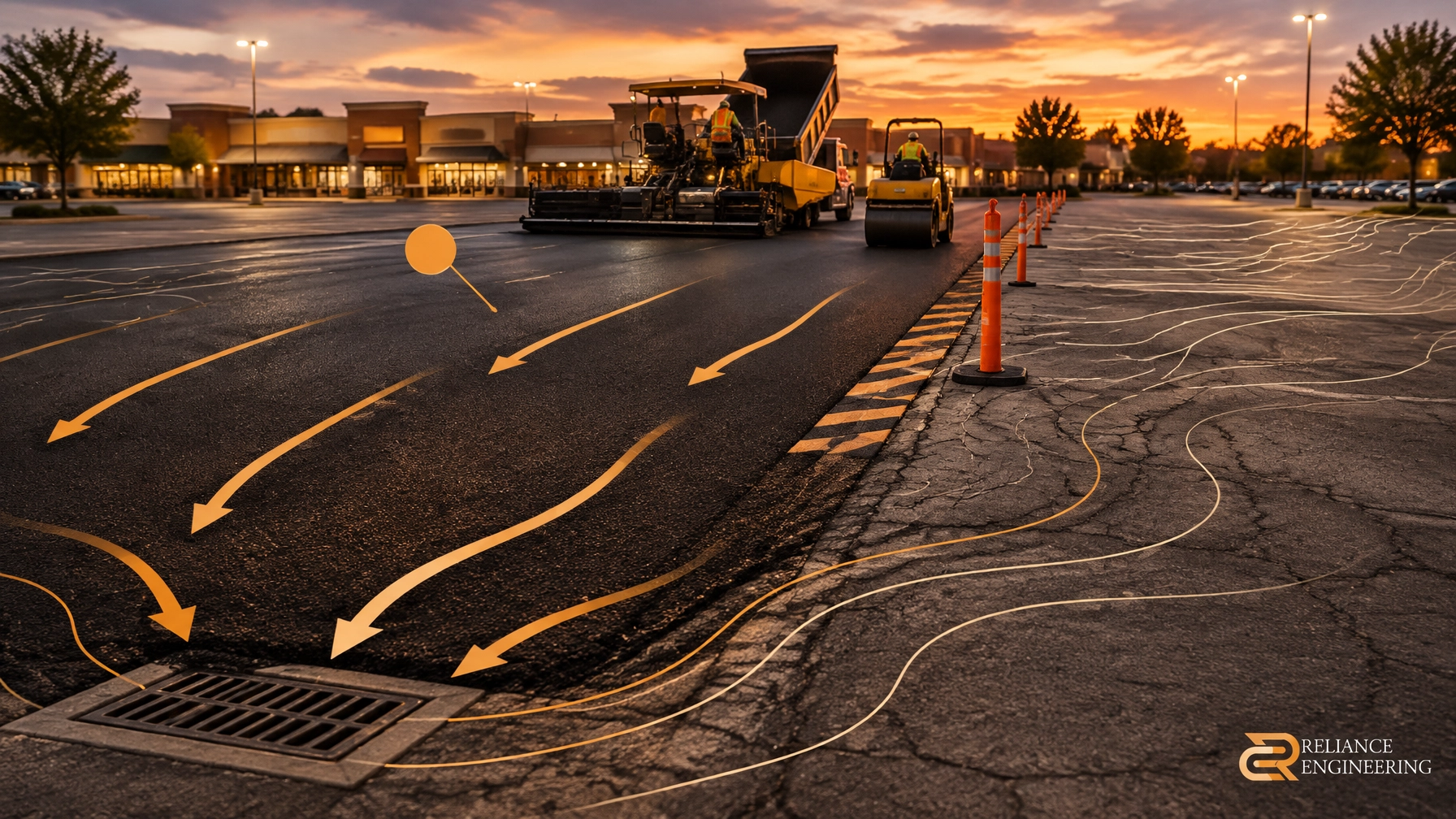
For a commercial site, a drainage-focused review can identify low points and runoff paths before they lead to recurring ponding. Practical commercial property grading fixes may involve correcting surface slopes, restoring a swale, adjusting inlet locations, or coordinating drainage with the storm system. The appropriate solution depends on survey information, site constraints, municipal criteria, and any applicable Conservation Authority requirements.
Clear, permit-ready drawings help reviewers and contractors understand the design. Reliance Engineering prepares coordinated, buildable grading designs and approval support for projects across Ontario. Local requirements vary by municipality, so each design must be checked against the applicable criteria and approvals.
Request a grading plan review
If ponding persists or a proposed site change may affect neighbouring drainage, Reliance Engineering can review available plans and site information, identify design considerations, and prepare permit-ready drawings. Contact us to discuss ponding solutions, commercial parking lot drainage in Ontario, or a site grading plan in Ontario.
Request a consultation or call 647-385-6418.
Professional credentials and contact
Naresh Ochani, P.Eng. M.Eng.
PEO Certificate of Authorization: 100548882
Reliance Engineering Canada Limited
6850 Millcreek Dr, Mississauga, ON L5N 2H4
647-385-6418 | [email protected]
Office hours: Mon–Fri 9:00 AM–5:00 PM; Sat 12:00 PM–2:00 PM; Sun Closed