| Article details | |
|---|---|
| Category | Ontario Grading & Drainage |
| Published | October 21, 2026 · 8:00 AM |
| Focus | ESC construction sequencing, grading and runoff controls |
| Prepared by | Reliance Engineering |
An approved Erosion and Sediment Control (ESC) plan is a starting point. Its effectiveness depends on whether the right controls are installed before soil is disturbed, adjusted as drainage changes, and kept in place until the site is stable.
That can be difficult on a changing construction site. Topsoil is stripped, elevations shift, utilities are installed, and crews move between areas. A control that was correctly located for one phase may not protect the next.
A practical ESC plan therefore needs to show how controls work through the build, not just where they go on day one. This article outlines common phases and field checks. Municipal grading and drainage requirements vary across Ontario, and Conservation Authority requirements apply where relevant. The approved drawings, permit conditions and direction from the applicable authorities govern each project.
Start with construction stages, not a single static plan
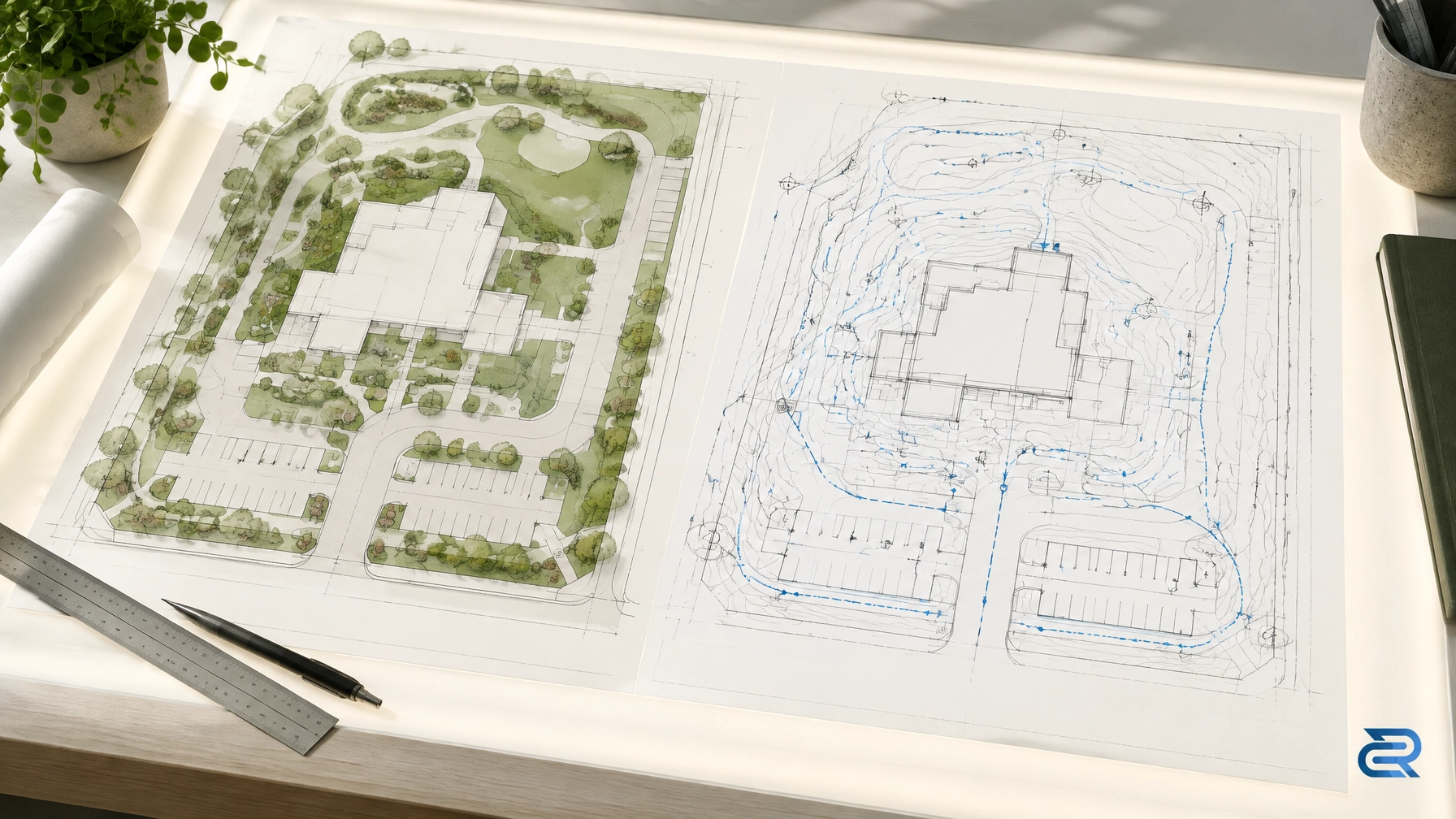
Before mobilization, coordinate the ESC plan with the grading design, drainage patterns and construction sequence. Identify where water enters and leaves the site, where exposed soil will be, and how temporary grades will change over time.
The TRCA Erosion and Sediment Control Guide for Urban Construction describes staged plans for distinct activities, commonly including stripping and grading, servicing, building construction, and final stabilization. A new stage may be needed when construction changes the drainage pattern or introduces a different sediment risk.
That coordination is where buildable grading matters. The plan should show workable access, positive drainage, safe overland flow routes, and controls that crews can install and maintain. Reliance Engineering’s Erosion and Sediment Control Plans are coordinated with grading, storm servicing and construction staging.

Phase 1: Install controls before stripping and grading
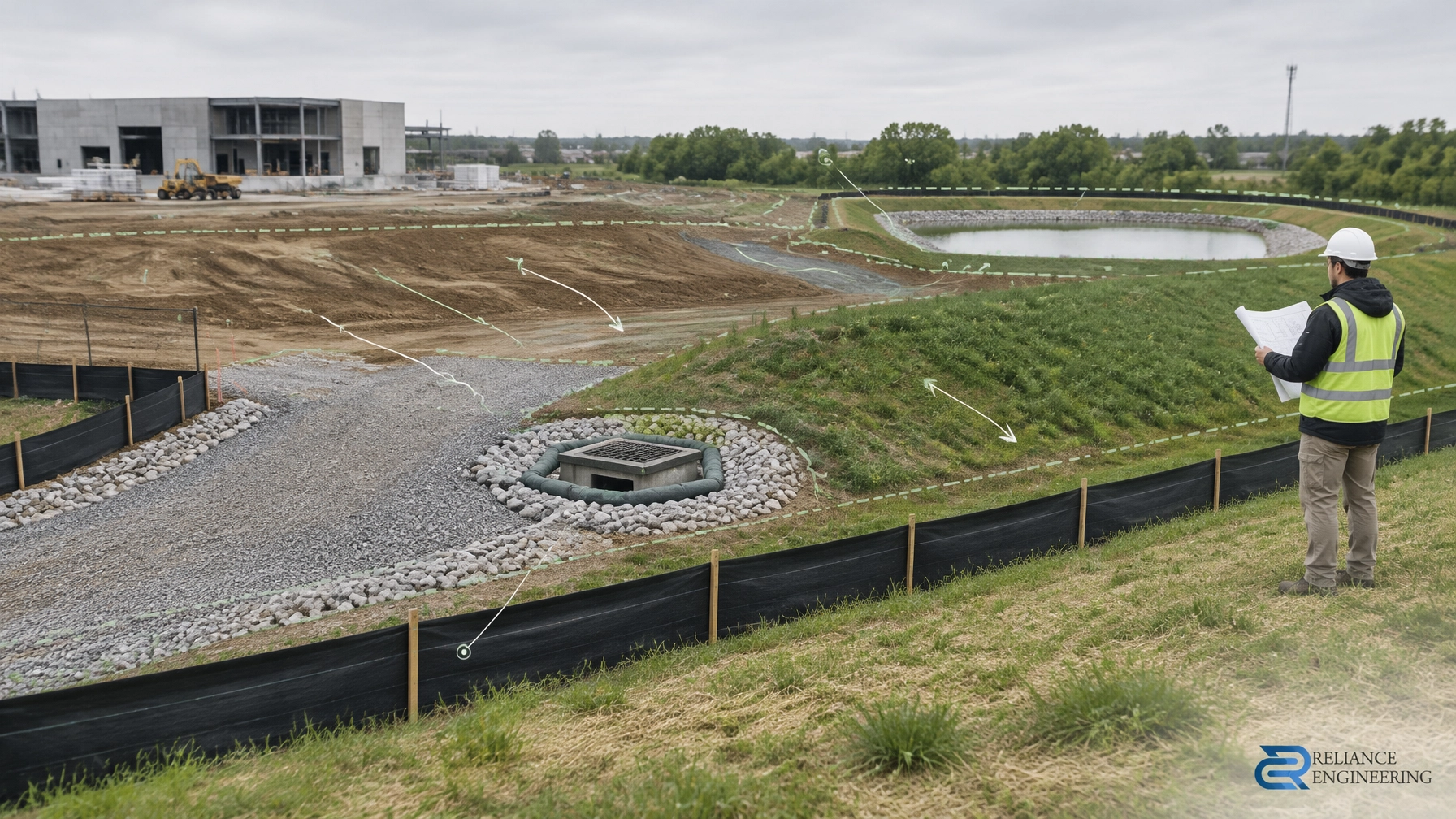
The highest-risk moment often begins when vegetation and topsoil are removed. Perimeter barriers, construction access controls, required diversions and any specified sediment trap or basin should be in place before general disturbance begins. A basin may require preliminary work to construct it, but that work should be limited to what is necessary for the basin and its protection.
Where the schedule allows, strip and grade a manageable area at a time. Leave other areas vegetated until they are needed, and stabilize completed sections rather than leaving the whole site exposed until the end. Direct clean water around disturbed soils where the design allows, and convey site runoff along stable routes.
A silt fence is not a substitute for controlling flow. It is generally suited to sheet flow, not concentrated runoff. Poor placement, gaps, undermining or water running around the ends can make it ineffective. Stockpiles also need a planned location and suitable perimeter and surface protection, especially when they are exposed between work stages.
Phase 2: Manage perimeter controls, access and trackout
Perimeter controls should protect the site boundary and sensitive drainage paths before earthworks start. Their job is to help retain sediment on site, not to carry concentrated runoff or serve as the only line of defence.
Provide a stabilized construction entrance or other specified mud and trackout control. Keep it functional as equipment moves in and out: replenish or replace stone when its voids fill with soil, and clean sediment from public roads promptly. Mud tracked onto roads can be carried into storm drains even if the perimeter fence remains intact.
Inspect controls after weather and active work. Repair torn fabric, gaps, displaced barriers, undercut sections and sediment buildup before they allow runoff to bypass the system. The GRCA ESC Inspection Guide includes practical checks for perimeter controls, access points and road trackout.

Phase 3: Protect inlets as they become operational
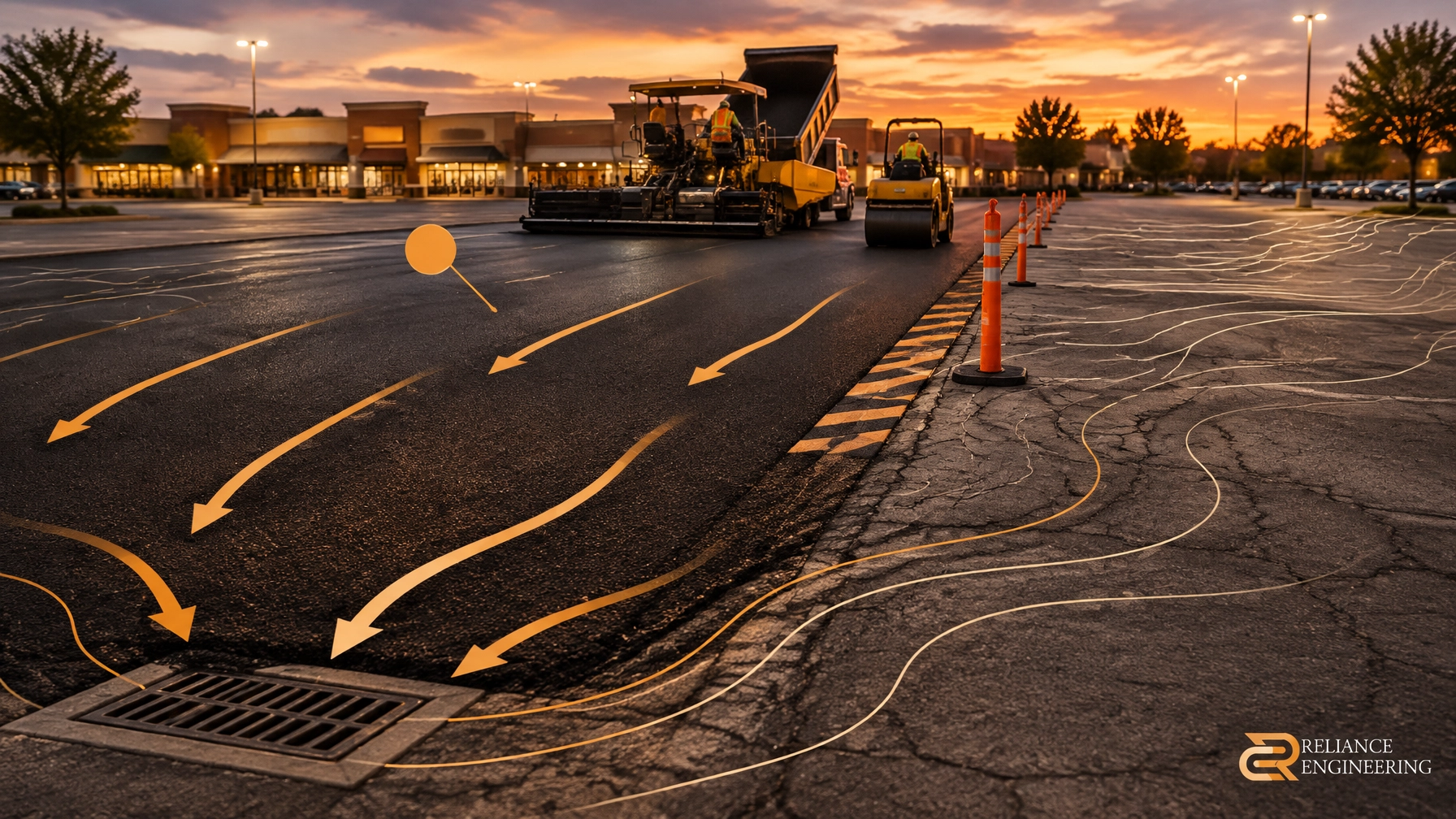
Catch basins may be installed or connected before the surrounding areas are stabilized. Protect each active inlet as soon as it begins receiving runoff, then check the protection as road grades, lot grades and vehicle routes change.
Inlet protection is a secondary barrier. It does not replace upstream erosion control or sediment treatment. Choose and maintain a suitable device without creating an unsafe drainage obstruction. Check for clogging, bypass, movement and sediment accumulation; clean or replace protection when it is no longer working as intended. A device that blocks drainage can cause localized ponding or flooding.
This is relevant to commercial parking lot drainage Ontario projects as well as other developments: grading, temporary drainage and inlet protection need to work together. For projects involving asphalt regrading, construction-phase controls should also account for existing drainage paths and temporary low points. That can help avoid construction runoff creating the very ponding solutions or commercial property grading fixes the finished design is intended to address. See Reliance Engineering’s Site Grading Plans for how grading design considers drainage routes, elevations and catch basins.
Phase 4: Build and maintain sediment traps or basins
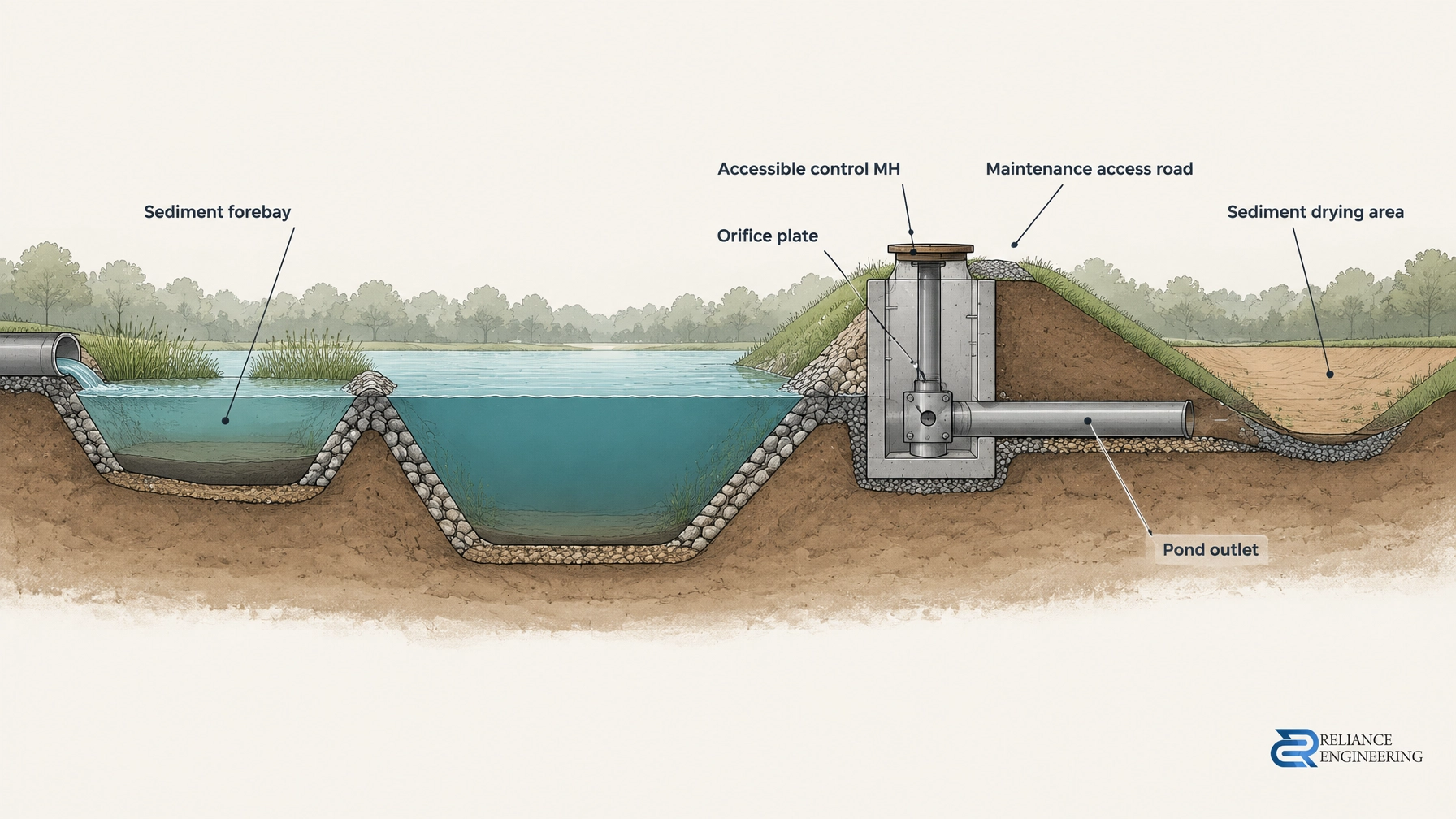
Where the approved design calls for a sediment trap or basin, construct it early enough to receive runoff from the relevant work areas. Protect its inlet, outlet, side slopes and overflow route. Stabilize exposed banks promptly, and keep construction traffic and unnecessary sediment sources out of the facility.
A basin is not a standalone solution. It works as part of a system: reduce erosion at the source, convey water along stable routes, and provide sediment treatment before discharge. Inspect after rainfall for erosion, sediment accumulation, debris, damaged outlets and signs of bypass. Remove sediment when the approved design, manufacturer guidance or applicable authority requirements call for it. Do not allow accumulated material to reduce the facility’s working capacity.

Phase 5: Stabilize completed areas promptly
Temporary stabilization is needed where work is paused or a surface will remain exposed. Depending on the site, season and approved plan, measures may include temporary seed, mulch, erosion-control blankets or other suitable cover. Inactive soil and stockpiles need particular attention; the TRCA guide identifies areas inactive for 30 days or longer as a stabilization concern. Confirm the specific requirements for the project.
Permanent stabilization, such as final seeding or sod, should follow as areas reach final grade and are ready for landscaping. Do not count a newly seeded surface as stable before cover is established. Protect seeded slopes from runoff, repair washouts, and reseed bare areas as needed. Sod may provide quicker surface cover where suitable, but it still needs proper installation and care.
Plan for winter shutdown
If construction pauses for winter, do not leave bare slopes, stockpiles or drainage routes without a suitable protection strategy. Seed may not establish in cold conditions, so the approved approach may need to rely on temporary covers, anchored erosion-control blankets, mulch or other seasonally appropriate measures. Keep diversion routes and outlets functional, and consider how snowmelt and rain on frozen ground will move across the site.
Before work stops, stabilize exposed areas as far as practical, repair perimeter and inlet controls, and record any remaining risks and required checks. Reassess the site before spring thaw and before construction resumes.
Inspect after rainfall, and maintain through every handoff
Controls can fail because they were installed after disturbance began, were never maintained, or were removed before contributing areas were stable. A contractor handoff between earthworks, servicing and building construction can also leave no one clearly responsible for maintaining them.
Assign responsibility for inspections, repairs, road cleaning and record keeping before work starts. The GRCA inspection guidance describes routine inspections, including weekly checks and inspections before and after rainfall events and significant snowmelt; permits or local requirements may set different or more demanding conditions. Follow the requirements that apply to the project.
After rainfall, check whether water followed the planned overland flow routes, whether controls were overtopped or undermined, and whether sediment reached roads, inlets or areas outside the work limits. Document deficiencies, corrective actions and completion. If the site’s grading, drainage or construction sequence changes, review whether the current ESC layout still works.
Municipal and Conservation Authority reviewers commonly look for a clear relationship between construction phases, limits of disturbance, drainage areas, flow routes and control locations. Field inspectors can compare the approved plan with installed measures and current conditions: are controls in place for this stage, maintained, and still protecting the intended areas? Clear, coordinated, permit-ready drawings help make that intent understandable to both the contractor and the reviewer.
Pre-construction ESC phasing checklist
- Confirm applicable municipal requirements, approvals and Conservation Authority conditions, where applicable.
- Coordinate the ESC plan with grading, servicing, drainage and the construction schedule.
- Mark disturbance limits, phase boundaries, drainage areas, discharge points and overland flow routes.
- Schedule perimeter controls, stabilized access, diversions and required sediment facilities before disturbance.
- Define when and where catch-basin protection will be installed as inlets become operational.
- Set stabilization steps for completed areas, inactive soil, stockpiles and winter shutdown.
- Assign inspection, maintenance, road-cleaning and record-keeping responsibilities.
- Establish checks after rainfall and snowmelt, along with repair and escalation procedures.
- Confirm controls will remain until contributing areas are stabilized and removal is appropriate.
Need an ESC plan that reflects how your site will actually be built? Request an ESC plan consultation. Reliance Engineering prepares practical designs, clear drawings and approval support coordinated with site grading and drainage.
References
- Reliance Engineering: Erosion and Sediment Control Plans
- Reliance Engineering: Site Grading Plans
- TRCA: Erosion and Sediment Control Guide for Urban Construction
- GRCA: ESC Inspection Guide
Contact and professional credentials
Naresh Ochani, P.Eng. M.Eng., PEO Certificate of Authorization 100548882
Reliance Engineering, 6850 Millcreek Dr, Mississauga, ON L5N 2H4
Phone: 647-385-6418 | Email: [email protected]
Office hours: Saturday 12:00 PM–2:00 PM; Sunday Closed