Article type: How-to guide
Topic: Municipal approvals
Date: October 31, 2026
Reading time: 7 minutes
Draft approval is conditional approval, not final approval. The conditions attached to the decision are the project’s to-do list, and the lapsing clock is tied to the timing set out in that decision. Clearing the civil conditions, obtaining required agency letters and registering the final plan are separate steps.
Where draft-plan conditions come from
Under section 51(25) of Ontario’s Planning Act, an approval authority may impose conditions on draft approval of a plan of subdivision. Section 51(26) allows the authority to require agreements, including a subdivision agreement. O. Reg. 544/06 sets out related application and notice requirements.
The approval authority issues the conditions with its decision. Depending on the project, the list may cover servicing, stormwater management, grading, study updates, easements and dedications, agreements, and requirements from external agencies. The actual conditions and clearance process vary by authority and project.
A condition should be read as an instruction: what must be done, who must review or clear it, when it must be completed, and how the approval authority must be notified.
What civil conditions can require
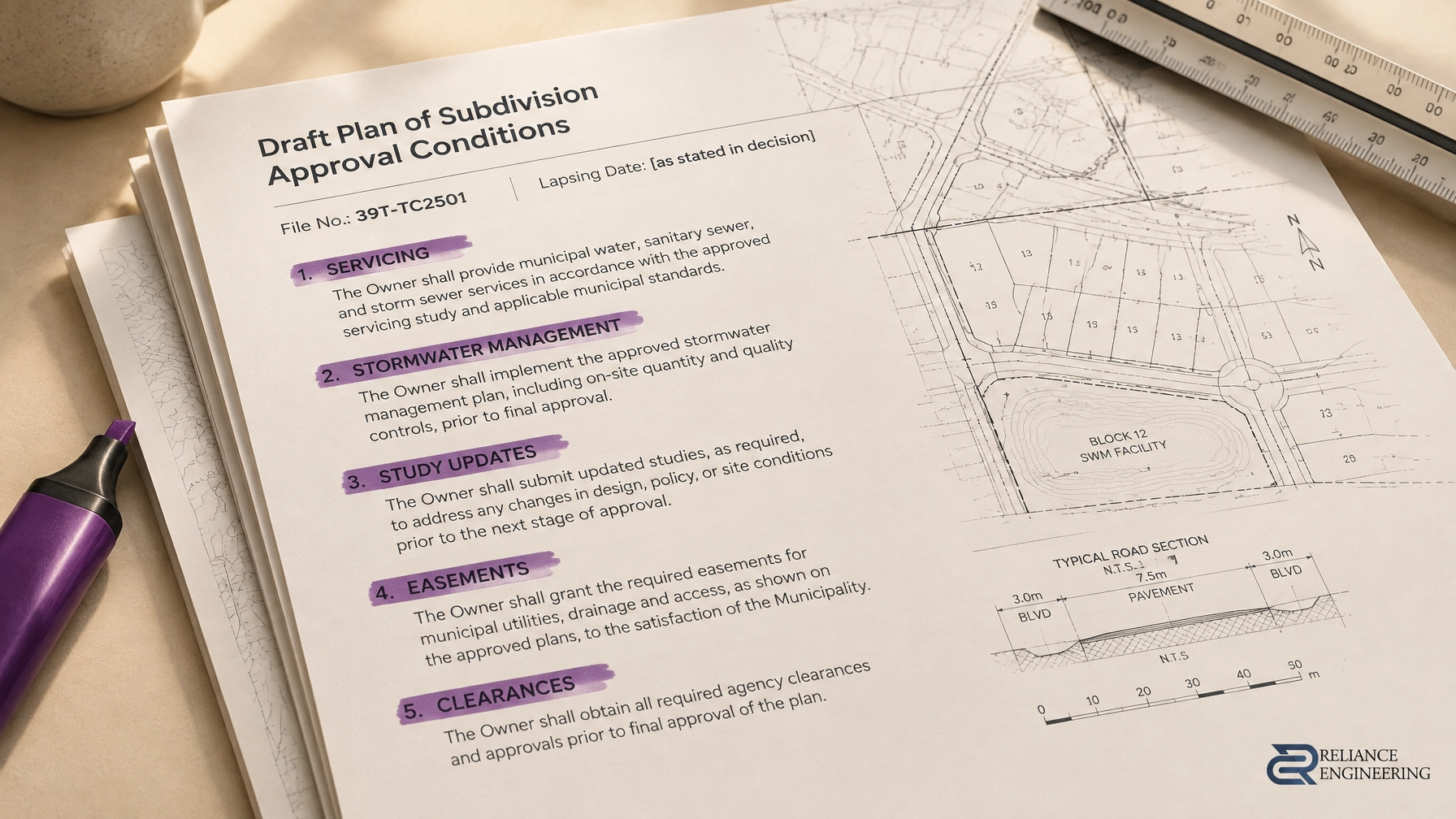
A preliminary conditions document for Thames Centre subdivision file 39T-TC2501, prepared for County of Middlesex consideration, illustrates how detailed civil requirements can be. The document itself says its cover page was to be inserted after County Council consideration, so it should be treated as an illustration, not as confirmation of an issued final decision. View the Thames Centre conditions document.
In that document:
- External capacity: Development may not begin until required external services are in place and operational, with capacity formally allocated by the Municipality through a Subdivision Agreement for each phase. The document states that if the Municipal Engineer deems external capacity insufficient, the Municipality has no obligation to provide it within the lapsing period, or at any time.
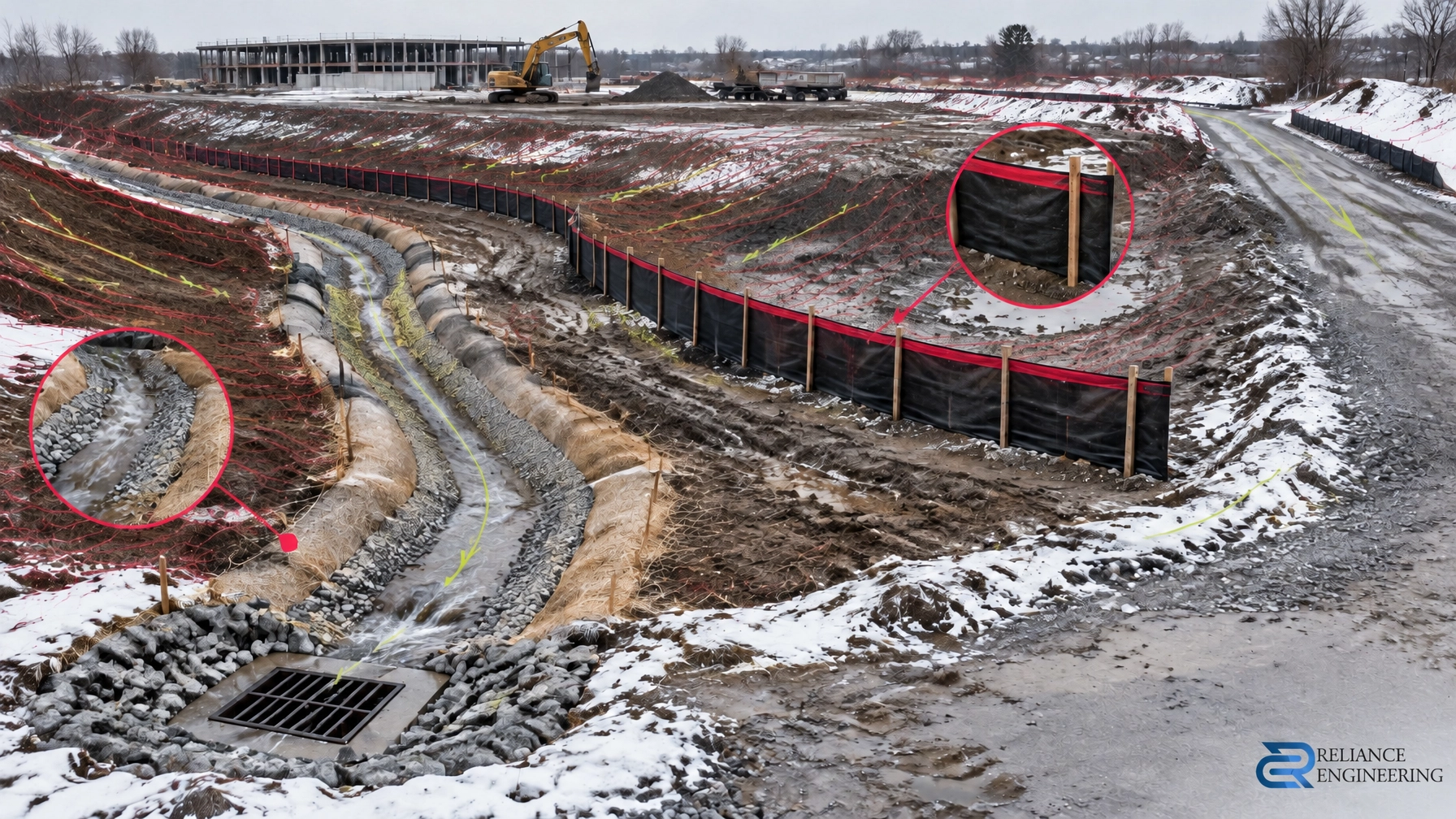
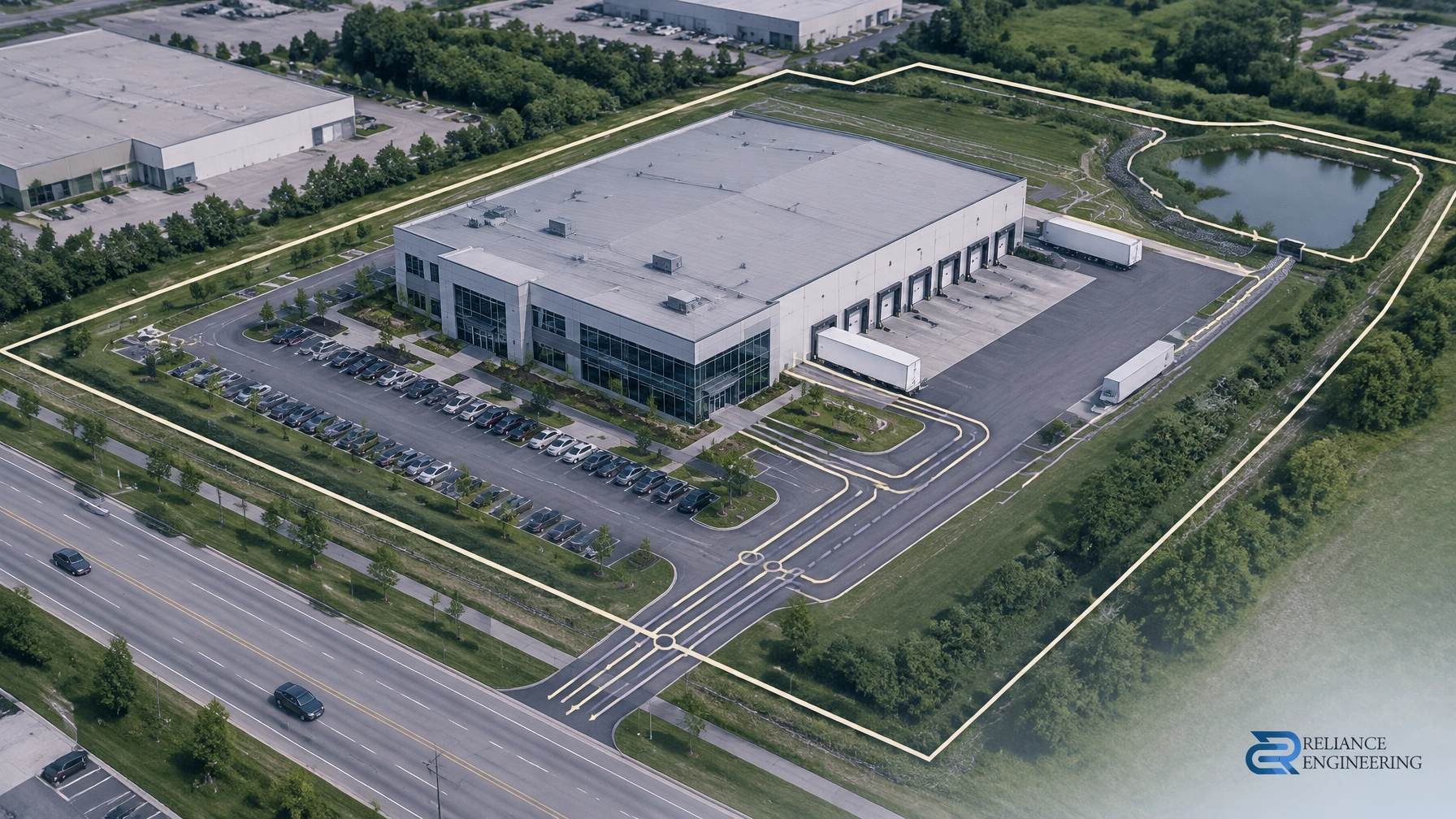
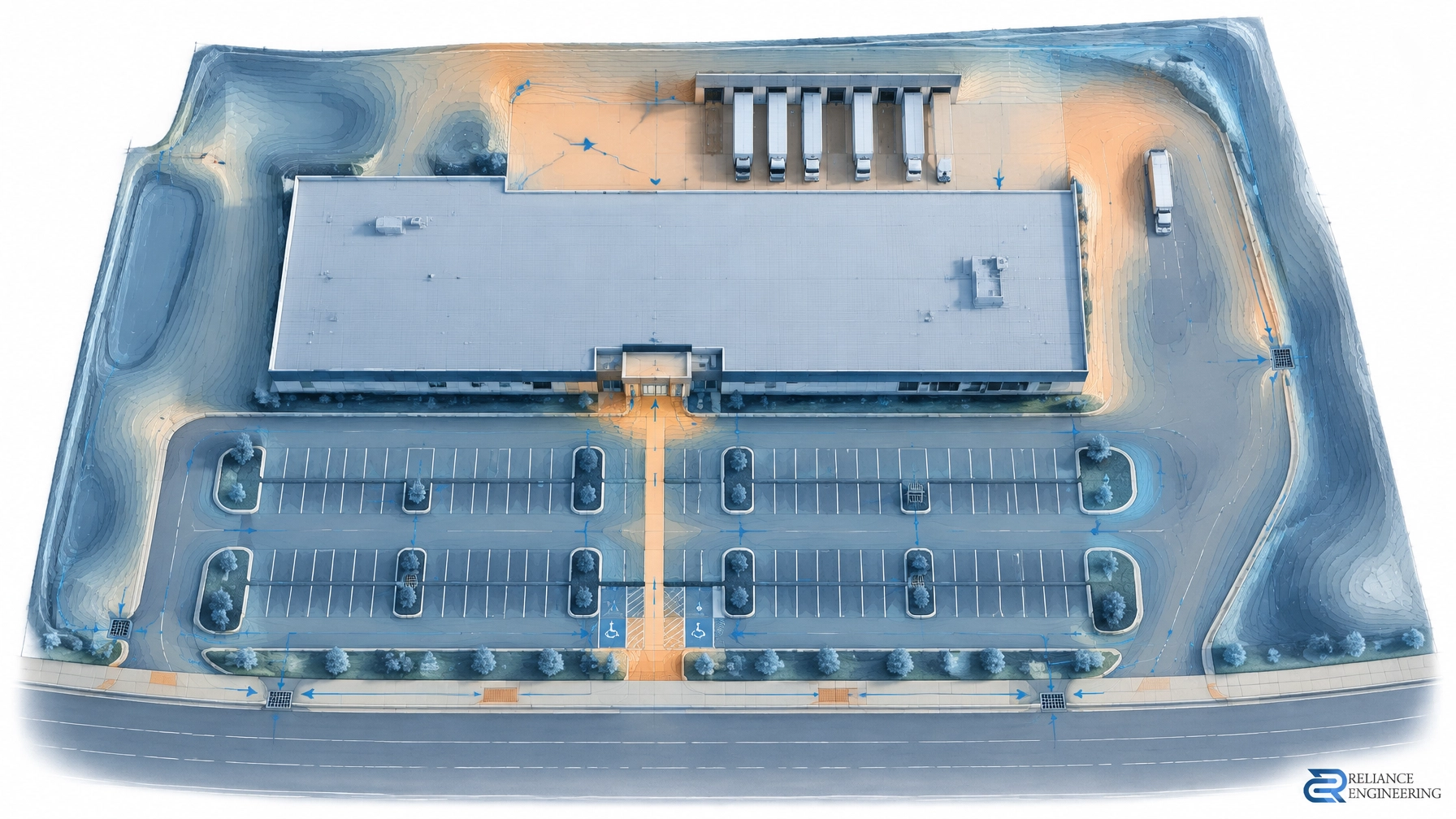
- Final civil plans: Before final approval, the document requires a Final Stormwater Management Plan, Sediment and Erosion Control Plan, and detailed servicing and grading plans for review by the Municipality and Conservation Authority.
- Study updates: Any required updates to listed studies (including the hydrogeological study, geotechnical report, stormwater management report, servicing report, archaeological study, traffic impact study and environmental impact study) must be provided before final approval.
- Permits and outlets: Where triggered, conditions require permits for regulated-area activities under the Conservation Authorities Act and O. Reg. 41/24, and approvals under the Drainage Act for a municipal drain outlet.
This example shows why “the study was submitted” may not be enough. A condition may require a final version, an update, an agency review, or a specific agreement before it can be cleared.

How the clearance protocol works
The Thames Centre preliminary conditions document includes a specific written-clearance process. Before final approval, the County is to receive written confirmation from the Municipality explaining how conditions 1–54 have been satisfied; from the Conservation Authority addressing conditions 7, 30, 43, 46, 47, 50 and 54; and from the County Engineer addressing condition 29.
The same document places responsibility on the applicant to fulfill the conditions and ensure the required clearance letters are forwarded to the approval authority, quoting the file number. In practice, that means tracking not only the work, but also the reviewer, the evidence required and the route by which confirmation reaches the approval authority.
Keep the registration deadline distinct from the lapsing date. The Thames Centre document notes that, once the final plan is approved, it must be registered within 30 days or the approval may be withdrawn under section 51(59) of the Planning Act. That is a post-approval registration window; it is not the draft-approval lapsing period.
The document’s notes state a five-year draft-approval period and say extension requests must be made 60 days before the lapsing date with written municipal endorsement. Because this file document is preliminary, confirm any operative dates and extension requirements against the issued decision. As a separate large-municipality illustration, the City of Toronto’s East Harbour conditions, File 16 270078 STE 30 SB, set different lapsing periods by phase: 10 years for Phases 1 and 2, and 15 years for Phases 3 and 4, with extension requests permitted before expiry.
These are examples, not Ontario-wide standards. Confirm the decision’s terms with the applicable approval authority.
Why civil design still matters at clearance
Conditions can require engineering work to be reviewed again closer to final approval or construction. Field conditions may have changed, the project scope may have shifted, or the approved servicing approach may need to be updated. A functional servicing report or stormwater management report that supported draft approval may not fully describe the design needed for the next stage.
The East Harbour conditions expressly require an updated Functional Servicing Report before Release for Construction of Services where necessary to address service changes or field conditions. They also provide for updates to the stormwater management strategy if directed by Engineering and Construction Services. The conditions require easements needed to implement the services in the approved Functional Servicing Report, and identify owner responsibilities for certain off-site infrastructure.
That is why coordinated design matters. Clear calculations, clean layouts, constructible routing and practical controls help reviewers assess whether drawings and reports answer the specific condition. Municipal experience helps identify which details need to align across reports, plans, easements and clearance submissions.
Track each condition from decision to clearance
Start a numbered condition register as soon as the decision arrives. For each item, record the exact condition, required deliverable, responsible party, reviewing authority, timing, submission status, response and clearance evidence. Keep the file number on correspondence and record when each clearance letter is issued and forwarded.
Prepare for likely civil condition wording during draft-plan review, so the engineering package can support the obligations that may follow. At clearance, sequence final stormwater management, erosion and sediment control, servicing and grading submissions against the decision’s deadlines. Where permitted, coordinate municipal and Conservation Authority reviews in parallel rather than waiting for one to finish before starting the next.

Developer checklist
- Create a numbered condition register with an owner and deadline for every item.
- Confirm the lapsing date and extension rules in writing with the approval authority.
- Map each condition to its deliverable, reviewer and required clearance evidence.
- Confirm the scope and submission route for municipal and Conservation Authority clearances early.
- Keep the Functional Servicing Report, stormwater management report, servicing and grading plans current as the project evolves.
- Forward clearance letters to the approval authority, quoting the correct file number.
Key takeaways
- Draft approval does not authorize final plan registration; conditions must be cleared.
- Each condition has a deliverable, reviewer and required timing. Track all three.
- Engineering studies and plans may need updates before clearance.
- Clearance letters and final-plan registration are distinct steps with separate requirements.
- Lapsing dates, extension rules and clearance protocols vary; verify them for the specific decision.

Get support with conditions clearance
Reliance Engineering prepares functional servicing reports, stormwater management reports, site servicing plans, grading and erosion and sediment control plans, and supports conditions clearance for projects across Ontario.
Request a consultation or learn more about our Functional Servicing Reports, Stormwater Management Reports and Site Servicing Plans.
Municipal and county condition formats, lapsing periods and clearance protocols vary across Ontario. Confirm requirements with the applicable approval authority and qualified professionals.
Professional credentials and contact
Naresh Ochani, P.Eng. M.Eng.
PEO Certificate of Authorization: 100548882
Reliance Engineering
6850 Millcreek Dr, Mississauga, ON L5N 2H4
Phone: 647-385-6418
Email: [email protected]
Hours: Monday–Friday 9:00 AM–5:00 PM; Saturday 12:00 PM–2:00 PM; Sunday Closed