Article type: Professional approval guide
Focus: Ontario site servicing and stormwater approvals
Reading time: 7 minutes
Prepared by: Reliance Engineering
For many development projects in Ontario, municipal engineering approval and Conservation Authority (CA) approval are connected but separate review processes.
A municipality reviews whether the proposed site can be serviced, graded, drained, and constructed in accordance with municipal standards. The local Conservation Authority reviews potential impacts on regulated natural hazards and environmental features, including watercourses, wetlands, floodplains, shorelines, and erosion hazards.
A coordinated submission gives both reviewers the information they need. A disconnected submission can lead to repeated comments, redesign, and approval delays.
Reliance Engineering prepares Site Servicing Plans, Stormwater Management Reports, Functional Servicing Reports, grading plans, and Erosion and Sediment Control Plans for development projects across Ontario.
When a Conservation Authority permit may be required
A CA permit may be triggered when a proposed development or construction activity is located within or near a regulated area. The exact requirements depend on the watershed, the local CA regulation, the site conditions, and the proposed work.
Common triggers include:
- A watercourse, valley, ravine, or river system
- A wetland or wetland buffer
- A floodplain or other flood hazard
- A shoreline or coastal hazard
- An erosion hazard or unstable slope
- Construction activity near a regulated natural feature
- In-water or near-water work
- Culverts, outfalls, channel works, crossings, grading, filling, or alteration of site drainage
The first step is to confirm the applicable Conservation Authority and obtain current mapping or a property-specific screening. A municipal zoning review does not replace a CA review. A site may comply with zoning and still require CA permission because of its regulated area or proposed construction activity.
CA requirements also vary across Ontario. Criteria used by Conservation Halton, Credit Valley Conservation, Toronto and Region Conservation Authority, Lake Simcoe Region Conservation Authority, and other agencies may differ. Early confirmation reduces the risk of designing to the wrong standard.
How CA and municipal engineering reviews work together
Municipalities and Conservation Authorities often review the same stormwater and servicing information from different perspectives.
Municipal engineering staff typically focus on:
- Connections to municipal water, sanitary, and storm infrastructure
- Pipe sizes, slopes, inverts, and capacity
- Road drainage and catchbasin locations
- Grading and drainage around buildings
- Emergency overland flow routes
- Site access and constructability
- Municipal stormwater quantity and quality criteria
The Conservation Authority may focus on:
- Floodplain limits and flood conveyance
- Impacts on wetlands and watercourses
- Erosion and channel stability
- Shoreline or slope hazards
- Water balance and groundwater conditions
- Downstream erosion or flooding risk
- Outfall design and receiving water impacts
- Construction-stage sediment control
- In-water or near-water construction impacts
These reviews must be based on the same site information. If the stormwater report shows one outlet location but the site servicing plan shows another, the submission is not coordinated. If the grading plan directs overland flow toward a building or regulated feature without adequate protection, both municipal and CA comments may result.
What a Stormwater Management Report must demonstrate
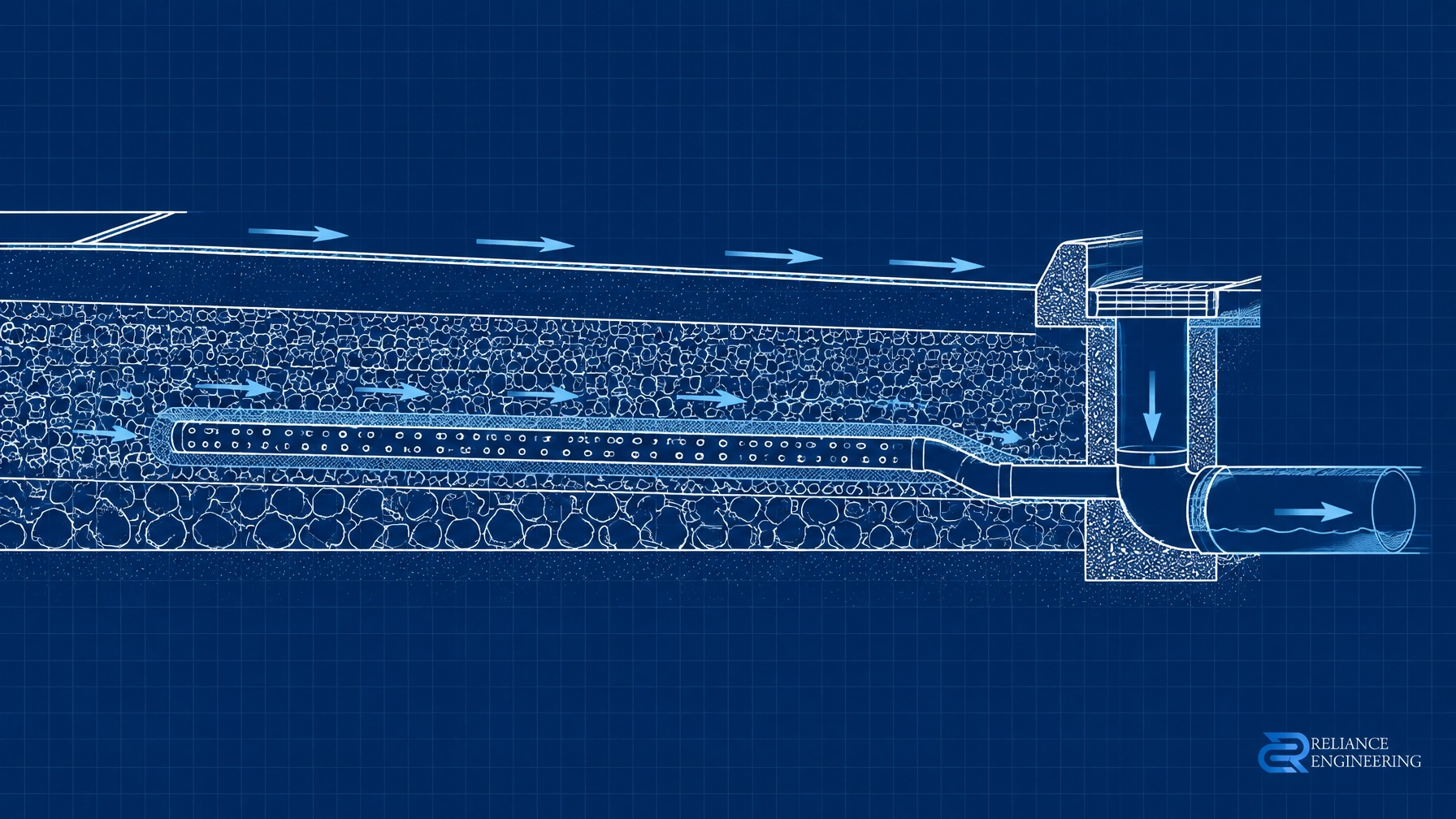
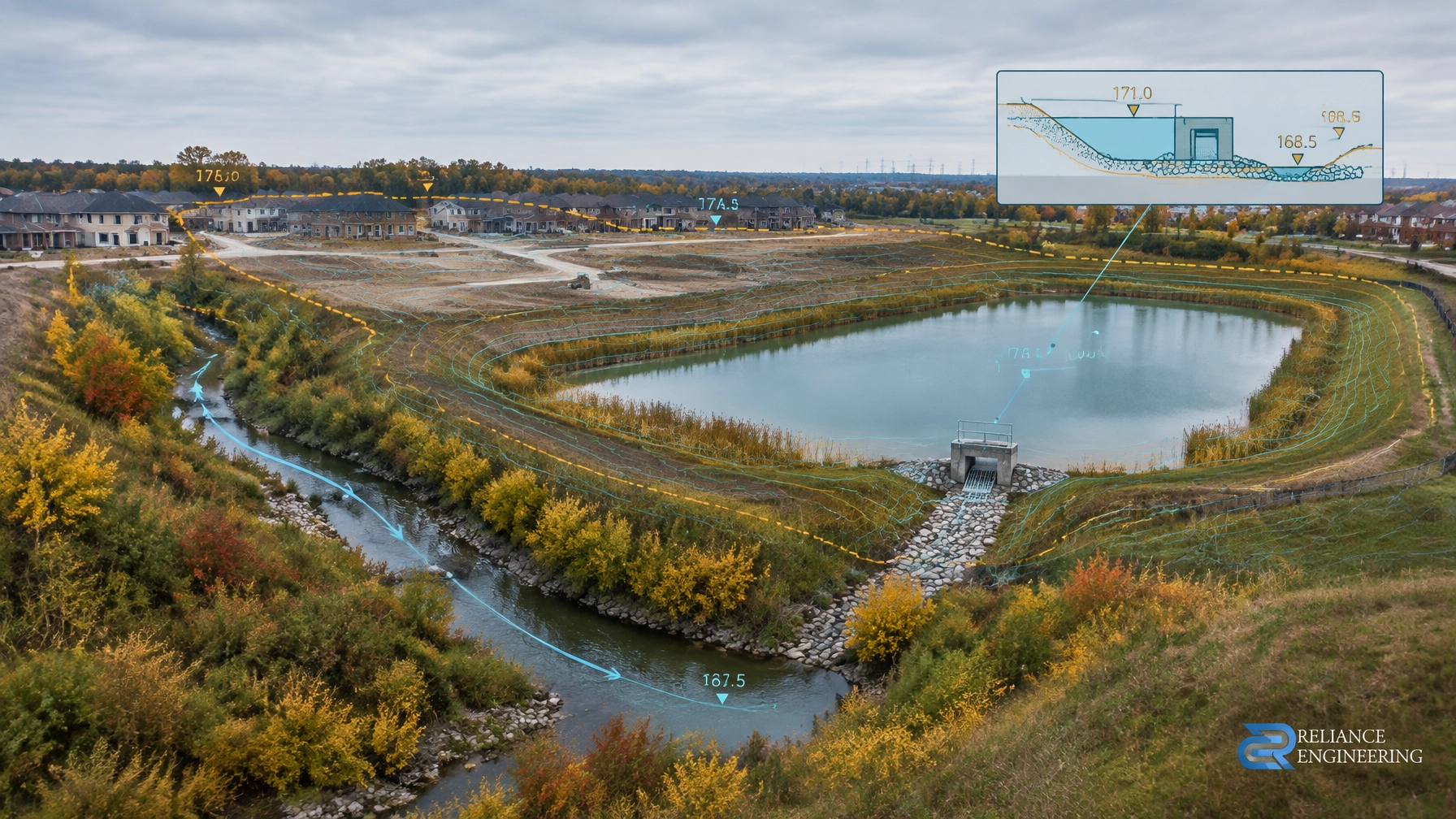
A professional Stormwater Management Report should explain how runoff will be collected, controlled, treated, and safely released after development.
Typical technical content includes:
- Existing and proposed drainage areas
- Pre-development and post-development runoff
- Runoff coefficients and hydrologic assumptions
- Peak flow calculations
- Allowable release rates
- Quantity control storage
- Orifice, weir, or outlet control sizing
- Water quality treatment
- Low Impact Development measures, where applicable
- Water balance requirements, where applicable
- Overland flow and major storm routing
- Downstream capacity and receiving system conditions
- Erosion protection at outlets and flow paths
- Operation and maintenance requirements
Allowable release rates and downstream capacity
The allowable release rate is not automatically the maximum flow that a site can discharge. Municipal and CA criteria may require post-development discharge to match pre-development conditions, meet a watershed target, or remain below an identified downstream capacity.
A downstream sewer, channel, culvert, pond, or watercourse may impose an additional restriction. In some cases, the design must demonstrate that the proposed release does not increase flooding, erosion, or adverse impacts downstream.
The report should clearly state:
- The applicable release-rate target
- The source of the target
- The proposed controlled discharge
- Required storage volume
- The design storm events reviewed
- The downstream receiving condition
- How emergency overflow will be managed
Clear calculations and straightforward summary tables help reviewers verify the design without reconstructing the analysis.

Site servicing plans must match the stormwater strategy
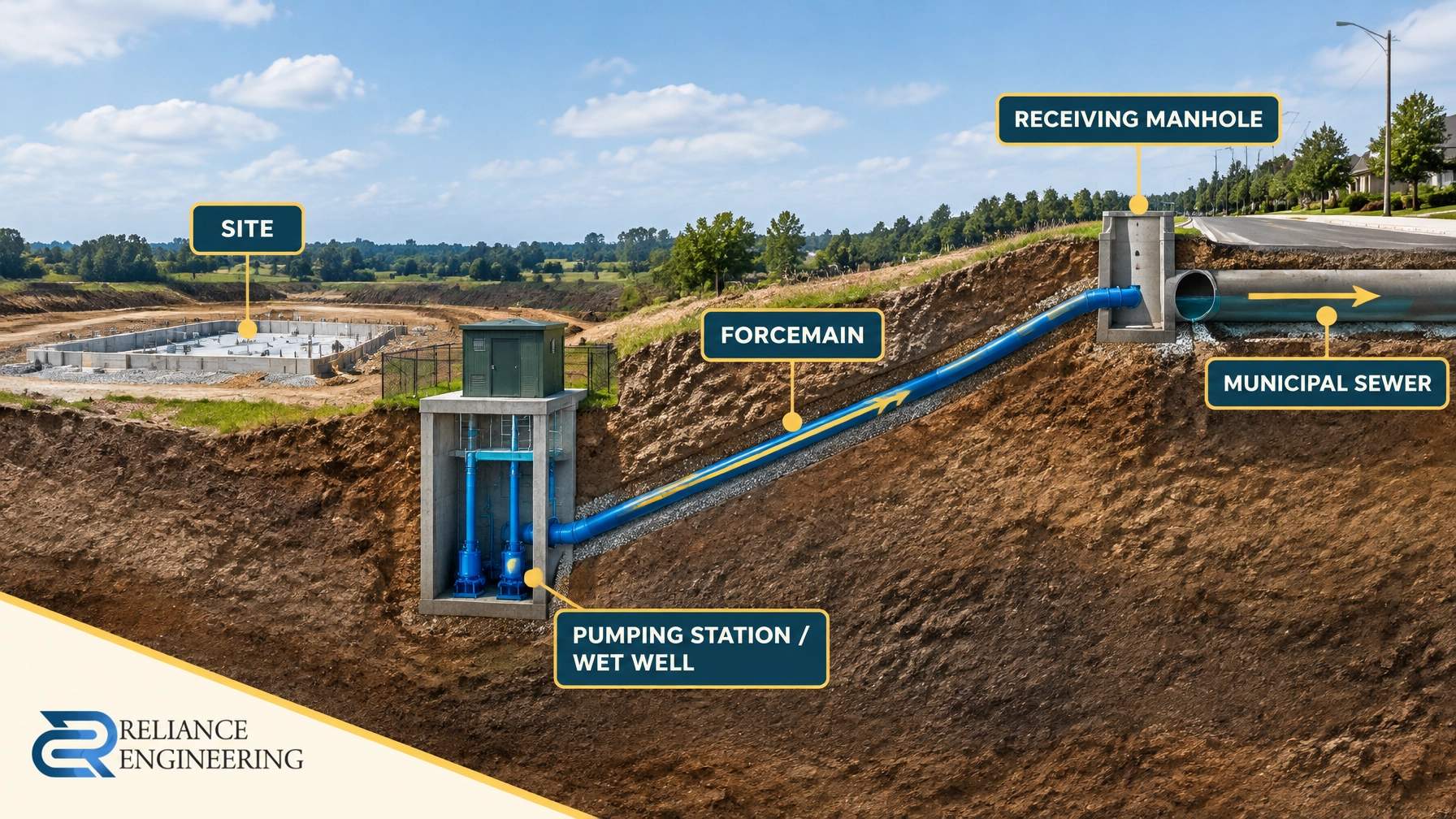
Site Servicing Plans show how a development connects to municipal or private water, sanitary, and storm infrastructure.
For CA and municipal review, the plan should also show the relationship between servicing and drainage. This may include:
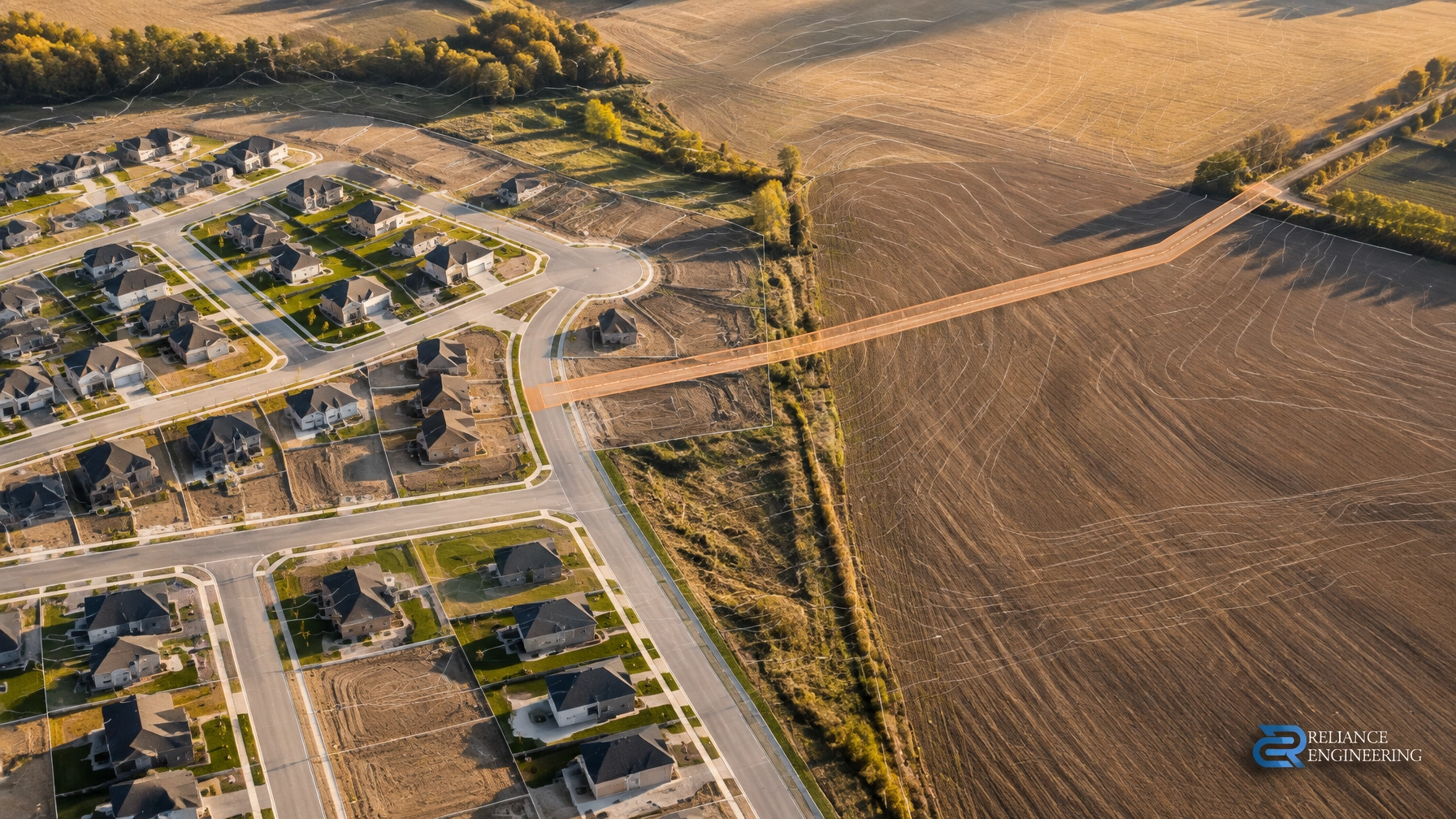
- Storm sewer routing and connection points
- Stormwater management facilities
- Catchbasins and maintenance access
- Pipe sizes, slopes, and inverts
- Outfall locations
- Overland flow routes
- Swales and spillways
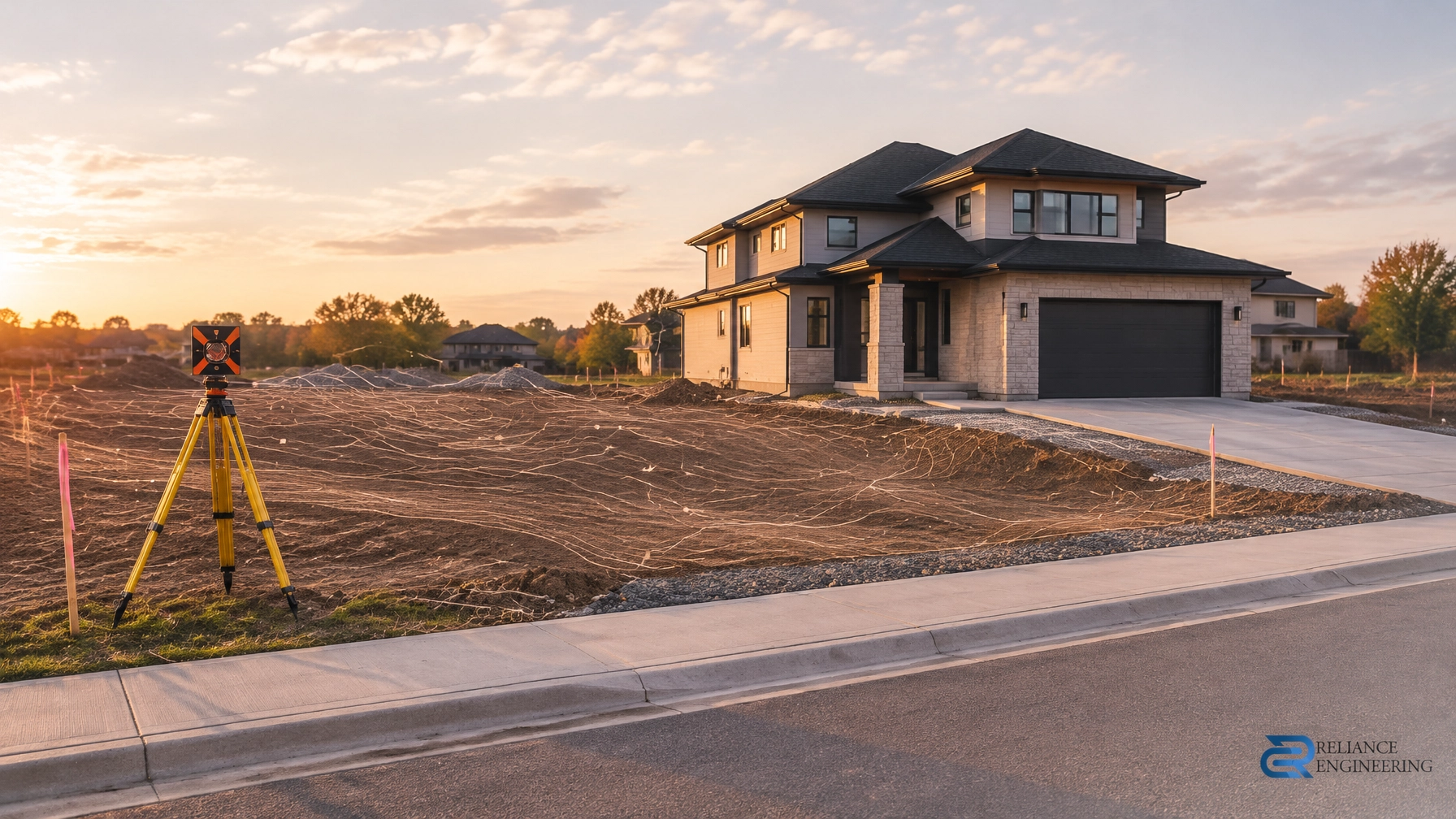
- Grading around buildings and paved areas
- Utility and easement coordination
- Construction access and staging constraints
The routing must be constructible. Pipes should not conflict with foundations, retaining walls, utilities, access routes, or environmental buffers. The proposed grading should provide positive drainage while maintaining required cover, freeboard, and emergency conveyance.
Clean layouts allow municipal and CA reviewers to compare the drawing with the SWM report quickly. A coordinated design also gives contractors clearer information during construction.
The Functional Servicing Report confirms system capacity
A Functional Servicing Report explains whether the proposed development can be supported by available infrastructure.
Depending on the project, the report may address:
- Existing municipal water and sanitary systems
- Proposed water demands
- Fire flow requirements
- Sanitary design flows
- Storm drainage strategy
- Available connection points
- Infrastructure capacity
- Required upgrades
- Coordination with site servicing drawings
- Municipal servicing constraints
The FSR and SWM report should not be prepared as separate technical packages with different assumptions. Building areas, site areas, servicing demands, drainage areas, and connection locations must be consistent.
Grading and erosion control are part of CA review
A stormwater design is not complete if it only addresses the permanent condition. Construction-stage drainage can create immediate risks to roads, storm sewers, neighbouring properties, wetlands, and watercourses.
An Erosion and Sediment Control Plan should be coordinated with the grading and servicing drawings. Practical controls may include:
- Silt fencing
- Stabilized construction entrances
- Mud mats
- Catchbasin protection
- Sediment traps
- Check dams
- Stockpile protection
- Construction limit fencing
- Dewatering procedures
- Inspection and maintenance notes
In-water or near-water works may require a CA permit before construction begins. Additional approvals may also apply depending on the work, receiving environment, municipality, Fisheries Act requirements, or provincial environmental requirements. The approval path should be confirmed before excavation, dewatering, outlet installation, channel alteration, or shoreline work.

Overland flow and floodplain safety
Major storm events must be considered even when the minor storm sewer system is functioning properly.
The design should identify where excess runoff will travel if the storm sewer is full, blocked, or exceeded. The overland flow route should:
- Avoid directing water toward building entrances
- Protect adjacent properties
- Maintain safe conveyance through the site
- Avoid uncontrolled discharge toward a regulated feature
- Provide appropriate grading and freeboard
- Connect safely to an approved outlet or drainage system
Where a site is near a floodplain, the review may require floodplain mapping, regulatory storm analysis, erosion hazard assessment, floodproofing measures, or restrictions on fill and grading. Building and site elevations must be coordinated with the applicable flood elevation and municipal requirements.
Common reasons comments come back
CA and municipal comments commonly result from:
- Inconsistent elevations between the grading plan, servicing plan, and SWM report
- An outlet or flow route that is not shown consistently
- Missing downstream capacity analysis
- Release rates that are not supported by the applicable criteria
- Incomplete floodplain, wetland, or watercourse information
- No clear emergency overflow route
- Outfall details that do not address erosion protection
- Construction controls that do not match site drainage
- Missing water balance or water quality analysis where required
- Drawings that do not show constructible routing or maintenance access
- Reports that rely on calculations without clear assumptions or supporting tables
- A permit application submitted after design decisions have already limited available options
These issues are avoidable when the civil documents are developed as one coordinated package.
Typical Ontario approval path
A practical approval sequence is:
- Confirm the municipality and Conservation Authority. Review current policies, mapping, and applicable criteria.
- Screen the site constraints. Identify watercourses, wetlands, floodplains, shorelines, erosion hazards, existing services, and downstream systems.
- Establish the servicing and drainage strategy. Confirm connection points, release targets, grading principles, and constructible routing.
- Prepare coordinated documents. Complete the SWM report, site servicing plans, grading plan, ESC plan, and FSR as required.
- Submit for municipal and CA review. Include supporting calculations, mapping, technical reports, and permit information.
- Respond to comments. Revise the coordinated package rather than updating one drawing or report in isolation.
- Secure approvals before construction. Confirm municipal approval, CA permission, and any other applicable environmental or provincial approvals.
Prepare for a cleaner review
Conservation Authority approvals in Ontario depend on more than a single report. Municipal and CA reviewers need to see a complete, coordinated solution for drainage, servicing, grading, construction control, and natural hazard protection.
Reliance Engineering provides practical designs, clear drawings, coordinated design, constructible routing, clear calculations, and approval support for projects across Ontario. Our municipal experience helps align the technical package with review expectations from the start.
For technical guidance on stormwater management reports Ontario, site servicing plans, functional servicing reports, or municipal approvals, contact Reliance Engineering before submitting your application.
Contact and professional credentials
Reliance Engineering
6850 Millcreek Dr, Mississauga, ON L5N 2H4
Phone: 647-385-6418
Email: [email protected]
Office hours: Saturday 12:00 PM–2:00 PM; Sunday Closed.
Naresh Ochani, P.Eng. M.Eng.
PEO Certificate of Authorization: 100548882
Request a consultation for Ontario-wide stormwater, servicing, grading, and municipal approval support.