Article type: Diagnostic guide
Focus: Ontario Grading & Drainage
Published: October 14, 2026 · 8:00 AM
Reading time: 6 minutes
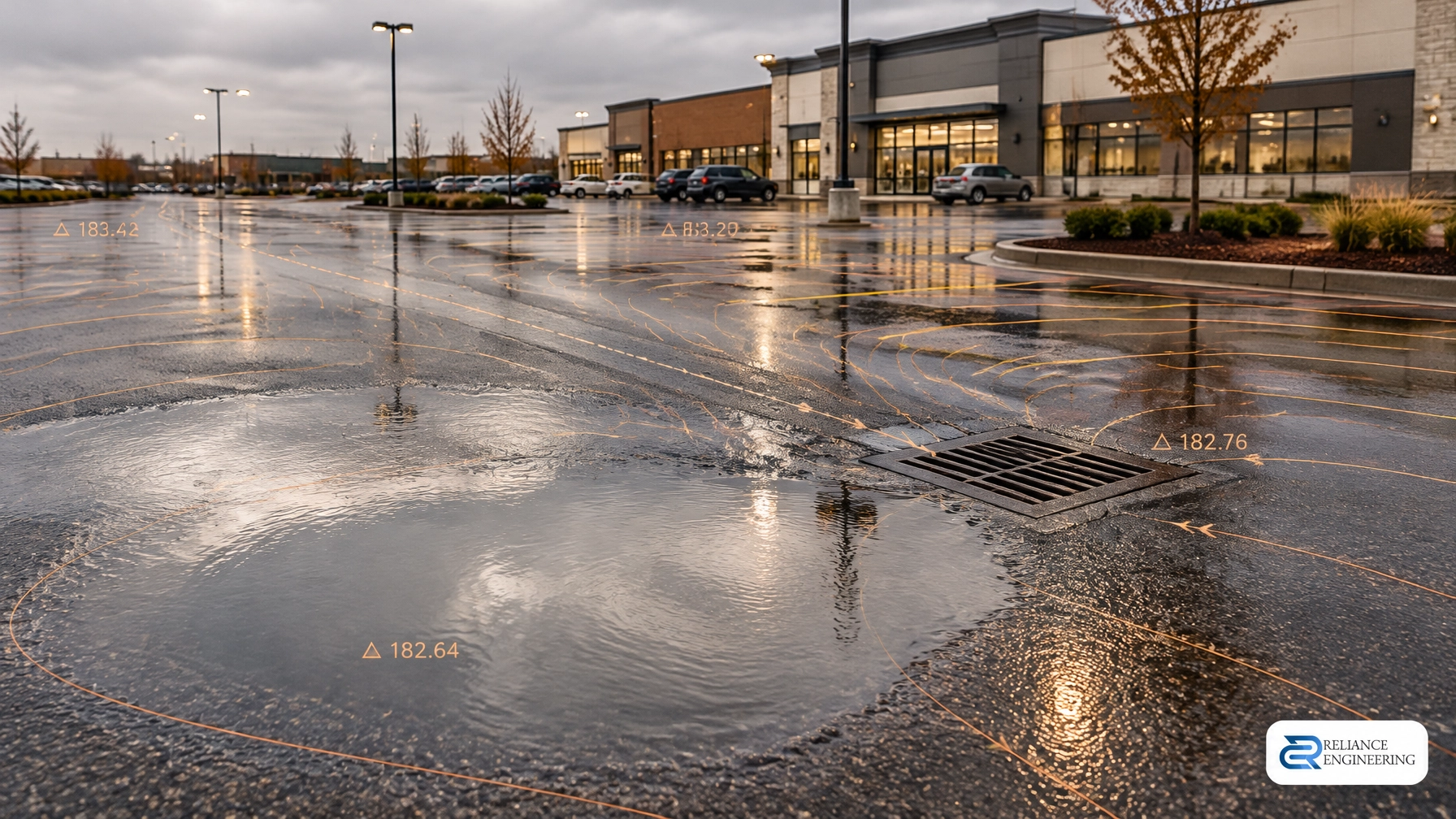
Water that remains on a commercial parking lot after rain can point to two very different issues: the pavement may be directing water poorly, or the underground storm system may not be draining it away. Sometimes both are involved.
The distinction matters. Asphalt regrading addresses surface slopes and low spots. A blocked, damaged, undersized or surcharged storm system calls for a different investigation and potentially more extensive work. Choosing a fix before identifying the cause can waste money, or move the problem elsewhere.
Start with the drainage pattern
Note where water collects, how deep it becomes, and how long it remains after rainfall. Record whether ponding is limited to one settled area, forms along a curb, or appears around several catchbasins. Photos taken during and after rain can help show the pattern.
The pattern is useful evidence, but it is not a diagnosis. A low spot may be caused by settled asphalt, while a catchbasin that appears to be the problem may actually be receiving water from a downstream pipe that is full.

Clues that point to a surface grading problem
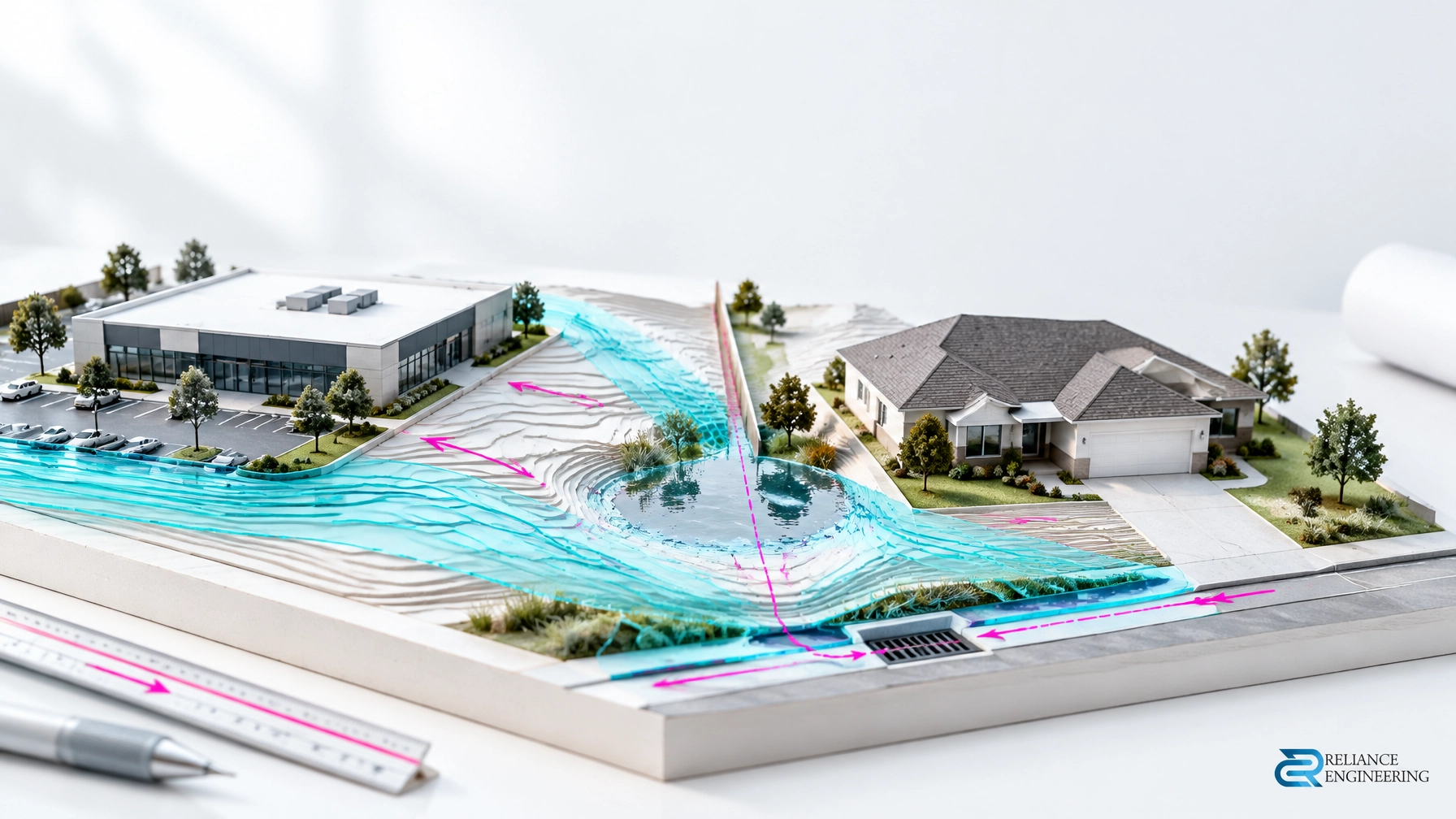
Surface grading is a likely factor when water settles in a distinct depression, particularly if nearby pavement appears to drain normally. Other signs include a changed slope along a curb, settlement around a utility cut, or water that flows past a catchbasin rather than toward it.
A drainage-focused site review checks whether the asphalt has workable slopes and positive drainage toward inlets or designated flow routes. It also considers whether curbs, landscaped islands, ramps or driveway and road tie-ins interrupt those routes. Pavement settlement may result from deterioration below the asphalt as well as from wear at the surface, so the repair should account for the condition of the underlying base.
In suitable locations, asphalt regrading may involve milling and resurfacing part or all of a pavement area to restore the intended slope. Where settlement or base failure is involved, more substantial reconstruction may be needed. A proposed fix must also work with existing curb elevations, accessible routes, building entrances, catchbasin rims and neighbouring grades. Simply placing a new asphalt layer over a low spot can leave water trapped, or create a new drainage problem.
Reliance Engineering’s site grading plan service focuses on clear drawings, buildable grading, flow routes and coordinated site conditions.
Clues that point to an underground storm-system problem
An underground issue becomes more likely when multiple catchbasins drain slowly, water levels rise in catchbasin structures during heavy rain, or ponding continues even though the pavement visibly slopes toward an inlet. Debris at a grate is one possible cause, but a clear grate does not prove that the downstream system is functioning.
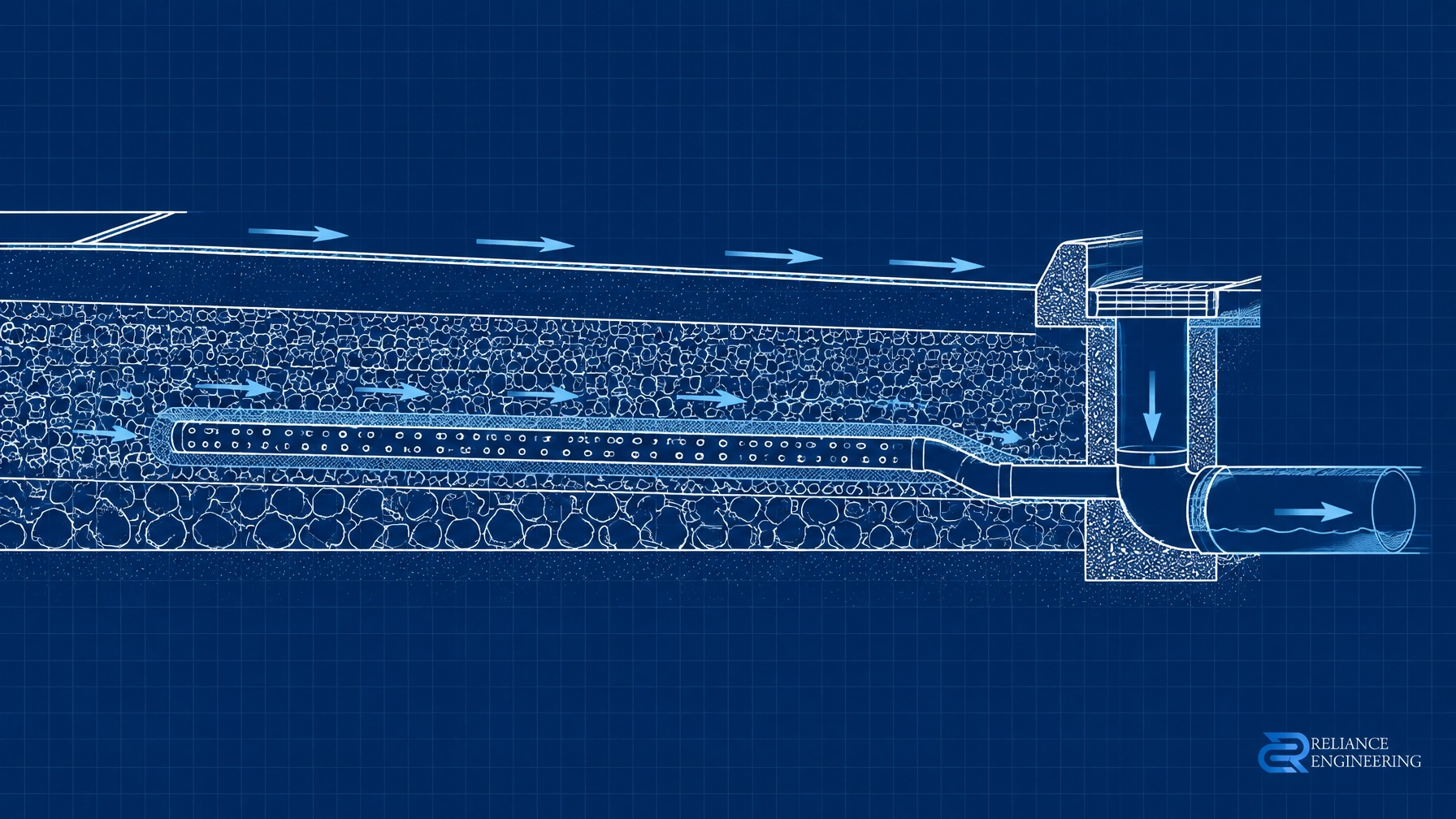
Possible issues include sediment or blockage, a damaged or poorly connected pipe, an adverse pipe slope, or surcharge in the private or municipal storm system. Surcharge means water in the downstream system rises high enough to restrict drainage from the site. In that situation, adding another catchbasin may not solve the problem: it adds an inlet but may not improve the capacity or outlet conditions of the pipe network.
A storm-system review may include opening and inspecting catchbasins, checking sediment and outlet conditions, confirming pipe and connection information, and arranging flushing or CCTV inspection if blockage or damage is suspected. The engineer also needs to assess catchbasin surcharge conditions and the receiving connection, not just the visible pavement.

For projects that require analysis or design of the private storm network, see Reliance Engineering’s storm system design and stormwater management report services.
How an engineer separates the two
A useful investigation combines site observations, elevation information and system checks:
- Walk the lot after rain. Map ponding, visible flow paths, areas where water bypasses inlets, and where water appears to persist. Check how water moves near buildings, curbs, landscape areas and driveway or road tie-ins.
- Check the outlet and overflow routes. Identify where water is intended to go if inlets cannot capture all runoff. Confirm that overland flow routes are practical and do not direct water toward buildings or neighbouring properties.
- Review catchbasins and connected pipes. Check for debris, sediment, visible damage and evidence of elevated downstream water. Where warranted, arrange cleaning, flushing or CCTV inspection.
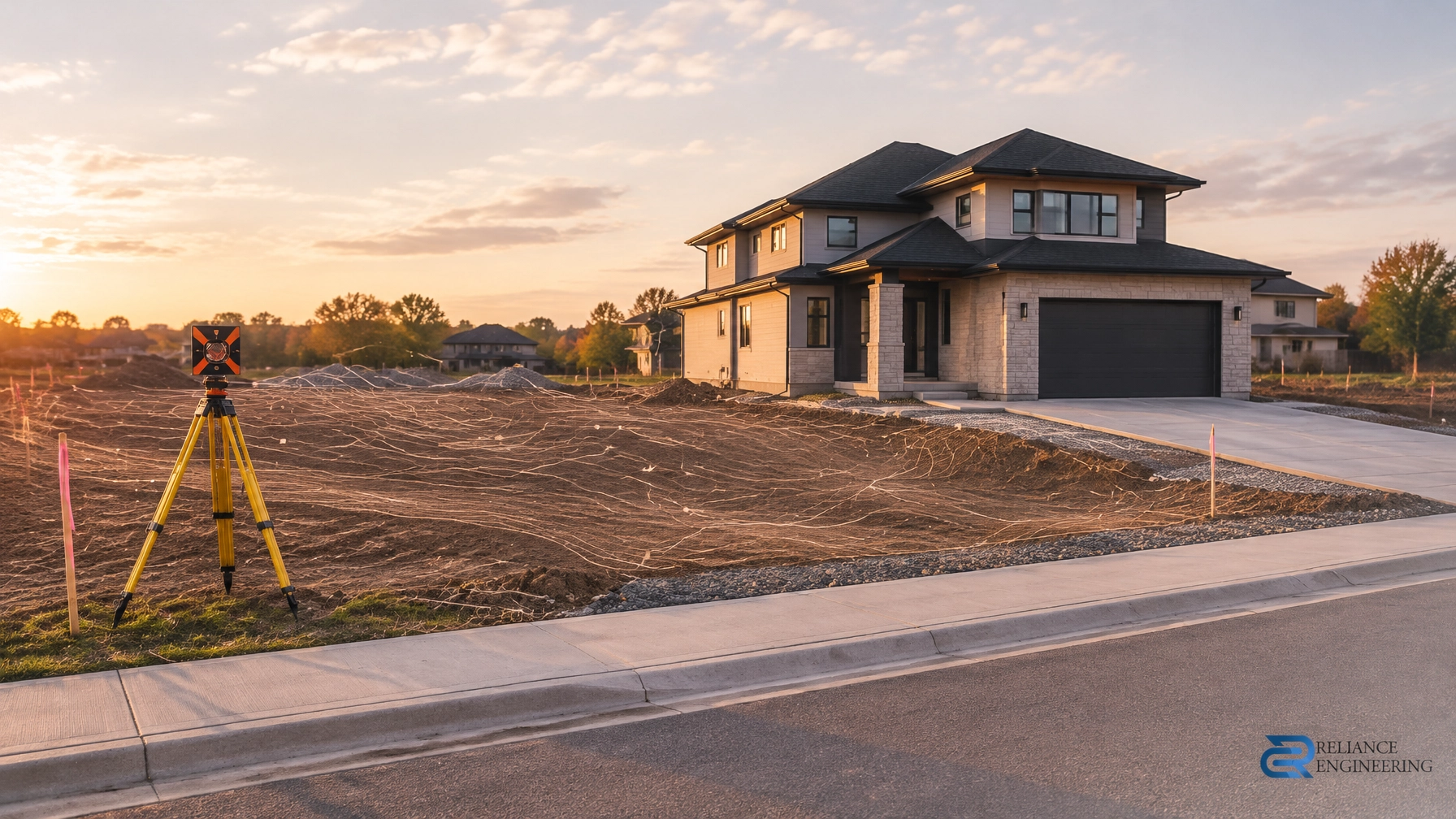
- Survey the grades. A grading survey can establish pavement elevations, low points, curb lines, catchbasin rims, entrances and other critical features. Comparing surveyed conditions with approved drawings can reveal where slopes have changed.
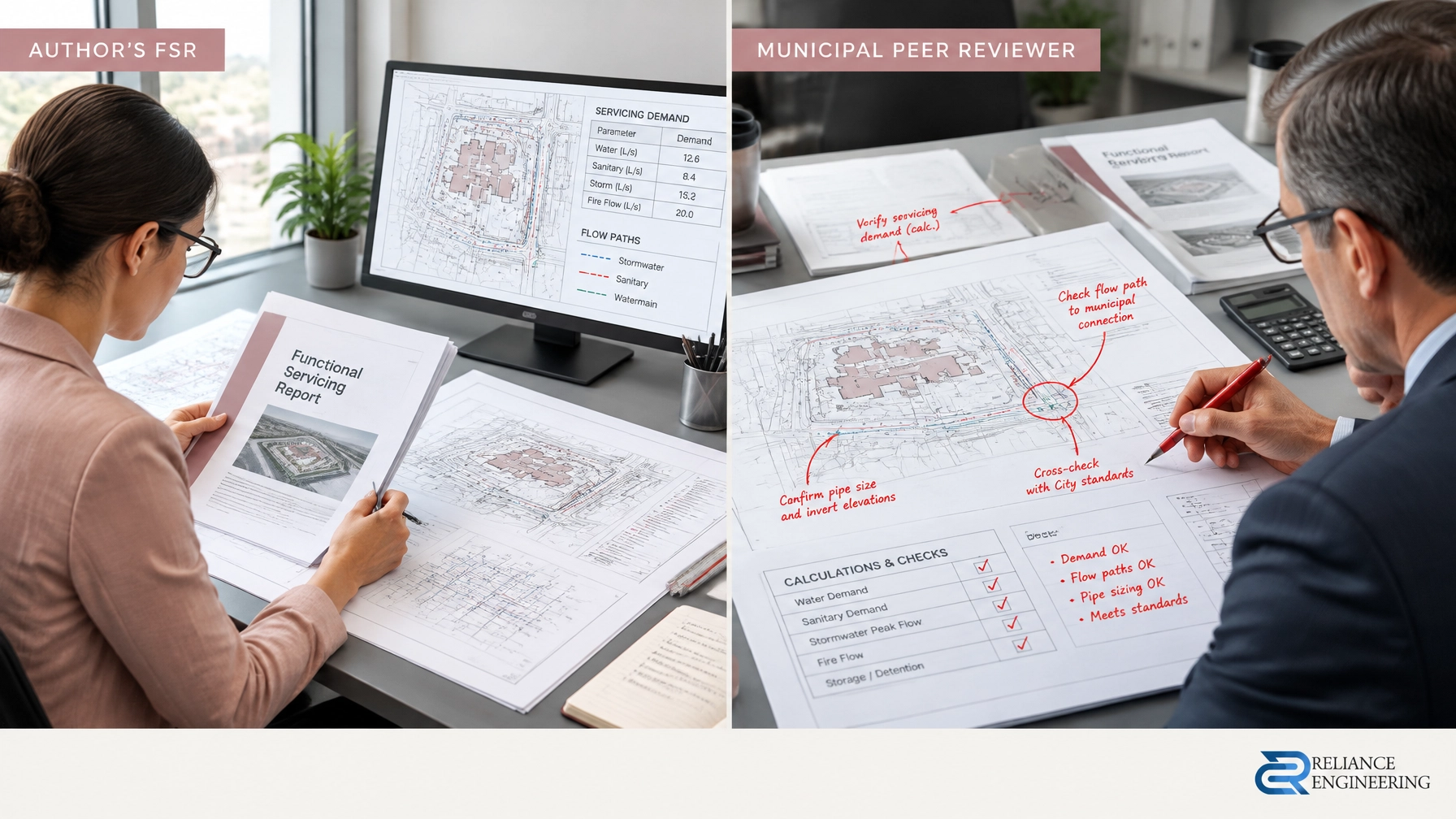
- Assess the storm connection. Review available servicing information and municipal requirements to understand the private system’s outlet and whether downstream capacity or surcharge may be restricting flow.

The investigation helps distinguish surface ponding solutions, such as localized regrading, from work involving pipes, inlets, connections or stormwater controls. In some cases, the result may be a combined repair.
Why the diagnosis changes the scope and cost
A localized grading repair may involve pavement work, adjustments to slopes and coordination with existing site features. A storm-system repair may require excavation, pipe repair or replacement, inlet changes, hydraulic assessment, and approvals for the proposed connection or discharge.
If the receiving system is constrained, solutions may require further analysis and municipal review rather than simply enlarging a private pipe. Ontario’s Stormwater Management Planning and Design Manual provides broader stormwater planning and design context; specific criteria and approval processes depend on the municipality and site.
These are different scopes of work, with different construction impacts. Getting the diagnosis first helps property owners compare practical options and avoid paying for a surface repair that cannot resolve an underground restriction, or underground work when the main issue is settled asphalt.
Consider approvals before changing grades
Municipal grading and drainage requirements vary across Ontario. Depending on the site, work may involve review of lot grading, storm sewer connections, driveway and road tie-ins, or site alteration and grading permits. A Conservation Authority review or permit may also apply where a property falls within a regulated area. Ontario Regulation 41/24 addresses prohibited activities, exemptions and permits in regulated areas.
Before construction, confirm requirements with the relevant municipality and, where applicable, Conservation Authority. The scope may require coordinated grading and servicing information, stormwater analysis and permit-ready drawings. The drawings should communicate elevations, drainage routes, proposed inlet or pipe work, and how the design protects buildings and adjacent properties.
Get a drainage-focused assessment
For commercial property owners looking for commercial property grading fixes, the first step is an evidence-based review, not a guess based on the nearest grate. Reliance Engineering provides site grading, site servicing and stormwater management services across Ontario. Our approach is to develop practical designs, coordinated with site conditions and municipal requirements, and provide approval support where required.
Request a consultation through Reliance Engineering’s contact page or contact us directly.
Contact and credentials
Naresh Ochani, P.Eng. M.Eng.
PEO Certificate of Authorization: 100548882
6850 Millcreek Dr, Mississauga, ON L5N 2H4
Phone: 647-385-6418
Email: [email protected]
Office hours: Saturday 12:00 PM–2:00 PM; Sunday Closed.