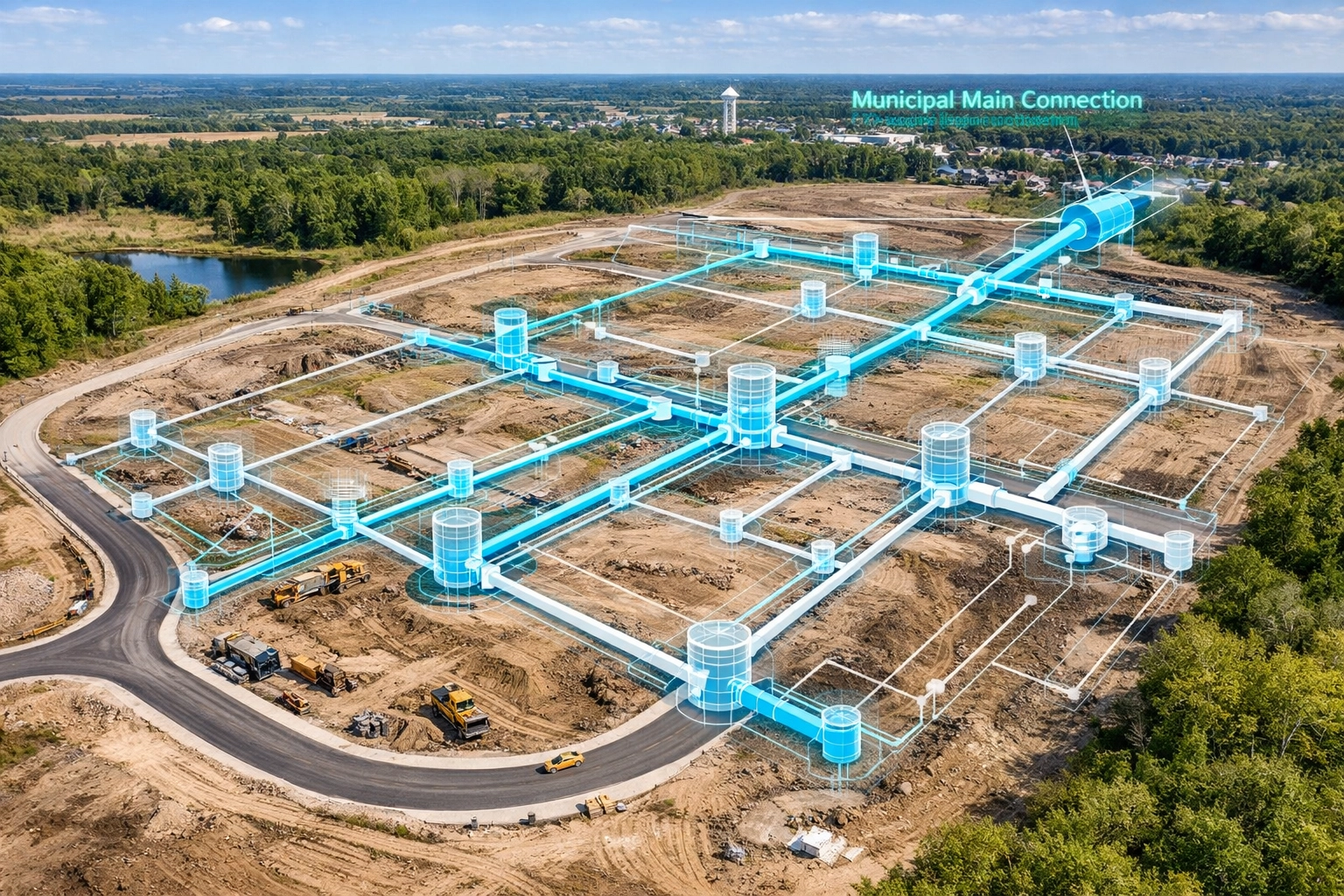
In the high-stakes world of Ontario land development, a flawed Site Servicing Plan is more than just a technical error: it is a project killer. At Reliance Engineering, we have spent over 20 years navigating the complexities of Ontario’s regulatory landscape. We have seen developers lose months of time and hundreds of thousands of dollars because of preventable mistakes in their servicing strategy.
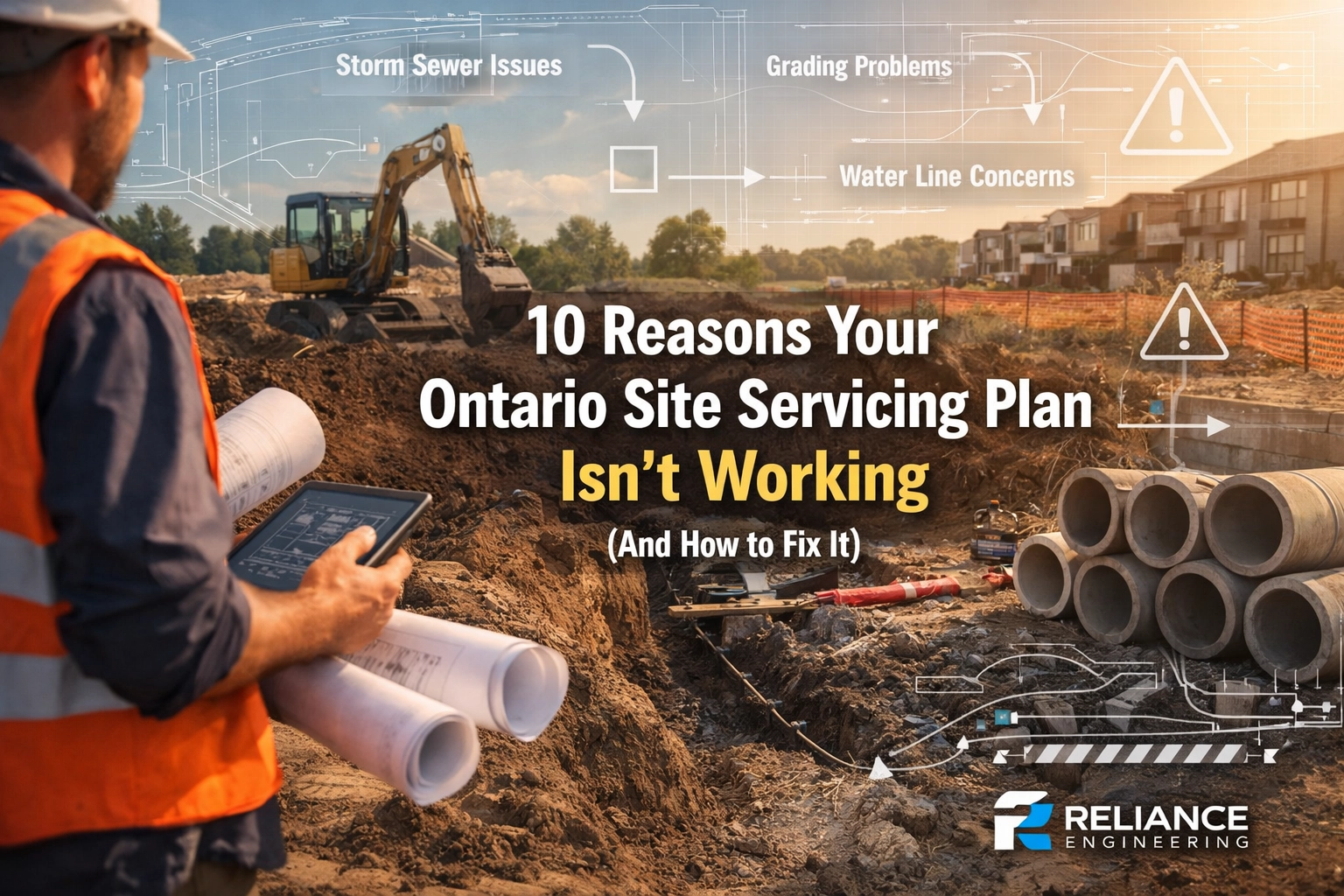
If your Site Plan Approval (SPA) is stalled or your construction costs are skyrocketing, your site servicing plan is likely to blame. Here are the 10 most common reasons these plans fail in Ontario and, more importantly, how you can fix them.
1. Insufficient Municipal Capacity Planning
Many developers assume that because a municipal water main or sanitary sewer runs past their property, they have an automatic right to hook up. This is a dangerous assumption. Across Ontario, many municipalities are facing significant infrastructure deficits.
The Problem: You submit your plan only to find out the downstream sanitary sewer is at capacity or the water pressure is insufficient for fire protection.
The Fix: Commission a Functional Servicing Report (FSR) during the due diligence phase. Do not wait for the city to tell you there is a problem. We use hydraulic modeling to confirm capacity before you even apply for a building permit.
2. Utility Coordination Conflicts
A site servicing plan doesn’t exist in a vacuum. It must coexist with hydro, gas, and telecommunications infrastructure.
The Problem: Your proposed sanitary line conflicts with a major gas main or a hydro vault that wasn’t properly identified. This leads to costly field changes and redesigns mid-construction.
The Fix: Schedule early coordination meetings with utility providers. At Reliance Engineering, we emphasize a "unified plan" approach where all utilities are overlaid onto a single drawing to ensure clearance and separation requirements are met per Ontario provincial standards.

3. Ignoring Poor Soil Conditions
What is happening underground dictates what you can build on top.
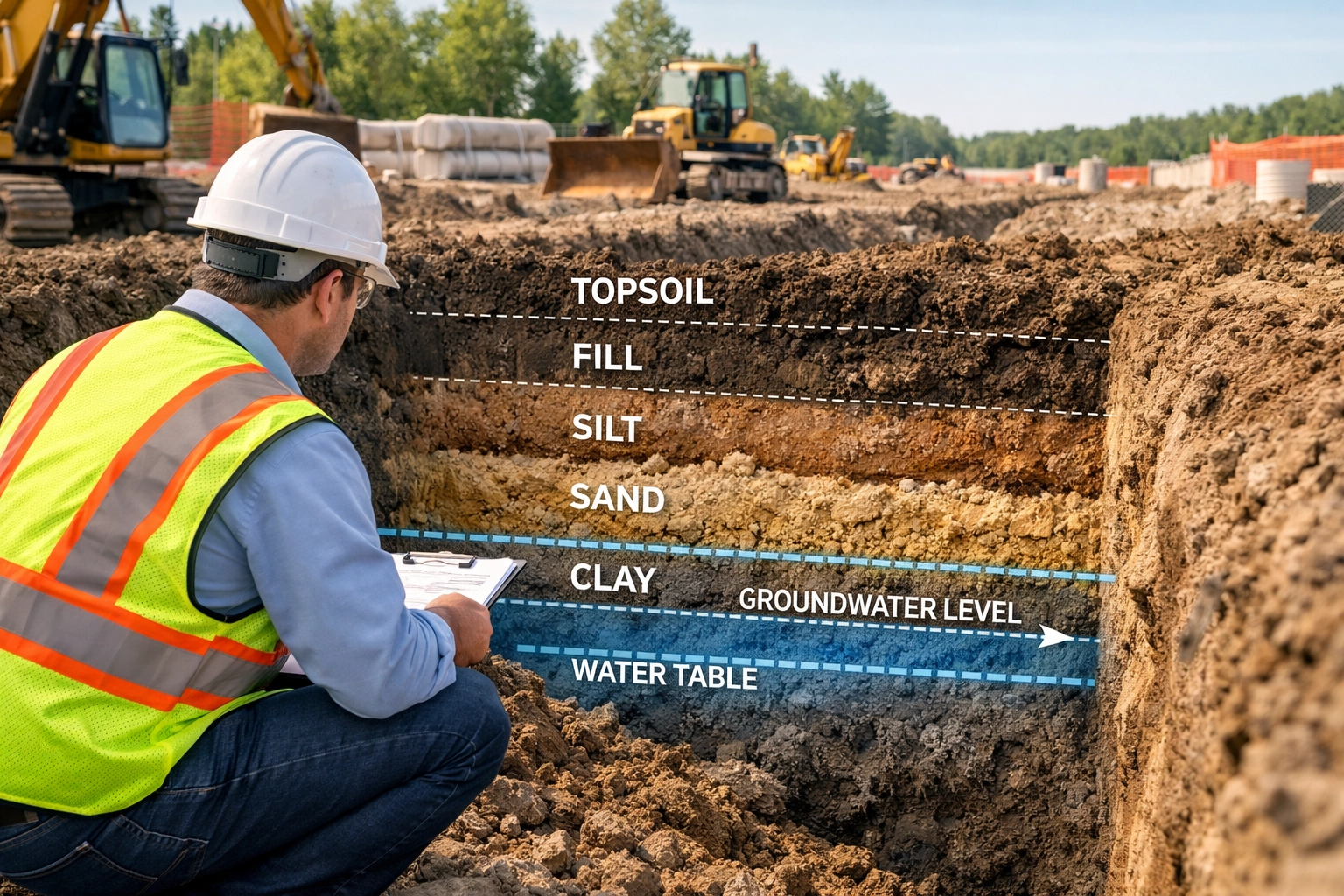
The Problem: Your servicing plan assumes standard trenching, but the geotechnical report reveals high groundwater or unstable soils. Now, you’re looking at expensive shoring or specialized bedding that wasn’t in the budget.
The Fix: Integrate your geotechnical findings into the site servicing design from day one. If we know the soil is poor, we can adjust the pipe materials or the routing to minimize construction costs.
4. Inadequate Stormwater Management (SWM)
Ontario has some of the strictest environmental regulations in North America. Between municipal standards and Conservation Authority (like TRCA or CVC) requirements, Stormwater Management is often where projects go to die.
The Problem: Your plan fails to meet "Enhanced" water quality treatment standards or fails to control post-development peak flows to pre-development levels.
The Fix: Don’t treat SWM as an afterthought. Engage with Conservation Authorities early. We often recommend Low Impact Development (LID) features or underground storage tanks to maximize buildable area while remaining 100% compliant with Ontario's environmental policies.
5. Incomplete or Unclear Drawings
Municipal reviewers in Ontario are overworked. If your drawings are hard to read or missing data, they will be pushed to the bottom of the pile.
The Problem: Missing pipe slopes, lack of invert elevations, or vague connection details lead to a "Request for Revision" that sets you back six weeks.
The Free Fix: Ensure every drawing is fully dimensioned and follows the specific CAD standards of the municipality you are working in. Clarity is the fastest way to an approval.
6. Missed Grading and Drainage Feasibility
Servicing and grading are two sides of the same coin. You cannot design one without the other.
The Problem: Your Site Grading Plan and servicing plan are disconnected. You end up with a sanitary sewer that is too shallow to service the basement or a storm pipe that doesn't have enough cover under a heavy-traffic driveway.
The Fix: Professional engineers must perform a simultaneous review of grading and servicing. We look at the "verticality" of the project to ensure that gravity works in your favor, avoiding the need for expensive pumping stations.

7. Inadequate Municipal Pre-Consultation
Every municipality in Ontario: from Toronto to Ottawa to Windsor: has its own set of "local standards."
The Problem: You design a plan based on general Ontario Building Code (OBC) standards, but the local municipality requires a specific type of hydrants or a different minimum pipe size.
The Fix: Never skip the pre-consultation meeting. We use these sessions to pin down exactly what the local engineers want to see, which drastically reduces the number of review cycles.
8. Underestimating Complex ICI Requirements
Industrial, Commercial, and Institutional (ICI) projects have vastly different servicing needs than residential subdivisions.
The Problem: High water demand for industrial processes or large sanitary flows from a commercial kitchen are underestimated, leading to system failure or municipal rejection.
The Fix: For ICI projects, perform a detailed water demand and sanitary flow analysis early. Our work on projects like the Redevelopment of Etobicoke General Hospital highlights the importance of scaling infrastructure to match complex institutional needs.

9. Incomplete Submission Packages
A site servicing plan is just one piece of the puzzle. If the supporting documents aren't there, the plan won't be reviewed.
The Problem: You submit the plan but forget the Sanitary Sewer Design sheets or the drainage area maps.
The Fix: Use a checklist. We ensure every submission includes the Site Servicing Plan, Grading Plan, SWMR, FSR, and Erosion and Sediment Control plans. A complete package signals to the municipality that you are a professional who respects their time.
10. Lack of Professional Oversight During Construction
The best plan in the world is useless if the contractor doesn't follow it.
The Problem: The pipes are installed at the wrong slope, or the wrong bedding material is used because there was no engineering oversight on-site.
The Fix: Hire a licensed Professional Engineer (P.Eng.) to perform site visits and inspections. We provide the necessary certification that the municipality requires before they will "assume" the services or release your securities.
Why Reliance Engineering?
At Reliance Engineering, we don't just draw lines on a map. We solve problems before they happen. Whether you are working on Townhomes in Toronto or a Redevelopment in Newmarket, our goal is to get your permits issued as quickly and cost-effectively as possible.
We specialize in:
- Site Plan Approvals
- Zoning & Official Plan Amendments
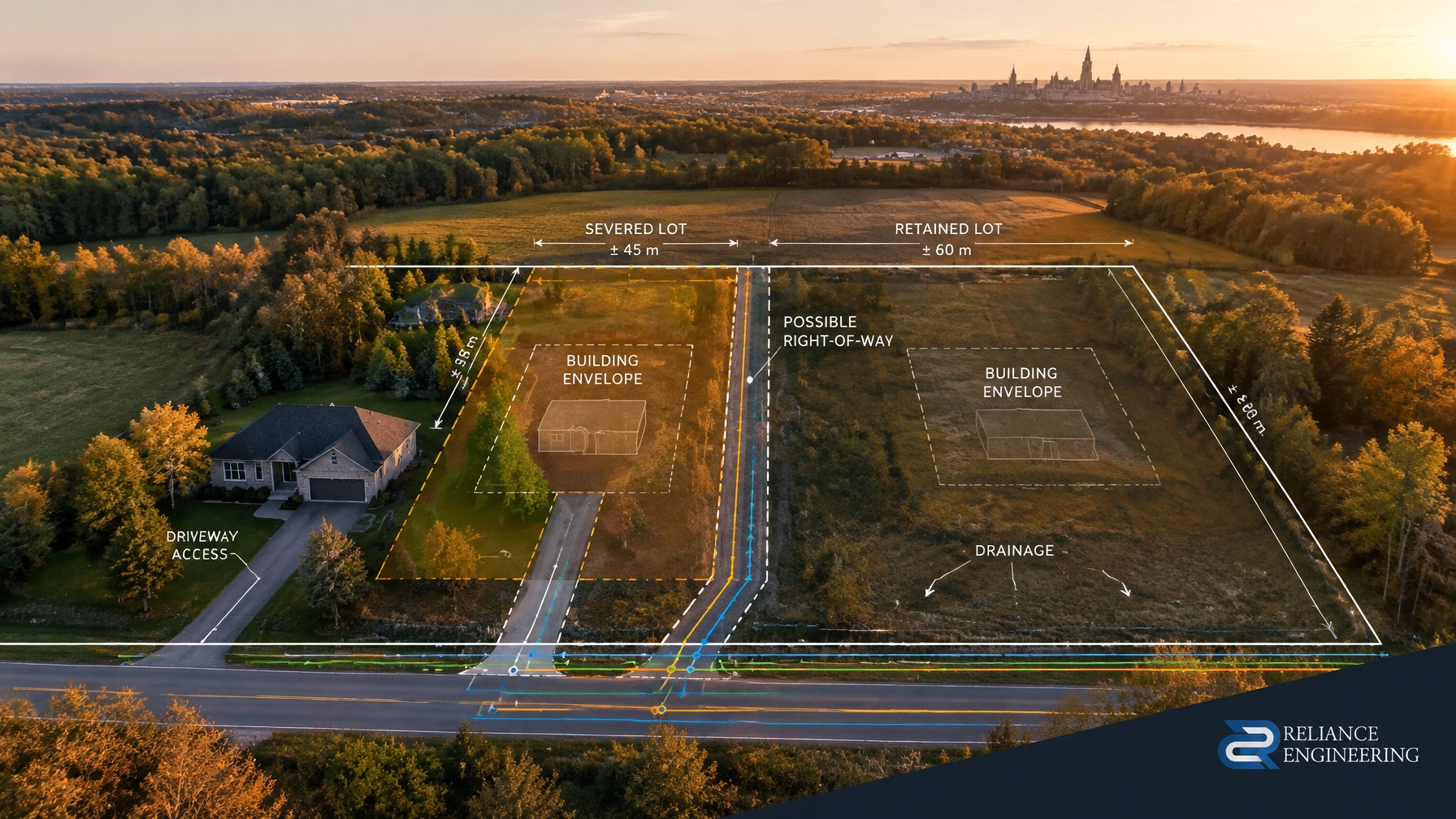
- Severance & Minor Variance Applications
- Comprehensive Servicing & Grading Design
Stop letting municipal red tape hold up your development. Let us put our 20+ years of Ontario experience to work for you.
Contact Information
Reliance Engineering
Naresh Ochani, P.Eng. M.Eng.
Founder and Principal
Address: 6850 Millcreek Dr, Mississauga, ON L5N 2H4
Phone: 647-385-6418
Email: [email protected]
Website: www.relianceengineering.ca
Office Hours:
- Monday – Friday: 9:00 AM – 5:00 PM
- Saturday: 12:00 PM – 2:00 PM
- Sunday: Closed
Expertise You Can Trust. Solutions That Work. Across Ontario.
Metadata:
- Date: Sunday, 22 of March 2026
- Location: Ontario, Canada
- Category: Civil Engineering / Land Development Consulting