Time is the most expensive commodity in Ontario land development. Every day your project sits in a "Resubmission Loop" at a municipal office is a day you aren't breaking ground. At Reliance Engineering, we’ve spent over 20 years navigating the complexities of site plan approvals across Ontario. We’ve seen why projects stall and, more importantly, we know how to push them through.
If you’re tired of the "back-and-forth" with city reviewers, you need a different strategy. You need precision, foresight, and municipal-specific knowledge. Here are 7 site plan hacks to stop wasting time and start building.
1. The "Pre-Consultation" Deep Dive
Most developers treat the pre-consultation meeting as a formality. This is a mistake. This is your chance to uncover the specific "pet peeves" of the local planning department.
Before you submit your Site Servicing Plan, ensure you have a clear understanding of the local municipality's unique standards. Every jurisdiction in Ontario: from Mississauga to St. Catharines: has slight variations in how they want to see pipes drawn and calculations presented.
The Hack: Don't just show up. Bring a preliminary draft. Ask specific questions about their capacity concerns for sanitary sewer design. Getting a verbal "nod" on your general approach early saves weeks of revision later.
2. Lock Your Geospatial Data Early
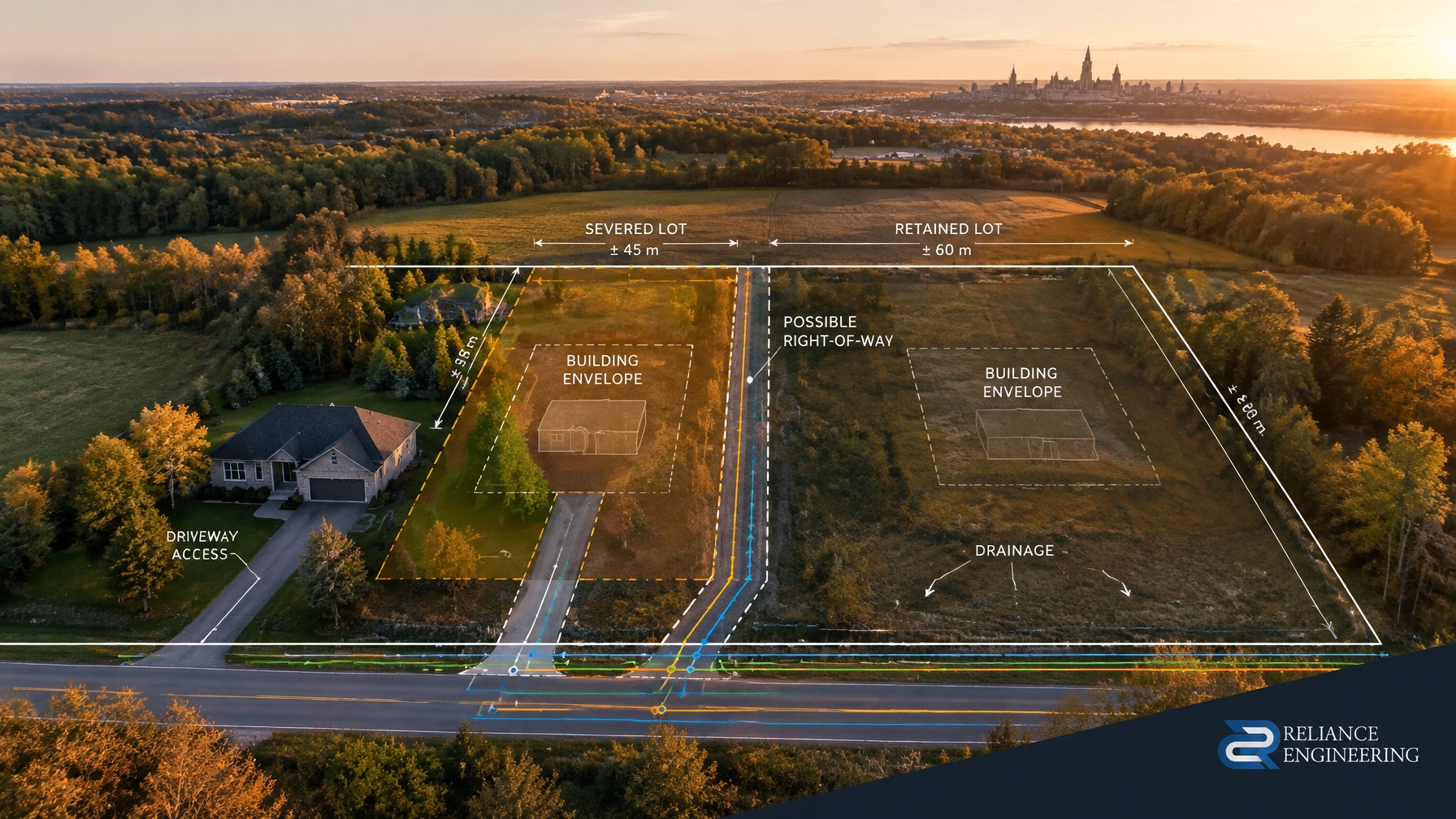
Nothing triggers a resubmission faster than inconsistent data. If your site plan doesn't align perfectly with the legal survey or the GIS references used by the city, your application will be flagged for "lack of clarity."
Errors in property boundaries or topographic benchmarks ripple through every other drawing. Your Site Grading Plan depends on absolute accuracy.
The Hack: Use a "Single Source of Truth" model. Align all engineering drawings to the same verified geodetic benchmark from day one. At Reliance Engineering, we verify geospatial accuracy before a single line is drawn. It prevents the nightmare scenario where a building footprint technically "shifts" three inches in a later revision.
3. The 3D Stress Test
Traditional 2D site plans can hide conflicts. A pipe might look fine on paper, but when it meets a structural footing or a high-voltage line, the design fails. Municipal reviewers are increasingly looking for "clash detection."
The Hack: Run a 3D simulation of your storm system design. Visualization allows you to see how water moves across the property and where utility conflicts might occur. Testing ideas in a virtual environment before you submit ensures that what you’ve designed is actually constructible. This level of rigor is what sets professional Civil Engineering apart.

4. Front-Load Your SWM Report
The Stormwater Management (SWM) report is often the biggest bottleneck. Reviewers are under pressure to ensure new developments don't overwhelm existing infrastructure or cause environmental damage.
If your Functional Servicing Report is vague, it’s an automatic resubmission.
The Hack: Over-deliver on detail. Don't just meet the minimum requirements; show the math for "extreme event" scenarios. Address Quality, Quantity, and Erosion Control explicitly. When a reviewer sees a comprehensive, data-driven SWM strategy, they gain confidence in the entire application. We applied this meticulous approach to the Redevelopment of Etobicoke General Hospital, ensuring all drainage and grading requirements were exceeded.
5. Eliminate Technical Ambiguity
Municipal reviewers hate "To Be Determined." If your plan includes vague notes about material palettes or construction details, you are inviting questions. Every question is a potential delay.
The Hack: Use specific, built-in databases for materials and specifications. Whether it's the specific type of catch basin or the exact diameter for water distribution design, specify it now. Precise labeling shows the reviewer that the project is "permit-ready" and fully thought through.
6. The "Complete Application" Framework
In many Ontario municipalities, an application isn't just "under review": it’s screened for completeness first. If one minor document is missing, the clock hasn't even started on your 30 or 60-day review period.
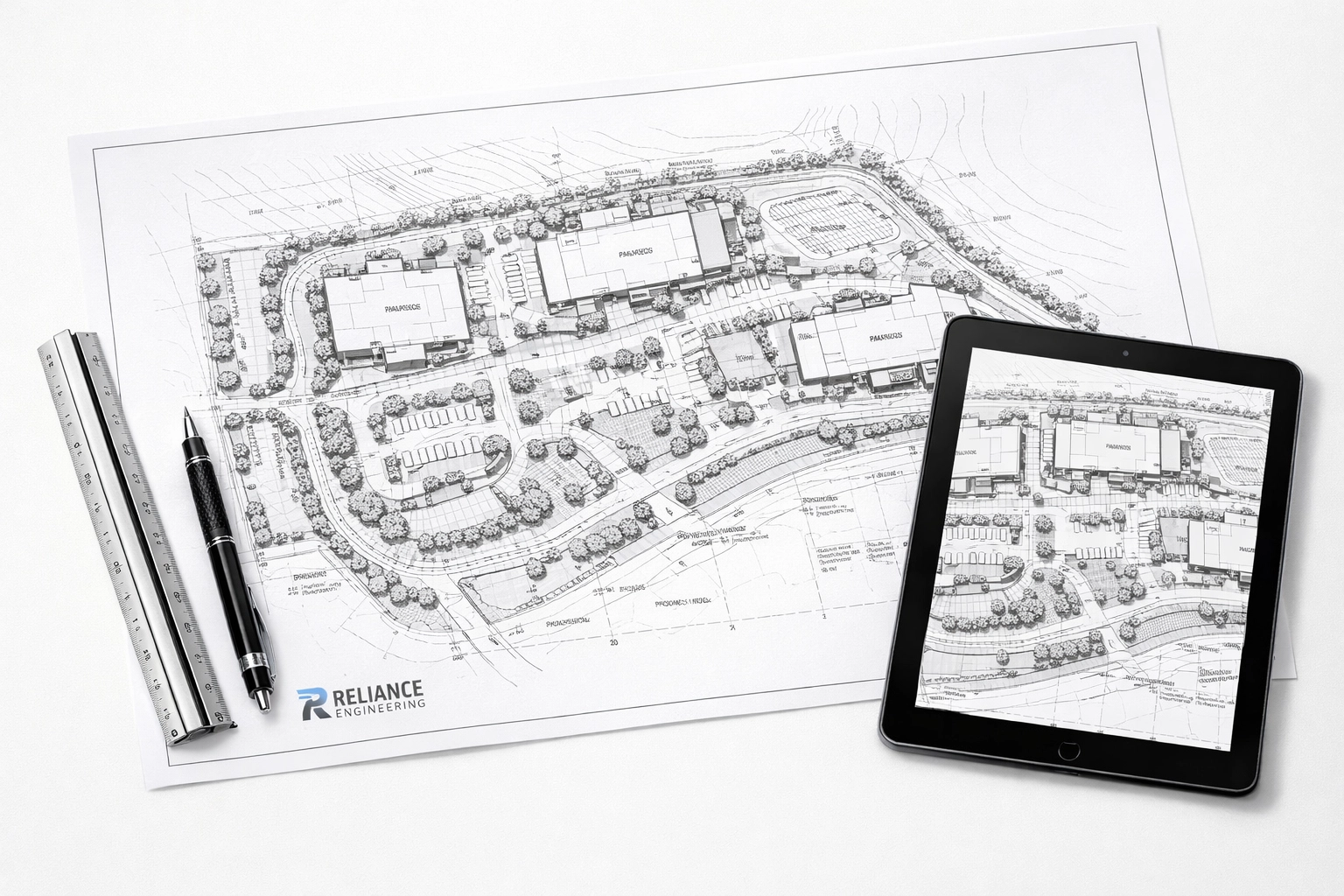
The Hack: Create a compliance checklist based on the specific municipality’s requirements. At Reliance Engineering, we use a proprietary internal audit to ensure every T is crossed. This includes verifying that the Site Grading Plan matches the landscape architect’s vision and the architect’s floor elevations. Total integration is the only way to avoid the resubmission loop.
7. Plan for Sustainability From Day One
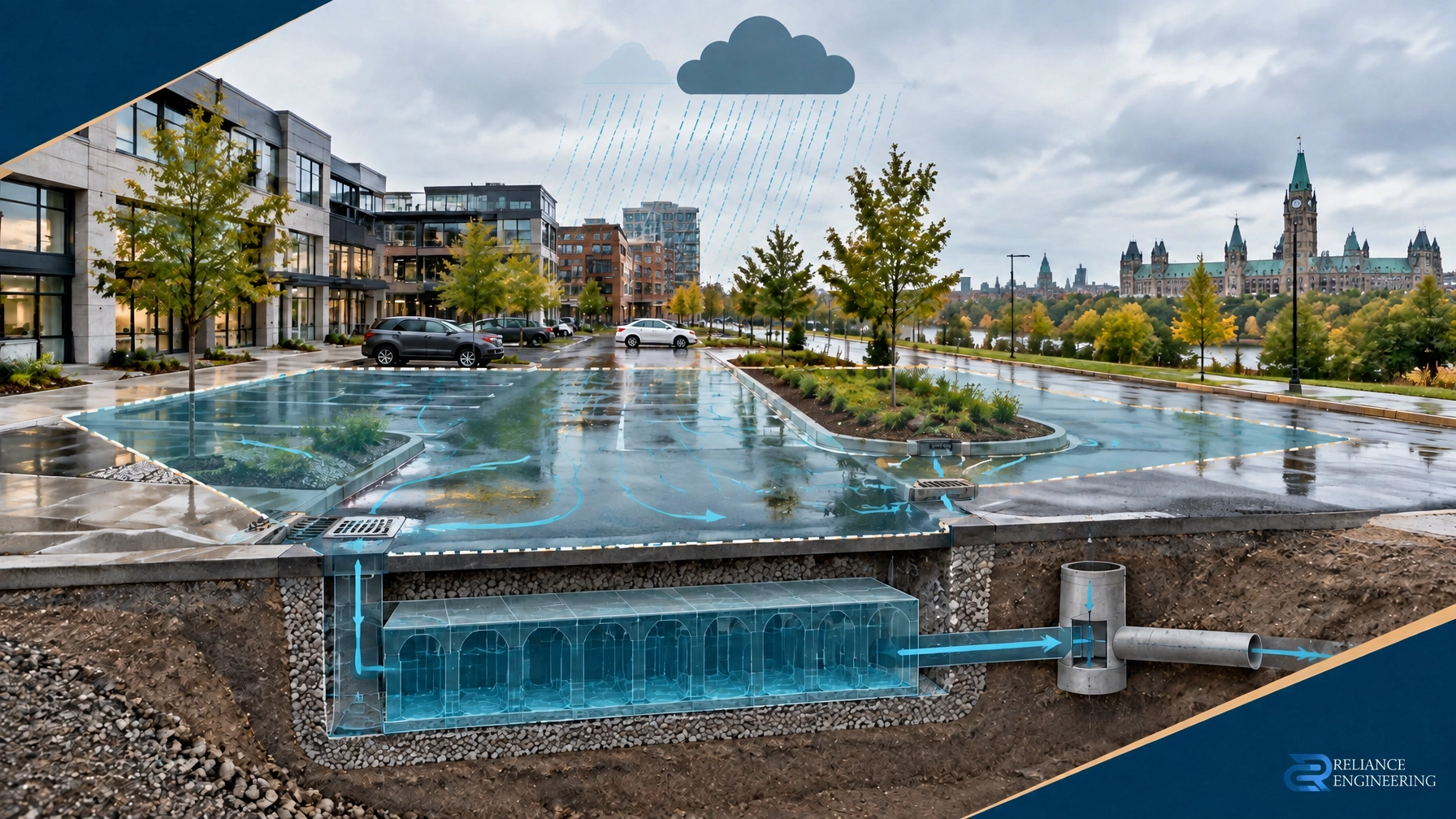
With the push for Low Impact Development (LID) across Ontario, missing sustainability requirements is a common cause for rejection. If you try to "tack on" LID features after your site plan is designed, you’ll end up redesigning the whole thing.
The Hack: Integrate LID features: like bioswales or permeable pavement: into your initial Stormwater Management strategy. Planning for these early means they become part of the site’s aesthetic and functional logic, rather than an expensive afterthought that requires a total site redesign.

Why Experience Matters
Navigating the Ontario land development landscape requires more than just technical skill; it requires an understanding of the human element. Reviewers are people who want to see projects succeed, but they have a duty to protect the municipality.
With 20+ years of experience, Naresh Ochani and the team at Reliance Engineering have built the relationships and the reputation needed to move projects forward. We’ve handled high-profile projects like 35 Wabash Avenue and 85 Bronte Road in Oakville, proving that a well-engineered plan is the fastest path to approval.

Stop Guessing. Start Building.
Don’t let your project get stuck in the cycle of endless revisions. At Reliance Engineering, we provide practical, compliant, and cost-effective solutions that are permit-ready. We offer draft plans in days, not weeks, helping you get to the Construction Administration phase faster.
If you have a project in Ontario that needs expert eyes, contact us today. Let’s get your site plan approved on the first try.
Contact Information
Reliance Engineering
Naresh Ochani, P.Eng. M.Eng.
Founder and Principal
Address: 6850 Millcreek Dr, Mississauga, ON L5N 2H4
Phone: 647-385-6418
Email: [email protected]
Website: www.relianceengineering.ca
Office Hours:
- Monday – Friday: 9:00 AM – 5:00 PM
- Saturday: 12:00 PM – 2:00 PM
- Sunday: Closed
Our Services:
- Land Development Consulting
- Site Grading & Servicing Plans
- Stormwater Management Reports
- Sanitary & Watermain Design
- Functional Servicing Reports
- Construction Administration
Ready to start? Contact Us for a consultation on your next project.