Site Plan Approval (SPA) is the most critical gatekeeper in Ontario’s land development process. It is the bridge between a conceptual architectural drawing and a shovel-ready project. Yet, many developers: both seasoned and new: treat it as a bureaucratic hurdle rather than a technical milestone.
At Reliance Engineering, we have spent over 20 years navigating the regulatory landscape across Ontario. We see the same mistakes repeated weekly. These errors don't just cause "paperwork delays"; they cost thousands in carrying costs, missed construction windows, and unnecessary redesign fees.
If you want your project to move from paper to pavement, you need to avoid these seven common pitfalls.
1. Submitting Incomplete or Low-Quality Plans
The fastest way to get your application tossed to the bottom of the pile is to submit a "preliminary" package that lacks technical depth. Ontario municipalities are overwhelmed. If your submission is missing a single item from the mandatory checklist, it will be deemed incomplete.
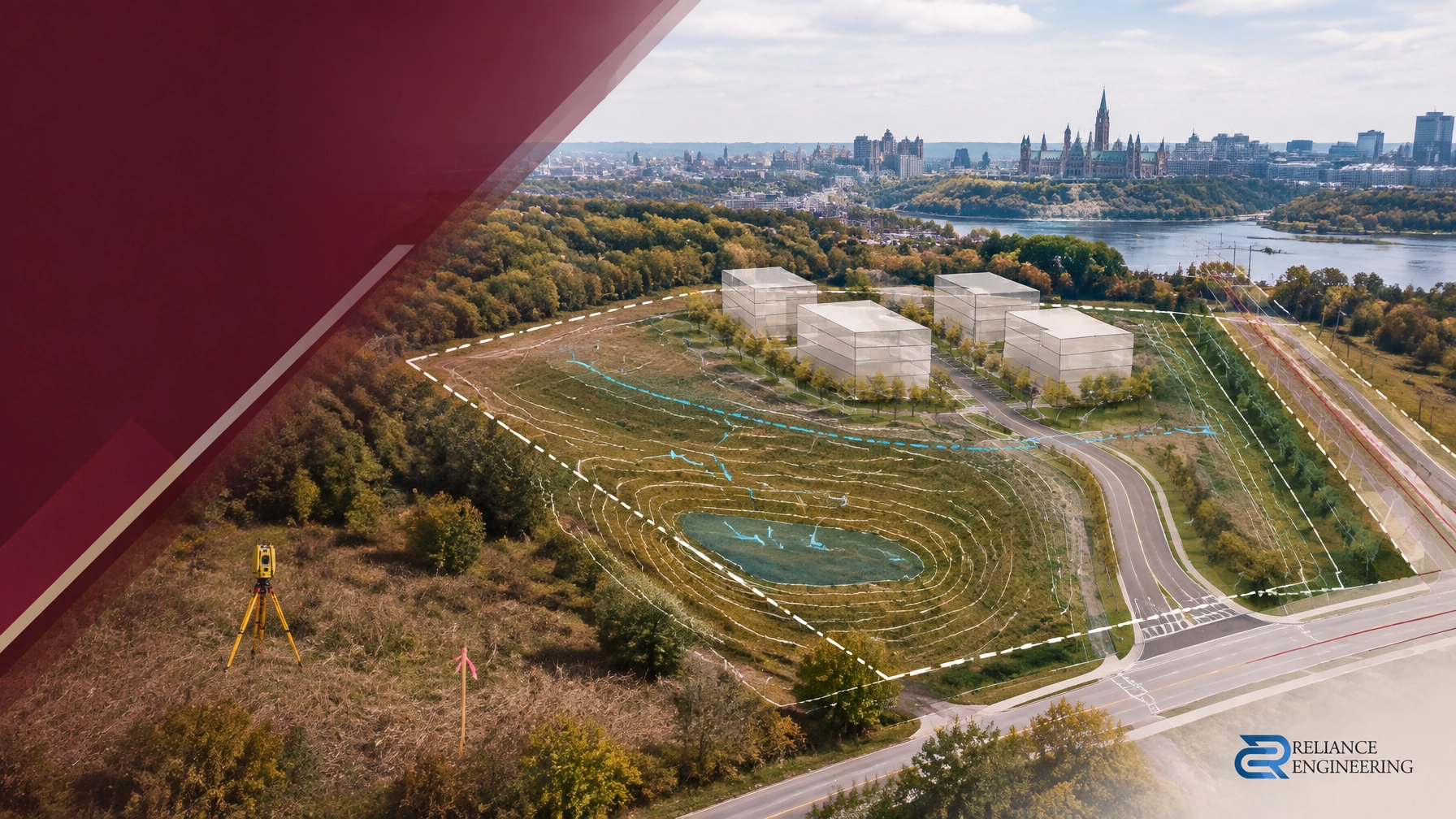
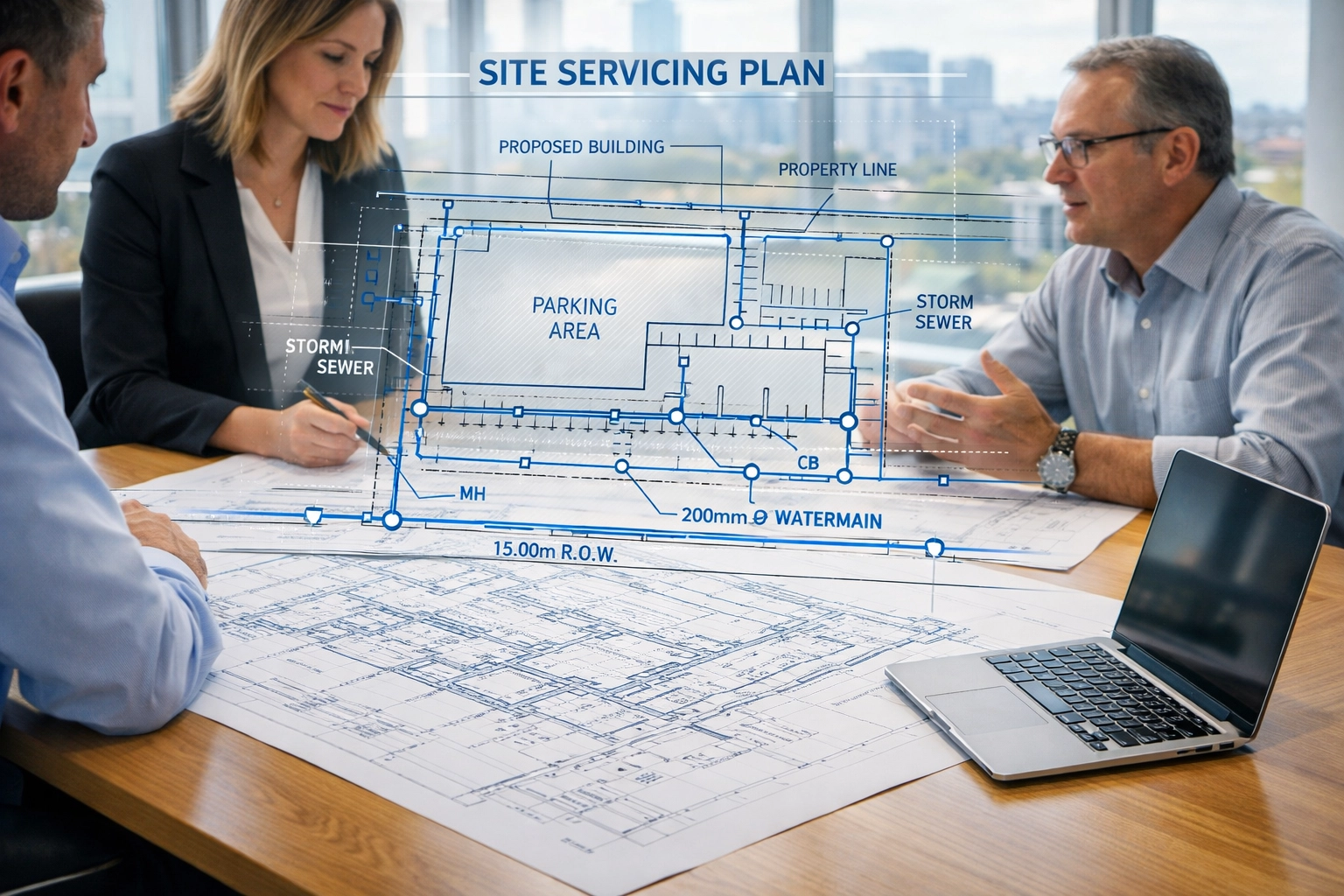
A common error is providing an architectural site plan without a corresponding Site Grading Plan. Without knowing how water will flow off the property or how the elevations interact with the municipal right-of-way, the city cannot review your application.
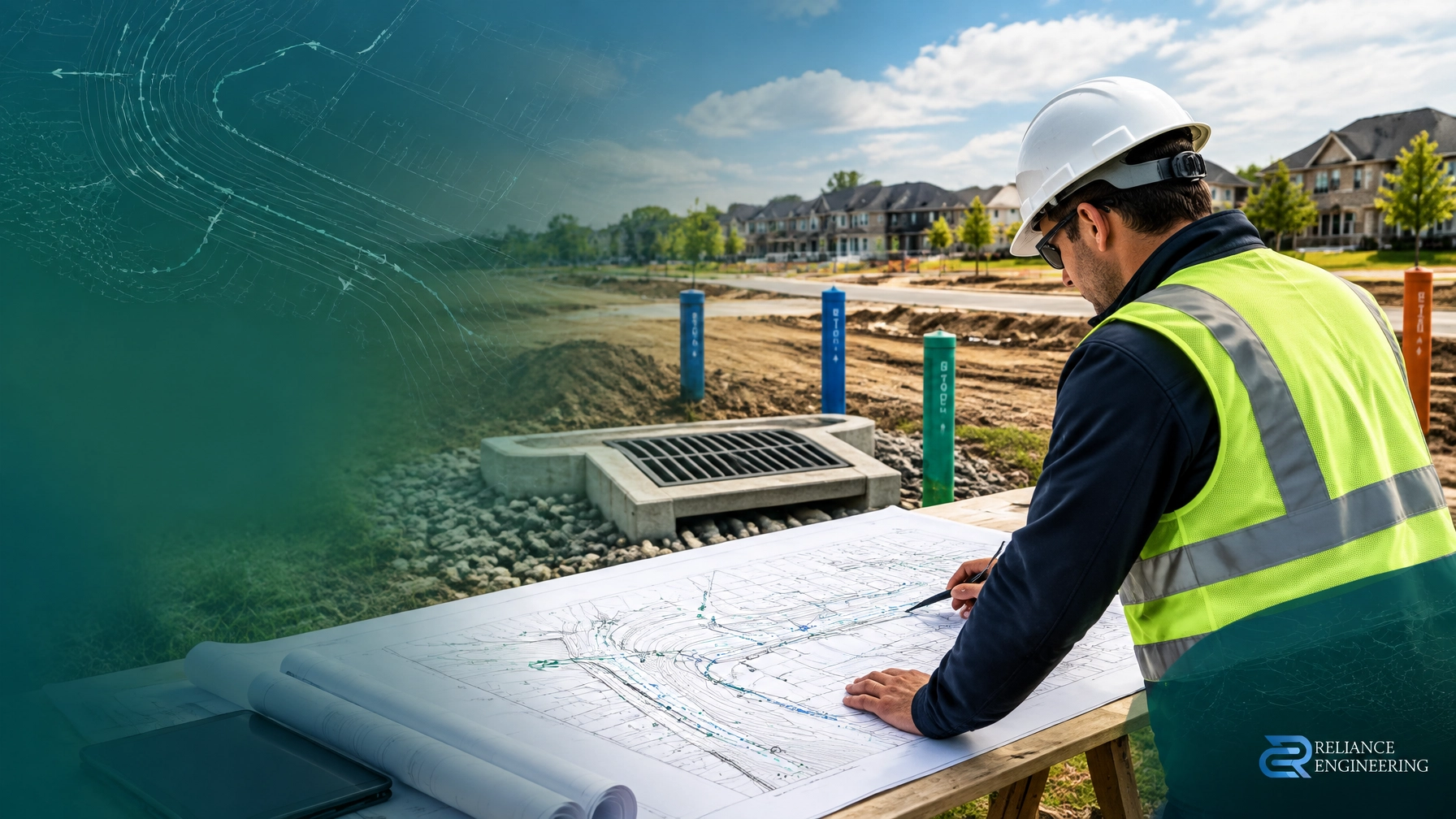
The Fix: Obtain the municipality’s "Checklist of Requirements" during the pre-consultation phase. Ensure your Site Servicing Plan and grading plans are detailed, sealed by a P.Eng., and coordinated with your architect’s vision.
2. Ignoring Zoning Compliance Before SPA
Many developers mistakenly believe that Site Plan Approval is the place to negotiate zoning issues. It isn't. SPA is meant to confirm how you will build what you are already permitted to build.
If your building height, setbacks, or parking counts don't align with the local Zoning By-law, your SPA application will stall indefinitely. You cannot "fix" a zoning violation through site plan comments.
The Fix: Verify zoning compliance before you even draft a site plan. If your project requires a Minor Variance or a Zoning By-law Amendment, initiate those processes early or run them concurrently. Reliance Engineering specializes in identifying these conflicts before they become expensive roadblocks.
3. Treating Pre-Consultation as an Informal Chat
In most Ontario municipalities, pre-consultation is mandatory. Many developers treat this as a "meet and greet." That is a mistake. This meeting is where the municipality defines the scope of all required technical studies: from traffic impact assessments to Functional Servicing Reports.
If you go in under-prepared, the city will default to requesting every study possible, adding months and tens of thousands of dollars to your budget.
The Fix: Use pre-consultation to narrow the scope. Present a solid conceptual plan that addresses obvious concerns like stormwater and access. The goal is to walk out with a signed "Record of Pre-Consultation" that lists only the necessary requirements.
4. Failing to Account for Stormwater and Servicing Realities
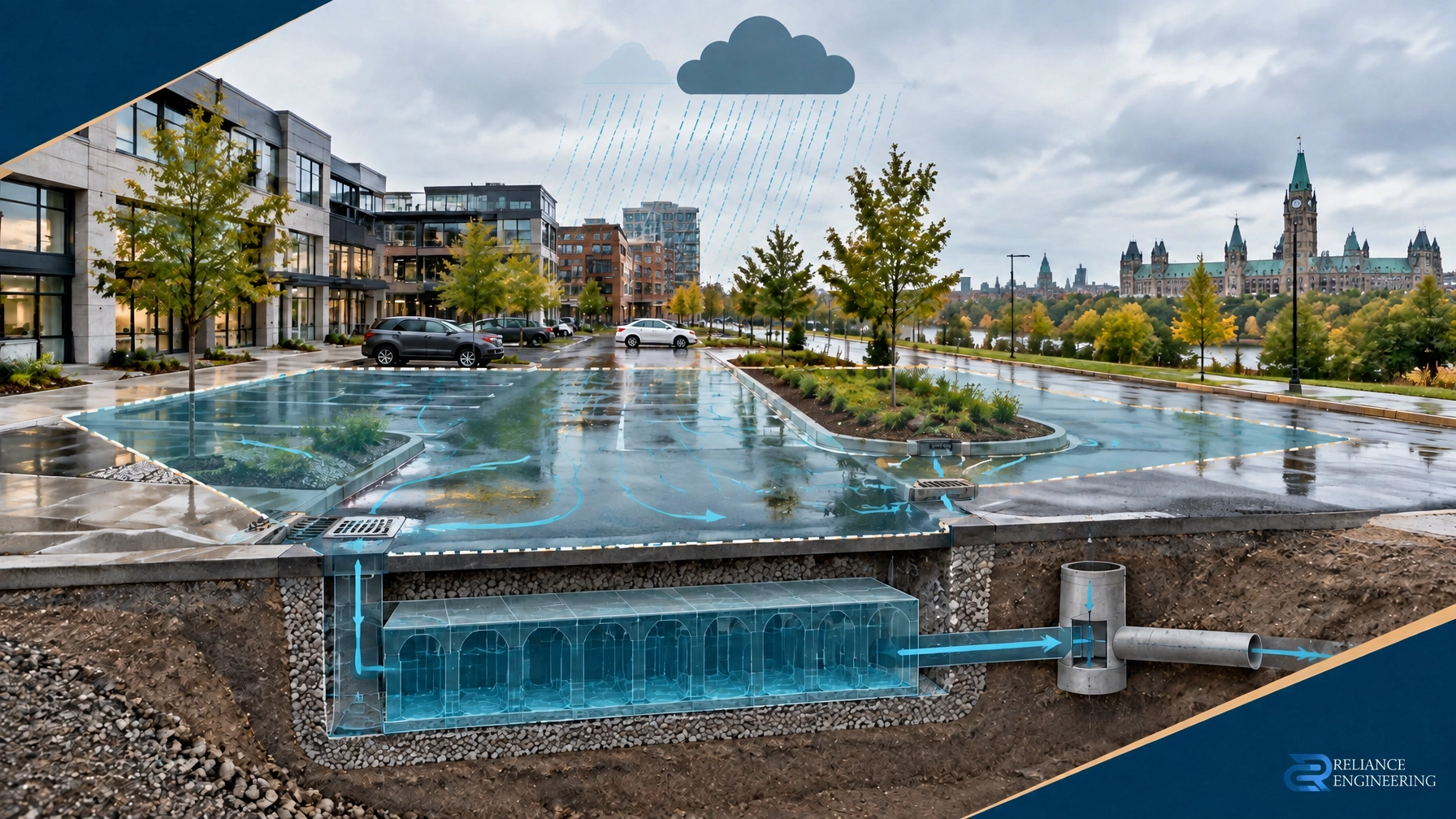
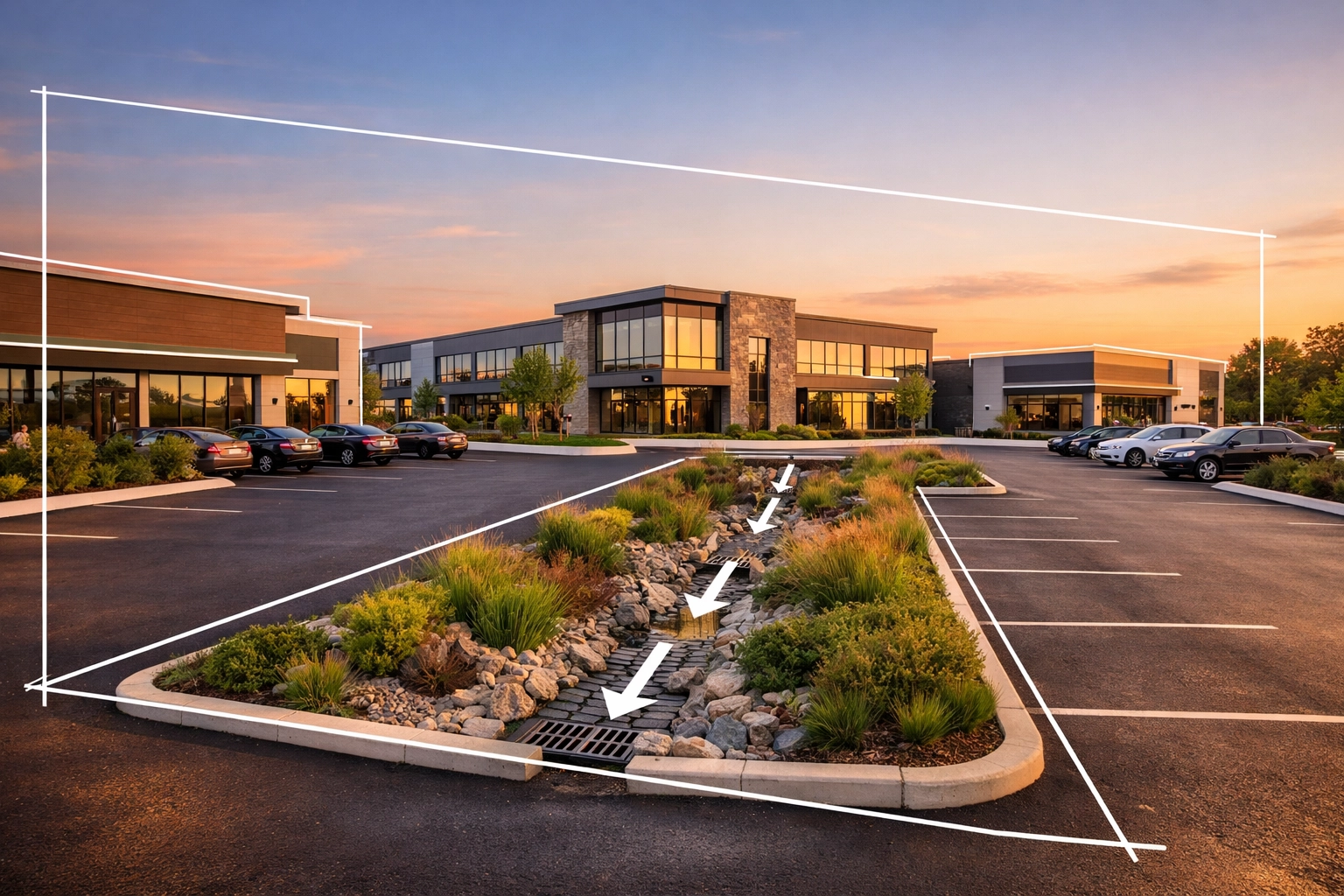
This is where projects often die. You might have a beautiful architectural design, but if the local sewer system doesn't have the capacity for your density, or if you haven't accounted for a Stormwater Management pond or underground storage, your plan won't work.
Ontario has strict regulations regarding "Quality and Quantity" control for stormwater. You cannot simply pipe all your rain runoff into the municipal street.
The Fix: Engage a civil engineer to draft a Functional Servicing Report (FSR) at the onset. This report proves that the existing infrastructure (water, sanitary, and storm) can support your development. At Reliance Engineering, we integrate Storm System Design into the initial SPA phase to ensure the footprint of your building actually fits the engineering reality of the site.
5. Construction Deviations Without Approval
You finally get your Site Plan Agreement signed, and you start digging. Mid-construction, you decide to move a driveway three meters to the left or change the type of retaining wall used.
In Ontario, if the "as-built" conditions do not match the approved site plan, the municipality can refuse to release your securities or, worse, issue a Stop Work Order.
The Fix: The approved site plan is the law of the land. If you must make changes, you need a Site Plan Amendment. Consult with your engineer before making any field changes to ensure they are compliant and documented properly.

6. Budgeting Blindly for Financial Securities
The approval itself isn't the final cost. Once you receive "Conditional Approval," you will be required to sign a Site Plan Agreement. This agreement usually requires the developer to post financial securities: often in the form of Letters of Credit (LCs): covering 100% of the cost of on-site and off-site works (landscaping, paving, lighting, and Site Servicing).
Developers who don't budget for these LCs, plus development charges and parkland dedication fees, find themselves unable to pull a building permit even after the engineering is approved.
The Fix: Ask for a preliminary estimate of securities early in the process. Work with an engineering firm that provides accurate cost estimates for site works so you can secure your financing ahead of time.
7. Underestimating the Review Timeline
"I need my permit in two months." We hear this often. In reality, the SPA process in Ontario typically takes 6 to 12 months for standard projects, and even longer for complex redevelopments.
Municipalities have 30 days just to tell you if your application is complete. After that, the first round of comments usually takes 8 to 12 weeks. If you haven't accounted for three or four rounds of revisions, your project schedule will collapse.
The Fix: Start early. Submit a high-quality, comprehensive package on day one to minimize the number of revision cycles. A clean submission from an experienced firm like Reliance Engineering can shave months off the approval timeline by addressing technical concerns before the city's reviewers even find them.
The Reliance Engineering Advantage
Navigating the Ontario regulatory landscape requires more than just technical drawings; it requires a strategic partner. At Reliance Engineering, we specialize in Land Development Consulting, helping clients through the complexities of Site Plan Approval, Sanitary Sewer Design, and Erosion and Sediment Control.
We have a proven track record of delivering permit-ready designs for residential and ICI projects across Ontario. Whether it’s a complex urban infill like 35 Wabash Avenue or large-scale institutional work like the Redevelopment of Etobicoke General Hospital, we bring 20+ years of expertise to the table.
Don't let avoidable mistakes derail your project. Reach out to us for a consultation and let’s get your site approved.
Contact Information
Naresh Ochani, P.Eng. M.Eng.
Founder and Principal
Reliance Engineering
Address: 6850 Millcreek Dr, Mississauga, ON L5N 2H4
Phone: 647-385-6418
Email: [email protected]
Website: www.relianceengineering.ca
Office Hours
- Monday – Friday: 9:00 AM – 5:00 PM
- Saturday: 12:00 PM – 2:00 PM
- Sunday: Closed