Navigating the land development process in Ontario requires a sophisticated understanding of municipal requirements, provincial regulations, and engineering standards. Among the most critical components of a successful Site Plan Approval (SPA) application is the Stormwater Management (SWM) strategy.
For developers, architects, and property owners, stormwater management is not merely a technical checkbox; it is a fundamental pillar of site design that dictates how a project interacts with the environment and existing municipal infrastructure. At Reliance Engineering, with over 20 years of experience in the Ontario landscape, we have seen how a proactive approach to SWM can streamline approvals and mitigate costly design revisions.
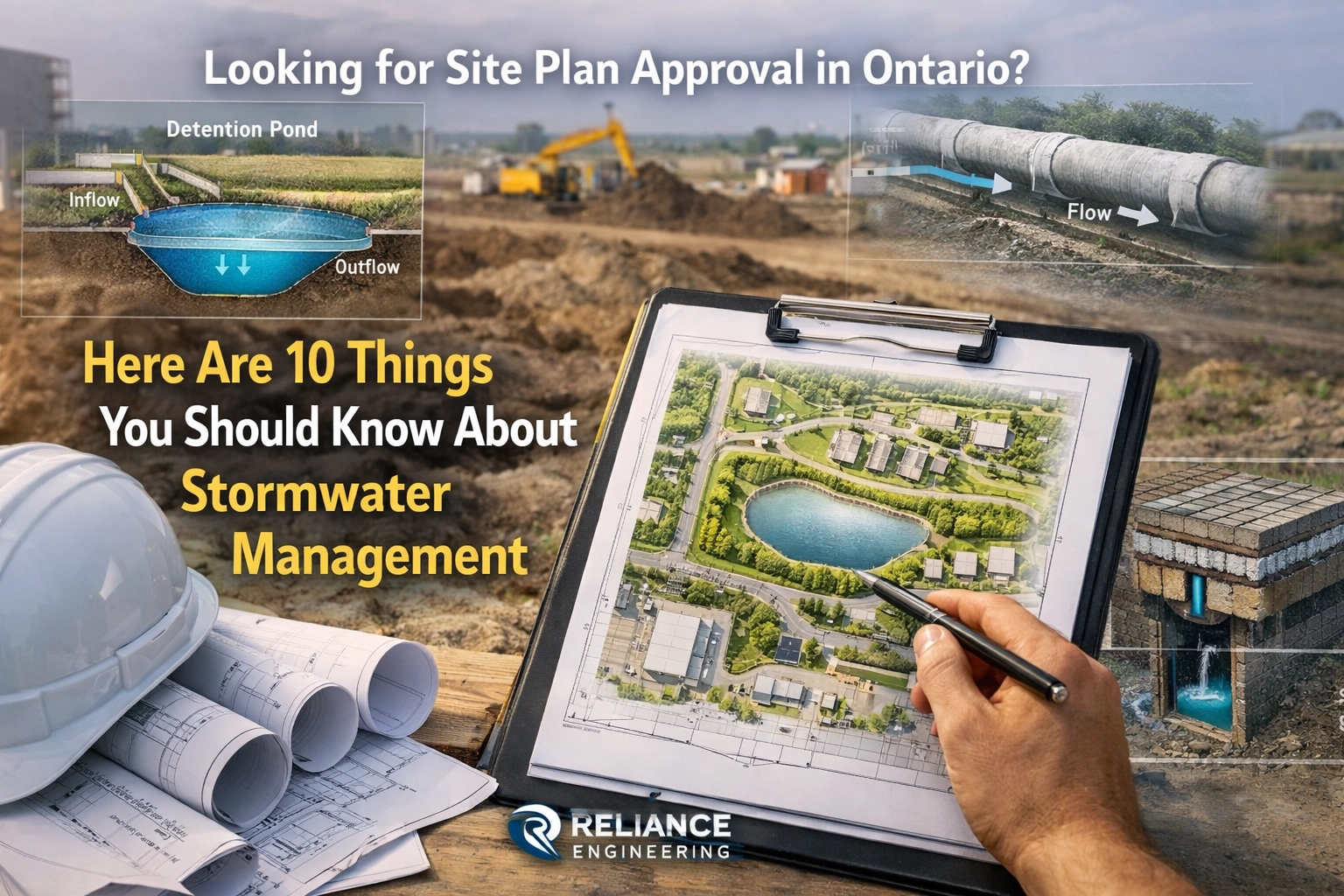
Here are 10 essential things you must know about stormwater management when seeking Site Plan Approval in Ontario.
1. The Stormwater Management Report (SWMR) is Non-Negotiable
For almost every commercial, industrial, or multi-residential development in Ontario, a comprehensive Stormwater Management Report is required. This report, prepared by a Licensed Professional Engineer, details how the site will handle rainfall and snowmelt. It addresses the quantity, quality, and water balance of runoff. Without a stamped SWMR that aligns with the municipality’s specific criteria, your Site Plan Approval application will likely be deemed incomplete or rejected during the first technical review.
2. Quantity Control: The "Pre-to-Post" Development Rule
One of the primary goals of stormwater management is quantity control. Most Ontario municipalities require that the peak flow rate of runoff leaving a site after development must not exceed the peak flow rate of the site in its natural or pre-development state. This is often referred to as the "pre-to-post" comparison.
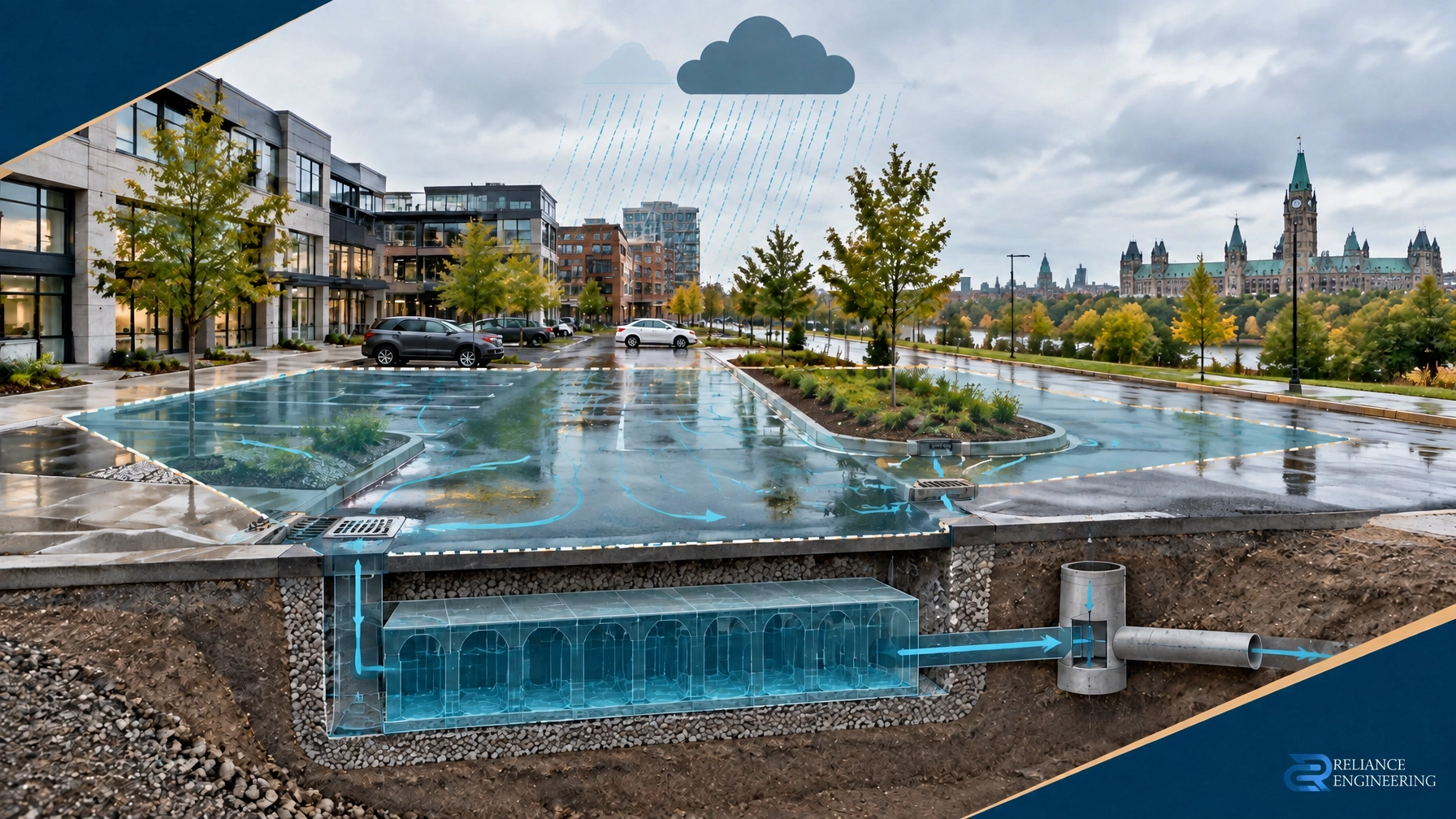
To achieve this, engineers design on-site detention systems: such as rooftop storage, underground tanks, or surface ponds: to temporarily hold water and release it at a controlled rate into the municipal storm sewer system. This prevents downstream flooding and protects municipal infrastructure.

3. Water Quality: 80% TSS Removal Standard
Protecting the quality of Ontario’s water bodies is a provincial priority. Most developments are required to meet "Enhanced" level protection, which translates to a minimum of 80% removal of Total Suspended Solids (TSS).
To meet these standards, engineers often incorporate Oil-Grit Separators (OGS), hydrodynamic separators, or specialized filtration systems. These units are designed to capture sediment, oils, and debris before they exit the site. Selecting the right unit requires careful calculation based on the site's drainage area and the specific removal efficiency mandated by the local Conservation Authority or municipality.
4. The Rise of Low Impact Development (LID)
Across Ontario, there is a significant shift away from traditional "pipe and pond" engineering toward Low Impact Development (LID). LIDs focus on managing stormwater as close to its source as possible. This includes:
- Permeable Pavement: Allowing water to infiltrate through parking surfaces.
- Bioswales and Rain Gardens: Using vegetation and engineered soil to filter and absorb runoff.
- Infiltration Trenches: Directing clean water into the ground to recharge local aquifers.
Implementing LIDs can often reduce the size of required underground storage tanks, potentially lowering overall construction costs while meeting stringent environmental targets.
5. Water Balance and Groundwater Recharge
In many regions of Ontario, particularly those near sensitive ecological areas or those dependent on well water, "water balance" is a critical requirement. This means the post-development infiltration (water soaking into the ground) must match pre-development levels.
Because development typically introduces impervious surfaces like asphalt and buildings, natural infiltration is reduced. Engineers must design "recharge" systems to put water back into the soil. Failure to address water balance can lead to objections from Conservation Authorities and significant delays in the Site Plan Approval process.
6. Integration with the Site Grading Plan
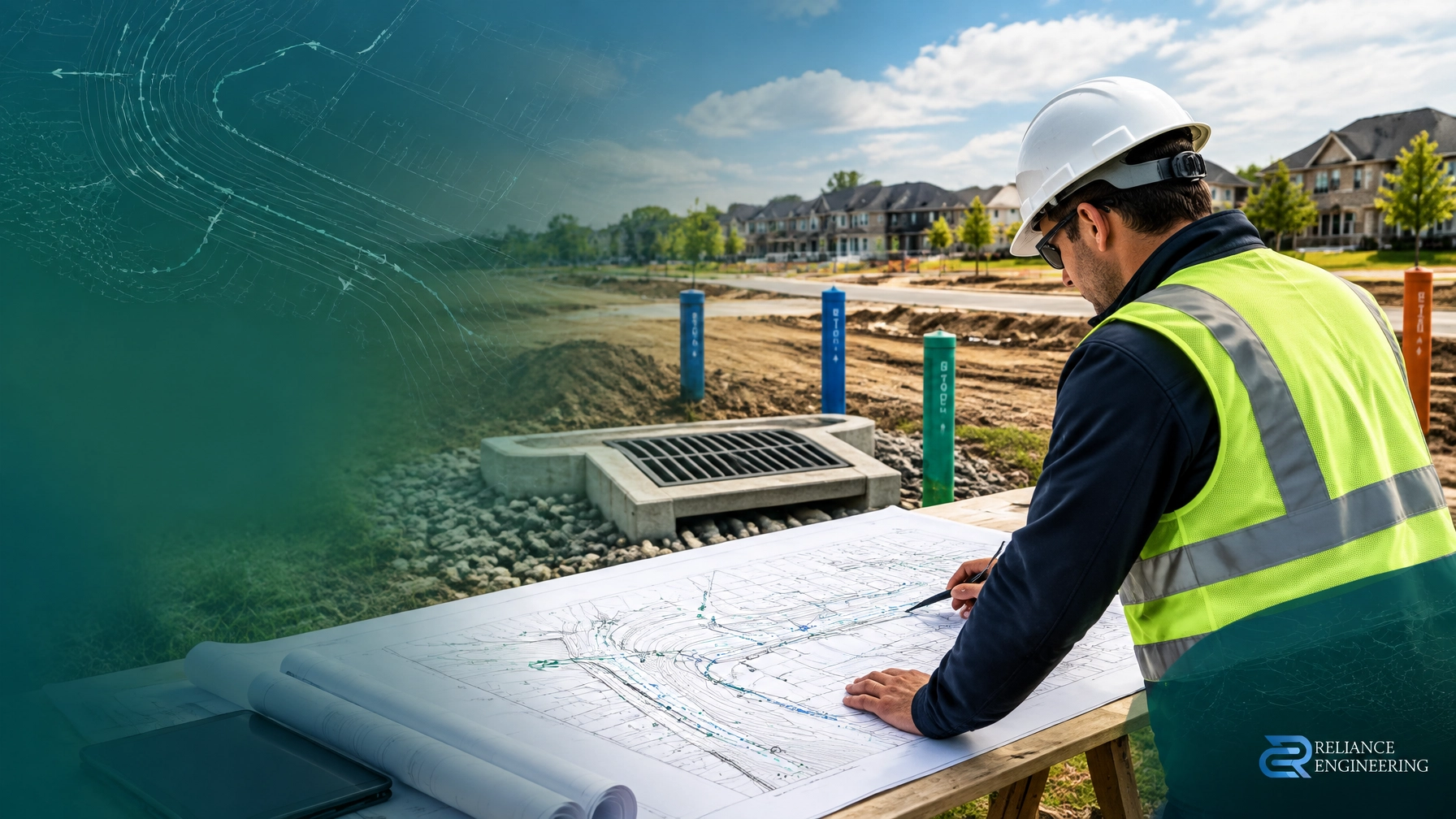
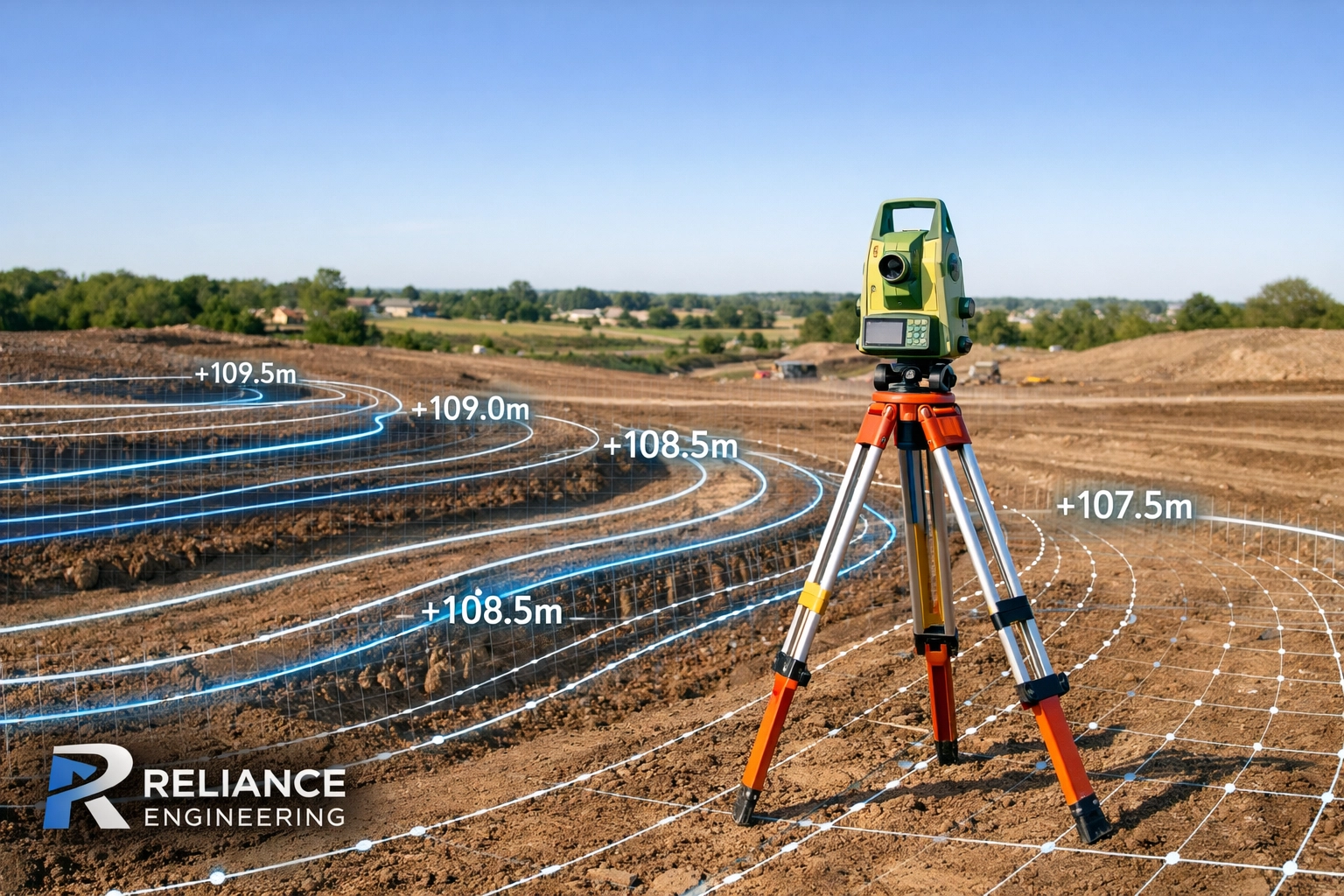
Stormwater management cannot exist in a vacuum; it is inextricably linked to your Site Grading Plan. The grading of the land determines exactly where the water flows. If the grading is not optimized, water may pool in undesirable areas or bypass treatment systems entirely.
A professional engineering firm ensures that the grading plan and the stormwater design work in harmony, creating a "major" and "minor" drainage system that protects the building from flooding while efficiently directing runoff to the appropriate treatment and detention facilities.
7. Erosion and Sediment Control (ESC) During Construction
Stormwater management is not just about the finished product; it’s about the construction phase as well. Municipalities in Ontario require a detailed Erosion and Sediment Control plan as part of the SPA package. This plan outlines measures: such as silt fences, mud mats at site entrances, and catch basin filters: to prevent sediment-laden water from leaving the construction site and entering the municipal system or local streams. High-quality ESC design is vital for maintaining compliance with environmental inspectors.
8. Dealing with Conservation Authorities
Depending on your site's location, you may need approval from one of Ontario’s many Conservation Authorities (e.g., TRCA, CVC, LSRCA). These agencies have their own sets of stormwater standards that are often more stringent than municipal bylaws, especially regarding floodplains, slope stability, and wetland protection. Early consultation with these agencies is essential to ensure that your Functional Servicing Report meets their specific requirements for environmental protection.
9. Climate Change and Stress Testing
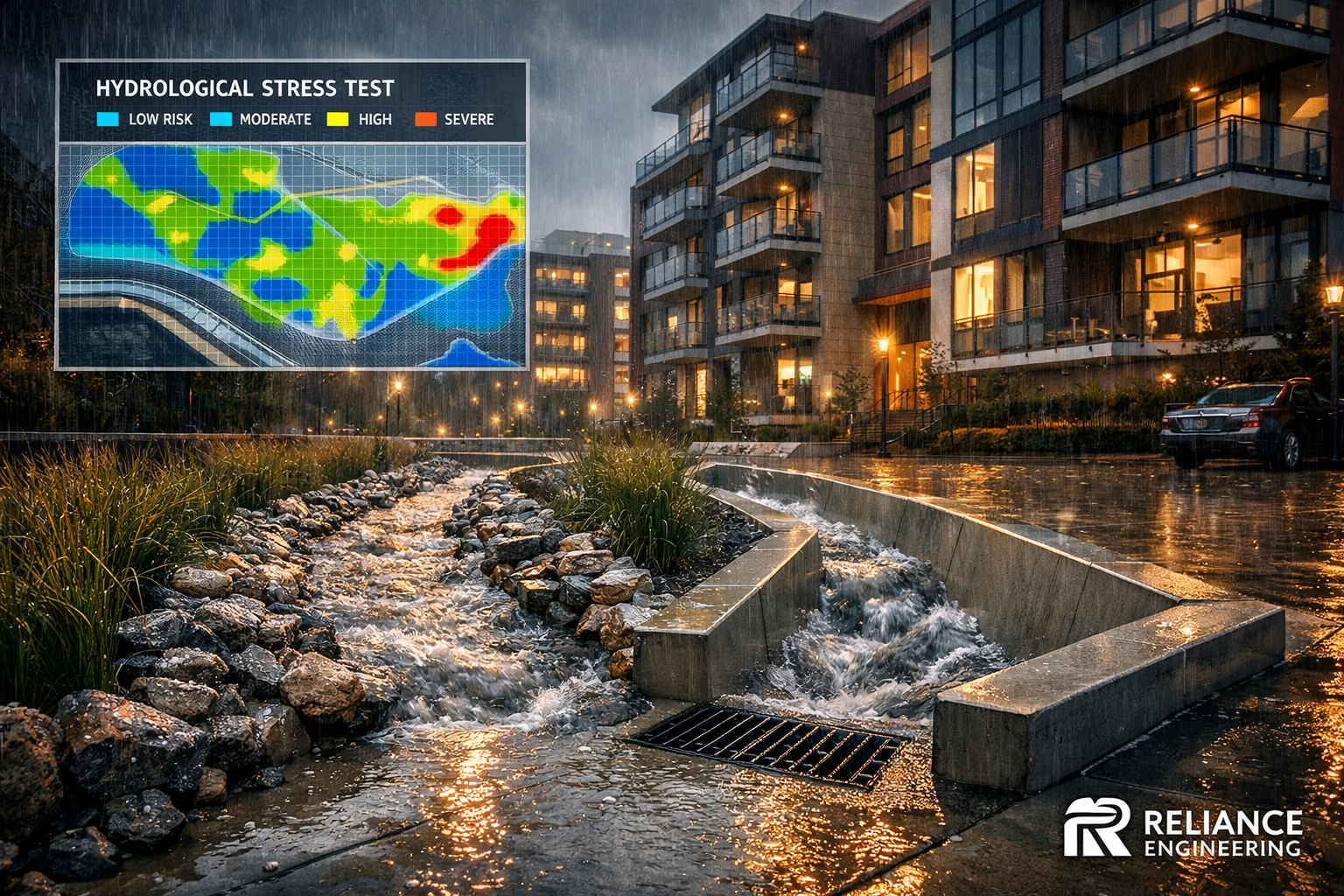
Ontario’s climate is changing, with more frequent and intense "extreme weather events." As a result, many municipalities are updating their design standards to require stress testing against the 100-year storm event, and in some cases, adding a "climate change factor" (often a 10% to 20% increase in rainfall intensity) to engineering calculations. Designing for these future conditions ensures long-term site resilience and minimizes the risk of liability due to flooding.
10. Long-Term Maintenance Requirements
Once a site is developed, the owner is responsible for the ongoing maintenance of the stormwater management system. This includes regular inspections and cleanouts of oil-grit separators, catch basins, and detention tanks. During the Site Plan Approval process, you may be required to enter into a legal agreement with the municipality that mandates this maintenance. Providing a clear and concise "Operations and Maintenance Manual" as part of your engineering submission can demonstrate your commitment to long-term infrastructure health.
Expert Engineering for Site Plan Approval
Securing Site Plan Approval in Ontario is a complex undertaking that requires a blend of technical expertise and regulatory knowledge. At Reliance Engineering, we specialize in helping developers navigate these challenges through precise Site Servicing and Stormwater Management solutions.
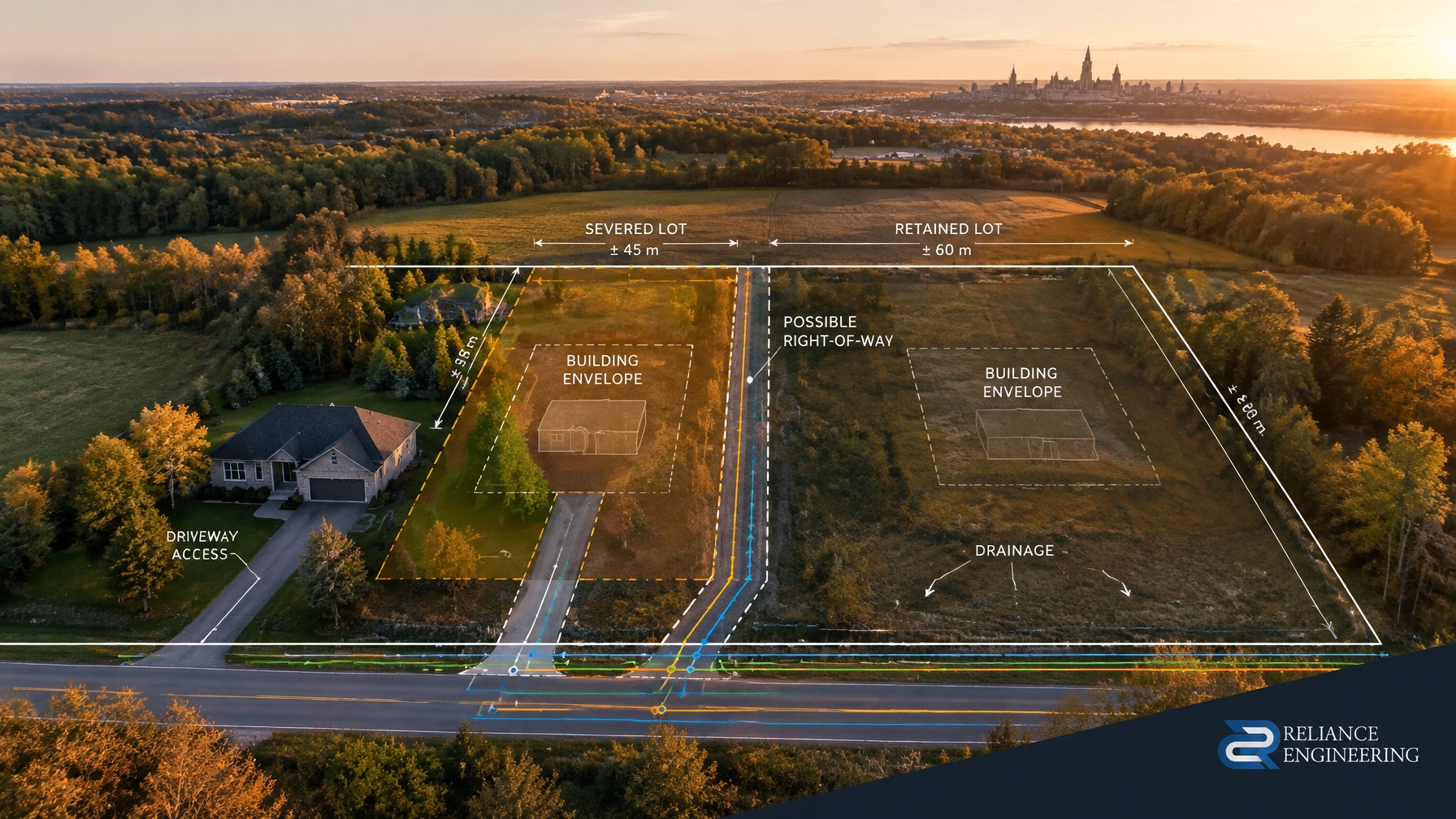
Our team, led by Naresh Ochani, P.Eng. M.Eng., leverages over two decades of industry experience to deliver permit-ready plans that are compliant, cost-effective, and practical. Whether you are working on a residential severance or a large-scale industrial redevelopment, we provide the engineering foundation for your project's success.
Contact Information:
- Name: Naresh Ochani, P.Eng. M.Eng.
- Company: Reliance Engineering
- Address: 6850 Millcreek Dr, Mississauga, ON L5N 2H4
- Phone: 647-385-6418
- Email: [email protected]
- Website: www.relianceengineering.ca
Office Hours:
- Saturday: 12:00 PM – 2:00 PM
- Sunday: Closed
Our Services Include:
- Site Grading and Site Servicing Plans
- Stormwater Management Reports (SWMR)
- Functional Servicing Reports (FSR)
- Erosion and Sediment Control Plans
- Site Plan Approval Support
- Building Permits (Residential and ICI)
If you are ready to move your Ontario development project forward, contact Reliance Engineering today for a consultation on your stormwater management needs.