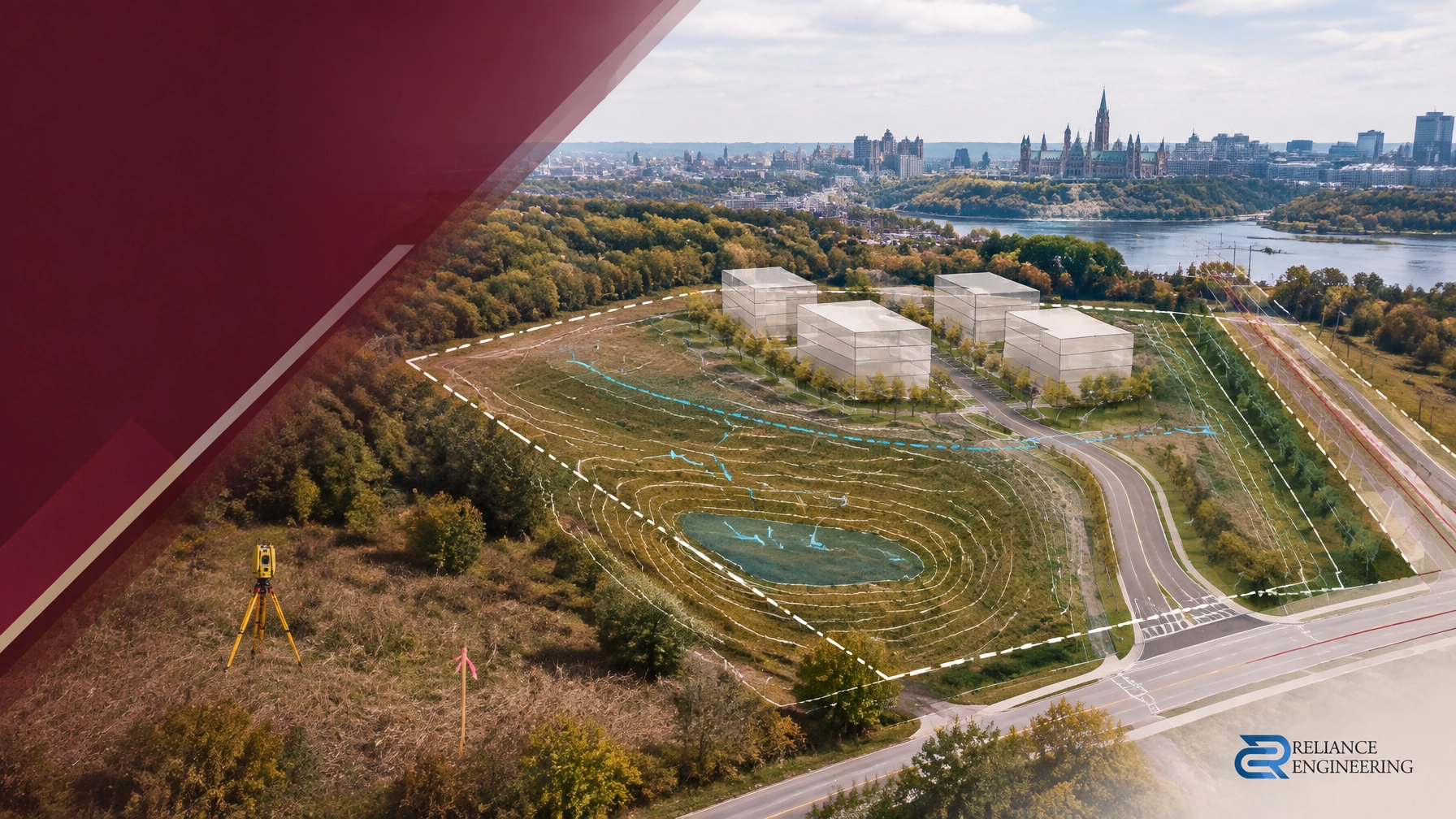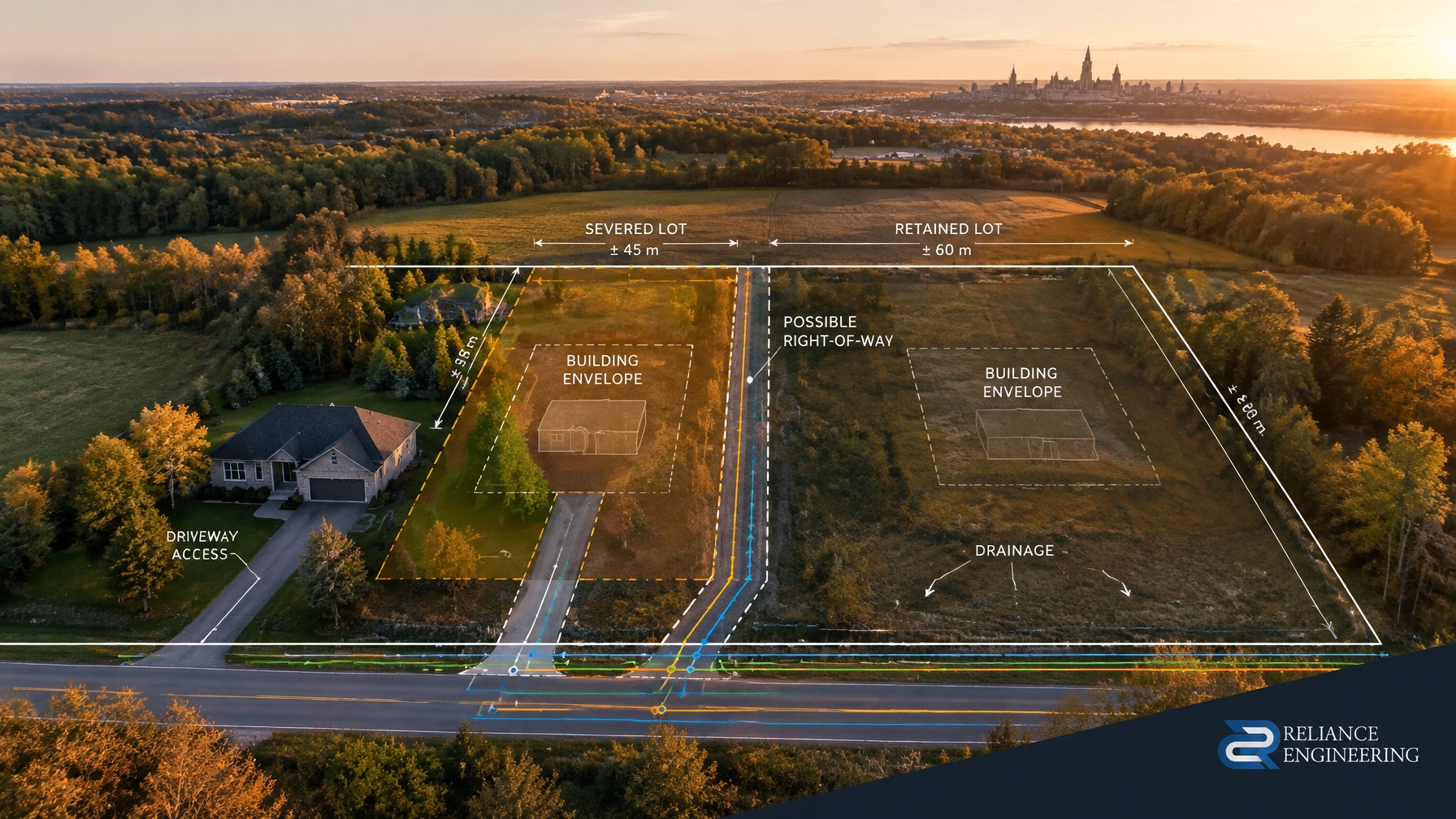
In the high-stakes world of property development in Ontario, profit margins are often buried under layers of bureaucracy, fluctuating material costs, and unexpected site conditions. While most developers spend their nights worrying about financing or architectural aesthetics, there is a silent, earth-bound document that can make or break a project’s ROI: the site grading plan.
To the untrained eye, a grading plan looks like a confusing web of contour lines and elevation spots. To a seasoned developer, it’s a financial roadmap. If designed poorly, it’s a series of expensive "toll booths" that drain your budget before the first brick is even laid. At Reliance Engineering, we’ve seen how professional Civil Engineering designs can turn a challenging lot into a profitable asset, just as we've seen how a few "red flags" can send a project’s contingency fund into a tailspin.
Here are five red flags in your grading plan that are likely costing you money, and how you can spot them before the excavators arrive.
1. The "Cut and Fill" Imbalance: Moving Dirt Twice
Dirt is cheap: until you have to move it. One of the most common and costly red flags in a lot grading plan is a significant imbalance between the amount of earth being removed (cut) and the amount of earth needed to level the site (fill).
In Ontario, tipping fees for "clean fill" have skyrocketed, and the logistics of hauling thousands of cubic yards of soil across municipal lines can decimate a budget. A red flag occurs when your grading plan ignores the existing topography in favor of an "ideal" flat site that requires exporting half the property or importing a small mountain of soil.
The Fix: Your engineer should aim for a "balanced" site whenever possible. This means utilizing the existing soil on-site to meet the new elevation requirements. At Reliance Engineering, we prioritize grading plans that work with the land, not against it, minimizing the need for expensive hauling and disposal.

2. Retaining Wall Overkill
Retaining walls are often necessary, especially in the undulating landscapes found across Ontario. However, they are also incredibly expensive. A retaining wall isn't just a pile of stones; it requires structural engineering, specific permits, safety railings, and long-term maintenance.
If your grading plan shows a series of tiered retaining walls where a simple 3:1 slope would suffice, you are looking at a major red flag. Sometimes, these walls are added as a "lazy" solution to manage steep elevation changes that could have been handled through more creative Civil Engineering designs.
The Fix: Challenge your engineering team to minimize structural elements. Can the building footprint be shifted? Can the driveway slope be adjusted within municipal limits? Reducing even two feet of wall height across a large site can save tens of thousands of dollars in construction and material costs.
3. Ignoring the "Ontario Context": Regulatory Misalignment
Ontario is a patchwork of regulatory jurisdictions. Between the local Municipality, the Conservation Authority (like the TRCA or CVC), and provincial standards, a grading plan that doesn't account for these specific "flavors" of regulation will inevitably face rejection.
A major red flag is a site grading plan that uses generic standards instead of site-specific municipal requirements. For instance, if your plan proposes a drainage solution that conflicts with the local stormwater management criteria, you will be stuck in a loop of costly revisions and "Resubmission Hell."
The Fix: Ensure your consultant has a proven track record with the specific municipality where you are building. Whether it’s a residential project in Newmarket or a complex redevelopment like the Etobicoke General Hospital, local knowledge is the difference between a permit in weeks and a permit in years.

4. The Stormwater Afterthought
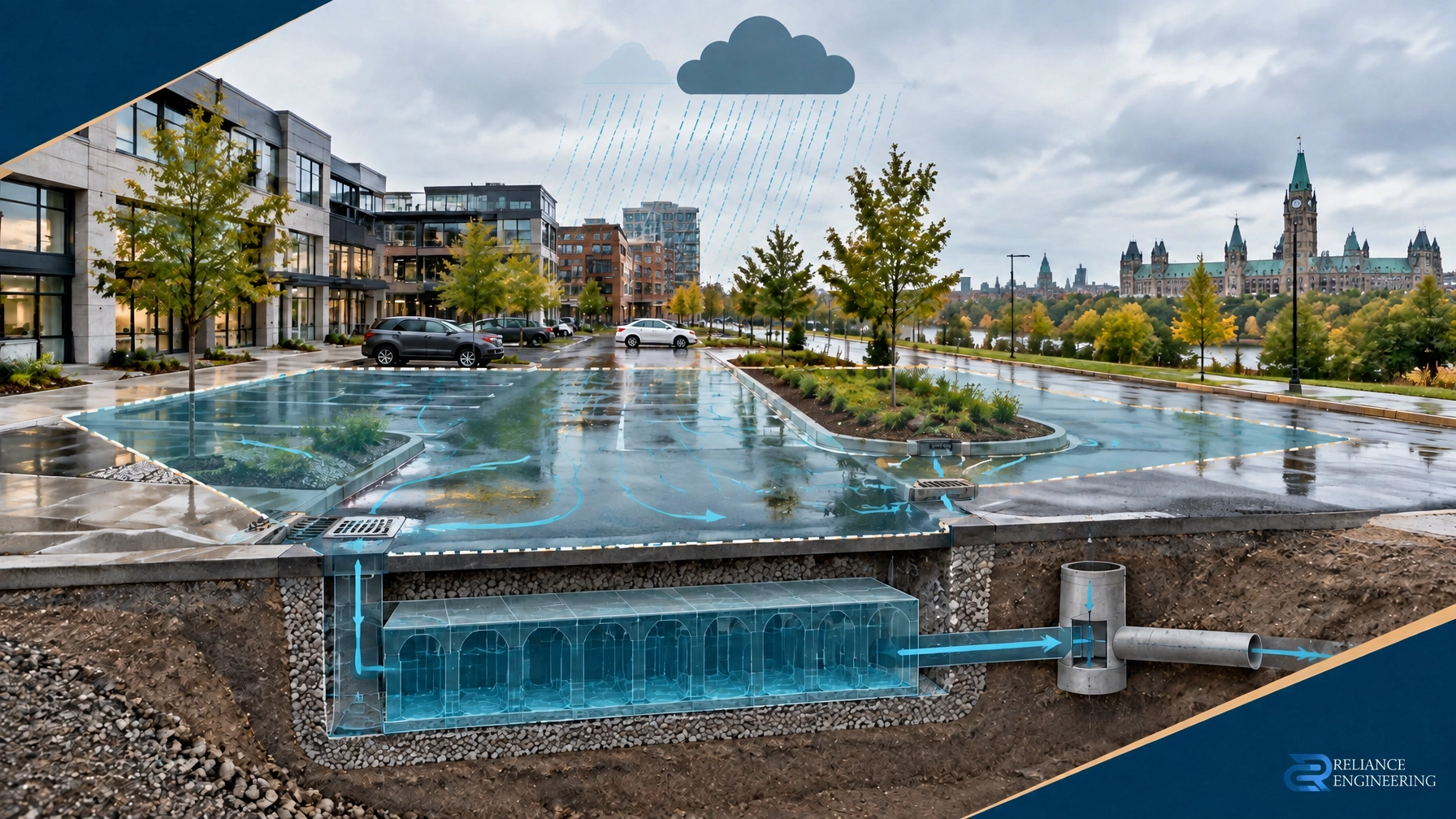
Grading and drainage are two sides of the same coin. A red flag appears when a grading plan is developed in a vacuum, without a deep integration with the storm system design.
If the grading plan directs water toward a neighbor’s property, a protected wetland, or an undersized municipal sewer without proper attenuation, you’re looking at more than just a fine: you’re looking at a potential lawsuit or a complete project halt. Often, developers find themselves needing to add expensive underground storage tanks at the eleventh hour because the grading didn't allow for more cost-effective surface ponding.
The Fix: Your grading plan should be developed in tandem with your Functional Servicing Report. By integrating these early, you can use the natural slope of the land to handle water, reducing the need for complex mechanical pumps or massive concrete storage structures.
5. AODA and Accessibility Blind Spots
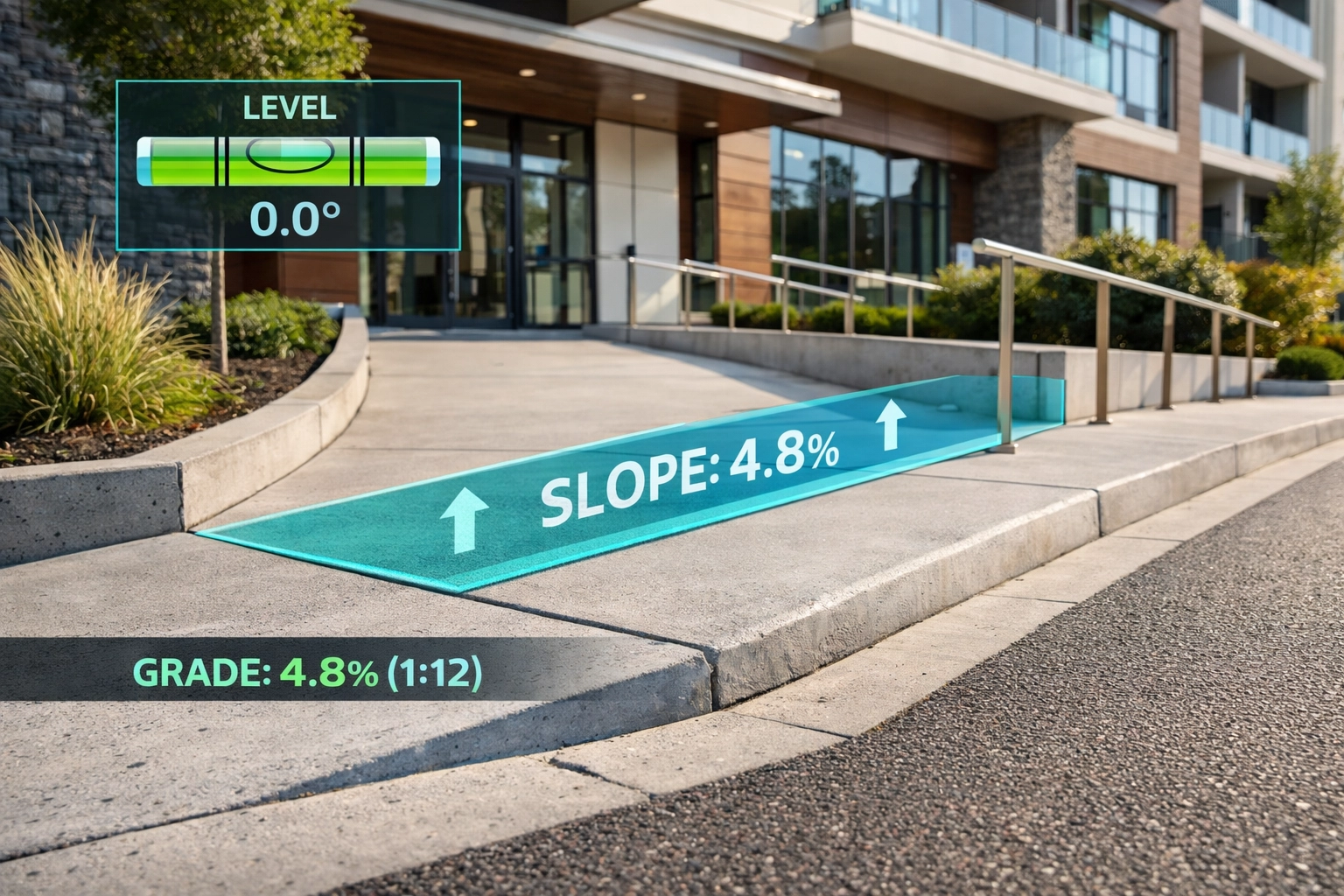
In Ontario, the Accessibility for Ontarians with Disabilities Act (AODA) isn't a suggestion: it's the law. A grading plan that fails to account for barrier-free paths of travel, maximum ramp slopes, and level landings at entrances is a ticking financial time bomb.
The "red flag" here is often "fine grading" that looks good on a 1:500 scale map but is impossible to execute on-site. When the inspector shows up and realizes your "accessible" entrance has a 6% cross-slope, the cost of ripping out concrete and regrading the entrance is exponentially higher than getting it right the first time.
The Fix: Ensure your engineer is obsessed with the details. We look at every entrance, every curb cut, and every sidewalk to ensure compliance. It’s better to spend a few extra hours in the design phase than weeks in the "re-do" phase.
Why Choosing the Right Engineer Matters
Many developers treat civil engineering as a commodity: looking for the lowest price per sheet. But as the red flags above demonstrate, a "cheap" design is often the most expensive mistake you can make.
At Reliance Engineering, we specialize in Land Development Consulting that prioritizes your ROI. We don't just move lines on a map; we optimize your site to save on construction costs, speed up municipal approvals, and ensure long-term site viability. Our experience spans from high-density urban projects like the 35 Wabash Avenue Townhomes to complex commercial sites across Ontario.
Don't let your grading plan be a drain on your resources. If you’re seeing these red flags in your current project: or if you want to ensure your next project starts on solid ground: reach out to us for a consultation.
Reliance Engineering: Practical, Compliant, Cost-Effective.
Services Include:
- Site Grading & Lot Grading Plans
- Site Servicing Plans
- Stormwater Management (SWM) Reports
- Functional Servicing Reports (FSR)
- Construction Administration
Contact Us Today:
- Website: www.relianceengineering.ca
- Direct Inquiries: Contact Page
- Operating Hours: Monday – Friday: 9:00 AM – 5:00 PM (America/Toronto)
- Location: Serving developers across Ontario.