In the complex landscape of Ontario land development, the Official Plan (OP) serves as the primary blueprint for how a community grows. It outlines where houses, businesses, and parks should be located and establishes the long-term vision for a municipality. However, as markets shift and the demand for housing or industrial space intensifies, a developer’s vision may not always align with the existing designation of a property. This is where the Official Plan Amendment (OPA) becomes the most critical tool in your development arsenal.
At Reliance Engineering, led by Founder and Principal Naresh Ochani, we have spent over 20 years navigating the regulatory intricacies of Ontario’s planning framework. Whether you are looking to convert an industrial brownfield into a high-density residential complex or expand a commercial footprint beyond current boundaries, understanding the OPA process is essential for success.
What is an Official Plan?
An Official Plan is a statutory document required under the Ontario Planning Act. It describes a municipal council's policies on how land should be used and how growth should be managed. It ensures that development is orderly, sustainable, and supported by adequate infrastructure.
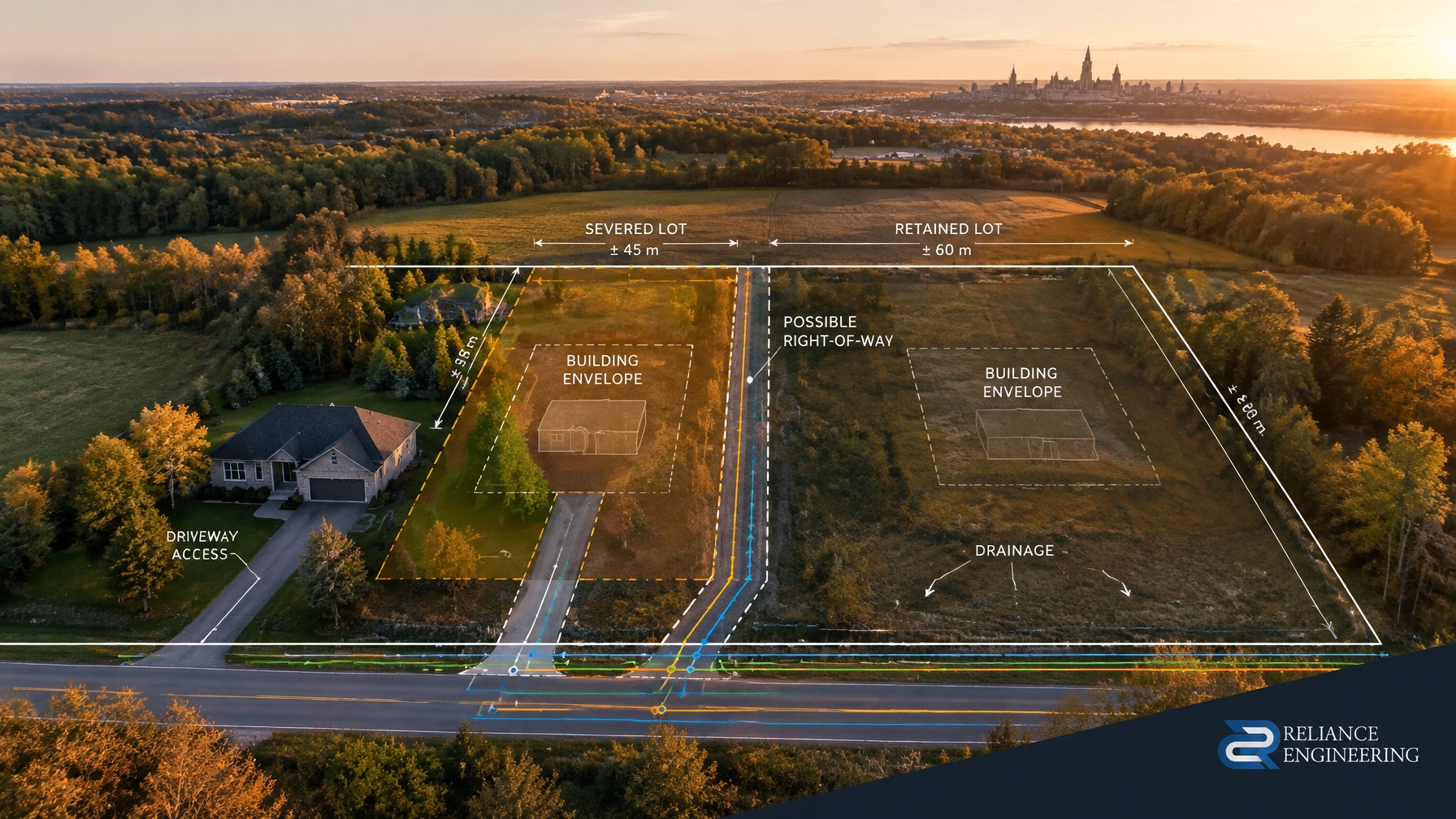
When your proposed development does not conform to the current land-use designation: for instance, proposing a multi-story residential building in an area designated for low-density commercial use: you must apply for an Official Plan Amendment. This is a formal request to change the "constitution" of the land to accommodate your project.
The Hierarchy of Planning in Ontario
To succeed with an OPA, you must understand that the Official Plan does not exist in a vacuum. In Ontario, planning follows a strict hierarchy:
- Provincial Policy Statement (PPS): Provides overall policy direction on matters of provincial interest.
- Growth Plans (e.g., A Place to Grow): Regional plans that dictate how density and infrastructure are managed.
- Official Plans: Municipal-level policies (Upper-tier and Lower-tier).
- Zoning By-laws: The specific rules governing building height, setbacks, and parking.
An OPA is the bridge between provincial mandates and local implementation. If you change the Official Plan, you will almost certainly need to follow up with a Zoning By-law Amendment.
The Official Plan Amendment Process: A Step-by-Step Guide
The OPA process is rigorous and requires a multidisciplinary team of planners, lawyers, and civil engineers.
1. Pre-Consultation
Before submitting an application, you must meet with municipal planning staff. This "pre-con" meeting identifies the studies required to support your application. This often includes a Functional Servicing Report (FSR) and a Planning Justification Report.
2. Submission of a Complete Application
A "complete" application is vital. If the municipality deems your application incomplete, the clock does not start on their decision-making timeline. You must provide a clear explanation of the purpose and effect of the amendment, the current land designation, and how the proposal aligns with provincial interests.
3. Public Notice and Consultation
Transparency is a hallmark of the Ontario planning system. Once an application is received, the municipality must notify the public. A public meeting is held where residents and stakeholders can voice their support or concerns.
4. Technical Review and Agency Circulation
Your proposal is sent to various agencies (Conservation Authorities, School Boards, and internal municipal departments like Engineering and Public Works). They will review your Site Grading Plan and Site Servicing Plan to ensure the existing infrastructure can support the new land use.
5. Council Decision
After considering the staff report and public input, Municipal Council will vote to adopt, modify, or refuse the amendment.
The Civil Engineering Component of an OPA
While an OPA is a planning tool, it is fundamentally anchored in engineering feasibility. You cannot change a land designation if the land cannot be properly serviced or if it creates environmental hazards. At Reliance Engineering, we integrate civil design early in the OPA process to ensure the proposal is technically sound.
Functional Servicing and Stormwater Management
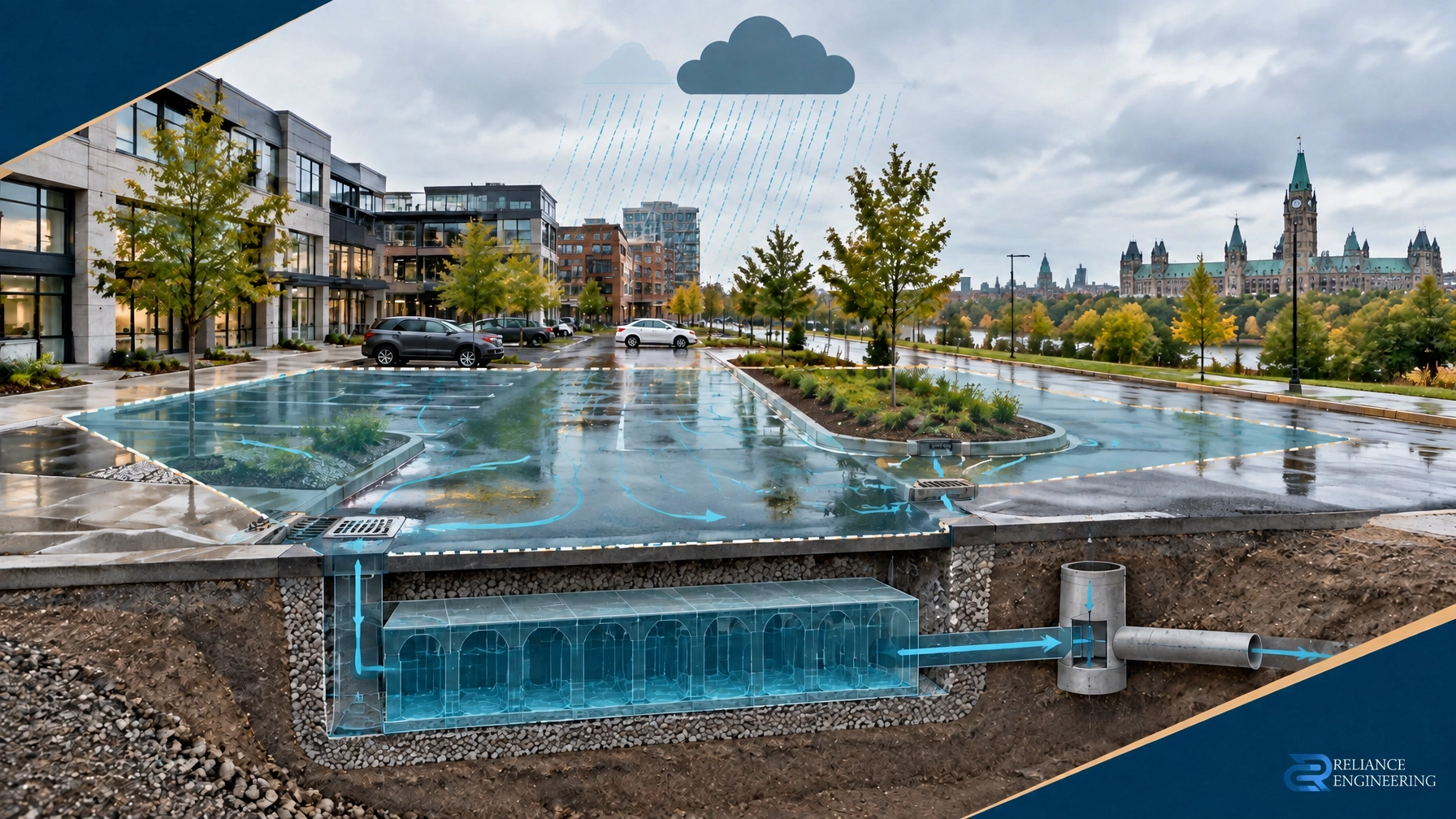
One of the biggest hurdles in an OPA is proving that the municipal infrastructure (water, sanitary, and storm sewers) has the capacity for the increased density. A Stormwater Management Report (SWMR) is often required to demonstrate that the new development will not impact downstream properties. Without a robust Sanitary Sewer Design, an OPA for a high-density project will likely be refused.
Site Grading and Environment
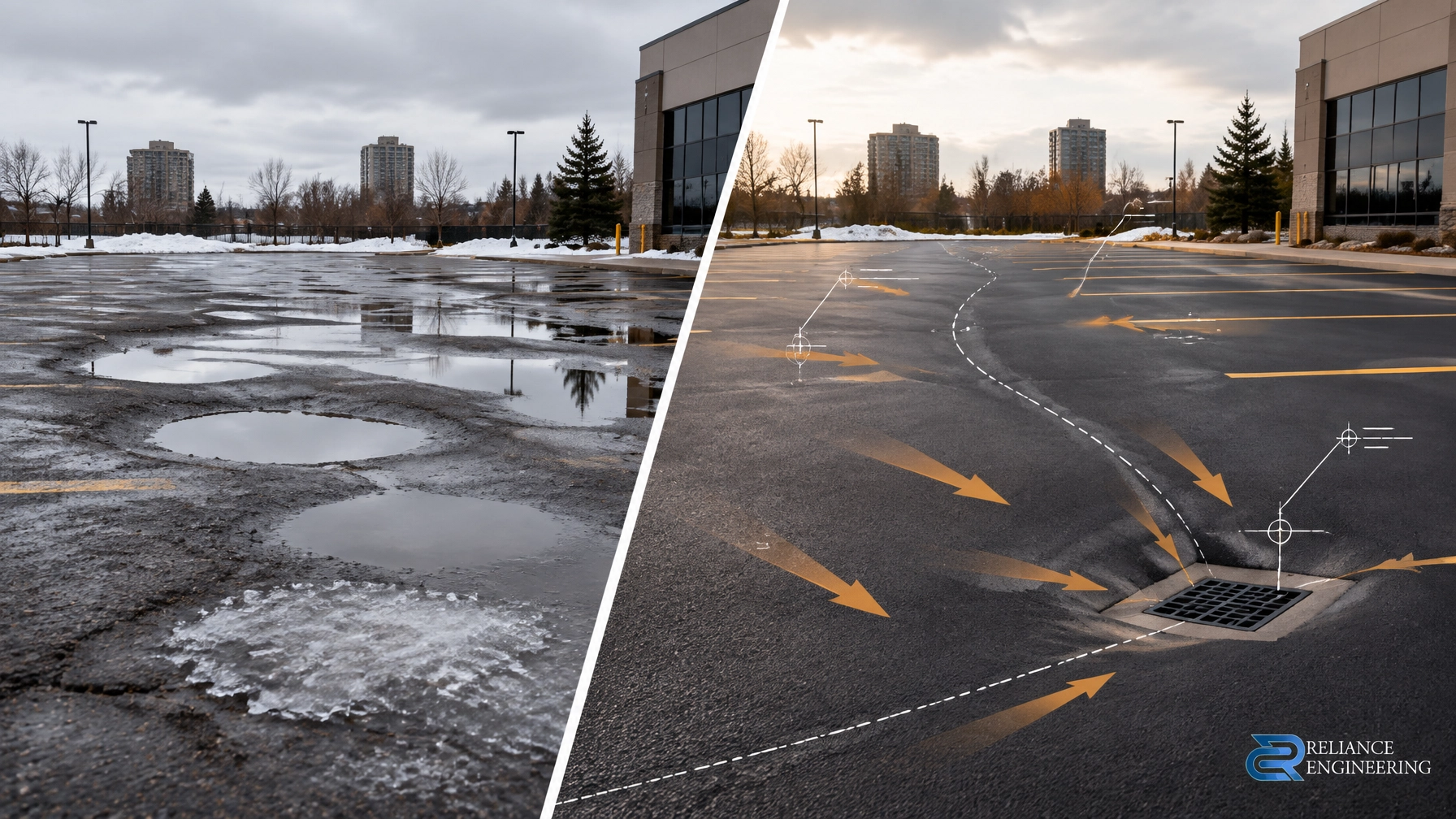
Official Plan Amendments often involve sensitive lands. Proving that you can manage Erosion and Sediment Control and maintain proper drainage patterns through a professional Storm System Design is critical to gaining agency approval.
Timelines, Appeals, and the OLT
Time is the most expensive variable in land development. In Ontario, the municipality has 120 days to make a decision on your OPA application. If they fail to act within this timeframe, or if they refuse the application, you have the right to appeal to the Ontario Land Tribunal (OLT).
The OLT is a quasi-judicial body that hears planning disputes. Success at the OLT requires expert testimony. Naresh Ochani and the team at Reliance Engineering provide the technical engineering evidence needed to support your case, ensuring that your Functional Servicing Report stands up to rigorous cross-examination.

Important Limitations: The Two-Year Moratorium
Under the Planning Act, there is a two-year "lock-out" period for new Official Plans. If a municipality has recently adopted a new comprehensive Official Plan, you cannot apply for a site-specific amendment for two years unless the Council passes a resolution to allow the application. Navigating this requires strategic timing and strong relationships with municipal staff.
Why Choose Reliance Engineering for Your OPA?
Navigating the OPA process in Ontario requires more than just filling out forms. It requires a partner who understands the intersection of policy and the "dirt" of civil engineering.
We specialize in:
- Rapid Turnaround: We provide draft plans in days, not weeks, helping you meet tight municipal deadlines.
- Technical Excellence: Our reports are permit-ready and designed to clear the hurdles of municipal review.
- Comprehensive Experience: From redevelopment projects in Etobicoke to townhome developments in Toronto, we have seen every challenge the Ontario landscape has to offer.

Final Thoughts for Developers
An Official Plan Amendment is a high-stakes, high-reward endeavor. It can unlock immense value in a property that was previously restricted. However, the path is fraught with regulatory traps and technical requirements. By engaging a civil engineering firm that understands the planning process from the ground up, you significantly increase your chances of a favorable decision.
If you are considering a project in Ontario that requires an OPA, don't leave the technical details to chance. Contact Reliance Engineering today to discuss how our expertise in Site Servicing, Grading, and Stormwater Management can support your application.
Contact Information
Reliance Engineering
Founder: Naresh Ochani
Specialization: Civil Engineering & Land Development Consulting
Service Area: Ontario-wide
Address: 122 Beecroft Road, Suite 1901, Toronto, ON M2N 7M3
Phone: (647) 961-3004
Email: [email protected]
Website: https://www.relianceengineering.ca
Business Hours:
Monday – Friday: 9:00 AM – 6:00 PM
Saturday – Sunday: Closed
Ready to start your project? Contact Us for a consultation on your Site Plan Approval, OPA, or Rezoning needs. We are committed to providing practical, compliant, and cost-effective engineering solutions across Ontario.