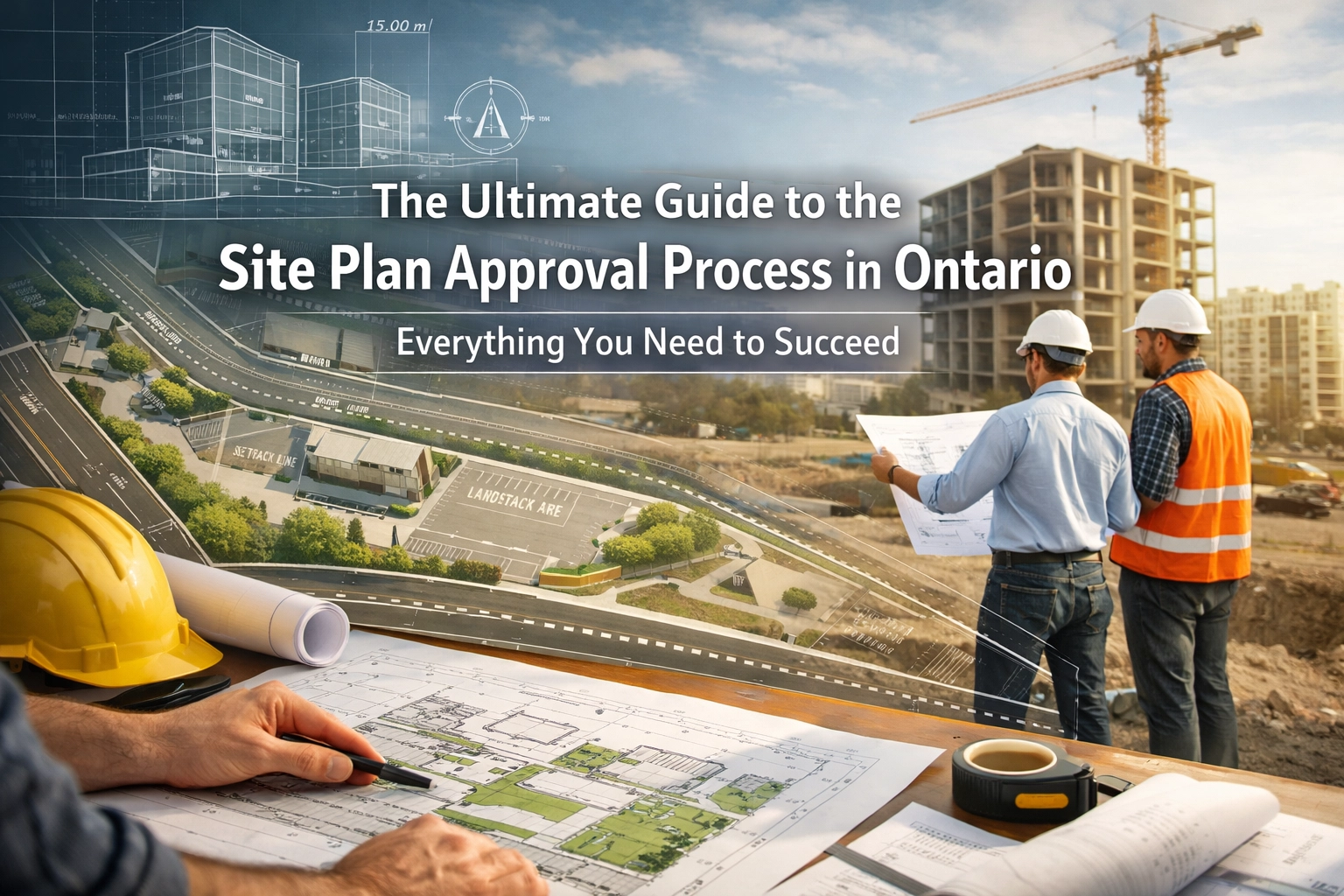
Navigating the land development landscape in the Greater Toronto Area (GTA) requires more than just a vision; it requires a precise understanding of the regulatory framework that governs how land is utilized. For property developers, builders, and even homeowners planning significant additions, the site plan approval process in Ontario represents one of the most critical hurdles between a concept and a construction crew on-site.
At Reliance Engineering, we have spent over 20 years guiding clients through the intricacies of municipal requirements. We understand that while the process can seem daunting, it is a necessary safeguard to ensure developments are safe, functional, and integrated into the surrounding community. This guide provides a comprehensive breakdown of what you need to know to secure your municipal approval efficiently.
What is Site Plan Approval?
Site Plan Approval (SPA) is a technical development review process authorized under Section 41 of the Planning Act. Unlike a Rezoning or Minor Variance application: which deals with what you can build: SPA focuses on the how. It is an evaluation of the detailed design of a property to ensure it complies with municipal standards, zoning bylaws, and safety regulations.
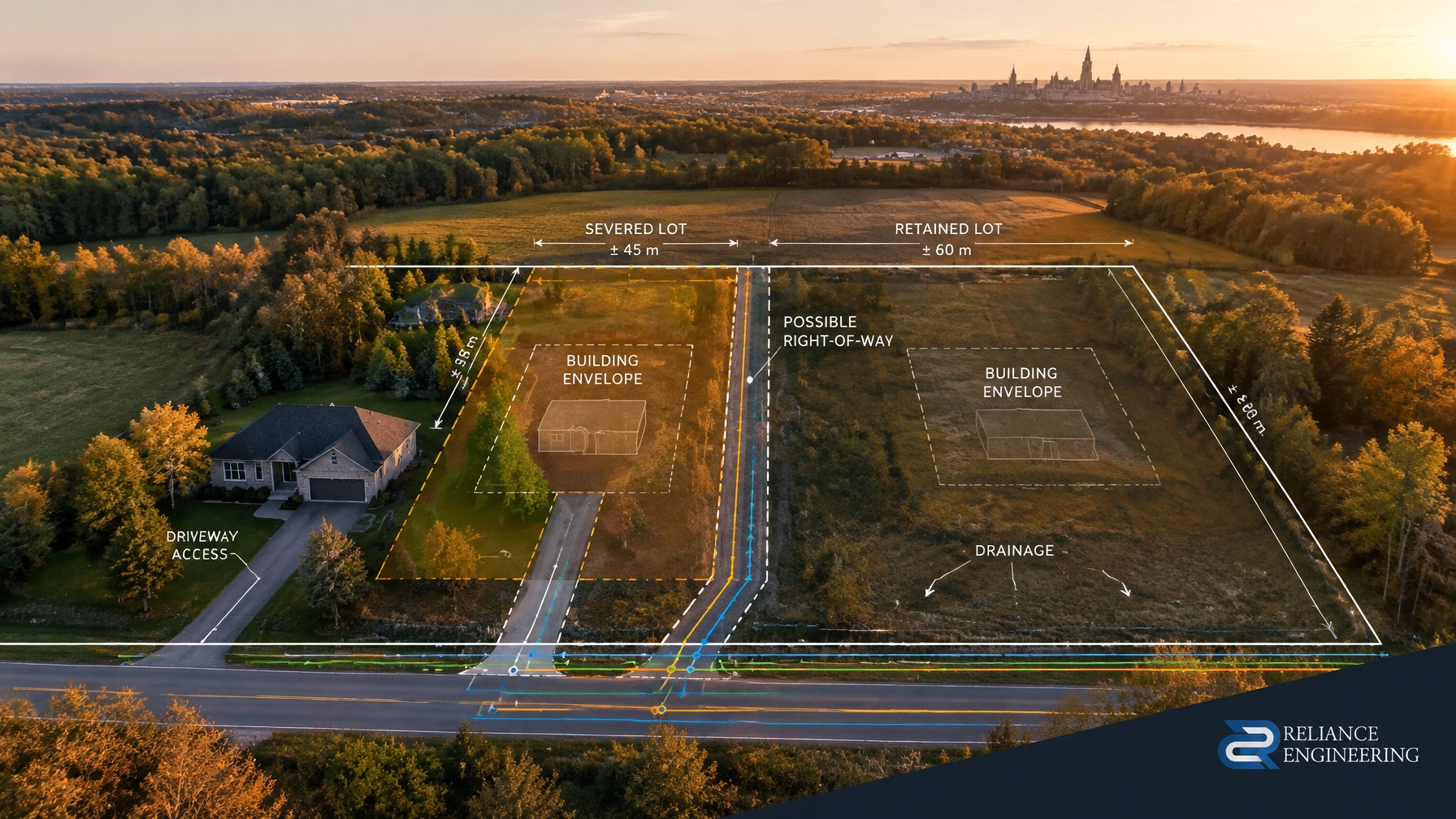
The municipality reviews everything from the building's footprint and height to the specific placement of parking spaces, landscaping, and drainage systems. For developers in the GTA, this process is essential for ensuring that new projects do not negatively impact municipal infrastructure or neighboring properties.
The 6 Stages of the Municipal Approval Journey
The site plan approval process in Ontario follows a structured path. While every municipality (from the City of Toronto to the Region of Peel) has its nuances, the core stages remain consistent.
1. Pre-Consultation: The Most Critical Step
Before you spend thousands on detailed engineering, you must meet with municipal planning staff. This "pre-con" meeting identifies the specific studies and site plan approval drawings required for your project. At Reliance Engineering, we leverage our two decades of experience to anticipate municipal concerns before they are even raised, saving our clients months of potential delays.
2. Application Submission
Once the requirements are set, you submit your formal application. This is not just a form; it is a massive package of documents. A complete submission typically includes a planning rationale, architectural elevations, and a suite of civil engineering drawings.
3. Technical Review (Circulation)
The municipality "circulates" your application to various departments: Engineering, Transportation, Landscaping, Fire Services, and sometimes external agencies like the Conservation Authority. Each department reviews the plans for compliance with their specific standards.
4. Comments and Revisions
It is rare for an application to be approved on the first pass. You will receive a consolidated list of "comments." This is where expertise matters. Responding to technical comments regarding a site grading plan or a stormwater management plan requires a high degree of precision to satisfy municipal engineers.

5. Conditional Approval (Notice of Decision)
Once the technical issues are resolved, the municipality issues a "Notice of Decision" or "Notice of Conditions." This means they approve of the plan, provided you meet certain requirements, such as posting financial securities or signing a Site Plan Agreement.
6. The Site Plan Agreement and Registration
The final step is the drafting of a Site Plan Agreement. This is a legally binding contract between the owner and the municipality. Once signed and registered on the title of the property, you can finally move forward with your building permit application.
Essential Documentation: The "Big Three" Engineering Requirements
While architects handle the look of the building, civil engineers handle how the site functions. In the GTA, the following documents are almost always mandatory for a successful submission:
Site Grading and Servicing Plans
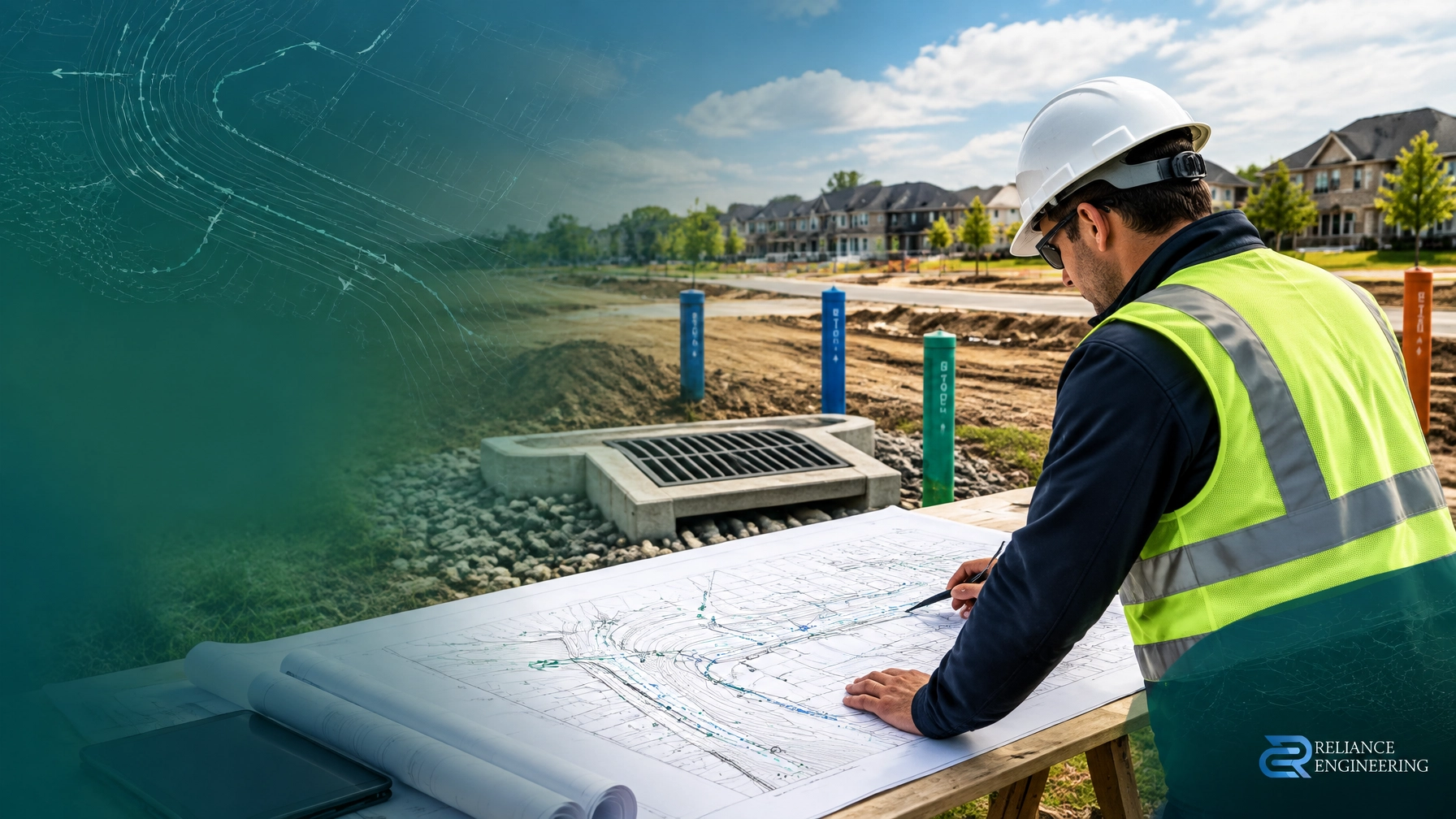
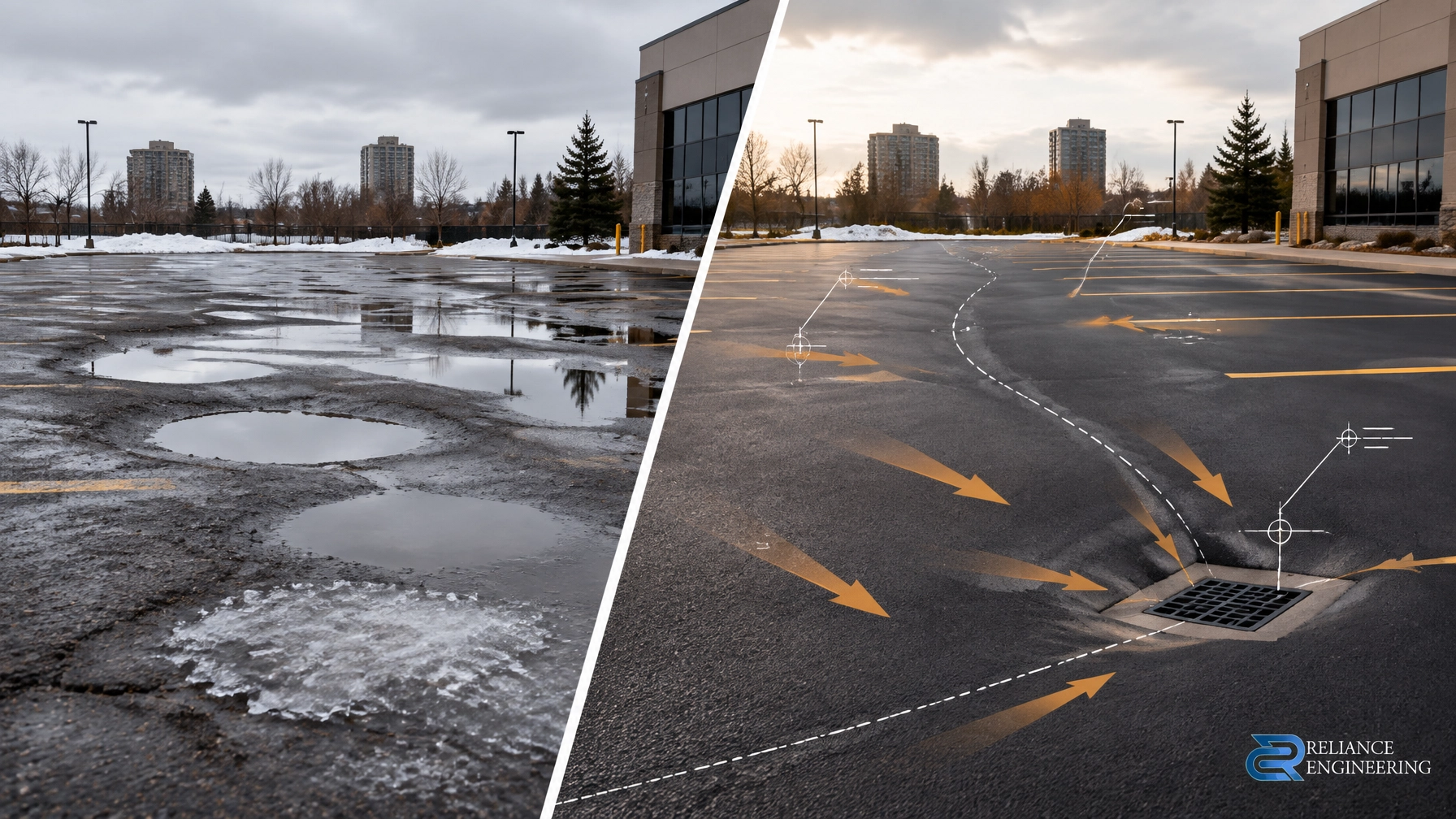
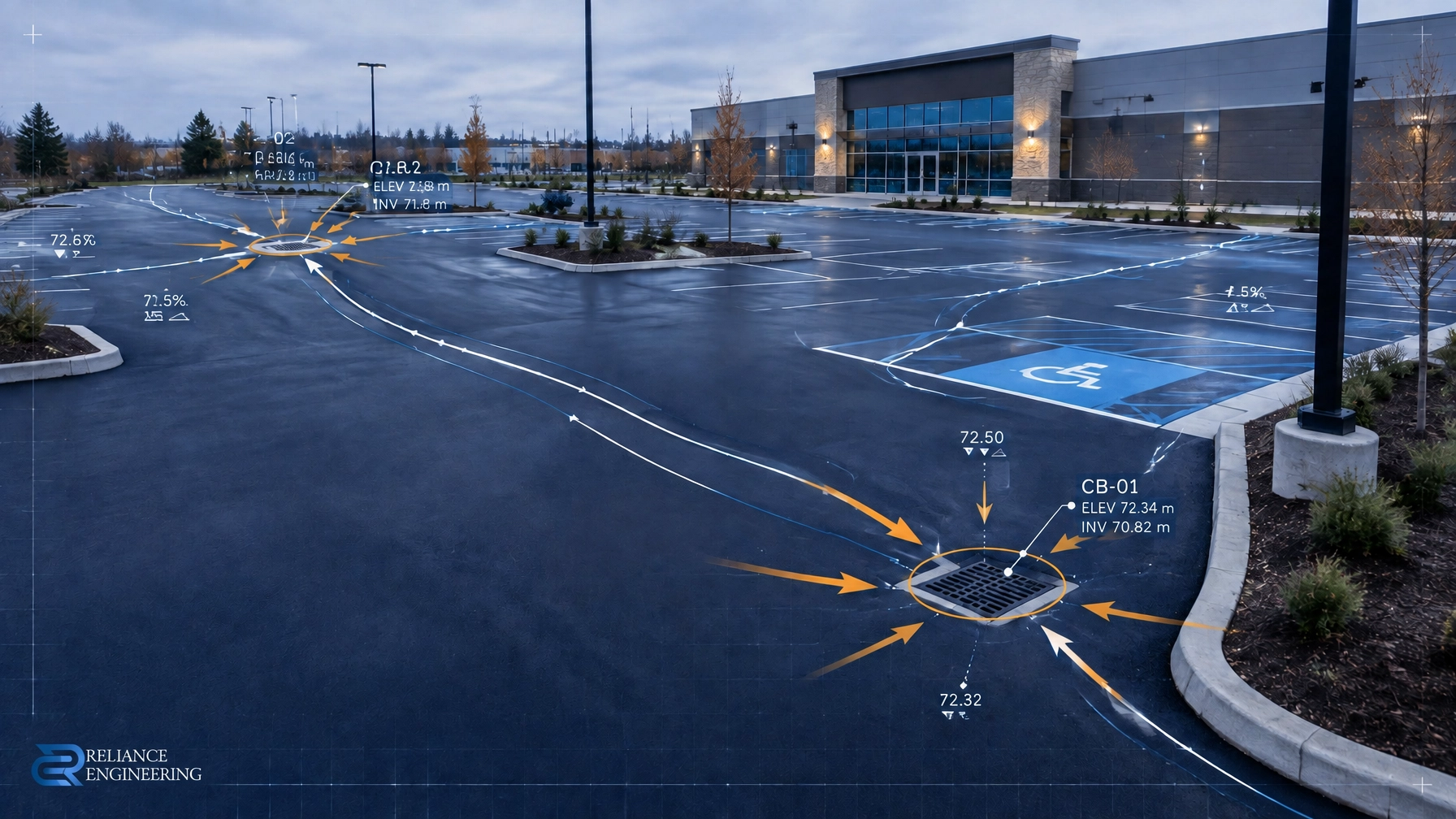
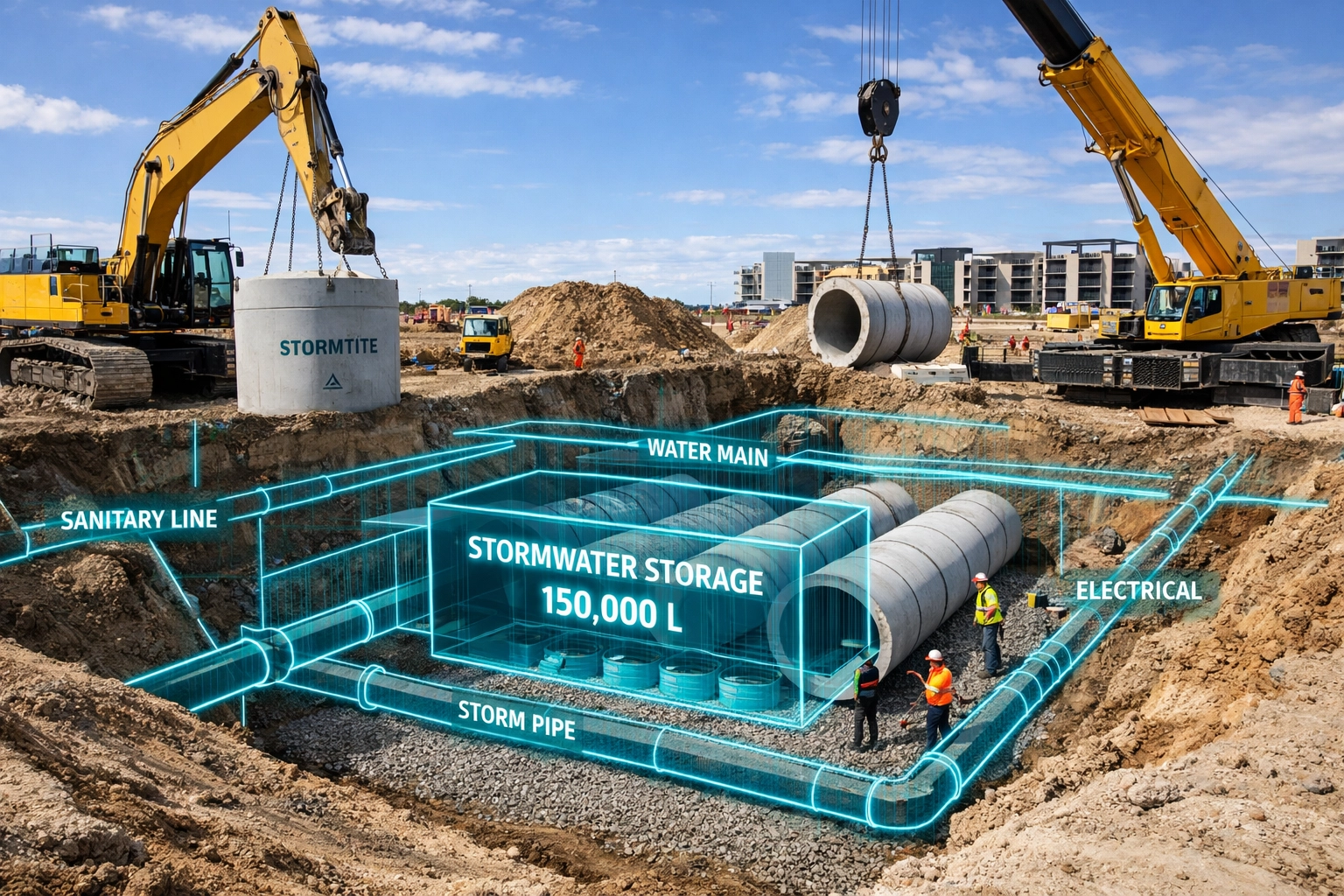
A site servicing plan outlines how your building will connect to municipal water, sanitary, and storm infrastructure. Concurrently, a site grading plan ensures that the land is shaped to direct water away from structures and prevent flooding on adjacent properties.
Functional Servicing Report (FSR)
For larger developments, a functional servicing report is required to prove that the existing municipal infrastructure can handle the new load. This includes calculations for water pressure, sanitary flow, and fire hydrants.
Stormwater Management (SWM)
With increasing urbanization and climate concerns, stormwater management is a top priority for Ontario municipalities. You must demonstrate how you will manage the quantity and quality of runoff from your site, often involving underground storage tanks or Low Impact Development (LID) features.
Timelines and the Impact of Bill 109
One of the most common questions we hear at Reliance Engineering is: "How long will this take?"
Historically, the process could take anywhere from 6 months to 2 years. However, recent legislation (Bill 109, the More Homes for Everyone Act) was designed to speed this up. Under current rules, municipalities are required to make a decision on a site plan application within 60 days. If they fail to do so, they may be forced to refund a portion of the application fees.
While this has pressured municipalities to work faster, it has also led to "completeness" hurdles. If your initial submission is missing even a minor detail, the municipality may refuse to "start the clock," emphasizing the need for professional, high-quality site plan approval drawings from the outset.
Common Pitfalls and How to Avoid Them
Even seasoned developers can run into trouble. Here are the three most frequent issues we see:
- Incomplete Submissions: Attempting to save costs by skipping a required study during the initial submission usually leads to a "Notice of Incomplete Application," which can set you back months.
- Lack of Coordination: If the architect changes the building footprint but the civil engineer isn't notified, the site servicing plan will be wrong. Total project coordination is vital.
- Underestimating Financial Securities: Municipalities require "Letters of Credit" to ensure that landscaping and exterior works are completed. These can be substantial (often 100% of the estimated cost of the works) and must be factored into your project's cash flow.

Why Partner with Reliance Engineering?
With 20+ years of experience in the Ontario land development sector, Reliance Engineering is more than just a consulting firm; we are your advocates in the municipal approval process. We have built strong relationships with municipal staff across the GTA, allowing us to navigate the "gray areas" of design standards that often stall projects.
Our team specializes in:
- Functional Servicing Reports
- Site Grading and Servicing Plans
- Stormwater Management Design
- Navigating the complex site plan approval process in Ontario
We understand that every day your project is stuck in "review" is a day of lost revenue. Our goal is to provide "right-the-first-time" engineering that minimizes comments and accelerates your path to a building permit.
Conclusion: Start with the End in Mind
Success in Ontario development is not about luck; it is about preparation. By understanding the municipal approval framework and surrounding yourself with an experienced technical team, you can transform the site plan approval process from a roadblock into a roadmap.
Whether you are developing a multi-unit residential complex, a commercial plaza, or a custom home, the quality of your engineering will dictate your timeline.
Ready to start your project?
Contact Reliance Engineering today for a consultation. Let our two decades of expertise work for you.
Reliance Engineering
Founder and Principal: Naresh Ochani
Expert Civil Engineering & Land Development Consulting
Learn more about our services
Operational Hours:
Monday – Friday: 9:00 AM – 5:00 PM
Location: serving the Greater Toronto Area (GTA) and surrounding Ontario municipalities.