Article type: Practical guidance / Audience: Ontario builders, contractors and small-site owners / Focus: Erosion and sediment control for dewatering and pumped discharge on small sites
Naresh Ochani, P.Eng., M.Eng., Principal Engineer, Reliance Engineering Canada Limited
PEO Certificate of Authorization: 100548882
6850 Millcreek Dr, Mississauga, ON L5N 2H4
Phone: 647-385-6418 | Email: [email protected]
Office hours: Monday–Friday 9:00 AM–5:00 PM; Saturday 12:00 PM–2:00 PM; Sunday Closed
Why dewatering shows up on small sites
Basement and foundation excavations, deep utility trenches, underground parking additions and parking lot reconstruction can all encounter groundwater. The risk may be more noticeable during spring work or where the excavation approaches the local water table. If water collects in the excavation, a pump may be needed to keep the work area usable.
Seasonal high groundwater levels vary across Ontario. Conditions at the specific site (including soil, excavation depth and timing) determine whether pumping will be necessary. It is best to consider that possibility before construction starts, rather than after water has collected.
Pumped water is not automatically clean water. It may carry soil from the excavation or become mixed with sediment as construction progresses. That makes dewatering an erosion and sediment control (ESC) issue as well as a construction task.
The ESC problem created by pumped water
Water drawn from an excavation can carry suspended soil. If sediment-laden discharge reaches a road, storm sewer, ditch or watercourse, it can create a classic ESC failure. It may also lead to complaints, inspection concerns or enforcement action.
Conditions can change while pumping is underway. Water that appears clear early in the morning may turn muddy as the excavation deepens, the soil changes, or the pump begins pulling fines from the excavation floor or sides. A discharge route that seemed suitable at first can also cause erosion or carry sediment toward an inlet or neighbouring property.
The receiving area matters too. Even water that appears relatively clear can cause problems if it scours bare soil, runs across pavement or enters a protected catchbasin. The plan should consider both treatment and where the water will go after treatment.
What a drainage-focused ESC plan does
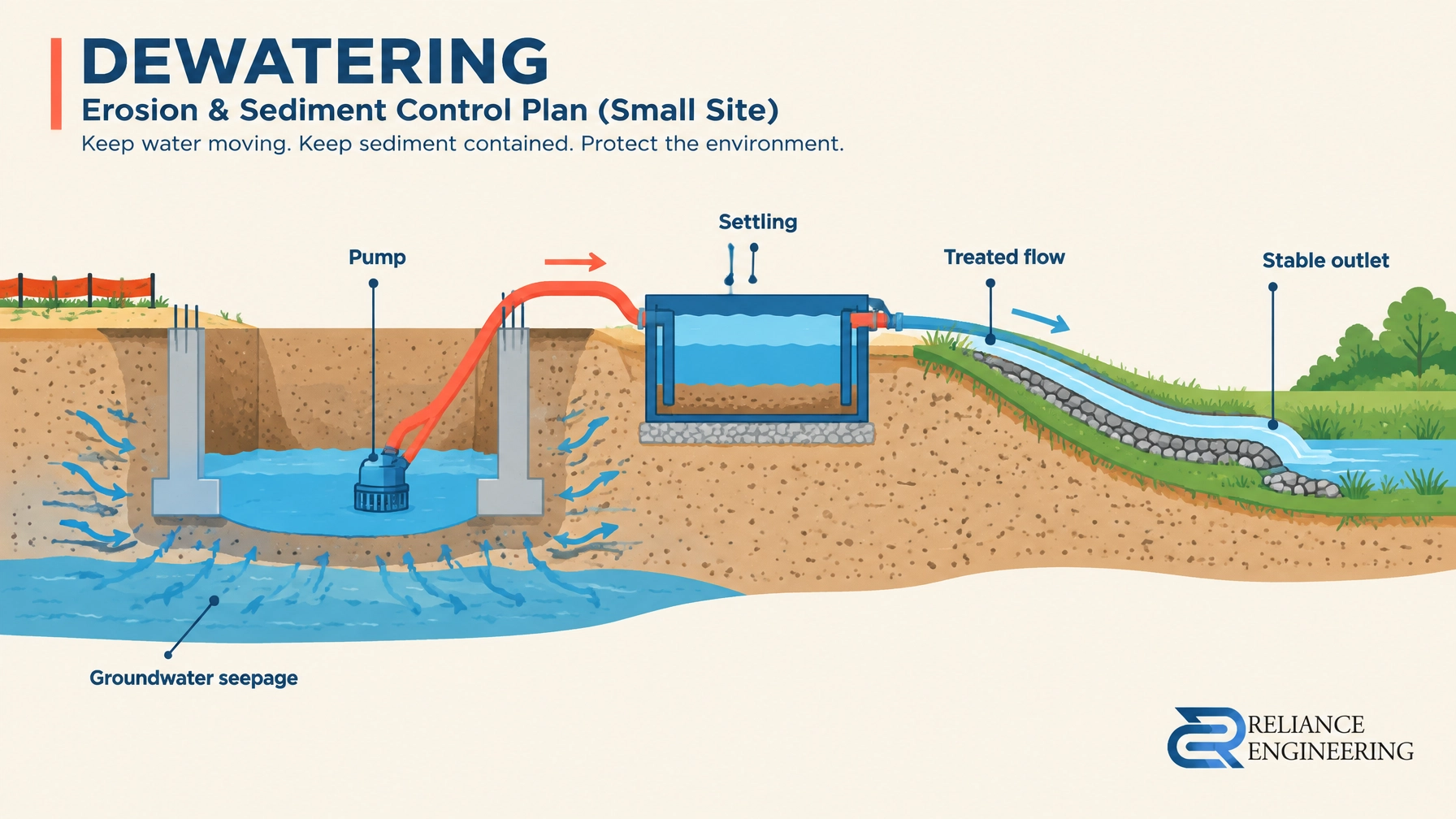
Dewatering discharge should be part of the ESC plan, not left as an improvised contractor decision after excavation begins. The plan should identify a treatment approach suited to the site conditions. Depending on the expected water and available space, options may include a sediment basin, settling tank or filter bag. The appropriate method depends on the project; no single option suits every site.
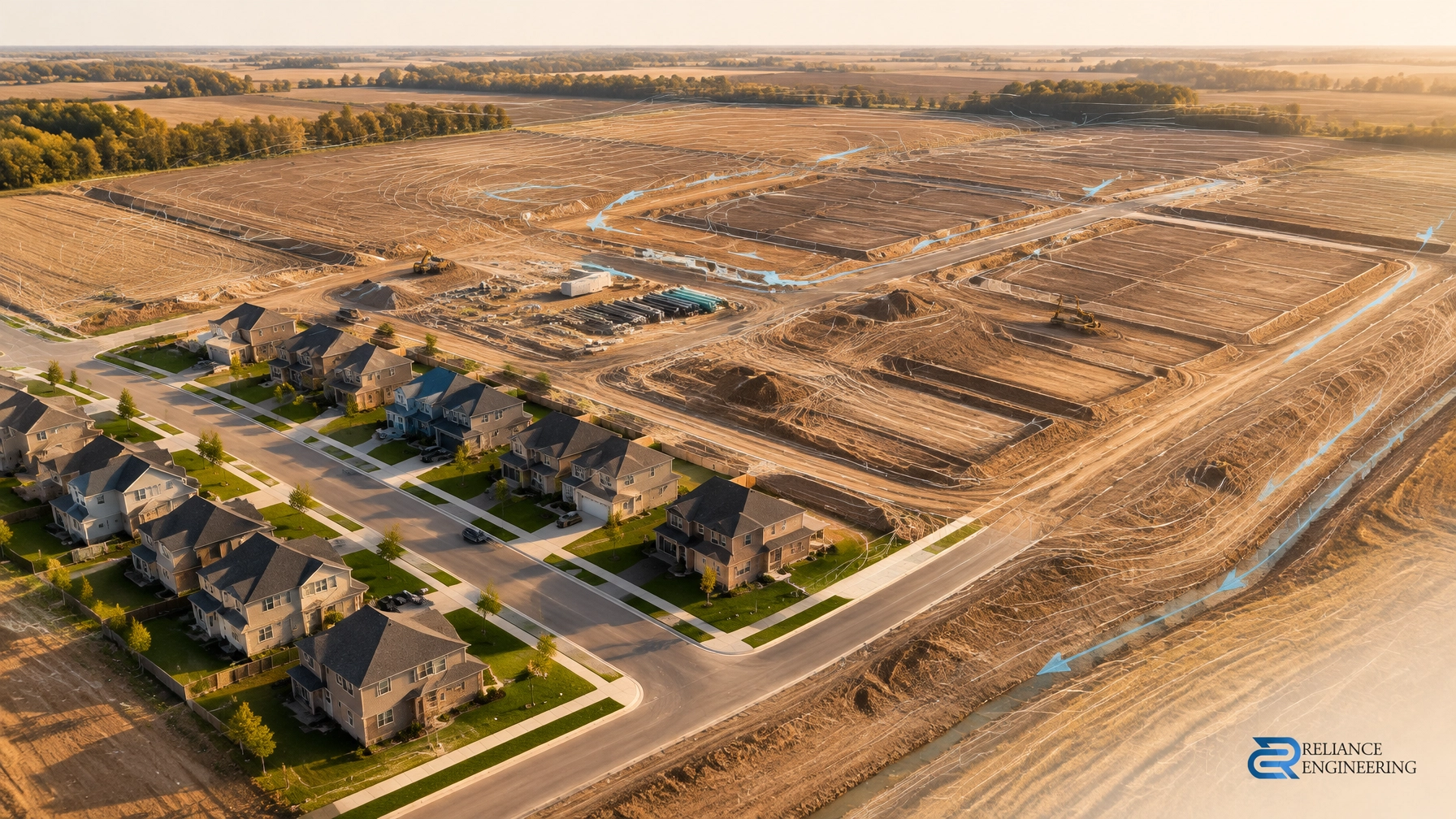
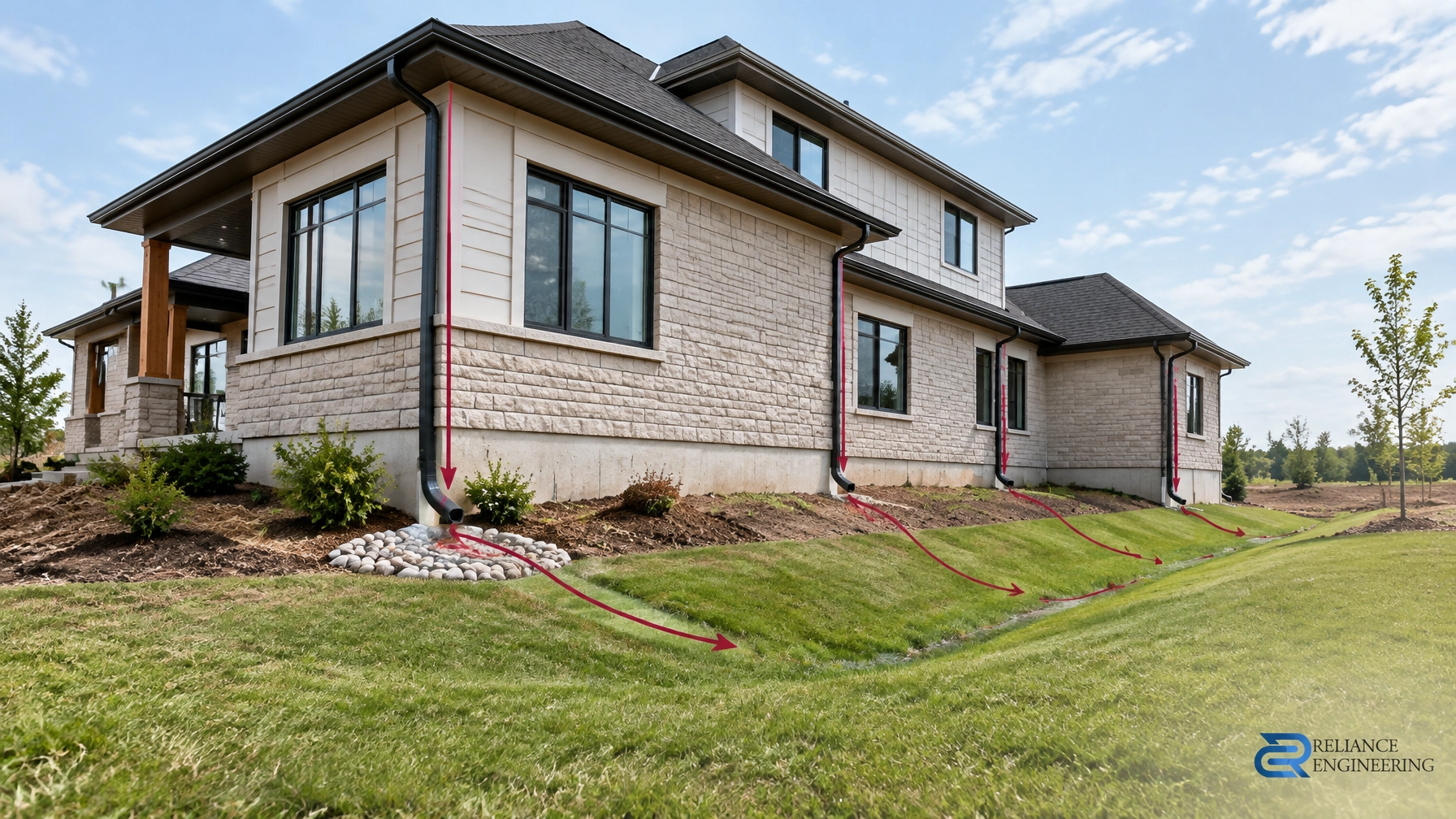
The ESC plan should also show a defined discharge point away from vulnerable areas, such as steep slopes, watercourses, neighbouring properties and unprotected inlets. A stable conveyance path helps guide treated water without creating erosion along the way. The route should be coordinated with proposed grading and overland flow routes, so temporary discharge does not conflict with the site’s drainage design.

Reliance Engineering’s Erosion and Sediment Control Plans include dewatering notes where required, along with control locations, details, and maintenance and inspection notes. Permit-ready drawings should show the discharge route and treatment approach clearly, rather than leaving the contractor to determine them in the field.
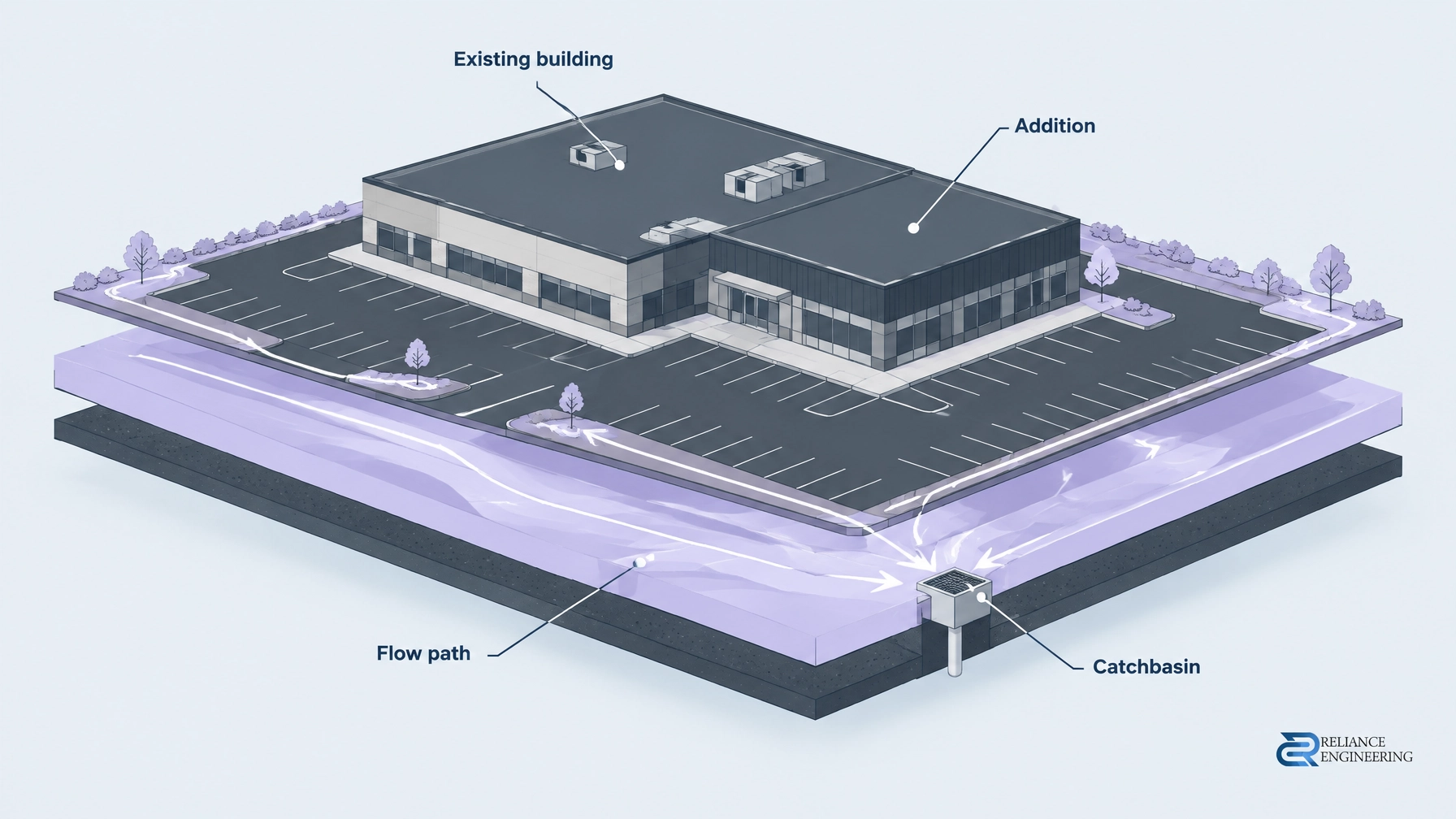
These controls need to work with the site’s grading. A Site Grading Plan helps coordinate positive drainage, surface flow and stable outlets. Where sewer connections or other servicing affect the outlet, coordination with Site Servicing Plans may also be needed. Clear drawings and coordinated design help the construction team understand how temporary pumping relates to the site’s overall drainage.

Approvals and who needs to know
Dewatering requirements vary across Ontario municipalities and depend in part on where the water will go. Municipal sewer systems may have specific discharge conditions or require separate permission. Discharge to land or a natural feature raises different considerations. Do not assume that approval for one receiving system or municipality applies elsewhere.
ESC plans are commonly reviewed with grading or building permit submissions. A Conservation Authority permit or review may apply where regulated features (such as watercourses, floodplains or wetlands) are nearby. Requirements can also depend on the location of the work and its potential effects.
Before work begins, confirm with your municipality and Conservation Authority what applies to the site, the planned discharge route and the receiving system. Ontario regulations and municipal guidance provide relevant context, including Ontario Regulation 41/24 and the City of Mississauga’s Erosion and Sediment Control Permit information. These resources do not replace site-specific confirmation.
A practical five-step process
-
Identify groundwater risk early. Review geotechnical information, consider nearby basements and account for seasonal conditions before tendering. Discuss the possibility of pumping with the project team while excavation and access arrangements can still be planned.
-
Show dewatering at the design stage. Include the treatment method and discharge route on the ESC plan. Check that the outlet, conveyance and grading work together and do not send water toward vulnerable areas.
-
Install controls before pumping starts. Set up the treatment and conveyance system before discharge begins. Maintain the equipment and inspect the route as part of routine ESC inspections, especially after changes to the excavation or pumping setup.
-
Watch the water and receiving area. Monitor discharge clarity and check for erosion, sediment movement or water backing up where it exits. If water becomes muddy or the receiving area is affected, stop or adjust pumping and address the cause. Visual clarity alone does not establish that all applicable discharge conditions have been met.
-
Coordinate construction sequencing. Plan dewatering alongside stripping, grading and stabilization. The contractor’s sequence should allow controls to remain effective as the work area changes, rather than placing pumping, soil movement and site drainage in conflict.

Plan the discharge before the pump starts
Treating pumped water as part of ESC from day one can be the difference between a clean inspection and a stop-work conversation. Early planning gives the owner and contractor a defined treatment method, a suitable outlet and a route that fits the site’s grading.
Reliance Engineering prepares Erosion and Sediment Control Plans and Site Grading Plans across Ontario. Our drainage-focused approach supports practical designs, buildable grading, positive drainage, overland flow routes and permit-ready drawings. We also provide guidance through municipal approvals.
For advice on a project where excavation may encounter groundwater, contact Reliance Engineering to discuss the site and its discharge route.
Naresh Ochani, P.Eng., M.Eng., Principal Engineer, Reliance Engineering Canada Limited
PEO Certificate of Authorization: 100548882
6850 Millcreek Dr, Mississauga, ON L5N 2H4
Phone: 647-385-6418 | Email: [email protected]
Office hours: Monday–Friday 9:00 AM–5:00 PM; Saturday 12:00 PM–2:00 PM; Sunday Closed