Author: Naresh Ochani, P.Eng., M.Eng.
Topic: Asphalt regrading, commercial property grading fixes and municipal approvals in Ontario
Reliance Engineering Canada Limited
Naresh Ochani, P.Eng., M.Eng.
PEO Certificate of Authorization: 100548882
6850 Millcreek Dr, Mississauga, ON L5N 2H4
647-385-6418 | [email protected]
Office hours: Monday–Friday 9:00 AM–5:00 PM; Saturday 12:00 PM–2:00 PM; Sunday Closed
A commercial parking lot may begin as a straightforward maintenance job: remove worn asphalt, correct ponding and repave. But if the work changes grades, drainage, parking layout or other approved site features, it may become a municipal grading approval or Site Plan Approval (SPA) matter.
There is no single province-wide grade-change threshold that decides when maintenance becomes redevelopment. Municipal rules and the site’s approval history matter. The practical question is whether the proposed work changes the conditions the municipality reviewed and approved.
1. The key distinction: surface renewal or site alteration?
A like-for-like mill-and-overlay may be maintenance when it preserves the approved elevations, drainage pattern, parking arrangement and site features. Even then, confirm the applicable requirements with the municipality before work starts.
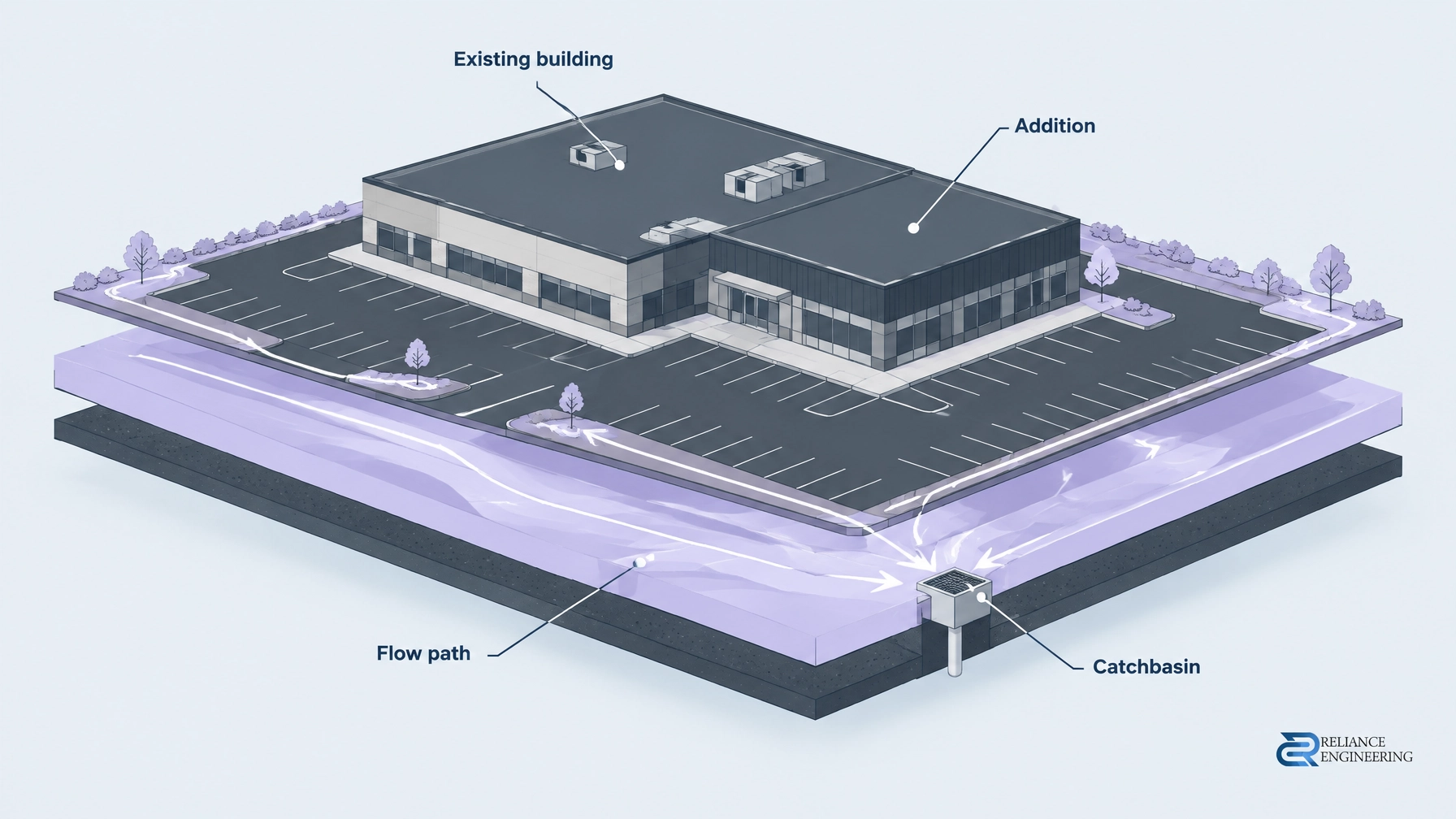
Asphalt regrading is different when it involves excavation or changes to pavement elevations, catchbasin inlets, curbs, swales, access points or runoff routes. The work may alter how water moves across the property, even when the parking lot footprint stays the same.
Mississauga provides a useful local example. Its Lot Grading and Municipal Services Protection By-law addresses grading and drainage approvals for construction activities, including commercial properties and parking lots. That grading approval is not automatically the same as SPA. The municipality determines the appropriate review stream based on the proposed work and applicable policies.
Across Ontario, site alteration, lot grading and site-plan-control requirements vary by municipality. A property owner should not assume that an approval or exemption in one city applies elsewhere.
2. Why reviewers look beyond the new asphalt
When reviewing a proposed grading change, municipalities may compare it with the approved site plan and grading plan, available survey information, legal grades, municipal criteria and the relationship to neighbouring properties.
The review is about site performance, not only pavement condition. A revised surface can change:
- Drainage toward or away from buildings and entrances
- Ponding locations and catchbasin elevations
- Swale grades and overland flow routes
- Runoff directed toward a property line or public right-of-way
- Tie-ins to roads, driveways and adjoining lands
The City of Mississauga’s Grading Plan Terms of Reference describes grading plan requirements and notes that a grading plan may be required as part of Site Plan Control and other approvals. Its review considers existing and proposed elevations, drainage patterns and the relationship to adjacent lands.

3. When the work may pull in Site Plan Approval
A grading approval addresses grading and drainage requirements. SPA review may also be needed when the proposed work changes the approved site layout or other development features.
Examples that warrant early municipal confirmation include:
- Reconfiguring or expanding parking stalls, aisles or driveways
- Changing landscaped areas or other site-plan features
- Altering accessible routes, pedestrian connections or entrance elevations
- Rebuilding or relocating catchbasins and storm connections
- Changing the way the property drains or connects to municipal infrastructure
- Undertaking wider site redevelopment alongside the asphalt work
The City of Mississauga’s Site Plan Application Manual outlines its site-plan application process and review streams. It illustrates why the correct path depends on the scale and nature of the proposed change. Other Ontario municipalities apply their own policies, by-laws and application procedures.
When grades move, zoning and site-plan compliance should be checked too. Parking supply, landscaped area, accessible routes and finished floor or entrance elevations may all be relevant. A grading fix should not create a conflict with the approved design or applicable zoning requirements.
4. Coordinate grading, servicing, SWM and ESC
Asphalt regrading can expose conflicts that a paving-only scope may miss. A coordinated civil package helps connect the proposed elevations with the site’s drainage and infrastructure.
A site grading plan can show existing and proposed elevations, parking grades, catchbasins, swales, positive drainage, finished floor and entrance elevations, and overland flow routes. The goal is buildable grading that manages runoff and protects adjacent properties.
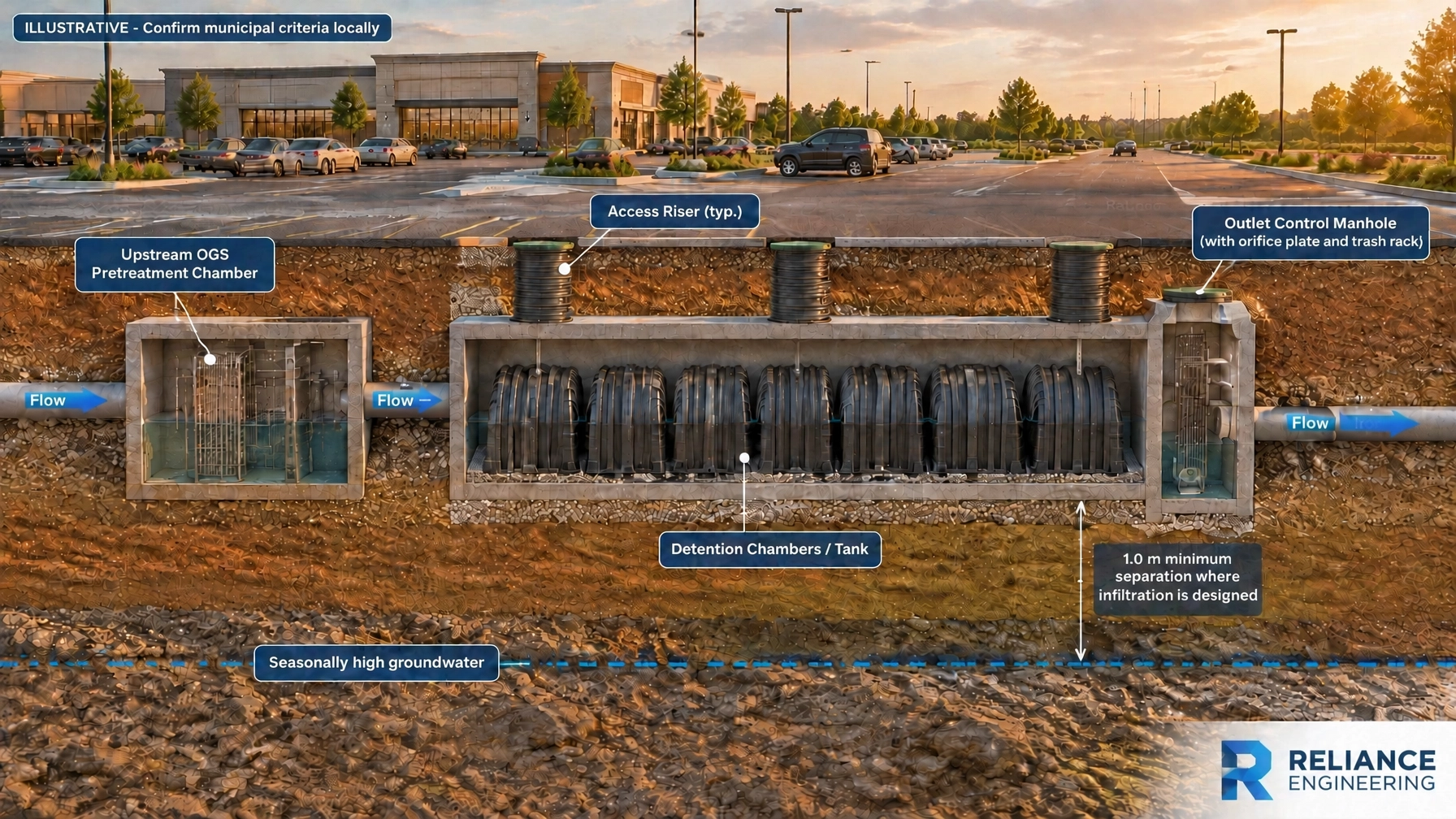
If catchbasins, storm sewers or other utilities are affected, the design may need to coordinate with site servicing. If drainage areas, outlets or runoff assumptions change, a Stormwater Management Report may be required or need review. The fact that the same area remains paved does not, by itself, prove that the existing stormwater approach still fits the proposed drainage pattern.
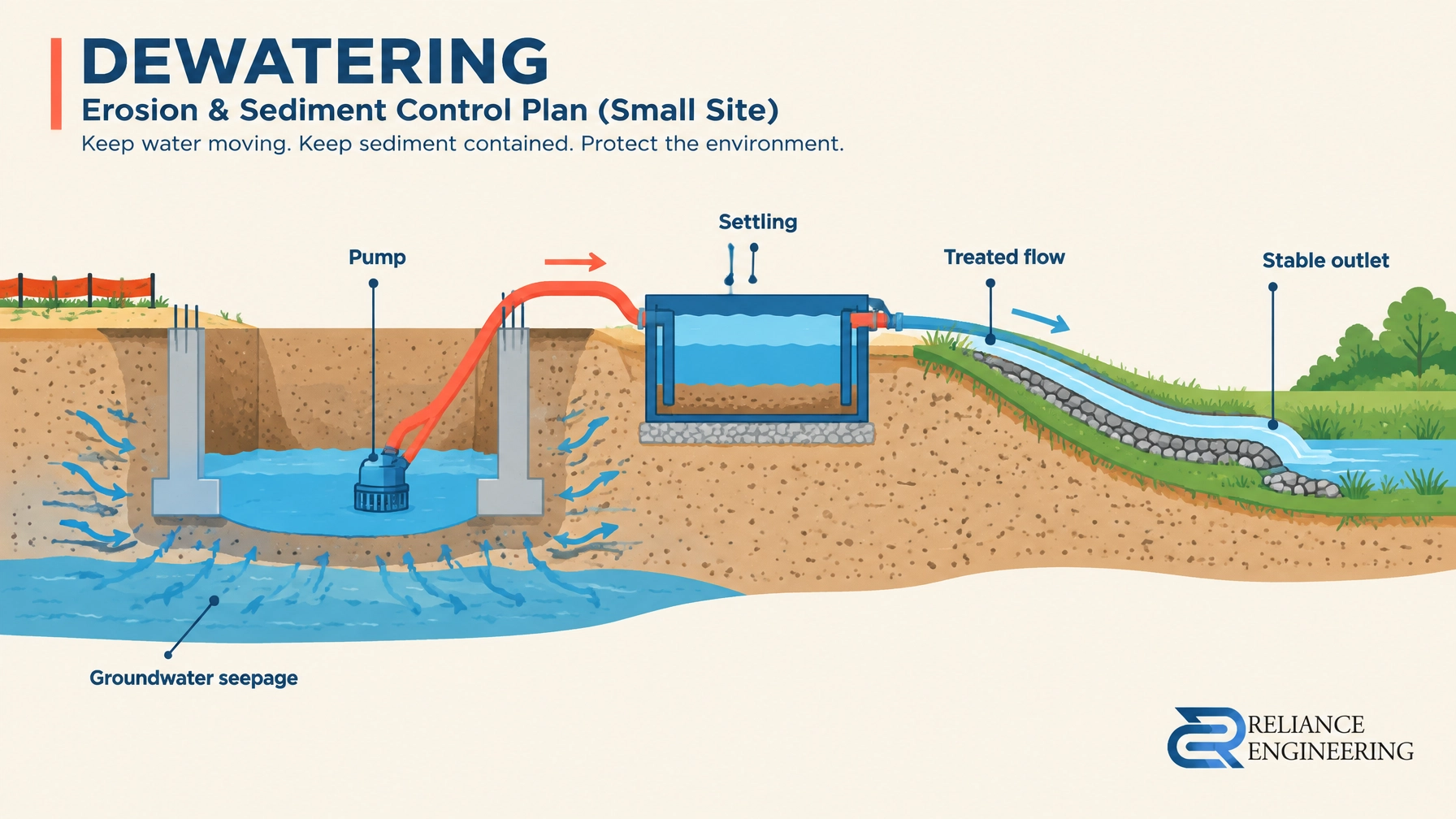
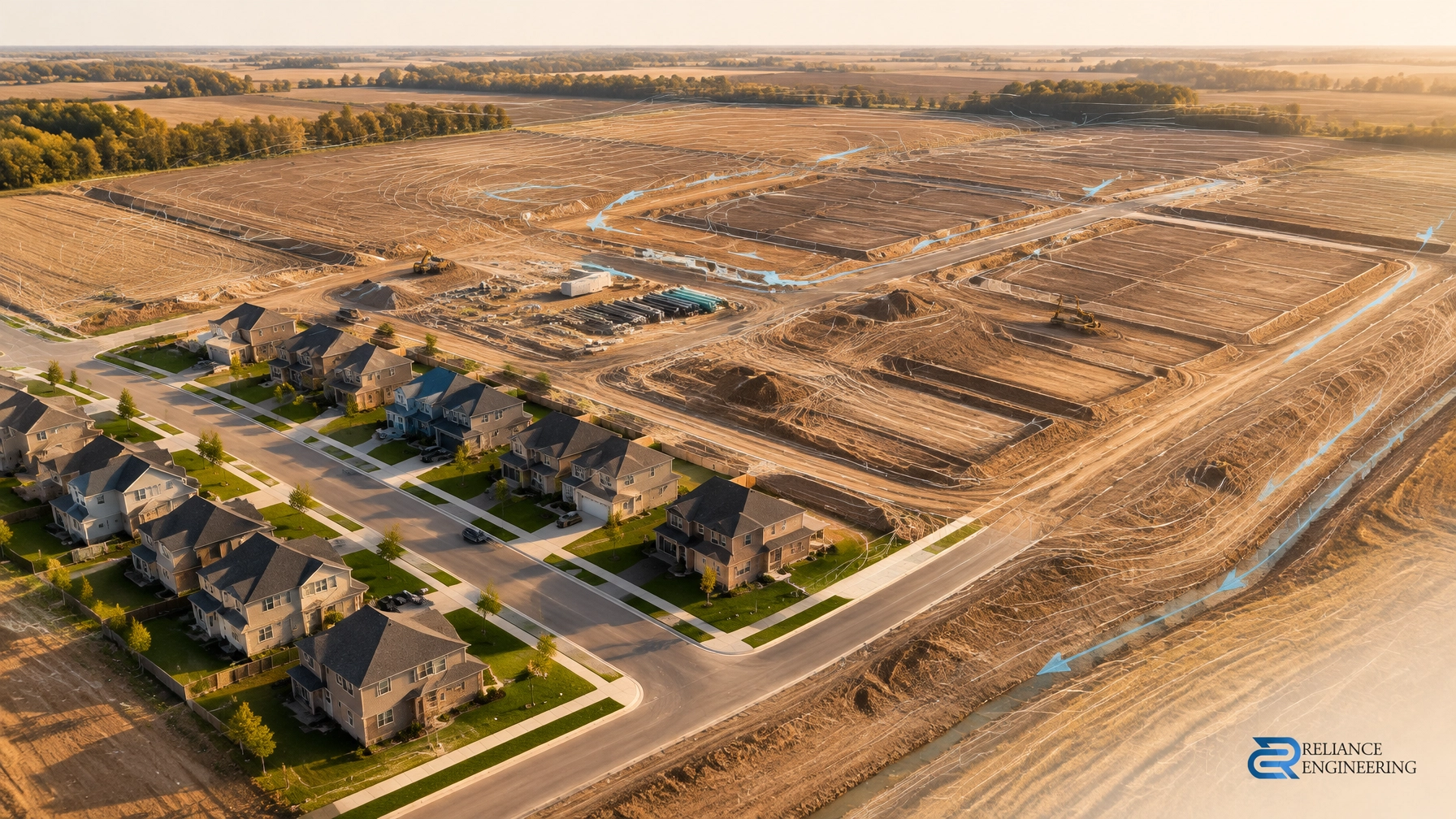
Removing asphalt and exposing soil can also create erosion and sediment risks. Municipal requirements or project conditions may call for an Erosion and Sediment Control Plan, with practical controls for catchbasins, construction access, exposed areas and stockpiles.

5. A practical path to determine the approval route
Start by obtaining the approved site plan and grading plan, if available, and confirming what the municipality has on file. Compare those documents with the proposed scope, not just the contractor’s paving limits.
Next, describe the change clearly to the municipal planning and engineering contacts. Ask whether it is considered maintenance, whether a grading and drainage approval is required, and whether the project needs a new or amended SPA submission. Confirm any separate permits or approvals that may apply.
Where the project falls within SPA, the civil work should be coordinated with the architectural, landscape and planning information. Reliance Engineering prepares Site Plan Approval drawings that can coordinate grading, servicing, stormwater management and erosion and sediment control. Clear drawings and consistent supporting information help reviewers assess the proposal and provide approval support through comments.
A complete submission cannot guarantee approval in one review. However, resolving grading, drainage, layout and supporting-document issues together can reduce avoidable gaps and conflicting revisions.
6. Pre-submission checklist
Before tendering or submitting asphalt regrading work, confirm:
- The approved site plan and grading plan have been reviewed.
- Existing and proposed grades are documented using suitable survey information.
- The municipality has confirmed the applicable grading approval requirements.
- SPA or an amendment has been considered if layout or approved site features change.
- Parking, landscaped areas, accessible routes and entrance elevations remain compliant.
- Catchbasins, storm connections and overland flow routes are coordinated.
- Stormwater requirements have been reviewed where drainage areas or outlets change.
- Erosion and sediment controls are addressed where asphalt removal exposes soil.
- Drawings and reports use consistent assumptions and align with the proposed scope.
7. Plan the approval before the paving scope
The right time to determine whether asphalt regrading needs municipal review is before construction documents and pricing are finalized. A drainage-focused approach can identify when a parking lot fix remains maintenance and when changed grades or site features call for permit-ready drawings and an SPA submission.
For project-specific guidance, contact Reliance Engineering to discuss the existing approval, proposed regrading and municipal requirements. We provide practical designs, coordinated design and approval support for commercial property grading fixes across Ontario.
Municipal references: Mississauga Lot Grading and Municipal Services Protection By-law 0172-2020 · Grading Plan Terms of Reference · Site Plan Application Manual. Requirements vary by municipality; confirm the applicable rules with the authority having jurisdiction.
Reliance Engineering Canada Limited
Naresh Ochani, P.Eng., M.Eng.
PEO Certificate of Authorization: 100548882
6850 Millcreek Dr, Mississauga, ON L5N 2H4
647-385-6418 | [email protected]
Office hours: Monday–Friday 9:00 AM–5:00 PM; Saturday 12:00 PM–2:00 PM; Sunday Closed