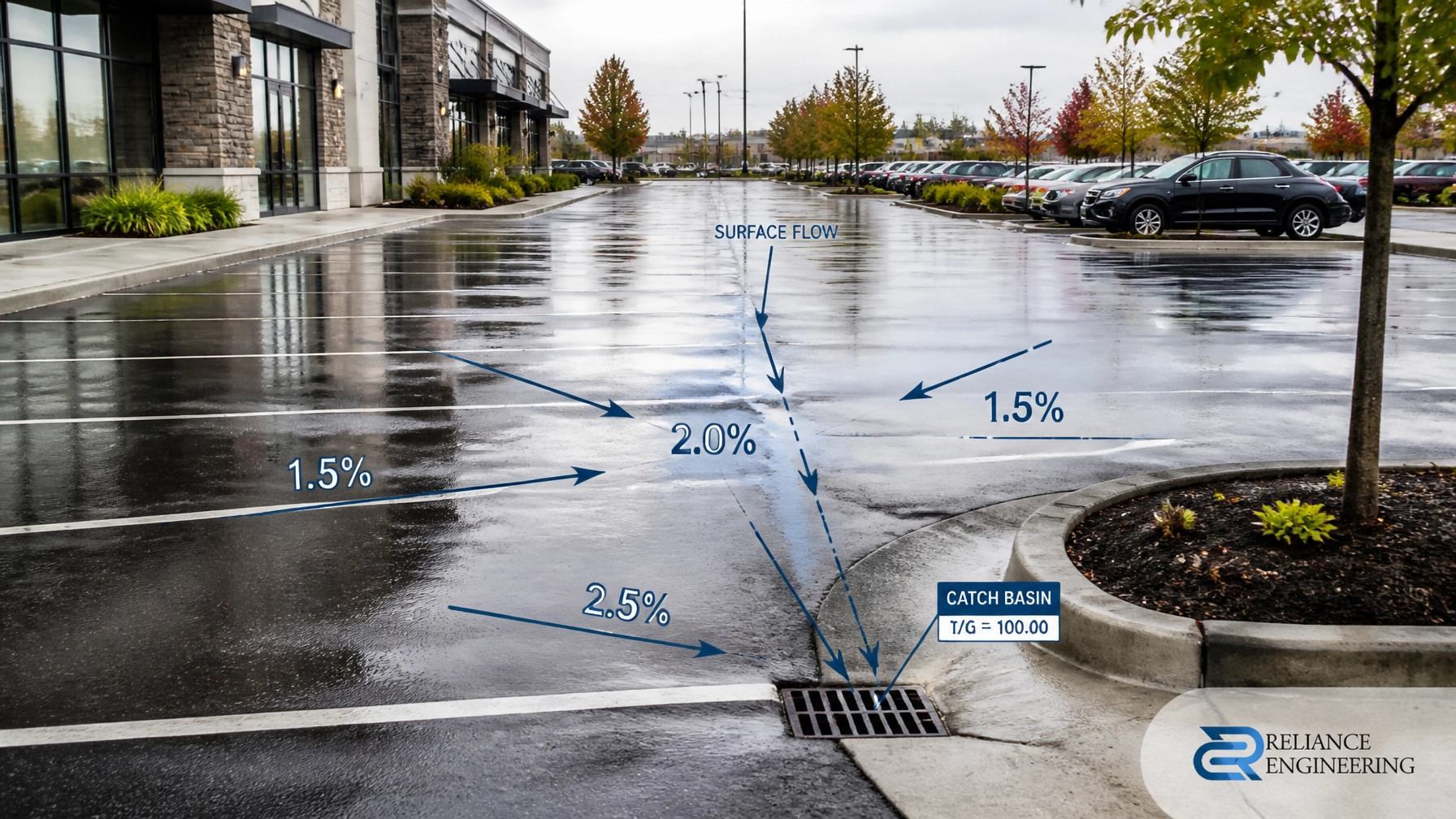
A commercial parking lot is a significant asset, but it can quickly become a liability if drainage is handled poorly. In Ontario, where heavy rains and freeze-thaw cycles are the norm, standing water is more than an eyesore: it is a destructive force that degrades asphalt, creates safety hazards, and invites municipal fines.
If you are seeing "lakes" in your parking lot after a storm, or if your pavement is cracking prematurely, you don't need another patch-and-seal job. You need a professional engineering solution. This guide covers everything you need to know about fixing commercial site drainage for good.
The High Cost of Poor Drainage
Many property owners mistake drainage issues for simple "wear and tear." In reality, water is the primary cause of pavement failure. When water sits on your asphalt, it seeps into the sub-base, softening the foundation of your lot. In the winter, this water freezes and expands, leading to massive potholes and "alligator cracking."
Beyond infrastructure damage, poor drainage creates:
- Liability Risks: Standing water turns into black ice in Ontario winters, leading to slip-and-fall claims.
- Operational Downtime: Flooded loading docks or blocked entrances halt business.
- Municipal Non-Compliance: Improper runoff can lead to environmental violations and orders to comply from the city.
1. The Foundation: Site Grading Plans
The most critical component of drainage is the Site Grading Plan. Water always follows the path of least resistance. If your lot isn't sloped correctly, no amount of drains will solve the problem.
A professional grading design ensures:
- Positive Drainage: Water is directed away from building foundations and toward collection points.
- Optimal Slopes: Pavement must have a minimum slope (typically 1-2%) to prevent ponding, while remaining accessible for pedestrians and vehicles.
- Transition Zones: Smooth transitions between new and existing grades at property lines to prevent neighbor disputes.

2. Point Collection: Catch Basins
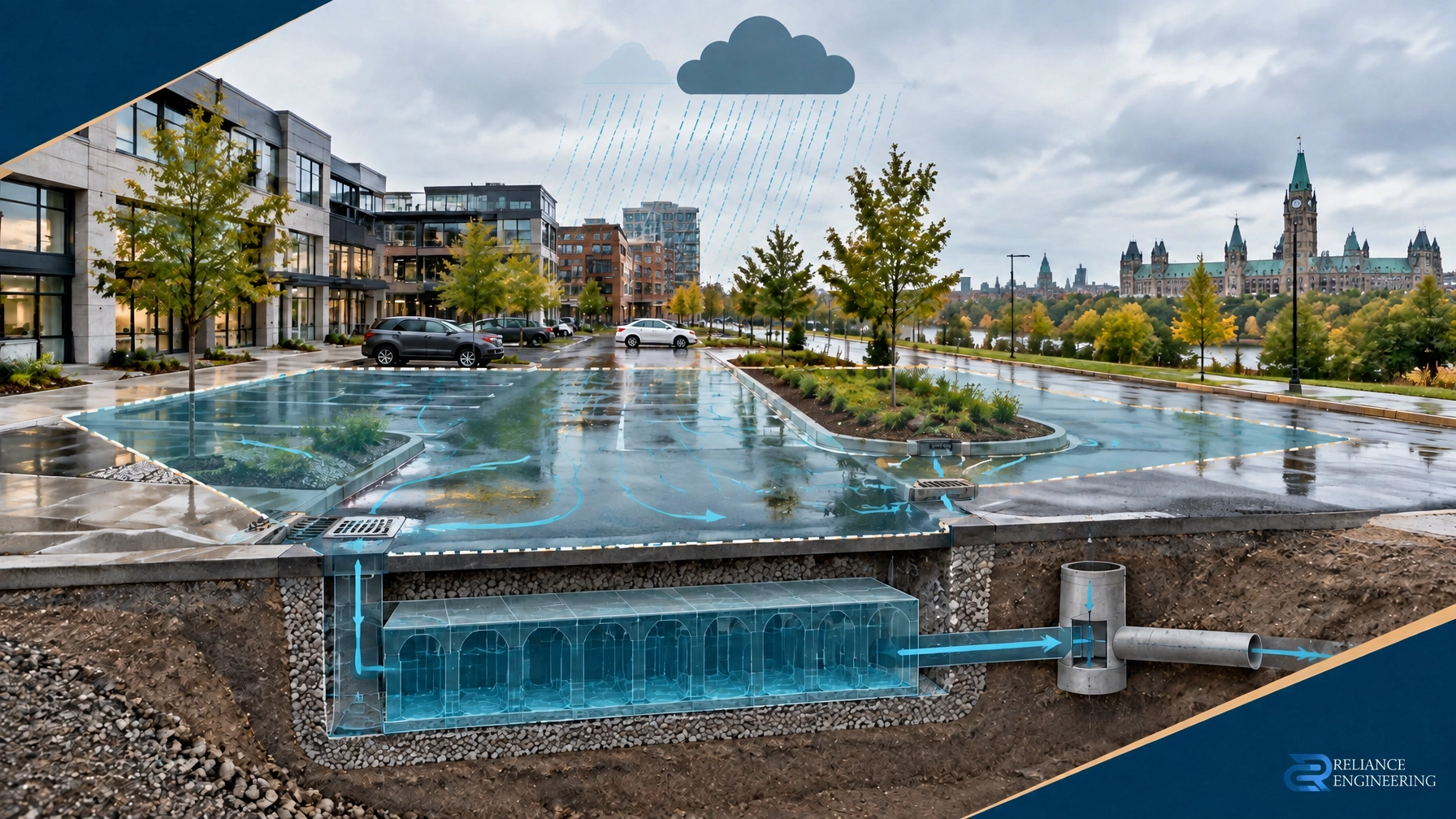
Catch basins are the workhorses of commercial drainage. These are subsurface structures topped with a grate that collect surface runoff and trap sediment before it enters the storm sewer system.
In many older Ontario lots, catch basins fail because they are clogged, collapsed, or positioned at the wrong elevation. Fixing your parking lot often requires "resetting" these basins or adding new ones in localized low spots.
At Reliance Engineering, we analyze the tributary area: the total surface area draining to a single point: to ensure your site servicing plans include basins with the right capacity for 10-year and 100-year storm events.

3. Linear Solutions: Trench Drains
For specific areas like loading docks, garage entrances, or building perimeters, a standard catch basin isn't enough. Water needs to be intercepted across a wider path. This is where Trench Drains (or channel drains) come in.
Trench drains provide a continuous line of collection. They are essential for:
- Ramps: Stopping water from rushing into underground parking garages.
- Level Areas: Providing an inlet for water where it's difficult to create a deep "bowl" for a standard catch basin.
- High-Traffic Zones: Heavy-duty grates can handle the tonnage of commercial delivery trucks while keeping the area bone-dry.

4. The Big Picture: Stormwater Management (SWM)
Fixing your parking lot isn't just about getting the water off your pavement; it’s about where that water goes. Most municipalities across Ontario require a Stormwater Management Report for any major site modification.
You cannot simply dump all your runoff into the municipal sewer at once. You must often "detain" the water on-site and release it slowly. Solutions include:
- Dry Ponds: Landscaped areas designed to hold water temporarily during peak rain.
- Underground Storage: Large pipes or chambers hidden beneath your parking lot to save space.
- Orifice Plates: Small devices that restrict the flow rate to meet municipal allowable limits.

Why "DIY" Fixes Fail
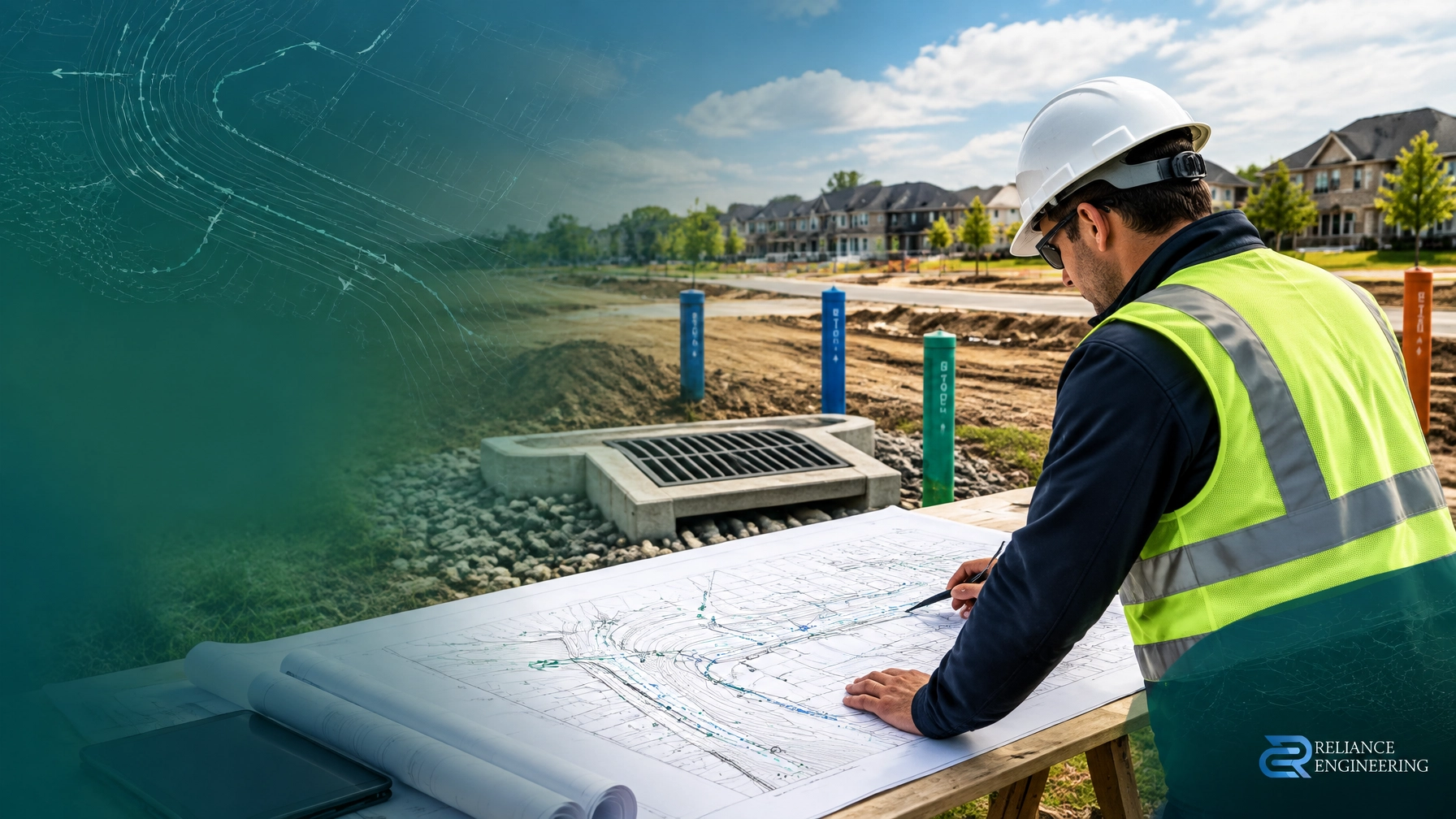
Asphalt contractors often suggest "skin patching" or "wedging" to fix puddles. These are temporary bandages. Without a licensed Professional Engineer (P.Eng.) reviewing the elevations, these fixes often just move the puddle ten feet to the left or, worse, direct it toward your building.
A professional engineering approach involves:
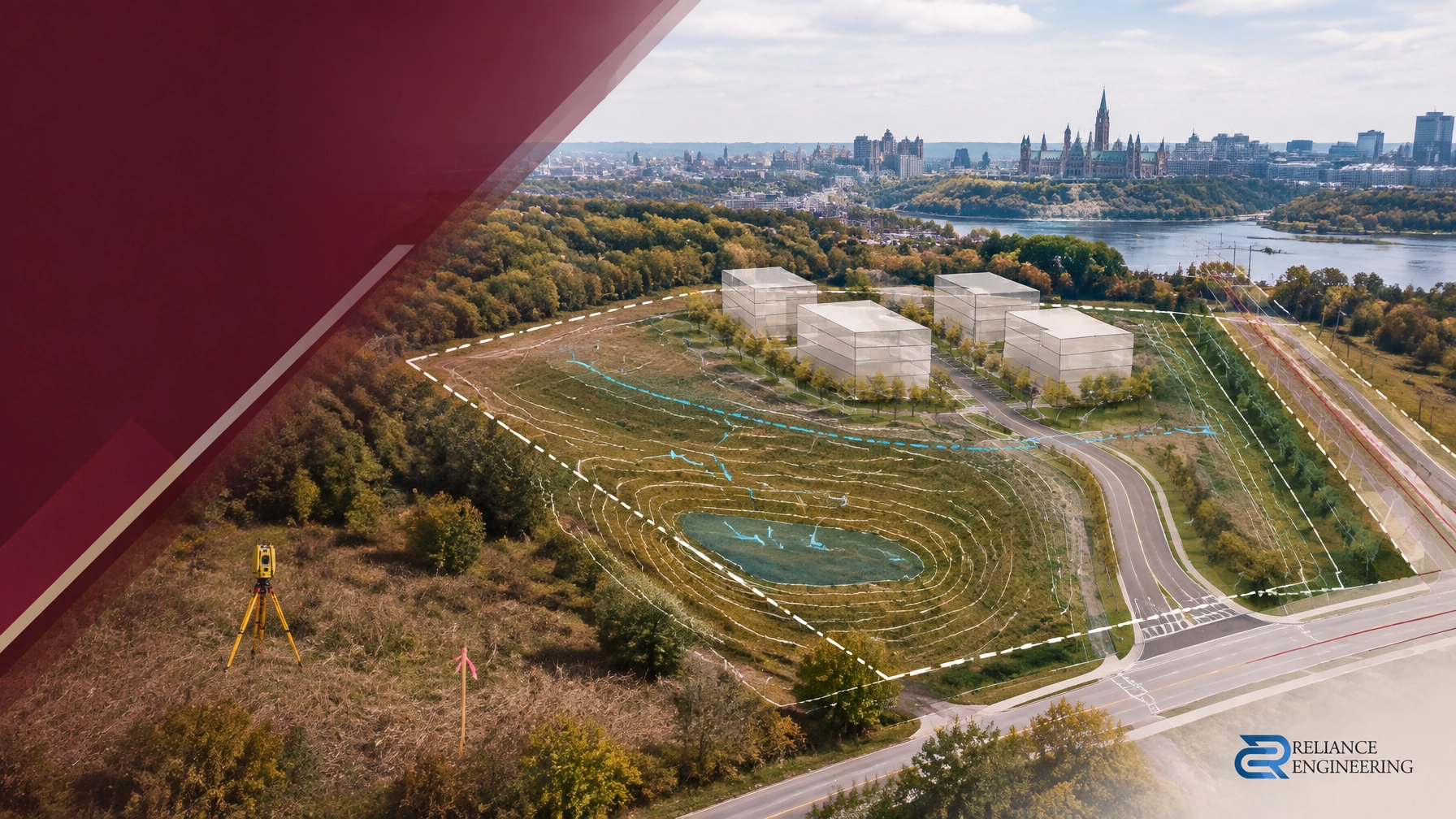
- Topographic Survey: Mapping exactly how the land sits currently.
- Hydraulic Modeling: Calculating exactly how much water your site generates.
- Permit Acquisition: Handling the complex paperwork required by Ontario municipalities for site plan approvals.
Engineering Success Across Ontario
At Reliance Engineering, we specialize in taking full ownership of your drainage challenges. With over 20 years of experience, we know the specific municipal requirements from Mississauga to Ottawa. We don't just provide drawings; we provide the peace of mind that your project will be approved quickly and your lot will remain dry for decades.
Whether you are dealing with a failing parking lot or planning a new commercial development, our team delivers precision designs that save you money in the long run.
Professional Contact Information
For expert consultation on your commercial drainage or site grading needs, contact us directly:
Naresh Ochani, P.Eng. M.Eng.
Reliance Engineering
6850 Millcreek Dr,
Mississauga, ON L5N 2H4
Phone: 647-385-6418
Email: [email protected]
Office Hours:
- Saturday: 12:00 PM – 2:00 PM
- Sunday: Closed
- Monday – Friday: By Appointment
Certifications:
Authorized by the Association of Professional Engineers of Ontario (PEO)
Certificate of Authorization: 100548882