
In the high-stakes world of land development, the Site Plan Approval (SPA) process is the ultimate gatekeeper. Whether you are developing a mid-rise residential complex in Toronto, an industrial warehouse in Mississauga, or a commercial plaza in Ottawa, mastering the nuances of Site Plan Approval is non-negotiable. It is the bridge between a conceptual architectural drawing and a shovel-ready project.
At Reliance Engineering, we have spent over 20 years navigating Ontario's regulatory landscape. We understand that delays in approval don’t just cost time: they cost capital. This guide breaks down the essential components of the SPA process and explains why your engineering documentation is the foundation of a successful application.
Understanding Site Plan Control in Ontario
Site Plan Approval is a technical review process authorized under Section 41 of the Planning Act. It allows municipalities across Ontario to oversee the design and layout of a development to ensure it is safe, functional, and minimizes impacts on the surrounding community and environment.
While a single-family home on an existing lot typically avoids this formal process, almost every other type of development: multi-unit residential, commercial, industrial, and institutional (ICI): requires it. The municipality uses this power to control building placement, site grading, landscaping, site servicing, and stormwater management.

The Core Components of a Site Plan Application
A successful application is built on technical precision. Municipalities require a comprehensive package that proves your project complies with local zoning bylaws and provincial standards.
1. Functional Servicing Report (FSR)
The Functional Servicing Report is the backbone of your infrastructure strategy. It details how the proposed development will be supplied with water, how sanitary sewage will be handled, and how the sanitary sewer design integrates with the existing municipal network. Without a robust FSR, your project is a non-starter.
2. Stormwater Management Report (SWMR)
With increasing climate volatility, Stormwater Management has become a top priority for Ontario municipalities. You must demonstrate how you will manage post-development runoff to match pre-development levels. This involves detailed storm system design and often low-impact development (LID) features to protect local watercourses.
3. Site Grading and Servicing Plans
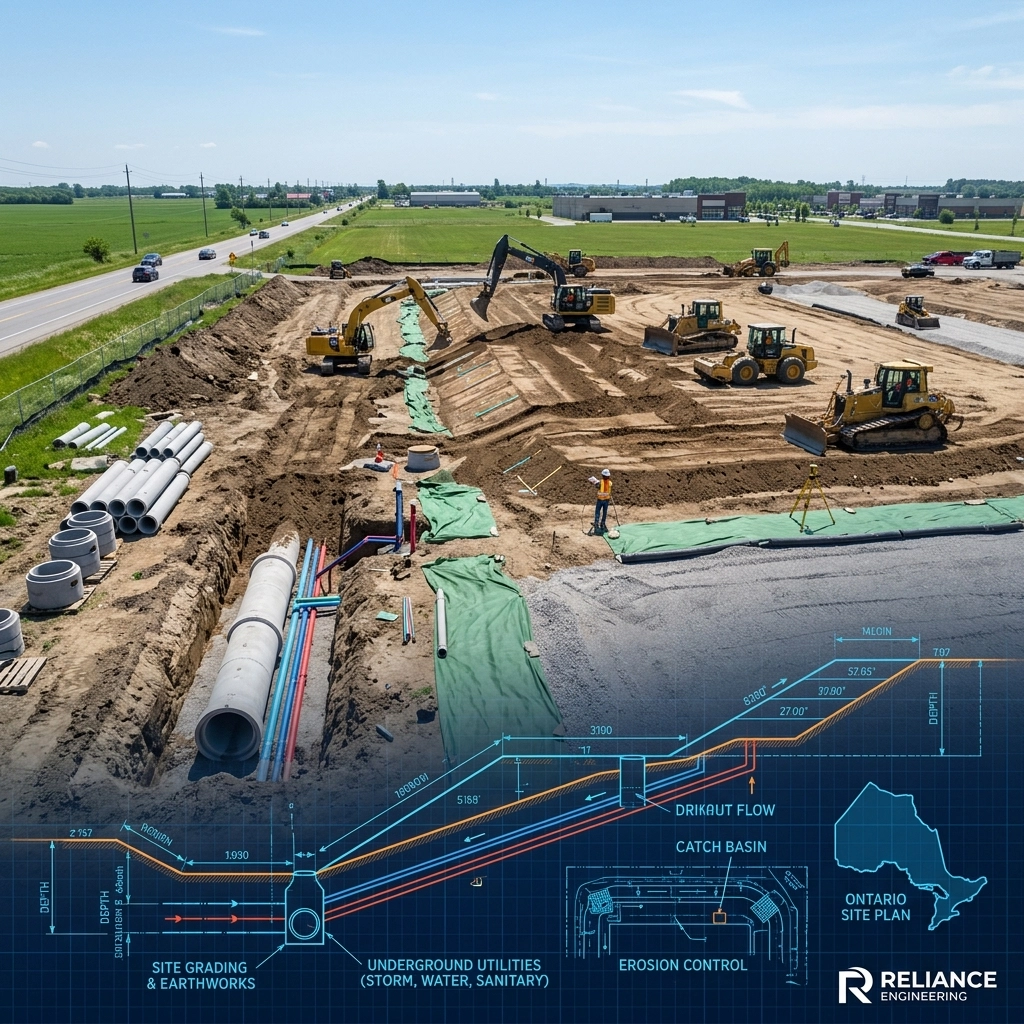
Precision in site grading ensures proper drainage and prevents flooding on neighboring properties. Simultaneously, site servicing plans map out the physical connections for watermains, sewers, and private utilities.
4. Erosion and Sediment Control (ESC)
During construction, protecting the environment is a legal requirement. An ESC plan outlines how you will prevent silt and debris from entering municipal sewers or natural habitats during the construction phase.

The 6 Phases of the Site Plan Approval Process
Navigating the municipal machine requires a structured approach. Missing a single step can set your timeline back by months.
Phase 1: Pre-Consultation
Never submit a formal application without a pre-consultation meeting. This is your opportunity to meet with municipal planners and engineers to identify potential "deal-breakers" early. The municipality will provide a checklist of required studies, which may include everything from traffic impact assessments to environmental site assessments.
Phase 2: Formal Submission
Once your technical drawings: including your water distribution design and grading plans: are finalized, the formal application is submitted. This includes the payment of municipal fees, which can range significantly depending on the scale of the project.
Phase 3: Technical Review and Circulation
Your application is circulated to various departments: Planning, Engineering, Fire Services, and external agencies like Conservation Authorities (e.g., TRCA, CVC). They will review your submission for compliance with the Official Plan and Zoning Bylaws.
Phase 4: Iterative Revisions
It is rare to receive approval on the first submission. Most projects go through at least two or three rounds of comments. This is where the expertise of Reliance Engineering becomes vital. We provide rapid responses to municipal comments, ensuring that technical objections are resolved with cost-effective engineering solutions.
Phase 5: Notice of Decision and Site Plan Agreement
Once the technical review is satisfied, the municipality issues a "Notice of Decision" or "Conditional Approval." You then enter into a legal Site Plan Agreement. This document is registered on the property's title and outlines your obligations, including the posting of financial securities (usually Letters of Credit) to guarantee the completion of construction administration and landscaping.
Phase 6: Building Permit Issuance
Only after the Site Plan Agreement is signed and the securities are posted can you apply for your final building permits. This is the green light for construction.

Timelines: What Developers Should Expect
In Ontario, the Planning Act technically allows for a 30-day decision period, but in the reality of today’s regulatory environment, this is rarely the case.
- Minor Developments: 3 to 6 months.
- Complex/Major Developments: 9 to 24 months.
The speed of approval is directly tied to the quality of your initial submission. High-quality site servicing plans and clear communication with municipal staff are the best ways to shorten these windows.
Proven Success Across Ontario
Reliance Engineering has a track record of securing approvals for diverse projects across the province. Our experience includes:
- Residential Townhomes: Providing comprehensive servicing and grading for the 35 Wabash Avenue Townhomes in Toronto.
- Urban Redevelopment: Handling the complexities of the 24 Howard Park Avenue project.
- Institutional Projects: Navigating the rigorous requirements for the Redevelopment of Etobicoke General Hospital.
- Commercial & Mixed-Use: Delivering permit-ready designs for 345-351 Davis Drive in Newmarket and 85 Bronte Road in Oakville.
Common Pitfalls and How to Avoid Them
Ignoring Zoning Amendments
If your project requires a Zoning By-law Amendment (ZBA) or an Official Plan Amendment (OPA), these must usually be handled before or concurrently with the Site Plan Approval. Trying to force a site plan that doesn't conform to zoning is a recipe for immediate rejection.
Underestimating Stormwater Requirements
Many developers underestimate the space required for stormwater retention. Early integration of a Stormwater Management Report ensures that you don't lose valuable buildable area later in the design process.
Poor Coordination
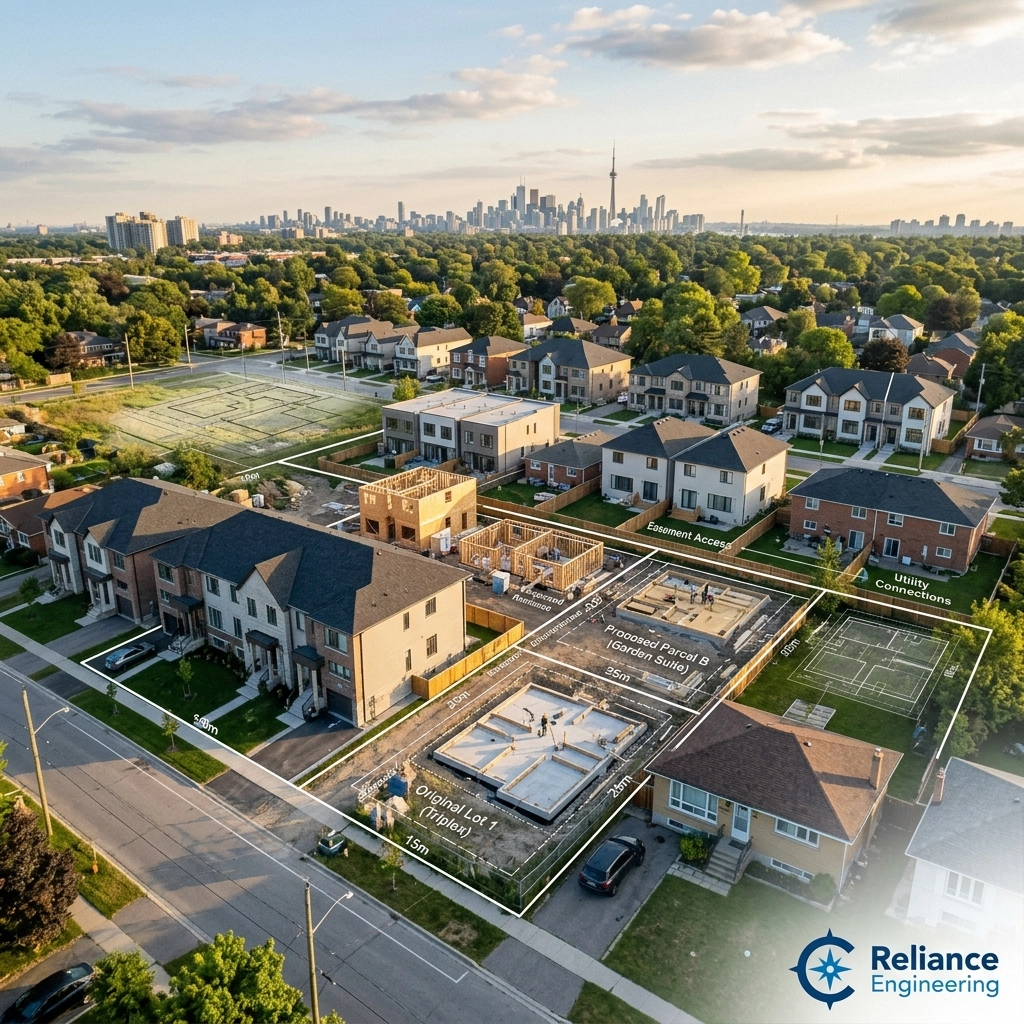
Site Plan Approval requires harmony between architects, landscape architects, and civil engineers. If the architect moves a building five feet to the left, the site servicing plan and grading must be updated immediately to avoid municipal conflict.

Partner with Reliance Engineering
Navigating Site Plan Approval in Ontario is a marathon, not a sprint. It requires a partner who understands the granular details of municipal requirements and has the professional authority to advocate for your project.
At Reliance Engineering, we specialize in Land Development Consulting, providing the essential services required to get your project approved and under construction. From initial Functional Servicing Reports to final construction administration, we are with you every step of the way.
Ready to start your next project? Contact us today to ensure your Site Plan Approval process is handled with 20+ years of professional expertise.
Contact Information
- Name: Naresh Ochani, P.Eng. M.Eng.
- Company: Reliance Engineering
- Address: 6850 Millcreek Dr, Mississauga, ON L5N 2H4
- Phone: 647-385-6418
- Email: [email protected]
- Website: www.relianceengineering.ca
Office Hours
- Saturday: 12:00 PM – 2:00 PM
- Sunday: Closed
- Monday – Friday: By Appointment
Reliance Engineering: Practical, compliant, and cost-effective civil engineering solutions across Ontario.




Leave A Comment