
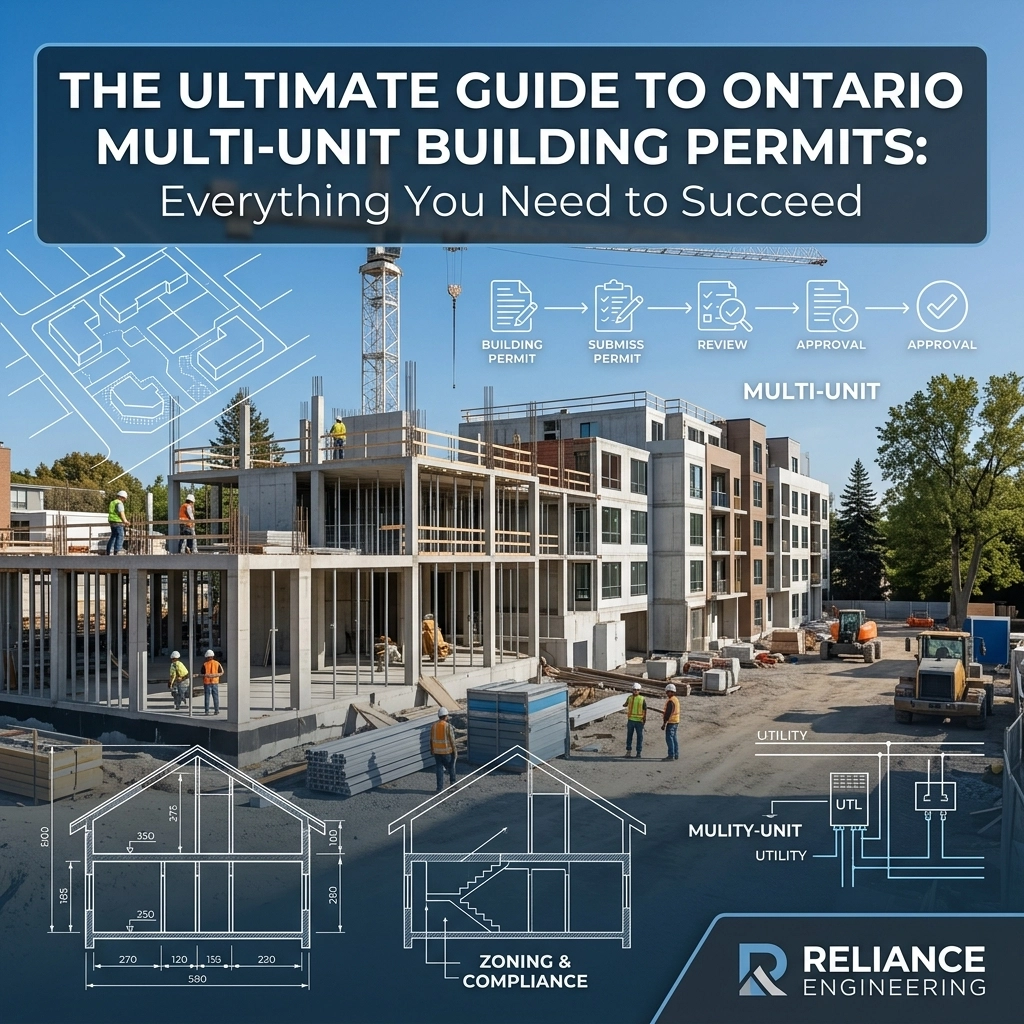
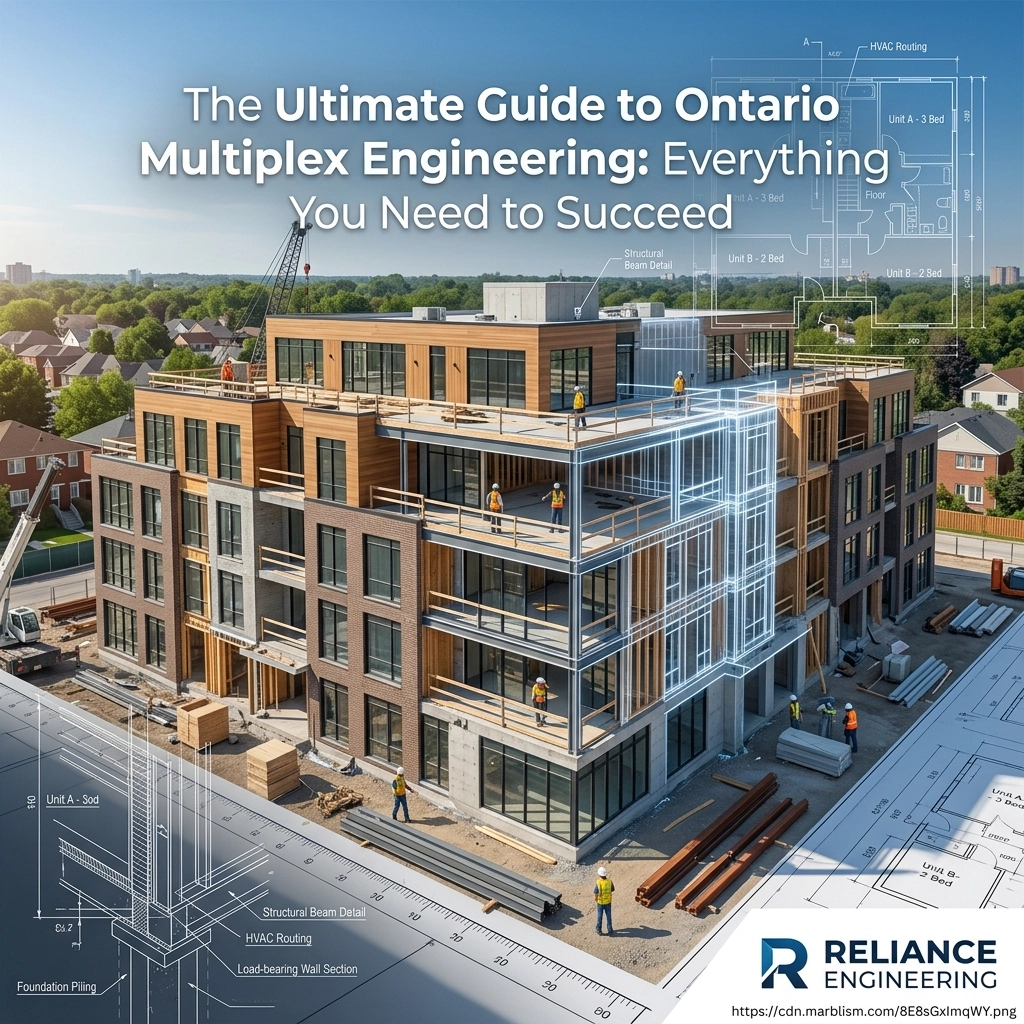
Ontario is in the middle of a housing revolution. From Toronto to Ottawa, the push for density is driving a surge in multi-unit residential developments. Whether you are converting a single-family home into a triplex or constructing a mid-rise complex, the regulatory landscape is demanding.
At Reliance Engineering, we’ve spent over 20 years navigating the complexities of Ontario’s building codes and municipal requirements. Getting a building permit for a multi-unit project isn’t just about filling out forms; it’s about engineering precision and regulatory strategy.
This is your ultimate guide to securing multi-unit building permits in Ontario.
Why Multi-Unit Permits Matter
In Ontario, a building permit is a legal requirement under the Building Code Act. For multi-unit projects, the scrutiny is significantly higher than for single-family homes. This is because multi-unit buildings involve increased occupancy, higher fire safety risks, and greater strain on municipal infrastructure.
You need a permit for:
- Constructing any new building over 10 square meters.
- Renovating or adding to an existing multi-unit structure.
- Changing the use of a building (e.g., converting a basement into a legal second suite).
- Material alterations to structural, plumbing, or mechanical systems.
Even if you aren't moving walls, a "Change of Use" permit is required because the Ontario Building Code views a multi-unit conversion as an increase in hazard.
The Regulatory Framework in Ontario
To succeed, you must satisfy three primary levels of regulation:
- The Ontario Building Code (OBC): The technical bible. It dictates fire separations, sound transmission ratings, egress requirements, and structural integrity.
- Municipal Zoning Bylaws: Every municipality in Ontario: from Mississauga to Hamilton: has its own rules regarding lot coverage, height, setbacks, and parking minimums.
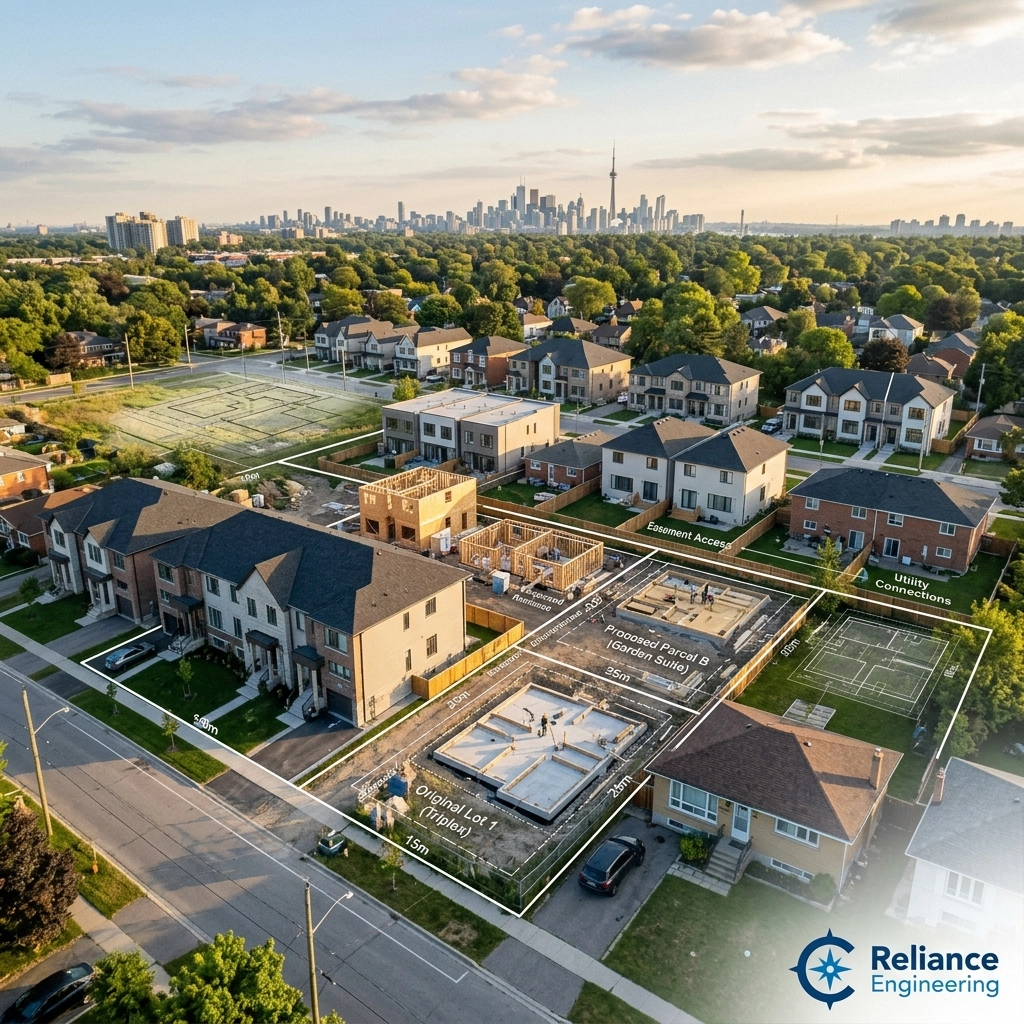
- Site Plan Approval (SPA): For most multi-unit developments, you cannot get a building permit until you have Site Plan Approval. This process ensures your project fits into the city’s broader urban design and infrastructure plan.
The Engineering Essentials
At Reliance Engineering, we specialize in the technical documentation that municipalities demand before they even look at your architectural drawings. For a multi-unit permit, your engineering package must be bulletproof.
1. Functional Servicing Reports (FSR)
An FSR proves to the municipality that the existing water, sanitary, and storm infrastructure can handle your new units. We calculate the peak demand for your building and compare it against the capacity of the city’s pipes.
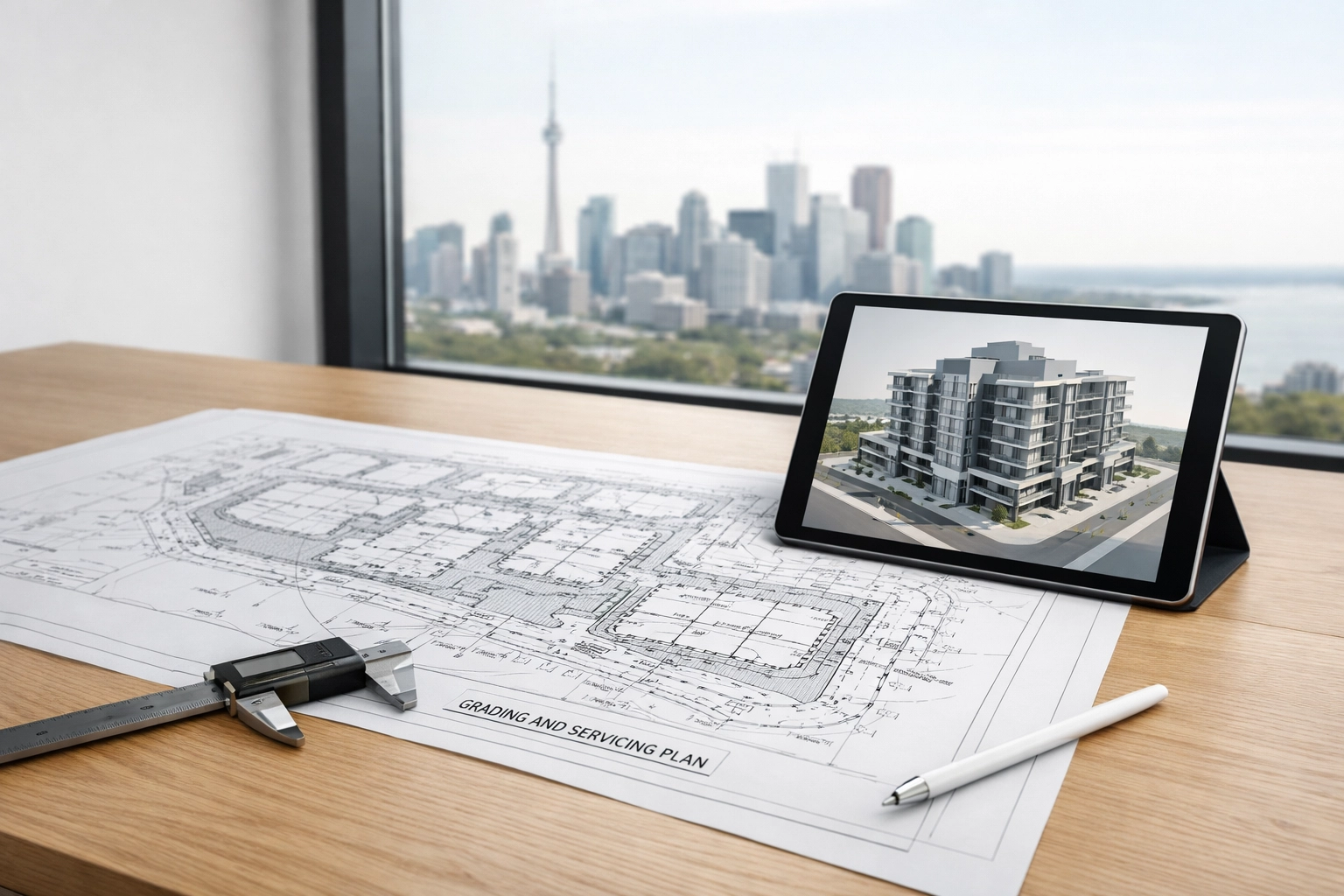
2. Site Grading Plans
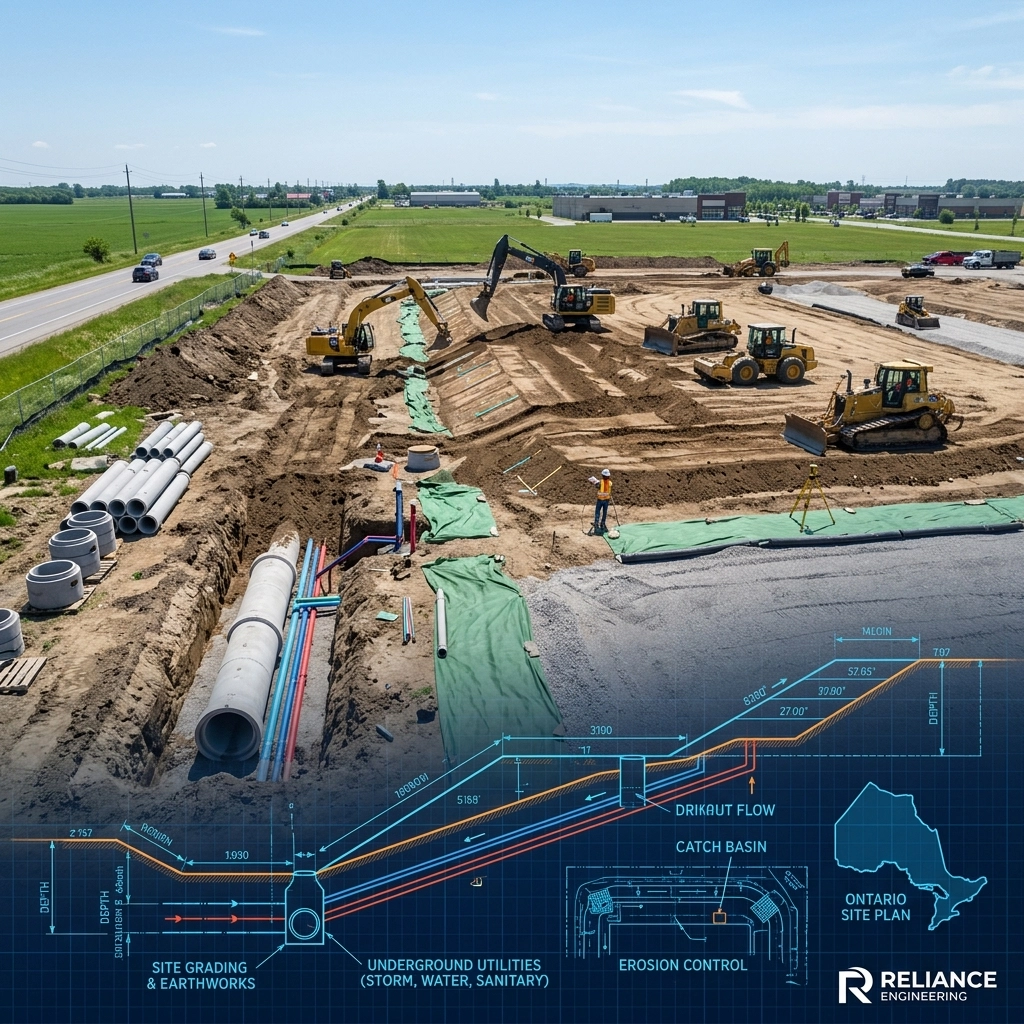
A Site Grading Plan is mandatory. It ensures that rainwater flows away from your building and doesn't flood your neighbors. In Ontario, drainage is a high-liability area. Our plans ensure compliance with local drainage bylaws and prevent future legal headaches.
3. Site Servicing Plans
How will your building connect to the municipal grid? A Site Servicing Plan outlines the exact location, size, and material of your water and sewer connections. We coordinate these with Sanitary Sewer Design and Storm System Design to ensure a seamless build.

Stormwater Management (SWM)
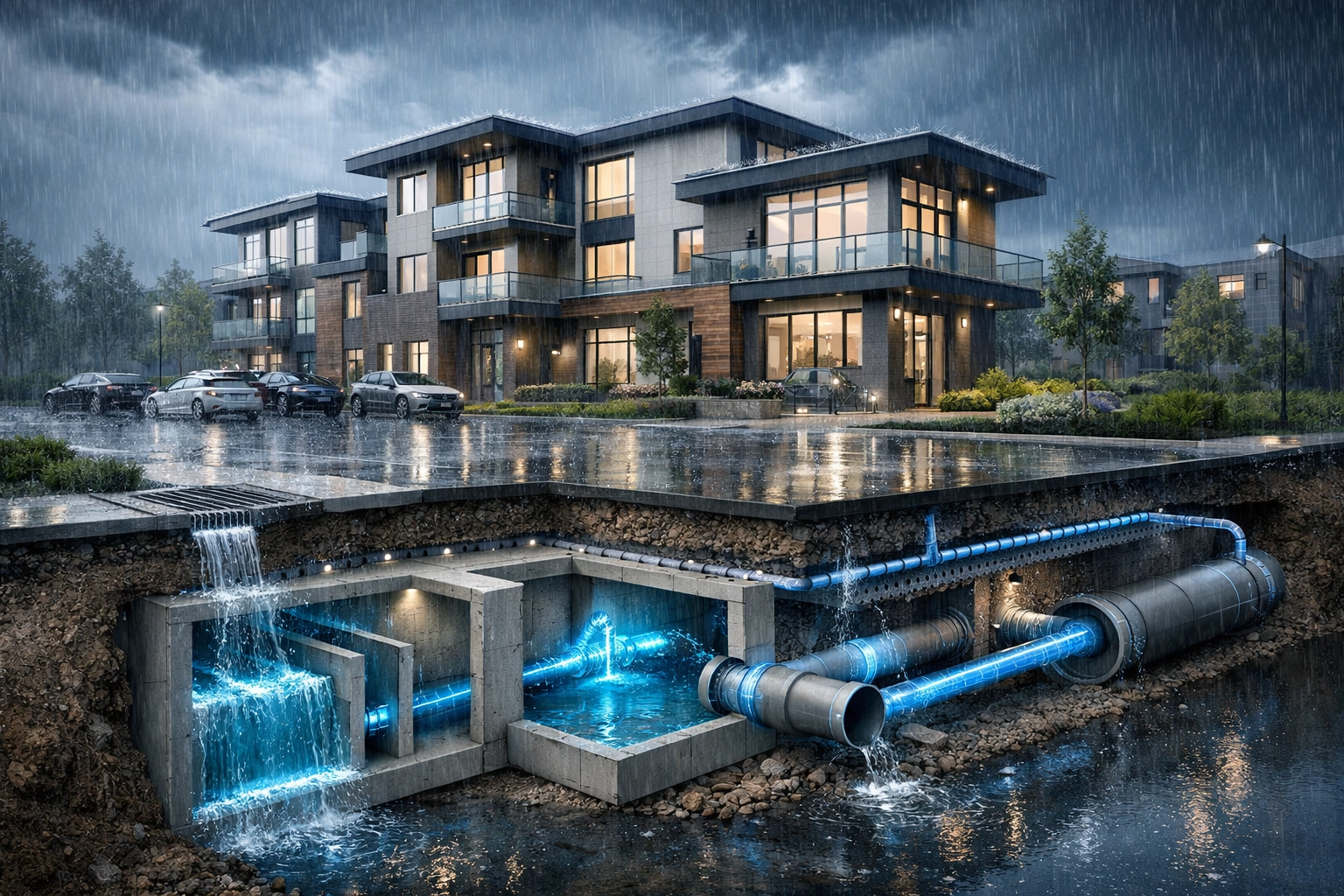
Ontario municipalities are increasingly strict about stormwater. If you are increasing the "impermeable surface" (more roof area, more pavement), you must manage the runoff on-site.
Our Stormwater Management Reports detail how you will mitigate the impact of your development. This often involves underground storage tanks, LID (Low Impact Development) features, or orifice pipes to slow down the release of water into the municipal system.
The Multi-Unit Application Process: Step-by-Step
Navigating the permit process requires a disciplined approach. Here is how we handle it at Reliance Engineering:
Step 1: Preliminary Zoning Review
Before spending thousands on detailed designs, we check if your project is actually allowed. If it isn't, you may need a Zoning Amendment or a Minor Variance from the Committee of Adjustment.
Step 2: Site Plan Approval (SPA)
This is where the site layout, landscaping, and engineering are finalized. We submit Site Plans and reports to the city for review by various departments (Traffic, Fire, Water, Planning).
Step 3: Detailed Engineering & Architecture
Once the SPA is on track, we finalize the technical drawings. This includes:
- Structural drawings (loads, foundations).
- Mechanical/HVAC plans.
- Plumbing drawings.
- Energy efficiency certifications (SB-10 or SB-12).
Step 4: Permit Submission
The formal application is submitted to the Building Department. In Ontario, the review timeline for multi-unit buildings typically ranges from 15 to 30 business days, depending on the complexity and the municipality.
Common Pitfalls to Avoid
Even seasoned developers get tripped up by the Ontario regulatory landscape. Watch out for these:
- Underestimating Parking Requirements: Many Ontario cities are reducing parking minimums, but don't assume your project is exempt.
- Ignoring Conservation Authorities: If your property is near a creek, wetland, or slope, you likely need approval from authorities like the TRCA or CVC. This can add months to your timeline.
- Fire Separation Failures: Multi-unit buildings require strict fire ratings between units and common areas. Getting this wrong in the design phase leads to expensive retrofits later.
- Incomplete FSRs: If your Functional Servicing Report lacks data or uses outdated municipal standards, the city will reject your application immediately.
Post-Permit: Inspections and Compliance
Securing the permit is only half the battle. Once construction starts, the municipality will conduct mandatory inspections at various stages:
- Footings and Foundations: Before pouring concrete.
- Structural Framing: Once the shell is complete.
- Insulation and Vapour Barrier: Before the drywall goes up.
- Final Inspection: To ensure the building is safe for occupancy.
Failure to follow the approved plans can lead to "Stop Work Orders" and heavy fines. We provide ongoing support throughout the construction phase to ensure that what we designed is what gets built.
Why Work with Reliance Engineering?
With over 20 years of experience across Ontario, Reliance Engineering understands the friction points in land development. We don't just draw plans; we solve problems. We specialize in Site Grading, Site Servicing, and Stormwater Management for both residential and ICI (Industrial, Commercial, Institutional) projects.
Our goal is to provide permit-ready plans that get approved the first time. We know the municipal standards from Toronto to the outer reaches of Ontario, ensuring your project remains compliant and cost-effective.
Professional Credentials
Naresh Ochani, P.Eng. M.Eng.
Founder and Principal, Reliance Engineering
Contact Information
Reliance Engineering
Address: 6850 Millcreek Dr, Mississauga, ON L5N 2H4
Phone: 647-385-6418
Email: [email protected]
Website: www.relianceengineering.ca
Office Hours
- Saturday: 12:00 PM – 2:00 PM
- Sunday: Closed
- Monday – Friday: By Appointment
Our Services
- Functional Servicing Reports (FSR)
- Site Grading & Servicing Plans
- Stormwater Management (SWM)
- Site Plan Approval (SPA) Coordination
- Zoning & Official Plan Amendments
If you’re ready to move forward with your multi-unit development in Ontario, don’t leave your permit to chance. Contact us today for a consultation. Let’s get your project out of the planning phase and into the ground.



Leave A Comment