Article type: How-to diagnostic framework
Focus: Ontario grading and drainage
Audience: Commercial and institutional property owners, facility managers, builders and project teams
Reading time: 6 minutes
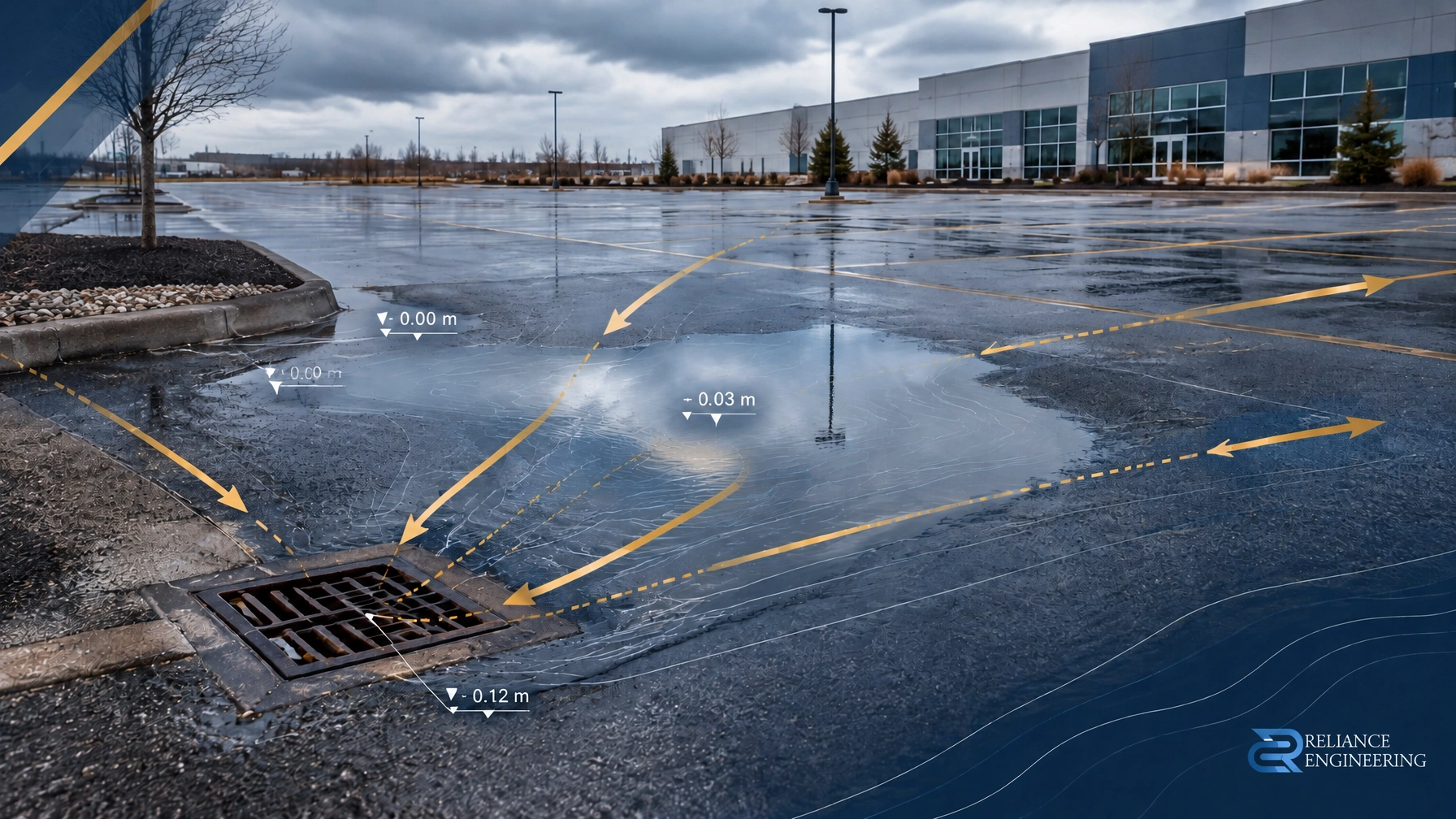
Ponding water on a commercial property is a symptom, not a diagnosis. The cause may be a blocked inlet, a settled catchbasin rim, an asphalt low point, inadequate drainage infrastructure or a subsurface condition. Choosing the wrong fix can leave the water in place, and add avoidable construction costs.
A drainage-focused approach starts by identifying where the water comes from, how long it remains and whether the surface or the ground is responsible. Then work through the practical fixes in order, from simple maintenance to engineered grading and drainage changes.

1. Map the ponding before deciding what to repair
Record where water gathers, how deep it gets and how long it takes to drain. Note whether the issue appears after ordinary rainfall, a major storm, snowmelt or a seasonal thaw. Check for debris at catchbasins and look for signs of pavement settlement, cracking, frost movement or water emerging from the ground.
Compare observations from different conditions where possible. A puddle that clears after an inlet is cleaned points to a different issue than standing water that returns in the same location despite an open inlet.
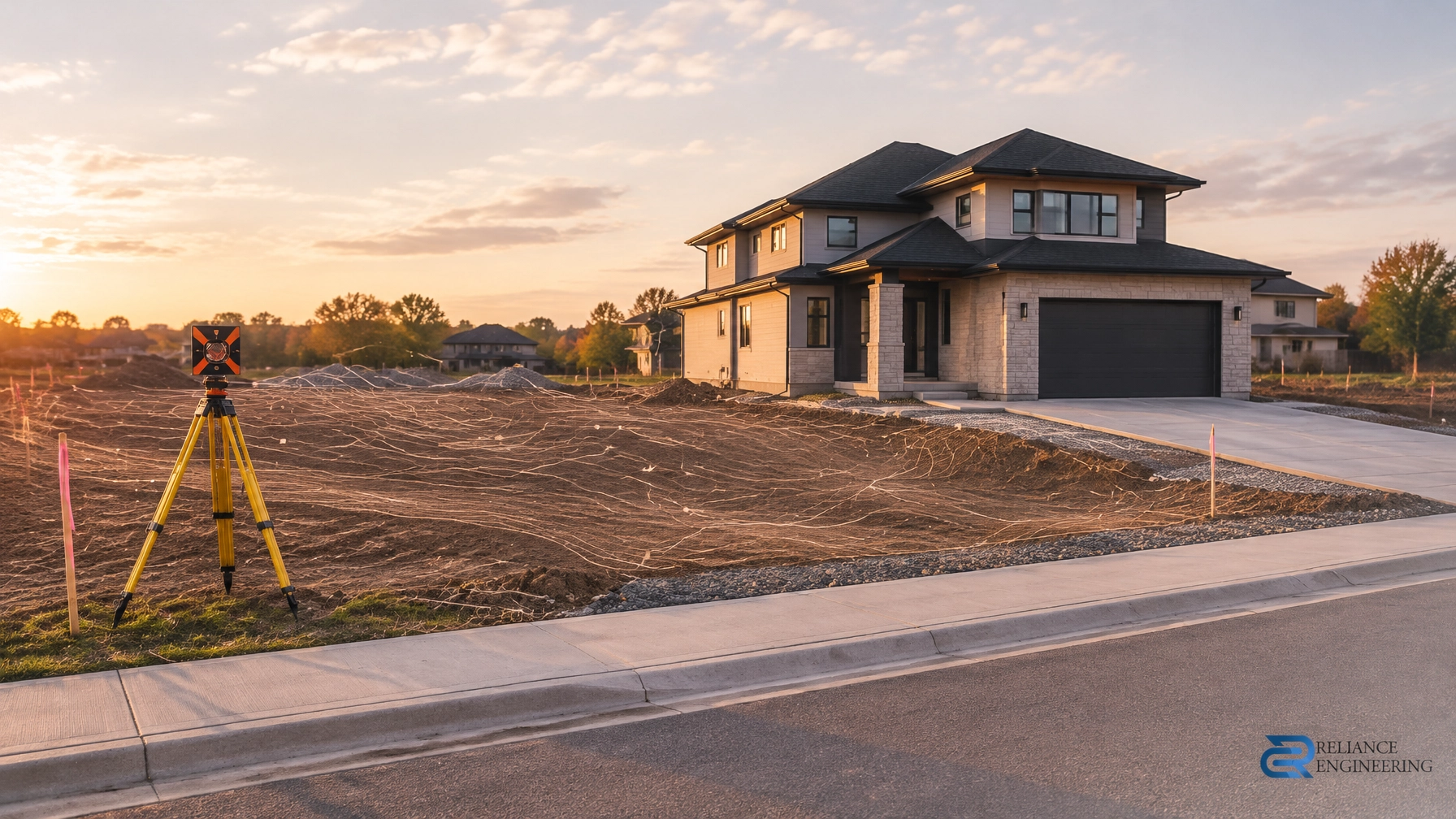
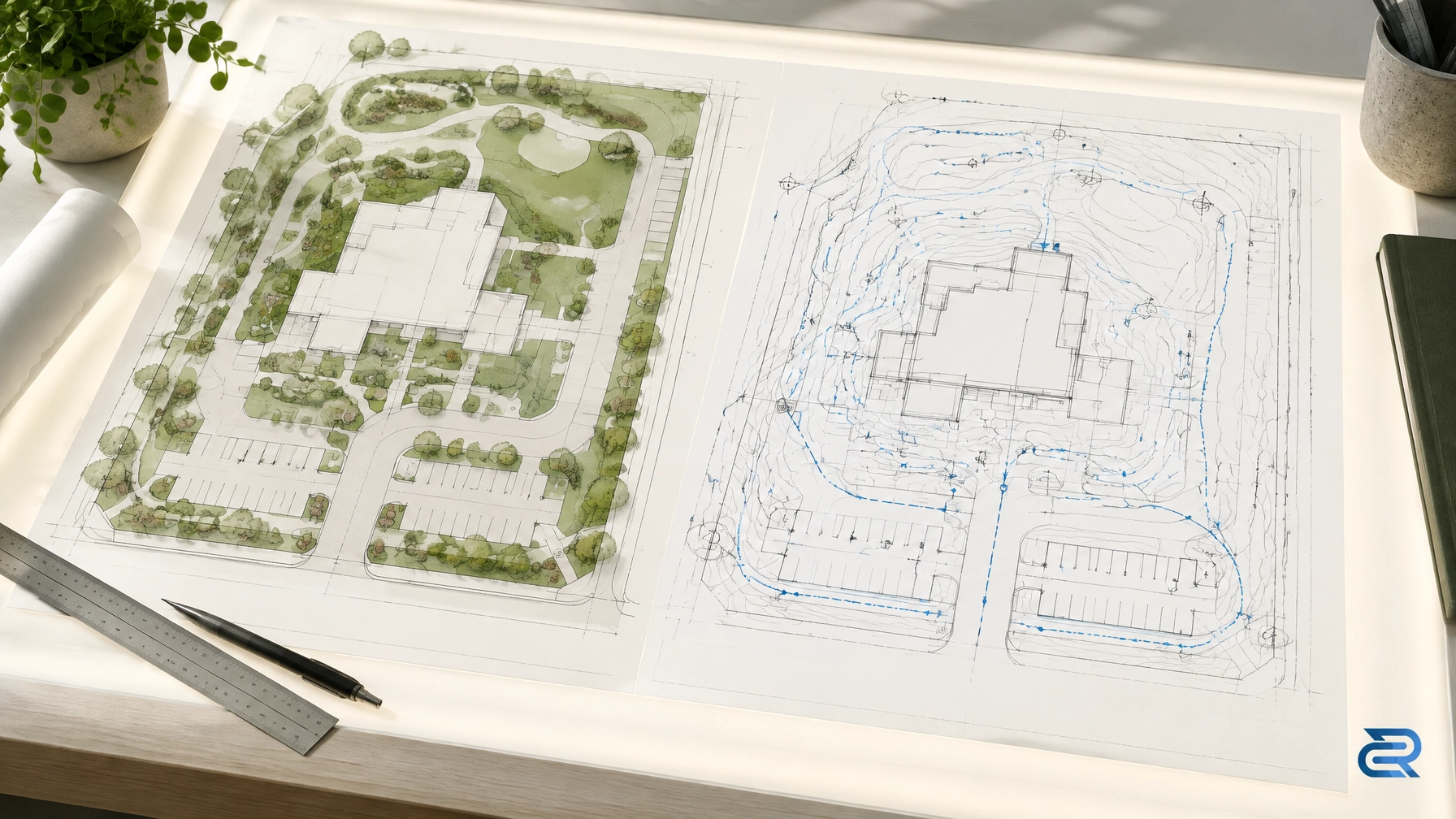
For a persistent or widespread problem, a current topographic survey can help confirm existing elevations and slopes. A site grading plan can document existing and proposed grades, drainage paths, catchbasins, swales and tie-ins to storm systems.
2. Check the simplest cause first: blocked inlet or catchbasin rim
Remove leaves, sediment and litter that are visibly obstructing an inlet, following the property’s maintenance procedures. If the water drains normally afterward, routine cleaning may be the appropriate response.
If the grate is clear but water still reaches it slowly, check the catchbasin rim against the adjacent pavement. Settlement, a raised rim or a poorly finished asphalt edge can prevent runoff from entering. A targeted adjustment may solve the problem without resurfacing a large area.
Do not assume that changing a rim is automatically a maintenance-only task. Confirm the structure, outlet and applicable property requirements before work proceeds. If cleaning or a rim adjustment does not improve drainage, move on to the surface geometry.
3. Confirm whether the asphalt still has positive drainage
A parking lot can have a functioning catchbasin and still pond if the pavement does not slope toward it. Settlement, patching, wear or construction tolerances can create a local low area or interrupt the intended drainage path.
A site review should compare actual pavement elevations with the intended grade and check how water moves across parking stalls, drive aisles and pedestrian areas. Municipal grading criteria vary. For instance, Barrie’s lot-grading standard includes parking-area slope guidance, but its figures should not be assumed to apply in other Ontario municipalities.
Where the problem is confined to a defined section, asphalt regrading or localized pavement reconstruction may restore positive drainage. The design needs to account for surrounding grades, catchbasin elevations, accessible routes, entrances and transitions. Simply adding asphalt over a low area can shift the problem elsewhere or leave an inadequate slope.

4. Add drainage only when the layout requires it
If water cannot reach an existing inlet without an impractical or unsafe surface slope, an area drain or additional catchbasin may be appropriate. This can be a better solution than extensive pavement work, but it introduces infrastructure that must connect to an approved outlet and be coordinated with the existing storm system.
Before adding an inlet, confirm where its flow will go and whether the downstream system can accept it. A stormwater review may be needed to assess runoff, storage, release rates or treatment requirements. Reliance Engineering’s stormwater management reports address site runoff, quantity control, water quality and overland flow where required.
5. Check whether a swale or overland flow route is needed
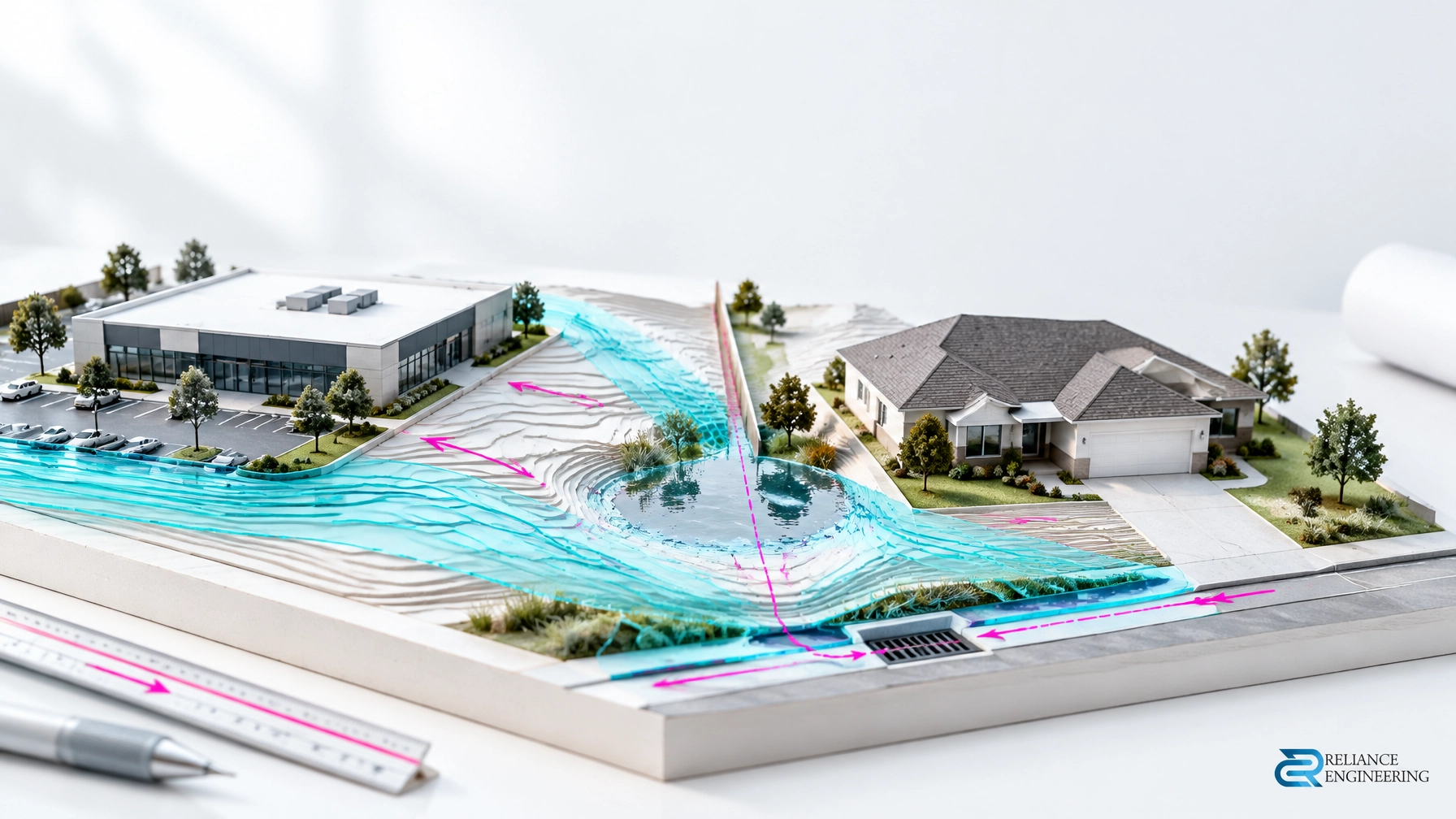
Some sites need a defined route to carry runoff safely toward an inlet, storm system or other approved outlet. A properly designed swale may direct water around a building or across a suitable landscaped area. An overland flow route can provide a planned path when the underground system is at capacity or unavailable.
These routes must work with the entire site. Consider building entrances and finished-floor elevations, pedestrian and vehicle movement, neighbouring lands, and the receiving point. The goal is not to move ponding to a new location. It is to establish buildable grading and a clear, coordinated drainage route.

6. Investigate subsurface causes when surface fixes do not fit
Not all ponding comes from the pavement. Water that returns after surface repairs, appears during the same season each year or seems to seep upward may indicate a subsurface condition. Possible factors include a high water table, compacted fill that limits infiltration, or frost and spring-thaw effects.
These conditions require a different investigation than ordinary surface ponding. Depending on the site, further assessment may include reviewing construction history and soil information, checking drainage structures, or arranging appropriate geotechnical investigation. Adding catchbasins or regrading asphalt alone may not address the source.
7. Confirm approvals before changing grades
Municipal lot-grading criteria and site alteration requirements differ across Ontario. Before changing grades, check the local municipality’s engineering standards and applicable approval process. A grading change may require review or a permit under a municipal site alteration by-law, particularly where it could affect drainage or alter the land.
Conservation Authority requirements may also apply where a property is within a regulated area. Ontario’s O. Reg. 41/24 addresses prohibited activities, exemptions and permits under the Conservation Authorities Act. Check with the relevant Authority to confirm whether the proposed work requires permission; municipal approval does not replace a required Conservation Authority permit.
For a commercial property grading fix, permit-ready drawings may need existing and proposed elevations, drainage routes, catchbasin and area-drain locations, and relevant stormwater information. The level of detail depends on the work and the reviewing authority.
Match the fix to the cause
A practical decision sequence is:
- Water drains after cleaning: Maintain the inlet and monitor.
- The inlet is clear, but the rim interferes with flow: Assess a targeted rim adjustment.
- The pavement has a confirmed low point or broken slope: Consider targeted asphalt regrading.
- The surface cannot drain safely to existing inlets: Assess area drains, catchbasin additions or a swale.
- Water returns despite surface and inlet corrections: Investigate subsurface and seasonal conditions.
The right solution depends on measured site conditions, municipal criteria and the approved drainage outlet, not just the visible puddle. A coordinated review can help avoid paying for a surface repair when the underlying cause is elsewhere.
Need help diagnosing ponding on your property?
Reliance Engineering prepares practical designs and clear drawings for site grading and drainage across Ontario. We review existing and proposed elevations, parking-lot grades, overland flow routes and municipal requirements, and provide approval support where required.
Contact Reliance Engineering for a consultation about commercial parking lot drainage Ontario, ponding solutions or commercial property grading fixes.
Contact and professional credentials
Naresh Ochani, P.Eng., M.Eng.
PEO Certificate of Authorization: 100548882
Reliance Engineering Canada Limited
6850 Millcreek Dr, Mississauga, ON L5N 2H4
Phone: 647-385-6418 | Email: [email protected]
Office hours: Mon–Fri 9:00 AM–5:00 PM, Saturday 12:00 PM–2:00 PM, Sunday Closed