Article type: Practical drainage guide
Topic: Ontario grading and drainage
Published: October 13, 2026 · 8:00 AM
Service area: Across Ontario
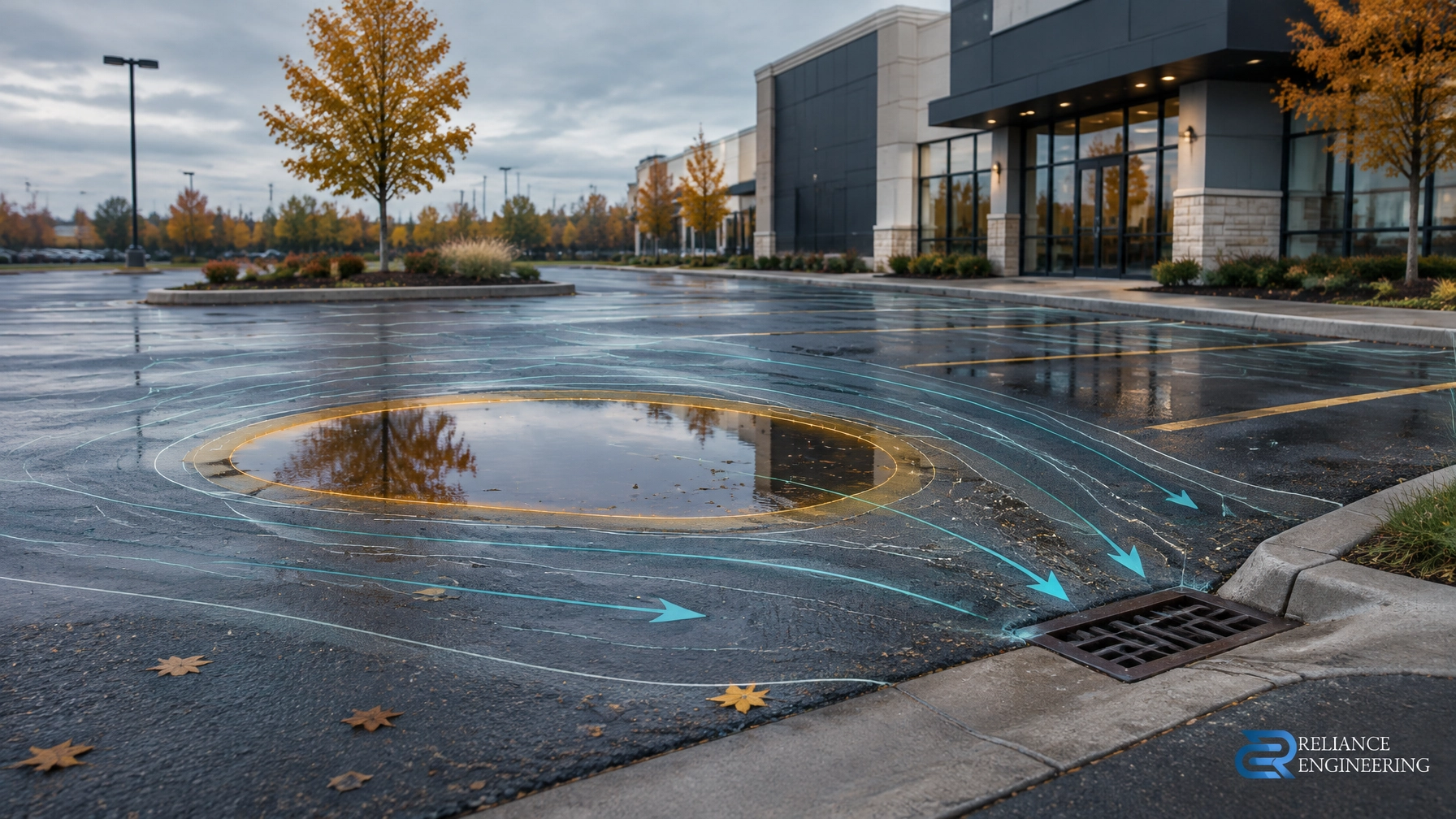
Water that remains in a commercial parking lot after rain or snowmelt can become a safety and maintenance concern as temperatures fluctuate. Before freeze-thaw cycles begin, identify why the water is collecting. The right repair depends on the surface grades, catchbasins, storm system and the site’s approved drainage design, not simply on adding a layer of asphalt.
Start with the drainage pattern
Observe the lot during rainfall or snowmelt. Note where water collects, how long it remains, and whether it flows toward a building, entrance, pedestrian route, neighbouring property or public road. Photograph recurring problem areas and mark their locations on a site plan, if available.
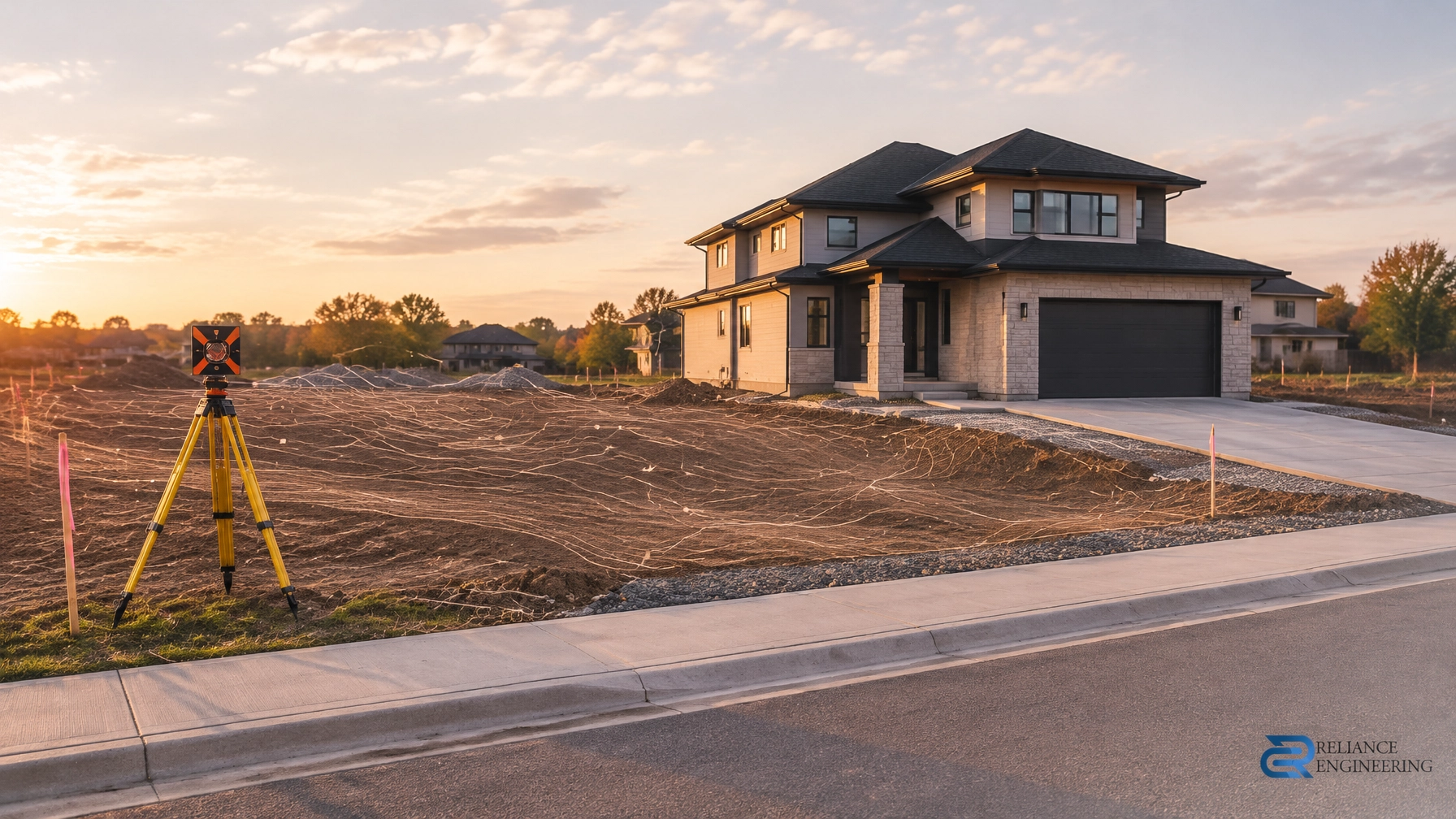
A survey of pavement, curbs, entrances, catchbasin rims, building openings and property boundaries can confirm whether the surface has the intended slopes. Compare the measured conditions with the approved grading plan and municipal requirements. This provides a factual starting point for commercial property grading fixes.
Common causes of ponding
- Settled asphalt or isolated low spots: Pavement may settle because of weak or poorly compacted base material, repeated vehicle loading or previous patching.
- Blocked or raised catchbasin rims: Debris, leaves and sediment can restrict an inlet. A rim set too high relative to the surrounding pavement may also prevent water from reaching it.
- Flat or inconsistent cross-slopes: A surface that has lost its intended fall can hold water between parking stalls, along curbs or in pedestrian areas.
- Roof leader discharge: Uncontrolled roof runoff can add water to paved areas instead of following a planned drainage route.
- Road and driveway tie-ins: A poor transition at an entrance may trap water, or direct it toward the site from the road.
- Winter wear: Snowplows, salt, water infiltration and repeated freezing and thawing can worsen cracks, surface damage and settlement.
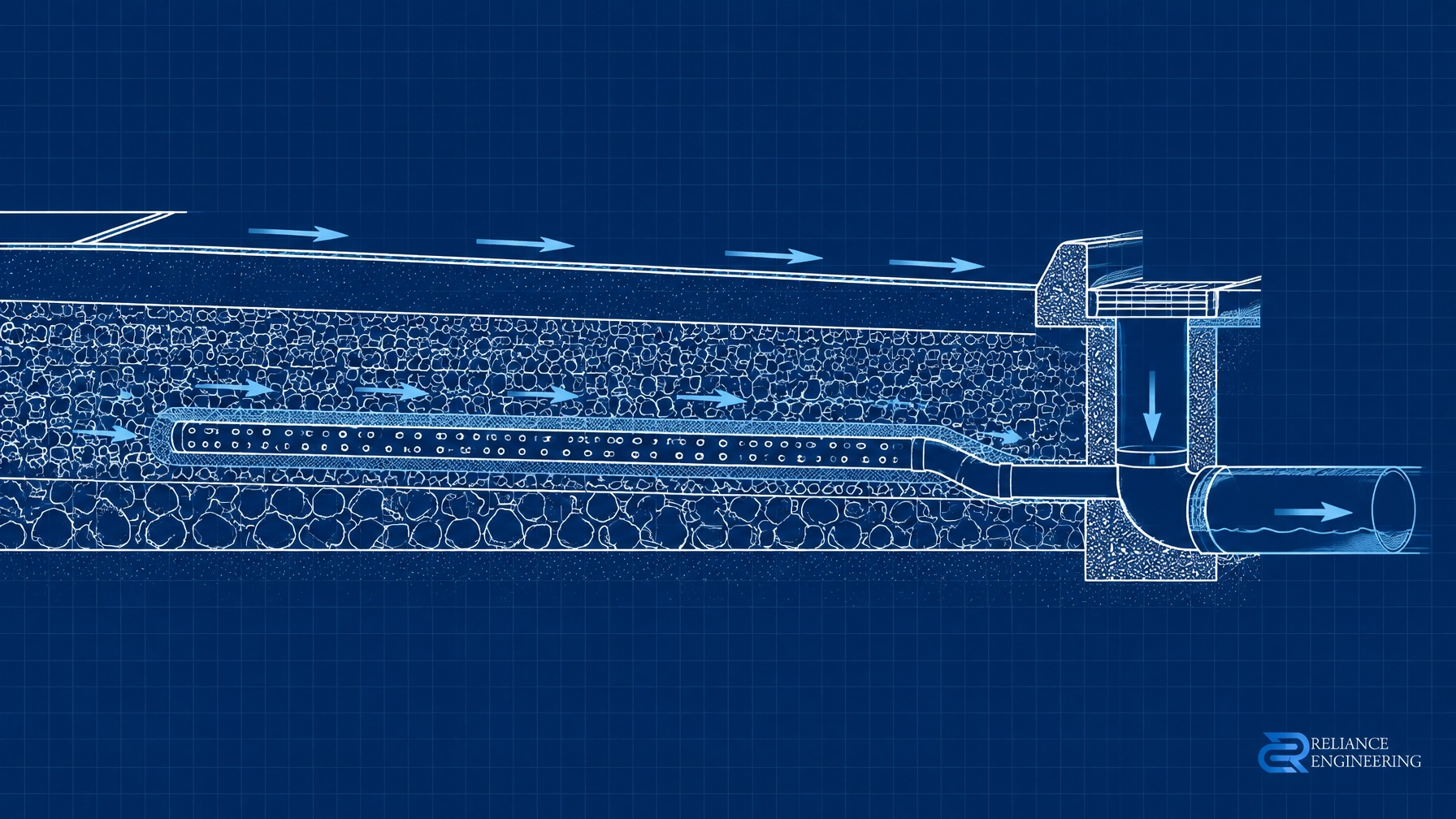
A catchbasin is only one part of the drainage system. The inlet, connecting lead, storm sewer and downstream outlet all affect performance. If water continues to pond despite a clear grate, the issue may be below the pavement or farther along the storm system.

Choose a repair that addresses the cause
A lasting repair begins with a drainage-focused approach. Confirm where water is meant to go, check whether the catchbasin and storm system can receive it, and identify any constraints at the building, property line or road connection.
Depending on the site, the repair may involve:
- Correcting cross-slopes and low points so pavement drains toward a planned collection point.
- Adjusting catchbasin locations or inlet elevations where the existing layout does not collect runoff effectively. Changes should be checked against the connecting pipe and municipal requirements.
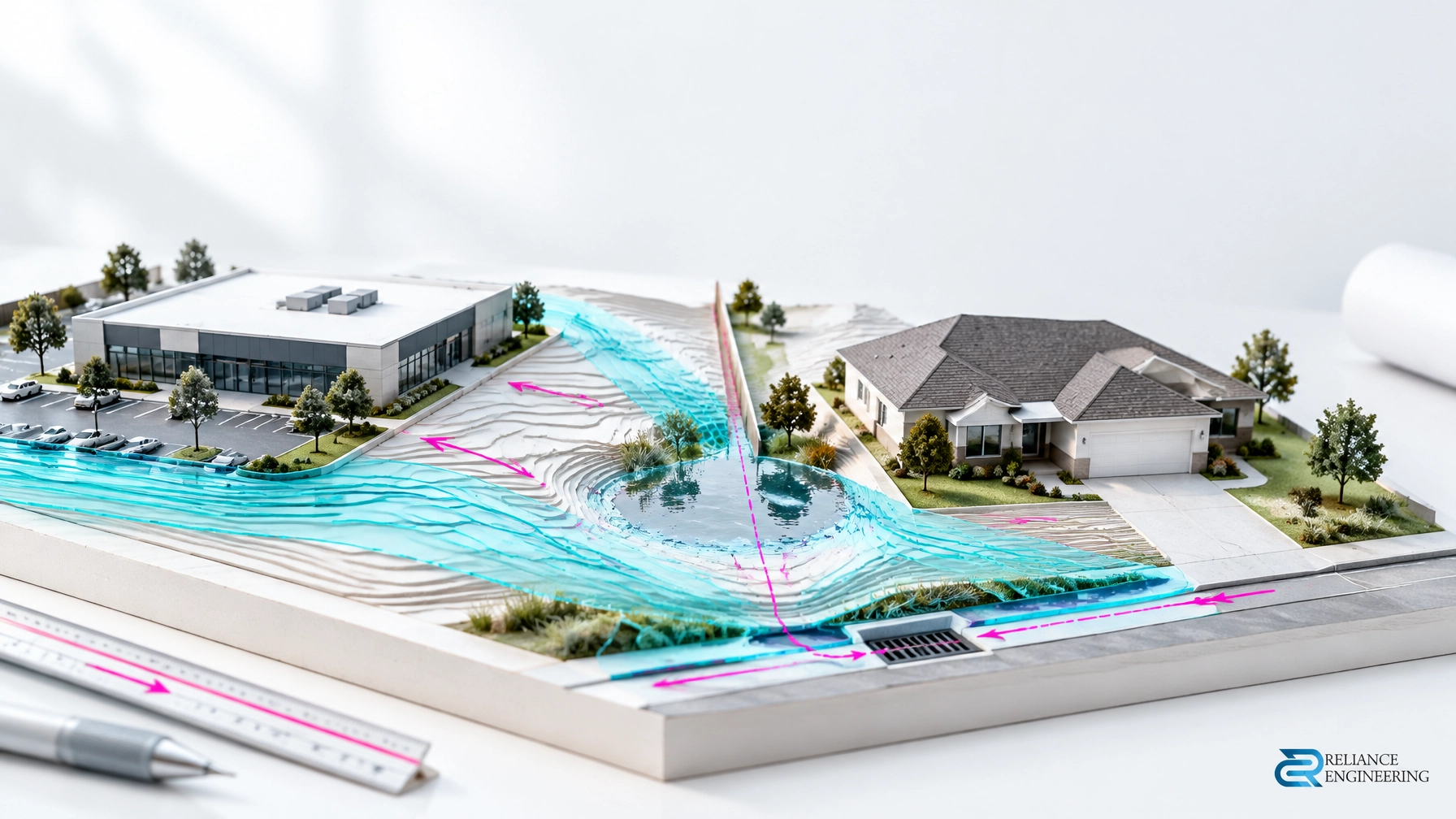
- Restoring swales and overland flow routes so excess runoff can move safely to an approved outlet rather than toward buildings or neighbouring lands.
- Localized asphalt regrading where a survey confirms a shallow surface depression and the underlying base is sound.
- Rebuilding pavement and granular base where settlement, poor compaction or frost-related movement has damaged the supporting layers.
- Considering subdrainage only where site, soil and groundwater conditions support it and the system can discharge to an approved outlet.
Simply paving over a low spot can leave the underlying cause unresolved. It may also raise the surface around catchbasins, curbs or entrances, or redirect runoff to another part of the property. The final grades should provide positive drainage while maintaining safe access and protecting adjacent properties.

Plan for Ontario’s freeze-thaw conditions
In Ontario, water left in pavement depressions can freeze and create slippery surfaces. Repeated freeze-thaw can also contribute to cracking and further deterioration, especially where water enters damaged asphalt or the supporting base.
Before winter, inspect catchbasins and remove surface debris through appropriate maintenance. Check whether snow-storage areas send meltwater toward busy pedestrian routes or low spots. Note whether ponding returns after a particular rain or melt event; that information can help distinguish a surface problem from a blockage or storm-system issue.
The Province’s Stormwater Management Planning and Design Manual discusses cold-climate design considerations, including ice-related impacts and the location of inlets and outlets. Its guidance is useful context, but a specific commercial lot repair must also meet the applicable municipal criteria and approved site design.
Municipal requirements vary across Ontario
There is no single set of commercial parking lot drainage Ontario requirements that applies identically in every municipality. Municipal engineering standards, lot-grading criteria, approved site-plan conditions and stormwater requirements can differ. Road and driveway tie-ins may also involve municipal right-of-way requirements.
For example, the City of Barrie’s Lot Grading and Drainage Infrastructure Design Standard describes a desirable parking-area surface grade of 2%–4%, with a minimum recommended grade of 1% for the commercial, institutional and industrial sites it addresses. These are Barrie criteria, not province-wide values. Confirm the current standards with the municipality responsible for the property before finalizing a repair.
Changing elevations or drainage paths may also require review under a municipal site alteration by-law. Where work is within a regulated area, Conservation Authority requirements may apply. Ontario’s O. Reg. 41/24 includes site grading and the placement or removal of material within its definition of development activity. Confirm whether the proposed work needs a permit before construction.
Control sediment during the repair
Pavement work, excavation and grading can send sediment into catchbasins, storm sewers, ditches, watercourses and neighbouring properties. An erosion and sediment control plan can specify measures such as catchbasin protection, construction access controls, silt fencing, stockpile protection, dewatering notes, and inspection and maintenance requirements.
Controls should suit the actual construction limits and drainage routes. They also need to remain effective while work is underway, not just appear on the drawing. Reliance Engineering prepares Erosion and Sediment Control Plans coordinated with site grading and storm servicing.

When to get a grading review
Consider a professional review if ponding repeatedly returns, water approaches a building, catchbasins overflow or appear ineffective, a driveway tie-in traps runoff, or a proposed repair could affect adjacent properties. A review can compare field elevations with the approved design, identify the likely drainage path and outline appropriate next steps.
Reliance Engineering prepares clear, permit-ready Site Grading Plans based on survey data, site conditions and applicable municipal standards. Plans can show existing and proposed elevations, overland flow routes, parking and driveway grades, catchbasins, swales and tie-ins to roads or storm systems. Where needed, grading can be coordinated with site servicing, stormwater management and construction controls.
Request a consultation before scheduling asphalt work. Contact Reliance Engineering to discuss ponding solutions for your commercial property and determine whether grading review or approval support is needed.
Contact and credentials
Naresh Ochani, P.Eng. M.Eng.
PEO Certificate of Authorization: 100548882
6850 Millcreek Dr, Mississauga, ON L5N 2H4
Phone: 647-385-6418
Email: [email protected]
Office hours: Monday–Friday 9:00 AM–5:00 PM; Saturday 12:00 PM–2:00 PM; Sunday Closed.