Article type: Practical guidance
Focus: ESC inspections, maintenance records and deficiency responses
Slug: esc-plan-inspections-ontario-maintenance-records
Naresh Ochani, P.Eng. M.Eng. | PEO Certificate of Authorization: 100548882 | Reliance Engineering Canada Limited | 6850 Millcreek Dr, Mississauga, ON L5N 2H4 | Phone: 647-385-6418 | Email: [email protected] | Hours: Monday–Friday 9:00 AM–5:00 PM; Saturday 12:00 PM–2:00 PM; Sunday Closed. Website: www.relianceengineering.ca.
An approved erosion and sediment control (ESC) plan only works when someone installs, inspects and maintains its controls. During construction in Ontario, inspectors assess site conditions, not just the drawing. A complete, current maintenance record is evidence that required controls were checked and deficiencies addressed.
1. Why maintenance documentation matters
Failed or neglected controls can allow sediment to leave the site, block catchbasins, muddy public roads and contribute to inspection failures. These are among the risks a well-designed ESC plan is intended to manage.
The record also demonstrates how the project team responded when a control was damaged, overwhelmed or no longer suited to site conditions. If problems remain unresolved, enforcement may escalate from a deficiency letter to a compliance order or stop-work direction. Depending on the applicable permit, agreement and securities, a municipality may also use security to address outstanding work.
These steps are not automatic or identical across Ontario. Municipal site alteration by-laws, permits, development agreements and Conservation Authority requirements set the project-specific process. Keep the approved plan and its maintenance and inspection notes available to the people responsible for the work.
2. What a proper ESC inspection covers
The inspection should compare field conditions with the approved plan and check whether each control is intact, effective and accessible for maintenance. At a minimum, review:
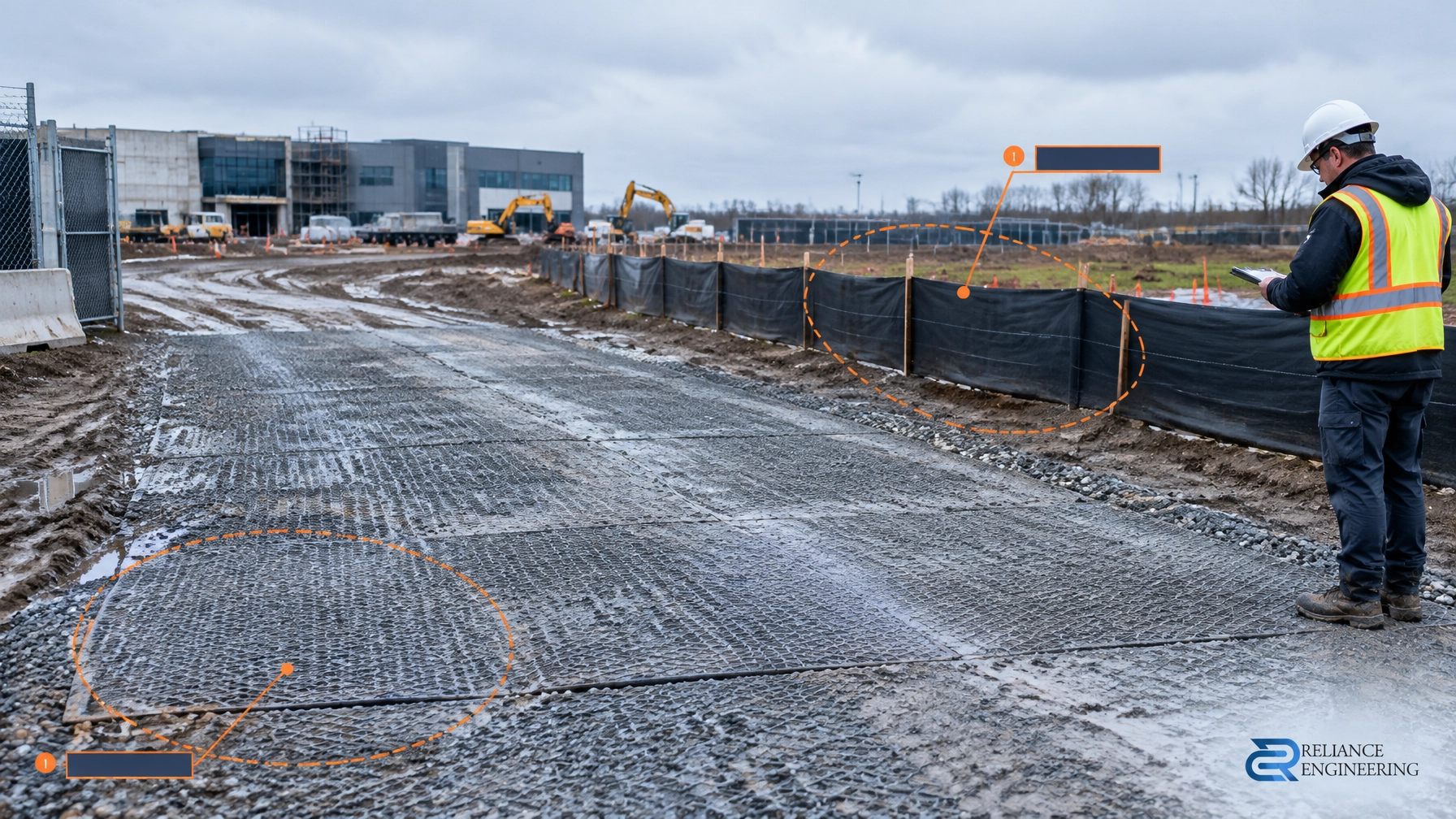
- Silt fence condition, anchoring, tears, undercutting and sediment accumulation.
- Mud mat and construction access condition, including whether vehicles are tracking soil onto public roads.
- Catchbasin protection and evidence of sediment entering or obstructing the inlet.
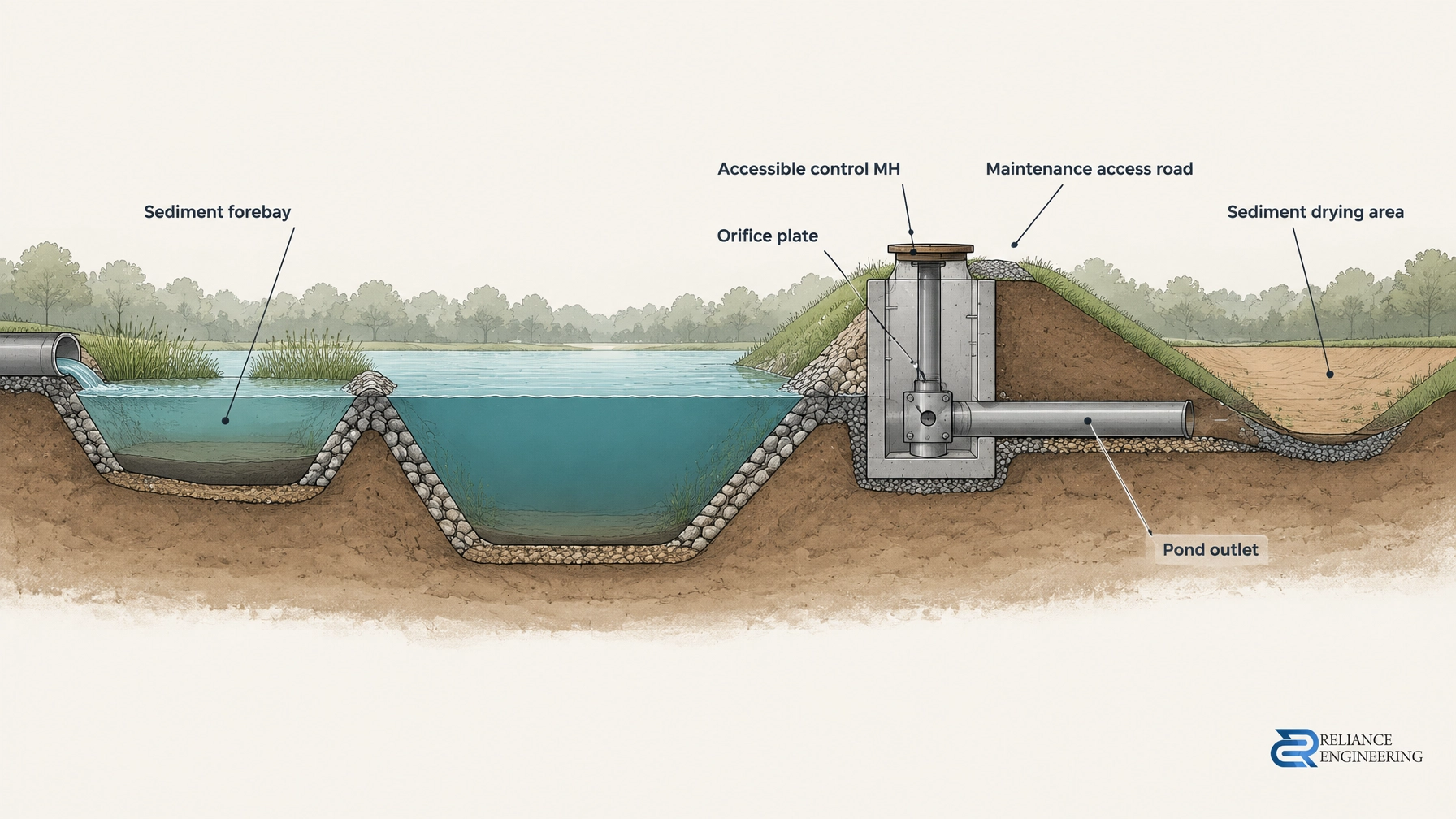
- Sediment traps and check dams for damage, bypass flow, accumulated sediment or reduced capacity.
- Stockpile protection, including perimeter controls and cover where required.
- Dewatering controls, discharge points and signs of erosion or sediment release.
- Construction limit fencing and other measures protecting areas outside the approved work zone.
- Track-out on public roads and the need for prompt cleanup.

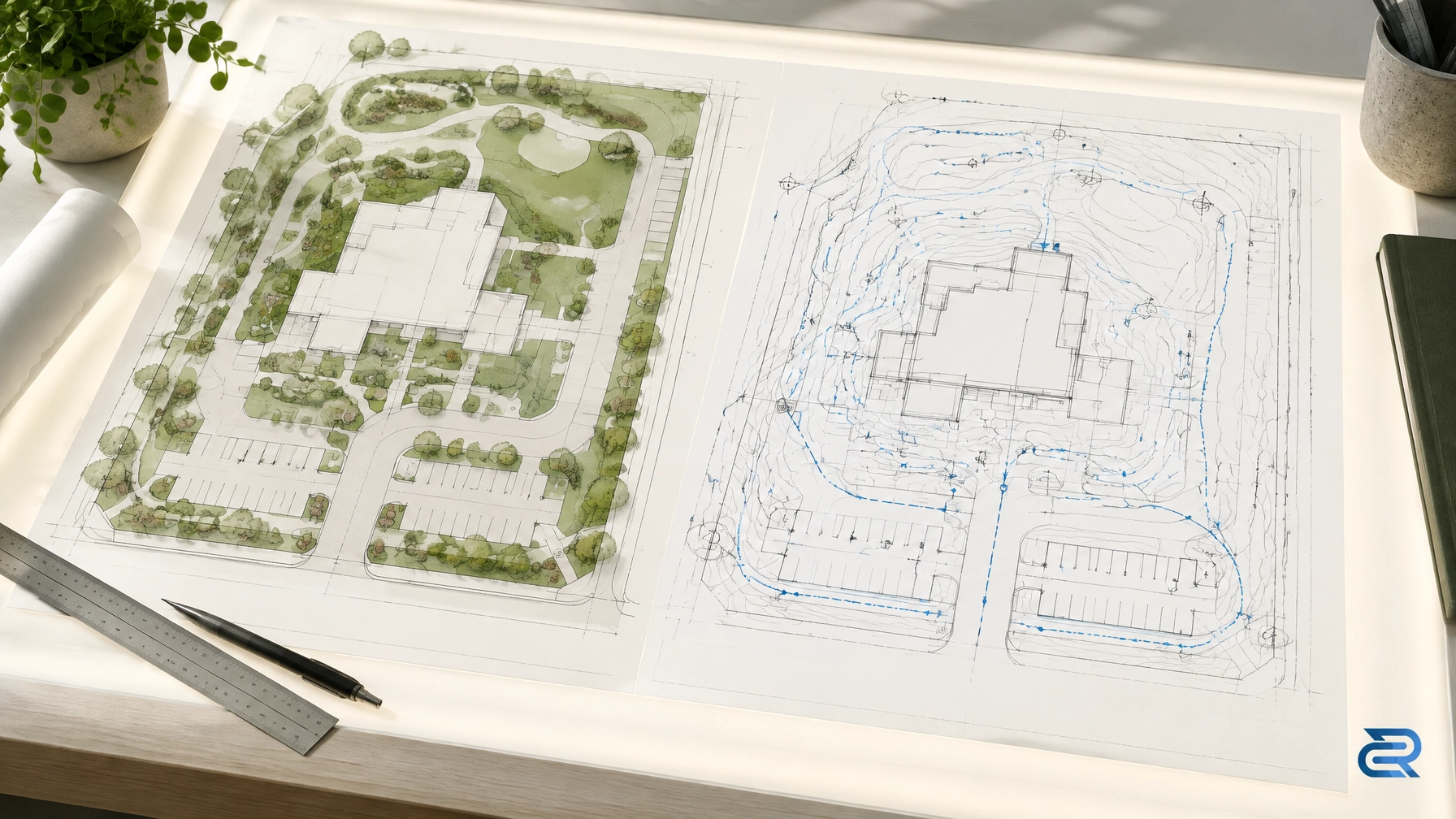
For a parking lot reconstruction, check how runoff moves through the active work area as surfaces change. Coordinate temporary controls with the grading design, construction access and drainage paths. A drainage-focused approach helps maintain positive drainage and protect overland flow routes while the site is under construction. The same coordination matters when work involves asphalt regrading, ponding solutions or commercial property grading fixes.
3. Inspection triggers and frequency
Assign a named person to inspect the site on a routine schedule while construction is active. A practical baseline is at least weekly, with additional inspections before forecast rainfall and after rainfall events. During prolonged rain or snowmelt, more frequent checks may be needed.
The Grand River Conservation Authority’s ESC inspection guide, for example, describes weekly inspections and checks before and after rainfall, as well as additional attention during extended wet weather. It is useful guidance, not a universal rule for every Ontario project.
Specific inspection frequencies, forms and securities or holdbacks vary by municipality and Conservation Authority. Confirm the requirements in the approved ESC plan, permits, site alteration by-law, development agreement and any applicable Conservation Authority permission. Do not assume a routine weekly inspection replaces a required post-rainfall check.

4. What an inspection record must contain
Use a consistent log that links observations to the approved plan and shows what happened next. A useful record includes:
- Inspection date and time, inspector’s name and role.
- Weather conditions and rainfall or snowmelt trigger, where relevant.
- Each control inspected and its condition.
- Sediment escape, blocked inlets, bypass flow, track-out or other issues observed.
- Corrective action, the person responsible and the deadline.
- Completion date and evidence that the issue was closed.
- Dated photographs tied to identifiable locations on the plan.
Photos are most useful when they show context as well as detail. Take them from repeatable viewpoints, identify the relevant control or plan location in the log, and retain before-and-after images when repairs are needed. Keep records on site or in an accessible project system so the contractor, owner and inspector can review the same information.
5. Responding to a municipal or Conservation Authority deficiency letter
Treat a deficiency letter as a task with an owner and deadline. Assess the site within days, not weeks, and follow any shorter response period stated in the notice.
- Review the notice and approved plan. Identify the affected control, location, requirement and response deadline.
- Inspect the area promptly. Record current conditions and determine whether there is an active discharge or immediate risk.
- Correct the deficiency. Repair, replace or supplement the control as appropriate. If the approved approach needs a design change, confirm the required review before altering it.
- Document the work. Photograph the condition before and after correction, record who completed the work and enter the close-out date.
- Reply in writing. Refer to the deficiency item and the relevant ESC plan sheet. State what was corrected and attach supporting records.
- Update the maintenance log. Ensure the contractor’s log, photographs and written response agree.
If a notice includes a compliance order or stop-work direction, follow its terms and obtain appropriate professional or legal advice where needed. A written response is not a substitute for completing the required corrective work. Keep communication with the municipality or Conservation Authority factual and timely.

6. End-of-project consequences
Missing inspection or maintenance records can complicate final inspection and delay grading deposit or security release. Municipalities may require outstanding deficiencies to be corrected, temporary controls to be properly stabilized or removed, and final grading or drainage requirements to be met before sign-off. Requirements depend on the applicable permit and agreement.
A weak record makes it harder to demonstrate when controls were maintained, whether problems were corrected, and whether the site was kept compliant through construction. The ESC plan’s maintenance and inspection notes are not boilerplate: once incorporated into an approval or permit condition, they are part of the project’s obligations.
At close-out, organize inspection logs, rainfall checks, dated photos, deficiency responses and evidence of final stabilization alongside the required grading documents. Coordinating ESC with site grading plans, stormwater management reports and site plan approval drawings can make field responsibilities and close-out requirements clearer.
Pre-construction checklist
- Assign inspection responsibility in writing, including who covers absences.
- Build routine and rainfall-triggered inspections into the construction contract.
- Keep repair materials and replacement controls available on site.
- Photograph controls at installation, after repairs and at key construction milestones.
- Coordinate the ESC plan with grading, staging, access and drainage paths.
- Keep current permit-ready drawings with the engineer’s stamp available on site.
Takeaway
An ESC plan is an ongoing site-management commitment. Regular inspections, clear maintenance records and prompt, documented responses help protect catchbasins, roads and neighbouring properties, and support a smoother path to final inspection and security release. Confirm project-specific requirements with the municipality and Conservation Authority before work begins.
Consultation
Reliance Engineering can review an ESC plan or assist with a response to municipal or Conservation Authority comments before deficiencies escalate. We prepare practical designs, clear drawings and approval support for projects across Ontario.
Contact Reliance Engineering to discuss your site or request a consultation.
Naresh Ochani, P.Eng. M.Eng. | PEO Certificate of Authorization: 100548882 | Reliance Engineering Canada Limited | 6850 Millcreek Dr, Mississauga, ON L5N 2H4 | Phone: 647-385-6418 | Email: [email protected] | Hours: Monday–Friday 9:00 AM–5:00 PM; Saturday 12:00 PM–2:00 PM; Sunday Closed. Website: www.relianceengineering.ca.