For real estate investors in Ontario, time is the ultimate currency. Every day your project sits in the "permitting phase" is a day you are paying interest without seeing a return. Navigating the intersection of municipal bureaucracy and technical civil engineering is where most projects either thrive or stall.
At Reliance Engineering, we’ve spent over 20 years helping clients clear these hurdles. Whether you are working on a residential severance or a large-scale industrial-commercial-institutional (ICI) development, understanding the flow of Ontario building permits and the critical role of a Site Servicing Plan is non-negotiable.
This guide breaks down the process into five actionable steps to get your project from a blueprint to a shovel-in-the-ground reality.
Step 1: Due Diligence and Zoning Compliance
Before you spend a dime on architectural drawings, you must know what the land allows. Ontario’s Planning Act governs land use, and every municipality has its own Official Plan and Zoning Bylaws.
As an investor, you need to ask:
- Is the use permitted? Check the current zoning. If not, you may need a Zoning By-law Amendment (ZBA) or an Official Plan Amendment (OPA).
- Are there restrictions? Check for conservation authority (TRCA, CVC, etc.) overlays or heritage designations.
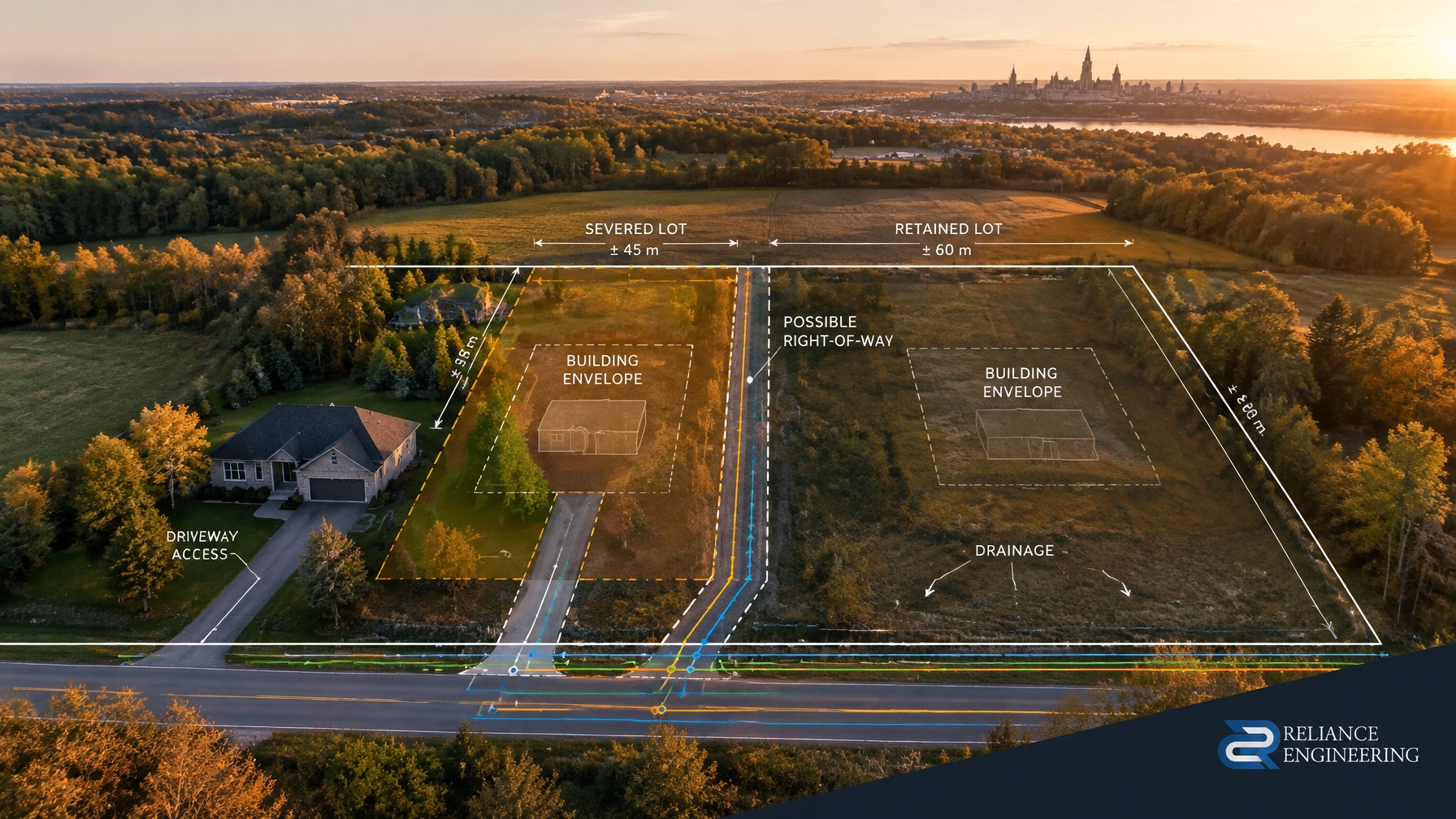
- Can the land be split? If you’re looking to divide a lot, you’ll need a Severance Application (Consent).
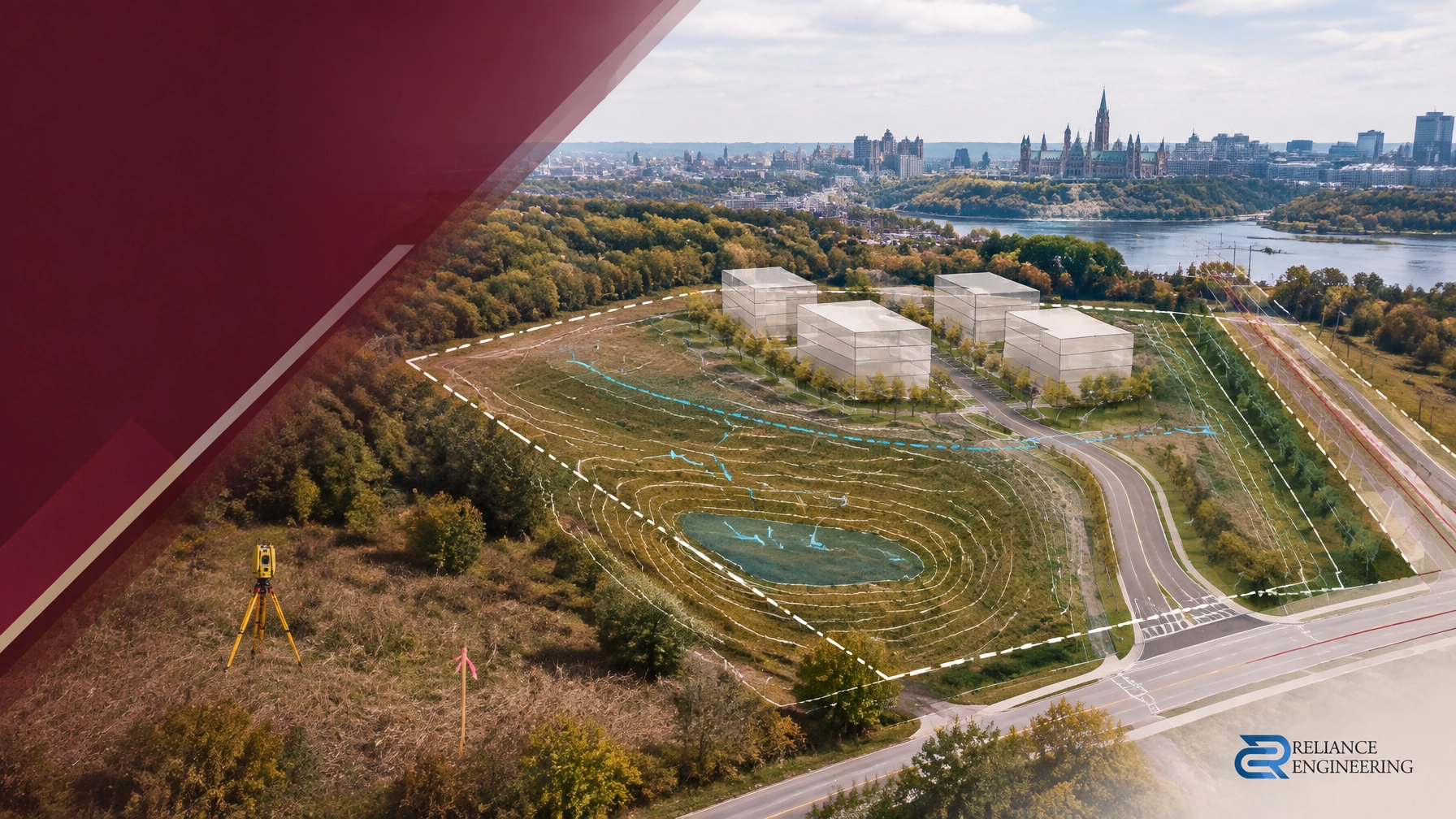
This stage is where a preliminary consultation with a civil engineer is vital. We look at the "bones" of the property: topography, existing utilities, and municipal capacity: to ensure your vision is physically and legally possible.
Step 2: The Functional Servicing Report (FSR)
In Ontario, you cannot get a building permit for a significant development without proving that the existing municipal infrastructure can handle your project. This is where the Functional Servicing Report (FSR) comes in.
An FSR is a comprehensive document that outlines how your site will be provided with water, sanitary sewer, and storm drainage. For investors, the FSR is a "make or break" document. If the local water main is undersized for your proposed high-density residential building, you might be on the hook for massive infrastructure upgrades.
Key components of an FSR include:
- Water Servicing: Analysis of domestic and fire flow requirements.
- Sanitary Servicing: Calculation of peak sewage flows.
- Stormwater Management: How you will handle rain and snowmelt.

Step 3: Mastering Stormwater Management and Site Grading
Once the "function" is established, we move into the detailed design. This involves two critical documents: the Stormwater Management Report (SWMR) and the Site Grading Plan.
Stormwater Management (SWM):
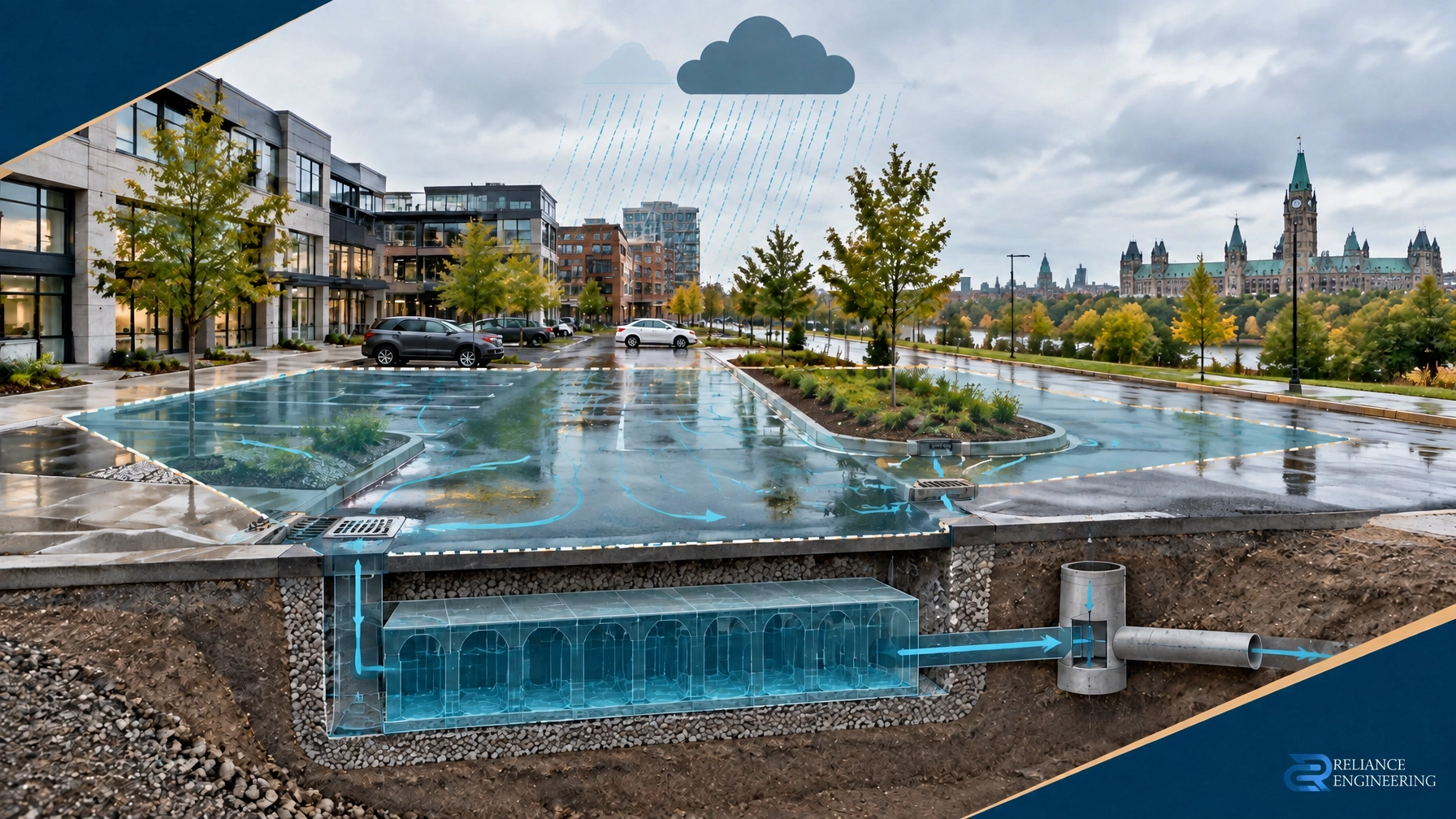
Ontario municipalities are strict about SWM. You generally cannot release more water off your site after development than occurred before development. This requires creative engineering: underground storage tanks, oil-grit separators, or bioswales: to control quantity and quality.
Site Grading:
A Site Grading Plan ensures that water flows away from your building and doesn't flood your neighbor's property. It also determines the "finished floor elevation" of your building. Get this wrong, and you face basement flooding or accessibility issues that could lead to costly litigation.
Step 4: The Site Servicing Plan and Site Plan Approval (SPA)
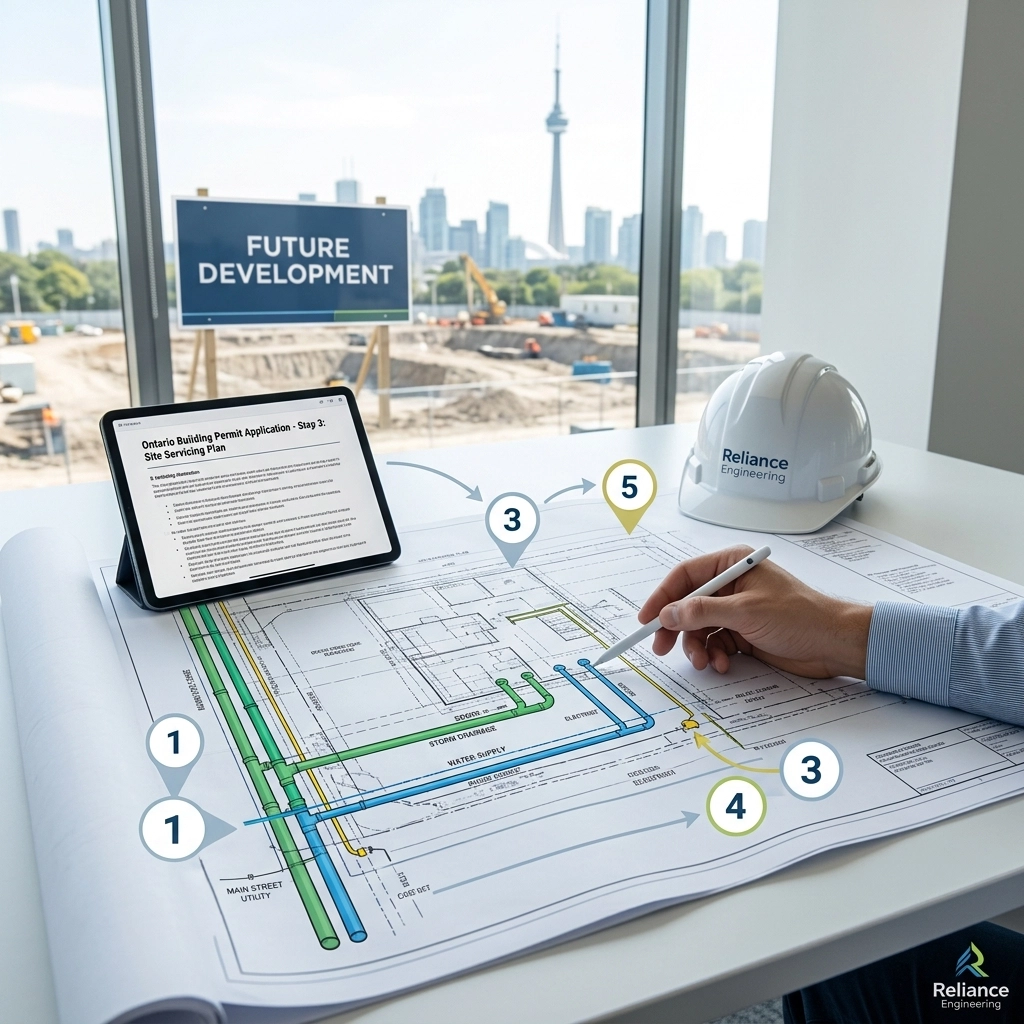
The Site Servicing Plan is the technical drawing that shows exactly where every pipe, valve, and connection will go. It bridges the gap between the engineer’s calculations and the contractor’s shovel.
For most multi-unit or commercial projects in Ontario, you must go through Site Plan Approval (SPA). This is a collaborative process where the municipality reviews your site layout, landscaping, grading, and servicing.
Pro-Tip for Investors: The SPA process is often the longest part of the development timeline. Having a permit-ready Site Servicing Plan that anticipates municipal objections can shave months off your schedule. We focus on providing cost-effective designs that meet Ontario Building Code (OBC) standards without over-engineering your budget.

Step 5: Building Permit Application and Inspections
With your Site Plan Approved and your engineering drawings finalized, you can finally submit your Building Permit Application.
In Ontario, a complete application package usually includes:
- Architectural Drawings (floor plans, elevations).
- Structural Drawings.
- Mechanical/Electrical Drawings.
- The Site Servicing Plan and Grading Plan.
- The Erosion and Sediment Control (ESC) Plan (to keep dirt off municipal roads during construction).
Once the permit is issued, construction begins. However, the process isn't over. You must call for inspections at key milestones. From a civil perspective, the municipality will want to inspect the sanitary and storm connections before they are buried. Finally, once construction is done, an engineer must often provide a Grading Certification to confirm that the site was built according to the approved plans. Only then can you "close" the permit.
Why Experience Matters in Ontario Land Development
The Ontario regulatory landscape is a maze of overlapping jurisdictions. A mistake in your Sanitary Sewer Design or a failure to account for Storm System Design can result in "stop-work orders" and mounting costs.
At Reliance Engineering, we specialize in cutting through the red tape. We provide investors across Ontario with the technical expertise needed to secure approvals quickly. From 35 Wabash Avenue in Toronto to hospital redevelopments in Etobicoke, our portfolio speaks to our ability to handle complex urban challenges.
Stop Guessing. Start Building.
Don't let your investment capital sit idle while you struggle with municipal comments. Partner with a firm that understands the Ontario Building Code and municipal standards inside and out.
Contact Reliance Engineering today for a consultation.
Corporate Information
Company Name: Reliance Engineering
Address: 6850 Millcreek Dr, Mississauga, ON L5N 2H4
Phone: 647-385-6418
Email: [email protected]
Website: www.relianceengineering.ca
Principal Consultant:
Naresh Ochani, P.Eng. M.Eng.
Office Hours:
- Saturday: 12:00 PM – 2:00 PM
- Sunday: Closed
- Monday – Friday: By Appointment
Our Core Services Across Ontario:
- Functional Servicing Reports (FSR)
- Site Grading Plans
- Site Servicing Plans
- Stormwater Management Reports (SWMR)
- Site Plan Approval (SPA) Coordination
- Zoning and Severance Support

Disclaimer: This guide is for informational purposes only. Local municipal requirements may vary. Always consult with a licensed Professional Engineer (P.Eng.) before proceeding with land development activities in Ontario.