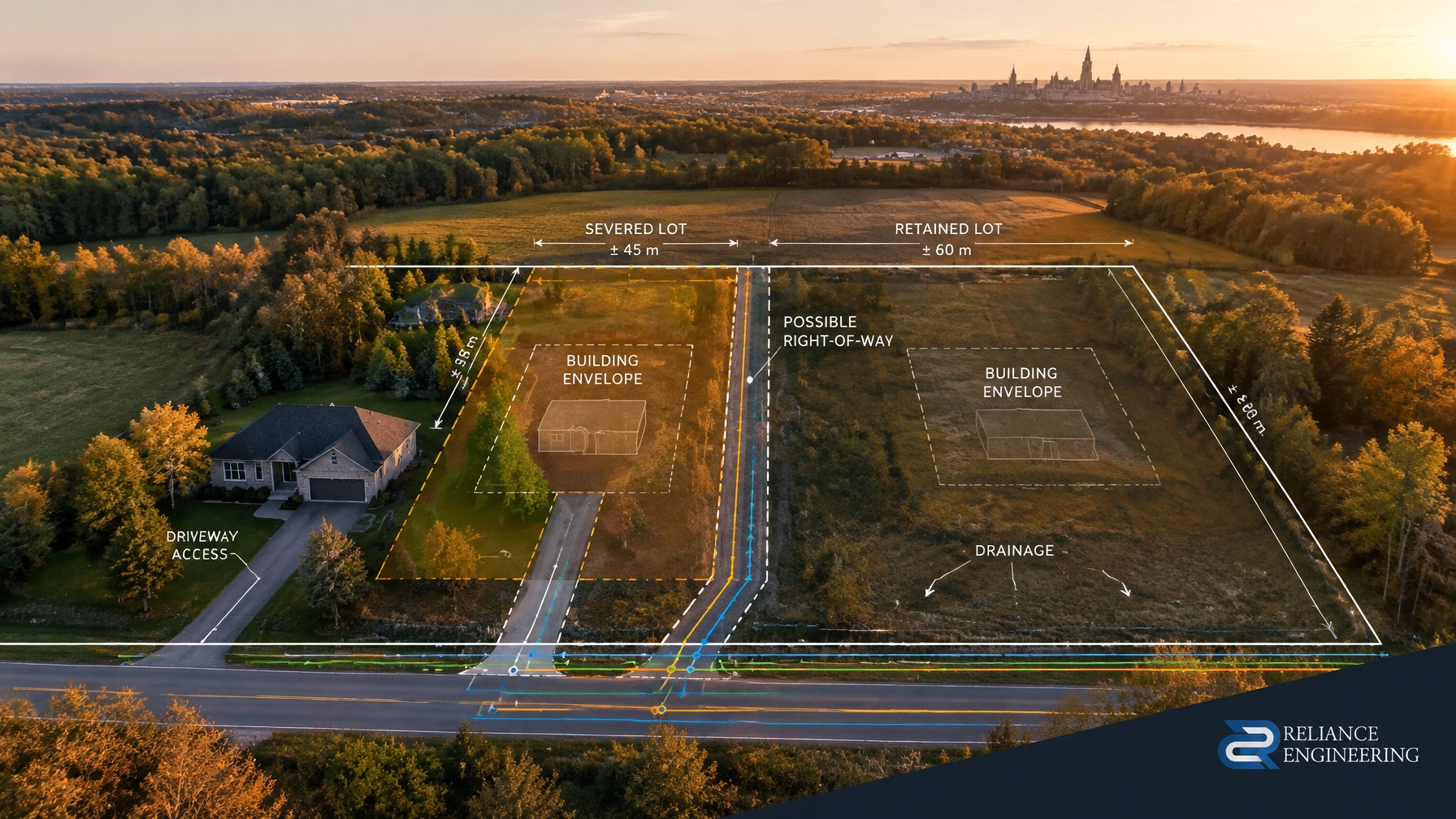
Time is money in Ontario real estate. If you are sitting on a development project, the last thing you want is a "Incomplete Submission" notice from the municipality.
The Functional Servicing Report (FSR) is the gatekeeper. It is the technical backbone of your application. It tells the City exactly how your project connects to their world. If the FSR fails, the project stops.
At Reliance Engineering, we don’t do fluff. We do results. Here are the 10 hard facts you need to know about Functional Servicing Reports before you hit "submit."
1. Know Your Triggers: When Is It Required?
Don't guess. A Functional Servicing Report is usually triggered when a development increases the load on water, wastewater, or stormwater infrastructure.
Across Ontario, if you are filing for:
- Official Plan Amendments (OPA)
- Zoning By-law Amendments (ZBA)
- Draft Plans of Subdivision
- Site Plan Control (SPA)
…you likely need an FSR. Check your pre-consultation notes. If you haven't had a pre-con yet, start here with our site plan approval guide.
2. It’s All About Capacity
The City’s primary concern isn’t your building: it’s their pipes. The FSR must prove that the existing municipal infrastructure can handle your project.
We evaluate:
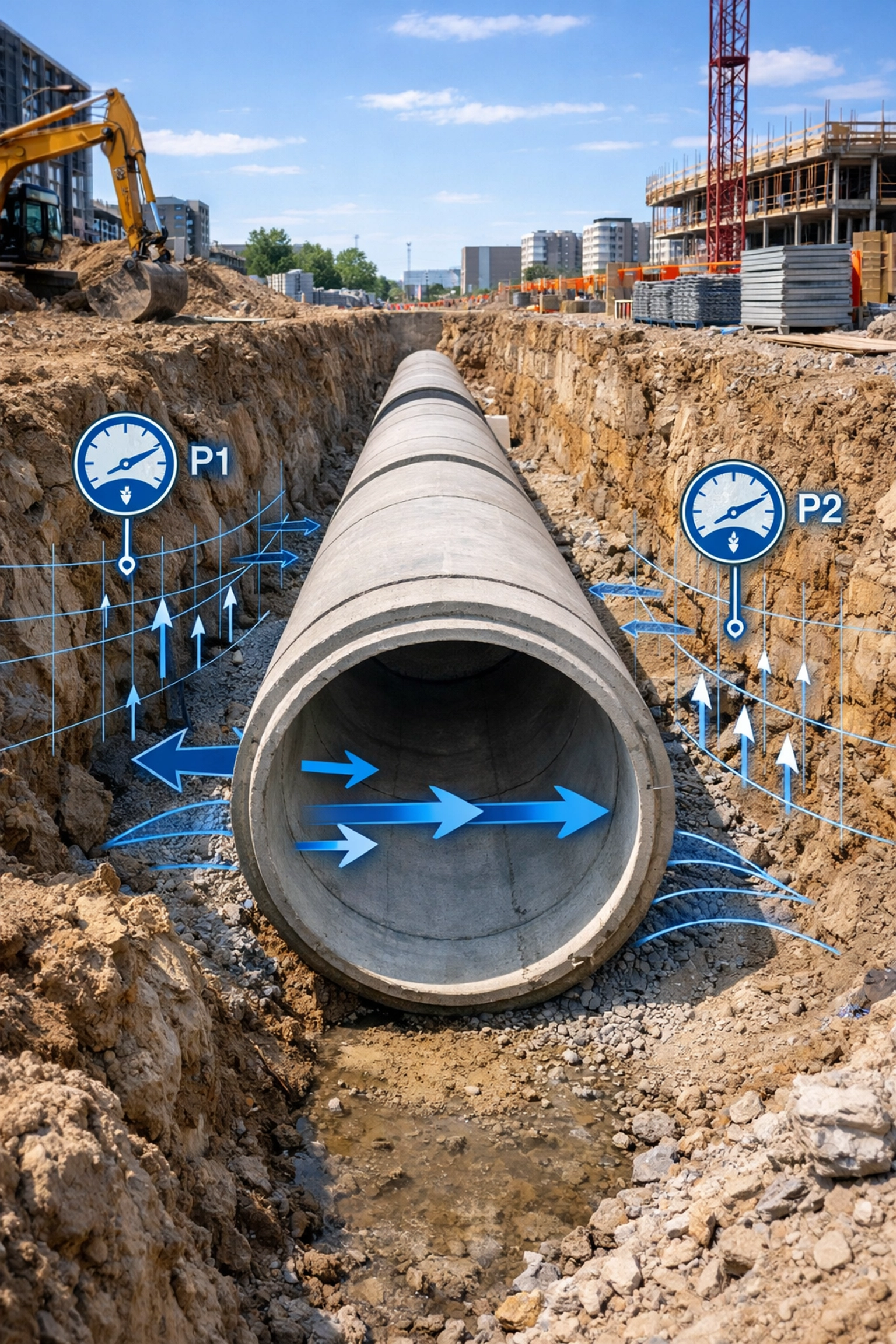
- Water Distribution: Is there enough pressure for fire protection and daily use?
- Sanitary Sewers: Can the local pipes take the extra flow?
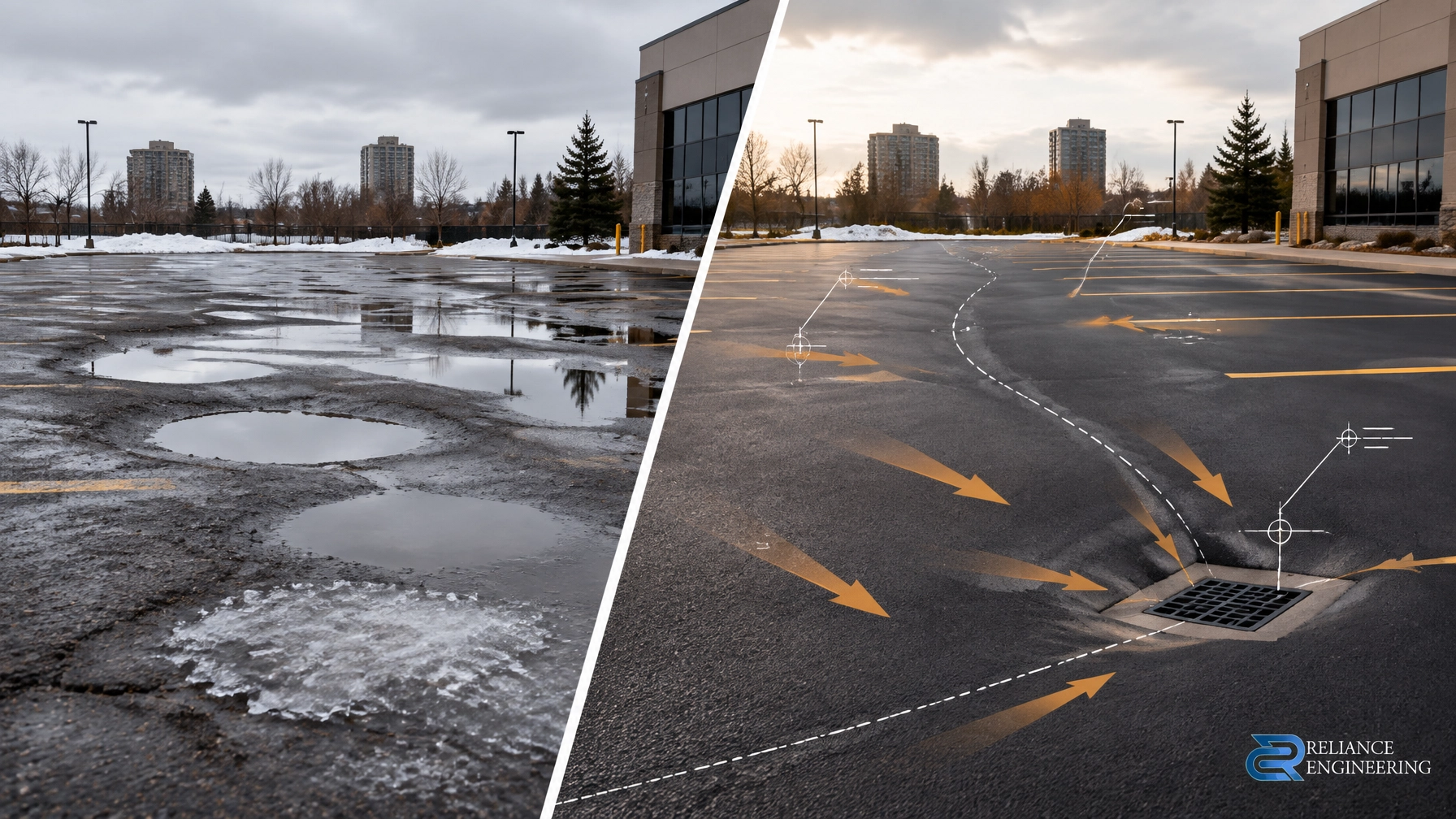
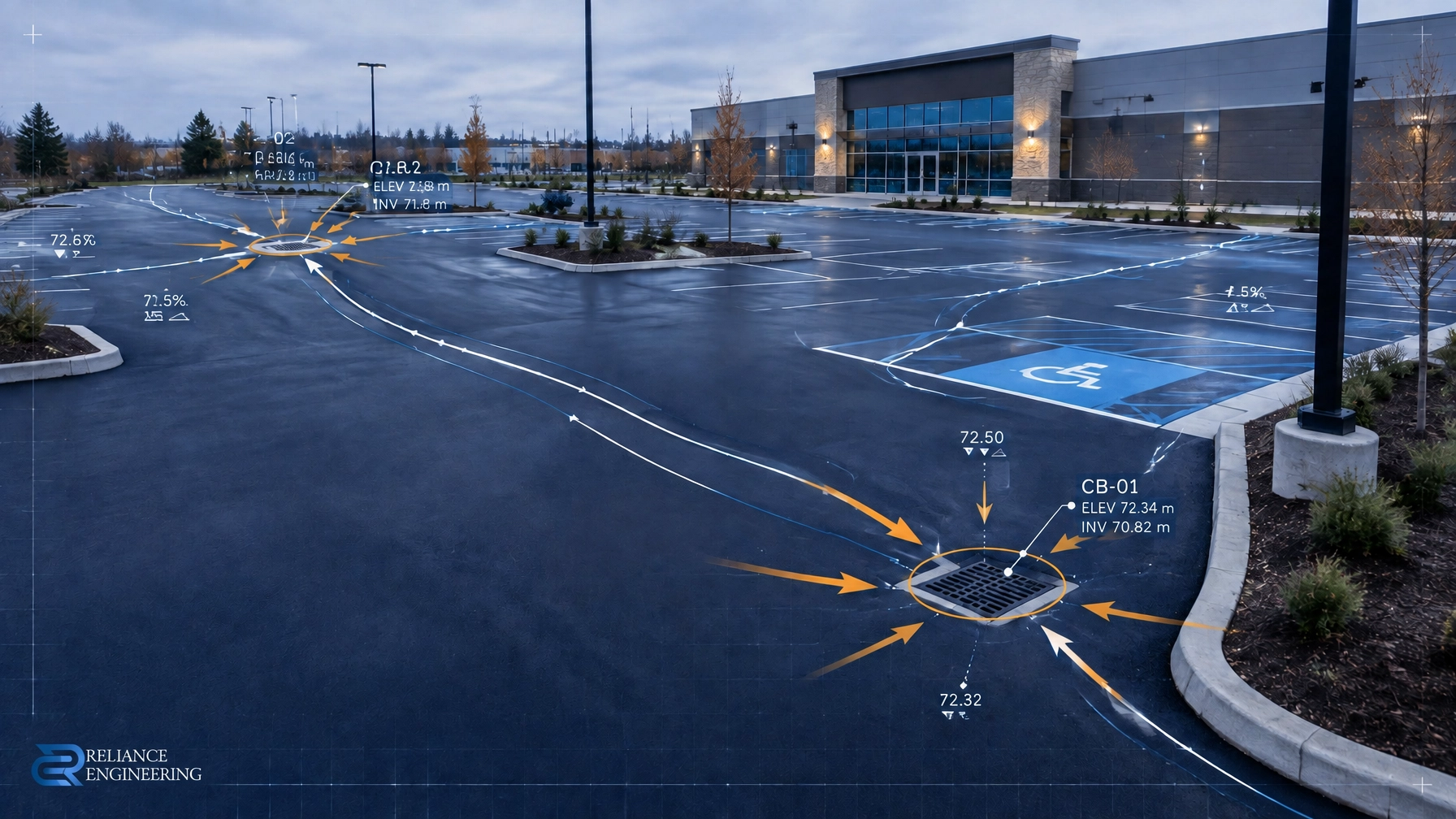
- Stormwater: How will you manage the runoff?
If the infrastructure is at its limit, your FSR needs to provide a solution, not just identify a problem.
3. Pre-Application Consultation Is Non-Negotiable
Stop working in a vacuum. Before a single calculation is made, we engage with municipal staff.
Why? Because every municipality in Ontario has different standards. Toronto is not Mississauga. Ottawa is not Hamilton. A formal pre-consultation identifies the specific "scoping" for your FSR. This prevents "scope creep" and ensures you aren't paying for analysis the City doesn't actually want.
4. The Scope Includes Everything Under the Ground
An FSR isn't a one-page summary. It is a comprehensive deep dive. Your report must examine:
- Water treatment plant capacity.
- Pumping stations and pressure zones.
- Trunk sewers and local collectors.
- Topography and grading impacts.
Missing one of these elements is the fastest way to get a rejection. If you are worried about your grading specifically, see our guide on site grading precision.
5. Professional Engineering Certification (The Stamp)
In Ontario, an FSR is a legal engineering document. It must be prepared, signed, and stamped by a licensed Professional Engineer (P.Eng.).
This isn't just a formality. The stamp represents accountability. It tells the municipality that the analysis meets the Ontario Building Code, municipal standards, and provincial regulations.
At Reliance Engineering, Naresh Ochani, P.Eng. M.Eng. personally oversees the technical integrity of every report we produce. We stand by our numbers.

6. Data Over Opinions: Supporting Documentation
The City staff are engineers. They don't want to hear that the servicing "looks fine." They want the math.
A complete FSR must include:
- Detailed computer modeling results (e.g., hydraulic modeling).
- Water demand calculations based on population density.
- Sanitary flow estimates.
- Drainage area maps.
If your report lacks these appendices, it isn't a report: it's a letter. Letters don't get permits.
7. Coordinate With Other Studies
Your FSR does not exist in a vacuum. It must be perfectly synchronized with:
- Stormwater Management (SWM) Reports: How are you treating the water?
- Environmental Impact Studies (EIS): Are you near a protected area?
- Geotechnical Reports: Can the soil support the new pipes?
If your FSR says one thing and your SWM report says another, the City will flag it immediately. Total coordination is the only way to succeed. Learn more about precise SWM reporting here.

8. The "Design Basis" Must Be Crystal Clear
Every report we write includes a dedicated section titled "Design Basis." This is where we lay out every assumption used in the study.
If we are deviating from municipal standards: perhaps due to a unique site constraint: we explain why and how we arrived at that conclusion. Transparency builds trust with municipal reviewers. Trust leads to faster approvals.
9. Identify and Solve Deficiencies Immediately
If the downstream infrastructure is deficient, the FSR must call it out. Do not try to hide it.
The municipality wants to know:
- Is there a problem?
- What is the proposed improvement?
- How will it be funded/constructed?
Whether it's a pipe upsizing or a new retention tank, the FSR is the place to negotiate these infrastructure solutions.
10. Avoid the "Incomplete Submission" Trap
Rejections are expensive. They push your construction start date back by months.
Before we submit any FSR, we run through a rigorous internal checklist. We ensure all municipal requirements are met, all stamps are in place, and all supporting data is attached.
One mistake can cost thousands in carrying costs. We don't make those mistakes.
Why Reliance Engineering?
We don't just write reports. We solve land development hurdles. Based in Mississauga and serving all of Ontario, we specialize in high-energy, fast-turnaround engineering solutions that get you to the finish line.
Get Started Today
Don't let a poorly prepared Functional Servicing Report stall your project. Contact us for a direct, professional consultation.
Naresh Ochani, P.Eng. M.Eng.
Phone: 647-385-6418
Email: [email protected]
Address: 6850 Millcreek Dr, Mississauga, ON L5N 2H4
Office Hours:
- Saturday: 12:00 PM – 2:00 PM
- Sunday: Closed
- Monday – Friday: By Appointment
Quick Links for Your Project:
- How to avoid Toronto submission delays
- Managing multi-unit conversions in Ontario
- The truth about Erosion and Sediment Control
Stop waiting. Start building. Call Reliance Engineering now.