Article type: Development approvals guidance
Focus: Functional Servicing Reports and water and sanitary capacity allocation
Geographic scope: Ontario
Published: October 20, 2026
Estimated reading time: 6 minutes
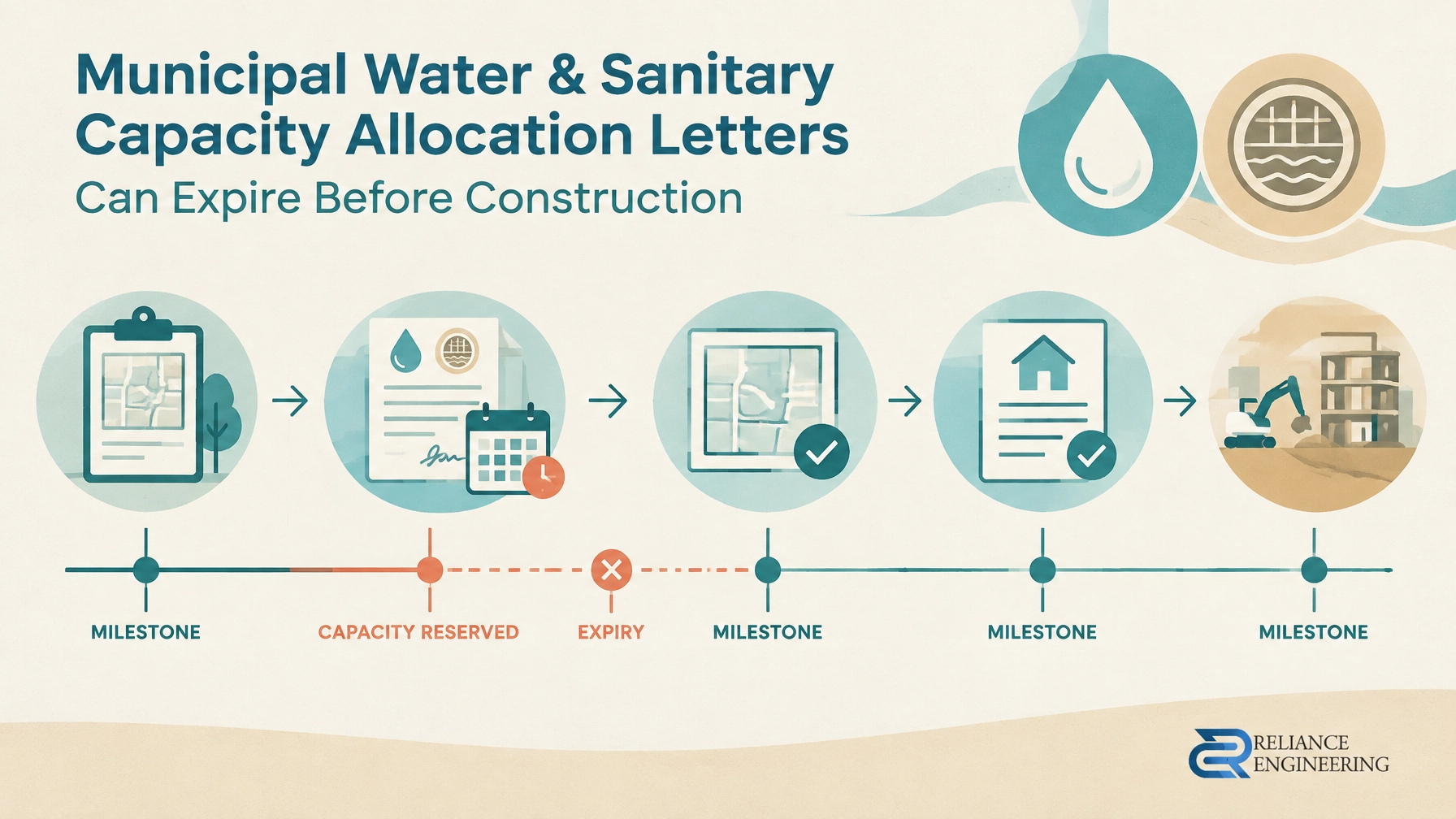
A developer can secure rezoning and still lose the water capacity that made the project viable. In municipalities managing constrained systems, a capacity confirmation may be tied to a defined period, approval stage, or construction milestone. If that condition is missed, the reservation may lapse, even if the site is otherwise ready to proceed.
The exact rules differ across Ontario. A letter’s expiry date and conditions matter as much as the capacity it confirms.
What a capacity allocation letter does
An allocation or reservation letter is a municipality’s written confirmation that a specified amount of servicing capacity has been set aside for a development, subject to stated conditions. Depending on the municipality and system, it may address water supply, wastewater treatment, or both.
These letters help municipalities manage finite infrastructure capacity and competing development demand. Policies are in place in communities and regions including Guelph, Waterloo, Kitchener, Cambridge, Richmond Hill, Woolwich, North Dundas, Oxford County, and Whitchurch-Stouffville. Their policies and procedures are not interchangeable. Always confirm the current local policy and the specific conditions in your letter.
For example, Oxford County’s Water and Wastewater Capacity Allocation Policy covers both water supply and sewage capacity. By contrast, Waterloo’s Water Supply Allocation Policy addresses allocation of water supply capacity. Confirm whether your project needs separate confirmation for water and wastewater.
Constrained systems may prioritize applications
Where available capacity is limited, a simple first-come-first-served queue may give way to a formal review or prioritization process. A complete application, project type, housing or community benefits, and readiness to proceed can affect how a municipality assesses requests. The criteria vary.
Waterloo reviews applications in allocation cycles and uses a five-level priority framework. Kitchener also reviews applications periodically as regional capacity becomes available. Cambridge describes collective review cycles and possible outcomes that include an allocation, a forward-looking servicing agreement, or deferral. A forward-looking agreement is not the same as a confirmed allocation.
These approaches make timing important. Ask about capacity during pre-consultation and the planning application stage, not only when preparing for a building permit. If capacity is unavailable, a project may be deferred or placed in a process for future review. The municipality may also require servicing studies or infrastructure upgrades before the development can proceed.
Expiry depends on the municipality and the project stage
Reservation periods are set locally. They may range from about one to four years in some policies, but shorter deadlines can apply to particular approval stages or milestones. These periods are examples, not Ontario-wide standards.
Guelph describes capacity holds connected to planning approvals, with different periods applying at different stages. Oxford County’s policy includes a conditional reservation period for draft-approved plans and a separate period for consent applications. Whitchurch-Stouffville’s by-law sets different reservation periods for draft plans, site plans, and consents, and also requires a building permit within a stated period after final allocation.
A letter may require progress beyond obtaining planning approval. Relevant milestones can include registering a plan, executing an agreement, starting servicing works, or obtaining a building permit. Some policies also require a developer to request an extension before the expiry date; Guelph’s published process, for example, identifies a 60-day advance request deadline for certain extensions. Whitchurch-Stouffville’s by-law specifies a different deadline. Check the applicable policy and letter rather than relying on a general rule.

What can put a reservation at risk?
Common risks include:
- Missed milestones: A required permit, agreement, registration, or construction step is not completed on time.
- Late extension requests: The municipality’s deadline passes before an extension is requested, or the request is not approved.
- Stalled applications: Planning review, financing, ownership changes, or design coordination delays progress past the letter’s validity period.
- A change in project scope: More units, larger floor area, a different use, or increased demand may no longer match the capacity assessment.
- Outdated servicing information: New assumptions or system conditions may require updated calculations or municipal review.
A change in scope does not automatically mean every allocation lapses. However, it can mean the original confirmation no longer covers the proposal as designed. The municipality may require updated modelling, a revised request, or a new allocation decision.
The Functional Servicing Report connects demand to allocation
The Functional Servicing Report (FSR) sets out the servicing assumptions and calculations used to assess a development’s water and wastewater demands. It helps explain how the proposed project is expected to connect to municipal systems and whether the proposed demand aligns with available capacity.
Oxford County’s policy requires an FSR for capacity review, including water and wastewater demand calculations and, where needed, downstream analysis. The report should reflect the same development scope as the capacity request: unit counts, uses, floor area, phases, and demand assumptions should be consistent.
If the proposal changes after capacity is confirmed, compare the revised plans with the FSR and the letter. An outdated or mismatched FSR can turn a seemingly secured allocation into a need for updated review or re-application.
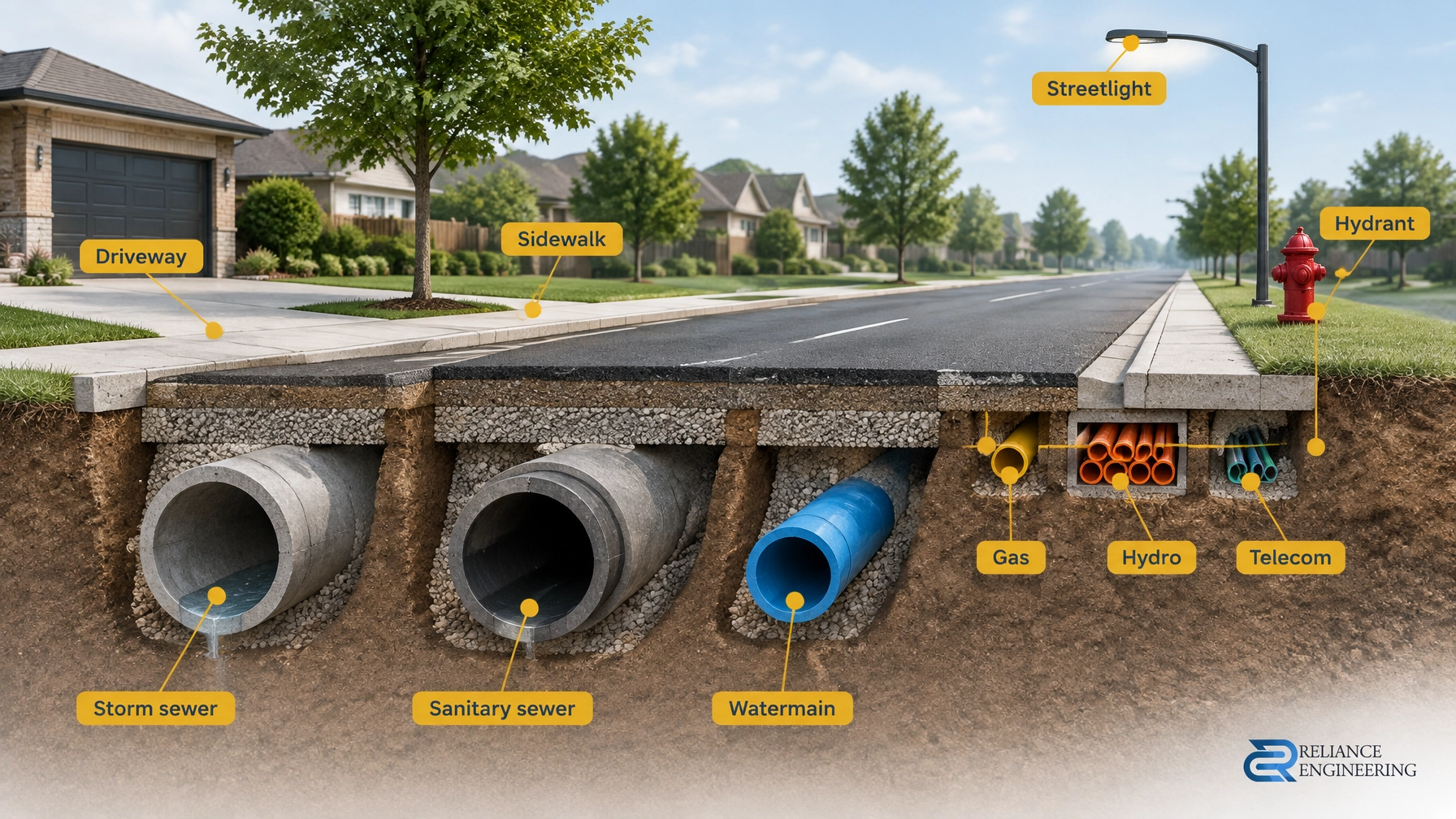
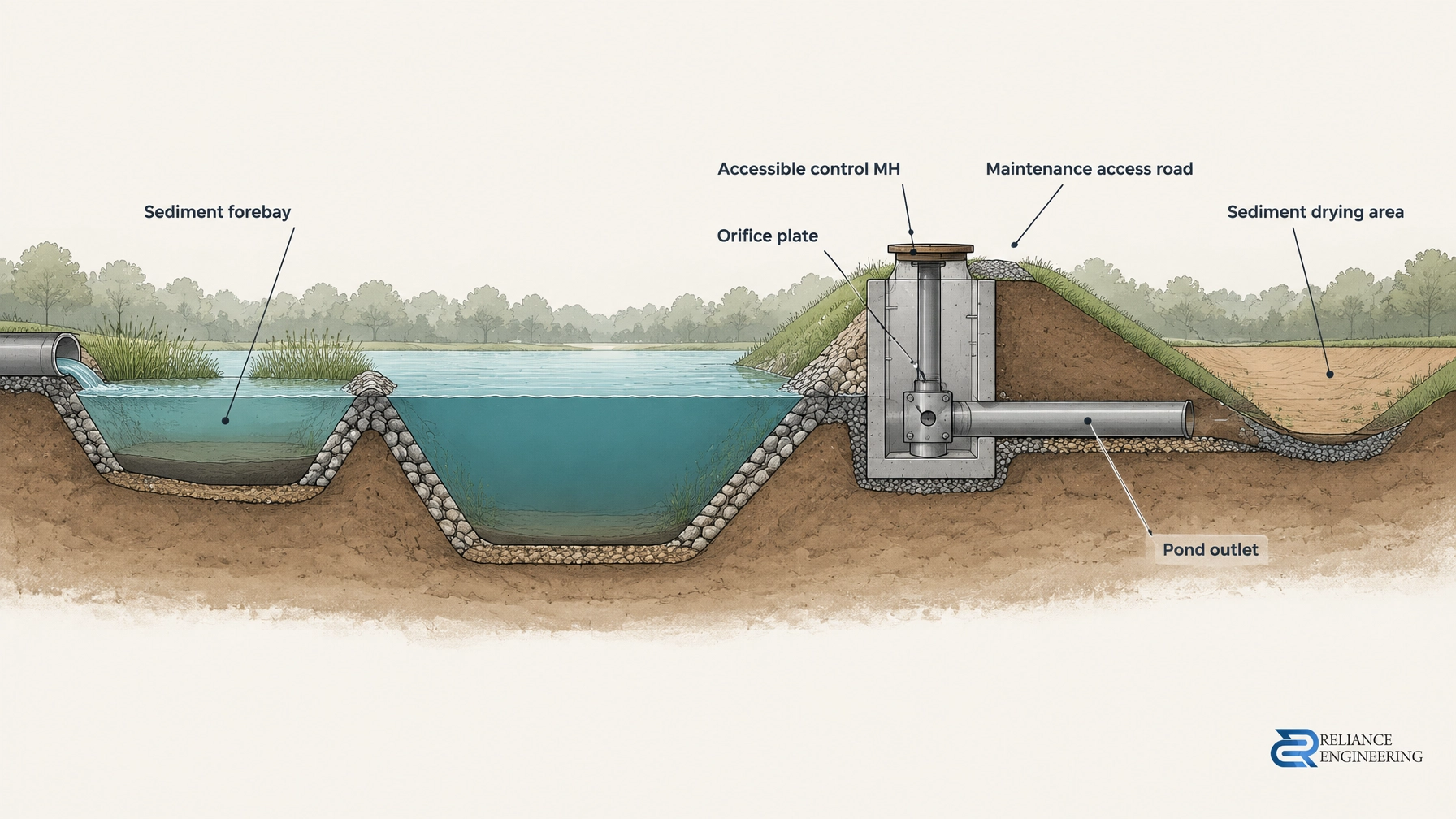
Clear calculations, coordinated design, clean layouts, and constructible routing help reviewers understand the request and its relationship to the site. Related site servicing plans and, where applicable, stormwater management reports in Ontario should be coordinated with the FSR and the current submission. These documents support municipal approvals; they do not guarantee capacity will be assigned.
For more information about our Functional Servicing Report services, speak with our team.
Developer checklist: protect the allocation
- Read the letter and current policy. Record the capacity granted, the project scope, the expiry date, and every condition.
- Build a milestone calendar. Track planning decisions, agreement execution, registration, building permit issuance, and any servicing or construction requirements.
- Start extension planning early. Confirm how far in advance a request must be submitted, what evidence is required, and whether approval is discretionary.
- Keep the project scope aligned. Match the FSR, site servicing plans, planning drawings, and capacity request. Flag changes to unit counts, use, floor area, or phasing.
- Confirm both systems. Determine whether the letter covers water, sanitary capacity, or both, and whether separate confirmations are needed.
- Ask early if capacity is constrained. During pre-consultation, confirm the allocation process, submission timing, possible prioritization, and whether servicing studies or upgrades may be required.

Key takeaways
A capacity allocation is not necessarily permanent. Its duration and conditions depend on the municipality, the servicing system, and the project stage. Priority-based review may apply where capacity is constrained, and missed milestones or changes in project demand can trigger a new review. Keep the FSR and approved scope aligned with the letter, track deadlines, and confirm extension requirements directly with the municipality.
Request functional servicing support
Reliance Engineering prepares practical designs, clear drawings, and approval support for development projects across Ontario. We bring municipal experience to FSRs, site servicing plans, and coordinated submissions.
Contact: Naresh Ochani, P.Eng., M.Eng., Principal Engineer
Reliance Engineering Canada Limited
PEO Certificate of Authorization: 100548882
Address: 6850 Millcreek Dr, Mississauga, ON L5N 2H4
Phone: 647-385-6418
Email: [email protected]
Office hours: Monday–Friday, 9:00 AM–5:00 PM; Saturday, 12:00 PM–2:00 PM; Sunday, Closed
Contact Reliance Engineering to discuss your project’s capacity timing, FSR, and municipal submission requirements.