Article type: Diagnostic how-to
Service area: Ontario
Topic: Construction runoff, erosion and sediment control, grading coordination
Published: October 16, 2026
An erosion and sediment control (ESC) plan is not just a drawing to submit with an application. It is a field guide for keeping sediment on site, protecting storm sewers and nearby properties, and helping construction proceed in line with applicable approval conditions.
Inspectors typically start by comparing the approved plan with what is happening on site. Are controls installed where shown? Are they maintained? Is muddy runoff leaving the property? Specific requirements depend on the municipality, conservation authority, permits and project scope. There is no single checklist that applies identically across Ontario.
The following steps help owners, builders and contractors identify common compliance gaps before they become inspection issues.
1. Confirm the ESC plan matches the work underway
Start with the current approved plan and compare it with the construction stage on site. Site conditions can change as grading, access, stockpiling and servicing work progress. A plan that no longer reflects the work may not provide useful direction to the contractor or inspector.
Check that the drawings identify construction limits, access points, stockpile areas, drainage paths, inlets and discharge locations. Confirm the plan’s notes and details reflect the controls that can actually be installed and maintained.
Reliance Engineering prepares ESC plans showing measures such as silt fence, construction access, catch basin protection, sediment traps, check dams, stockpile protection and maintenance notes. The design is coordinated with grading and construction staging, not added as a set of generic notes. Learn about our ESC plan services.
2. Install controls before disturbing soil
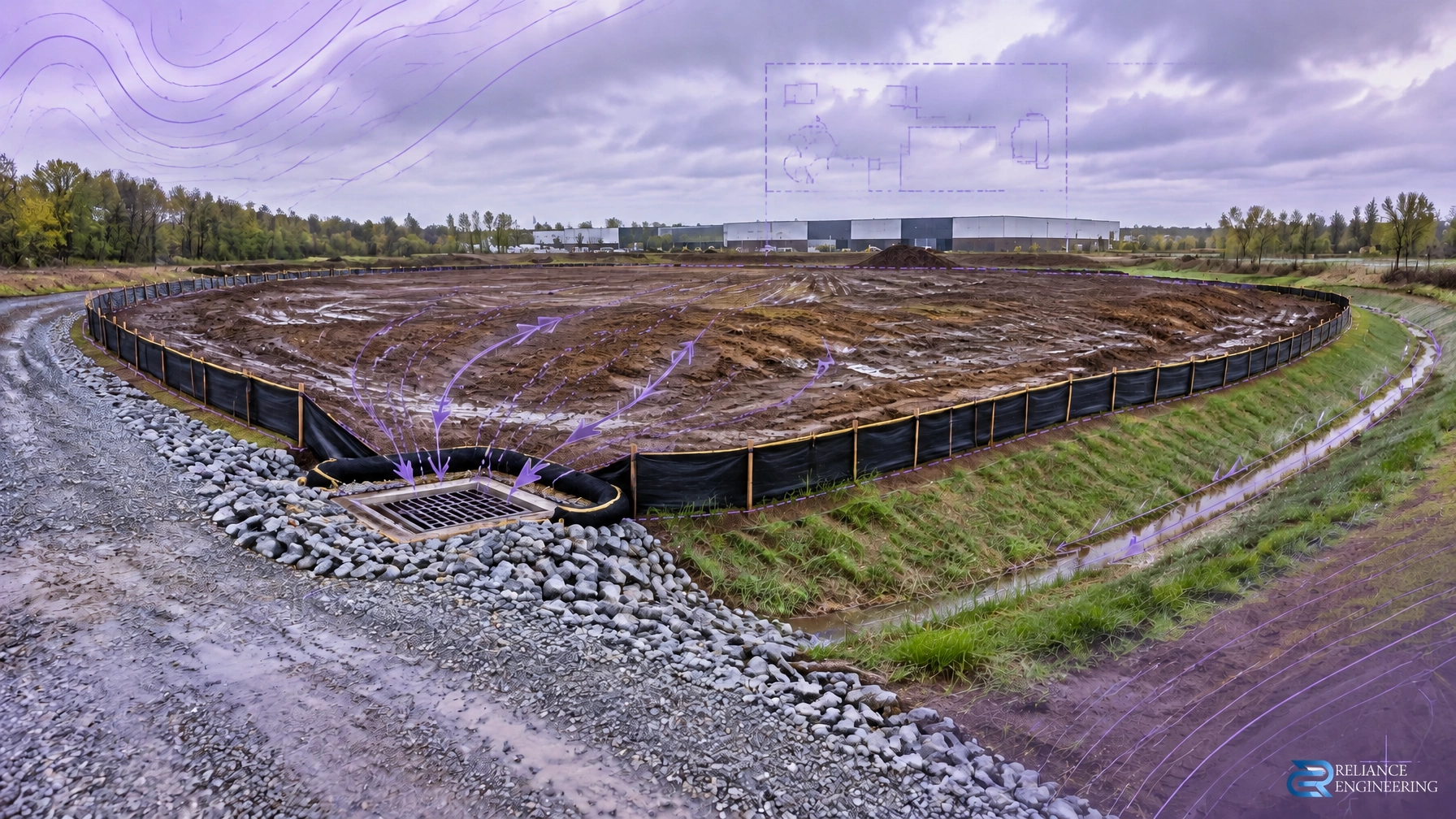
Controls are most useful when they are in place before clearing, excavation or grading begins. Inspectors may look for perimeter barriers, protected catch basins, stabilized construction entrances, and measures that direct or slow runoff.
A barrier that is poorly placed, damaged, undermined or blocked may not work as intended. Similarly, an unprotected inlet can allow sediment to enter the storm sewer system. Controls should suit the site’s slopes, drainage patterns and construction sequence.

3. Keep clean water separate from exposed soil
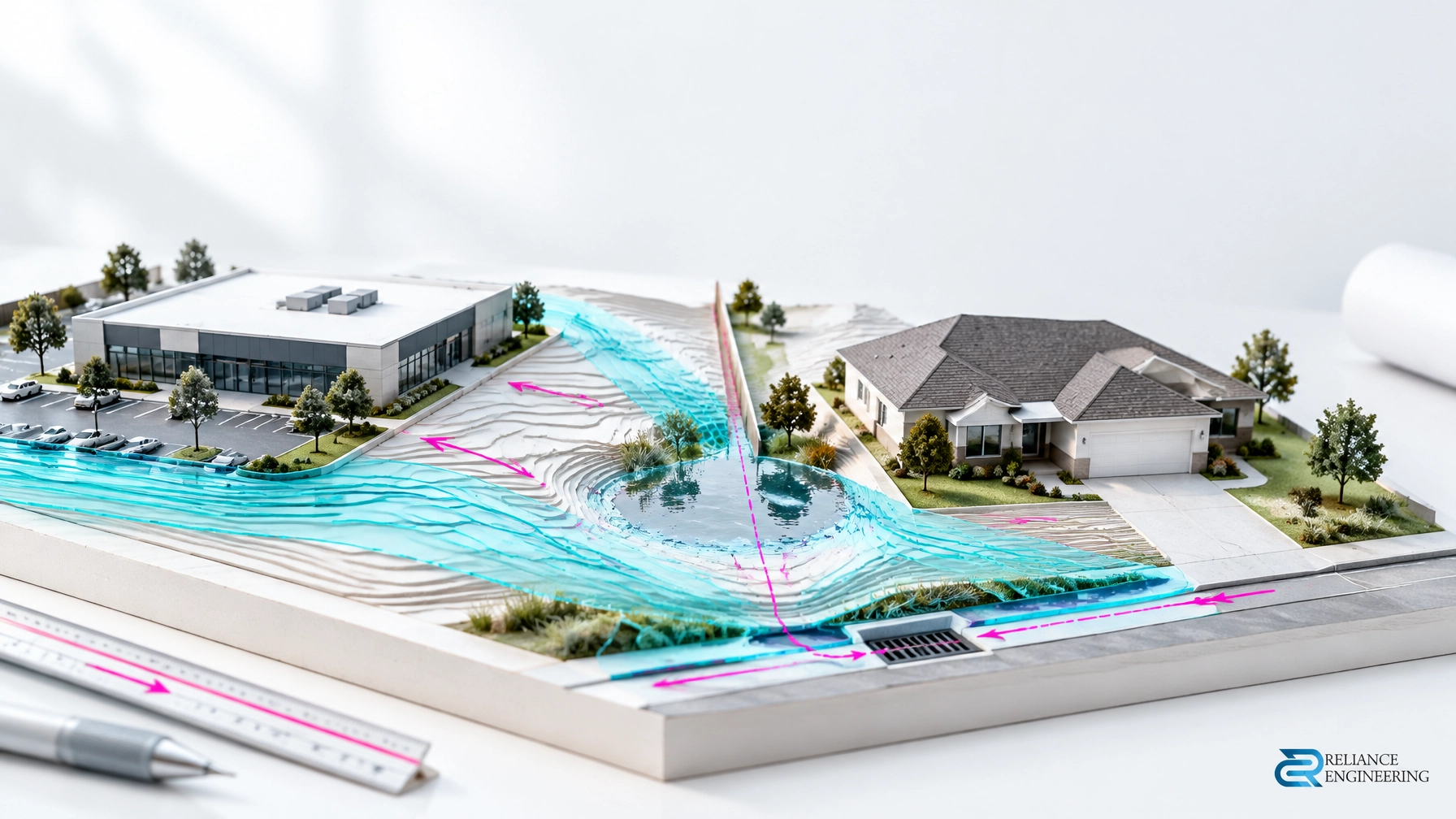
A practical drainage-focused approach considers where water comes from, where it flows, and where it leaves the site. Where the design and site conditions allow, clean runoff should be directed away from exposed soil. Runoff that crosses disturbed areas may carry sediment toward catch basins, ditches, watercourses or neighbouring properties.
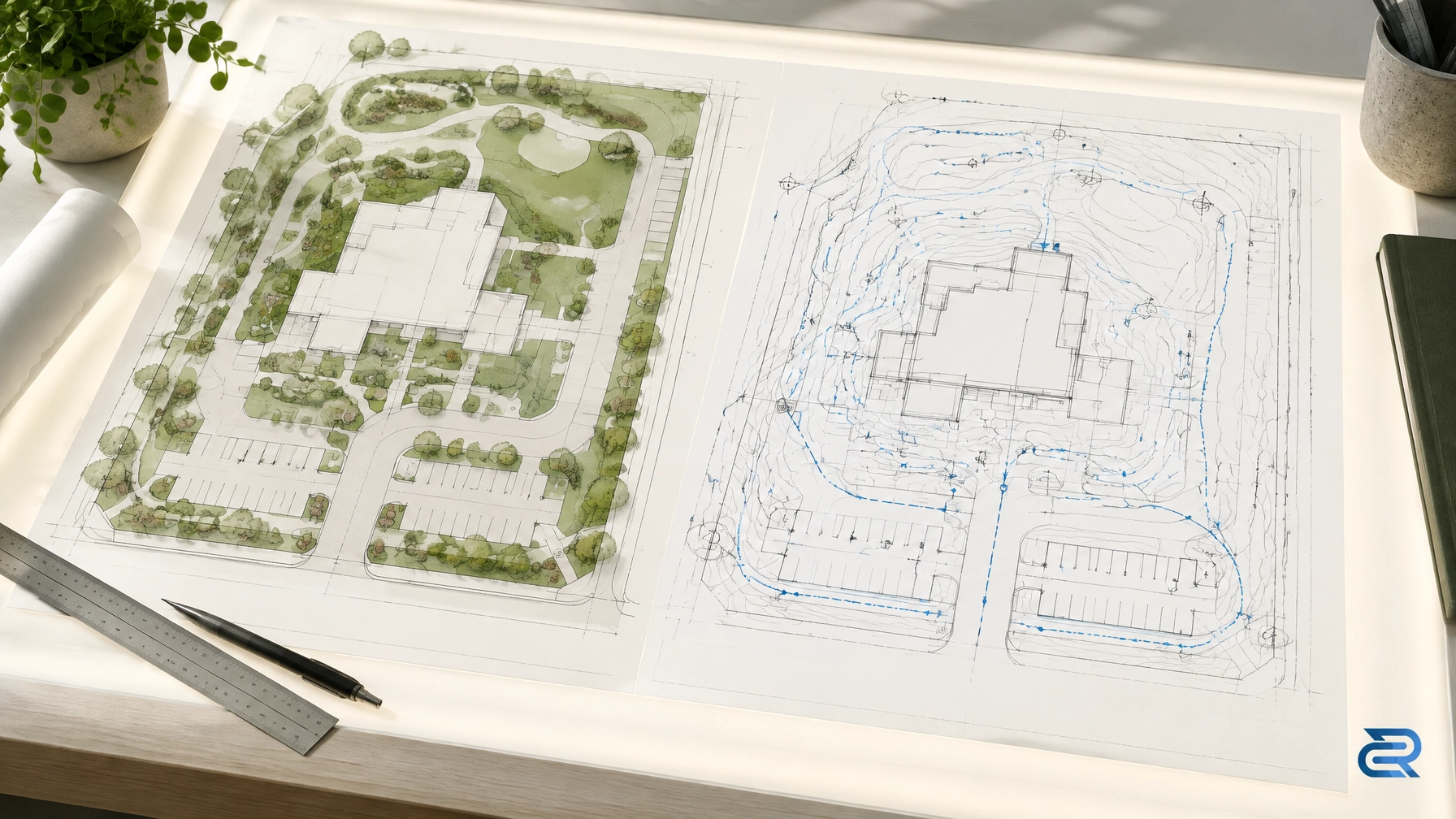
Review the proposed grading and temporary drainage together. The ESC plan should make overland flow routes understandable in the field and coordinate with the permanent design where appropriate. Buildable grading and positive drainage help make that coordination practical.
For sites with existing drainage issues, a grading review may also help identify ponding solutions or commercial property grading fixes. At a parking lot, for example, commercial parking lot drainage in Ontario may require coordinated grading, inlet locations and construction-phase protection, not just a surface adjustment. See our site grading plan services.

4. Stabilize exposed areas and protect stockpiles
Reducing exposed soil limits the opportunity for erosion. Phase work where feasible, avoid disturbing areas before they are needed, and stabilize inactive areas in keeping with the approved plan and project requirements. Protect stockpiles from rainfall and runoff, and keep them away from catch basins and drainage routes where practical.
The right method depends on the site, schedule, soil, season and approvals. Do not assume that a control used on one project will be appropriate on another. A qualified designer can help select practical designs that contractors can install and maintain.
5. Inspect after weather and maintain the controls
A control is not compliant simply because it was installed. It needs to remain functional as the site changes and weather affects the ground. Inspect for sediment buildup, damaged or undercut barriers, blocked inlets, muddy access roads, erosion channels and signs of sediment leaving the property.
Follow the inspection frequency and maintenance procedures in the approved plan and applicable approvals. For certain prescribed stormwater management works, Ontario Regulation 137/25 sets out ESC plan requirements, including inspection and maintenance provisions. Municipal or conservation authority conditions may set additional or more frequent requirements. Check the rules that apply to the project rather than relying on a general schedule.
Keep records of inspections, deficiencies, repairs and relevant site conditions. If a control fails, take timely corrective action and document what was done. The Erosion and Sediment Control Guide for Urban Construction provides additional technical guidance for construction sites.

6. Coordinate temporary controls with permanent drainage
ESC measures are temporary, but they must work alongside the permanent design. A change to driveway grades, a catch basin, a swale or the construction access can affect how runoff moves during the work.
For commercial parking lot drainage Ontario projects, asphalt regrading can alter surface flow and affect ponding solutions. Review those changes with the site grading design and construction-phase controls before work proceeds. A coordinated design can help prevent temporary runoff issues from being built into the permanent layout.
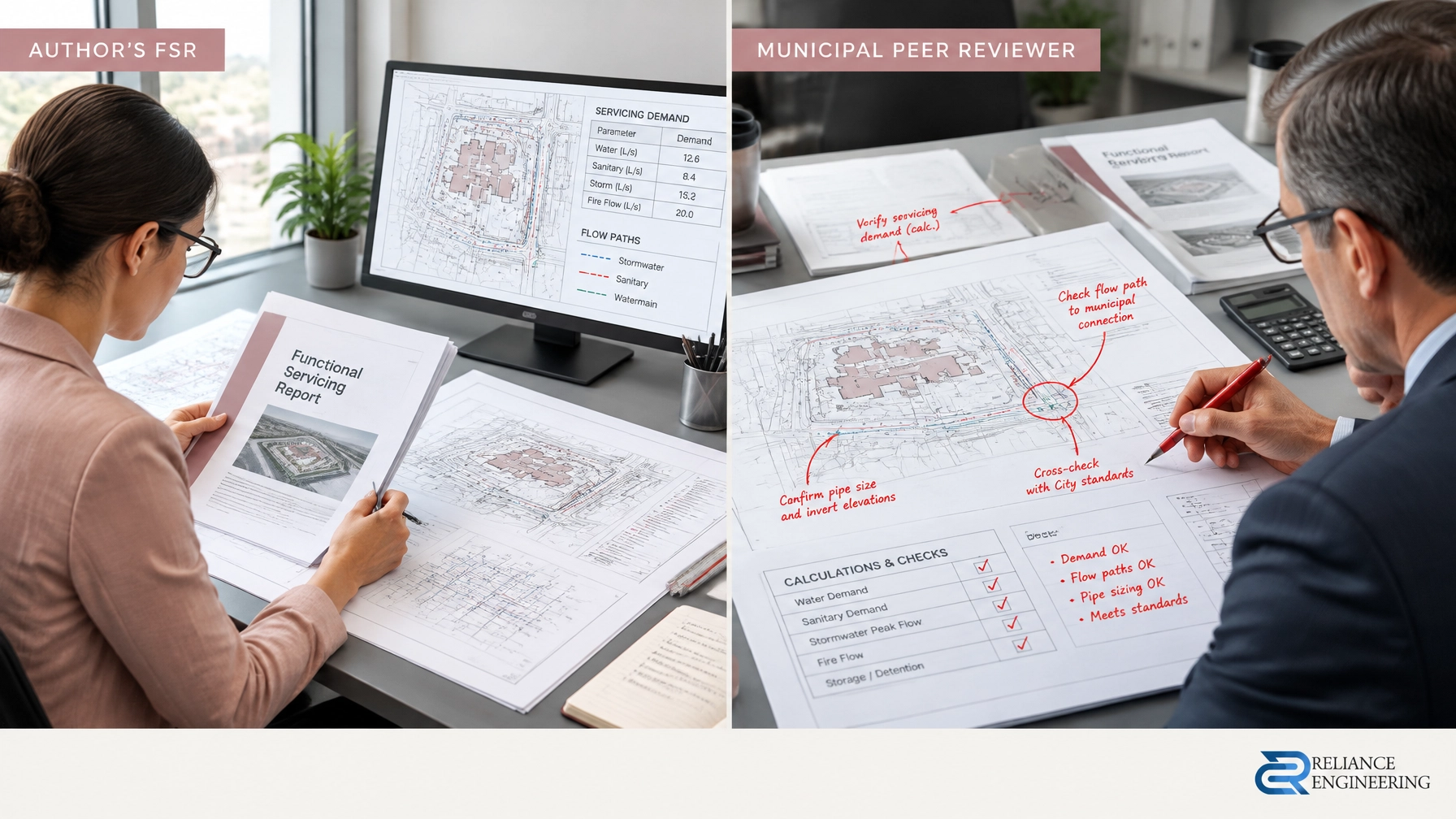
ESC drawings may also form part of a broader submission package. Depending on the project, site grading, servicing, stormwater management, Site Plan Approval or Building Permit drawings may need to align with the controls and construction sequence. Clear drawings reduce uncertainty for reviewers and contractors.
Prepare for inspection before the first site visit
Use this short field check:
- Keep the current approved ESC plan accessible on site.
- Confirm controls are installed in the locations shown before soil disturbance.
- Check that site access and catch basin protection are functioning.
- Look for sediment, muddy water or erosion beyond the construction limits.
- Inspect after weather and at the frequency required by approvals.
- Record deficiencies, repairs and plan changes.
- Coordinate changes to grading, servicing or staging with the appropriate design professional.
A well-prepared ESC plan supports compliance, protects surrounding infrastructure and helps keep construction moving. Reliance Engineering provides clear drawings, approval support and permit-ready drawings coordinated with grading and site drainage.
Need an ESC plan or help responding to review comments? Contact Reliance Engineering to discuss your project. Our team can review site conditions and prepare practical controls coordinated with your grading and construction plans.
Contact and professional credentials
Naresh Ochani, P.Eng. M.Eng.
PEO Certificate of Authorization: 100548882
6850 Millcreek Dr, Mississauga, ON L5N 2H4
Phone: 647-385-6418
Email: [email protected]
Office hours: Monday–Friday 9:00 AM–5:00 PM; Saturday 12:00 PM–2:00 PM; Sunday Closed.