Published: October 2, 2026
Category: Ontario Grading & Drainage
Reading time: 6–8 minutes
Commercial parking lot drainage problems usually appear as ponding, damaged asphalt, winter ice, blocked catchbasins, or water flowing toward a building entrance. The visible issue may be small, but the underlying cause is often a grading, servicing, or stormwater problem.
Effective commercial parking lot drainage fixes in Ontario start with the site’s elevations and drainage routes, not with a patch of asphalt or a replacement grate.
A proper design should provide positive drainage, protect neighbouring properties, maintain safe access, and coordinate with municipal engineering standards. Reliance Engineering prepares practical designs, clear drawings, and permit-ready stamped documents for commercial property owners, builders, architects, and developers across Ontario.
Diagnose the Low Spot Before Choosing the Fix
A parking lot can pond for several reasons:
- The asphalt has settled or was paved with insufficient slope.
- The catchbasin is too high, too low, blocked, or poorly located.
- The storm connection lacks capacity or was never properly completed.
- A driveway or road tie-in directs water back into the lot.
- Snow storage blocks catchbasins during spring melt.
- Construction changes redirected runoff toward a building or neighbouring property.
- The original grading plan was not followed accurately during construction.
A site review should compare existing elevations, pavement condition, catchbasin locations, storm sewer information, building entrances, accessible parking areas, loading zones, and the municipal road connection.
For many commercial sites, 2% is a typical target slope for asphalt drainage, but the final slope must reflect the municipal standard, site constraints, accessibility requirements, fire routes, and connection elevations. The goal is not simply to make the pavement steeper. The goal is to create buildable grading that moves water to an approved collection or discharge point.

When Asphalt Regrading Is the Correct Solution
Asphalt regrading is appropriate when the drainage problem is caused by the pavement profile. Common solutions include:
- Milling high areas to restore a continuous fall.
- Placing a tapered asphalt overlay to raise low areas.
- Rebuilding localized pavement where settlement has damaged the base.
- Reconstructing a parking aisle or loading area with new elevations.
- Resetting catchbasin frames and grates to match the proposed surface.
- Regrading around entrances, ramps, accessible stalls, and pedestrian routes.
A small overlay may solve a shallow depression if the surrounding grades provide enough elevation flexibility. A deeper low spot may require full-depth reconstruction, especially when water has saturated the granular base or caused freeze–thaw damage.
Patching alone is rarely a complete solution. If the surrounding asphalt still drains toward the same low point, ponding will return.
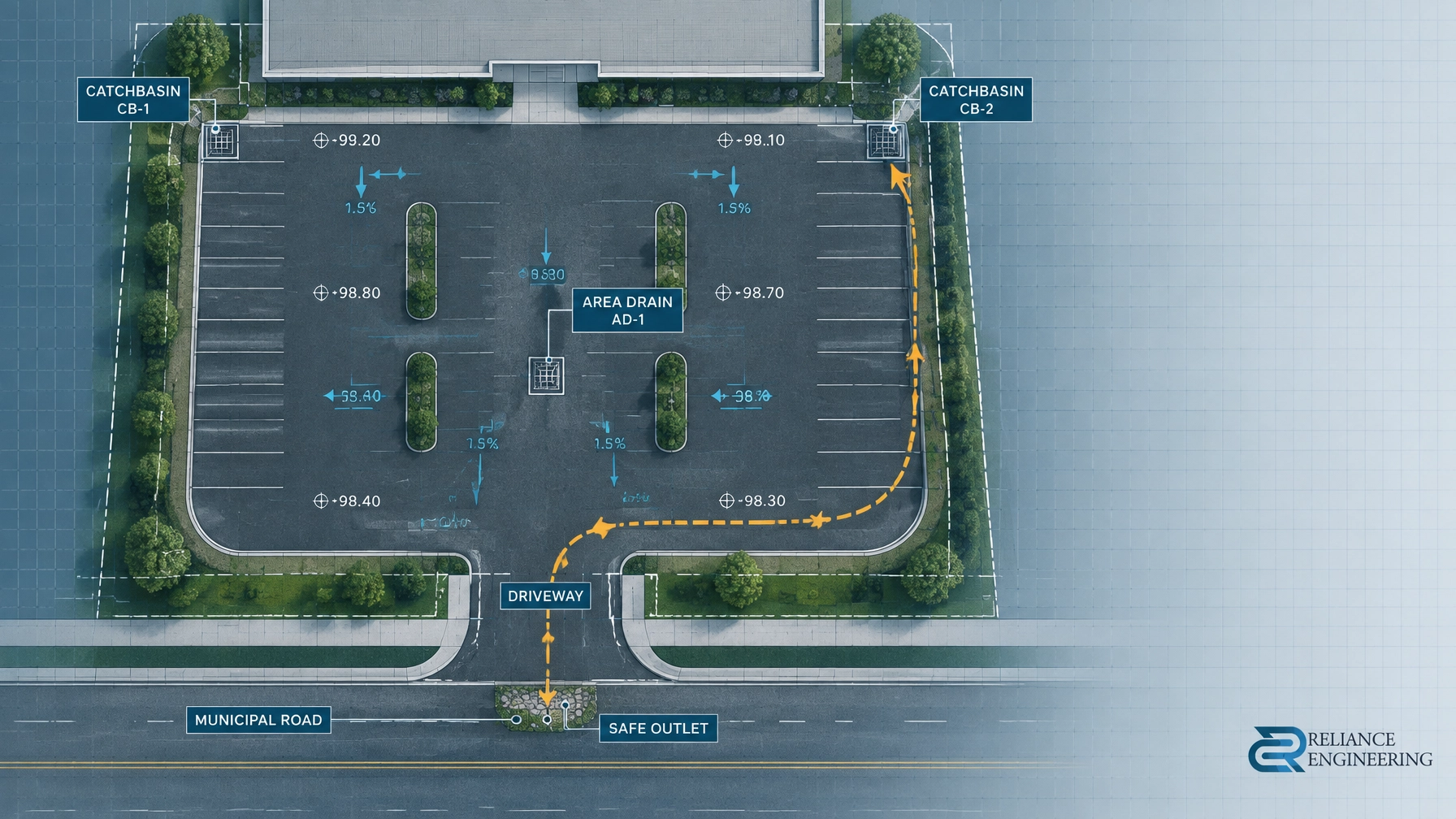
Effective commercial property grading fixes must show how the entire drainage area works. This includes slope arrows, proposed spot elevations, catchbasin rim elevations, pavement limits, and tie-ins to existing grades.
When Adjusting a Catchbasin Is Enough
Not every drainage complaint requires full asphalt regrading. Adjusting the catchbasin may be appropriate when:
- The basin has settled below the surrounding pavement.
- The rim is set too high and prevents surface water from entering.
- The grate is damaged or obstructed.
- The surrounding asphalt has deteriorated locally.
- The existing basin is correctly located but no longer matches the finished surface.
The repair may include resetting the frame, rebuilding the asphalt around the basin, cleaning the sump, or repairing the outlet connection.
However, lowering a grate does not correct a lot-wide grading problem. If pavement slopes away from the catchbasin, water will continue to bypass it. The proposed rim elevation must be coordinated with the grading plan and the required inlet capacity.
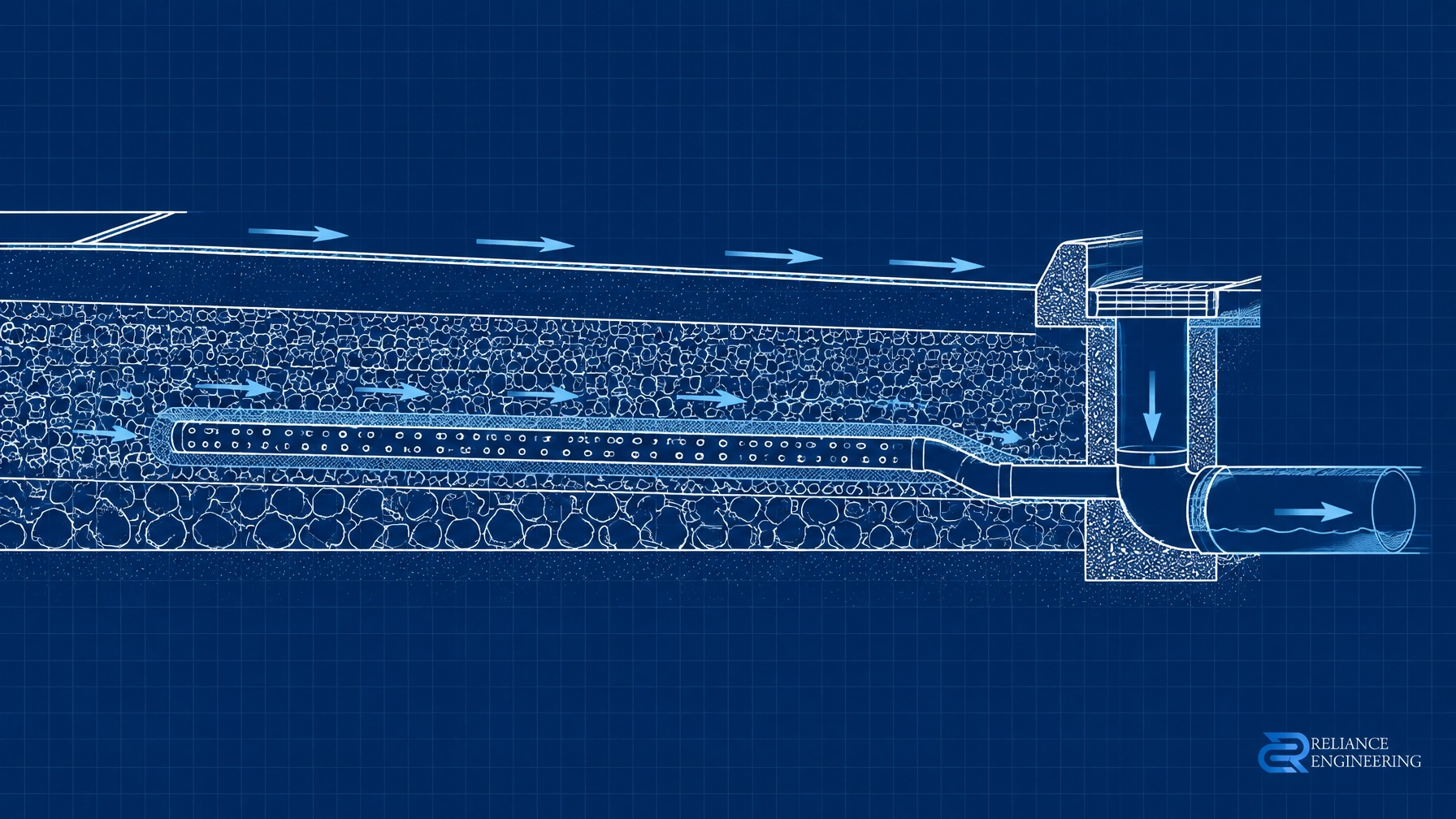
Where a low point cannot be corrected with reasonable surface grading, a new catchbasin, area drain, or trench drain may be needed. The new structure must be connected to an approved storm system and designed for maintenance access.
When a New Storm Connection Is Required
A new storm connection may be required when:
- The site has no suitable municipal storm outlet.
- Existing pipes are damaged, undersized, or incorrectly connected.
- A new catchbasin cannot drain by gravity to the existing system.
- The proposed development increases runoff or changes drainage areas.
- The municipality requires a new service connection.
- Stormwater storage, quality treatment, or quantity control is required.
A new connection is not a substitute for proper surface grading. The pavement must still direct runoff to the inlet, and the storm system must be coordinated with downstream capacity, municipal criteria, and applicable approvals.
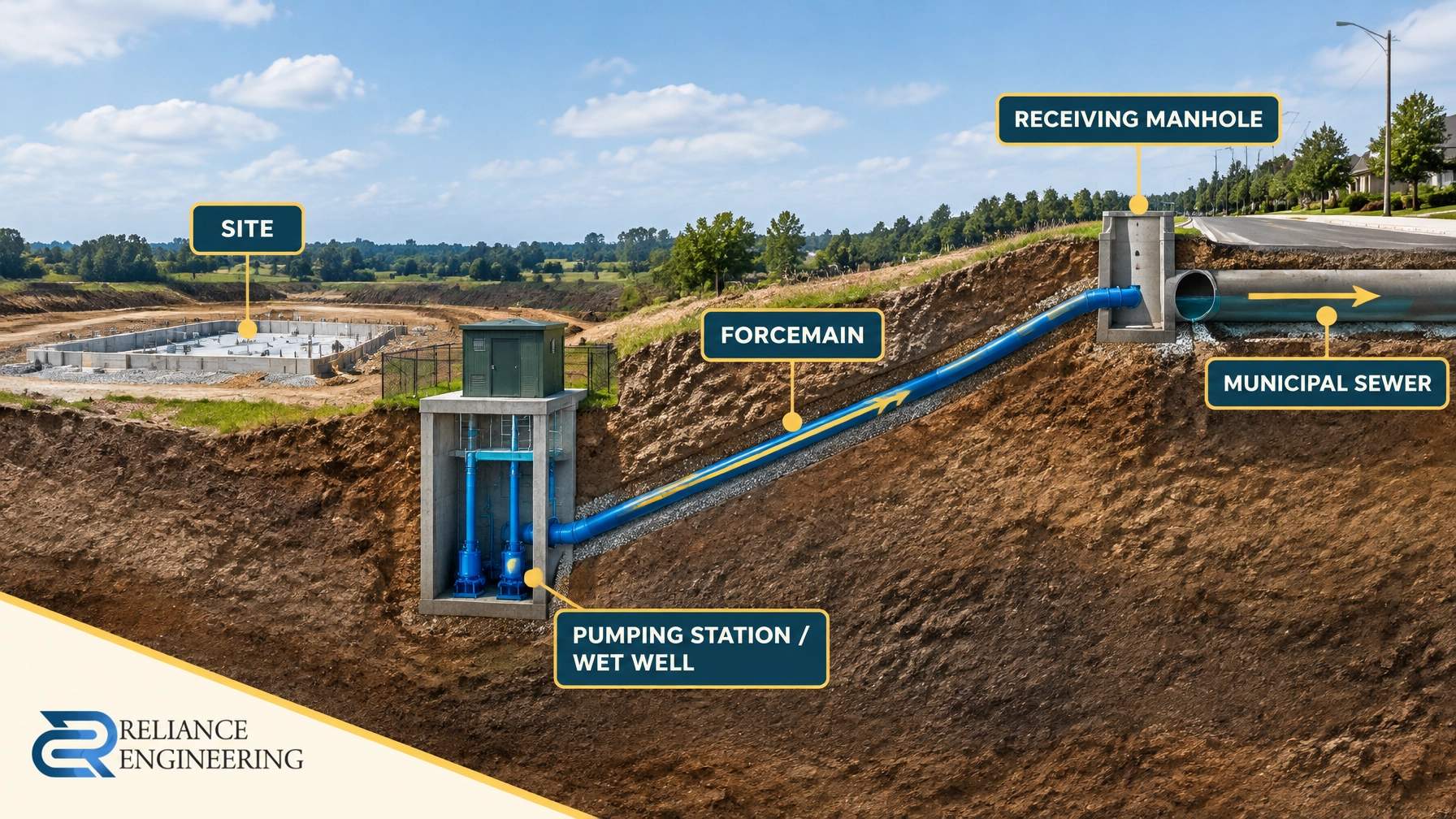
A Site Servicing Plan typically shows storm, sanitary, and water servicing layouts, connection points, pipe information, structures, and municipal tie-ins. Depending on the site and scope, a Stormwater Management Report or Functional Servicing Report may also be required.
Catchbasins, Area Drains, and Overland Flow Routes
Catchbasins should be placed where grading naturally concentrates runoff. They should not be added randomly to the lowest visible area without checking the full drainage pattern.
The design should consider:
- Parking stall and drive aisle slopes.
- Building entrances and foundation elevations.
- Loading docks and overhead doors.
- Accessible parking and pedestrian routes.
- Snow storage and winter maintenance.
- Fire access routes.
- Landscaping, retaining walls, and curbs.
- Existing and proposed storm sewer capacity.
Every commercial lot also needs a defined overland flow route. This is the safe surface route water follows when the minor storm system is full, an inlet is blocked, or an extreme rainfall event exceeds the underground system.
The route should avoid:
- Building entrances.
- Loading doors.
- Accessible parking spaces.
- Neighbouring properties.
- Public sidewalks where unsafe.
- Road intersections where flow could create a hazard.
Overland flow should move toward an approved discharge point, municipal right-of-way, swale, storage area, or other engineered outlet. It should be shown clearly on the site grading plan.

Driveway and Road Tie-Ins Need Careful Control
Many drainage complaints begin at the edge of the property. A driveway connection that is too flat, too steep, or improperly tied to the municipal road can send water into the parking lot or create a low point at the entrance.
The design should confirm:
- Existing road elevations and curb conditions.
- Driveway grades and transition slopes.
- Sidewalk and boulevard elevations.
- The location of road catchbasins.
- Surface drainage near the property line.
- Whether runoff can enter the municipal right-of-way.
- Whether a municipal road occupancy or access approval is required.
The site must also comply with applicable municipal lot grading criteria, site alteration by-laws, storm sewer protection requirements, and Conservation Authority requirements where applicable. Requirements vary across Ontario, so the design must be coordinated with the authority having jurisdiction.
Protect the Site During Construction
Drainage work can create temporary risks if soil and sediment are not controlled. Construction runoff can block catchbasins, dirty public roads, and carry sediment into municipal storm sewers.
An Erosion and Sediment Control Plan may include:
- Catchbasin protection.
- Silt fencing.
- Mud mats and stabilized construction access.
- Stockpile protection.
- Sediment traps or check dams.
- Construction limit fencing.
- Dewatering measures.
- Inspection and maintenance notes.
The ESC design should be coordinated with the grading and servicing plans, not added as a disconnected standard detail.
Keep the Commercial Lot Operating
Parking lot drainage work can often be staged to reduce disruption. A practical construction plan may:
- Divide the lot into manageable work zones.
- Maintain temporary vehicle and pedestrian routes.
- Complete critical catchbasin or storm connection work first.
- Protect active drainage inlets during construction.
- Schedule paving in sections.
- Coordinate work with business hours, deliveries, and snow operations.
- Complete final grading checks before line painting and reopening.
The contractor needs clear elevations, limits of work, drainage details, and sequencing requirements. Clear drawings reduce field decisions and help prevent rework.

What We Check and Do
Reliance Engineering uses a drainage-focused approach to commercial parking lot drainage fixes across Ontario.
We typically:
- Review surveys, existing drawings, and municipal comments.
- Inspect ponding, settlement, cracked asphalt, and winter icing locations.
- Confirm catchbasin and area drain conditions.
- Check building, driveway, road, and neighbouring property elevations.
- Target positive drainage with practical, buildable slopes.
- Identify whether the solution is grading, asphalt regrading, drainage infrastructure, or a new storm connection.
- Design overland flow routes and emergency overflow paths.
- Coordinate storm, sanitary, water, accessibility, fire access, and landscaping requirements.
- Prepare Site Grading Plans, Site Servicing Plans, and ESC Plans.
- Provide permit-ready drawings with engineer’s stamp.
- Assist with municipal review and approval comments.
Our Process
1. Initial consultation
We review the drainage complaint, site location, available plans, photographs, and operating requirements.
2. Site and elevation review
We assess existing grades, pavement conditions, drainage structures, and municipal tie-ins.
3. Practical design
We compare grading changes, catchbasin adjustments, asphalt regrading, and storm servicing options.
4. Coordinated drawings
We prepare clear grading, servicing, and ESC drawings that reflect the full site design.
5. Approval support
We assist with municipal comments, revisions, and permit-ready submissions.
Request a Commercial Parking Lot Drainage Review
Ponding, icing, and damaged asphalt should be addressed before they become larger pavement, safety, or approval problems.
Contact Reliance Engineering for a consultation or quote for commercial property grading fixes, asphalt regrading, catchbasin improvements, or storm servicing in Ontario.
Contact and Professional Credentials
Reliance Engineering
6850 Millcreek Dr
Mississauga, ON L5N 2H4
Phone: 647-385-6418
Email: [email protected]
Website: www.relianceengineering.ca
Office hours:
- Monday–Friday: 9:00 AM–5:00 PM
- Saturday: 12:00 PM–2:00 PM
- Sunday: Closed
Principal Engineer: Naresh Ochani, P.Eng. M.Eng.
PEO Certificate of Authorization: 100548882