Article type: Technical how-to and approval guidance
Service focus: Erosion and Sediment Control Plans, Site Grading Plans, Site Servicing Plans, Stormwater Management Reports
Service area: Ontario-wide
Audience: Property owners, builders, developers, architects, engineers, contractors, and land development planners
Construction runoff can carry soil from an active site onto municipal roads, into catchbasins, through storm sewers, and toward ditches or watercourses. Once sediment leaves the property, the project may face inspection failures, municipal enforcement, environmental impacts, cleanup costs, and approval delays.
A properly prepared Erosion and Sediment Control Plan sets out practical controls before construction begins. It also coordinates those controls with site grading, drainage, servicing, construction access, and the project schedule.
Reliance Engineering prepares permit-ready drawings with engineer’s stamp for projects across Ontario. Our approach combines clear drawings, practical controls, drainage-focused design, and approval support.
ESC Plans Must Follow the Site’s Drainage Pattern
An ESC plan should not be a standard sheet added at the end of a submission. It must respond to the site’s actual topography, soil conditions, construction limits, and drainage pattern.
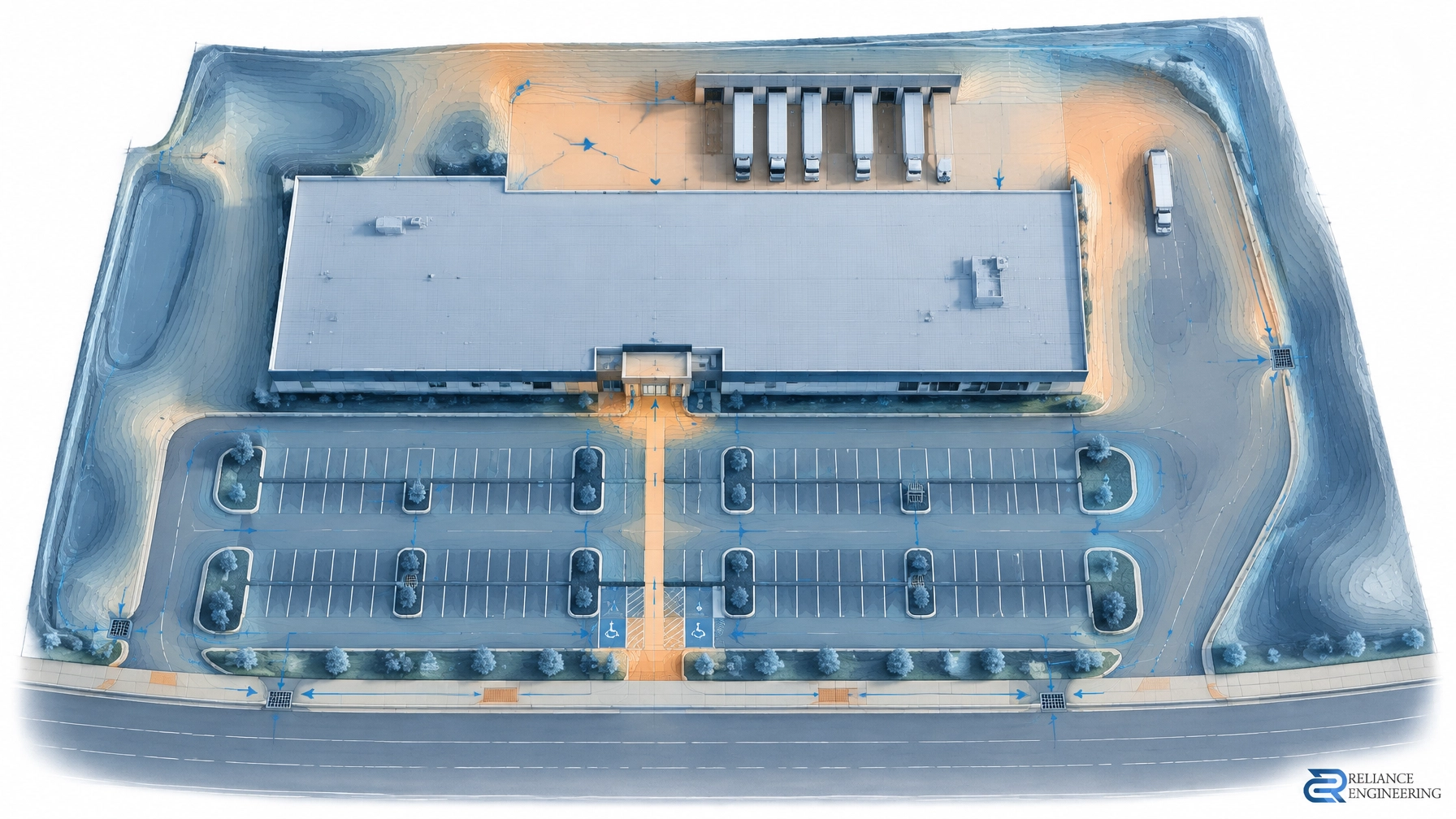
Rainfall moves according to grade. If exposed soil is located upstream of a catchbasin, roadside ditch, or watercourse, the ESC plan must show how sediment-laden runoff will be intercepted before it reaches that outlet.
This requires coordination with:
- Existing and proposed site elevations
- Lot grading and buildable grading
- Overland flow routes
- Driveway and road tie-ins
- Municipal storm systems
- Catchbasin and storm sewer locations
- Construction staging
- Stockpile and equipment areas
- Watercourses, wetlands, and natural heritage features
- Site alteration permits and municipal by-laws
- Conservation Authority requirements, where applicable
The goal is positive drainage without sediment migration offsite.

What an Ontario ESC Plan Should Show
Municipal requirements vary across Ontario. A municipality, Region, Conservation Authority, or road authority may request additional information. However, a complete ESC plan commonly includes the following controls.
1. Silt Fence Layout
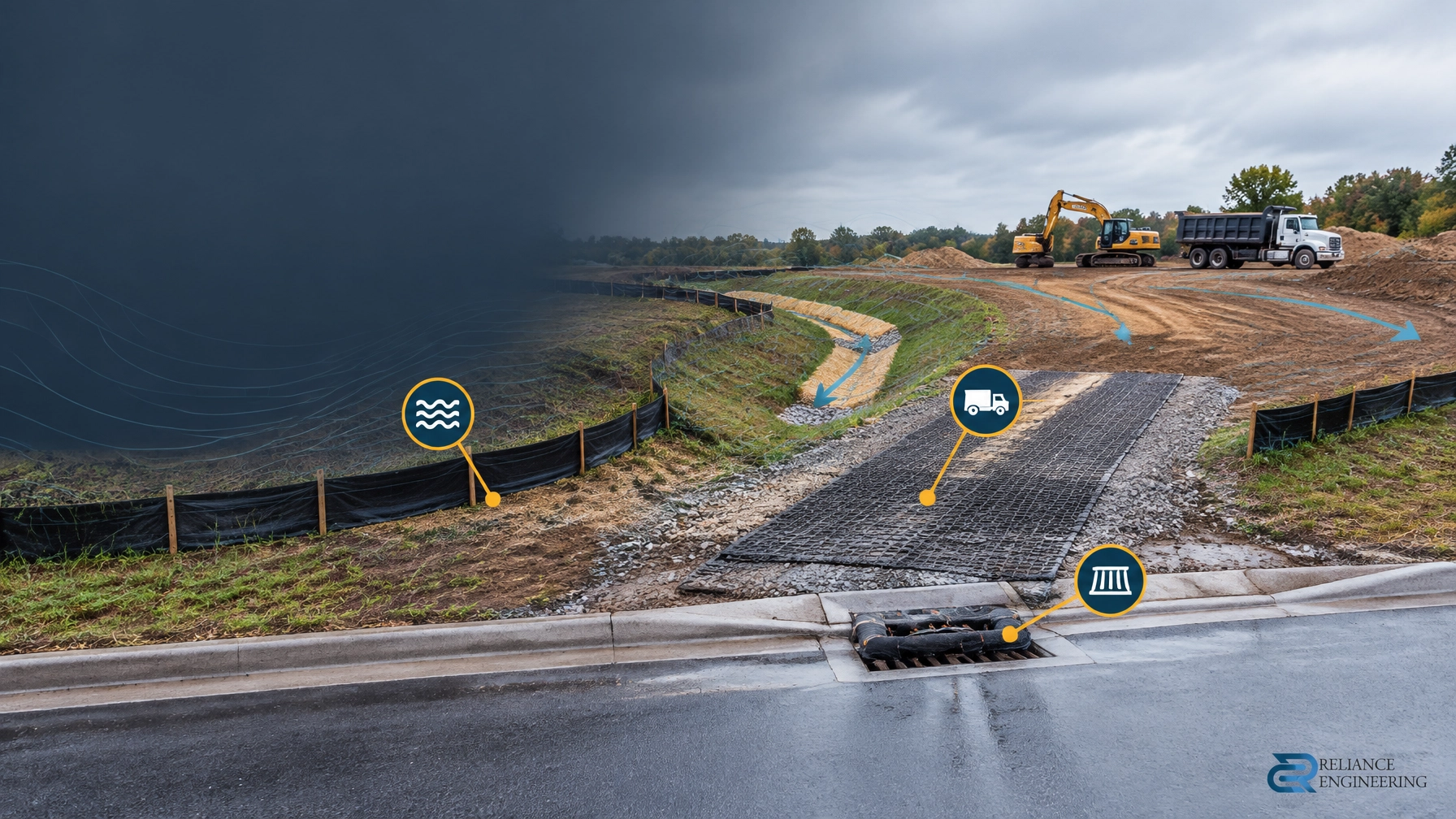
Silt fence is generally installed downslope of disturbed areas to intercept sheet flow. It must be placed where it can receive runoff without redirecting concentrated flow around the ends.
A frequent inspection failure is a silt fence installed:
- Off-contour
- On the wrong side of a slope
- Without an adequate return at the ends
- Without the fabric properly entrenched
- Across a concentrated flow route
- Too far from the sediment source to be effective
The plan should show the fence alignment, installation detail, limits of disturbance, and any double-row fencing required near sensitive features.
2. Mud Mat and Construction Access
Every active entrance and exit should have a defined construction access route. A properly designed mud mat or construction access pad reduces soil tracking onto public roads.
The access should be coordinated with:
- The proposed driveway location
- Road and curb elevations
- Site grading
- Truck turning movements
- Municipal road protection requirements
- Sweeping and maintenance procedures
A missing construction access pad is one of the most common reasons mud reaches municipal streets. Road sweeping alone does not replace a stable entrance.
3. Catchbasin Protection
Catchbasins must be protected before earthworks begin. Protection may include approved inlet protection, filter fabric, stone, concrete blocks, sediment barriers, or temporary covers, depending on the site and municipal requirements.
Catchbasin protection must be inspected and cleaned regularly. A clogged inlet can create ponding, redirect runoff toward neighbouring properties, or cause sediment to bypass the control.
4. Sediment Traps and Check Dams
Temporary sediment traps should be located at low points and near sediment sources. Check dams in temporary swales can reduce flow velocity and promote settling.
The design must account for:
- Contributing drainage area
- Temporary and permanent grades
- Storage volume
- Outlet protection
- Emergency overflow
- Maintenance access
- Construction phasing
A drainage-focused approach uses multiple barriers rather than relying on one downstream control.
5. Stockpile Protection
Stockpiles should be located away from roads, ditches, storm outlets, watercourses, and property boundaries where required. They should be stabilized when inactive and protected with appropriate cover, perimeter controls, or erosion protection.
The ESC drawing should identify:
- Stockpile location
- Maximum height and side slope
- Protection around the base
- Cover requirements
- Setbacks
- Stabilization timing
- Sediment control measures
An uncovered stockpile can become a major sediment source during one rainfall event.
6. Dewatering Notes
Excavation, trenching, and foundation work may require dewatering. Pumped water should not be discharged directly onto an erodible slope, road, ditch, storm sewer, or watercourse without suitable treatment and outlet protection.
Dewatering notes should address:
- Pump location
- Discharge route
- Filter bags or settling measures
- Splash pads or energy dissipation
- Inspection requirements
- Turbidity control
- Emergency procedures
- Additional approvals, where applicable
Depending on the volume and conditions, a Permit to Take Water or other agency review may be required.
7. Construction Limit Fencing
Construction limit fencing helps prevent unnecessary disturbance to vegetation, drainage features, natural heritage areas, and adjacent lands.
It also defines where equipment, materials, and workers may operate. Protecting existing vegetation and natural drainage areas can reduce erosion risk before construction starts.
Embedded ESC and Grading Layout
The following conceptual drawing illustrates how silt fence lines, catchbasin protection, construction access, sediment traps, check dams, stockpile protection, and dewatering controls can be coordinated on one plan.

Common ESC Inspection Failures
Most ESC failures are not caused by a lack of available control products. They occur because the controls are poorly located, incorrectly installed, or not maintained.
Common problems include:
-
Silt fence installed on the wrong side of the slope
The fence must be located downslope of the disturbed area and aligned for the expected sheet flow. -
Silt fence installed across concentrated flow
Silt fence is not a substitute for a stabilized swale, ditch, sediment trap, or check dam. -
Unprotected catchbasins
Catchbasins must be protected before runoff can reach them. -
Mud tracked onto municipal roads
A stable construction entrance, regular inspection, and prompt sweeping are required. -
No construction access pad
Temporary access should be shown and installed before heavy vehicle movement begins. -
Stockpiles left uncovered
Stockpiles need stabilization or cover when they will remain inactive. -
Missing dewatering plan
Pumped water requires a controlled discharge route and appropriate erosion protection. -
Controls not maintained after rainfall
ESC measures should be inspected regularly and after significant rainfall events. Damaged controls should be repaired promptly. -
No winter stabilization strategy
Projects extending beyond one construction season need a plan for inactive areas, exposed slopes, stockpiles, and temporary drainage.
Maintenance and inspection notes should be included directly in the drawing set. The contractor must also understand that site conditions may require additional controls as grading and construction progress.
Ontario Approvals and Agency Requirements
Across Ontario, ESC plans may support several approval processes, including:
- Site alteration permits
- Site Plan Approval applications
- Building permit submissions
- Severance and Consent applications
- Plan of Subdivision applications
- Zoning By-law Amendment and Official Plan Amendment applications
- Municipal engineering review
- Conservation Authority review
- Environmental Compliance Approval submissions, where applicable
- Road or driveway access approvals
Ontario’s B-6 Guidelines for Evaluating Construction Activities Impacting on Water Resources emphasize planning, source control, protection of water resources, and regular inspection and maintenance.
Municipal terms of reference may require a professional engineer to prepare and stamp the ESC plan. For example, York Region’s Erosion and Sediment Control Plan Terms of Reference identify the need to prevent negative impacts on engineering and natural drainage systems caused by site alteration.
Requirements also differ between Conservation Authorities. The Lake Simcoe Region Conservation Authority Technical Guidelines for Stormwater Management Submissions call for an at-source, multi-barrier approach, clear construction phasing, inspection, maintenance, and a goal of no sediment migration offsite.
Always confirm the applicable municipal and agency requirements during pre-consultation.
ESC Must Be Coordinated With Grading and Servicing
An ESC plan is most effective when prepared with the civil design package.
A Site Grading Plan establishes elevations, slopes, swales, drainage routes, driveway grades, road tie-ins, and overland flow routes. This provides the foundation for locating silt fences, traps, check dams, and protected outlets.
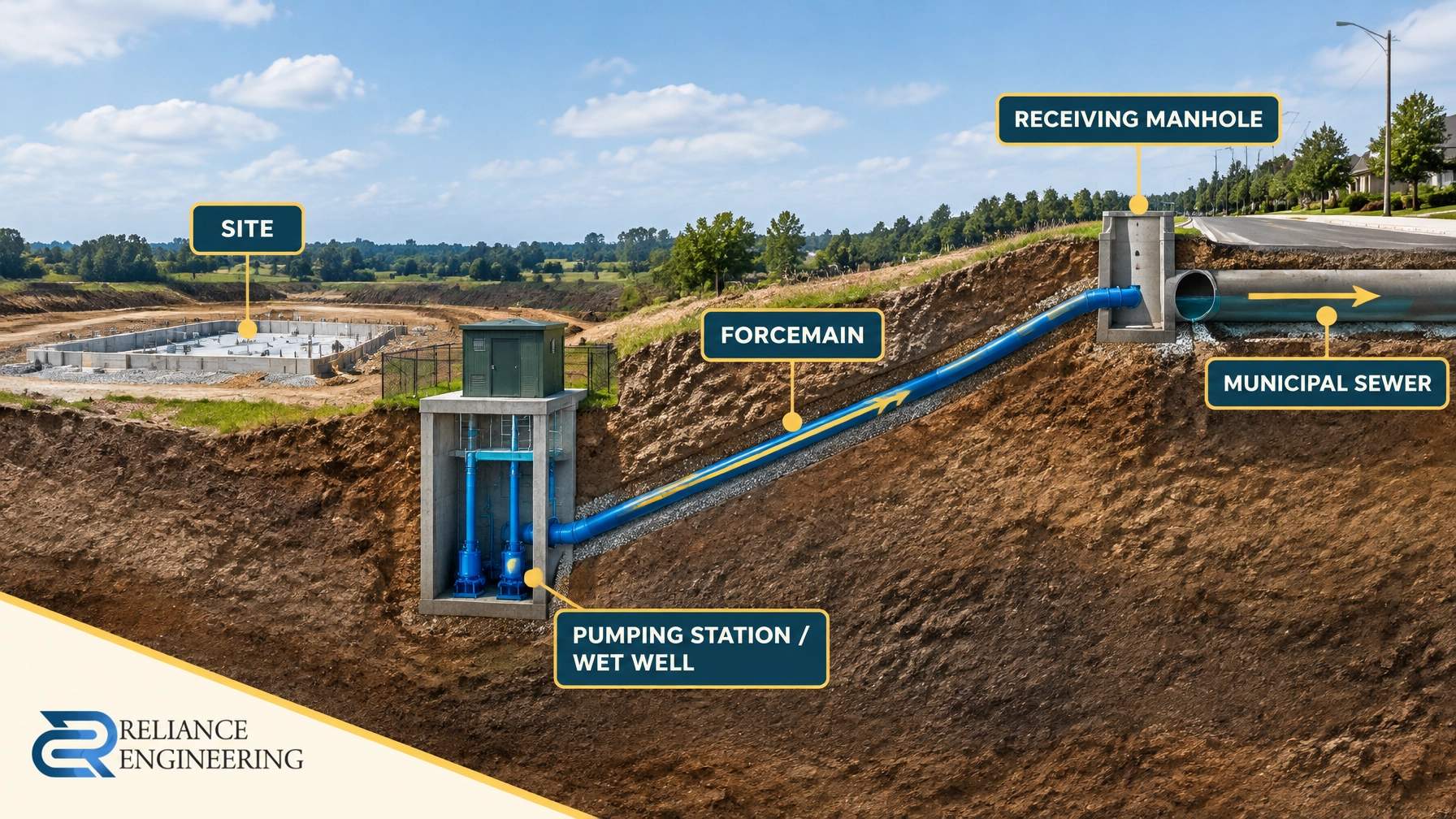
Site Servicing Plans coordinate storm sewer connections, pipe slopes, catchbasins, manholes, and municipal infrastructure. The ESC plan must protect these systems during construction.
For larger projects, Stormwater Management Reports and a Functional Servicing Report may be required. These documents assess runoff, outlets, drainage capacity, stormwater controls, and servicing strategies.
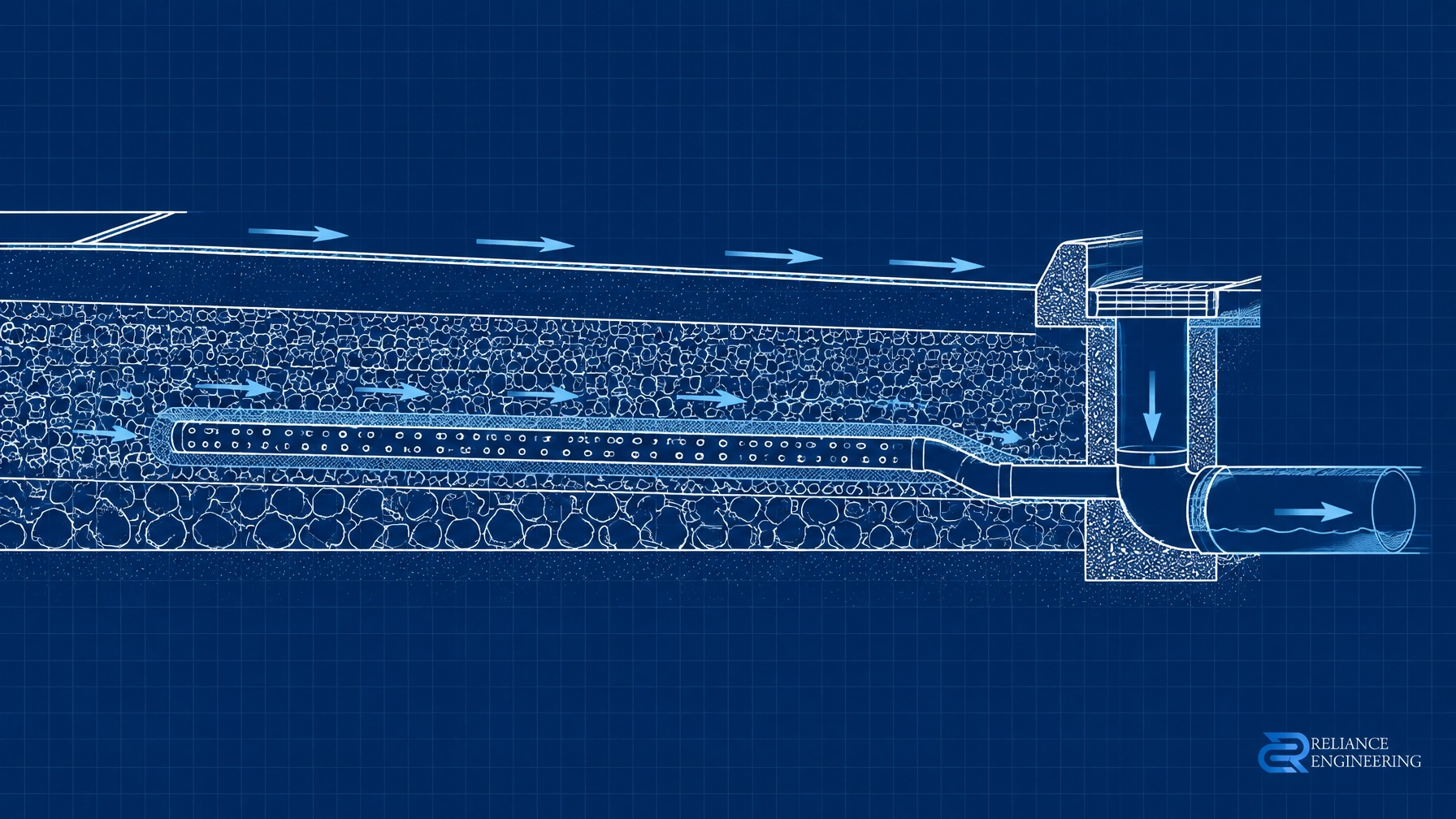
This coordinated design approach is also important for existing commercial sites. Projects involving commercial parking lot drainage Ontario, asphalt regrading, ponding solutions, and commercial property grading fixes often require temporary ESC controls during excavation, milling, reconstruction, or drainage improvements.
Prepare Clear, Buildable ESC Drawings
A strong ESC plan should be practical for the contractor and easy for the reviewer to follow. It should show where controls are installed, when they are installed, how they are maintained, and how they are adjusted as the work changes.
Reliance Engineering prepares clear drawings and approval support for projects across Ontario. Our ESC plans include practical controls, drainage-aware design, construction notes, inspection requirements, and permit-ready drawings with engineer’s stamp.
Contact us before site disturbance begins to discuss your project and obtain expert advice.
Contact Reliance Engineering
Naresh Ochani, P.Eng. M.Eng.
PEO Certificate of Authorization: 100548882
6850 Millcreek Dr, Mississauga, ON L5N 2H4
Phone: 647-385-6418
Email: [email protected]
Office hours:
Monday–Friday: 9:00 AM–5:00 PM
Saturday: 12:00 PM–2:00 PM
Sunday: Closed
Request an ESC Plan Consultation
Reliance Engineering provides civil engineering services for grading, drainage, stormwater, site servicing, municipal approvals, and land development projects across Ontario.