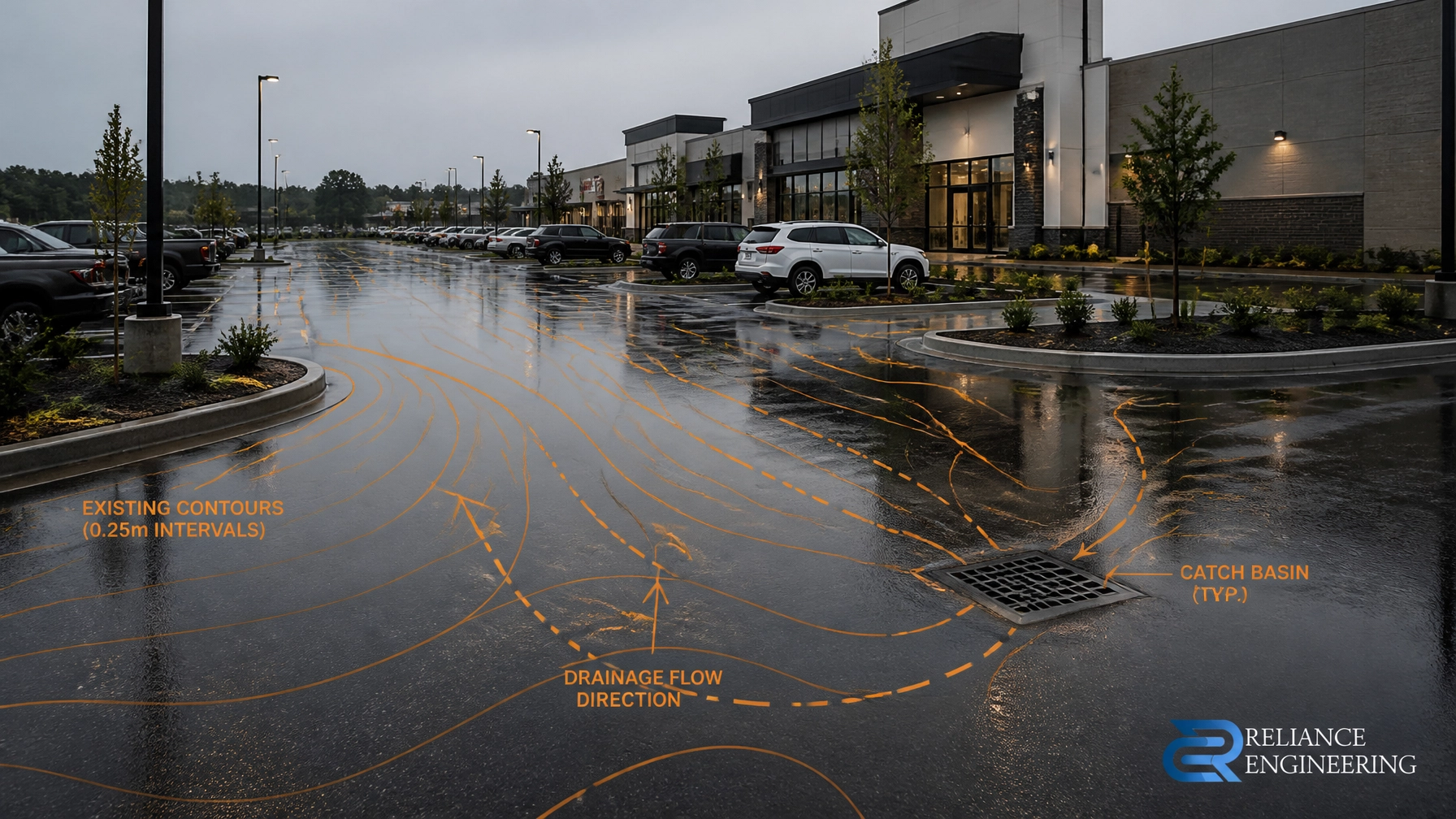
In 2026, a parking lot is no longer just a place to park cars. It is a critical piece of infrastructure that dictates the longevity of your asset, the safety of your tenants, and your compliance with increasingly rigid Ontario environmental standards. If you are a commercial property owner or developer in Ontario, "good enough" drainage is a liability you can't afford.
At Reliance Engineering, we’ve seen how poorly managed water destroys asphalt, creates massive liability through ice accumulation, and leads to costly municipal fines. Here is why parking lot drainage is the most important investment you'll make this year.
The High Cost of Neglect: ROI and Asset Protection
Water is the primary enemy of asphalt. When drainage fails, water seeps into the sub-base, weakening the foundation and leading to "alligator cracking," ruts, and eventual potholes. In the climate of 2026: characterized by high-intensity storm events: pavement that doesn't shed water effectively will fail twice as fast.
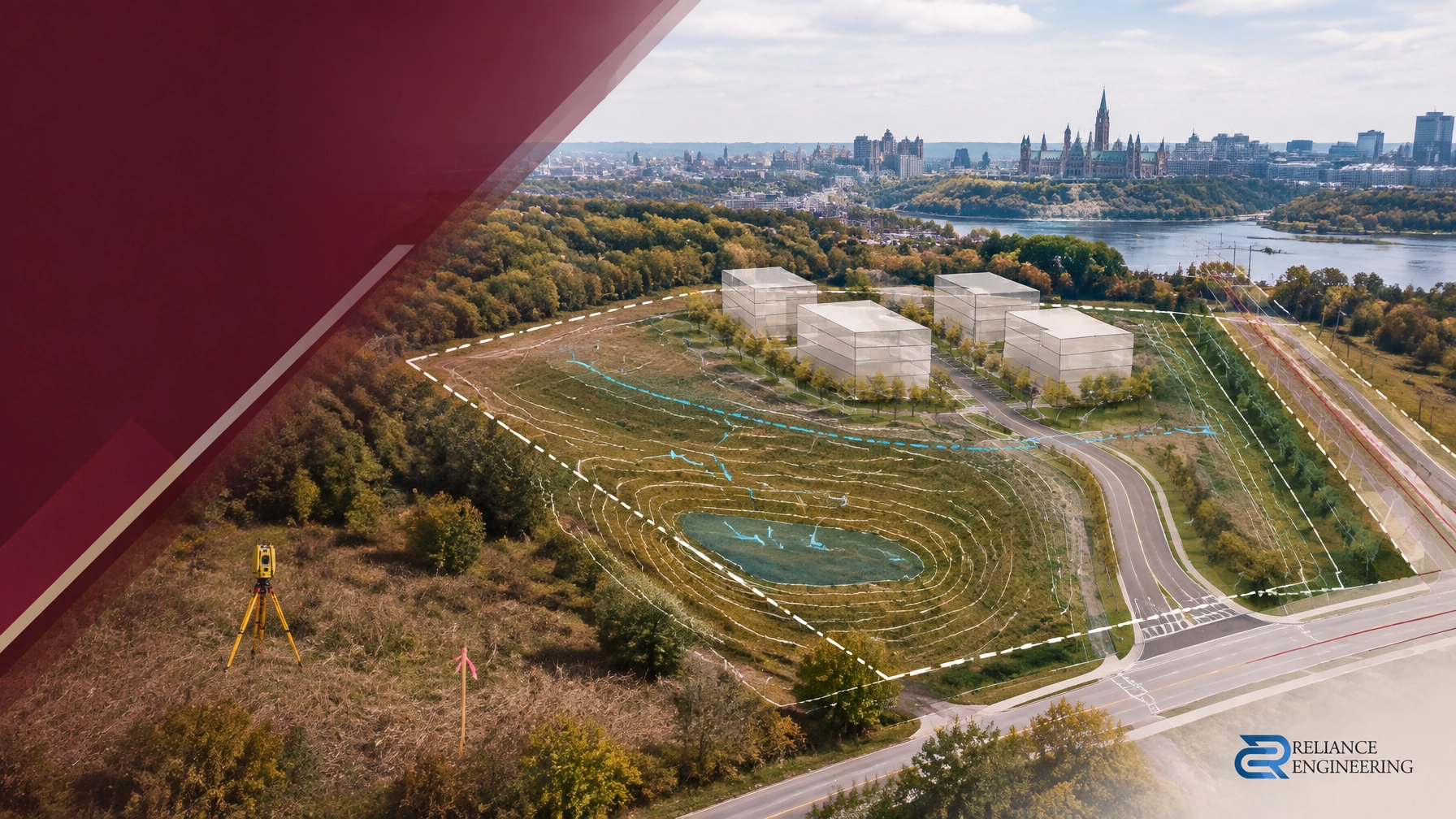
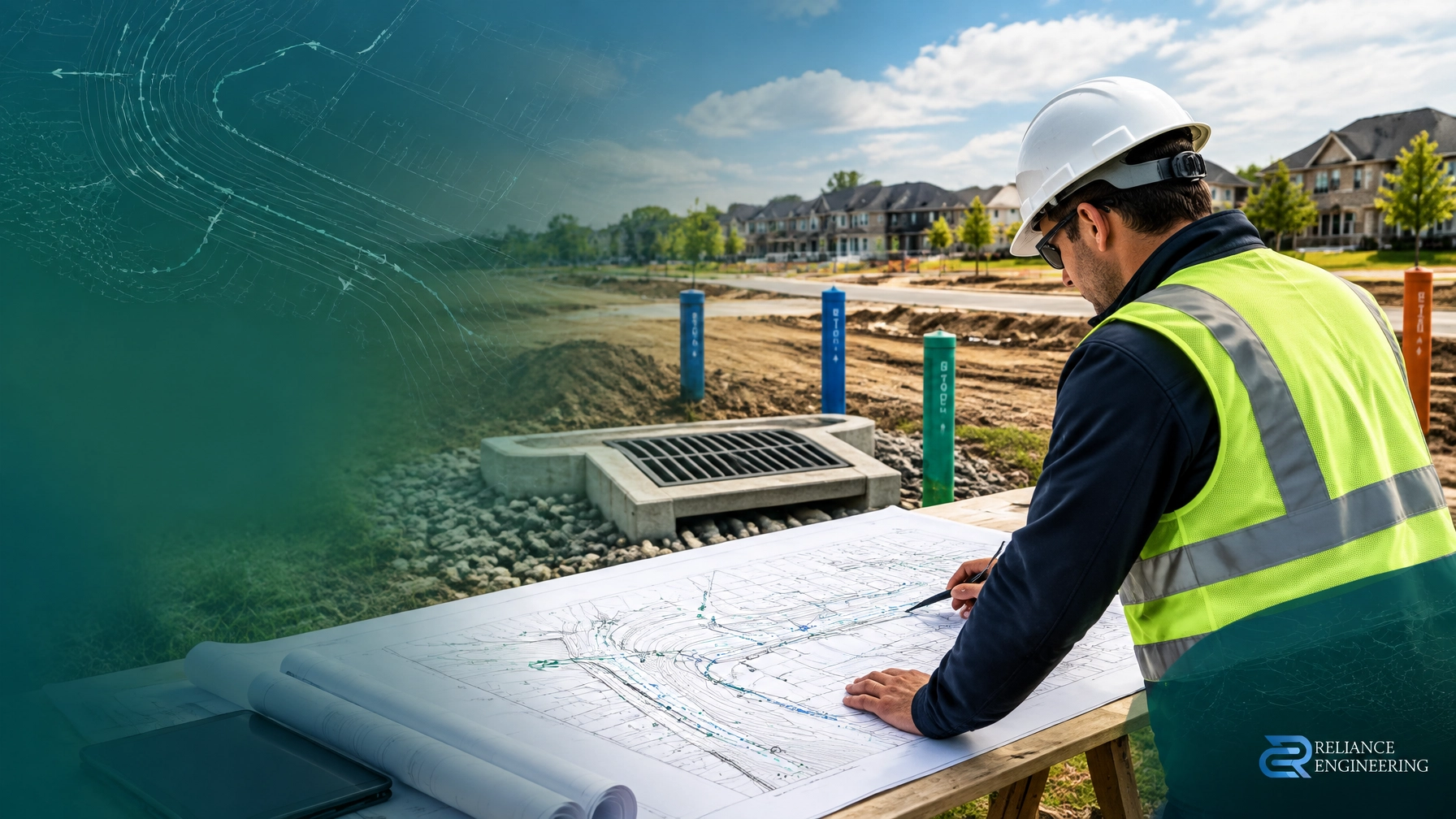
Proper Site Grading Plans are not just a bureaucratic hurdle; they are your first line of defense. By maintaining the correct slopes, you ensure that runoff moves quickly toward your Storm System Design, keeping the surface dry and the structural integrity of your lot intact.
Technical Standards: The Numbers You Need to Know
Ontario’s regulatory landscape for commercial sites has tightened. Reviewers in 2026 are looking for precision. Here are the benchmarks we use to ensure your site gets approved on the first submission:
1. The Critical Slope Range
For a functional commercial lot, grades must typically stay between 0.5% and 5%.
- Under 0.5%: You risk nuisance ponding, which leads to ice patches in the winter: a massive slip-and-fall liability.
- Over 5%: You face erosion issues and potential safety hazards for moving vehicles.
2. AODA Compliance (1:48 is the Law)
Accessibility is not optional. Under the Accessibility for Ontarians with Disabilities Act (AODA), accessible parking spaces and their access aisles cannot exceed a slope of 1:48 (approximately 2.08%) in any direction. This requires surgical precision in your Site Plan Approval Drawings.

Understanding Stormwater Storage and Ponding
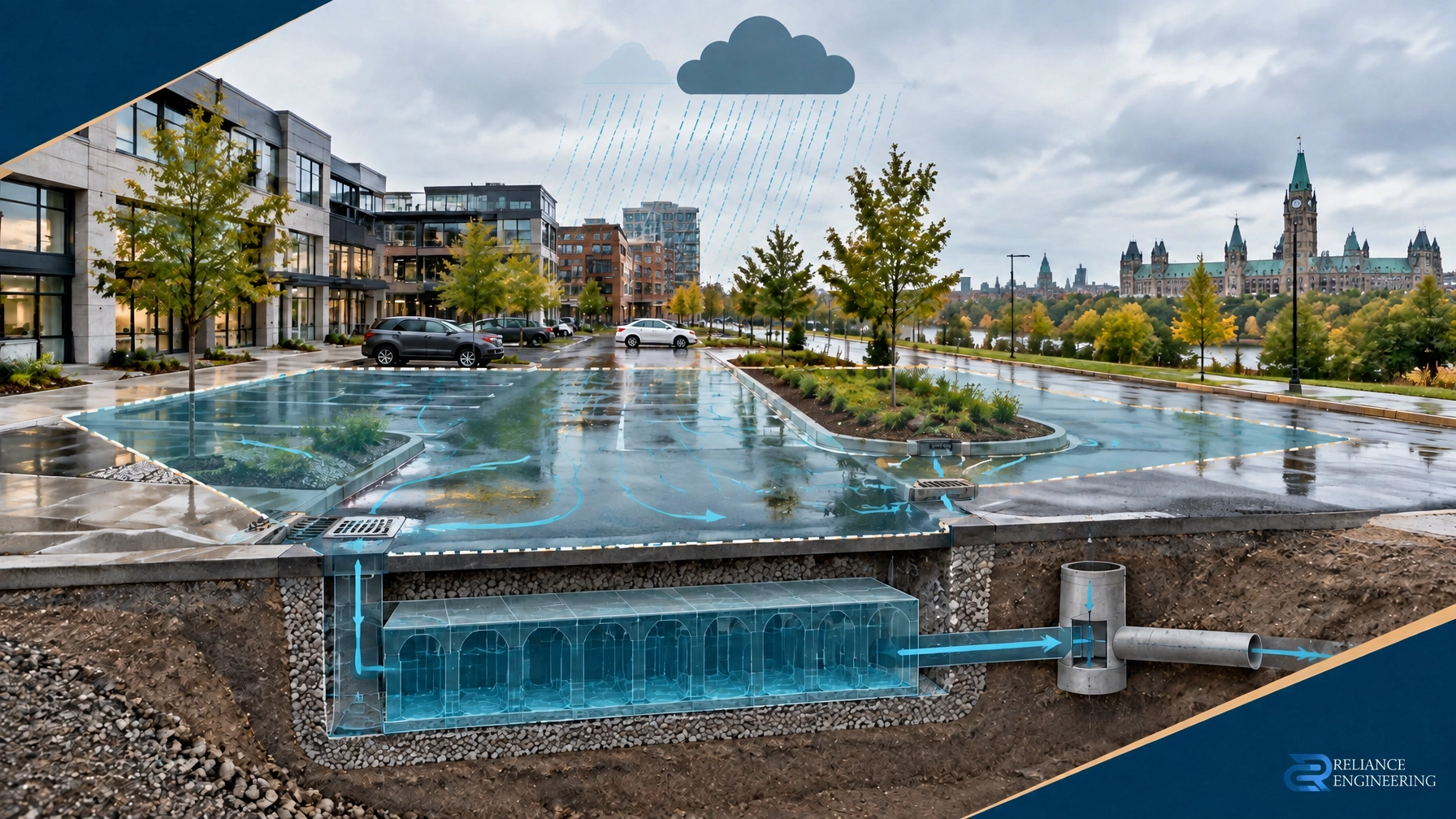
Modern Ontario municipalities often require the parking lot itself to act as a temporary storage reservoir for stormwater. This reduces the strain on the municipal sewer system during peak rainfall.
- Maximum Ponding Depth: Generally limited to 300 mm (12 inches).
- Duration: Water must clear within one hour.
- Location: Ponding areas must be strategically placed away from building entrances and critical fire routes.
At Reliance Engineering, we utilize sophisticated Stormwater Management Reports to model these events, ensuring your lot stores what it must without flooding your tenants.
The Infrastructure Beneath the Surface
A parking lot's drainage is only as good as the pipes and basins beneath it. Our Site Servicing Plans focus on the "invisible" assets that keep your business running:
- Catch Basins: Strategically placed at low points to intercept sheet flow.
- Orifice Controls: Precisely sized (typically 75mm to 100mm) to regulate the flow of water leaving your site.
- Overland Flow Paths: Emergency routes designed to carry water safely away from buildings if the storm system is overwhelmed.

Sustainability and Low Impact Development (LID)
In 2026, sustainability is a requirement, not a buzzword. Many Ontario municipalities now incentivize or mandate Low Impact Development (LID). This includes:
- Permeable Pavers: Allowing water to soak into the ground rather than running off.
- Bioswales: Naturalized drainage channels that filter pollutants.
- Oil-Grit Separators (OGS): Specialized units that remove hydrocarbons and sediment before water enters the public system.
Implementing these solutions can speed up your Building Permit Drawings approval process by demonstrating a commitment to environmental stewardship.
Erosion and Sediment Control: Protecting Your Site During Construction
If you are breaking ground on a new project, drainage begins before the first layer of asphalt is poured. Erosion and Sediment Control Plans are essential to prevent silt and debris from clogging municipal drains, which can result in immediate "Stop Work" orders.

Why Reliance Engineering?
We don’t just draw plans; we secure approvals. With over 20 years of principal engineer experience, we understand the specific requirements of every municipality across Ontario. Our goal is to get your designs approved in one submission, saving you time, money, and frustration.
Whether you are dealing with a complex Functional Servicing Report or need a precise Sanitary Sewer Design, we take full ownership of the process.

Act Now to Future-Proof Your Asset
Don't wait for the next heavy rain to find out your drainage is insufficient. Whether you are planning a new commercial development or need to remediate an existing lot, the time to act is now.
Contact Information
For expert consulting and rapid permit approvals across Ontario, reach out to us today.
Naresh Ochani, P.Eng. M.Eng.
Reliance Engineering
Address: 6850 Millcreek Dr, Mississauga, ON L5N 2H4
Phone: 647-385-6418
Email: [email protected]
Website: www.relianceengineering.ca
Office Hours
- Saturday: 12:00 PM – 2:00 PM
- Sunday: Closed
- Monday – Friday: Professional Consulting by Appointment