In the high-stakes world of Industrial, Commercial, and Institutional (ICI) development across Ontario, speed isn't just a luxury: it’s the difference between a profitable venture and a project stalled in municipal red tape. Whether you are building a massive logistics warehouse, a new shopping plaza, or a private school, your primary hurdle isn't just the construction itself; it's securing the municipal "green light" to move forward.
The most critical document in this process? The Functional Servicing Report (FSR).
At Reliance Engineering, we’ve spent over two decades navigating the complexities of land development. We’ve seen hundreds of projects. The ones that move to construction quickly all have one thing in common: a bulletproof FSR that addresses municipal concerns before the reviewer even asks the question.
In this guide, we reveal why the FSR is your project’s "make-or-break" document and how a precision-engineered report can slash your approval timelines.
What Exactly is a Functional Servicing Report?
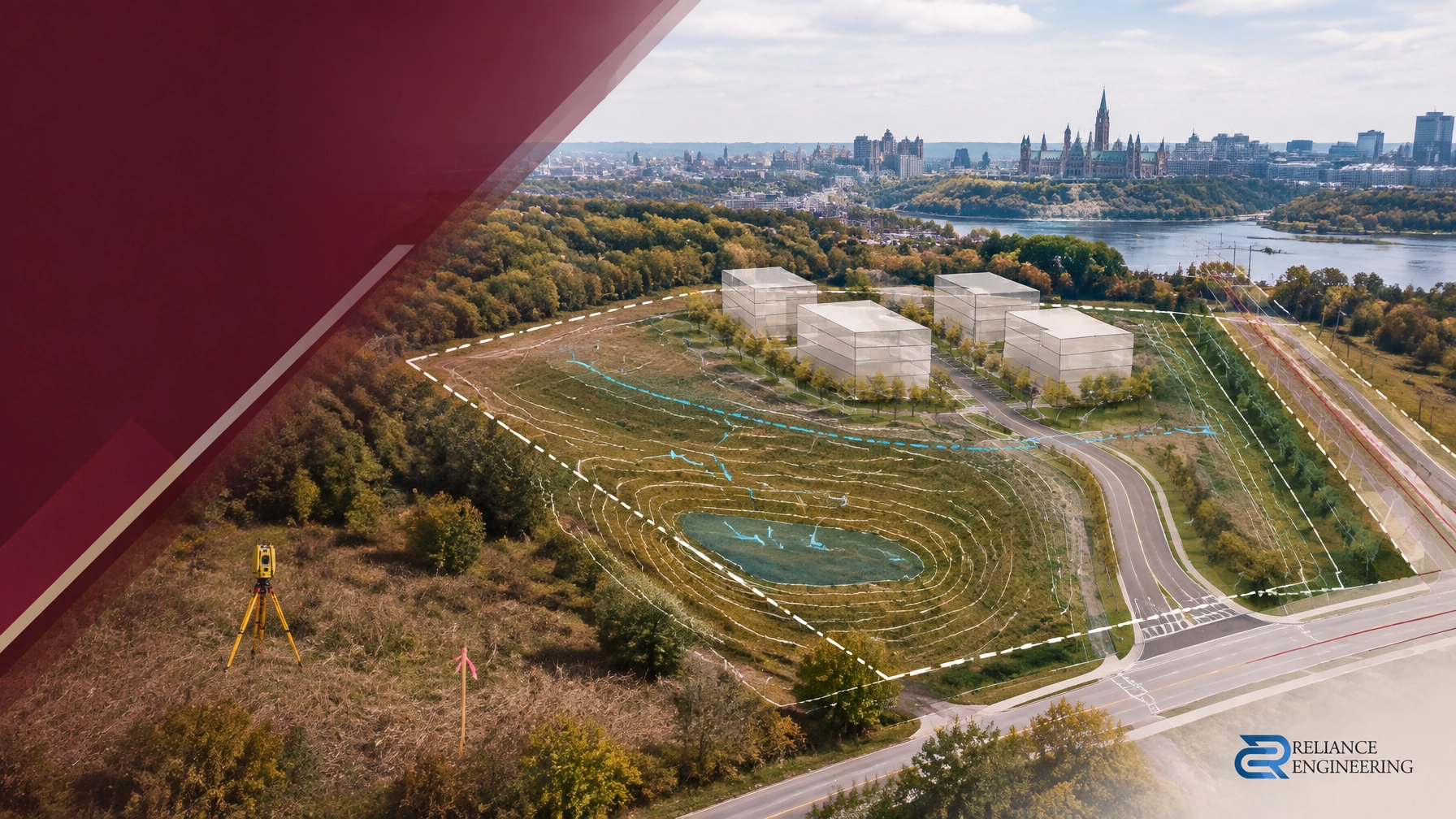
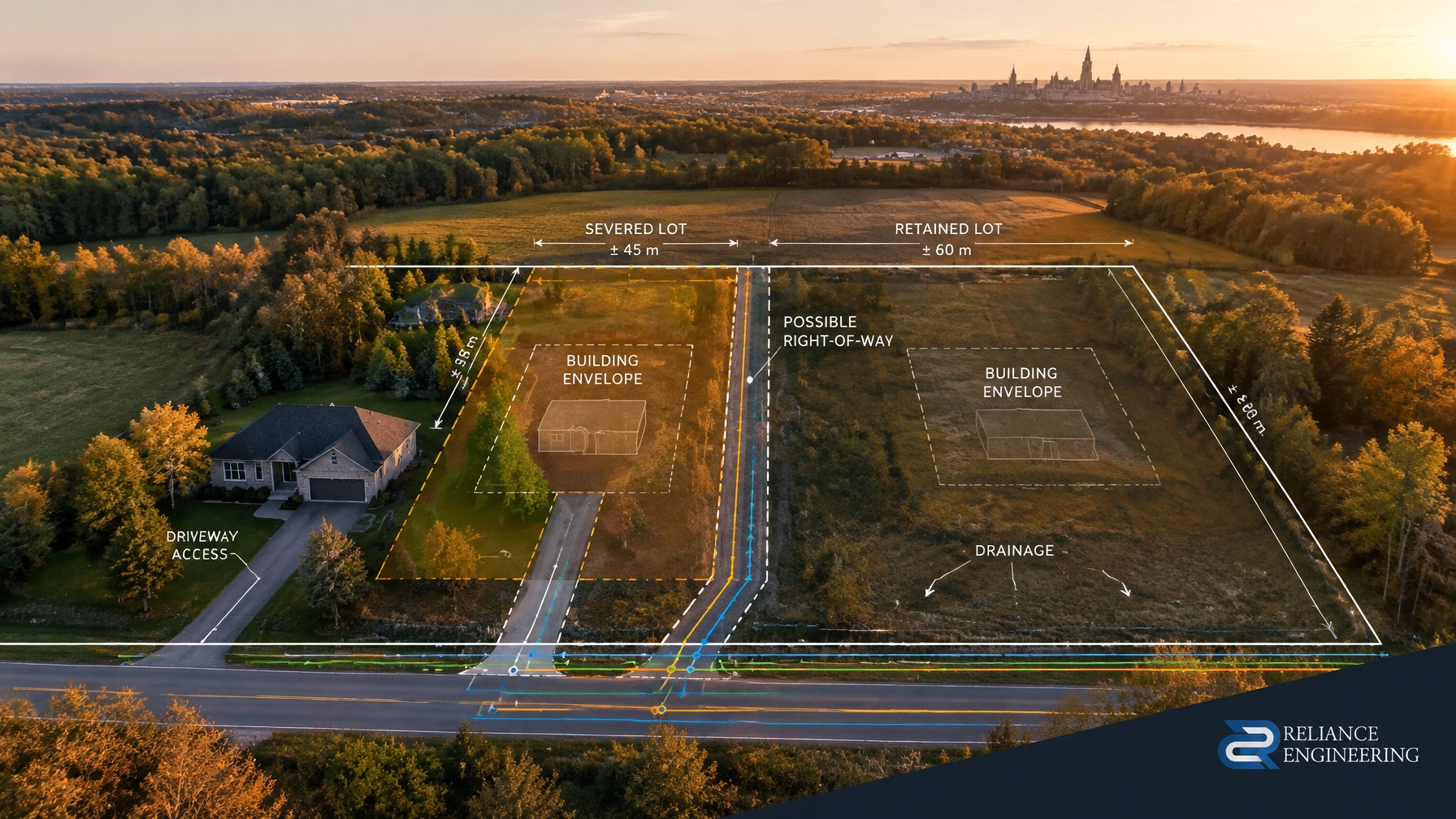
A Functional Servicing Report is a comprehensive technical document that proves your proposed ICI development can be adequately serviced by existing or planned infrastructure. It isn't just a "box to check" for your Site Plan Approval (SPA). It is the technical foundation that demonstrates your project is actually feasible.
An FSR evaluates four primary pillars:
- Water Supply: Ensuring there is enough pressure and volume for domestic use and, more importantly, fire protection.
- Sanitary Sewers: Confirming the municipal pipes can handle the wastewater generated by your specific use.
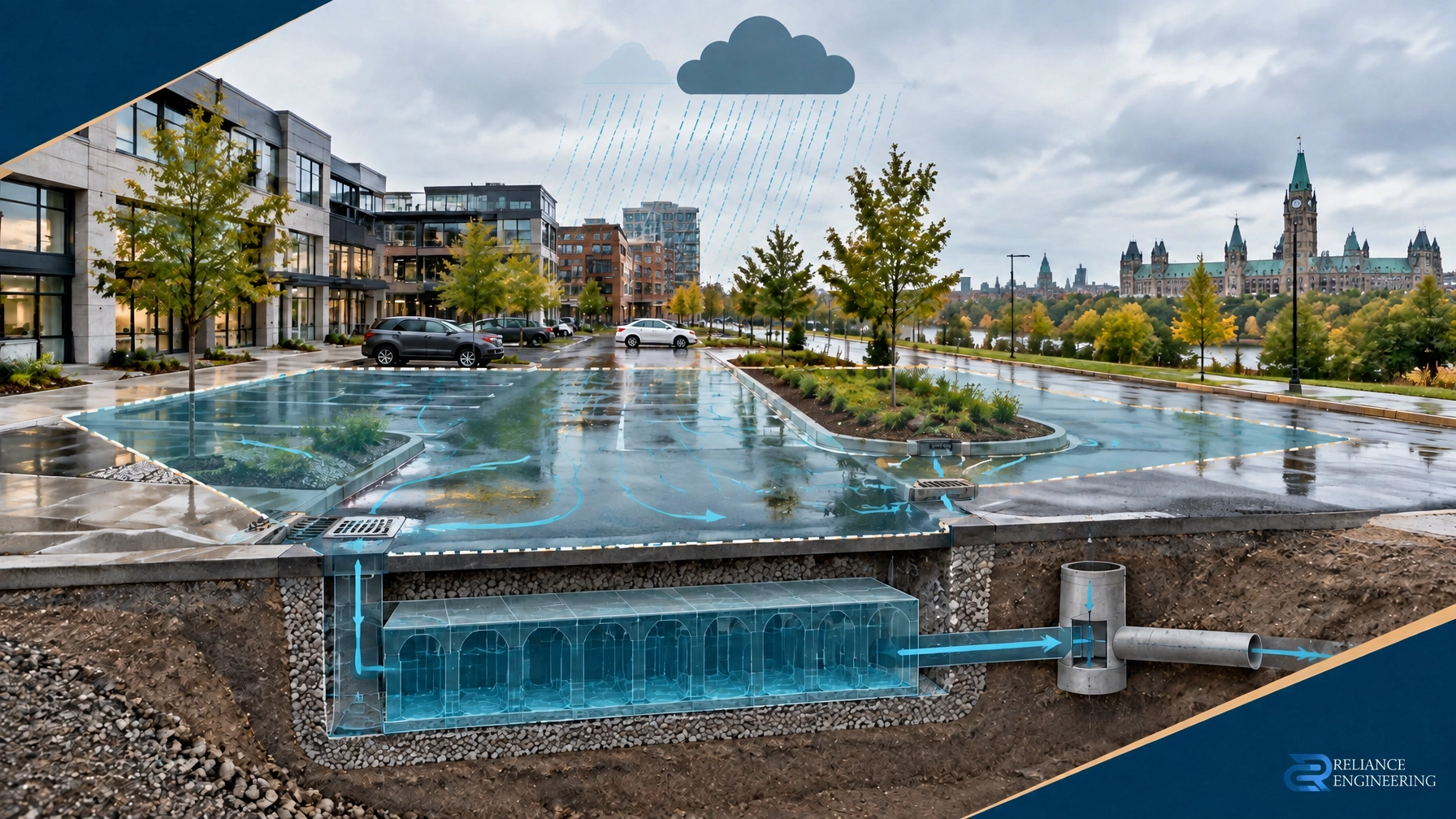
- Stormwater Management (SWM): Designing systems to manage runoff, prevent flooding, and protect water quality.
- Site Grading: Coordinating the elevations to ensure natural drainage and structural integrity.
Without a stamped FSR from a licensed Professional Engineer (P.Eng.), your application will likely be deemed "incomplete" and tossed back to the bottom of the pile.

Why the FSR is the "Gatekeeper" of ICI Approvals
Municipalities across Ontario are under immense pressure. Infrastructure in many areas is aging or operating at near-maximum capacity. When you submit a plan for a new 100,000 sq. ft. industrial facility, the city's first question isn't "how does it look?": it’s "does our system have enough room for this?"
1. The Capacity Allocation Challenge
Many developers don't realize that municipal capacity (water and sewer) is a finite resource. It is often allocated on a first-come, first-served basis. An FSR acts as your formal request for this allocation. If your report is weak or inaccurate, the municipality may deny your project simply because they aren't convinced you’ve accounted for the impact on their systems.
2. Proving Regional Compliance
For projects in regions like Peel, York, or Durham, you aren't just dealing with one set of rules. You often have to satisfy both local municipal requirements and regional infrastructure standards. A high-quality FSR bridges this gap, showing that your site servicing plan aligns with the broader Master Servicing Plans of the region.
The ICI Dealbreaker: Fire Flow Requirements
If there is one thing that kills an ICI project faster than anything else, it’s Fire Flow.
Industrial and commercial buildings have significantly higher fire protection requirements than a standard 4-plex or single-family home. If your FSR doesn't prove that the municipal water main can provide the necessary liters per second (L/s) during a fire event, your building permit will be denied.
At Reliance Engineering, we conduct rigorous hydraulic modeling as part of our Site Servicing Plans. We don't just guess; we use real-world data to ensure your fire hydrants and internal sprinkler systems will meet the Ontario Building Code (OBC) and municipal standards. If the pressure is too low, we identify the need for on-site booster pumps or water storage tanks early in the design phase, preventing costly surprises during construction.

Stormwater Management: Turning Constraints into ROI
For ICI sites, which are typically covered in large roofs and expansive parking lots, stormwater management is the biggest engineering hurdle.
Municipalities are now enforcing strict "Quantity, Quality, and Water Balance" requirements. You cannot simply pipe all your rain runoff into the street. You must treat it, slow it down, and often infiltrate it back into the ground.
A poorly designed SWM strategy in your FSR can eat up valuable buildable area. If your engineer only knows how to design large, open "dry ponds," you lose land that could have been used for more parking or a larger warehouse footprint.
The "secret" we employ at Reliance Engineering is utilizing innovative solutions like underground storage chambers, oil-grit separators (OGS), and Low Impact Development (LID) techniques. This allows you to maximize your Floor Space Index (FSI) while remaining fully compliant with environmental regulations.
Why Precision Matters: The One-Submission Goal
Municipal reviewers are overworked. If they open an FSR and find errors in the drainage calculations or missing flow data, they won't fix it for you. They will issue a list of "comments" and send you to the back of the line. This cycle of "submit-review-comment-resubmit" can add 6 to 12 months to your timeline.
Our goal is simple: Approval in one submission.
We achieve this through:
- Deep Municipal Knowledge: We know the specific quirks of every municipality across Ontario. We know what a reviewer in Mississauga wants to see versus a reviewer in Vaughan.
- Principled Ownership: Naresh Ochani, P.Eng. M.Eng., takes full ownership of every report. We don't just "crank out" drawings; we engineer solutions.
- Early Engagement: We encourage our clients to involve us during the Functional Servicing Report stage before they even close on a piece of land. This due diligence ensures you aren't buying a site that is impossible to service.

Conclusion: Don't Let Engineering Be Your Bottleneck
Your ICI project is a massive investment. Don't let a "template" Functional Servicing Report be the reason your project stalls. In 2026, the regulatory environment in Ontario is more complex than ever. You need an engineering partner who understands the high-energy, fast-paced nature of B2B development.
At Reliance Engineering, we provide the technical precision and municipal expertise required to get your shovels in the ground faster. Whether you need a Stormwater Management Report or a complete suite of Site Plan Approval Drawings, we are here to guide you.
Ready to Fast-Track Your Approval?
Stop waiting for municipal comments. Get it right the first time with Reliance Engineering.
Contact Us Today:
- Principal Engineer: Naresh Ochani, P.Eng. M.Eng.
- Phone: 647-385-6418
- Email: [email protected]
- Office Address: 6850 Millcreek Dr, Mississauga, ON L5N 2H4
- Office Hours: Saturday 12:00 PM–2:00 PM; Sunday Closed.