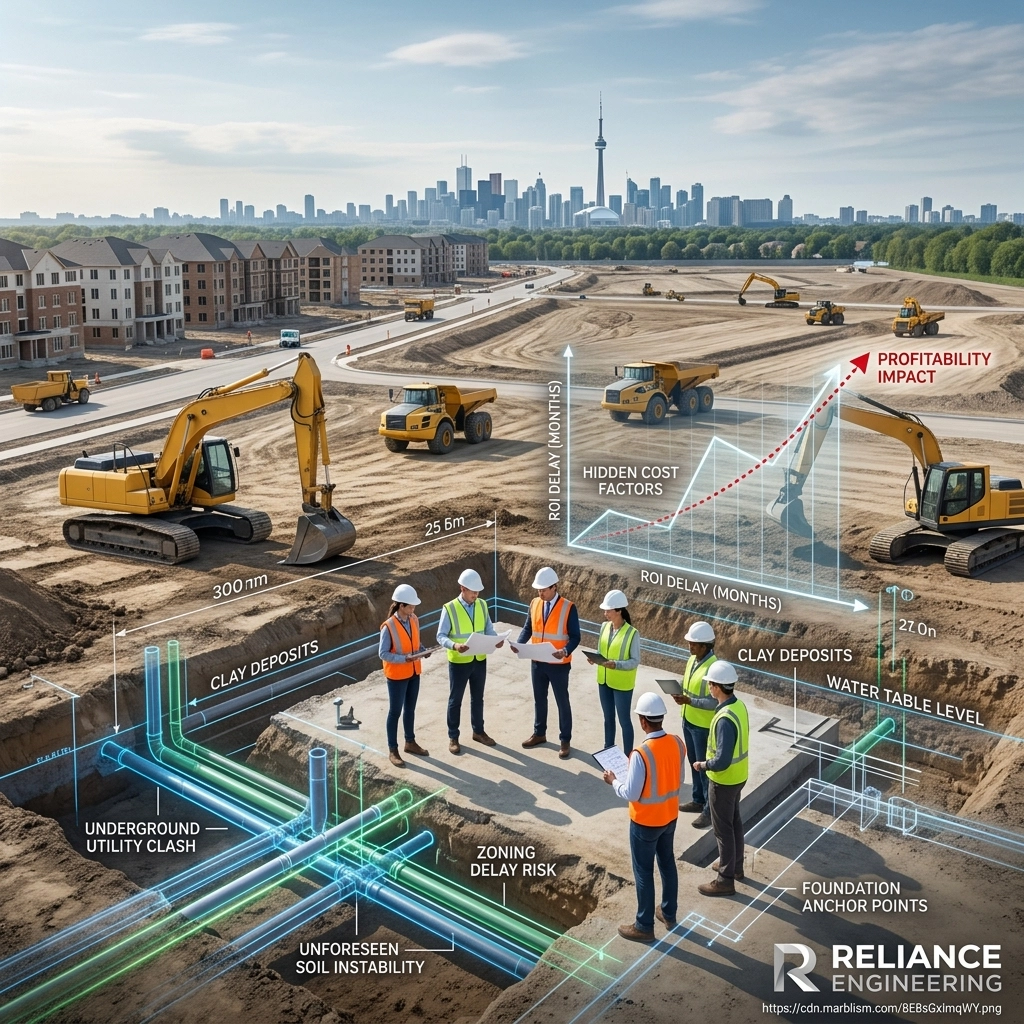
Land development in Ontario is a high-stakes game. Investors see the soaring demand for housing and the lucrative potential of multi-unit conversions, but many walk into a financial buzzsaw because they overlook the technical "hidden killers" that drain capital before the first brick is laid.
At Reliance Engineering, we see it daily. A developer buys a "perfect" lot only to find out the site grading requires half a million dollars in retaining walls, or the local sanitary sewer is at maximum capacity. These aren't just minor setbacks; they are Return on Investment (ROI) killers.
If you want to survive and thrive in Ontario’s development landscape, you need to look past the architectural renderings and focus on the civil engineering realities. Here is what the industry veterans know: and what your average consultant might not tell you.
The Illusion of the "Clean" Site
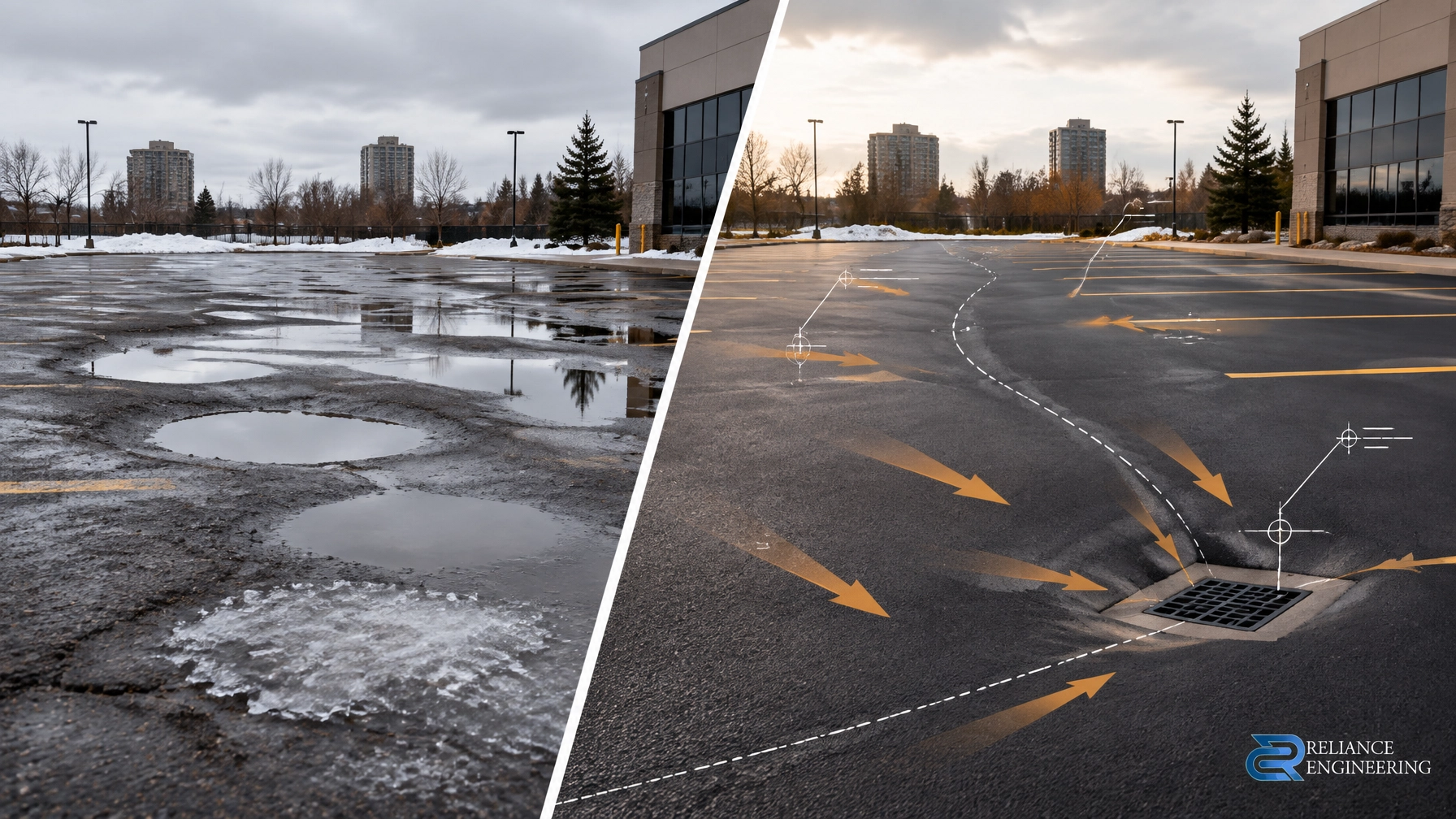
Every developer wants a flat, clear lot. On paper, it looks simple. In reality, a flat lot can be your worst enemy. Why? Drainage.
In Ontario, municipal standards for drainage are incredibly strict. If your site doesn't have a natural slope toward a legal outlet, you are looking at expensive pumping systems or massive amounts of imported fill.
Hidden Killer #1: The Grading Nightmare
Site grading is the foundation of your project's budget. A poor site grading plan can lead to:
- Excessive Retaining Walls: A single 3-foot retaining wall running the length of a property line can cost tens of thousands of dollars.
- Export/Import Costs: If your site has "too much" dirt (cut) or needs more (fill), the trucking costs in Ontario are astronomical. Moving 500 cubic meters of soil can easily break a small developer’s budget.
- Foundation Depth: If the grading isn't optimized, you might be forced to pour deeper foundations than anticipated, adding unnecessary concrete costs.
At Reliance Engineering, we prioritize balanced grading. Our goal is to keep as much soil on-site as possible while ensuring every drop of water moves exactly where it needs to go.

The Servicing Capacity Trap
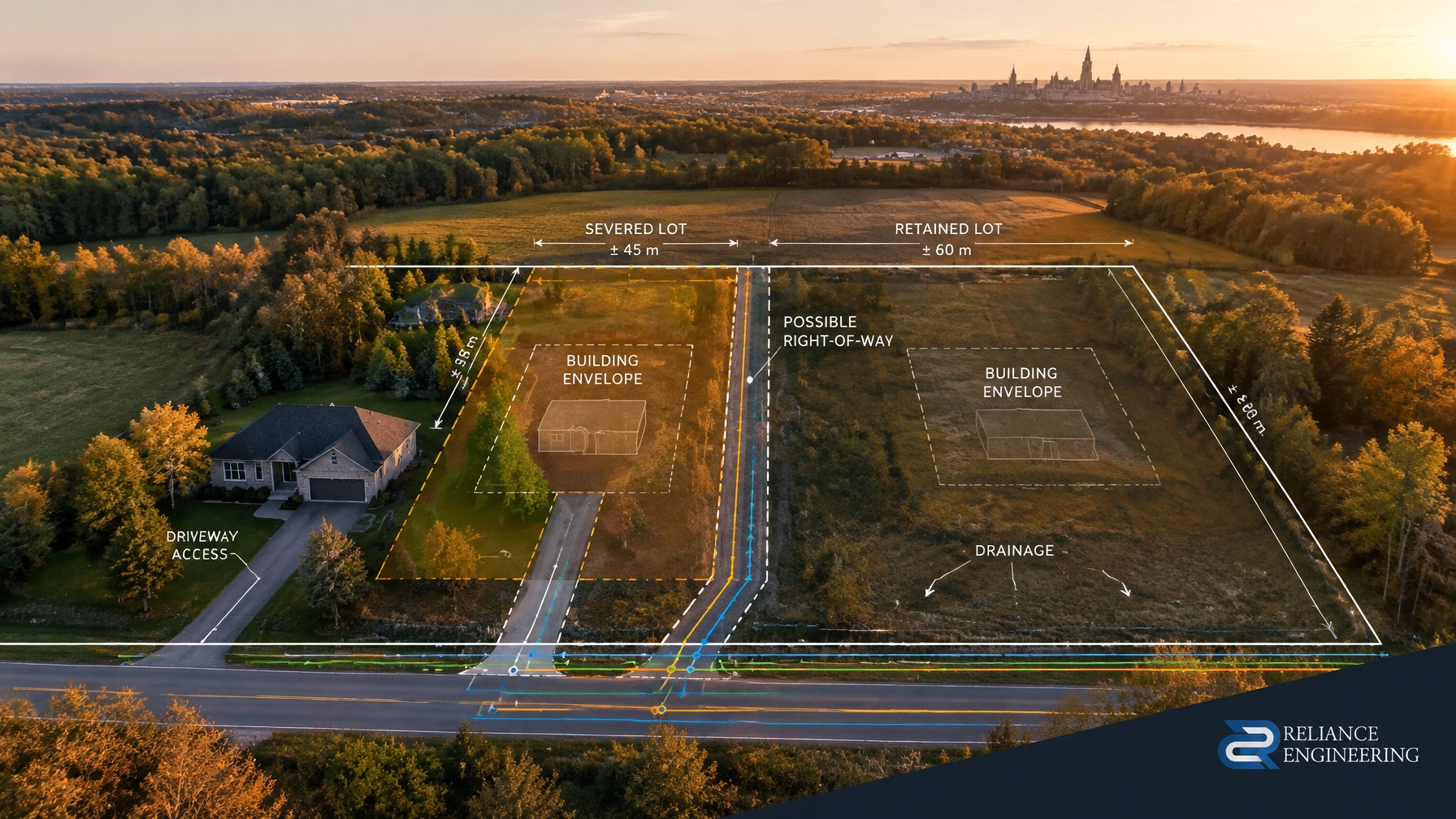
You found a lot that is zoned for a 4-plex. You’ve done the ROI math based on four rental units. But have you checked the pipe in the street?
Many areas across Ontario, especially older neighborhoods targeted for intensification, have aging infrastructure. Just because the zoning says you can build four units doesn't mean the sanitary sewer design of the street can handle the load.
Hidden Killer #2: Invisible Servicing Limits
If the municipal sewer is at capacity, you might be hit with "Externalities." This means the city could require you to pay for upgrades to the public water main or sewer line several blocks away before they allow your connection.
We’ve seen developers forced to halt projects because the water distribution design required a fire flow that the existing street pipes couldn't provide. Before you close on a deal, you need a Functional Servicing Report to confirm the infrastructure can actually support your vision.
Stormwater Management: The Land Eater
Stormwater Management (SWM) is the single most misunderstood aspect of land development for new investors. In Ontario, you are generally not allowed to release more water from your site after development than was released before development.
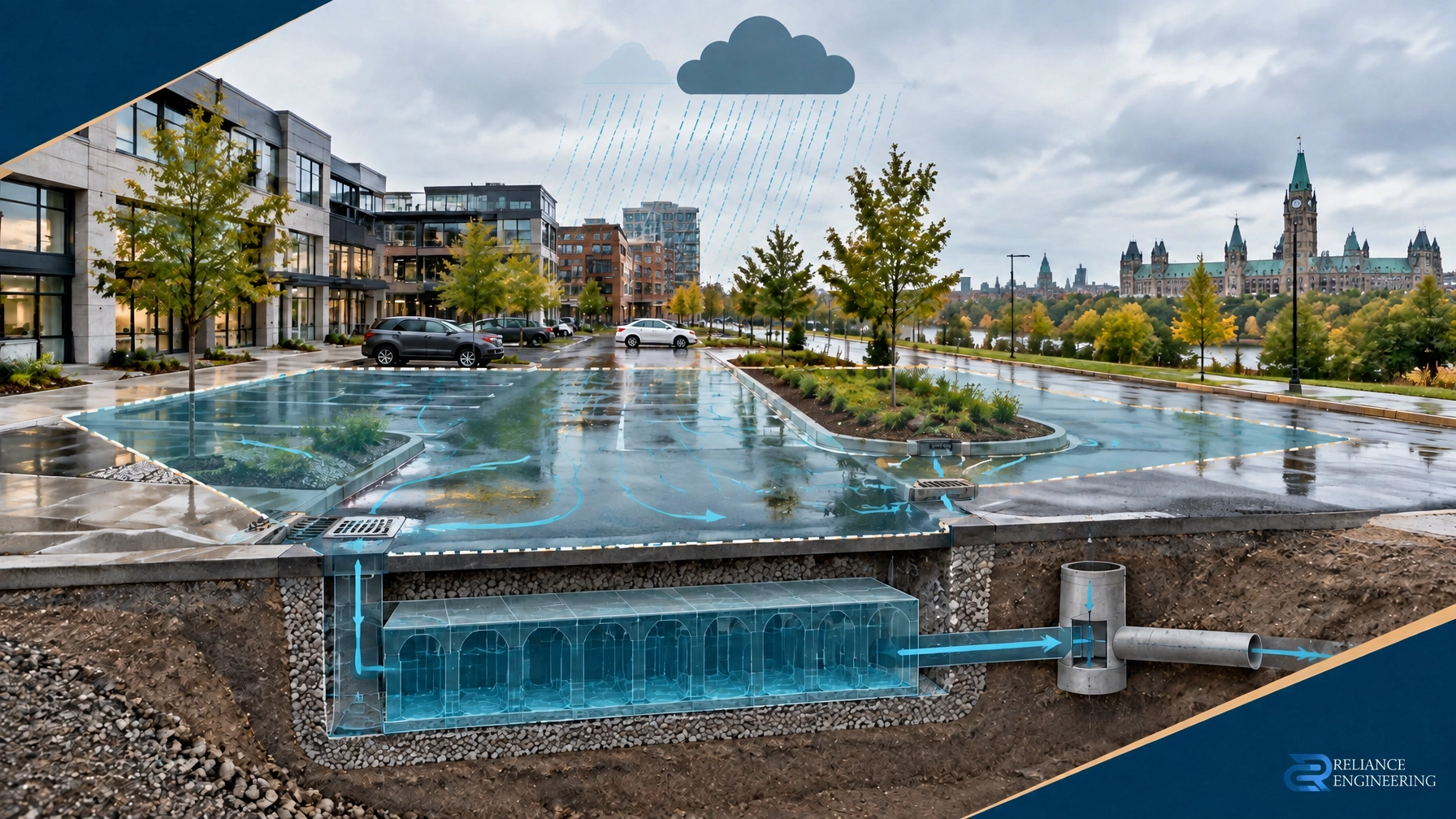
Since rooftops and pavement don't absorb water like grass does, you have to "store" that extra rainwater on your property and release it slowly.
Hidden Killer #3: Lost Sellable Area
If you don't have an expert storm system design, you might end up losing 15% of your sellable land to a massive surface pond. In high-density urban areas, land is too valuable to waste on a hole in the ground filled with water.
The "secret" is underground storage and Low Impact Development (LID) features. By utilizing underground chambers or infiltration galleries, we help clients keep their surface area for parking or additional units, directly protecting their ROI. Learn more about our approach at Stormwater Management.

The 4-Plex Revolution: ROI Math for Modern Investors
Ontario's push for "missing middle" housing has opened the doors for 4-plex conversions. The math for 4-plexes is attractive: you split the land cost across four units instead of one. However, the engineering requirements for a 4-plex are significantly more complex than a single-family home.
When converting or building a 4-plex, you must account for:
- Increased Water Demand: You may need a larger service connection from the street, which involves cutting the road: a high-cost permit and construction item.
- Fire Access: Grading must ensure that emergency vehicles can access the site according to the Ontario Building Code.
- Site Servicing: A comprehensive site servicing plan is mandatory for these approvals.
Investors who treat 4-plexes like "just a big house" often get stuck in the permitting phase for months. Speed is the second-best way to protect ROI; the best way is accuracy.
How to Fast-Track Your Permits
The "experts" often tell you that the municipality is the bottleneck. While Ontario municipalities can be slow, the number one reason for permit delays is incomplete or poor-quality engineering submissions.
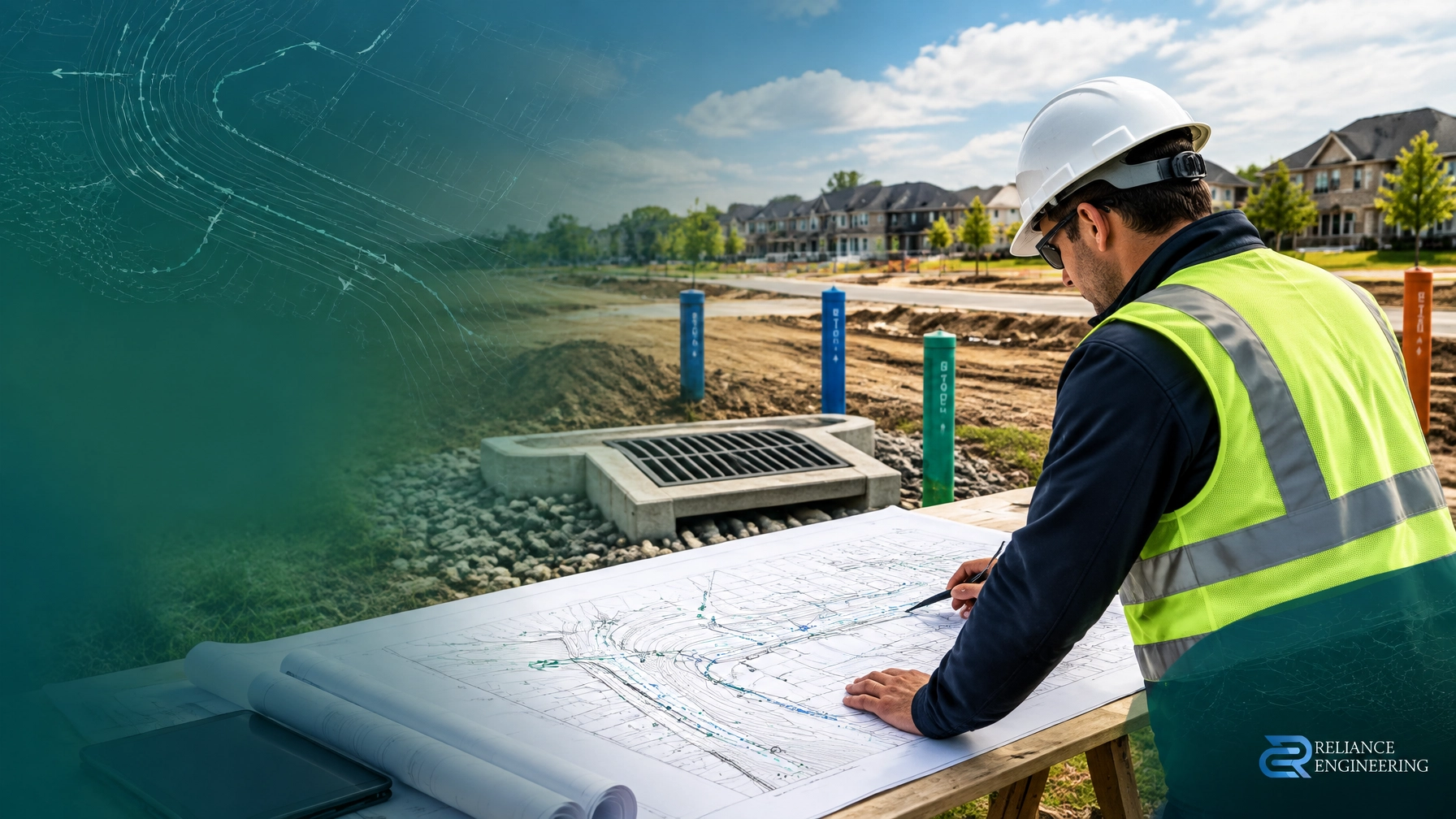
If your grading plans are sent back for corrections three times, you’ve lost three months of carrying costs. At Reliance Engineering, we specialize in permit-ready plans. We know what the reviewers are looking for because we’ve worked on everything from 35 Wabash Avenue to major projects like 85 Bronte Road in Oakville.
The Reliance Advantage: Draft Plans in Days
We don't believe in the traditional 6-week wait for a first draft. We provide engineering solutions that are:
- Practical: We design for the real world, not just the computer screen.
- Compliant: We stay ahead of Ontario's evolving environmental and building regulations.
- Cost-Effective: We focus on reducing construction costs through smart design.
Whether you are working on the redevelopment of Etobicoke General Hospital or a boutique residential infill at 24 Howard Park Avenue, the principles of ROI protection remain the same.
Final Thoughts: Look Beneath the Surface
The secret to land development ROI isn't the finishes in the kitchen; it's the pipes in the ground and the slope of the dirt. By identifying these hidden killers during the due diligence phase, you can negotiate better purchase prices or walk away from "deals" that are actually liabilities.
Don't leave your investment to chance. Partner with a firm that understands the technicalities of Ontario land development.
Work With Reliance Engineering
We provide expert civil engineering and land development consulting across Ontario. Our team specializes in site grading, servicing, and stormwater management that secures permits and protects your bottom line.
Contact Information:
- Principal: Naresh Ochani, P.Eng. M.Eng.
- Address: 6850 Millcreek Dr, Mississauga, ON L5N 2H4
- Phone: 647-385-6418
- Email: [email protected]
- Website: www.relianceengineering.ca
Office Hours:
- Saturday: 12:00 PM – 2:00 PM
- Sunday: Closed
- Monday – Friday: By Appointment
Our Core Services:
- Land Development Consulting
- Site Grading Plans
- Site Servicing Plans
- Stormwater Management Reports
- Functional Servicing Reports
- Construction Administration
Protect your ROI. Get your permit-ready plans today.