Multi-unit conversions are the hottest ticket in Ontario real estate right now. With the housing crisis reaching a boiling point, investors are flocking to 4-plex conversions to squeeze maximum yield out of single-family lots.
But here is the secret most "gurus" won't tell you: The difference between a 10% ROI goldmine and a bankrupt money pit isn't the paint color, it’s the civil engineering.
At Reliance Engineering, we’ve seen projects stall for months because an investor thought they could just "plug in" three extra toilets without checking the sewer capacity. If you want to play the 4-plex game and win, you need to understand the math, the permits, and the infrastructure.
The Bill 23 Advantage: Fact vs. Fiction
You’ve heard of Bill 23 (More Homes Built Faster Act). It’s a game-changer across Ontario. It technically allows up to three residential units "as-of-right" on most urban lots.
The Catch: A 4-plex is four units.
That fourth unit often pushes you out of the "as-of-right" easy lane and into the world of Minor Variances and Site Plan Approvals. Even if your municipality has up-zoned to allow 4 units, you aren't exempt from the technical standards. You still have to deal with setbacks, lot coverage, and the biggest ROI killer of all: Servicing Capacity.
Secret #1: The "Functional Servicing" Trap

When you quadruple the density of a lot, you quadruple the demand on the city's pipes. You cannot simply connect four units into a 50-year-old clay sewer pipe and expect the City of Mississauga or Toronto to say "yes."
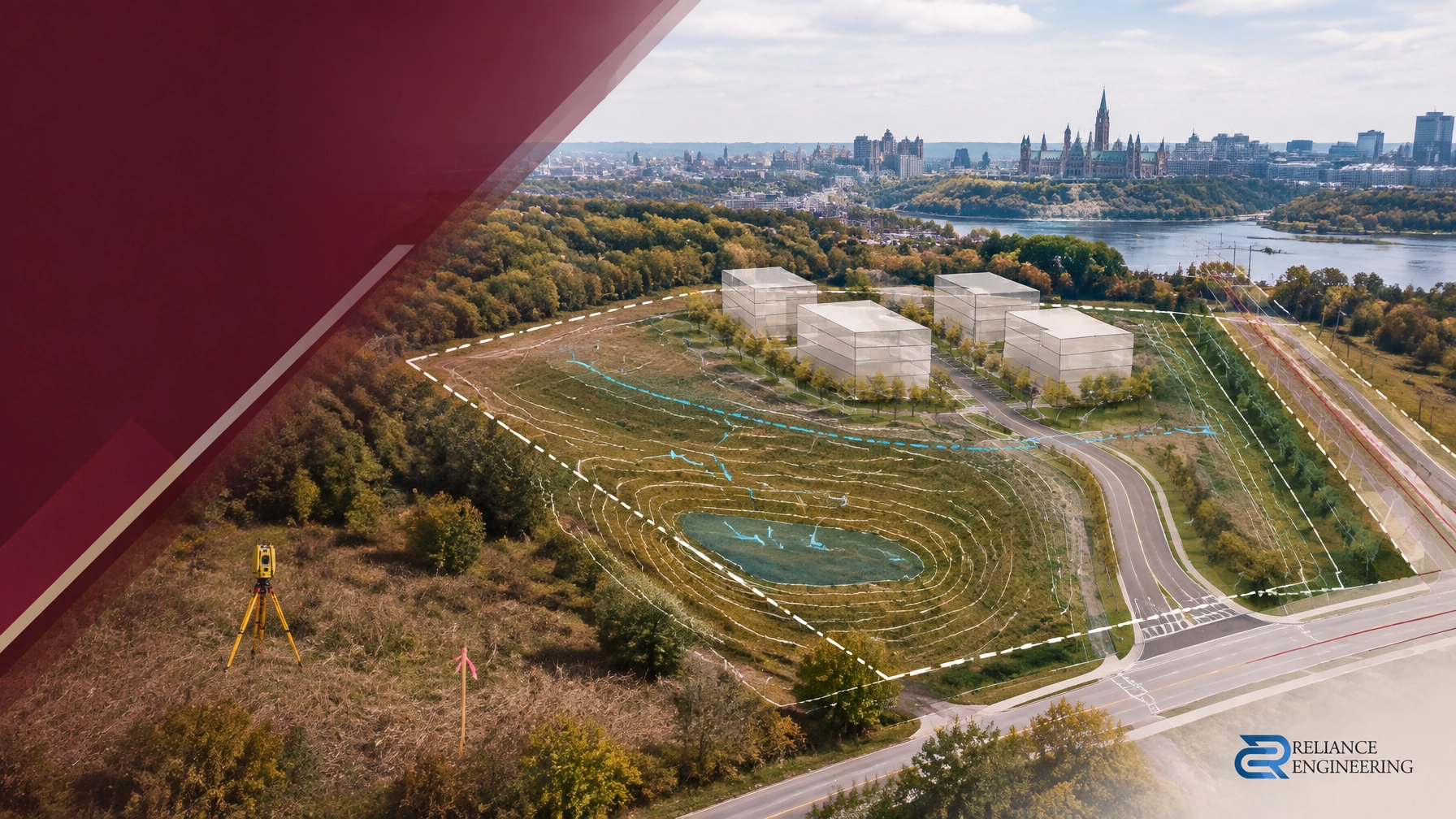
This is where a Functional Servicing Report (FSR) becomes your best friend: or your worst enemy.
An FSR evaluates:
- Water Pressure: Can the existing main handle four simultaneous showers and fire protection?
- Sanitary Sewer: Is there enough "slope" and diameter in your lateral to prevent backups?
- Infrastructure Integrity: If the city's main is at capacity, you might be on the hook for off-site upgrades.
Pro Tip: Get your FSR done before you close on the property. If the city requires a $50,000 sewer upgrade, your ROI just evaporated.
Secret #2: Stormwater Management (SWM) is the New Property Tax
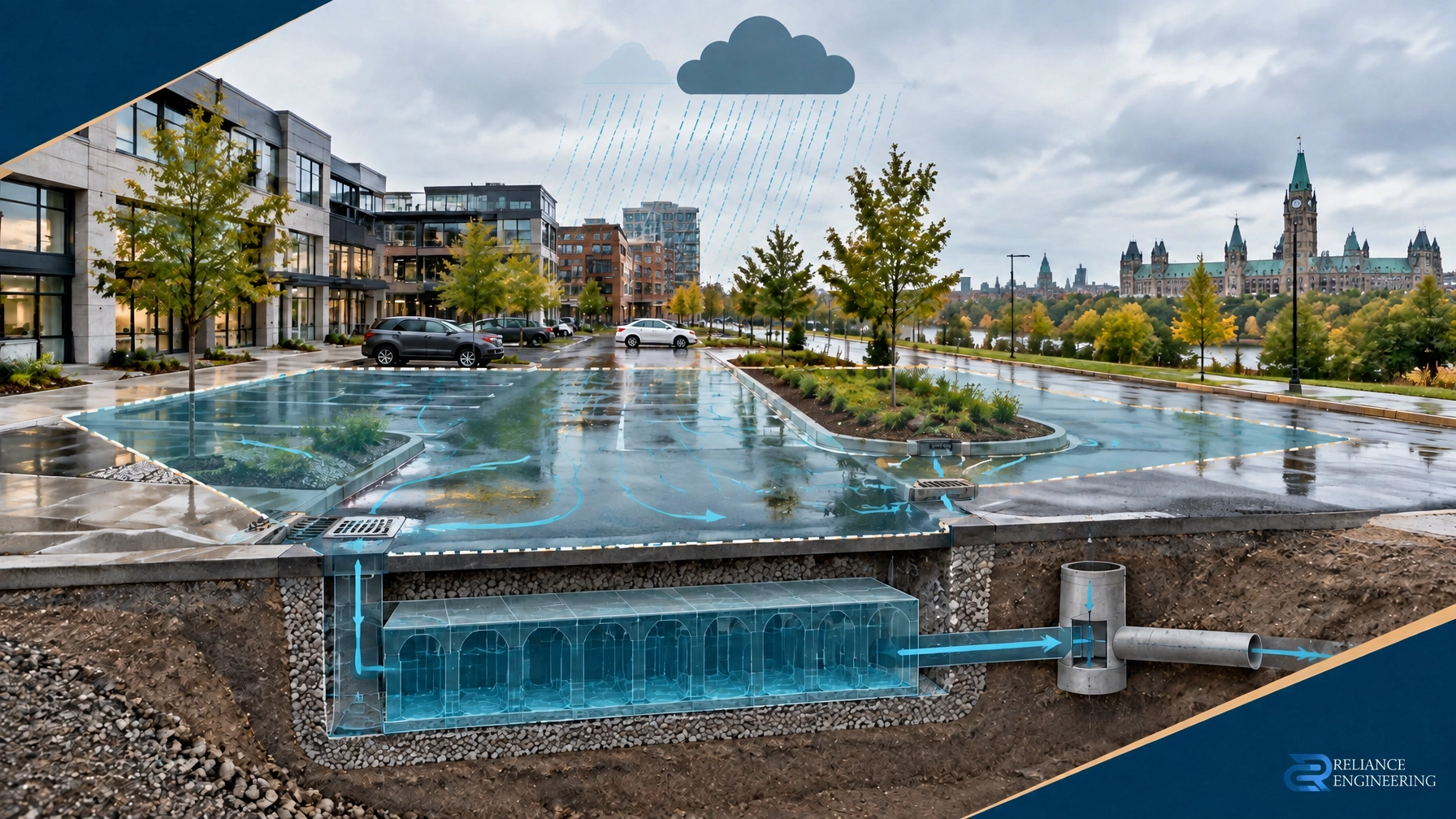
Ontario municipalities are obsessed with water. When you add a larger building footprint or more parking for those four tenants, you create more "impervious surface." Rainwater that used to soak into the grass now flies off the roof and into the city's overtaxed storm system.
To get your permit, you’ll likely need a Stormwater Management Report. Modern standards often require Low Impact Development (LID) features:
- Permeable Pavers: Letting water soak through the driveway.
- Infiltration Trenches: Hidden underground gravel pits that hold water.
- Dry Wells: Managing runoff on-site so it doesn't flood the neighbor.
At Reliance Engineering, we specialize in designing LID systems that meet municipal criteria without eating up your entire construction budget.
Secret #3: The Math of the 4-Plex Pivot

Let's look at real-world Ontario numbers. An investor in Hamilton recently converted a tired triplex into a luxury 4-plex.
- Purchase Price: $737,000
- Renovation/Engineering/Permits: $250,000
- Total All-In: $987,000
The Monthly Revenue Reveal:
- Unit 1 (2 Bed): $2,500
- Unit 2 (2 Bed): $2,100
- Unit 3 (1 Bed Loft): $1,500
- Unit 4 (2 Bed Basement): $1,800
- Total Monthly Rent: $7,900
- Annual Gross: $94,800
That is a 9.6% gross rental yield. In a market where most single-family rentals are cash-flow negative, this is why the 4-plex is king.
The ROI Multiplier: By installing electric heat pumps and separate hydro meters, the tenants pay their own utilities. This shifts the inflation risk of energy costs entirely off your plate, protecting your net operating income for decades.
Secret #4: Grading is Why Permits Get Rejected

You have the architectural drawings. You have the financing. But your building permit is stuck. Why? The Grading Plan.
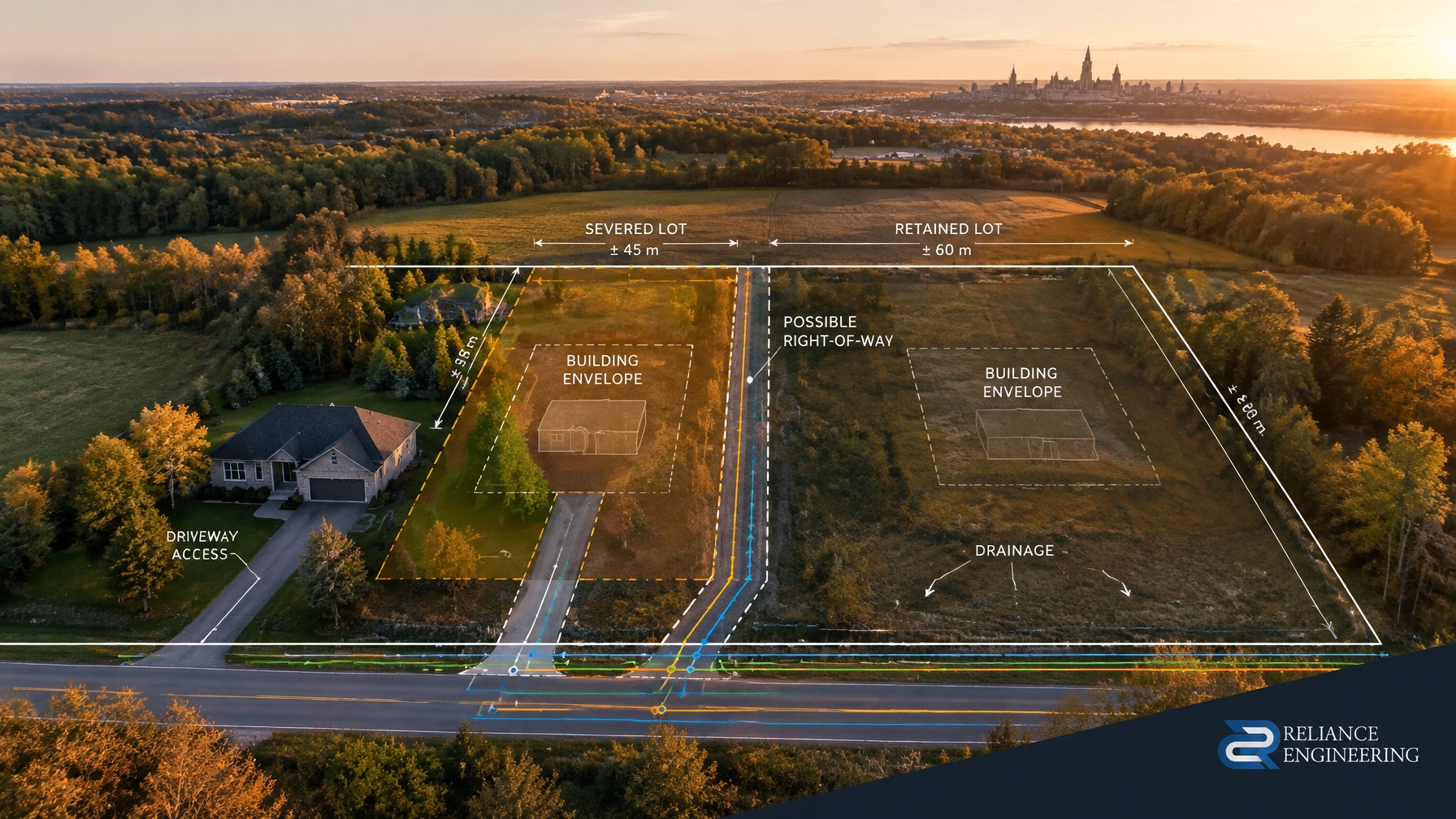
Municipalities are "extremely strict" about how water moves across your lot. If your new 4-plex pushes a single gallon of extra water onto the neighbor’s property, your permit is dead in the water.
A professional Site Grading Plan ensures:
- Finished floor elevations are high enough to prevent flooding.
- Slopes direct water away from the foundation.
- Retaining walls (if needed) are engineered for Ontario’s freeze-thaw cycles.
How to Fast-Track Your 4-Plex Approval
Efficiency is the soul of ROI. Every month your project sits in the municipal "review pile" is a month of lost rent and mounting interest.
Reliance Engineering doesn't just draw lines on paper. We take full ownership of the approval process. Our deep knowledge of municipal requirements across Ontario means we often get designs approved in one submission. We know what the reviewers are looking for because we’ve been doing this for over 20 years.
If you are serious about converting a property into a 4-plex, don't leave the engineering to chance.
Our Core 4-Plex Services:
- Site Servicing Plans: Coordination of water, sanitary, and storm lines.
- Erosion and Sediment Control: Environmental protection to keep your site compliant.
- Functional Servicing Reports: The "go/no-go" feasibility study for your ROI.
- Building Permit Drawings: The technical bridge between your vision and the city's approval.
Contact Information
Naresh Ochani, P.Eng. M.Eng.
Reliance Engineering
6850 Millcreek Dr, Mississauga, ON L5N 2H4
Phone: 647-385-6418
Email: [email protected]
Office Hours:
Saturday: 12:00 PM – 2:00 PM
Sunday: Closed
Authorized by the Association of Professional Engineers of Ontario (PEO).