Achieving a seamless building permit approval in Ontario requires more than just technical knowledge. It requires a level of precision that eliminates the friction between your vision and municipal requirements. At Reliance Engineering, we see countless projects delayed not by major design flaws, but by small, avoidable inconsistencies.
There is one simple trick that can immediately elevate the quality of your submission: the Comprehensive Cross-Sheet Audit.
The Problem: The High Price of Permit Rejections
Most developers and property owners view the building permit process as a hurdle to be cleared. However, the municipal reviewers at the City of Toronto, Mississauga, or any Ontario municipality view your drawings as a legal contract of intent. If Sheet A contradicts Sheet B, the reviewer loses confidence in the entire set.
A single rejection can delay a project by weeks or months. In the current economic climate, where interest rates and construction costs fluctuate, a three-month delay can cost tens of thousands of dollars. Most rejections are triggered by "clashes": points where different drawings provide conflicting information about the same physical space.

The Simple Trick: The Cross-Sheet Audit
The "simple trick" is to stop looking at your drawings as individual sheets and start looking at them as a 3D puzzle. Before any submission, you must perform a systematic cross-check. This involves laying out every plan: from your Site Grading Plan to your architectural sections: and verifying that every dimension, material, and elevation matches across the entire set.
1. Dimension Verification
Check that the dimensions on your floor plans match the dimensions on your site plan. It sounds basic, but a 0.5-meter discrepancy between an architectural drawing and a civil engineering plan is enough to trigger a formal Request for Revision.
2. Wall Thickness and Material Consistency
Ensure that the wall assemblies described in your sections are identical to those represented on your floor plans. If your Functional Servicing Report assumes a certain building footprint, that footprint must be mirrored exactly in your architectural drawings.
3. Elevation Benchmarking
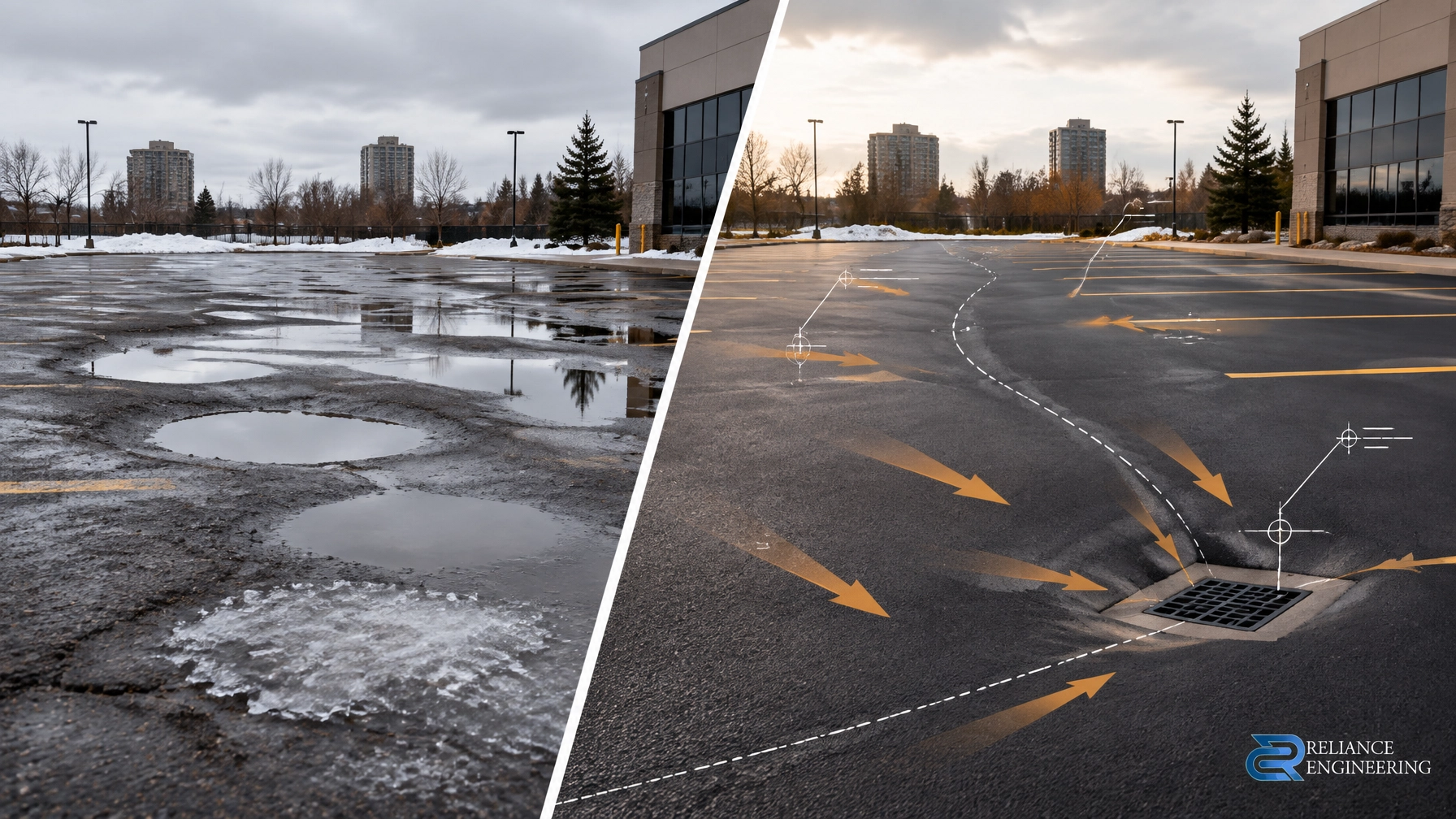
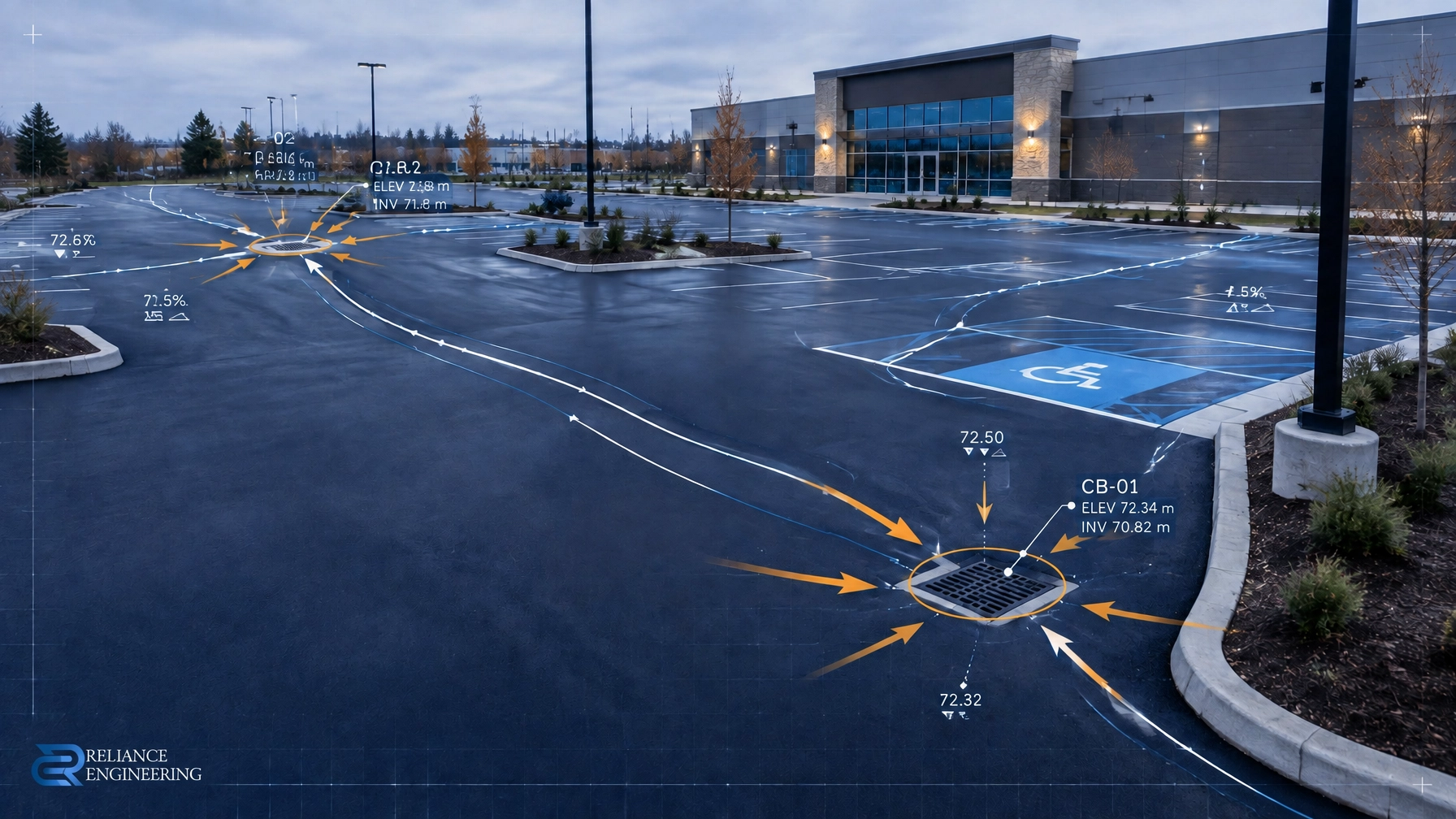
This is where many projects fail. Your Site Grading Plan must use the same benchmarks as your architectural elevations. If the civil engineer uses one datum and the architect uses another, the municipal reviewer cannot verify the building height or drainage patterns.

Navigating Ontario’s Municipal Landscape
Reliance Engineering operates across Ontario, providing expert consulting in civil engineering and land development. We understand that while the Ontario Building Code (OBC) is a provincial standard, the application of that code varies significantly between municipalities.
In Toronto, for instance, projects like the 35 Wabash Avenue Townhomes or the 24 Howard Park Avenue development require specific attention to urban integration and stormwater management. Meanwhile, projects in areas like St. Catharines, such as 16-20 Queen Street, may face different local requirements for sanitary sewer design.
Our deep municipal knowledge allows us to anticipate these local preferences. We don't just follow the code; we follow the local interpretation of the code. This proactive approach is built into our internal audit process.
Integrating Severance Applications and Site Grading
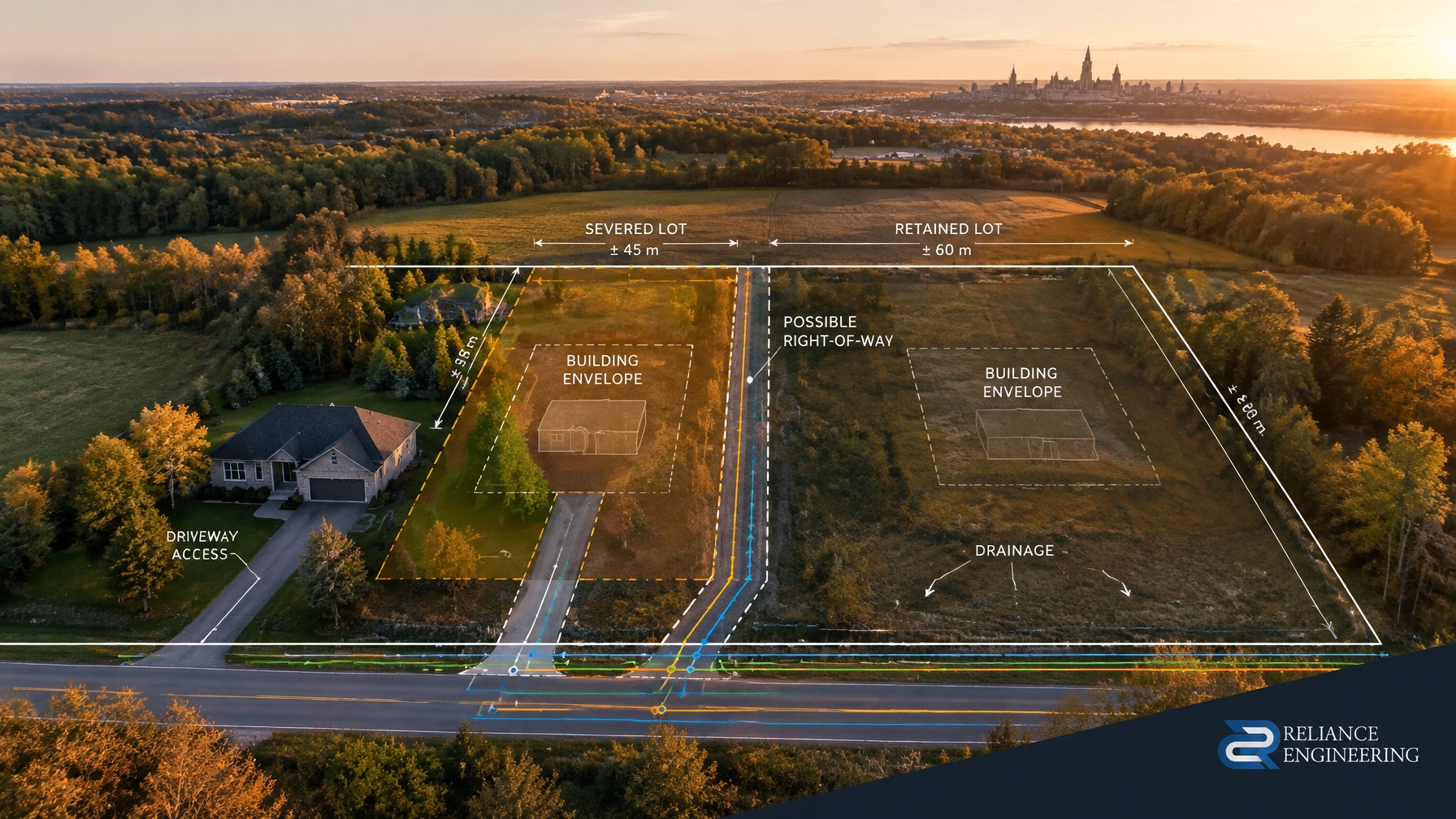
Many our clients come to us during the land division phase. Handling a severance application alongside a Site Grading Plan is a complex task. A common mistake is to treat the severance as a legal matter and the grading as a construction matter.
In reality, they are inextricably linked. The committee of adjustment will look at how the proposed severance affects drainage for both the new and the retained lots. By applying our "Cross-Sheet Audit" trick here, we ensure that the severance boundaries align perfectly with the proposed Stormwater Management infrastructure.
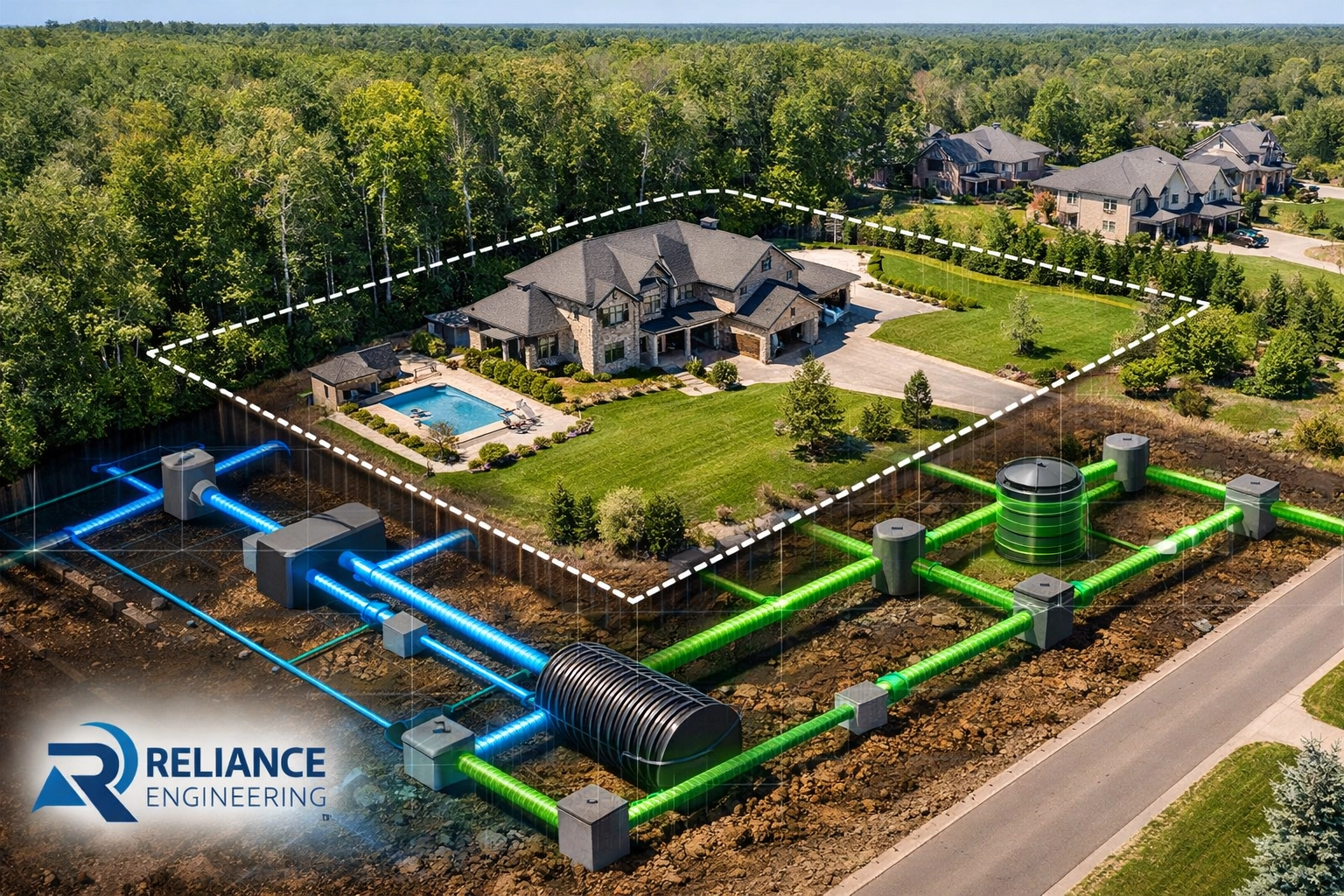
A well-coordinated Site Servicing Plan ensures that each new lot has independent access to water distribution and sanitary sewer design without encroaching on the other.
Functional Servicing Reports: The Foundation of Precision
A Functional Servicing Report (FSR) is often the most scrutinized document in a permit application. It outlines how the proposed development will be serviced by municipal infrastructure.
To improve your permit drawings, your FSR must be the "Source of Truth." Every other drawing in your set must bow to the calculations found in the FSR. At Reliance Engineering, we specialize in high-stakes FSRs for complex projects, such as the Redevelopment of Etobicoke General Hospital. Our precision ensures that Sanitary Sewer Design and Storm System Design are integrated seamlessly.
Enhancing Visual Clarity
Beyond consistency, clarity is king. A cluttered drawing is a rejected drawing.
- Line Weights: Use distinct line weights to separate existing features from proposed developments.
- Legends: Ensure every symbol used is defined in a clear legend.
- Annotations: Label all materials and dimensions. If a reviewer has to guess what a line represents, they will likely ask for a resubmission.
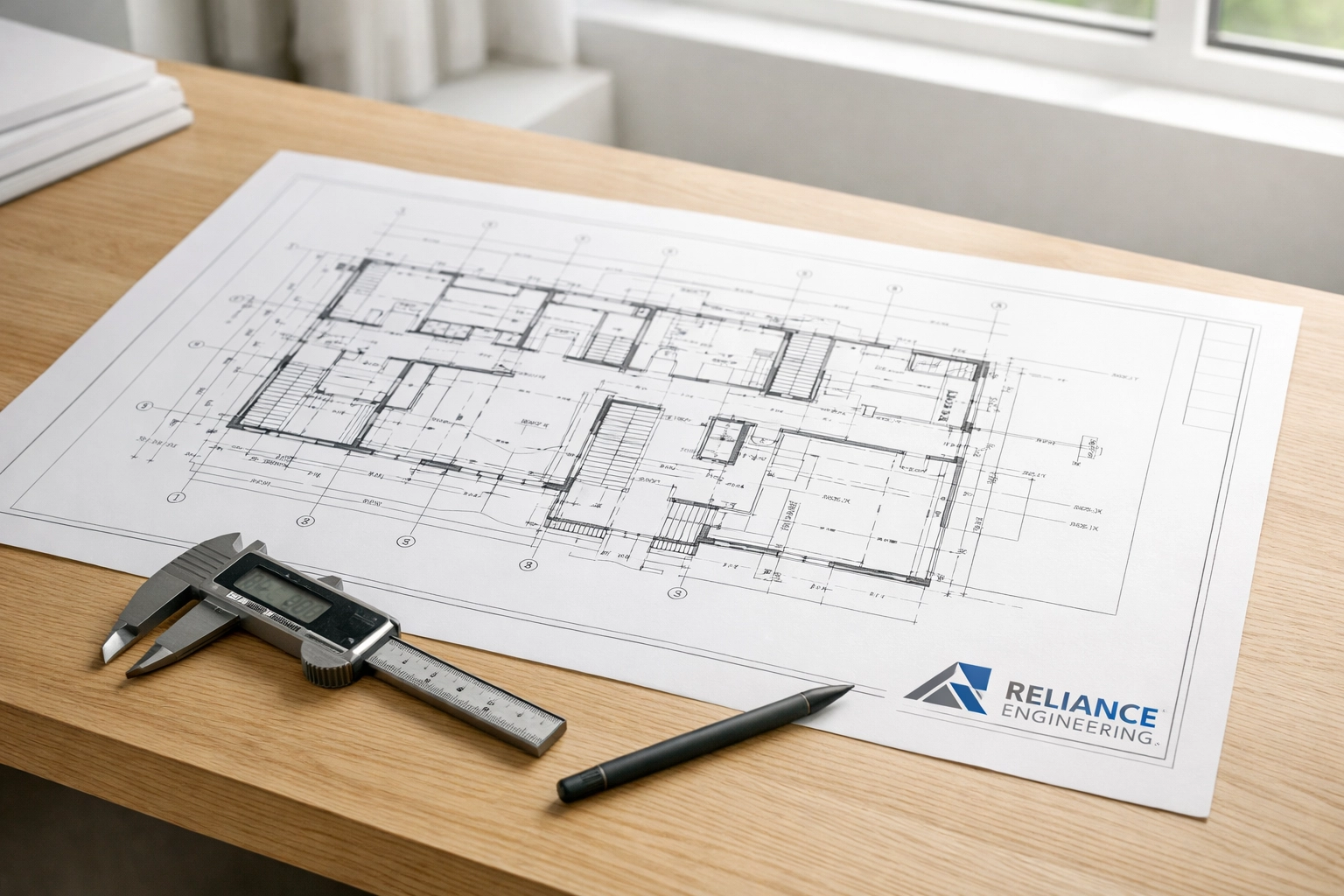
Our team at Reliance Engineering prioritizes clean, professional layouts that make the reviewer's job easier. When a reviewer sees a clean set of drawings from a reputable firm, the approval process tends to move faster.
Why Precision Matters
In land development, precision is the difference between a project that starts on time and one that languishes in a municipal backlog. Whether it is a residential project like 85 Bronte Road in Oakville or a commercial development at 345-351 Davis Drive in Newmarket, the principles remain the same.
We focus on the intersection of engineering excellence and regulatory compliance. Our Construction Administration services further ensure that what is designed on paper is exactly what is built on the ground, maintaining the integrity of the permit throughout the construction lifecycle.
Professional Consultation and Expert Services
Improving your building permit drawings doesn't have to be an overwhelming task. By implementing a rigorous cross-checking process and leveraging professional expertise, you can significantly increase your chances of first-time approval.
Reliance Engineering provides comprehensive Services across Ontario, specializing in everything from Water Distribution Design to complex grading and servicing plans. We invite you to explore our Projects to see the standard of precision we bring to every engagement.
If you are preparing a submission and want to ensure your drawings are permit-ready, contact us today for a consultation.
Contact Information
Naresh Ochani, P.Eng. M.Eng.
Founder and Principal
Reliance Engineering
Address: 6850 Millcreek Dr, Mississauga, ON L5N 2H4
Phone: 647-385-6418
Email: [email protected]
Website: www.relianceengineering.ca
Office Hours:
- Saturday: 12:00 PM – 2:00 PM
- Sunday: Closed