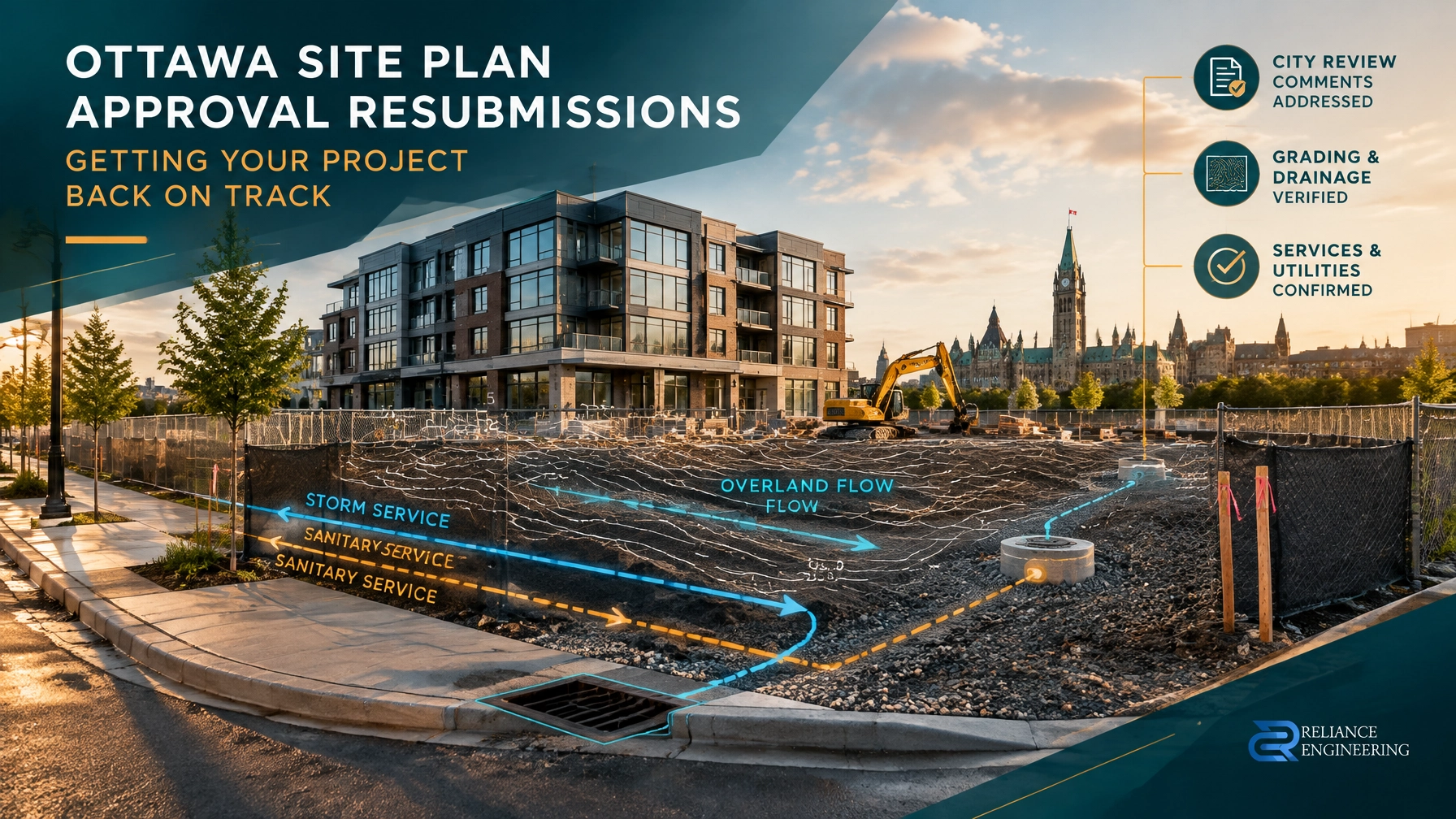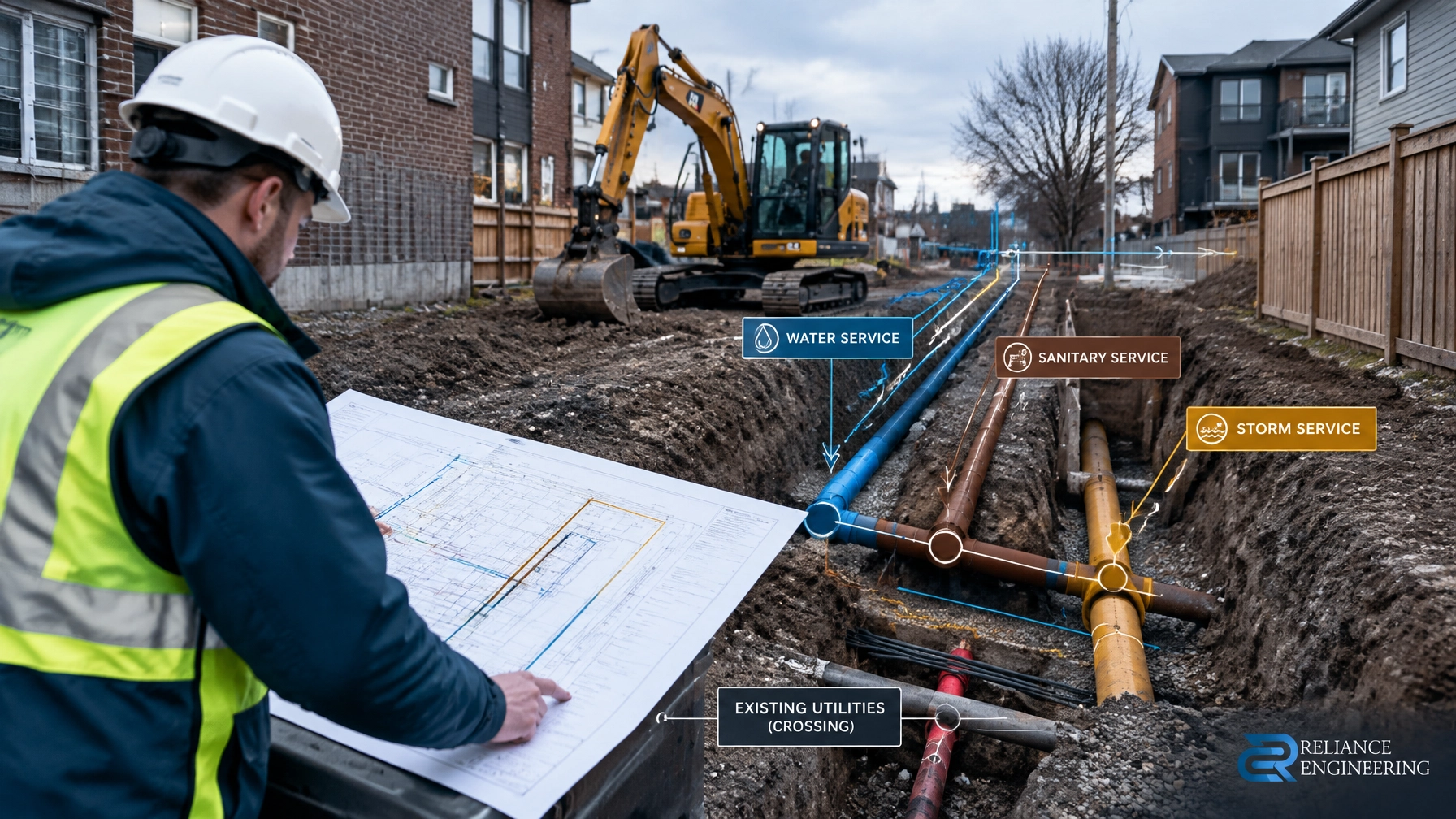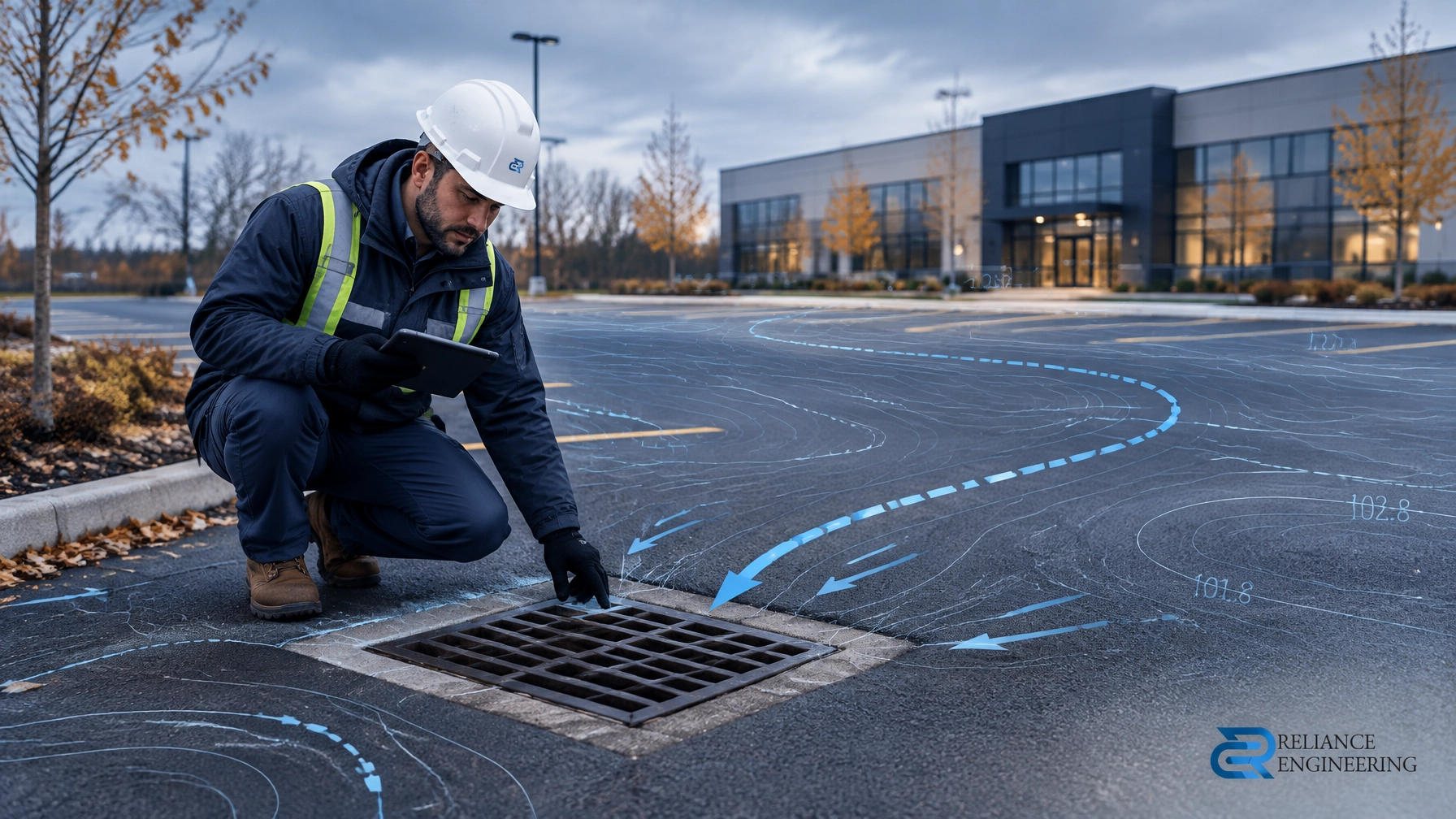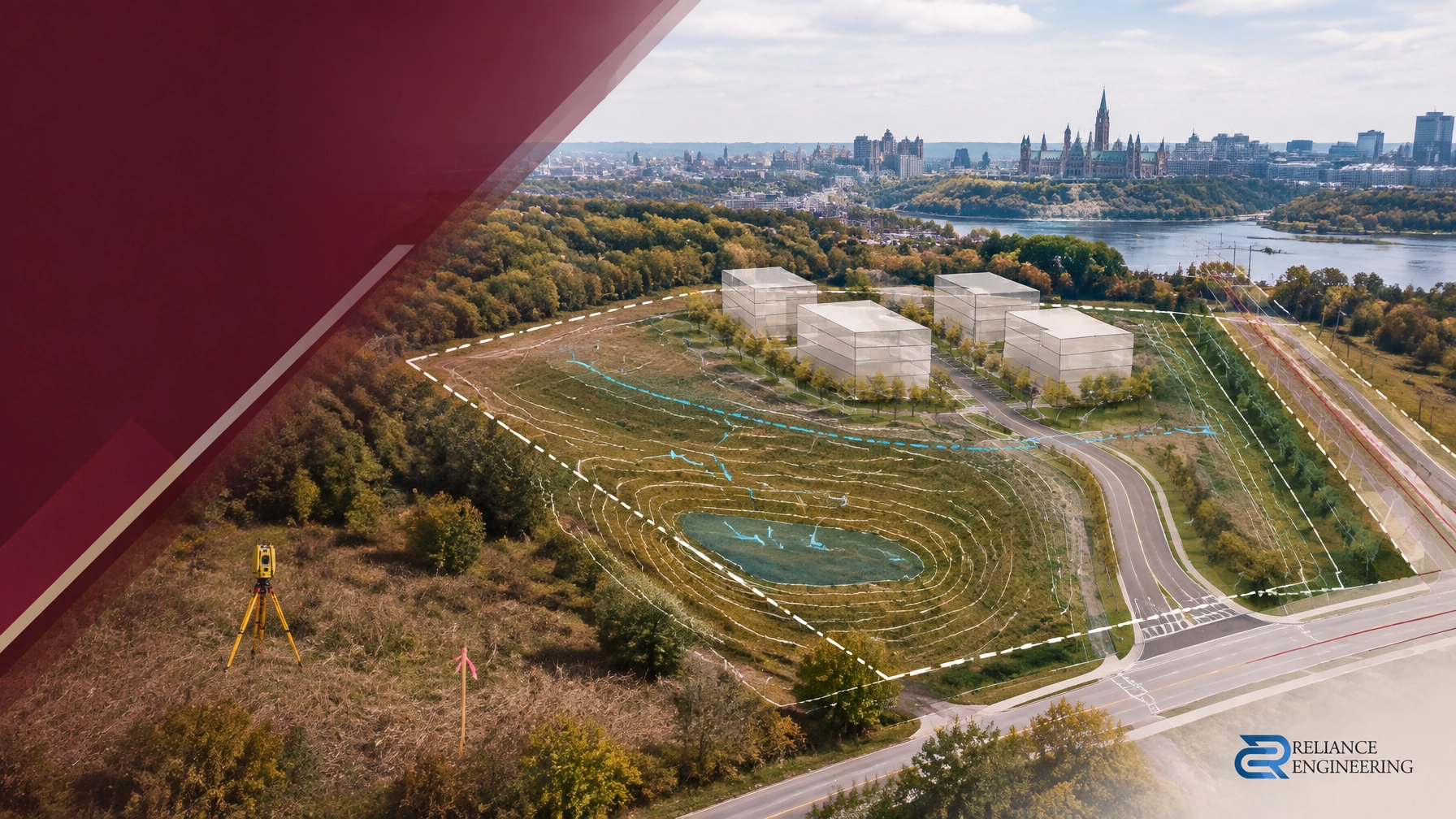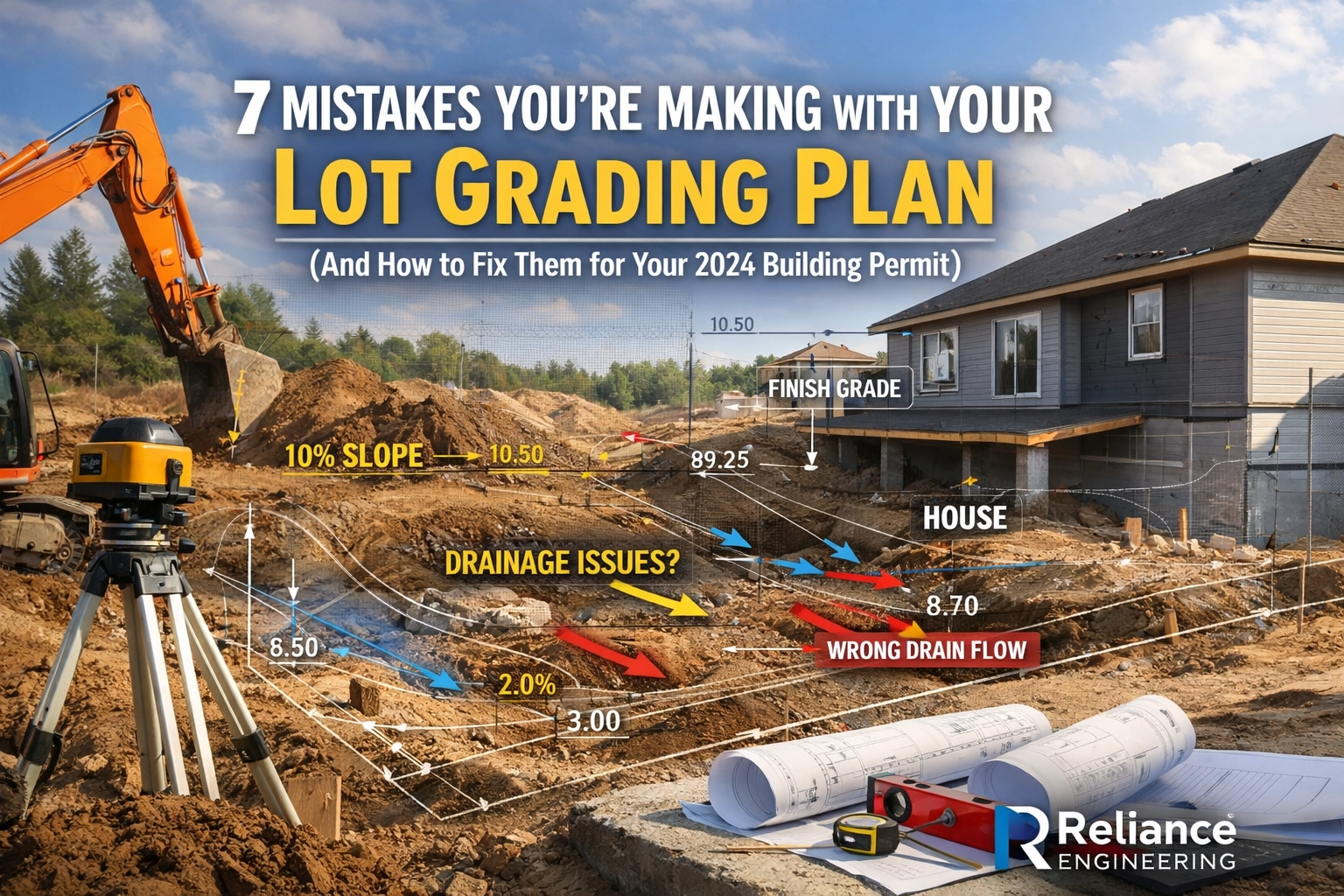
It is Friday, March 13, 2026. If you are reading this and you haven’t secured your building permit for your upcoming project, the clock isn’t just ticking: it’s practically screaming. In the world of land development across Ontario, the "Golden Ticket" to any construction project is the building permit. But before you get to lay a single brick or pour a yard of concrete, you have to deal with the silent project-killer: the Lot Grading Plan.
At Reliance Engineering, we have spent over 20 years navigating the labyrinth of municipal requirements. We have seen it all: from "backyard lakes" that weren't in the design to homeowners who accidentally turned their neighbor’s basement into a swimming pool.
If you want your 2026 permit approved on the first try, you need to stop making these seven common mistakes.
1. The "Eyeball" Approach to the 2% Rule
The most fundamental rule in civil engineering is that water runs downhill. Simple, right? Yet, one of the most frequent reasons for permit rejection is failing to maintain a proper slope away from the foundation.
Many DIY-inclined builders or inexperienced designers attempt to "eyeball" the grade. In Ontario, the standard requirement is a minimum 2% slope for the first 10 feet (3 meters) away from the foundation. This creates a 6-inch drop that ensures water doesn't loiter near your footings.
The Fix: Don't guess; calculate. Professional site grading plans use precise laser levels and topographical data to ensure that 2% is a reality, not a suggestion. If you ignore this, hydrostatic pressure will eventually force water through your concrete pores, and you’ll be dealing with mold before the 2027 thaw.

2. Ignoring the "Bowl Effect" (Soil Settlement)
You’ve cleared the land, moved the dirt, and it looks perfect on day one. Fast forward six months, and your perfectly graded slope has turned into a shallow bowl. What happened? You ignored soil settlement.
Freshly excavated soil is full of air. As it sits, gravity and rain do their work, compacting the soil naturally. If your grading plan doesn't account for this "fluff factor," your positive slope will become a negative slope as the ground sinks around your brand-new foundation.
The Fix: At Reliance Engineering, we specify soil compaction in 4-8 inch "lifts" using mechanical equipment. By properly compacting the soil during the grading process, we ensure that the "on-paper" design remains the "on-site" reality for decades.
3. Creating "Spite Drainage" on Neighboring Properties
There is no faster way to end up in a legal battle (or have your permit revoked) than by directing your property's runoff onto your neighbor’s lawn. Municipalities across Ontario are hyper-sensitive to this. If your plan shows a new swale that conveniently empties right into the neighbor’s flower bed, expect a swift "REJECTED" stamp.
The Fix: Your lot grading plan must demonstrate that your development has zero adverse impact on adjacent properties. We design systems that direct water toward the municipal right-of-way or designated drainage easements. It’s about being a good neighbor: and an even better developer.
4. Relying on "Ghost Surveys"
We see this all the time: a client comes to us with a topographical survey from 1998 and asks us to design a 2026 grading plan based on it. In the engineering world, we call these "Ghost Surveys." They represent a reality that no longer exists.
Land shifts. Neighbors build fences. Municipalities install new culverts. Using an outdated survey is a recipe for a grading disaster where the elevations on your plan don't match the dirt on the ground.
The Fix: Invest in a fresh, licensed topographical survey. Our team at Reliance Engineering works with current data to ensure that our site servicing plans are accurate to the millimeter. Starting with bad data is the most expensive way to "save" money.

5. The "Rollercoaster" Grade (Inconsistent Slopes)
A common error in amateur grading is "micro-grading": where the slope changes every few feet to accommodate a tree, a rock, or a shed. This results in a "rollercoaster" effect. While it might look okay to the untrained eye, these inconsistencies create "dead spots" where water pools, leading to ice patches in the winter and mosquito nurseries in the summer.
The Fix: A professional grading plan looks at the property as a holistic system. We create smooth, consistent transition lines that ensure water moves predictably and efficiently toward the stormwater management system.
6. Using "Free" Fill Dirt (The Organic Trap)
Someone down the street is excavating a pool and offers you "free fill." It sounds like a win-win, right? Wrong.
"Free fill" is often loaded with organic material: roots, sod, and topsoil. As that organic matter decomposes, it creates voids in the ground, leading to uneven settling and potential structural failure for driveways and walkways. Furthermore, if that soil isn't "clean," you could be violating Ontario’s strict excess soil regulations.
The Fix: Use only clean, compactable fill (typically clay or sandy loam) for your structural grading. Save the topsoil for the top 4 inches where your grass actually needs it. Our construction administration services help builders ensure that the materials arriving on-site actually meet the engineering specifications.
7. Hiring Based on Price Over Experience
We get it: development is expensive. It’s tempting to hire a low-cost draftsman who "knows how to draw lines." But a lot grading plan isn't just a drawing; it’s a legal document that must be signed and sealed by a Professional Engineer (P.Eng).
Low-cost plans often lack the technical depth required to clear municipal review. You might save $1,000 on the design only to lose $10,000 in construction delays, re-submissions, and remedial grading work.
The Fix: Work with a firm that has a track record. Reliance Engineering brings over 20 years of experience to the table. We know the specific quirks of municipal reviewers across Ontario, from Toronto to Ottawa. We don't just draw plans; we get permits.
The Reliance Engineering Advantage

When you are aiming for a 2026 building permit, you don't have time for the "trial and error" approach. Every week your project sits in the municipal "pending" pile is a week of lost revenue or delayed dreams.
At Reliance Engineering, led by Naresh Ochani, we specialize in making the complex simple. Our services range from functional servicing reports to complex storm system design. We have helped transform properties across the province, including high-profile projects like the 35 Wabash Avenue Townhomes and the Redevelopment of Etobicoke General Hospital.
Don't Let Grading Hold You Back
Your lot grading plan is the foundation of your project, literally. By avoiding these seven mistakes, you are setting yourself up for a smooth permit process and a structurally sound build.
Are you ready to stop fighting with the city and start building? Whether you are a homeowner planning an addition or a developer breaking ground on a new subdivision, our team is ready to provide the professional, permit-ready plans you need.
Ready to get your 2026 permit moving?
- Explore our services: Land Development & Civil Engineering
- See our work: Featured Projects
- Get in touch: Contact Us Today
Reliance Engineering
Professional. Compliant. Cost-Effective.
Serving all of Ontario.
Operational Hours:
Monday – Friday: 9:00 AM – 5:00 PM
Saturday – Sunday: Closed
Contact Information:
https://www.relianceengineering.ca/contact-us