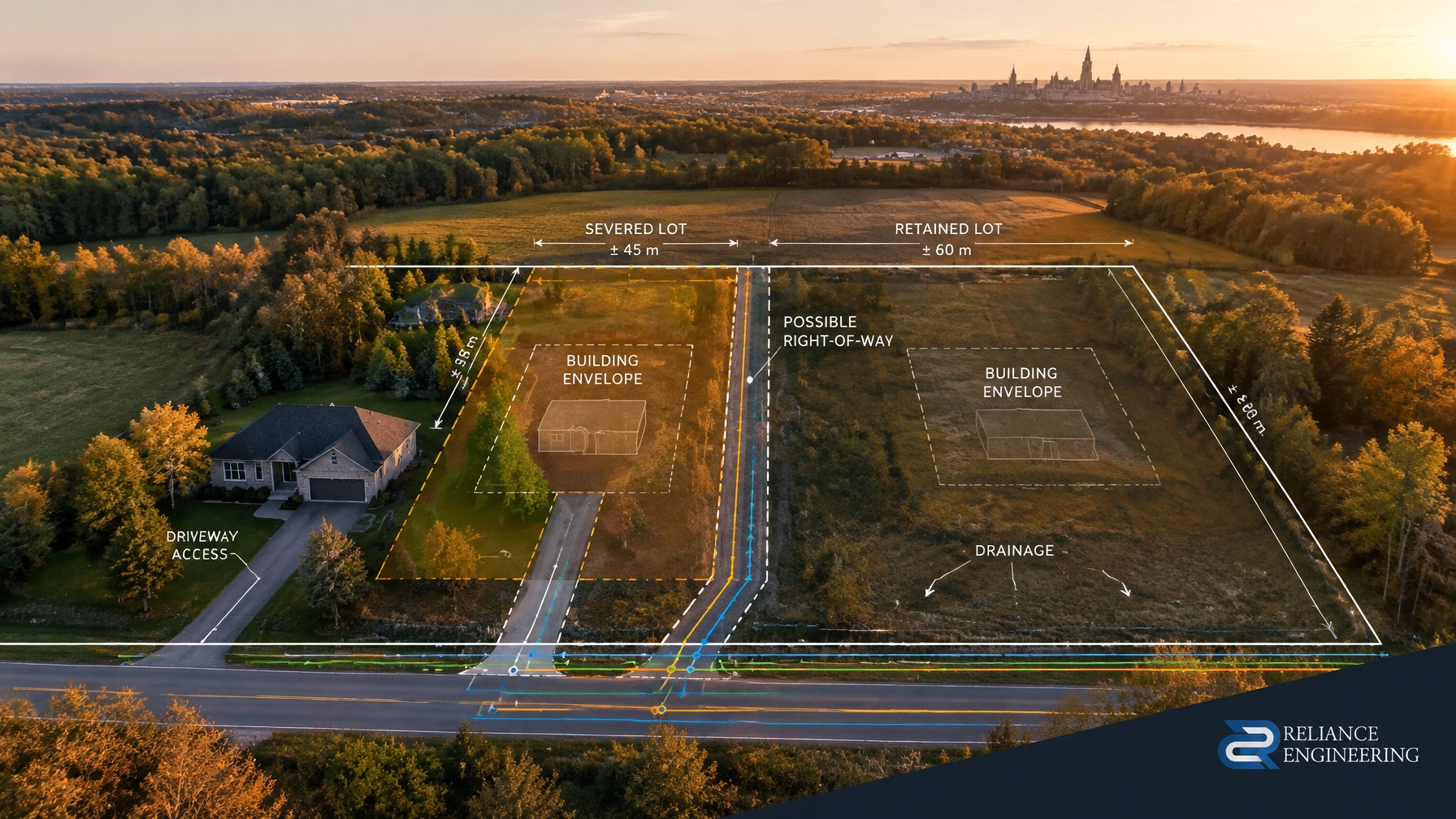
The Functional Servicing Report (FSR) is a fundamental document in the field of land development, serving as a blueprint for integrating new projects with existing infrastructure. This comprehensive guide delves into the various components that constitute an FSR, elucidating their importance in ensuring a development project’s success and compliance with local standards.

Site Analysis: The Starting Point of Development
Understanding the current conditions of a site forms the foundation of any development project.

Existing Conditions and Site Analysis

A meticulous examination of the site’s infrastructure, environmental context, and potential constraints is critical. This includes:

  • Infrastructure Review: Assessing the site’s existing stormwater, sanitary, and water systems, along with grading.
  • Environmental Survey: Evaluating the impact on and interaction with surrounding natural features and urban settings.
  • Constraint Identification: Identifying challenges that could influence the project’s feasibility or design.

Significance:

Conducting a comprehensive site analysis is not just about ticking regulatory boxes; it is about laying a solid foundation for design and planning decisions that align with environmental sustainability and urban compatibility.

Core Components:

  1. Stormwater Management
  2. Sanitary and Storm Servicing
  3. Water Servicing
  4. Green Infrastructure

1 .Stormwater Management:

  • Strategy Development: Formulating an effective management plan that encompasses stormwater facilities and best practices.
  • Design Details: Creating a detailed storm sewer system plan, complete with necessary calculations and drawings.
  • Regulatory Compliance: Ensuring that the proposed solutions align with local stormwater management guidelines.

2 .Sanitary and Storm Servicing

  • Sewer Design: Outlining the design of the sanitary and storm sewer systems, including pipe sizes and connection points.
  • Septic Solutions: For areas without central sewage, detailing the design of septic systems.
  • Capacity Analysis: Demonstrating the system’s ability to handle the expected wastewater and stormwater flows.

3. Water Servicing:

  • System Design: Detailing the design of the water supply system, including pipeline networks and fire hydrant placements.
  • Flow Analysis: Ensuring that the system delivers adequate water flow and pressure.
  • Quality and Standards Compliance: Meeting the required standards for watermain design and water quality.

4. Green Infrastructure:

  • Innovative Design: Incorporating elements like bios swales and green roofs into the stormwater management system.
  • Sustainability Calculations: Providing detailed designs and calculations for these green features.
  • Adherence to LID Practices: Aligning with Low Impact Development principles and local environmental guidelines.

Conclusion:

In summary, a Functional Servicing Report is more than a technical document; it is a roadmap for sustainable and responsible development. It ensures that new developments harmonize with existing infrastructure and adhere to environmental standards, paving the way for communities that are not only functional but also sustainable and resilient.