Author: Naresh Ochani, P.Eng., M.Eng., Principal Engineer, Reliance Engineering Canada Limited
PEO Certificate of Authorization: 100548882
Address: 6850 Millcreek Dr, Mississauga, ON L5N 2H4
Phone: 647-385-6418 | Email: [email protected]
Office hours: Monday–Friday 9:00 AM–5:00 PM; Saturday 12:00 PM–2:00 PM; Sunday Closed
A commercial parking lot can have more than one drainage problem at a time. Rainwater may pond on the asphalt, water may remain trapped in the granular base, and runoff may enter from an adjacent area. Each condition calls for a different response.
Adding catchbasins is not a complete solution if the pavement base is saturated. Installing subdrains will not correct a low spot caused by settled asphalt or poor grading. Effective commercial parking lot drainage in Ontario starts by identifying where the water is, and matching components to its source.
Start by identifying where the water is
Surface water is rain or meltwater running across the pavement. It needs positive drainage: a graded surface that directs runoff to collection points and safe flow routes.
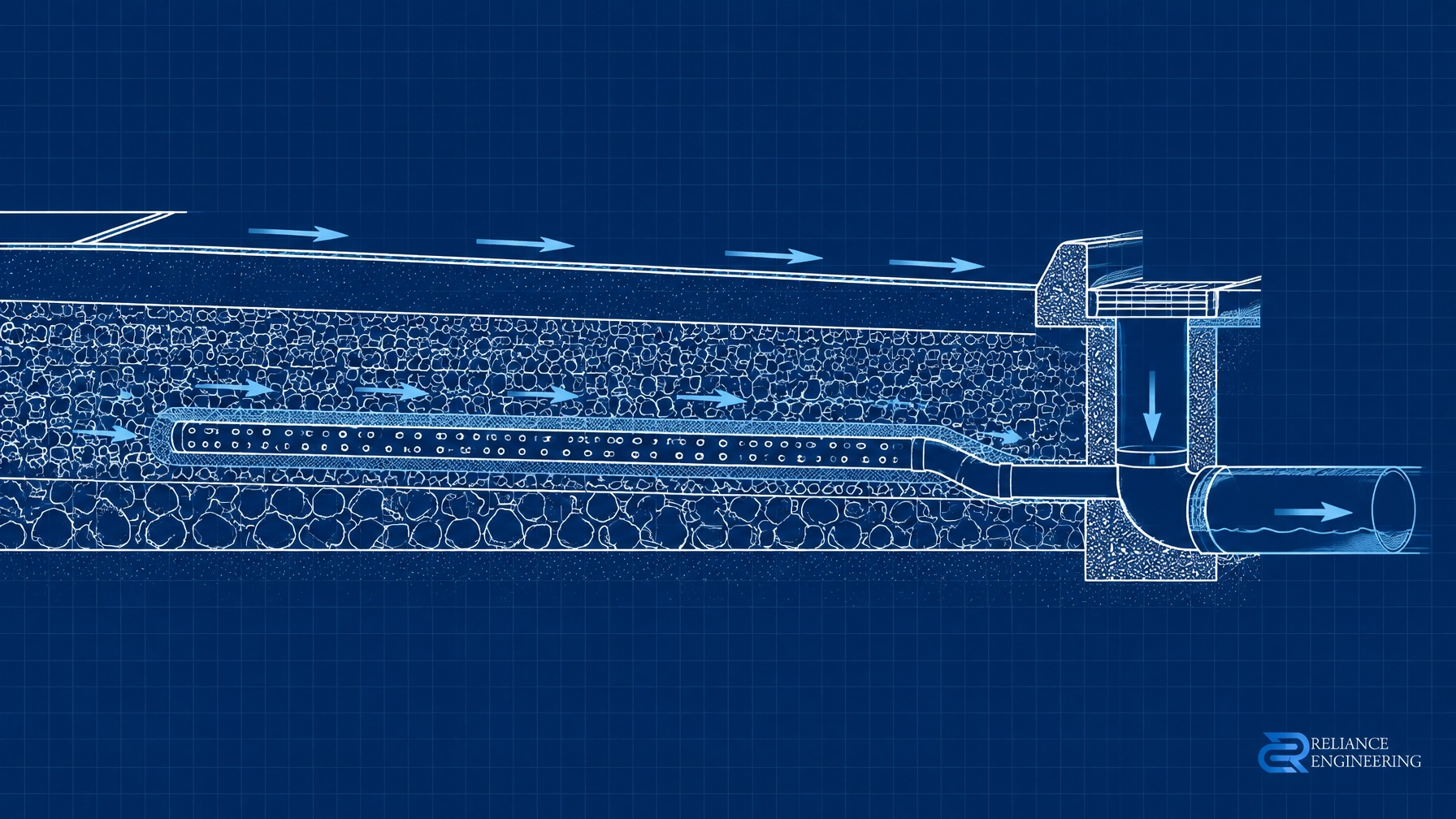
Subsurface water is water that has entered or become trapped in the granular base or subbase below the pavement. It may saturate the pavement structure even when the surface appears to drain. This condition can contribute to cracking, heaving, frost damage and edge deterioration.
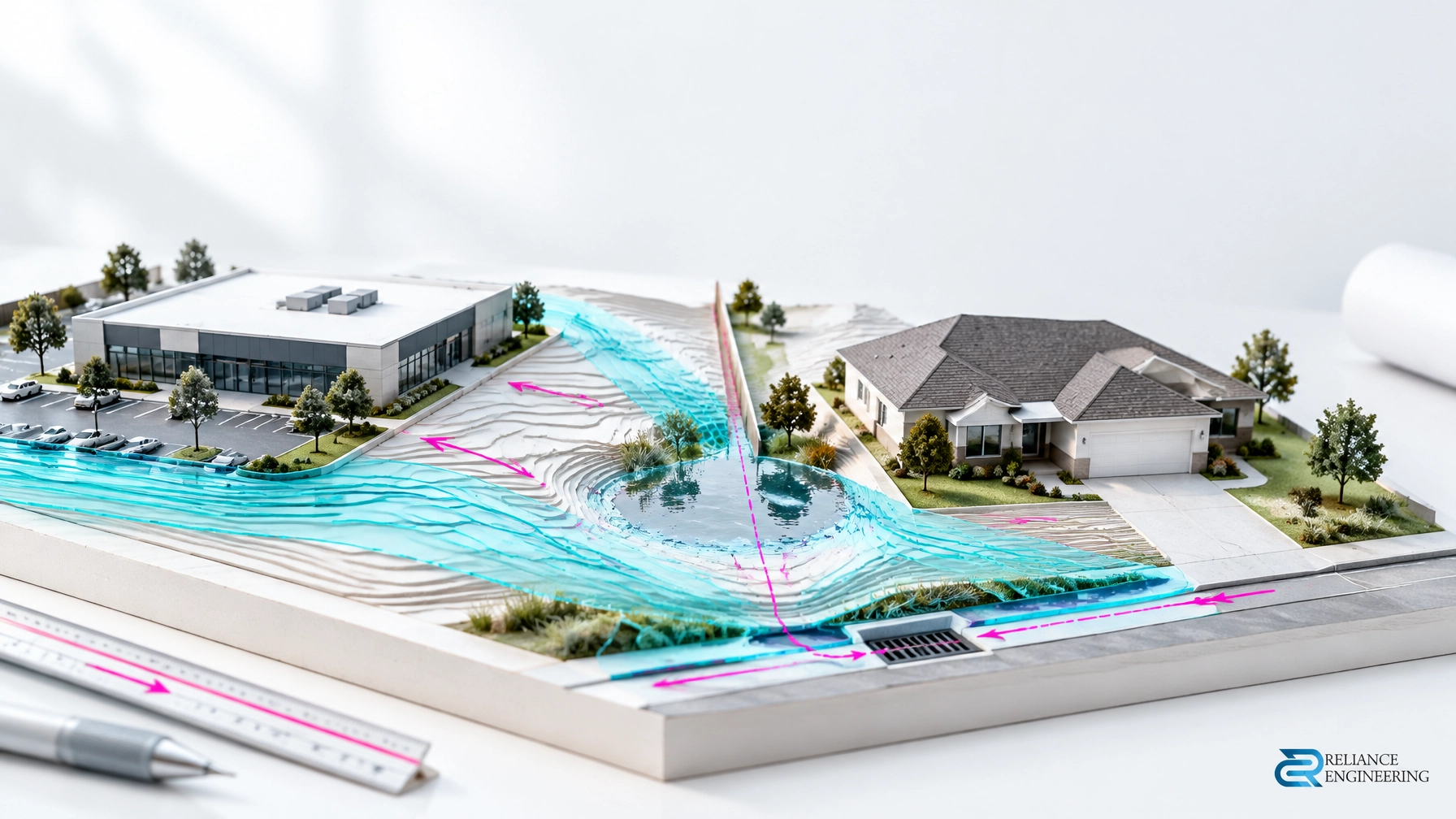
External runoff may arrive from a neighbouring lot, a driveway, a landscape area or another part of the property. The grading and drainage design must account for where that water comes from and where it can safely go.

Surface drainage: manage runoff on the pavement
Surface drainage begins with lot grading. Asphalt should slope toward collection points without creating inconvenient or unsafe flow paths at entrances, accessible routes, pedestrian areas or building thresholds. The specific grades depend on site conditions and applicable municipal criteria.
Catchbasins and area drains belong at designed low points and along surface flow paths. Their locations should follow the grading, not be added as a substitute for correcting an unintended depression. Curb lines and driveway tie-ins also matter: they can direct runoff toward an inlet, or unintentionally trap it on the lot.
Where a lot includes landscaped areas or changes in elevation, swales and defined overland flow routes may help direct water toward an approved outlet. The design should show how runoff moves during the intended design conditions, including where excess flow goes if the inlets cannot capture it all.
Surface inlets are most useful when the main issue is water ponding on top of the pavement. They collect surface runoff and convey it through the site’s storm system, subject to the approved design and municipal requirements.
Subsurface drainage: protect the pavement structure
A parking lot may drain at the surface and still have a wet or saturated base. Signs can include recurring pavement failure (cracking, heave, frost damage or breakup along the edges) particularly when surface ponding does not explain the deterioration.
Perforated subdrains, also called underdrains, are used to collect water within or below the granular pavement layers. The collected water is conveyed through an approved connection, often to a catchbasin or another approved storm outlet. The pipe, stone envelope, filter material, connection and outlet must be designed to suit site conditions and applicable standards.
Subdrains can help dewater a saturated base, but they are not a replacement for surface inlets. They are not intended to capture all rainfall running across a commercial lot. Surface grading and collection remain necessary to move runoff off the pavement.

Why the wrong mix fails
Adding surface inlets where the real problem is water trapped in the base may leave the pavement structure wet. The new inlet collects water from the surface, but it does not necessarily drain the granular layers.
Conversely, installing subdrains will not correct surface ponding caused by settled grades or an inlet that sits above the surrounding pavement. Asphalt regrading or another grading correction may be needed to restore positive drainage and direct runoff to collection points.
The maintenance needs differ, too. Grated inlets can collect sediment, leaves and debris, reducing their ability to accept runoff. Subdrains are hidden below the pavement, so blockages or poor performance may go unnoticed until pavement damage appears. Both systems need to be considered in design, construction and long-term maintenance planning.

A practical diagnostic sequence
Before choosing ponding solutions or commercial property grading fixes, review the problem systematically:
- Observe when ponding appears and disappears. Does it occur during rainfall and clear as the inlets drain, or does water remain after the surface runoff has gone? Persistent surface water may point to low grades, inlet placement or capacity; prolonged dampness and pavement deterioration may indicate a subsurface issue.
- Check the condition of the pavement. Cracking, heave, frost damage and edge breakup can indicate that surface drainage alone is not addressing the problem. These signs are not a diagnosis by themselves; pavement structure, soil conditions and site history also matter.
- Review existing plans and site conditions. Existing grading and servicing plans can show proposed elevations, catchbasins, storm connections and flow routes. Field conditions may differ from the drawings, so a site review can be important.
- Confirm the available outlet and review requirements. The outlet must be suitable and approved for the proposed drainage strategy. Municipal criteria vary by city, and Conservation Authority requirements may apply depending on the site and outlet. Check current requirements before fixing the design.
Ontario municipalities may review grading, servicing and stormwater details together. The Town of Barrie’s Lot Grading and Drainage Infrastructure Design Standard and the Lake Simcoe Region Conservation Authority parking-lot guidance illustrate why local criteria and site-specific design matter. The provincial OPSS.PROV 405 pipe subdrain specification provides construction requirements for pipe subdrains; project details must still follow the applicable municipal standards and approvals.
Show the systems working together
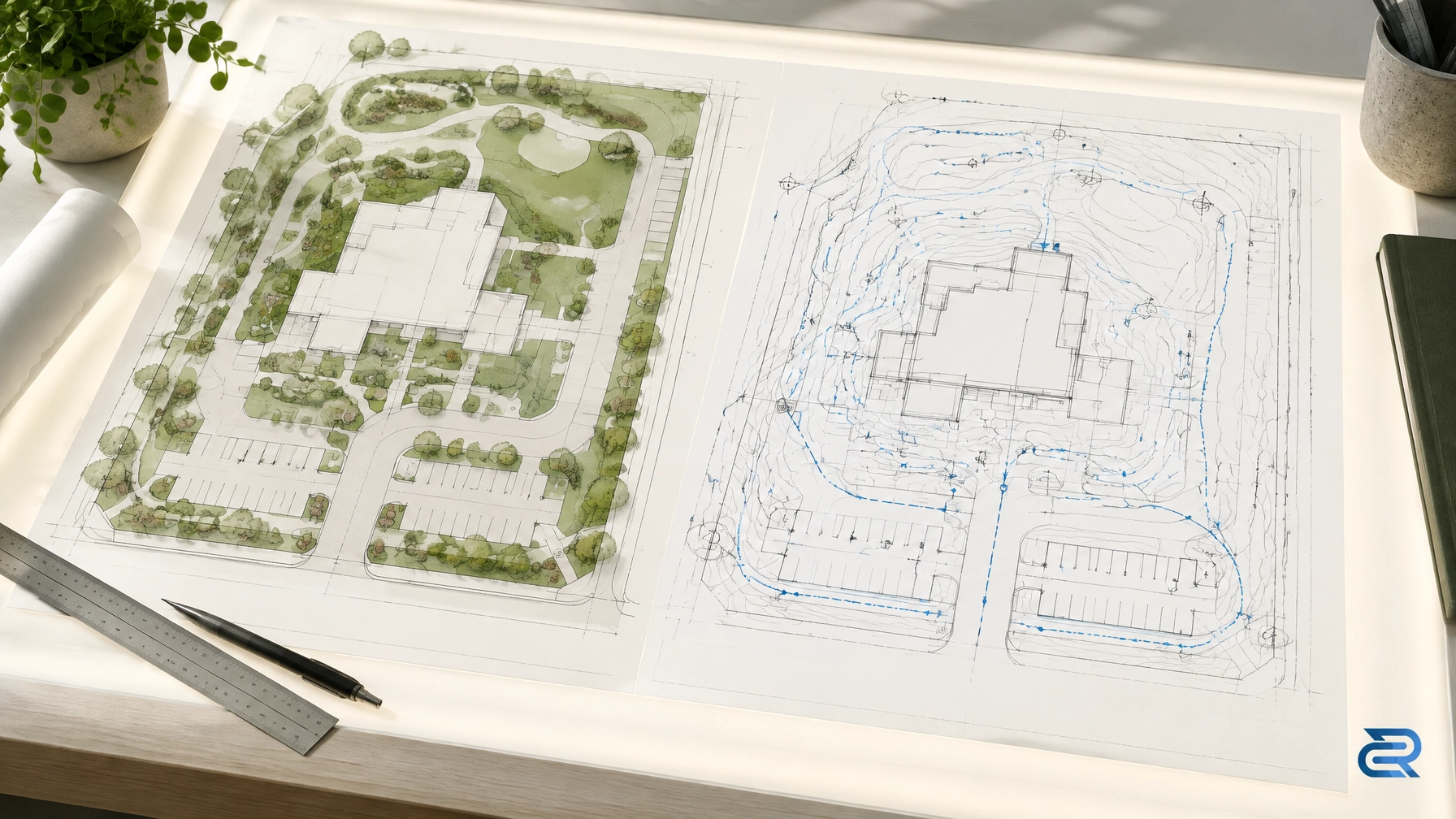
A coordinated site grading plan should make the relationship between surface and subsurface components clear. It shows pavement grades, catchbasins and area drains, curb and driveway tie-ins, swales, overland flow routes, and, where required, subdrain routing and connections. Coordination with storm servicing and stormwater management helps ensure the proposed components have a clear, approved destination.
Reliance Engineering prepares Site Grading Plans, Site Servicing Plans and Stormwater Management Reports for projects across Ontario. Our drainage-focused approach emphasizes practical designs, buildable grading, clear drawings and permit-ready drawings aligned with municipal criteria.
If a commercial lot has recurring ponding or pavement failure, contact us to discuss the site conditions and the right mix of drainage components.
Consultation: Contact Reliance Engineering
Phone: 647-385-6418 | Email: [email protected]
Naresh Ochani, P.Eng., M.Eng.
Principal Engineer, Reliance Engineering Canada Limited
PEO Certificate of Authorization: 100548882
6850 Millcreek Dr, Mississauga, ON L5N 2H4
647-385-6418 | [email protected]
Office hours: Monday–Friday 9:00 AM–5:00 PM; Saturday 12:00 PM–2:00 PM; Sunday Closed