Article type: Technical explainer
Audience: Developers, builders, commercial and institutional project owners, and architects
Focus: Water quality treatment and water balance in Ontario stormwater management reports
A stormwater management (SWM) report does more than describe how runoff will be managed. For many Ontario developments, it must also explain how the design will reduce pollutants and retain or treat runoff close to where it falls. Peak-flow control alone does not address these goals.
Municipalities and Conservation Authorities may apply site-specific criteria for water quality, Low Impact Development (LID), and water balance. Reviewing those criteria early helps the project team choose practical controls and avoid redesign during municipal approvals.
Why treatment and LID matter
Development adds roofs, roads, parking areas, and other hard surfaces. Runoff from these areas can carry sediment, oils, salts, and other pollutants toward storm sewers and receiving waters. Conventional quantity controls may reduce or delay peak flows, but they do not necessarily remove pollutants or restore water that would otherwise infiltrate, evaporate, or support groundwater.
The MECP Stormwater Management Planning and Design Manual promotes a broader approach to stormwater planning. In practical terms, a report should consider prevention first, then controls that manage runoff near its source, followed by treatment of residual runoff.
The exact submission requirements depend on the municipality, Conservation Authority, site conditions, and project scope. A stormwater management report should identify the applicable criteria and show how the proposed strategy responds to them.
Apply prevention, control, and treatment
The prevention-control-treatment approach helps shape the design from the start:
- Prevent runoff and pollution where practicable. Preserve suitable natural features, limit unnecessary impervious area, and plan outdoor uses to reduce exposure of runoff to pollutants.
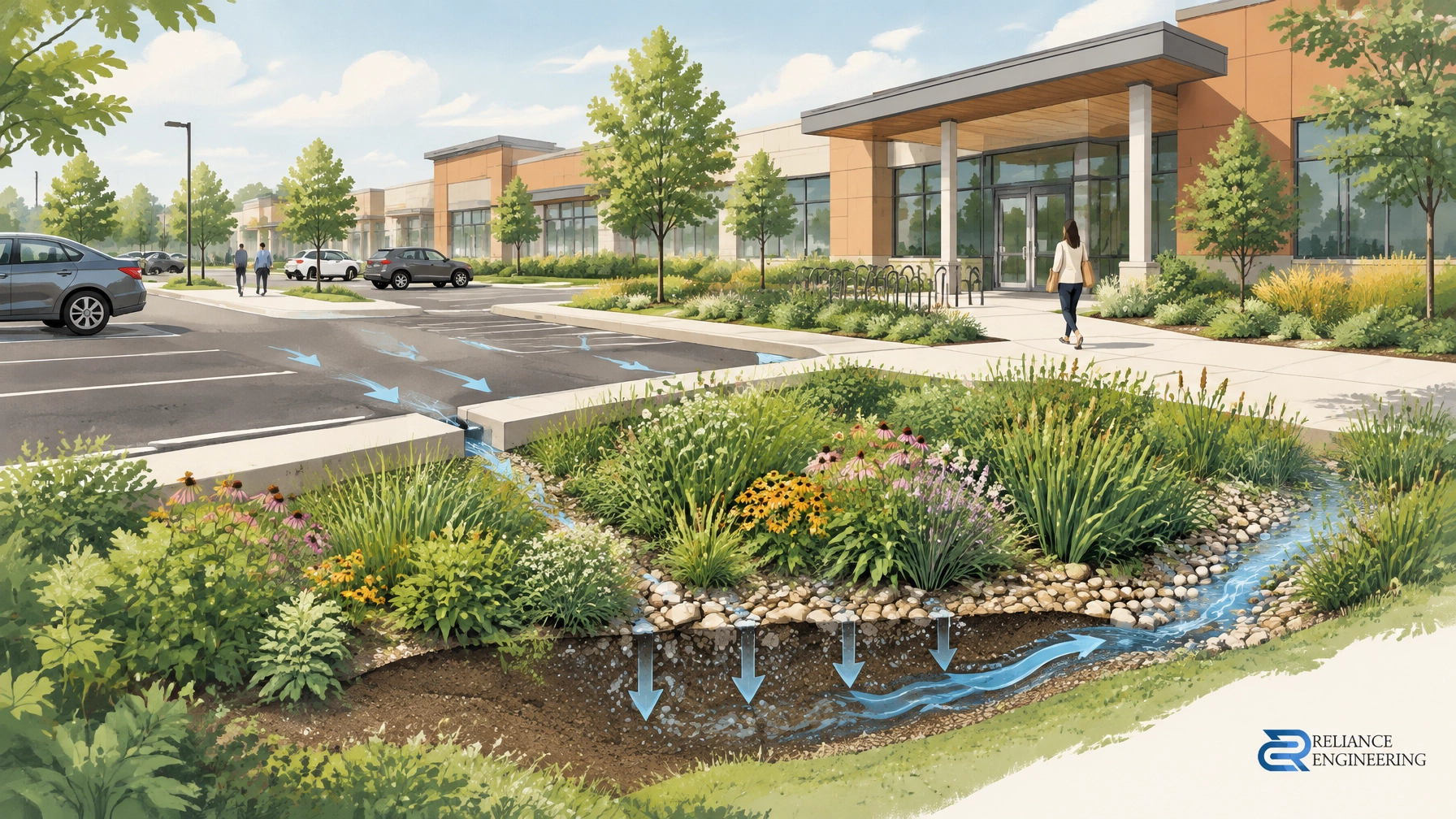
- Control runoff near its source. Use LID measures to capture, store, filter, reuse, or infiltrate water close to where it lands.
- Treat remaining runoff. Use appropriate treatment devices or landscape-based practices before discharge when source controls cannot manage all runoff.
This is a treatment train, not a single-device solution. The sequence and components should reflect the site and the review criteria. Infiltration, for example, can support water balance but is not appropriate for every runoff source or site condition.
Treatment options in an SWM report
An SWM report typically evaluates possible controls and explains why the selected combination is practical. Each measure has different space, soil, maintenance, and drainage needs.
| Control | Typical role | Key considerations |
|---|---|---|
| Oil-grit separator | Captures sediment and some floatable material from runoff | Access for inspection and cleanout; does not replace every treatment step |
| Bioswale or enhanced grassed swale | Slows and filters runoff as it moves through a vegetated channel | Grade, flow path, vegetation, winter operation, and available width |
| Bioretention area or rain garden | Filters and temporarily stores runoff in a planted soil system | Soil media, underdrain needs, inlet design, groundwater, and maintenance |
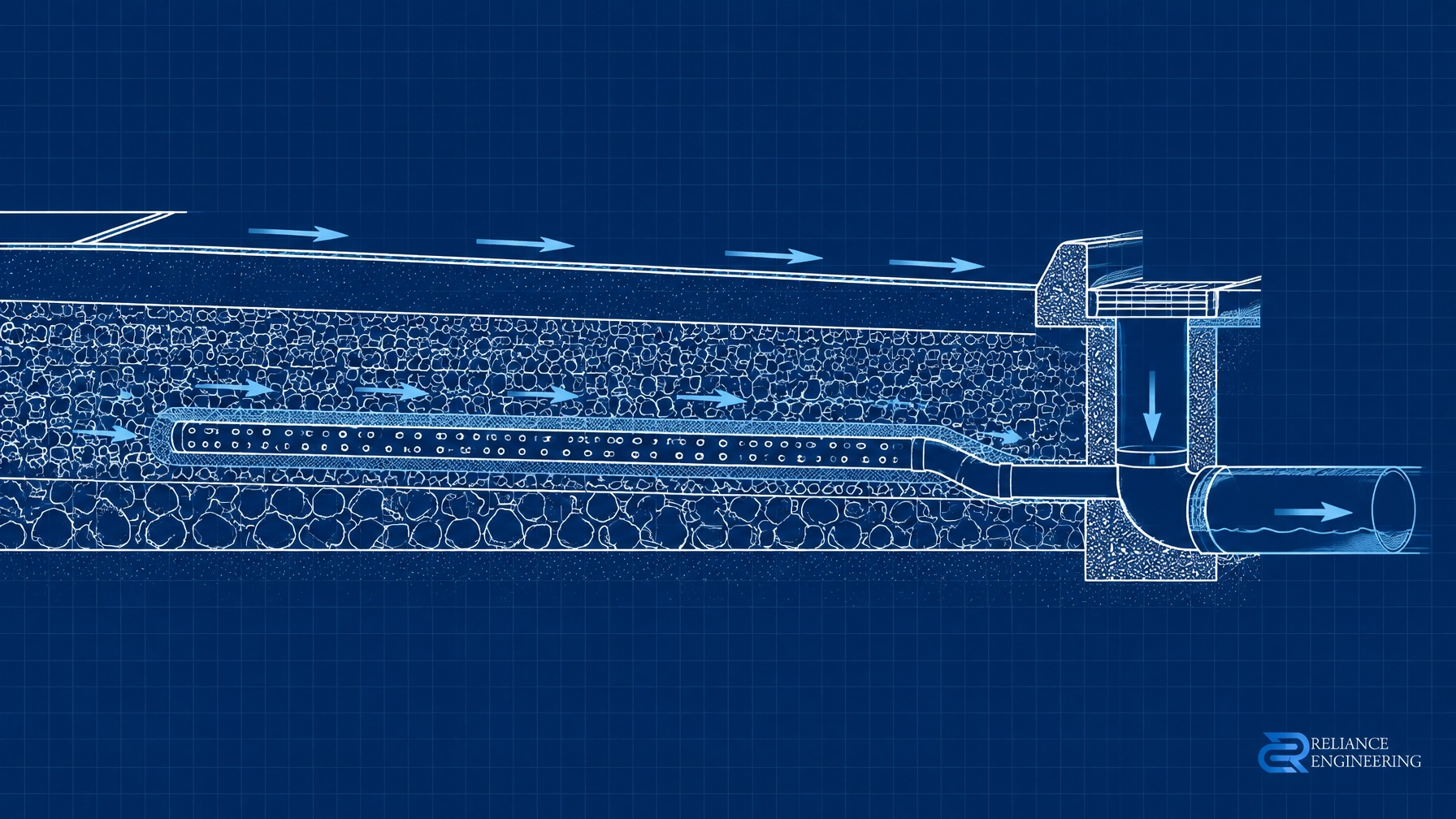
| Permeable pavement | Allows runoff to pass through the surface into a stone reservoir | Subgrade suitability, sediment loading, winter maintenance, and upkeep |
| Infiltration trench | Stores runoff in stone and allows infiltration where suitable | Soil infiltration capacity, groundwater separation, source-water protection, and pretreatment |
These are potential options, not universal prescriptions. A separator may be useful for runoff from a parking area, while a bioretention area may suit a landscape edge. A combination may be needed to treat runoff from different parts of the site. The report should clarify which drainage areas flow to each measure and what treatment each is intended to provide.

Set water balance targets around actual site conditions
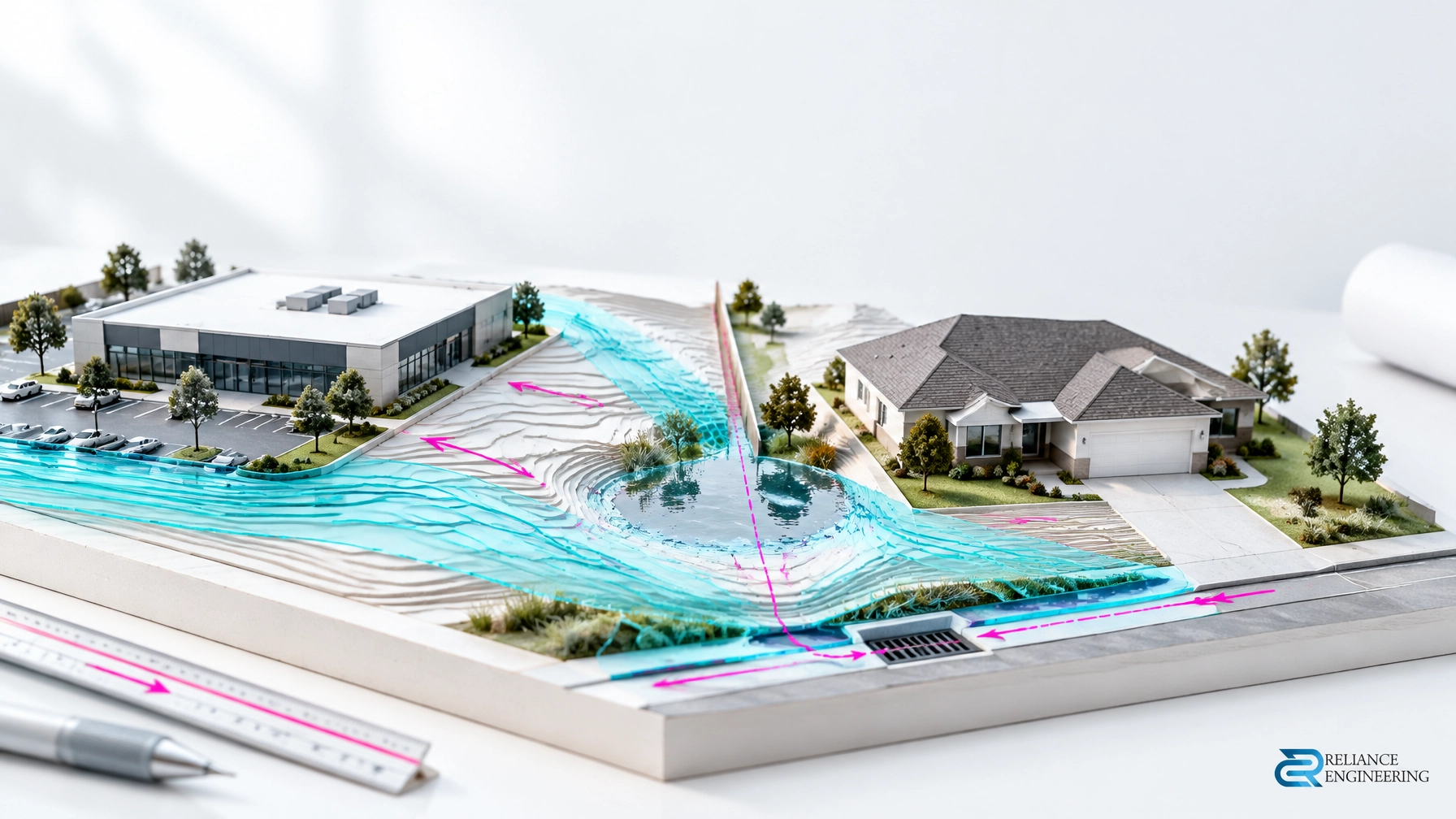
Water balance focuses on how development changes the movement of water through infiltration, evapotranspiration, storage, and runoff. Where required by applicable criteria, an SWM report should explain how the design will retain runoff on-site and meet infiltration or other water-balance objectives.
The feasible approach depends on what the site can support:
- Soils: Clay or otherwise low-permeability soils can limit infiltration rates.
- Groundwater: A high groundwater table may constrain storage depth or infiltration.
- Contamination: Infiltration may be unsuitable where it could mobilize contaminants or create an unacceptable risk.
- Land use and runoff source: Runoff from fuel-handling or salt and snow storage areas may need to be excluded from infiltration controls.
- Space and operations: Buildings, utilities, access, landscaping, and winter maintenance can affect where a practice fits and how it will function.
Some activities may be prohibited or restricted in particular areas under applicable source-protection policies. The rules depend on the local source-protection plan and site context; they should not be inferred from general stormwater guidance alone. Where infiltration is unsuitable, alternatives may include filtration through a lined or underdrained bioretention system, controlled storage, reuse, or other treatment selected to meet the applicable criteria. Runoff from different site areas can also be separated so that cleaner sources are considered independently from higher-risk areas.

Document the treatment train clearly
Reviewers need to understand how the strategy works, not just see a list of proposed measures. A complete report should document:
- The municipal and Conservation Authority criteria reviewed.
- The drainage areas and runoff sources assigned to each measure.
- The selected treatment train and the role of each control.
- The design approach, sizing basis, assumptions, and supporting calculations.
- How water-balance objectives are addressed, including constraints and alternatives.
- Maintenance and inspection assumptions, including access to devices that require cleanout.
Clear calculations and a concise SWM summary table help reviewers follow the design. For each proposed control, the table can identify its contributing area, intended treatment function, design basis, outlet or overflow route, and maintenance responsibility or assumption. The report should make any limitations explicit rather than implying that one device resolves every water-quality and water-balance requirement.
Coordinate LID with servicing and grading
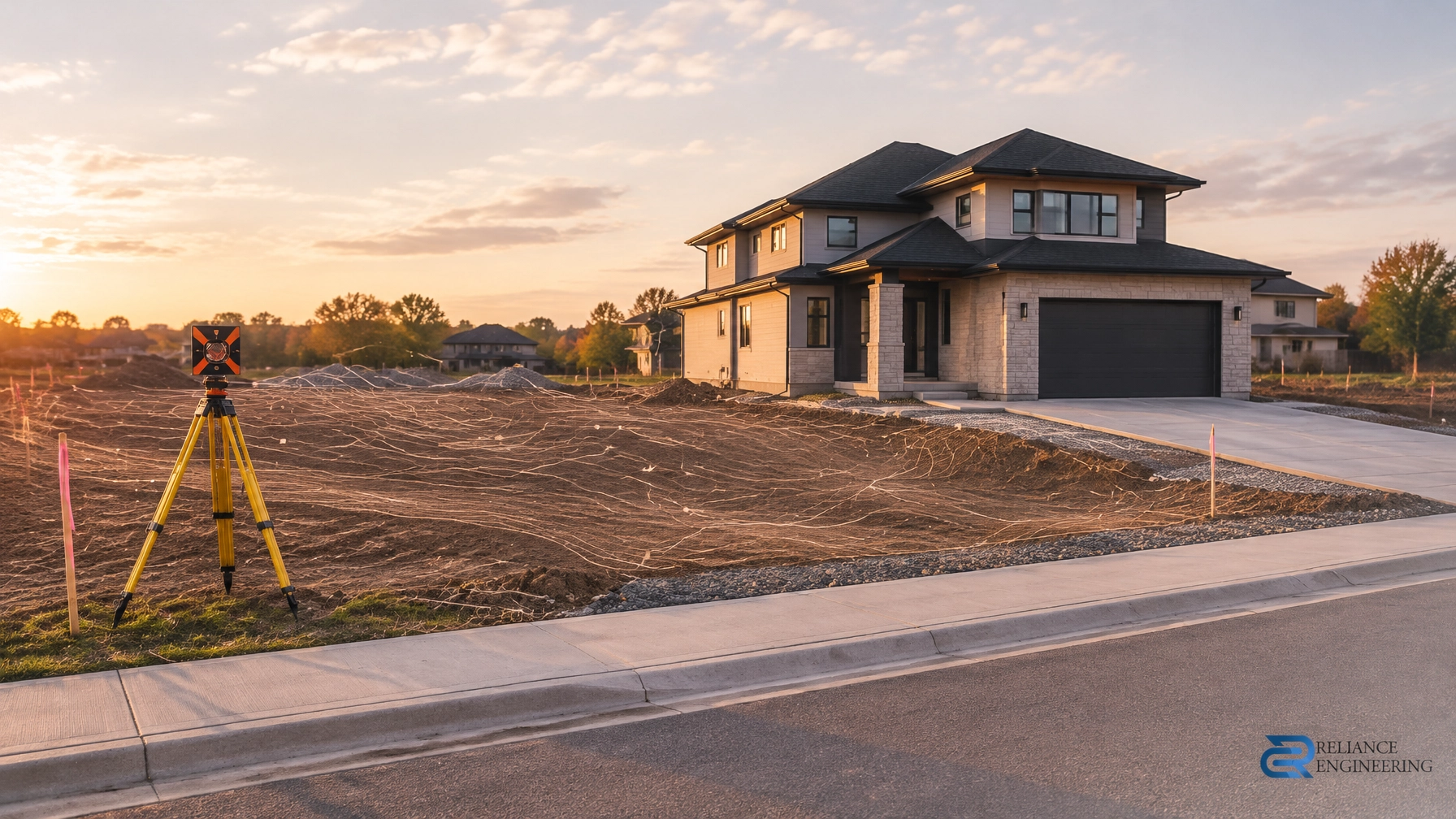
LID controls need to fit the rest of the civil design. A bioretention area can conflict with a buried utility; an infiltration trench may be difficult to construct if servicing routes or building constraints are unresolved. Grading must direct runoff to the intended control without creating ponding, inaccessible low points, or conflicting overland routes.
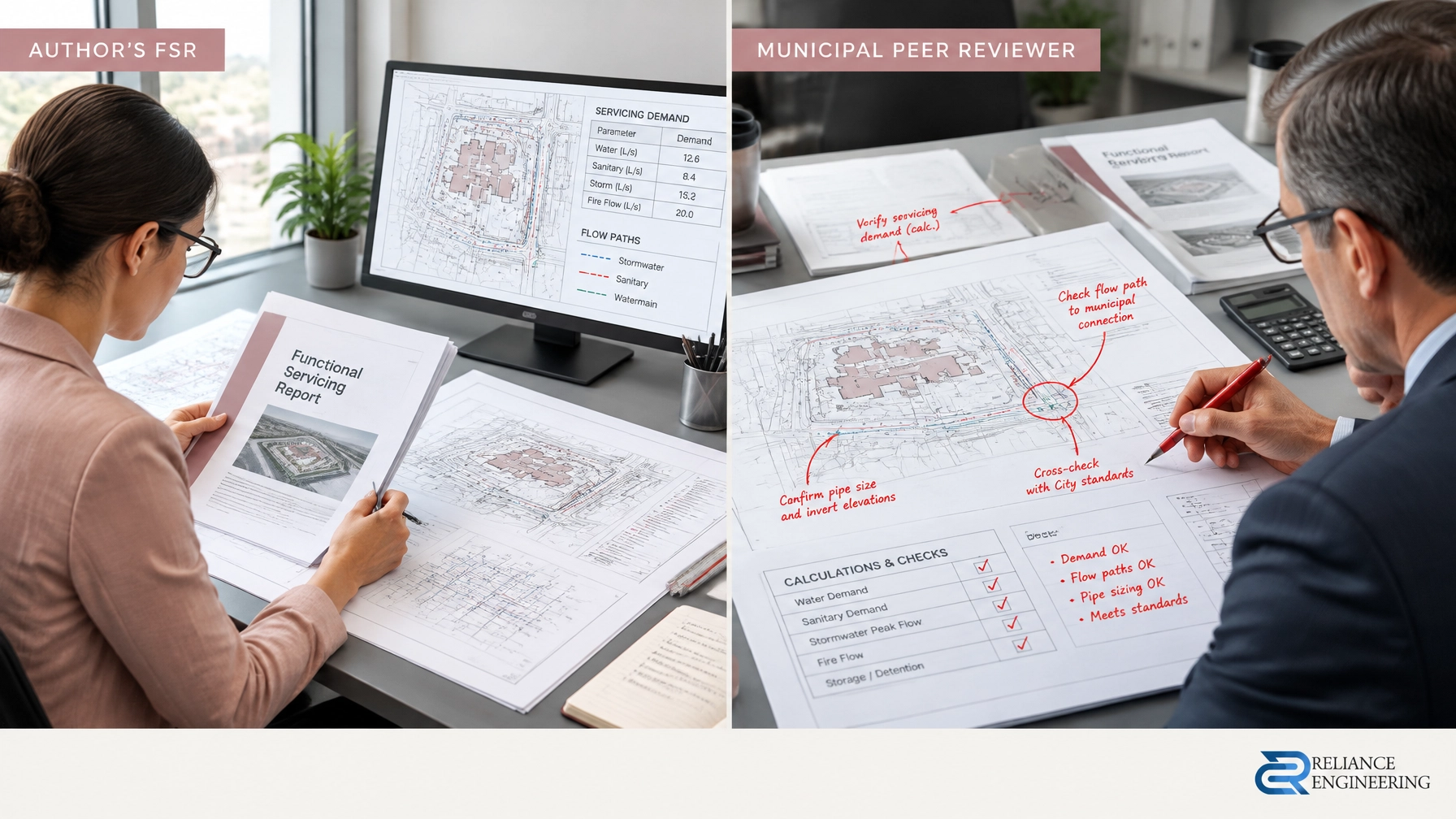
Coordinating the SWM report with site servicing plans, grading, and, where relevant, a functional servicing report supports clean layouts, constructible routing, and a coordinated design. This coordination can also identify utility conflicts and maintenance access needs before detailed drawings are finalized.

Review local criteria early
Municipal and Conservation Authority expectations vary. Before finalizing the layout, confirm the applicable water-quality treatment level, LID and water-balance objectives, acceptable practices, source-water restrictions, and documentation requirements.
Early criteria review gives the design team time to check soil and groundwater information, screen runoff sources, reserve space, and coordinate controls with grading and servicing. That is more practical than redesigning a nearly complete site plan after review comments identify a missed requirement.
Reliance Engineering brings municipal experience to SWM reports for projects across Ontario. We prepare practical designs, clear calculations, and approval support that account for site conditions and review requirements.
Discuss your stormwater requirements
Contact Reliance Engineering to discuss stormwater management requirements for your project.
Prepared by Naresh Ochani, P.Eng., M.Eng.
Principal Engineer, Reliance Engineering Canada Limited
PEO Certificate of Authorization: 100548882
Address: 6850 Millcreek Dr, Mississauga, ON L5N 2H4
Phone: 647-385-6418
Email: [email protected]
Office hours: Saturday 12:00 PM–2:00 PM; Sunday Closed
Request a consultation · Stormwater management reports · MECP Stormwater Management Planning and Design Manual