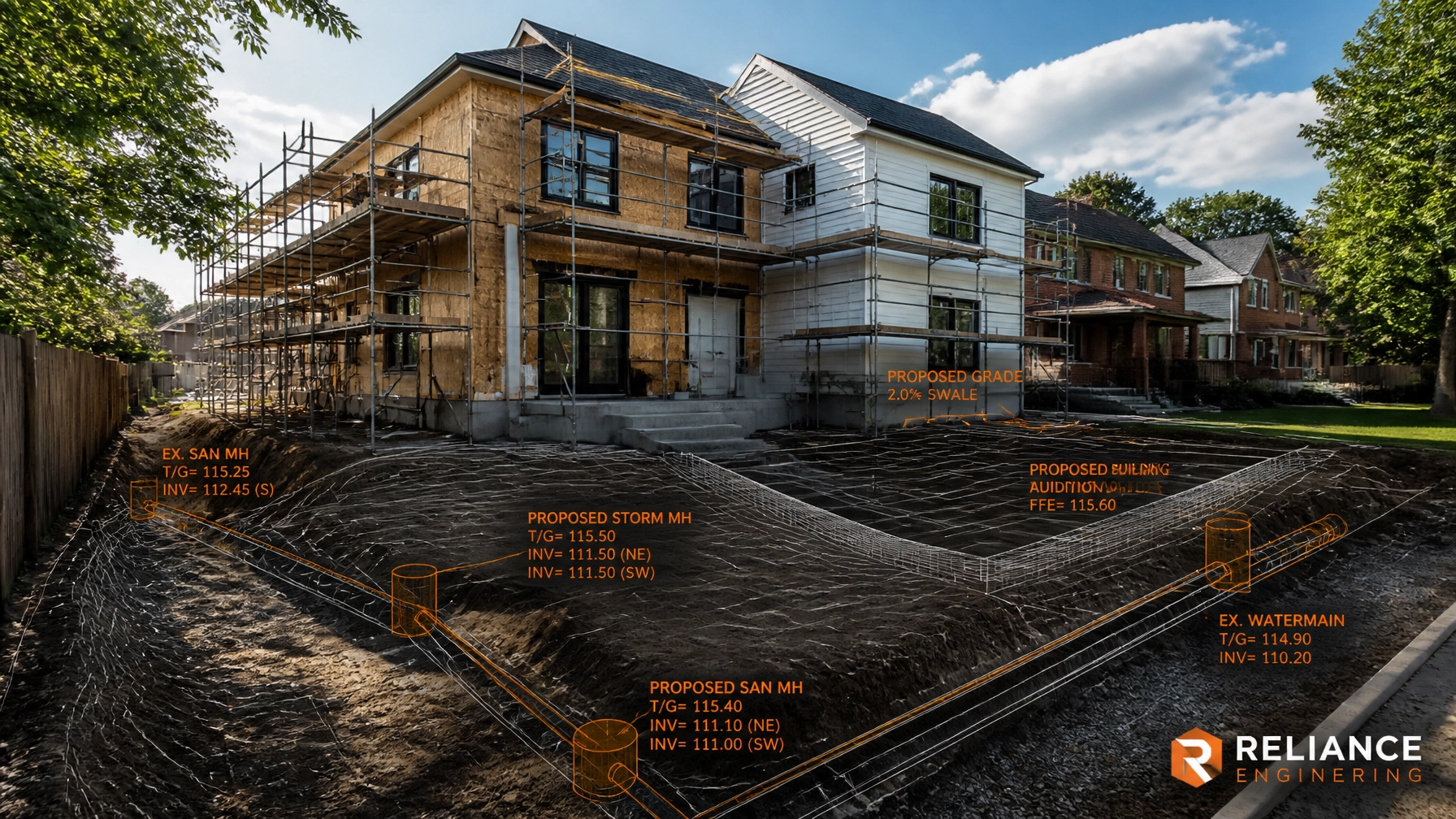
The landscape of residential development in Ontario has shifted. The "Missing Middle" isn't just a buzzword anymore; it is a legal reality that property owners and investors are using to unlock massive value. While the headlines focus on the housing crisis, savvy developers are quietly capitalizing on legislative changes that allow for more units on existing lots.
But here is the secret: having the right to build doesn't mean you have the ability to build. The gap between a zoning permission and a building permit is filled with technical engineering hurdles that catch most people off guard.
At Reliance Engineering, we specialize in navigating these complexities. We don't just draft plans; we secure approvals. If you are looking to convert a single-family home into a triplex or fourplex, you need to know what’s happening behind the scenes.
The As-of-Right Power Move: Bill 23 and Bill 185
The biggest "secret" is the provincial override. Under Bill 23 (the More Homes Built Faster Act), most residential lots across Ontario now permit up to three units "as-of-right." This means your local municipality cannot use zoning to stop you from adding a second or third unit, like a basement suite and a garden suite, on an eligible lot.
Furthermore, Bill 185 is pushing to remove even more red tape, targeting Additional Residential Units (ARUs). The provincial government is effectively stripping away the municipal "no" that has stalled development for decades.
However, "as-of-right" is not a blank check. You still have to meet the Ontario Building Code and municipal engineering standards. This is where projects either thrive or die.
Secret #1: The Service Capacity Trap

You might have permission for four units, but does your current infrastructure support them? This is the primary hurdle in multi-unit conversions.
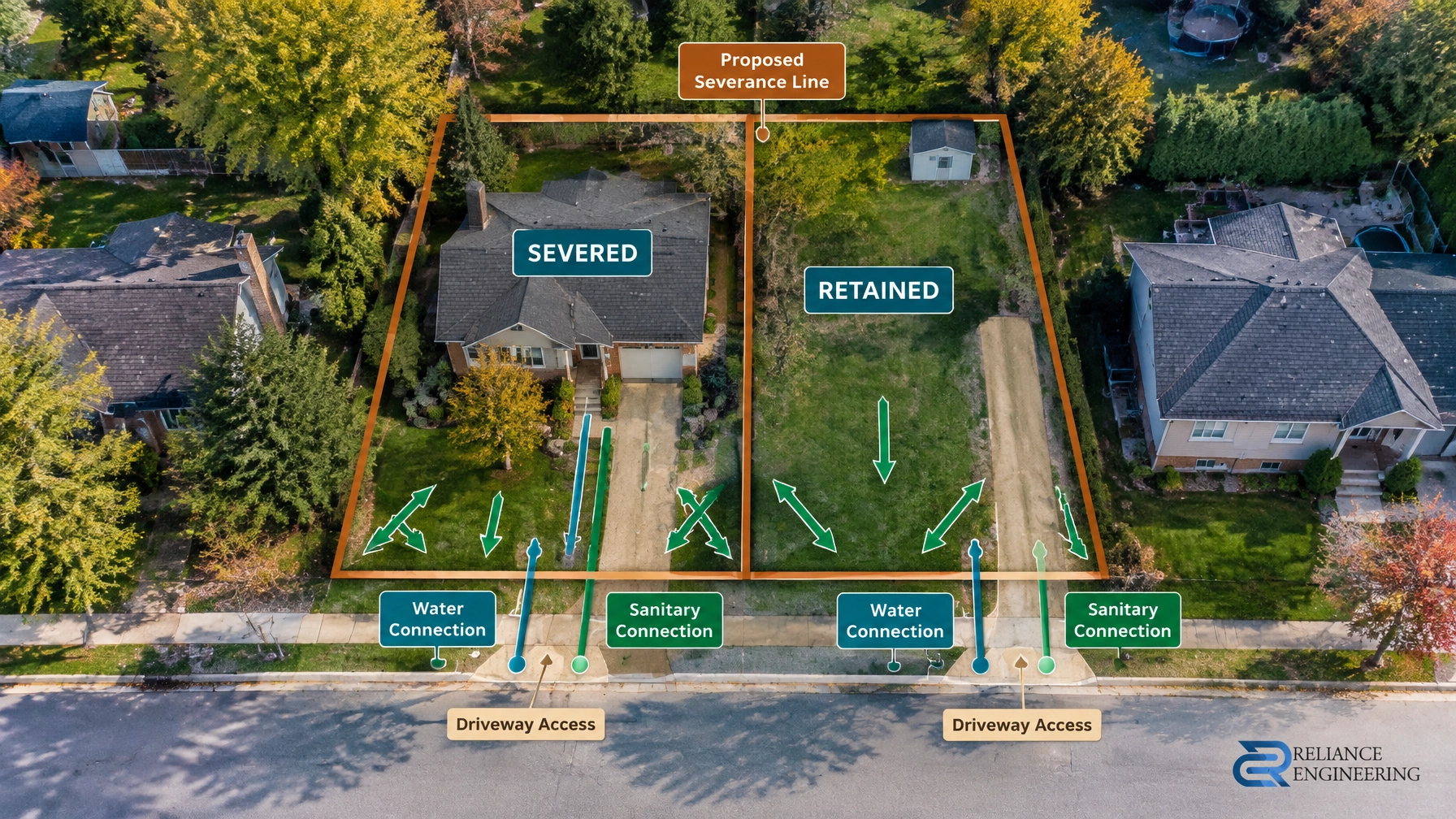
Most single-family homes in Ontario were designed for a single water and sanitary connection sized for a single household. When you triple the occupancy, you triple the demand.
- Water Supply: Will the existing line provide enough pressure for multiple kitchens and bathrooms?
- Sanitary Sewers: Can the current lateral handle the increased flow?
- Stormwater: Are you increasing the footprint of the building or adding a detached garden suite?
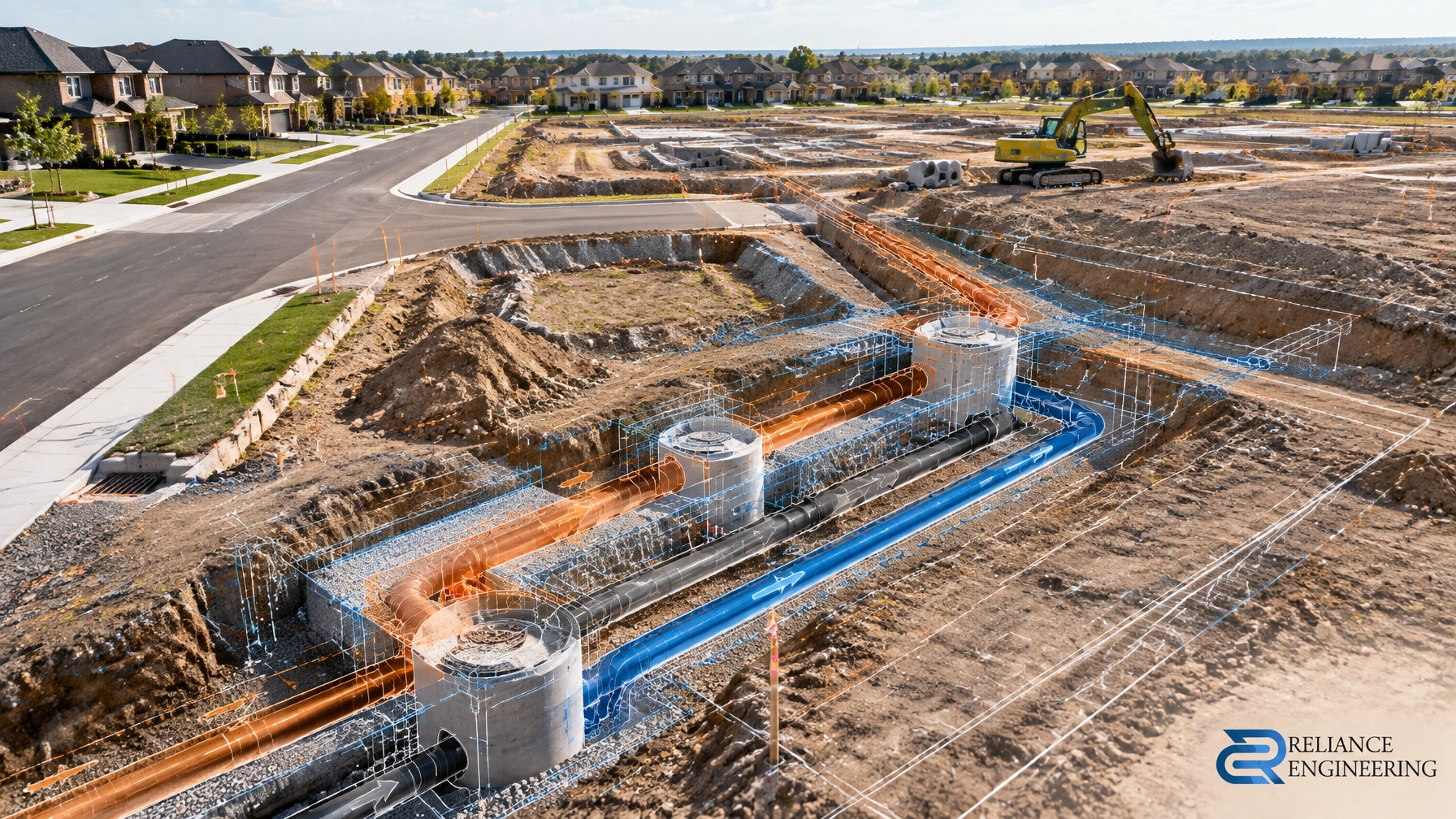
If your existing services are undersized, you’ll need a Site Servicing Plan. This often requires a Functional Servicing Report to prove to the municipality that your project won't overwhelm the local grid. At Reliance Engineering, we identify these capacity issues in the design phase, avoiding costly surprises during construction.
Secret #2: Site Grading – The Invisible Deal-Breaker

Many investors assume that because they are "just" adding a unit inside an existing house, they don't need a civil engineer. They are wrong.
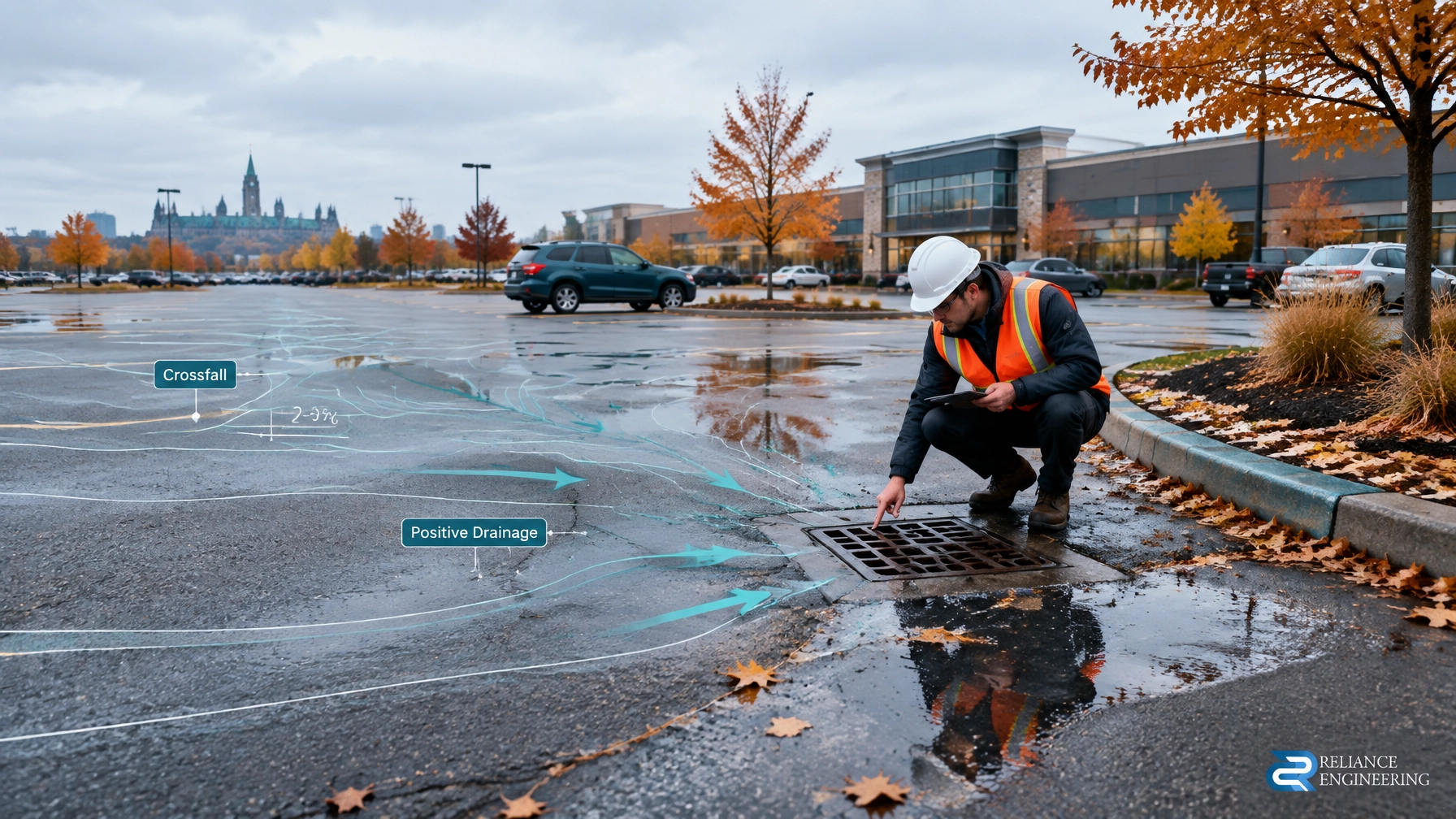
The moment you change the usage of a property or add a detached structure (like a coach house or garden suite), you trigger a review of your Site Grading Plans. Municipalities are terrified of drainage complaints. If your new unit causes water to pool on a neighbor’s driveway, you are liable.
Professional grading design ensures:
- Positive Drainage: Water flows away from the foundation and toward the proper municipal outlets.
- Neighbor Protection: No adverse impacts on adjacent properties.
- Accessibility: Meeting the grading requirements for safe exits and entrances.
We produce grading plans that meet stringent municipal criteria across Ontario, ensuring your permit moves through the system without being flagged for "inadequate drainage details."
Secret #3: The Building Code Shift (3 is the Magic Number)
Once you move from two units to three, you are no longer just building a "house" in the eyes of the Ontario Building Code. You are now entering the territory of a "Small Building."
This transition triggers significantly higher standards for fire separation, exit requirements, and ventilation. From a civil engineering perspective, it often means more rigorous Stormwater Management requirements. If your lot coverage increases, you may need on-site infiltration systems or soakaway pits to manage runoff.
How to Get Approved in One Submission

The secret to a fast approval isn't just following the rules; it's anticipating the reviewer's questions. Municipalities in Ontario are overwhelmed with applications. If your submission is messy or missing key data, it goes to the bottom of the pile.
At Reliance Engineering, we take full ownership of the process. Our 20+ years of principal engineer experience means we know exactly what the city engineers are looking for. We provide:
- Precision Drawings: Detailed site plans that leave no room for interpretation.
- Fast Turnaround: We understand that time is money in real estate development.
- GTA & Ontario Expertise: We have deep knowledge of the specific nuances in different municipalities.
Take Action Today
The window for high-margin multi-unit conversions is wide open, but the technical requirements are tightening. Don't let a "simple" zoning change turn into a multi-year permit nightmare.
Get your design approved in one submission.
Contact Naresh Ochani, P.Eng. M.Eng. today to discuss your project requirements and secure your building permit.
Contact Information
- Principal Engineer: Naresh Ochani, P.Eng. M.Eng.
- Office Address: 6850 Millcreek Dr, Mississauga, ON L5N 2H4
- Phone: 647-385-6418
- Email: [email protected]
- Website: www.relianceengineering.ca
Office Hours
- Saturday: 12:00 PM – 2:00 PM
- Sunday: Closed
- Monday – Friday: By Appointment
Reliance Engineering
Authorized by the Association of Professional Engineers of Ontario (PEO).
Certificate of Authorization: 100548882